What does it mean to be a “birder” or a “bird watcher”? Some of us pursue birds in the field as academic or scientific pursuits. We tend to shade those activities over into “ornithology” which is (perhaps too) simply the scientific study of birds. The rest of us have this passion to find these winged beauties for a million different and personal reasons. But it all boils down to the love of a challenge and the persistence to see things through. Whether it’s to finally conquer your “nemesis bird”, get your 400th state species, or figure out what the heck is making that weird “cheepy-urp!” call in your backyard, it takes dedication and love of the challenge to continue birding.
To that end, we have long employed optics and field guides. Some of us march out with camera lenses that almost make astronomical observatories feel inadequate. Audio recordings are nothing new to the study of birds, but with the relatively recent advent of smartphones and birding apps, almost anyone can walk into a yard, park, or forest and play a high-fidelity bird call or song. Be it alarm or predator calls, we are increasingly using these methods to at least get birds to come closer to look, or to pop out of that darn bush for half a second, PLEEEASE?! There’s much debate over the effects these recordings have on birds, and that’s a debate well worth having.
But one other audio aid birders have used far longer than iBird or Sibley or even YouTube streams is the simple “pish.”
Pishing is both a tool and an art form. Combining percussive “puh” and harsh “shushing” noises in quick succession, the sound is thought to create an alarm response in birds, especially the smaller passerines (though I’ve had crows come investigate on occasion). Sometimes I think they just come to laugh at someone in a big hat and cargo shorts spraying spittle all over his t-shirt. Some birders seem to get almost immediate responses to their pishes. Others’ attempts can grate on your nerves and you wonder what the big deal is, as you consider another reason to carry an umbrella along.
Sadly, I feel my pishes fall into the latter, soggy category. And I rarely have any success with my pishes, no matter how I alter the sound. Besides the aforementioned crows, I think I may have called up 2 Pine Warblers and one tired flock of late-winter Yellow-rumped Warblers since I started pishing 3 years ago. Before then, I was always embarrassed to try it. If I was out by myself, it was almost like talking to myself. I guess when I finally realized I was often talking to myself, pishing didn’t seem such a long reach.
I suppose just like any other birding tool, and particularly audio recordings, pishing isn’t too invasive or troublesome when used judiciously. Pestering birds during critical times, like nesting or rearing young might be a bit much, but in general any amount of action you’re likely to raise isn’t much above the noise level for a bird that may have traversed 3500 kilometers, 10 interstates, a wind farm, a sports stadium, and predators – natural and unnatural – to get to your favorite patch of woods. But it’s probably best to be safe. Maybe your pish will be the proverbial (and salivary) straw that breaks the camel’s back. And in popular spots or during birding festivals, it might just about wear the birds out to hear hundreds of hiking boots, dozens of pishes and the actual and virtual shutter-clicks of a hundred cameras for a week straight.
In short, pish wisely my friend, and if you’re on the low end of the pishing mojo scale, like I am, maybe leave it alone. Your fellow birders will be happier – and drier – for it.
Since my last entry we’ve had one small and one larger “fall out” of migrating birds here along the Space Coast. A fall out happens when birds encounter a weather event that forces them from flight to stop and seek shelter or food – or both – for a time before resuming their paths. Flying takes a tremendous amount of energy. Over a long period of time, many birds have developed methods to save that energy in flight. Neotropical migrants, like warblers, use approaching winds and weather fronts to time their overnight flights. For much of this spring there have been unusually strong southerly winds along the entire peninsula of Florida, allowing many migrants to fly very long distances with a tail-wind, often bypassing the state altogether. That has made for another fairly quiet migration, for the most part.
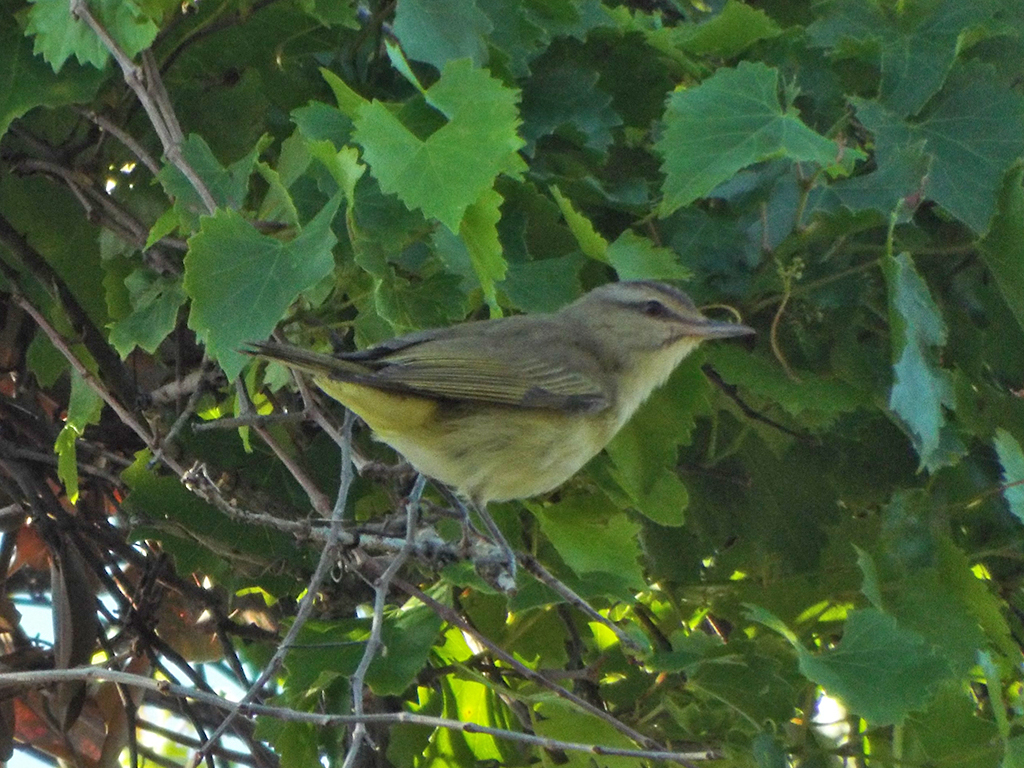
At the beginning of April, a cold front did sweep across the state, and some early migrants were forced down into area hotspots. At Lori Wilson Park, that generated some excitement as a rare Black-whiskered Vireo stopped for a couple of weeks. This is likely the same bird that also stopped there last year, so it remembered the park as a safe haven and place to refuel.
Like many recurring and rare visitors, this bird had a favorite hang-out in the park. In this case a mature Gumbo Limbo tree, producing berries that vireos seem to love.
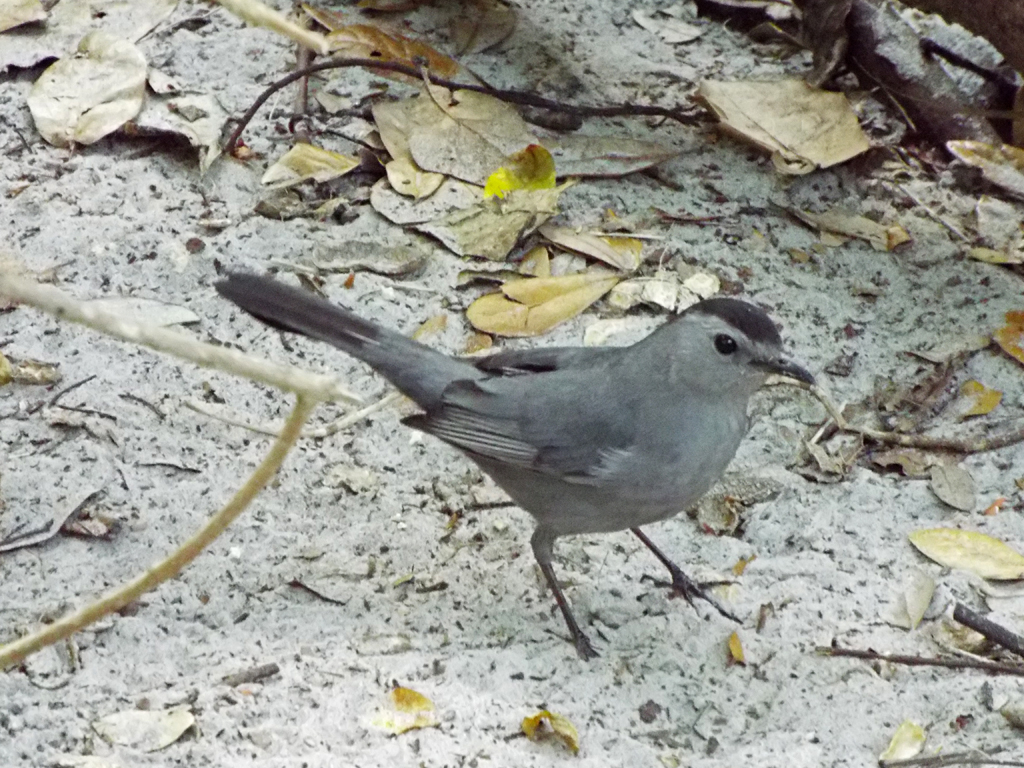
The season’s first Red-eyed Vireos were also present, as well as familiar faces that hadn’t found their favorable winds quite yet. Prairie and Yellow-rumped Warblers were still there, as well as the park’s large contingent of Gray Catbirds.
Catbirds generally prefer to skulk in the underbrush, but this bird had come out in the open to get some water.
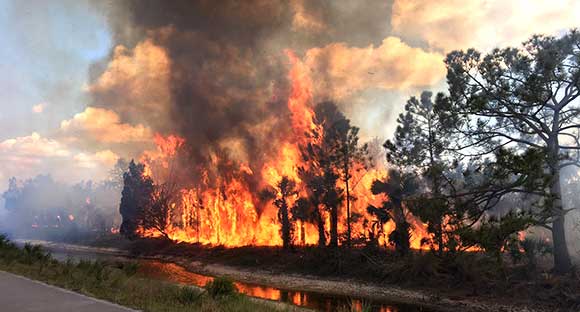
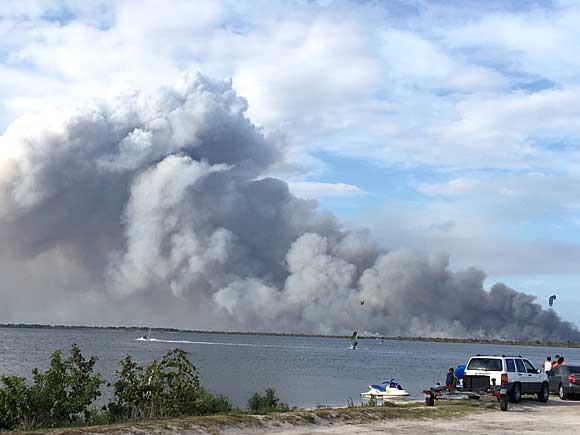
A complication this spring for any migrants that do need to stop and “top-up their tanks” is the lack of rainfall since the end of winter. Many places around the state are in drought and fire hazard warnings were up for much of the first part of April. The conditions only got worse as the month has worn on. The marsh habitat of Black Point Wildlife Drive on Merritt Island caught fire last week and about 5,000 acres burned. Fire is a natural and necessary force in shaping central Florida’s natural landscape, but only in area adapted for it. The area around Black Point is a wetlands habitat, dominated by mangroves. A hot burn there stands to do damage, even to the soil. It’s early days yet to know how much damage may have been done. The fire is suspected to be human induced, though the origin might never be truly known. If you smoke, please properly extinguish whatever you’re smoking and don’t light up when in areas prone to fire (which in recent days is just about anywhere outside).
Fire at Black Point. (Photo courtesy USFWS)Photo courtesy of USFWS.
After the small fall out at the start of April, conditions returned to strong, southerly winds again, even through the Spring meeting of the Florida Ornithological Society. The FOS meeting was in Ruskin this year, near Tampa. I’ll have a little to say about that coming up in another blog entry.
Finally, this weekend we had another front come through. Though not as strong as the one a couple of weeks ago, there were more birds in the sky as we’ve reached peak migration time for many species. The results were dramatic. Over at Fort De Soto park (just days after I left the area after the FOS meeting), dozens of tanagers and grosbeaks descended on the park, though the warbler numbers were low.
Closer to home, Turkey Creek Sanctuary finally saw its largest number of migrant warblers of the season. Over two days this week I went out before work to see what made pit stops there.
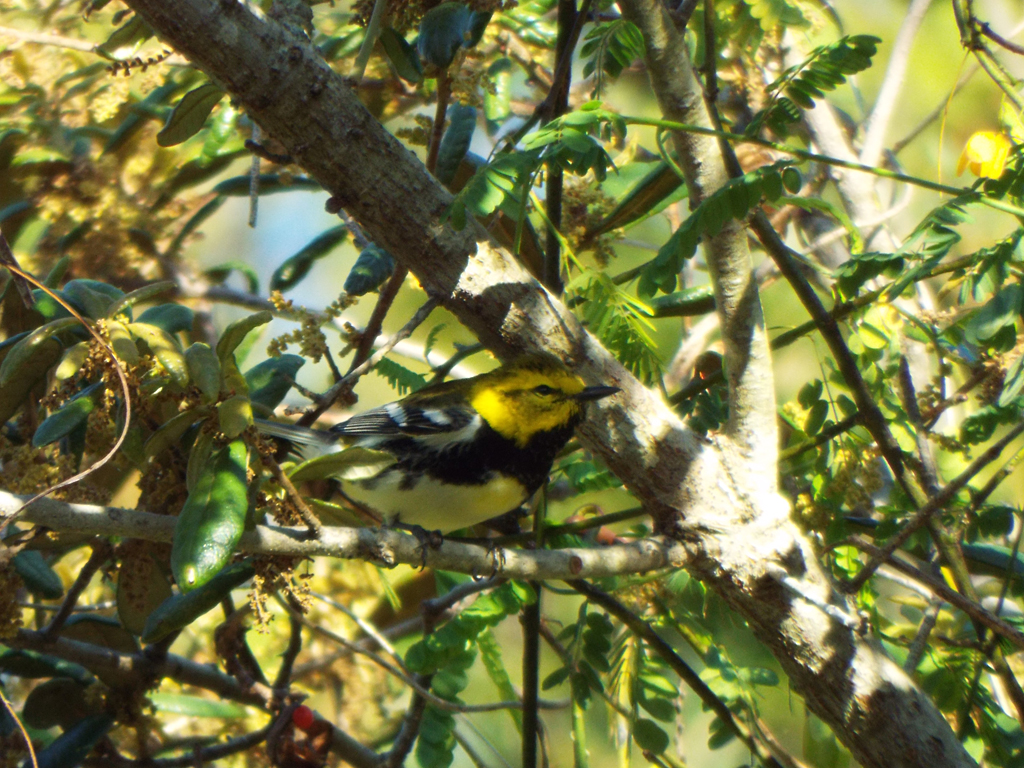
Tuesday morning had large numbers of Black-and white Warblers on the move. This species winters in Florida, Mexico, Central America, and parts of South America. It breed throughout much of the eastern US and Canada. There were also Black-throated Blue Warblers, American Redstarts, and Blackpoll Warblers throughout Turkey Creek Sanctuary. Small numbers of Cape May and Worm-eating Warblers were also there, and at least one Black-throated Green Warbler – a long anticipated life bird for me!
Finally! I’ve been hoping for this bird for a while. The extensive black throat feathers identify this Black-throated Green Warbler as a male.
Many of the birds were moving west, out of the sanctuary and into the adjacent neighborhood. I think this might be because of the limited food supplies in the park itself. The native and ornamental trees in the neighborhood might be irrigated, thus producing more fruit and attracting more insects.
The following morning saw much the same mix, except the predominate bird was the Blackpoll Warbler. I saw at least 3 dozen, mostly males, throughout the entire southern part of the Sanctuary (the northern area – specifically the Sand Pine and Turkey Oak trails – remain closed as trees and debris are being cleared, due to last Fall’s hurricane Matthew.
Here are three eBird lists from Monday, Tuesday, and Wednesday. I included Monday’s list for a comparison to what happened after the fall out conditions.
Food supplies in the sanctuary are still low, but these birds are finding enough for at least a brief stopover.
I expect things will taper off again as the winds are already turning more southerly. There are still a few weeks to go for migration, so hopefully there will be more chances for birds to make stops along the Space Coast. Many of these species won’t be seen here again until October.
I know this entry is a little light in the photographs, but such is the way with small, fast moving targets. I was excited that my Black-throated Green Warbler was as accommodating as he was!
It’s that strange in-between time again. The nominally “dry” season in Florida is nearing an end, and the trees are blooming. The ducks have mostly left, along with the American Robins. But the Blue-headed Vireos, along with Yellow-rumped and Palm Warblers are hanging about. Some of the winter “rare-but-regulars” like the Scissor-tailed Flycatcher haven’t gone yet.
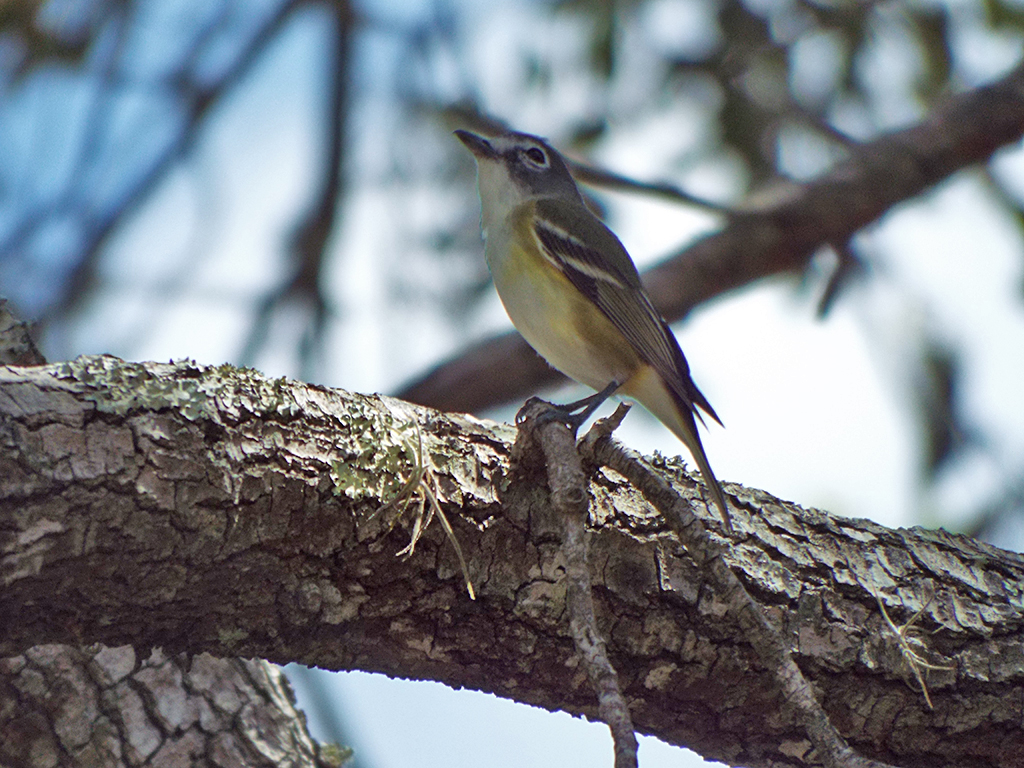
The Blue-headed Vireo’s song sounds like a sweet, “Be seein’ you! See you later!” which is apt for this time of year.
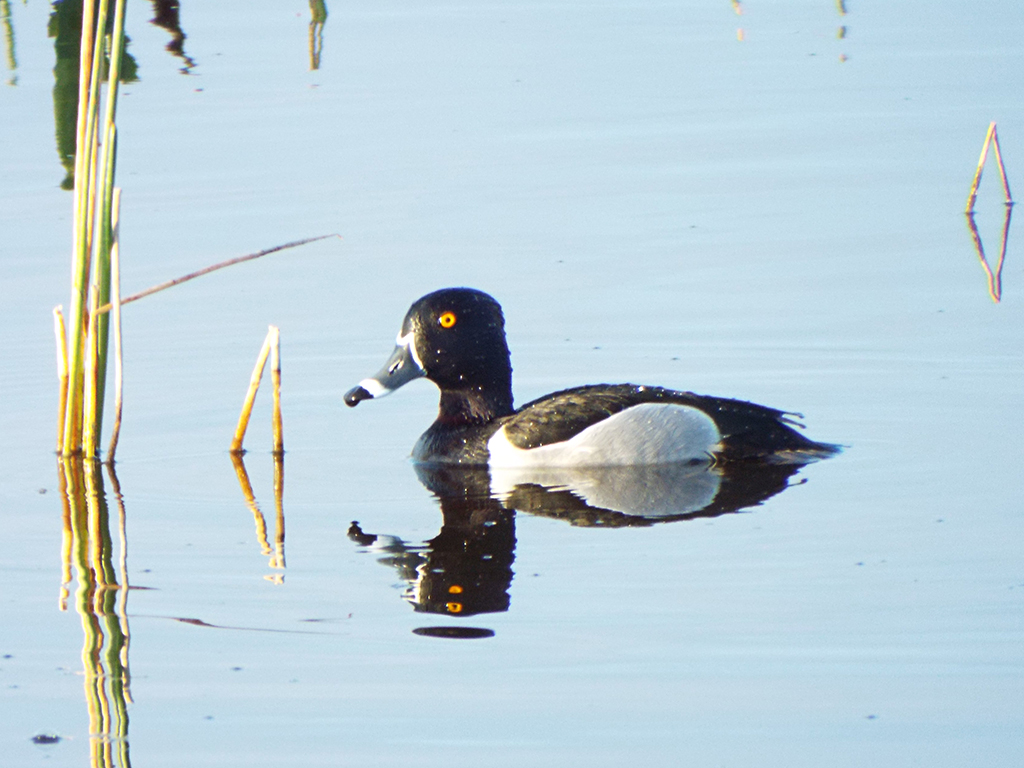
Since this photo was taken a couple of weeks ago at the Viera Wetlands, the Ring-necked Ducks have mostly left.
But within a few weeks, the migrants will be heading north, stopping in Florida to rest and refuel, as many will still have thousands of kilometers to go to get to their breeding grounds. The local winter residents will make a similar journey and we’ll be saying “good-bye” to them until fall.
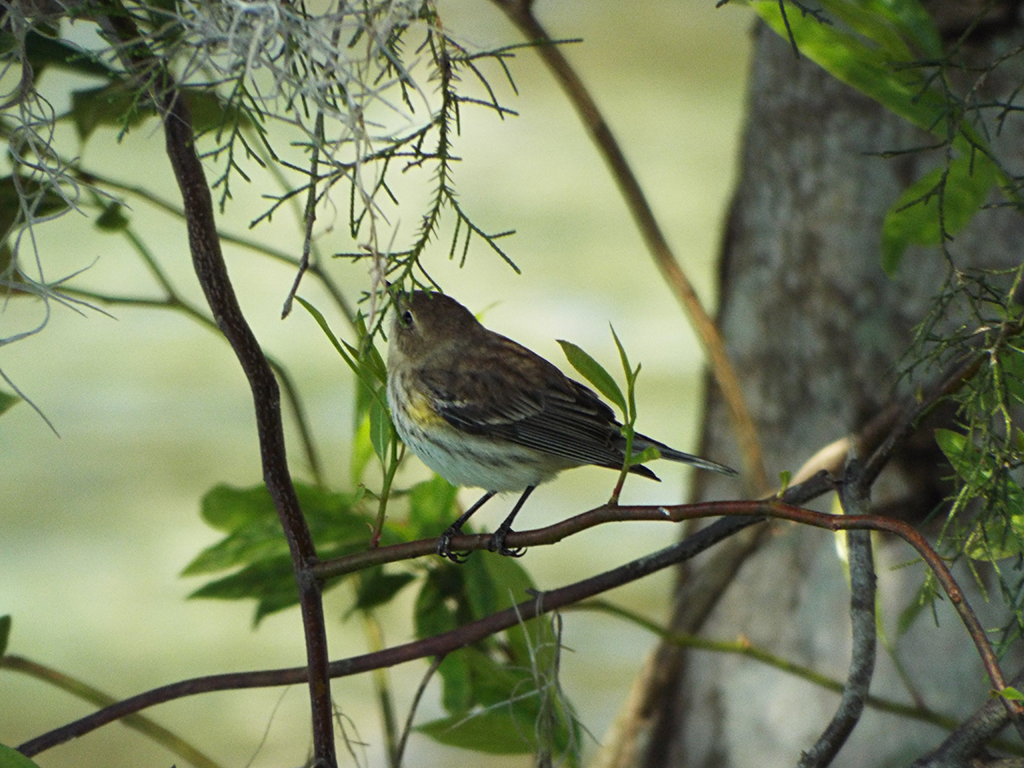
A Yellow-Rumped Warbler, finding tiny insects and mites on Spanish Moss.
During this quiet time, I’ve been out to the Viera Wetlands, Pine Island Conservation Area, Turkey Creek Sanctuary, Spruce Creek Park, and Fay Lake Wilderness Park. They all seem to be holding their breath. To me it seems like the winter residents have been holding on longer this year. This may be because, despite the record-warm winter in the U.S. (particularly the southeast), there have been strong storm systems moving through, some dumping quite a bit of snow.
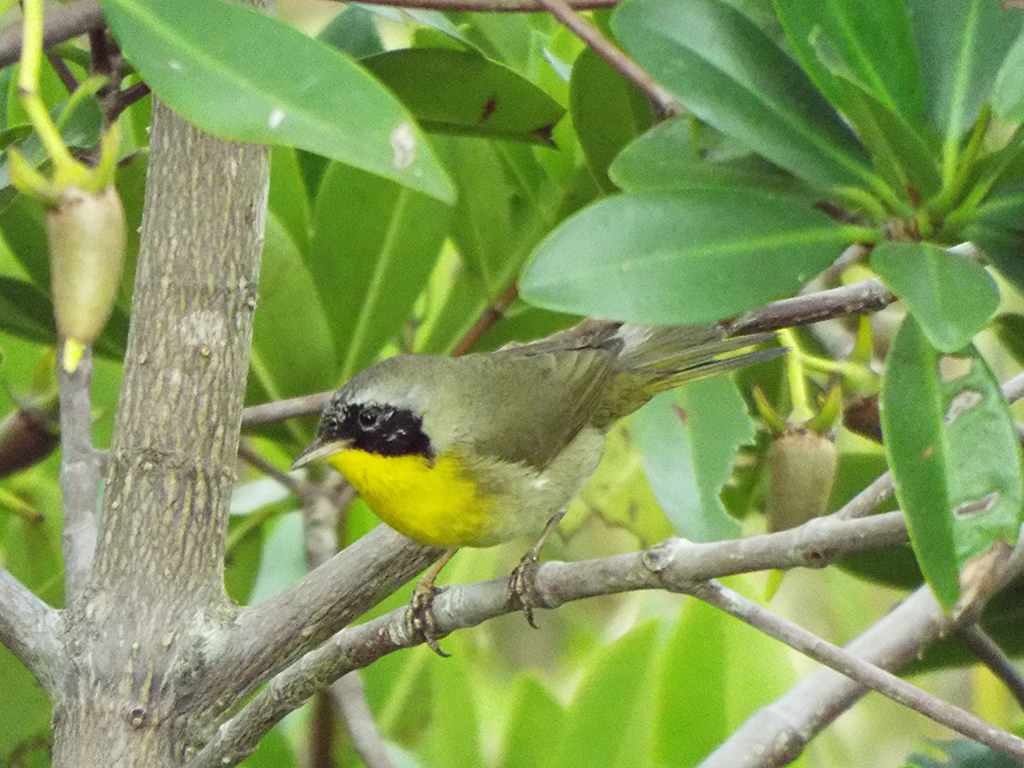
This male Common Yellowthroat, at Spruce Creek, hasn’t quite got his full “domino” (black facial feathers) yet.
However birds sense weather, it seems they “know” to hang back and wait sometimes. It’s tempting to think this is an ancient and fail-safe wisdom animals share, but the truth is weather is a major hurdle that migrating birds have to face, twice each year. Many do not make the journey due to winds or extreme temperatures. If a food source fails to appear for them during a “fallout” or a rest, or is covered in too-deep snow, they may actually starve. But nature has given birds some innate abilities to read their environment and make the best choices they can. The ability to fly gives them an edge, too. If food is scarce, they can move on – as long as they have the energy to spare.
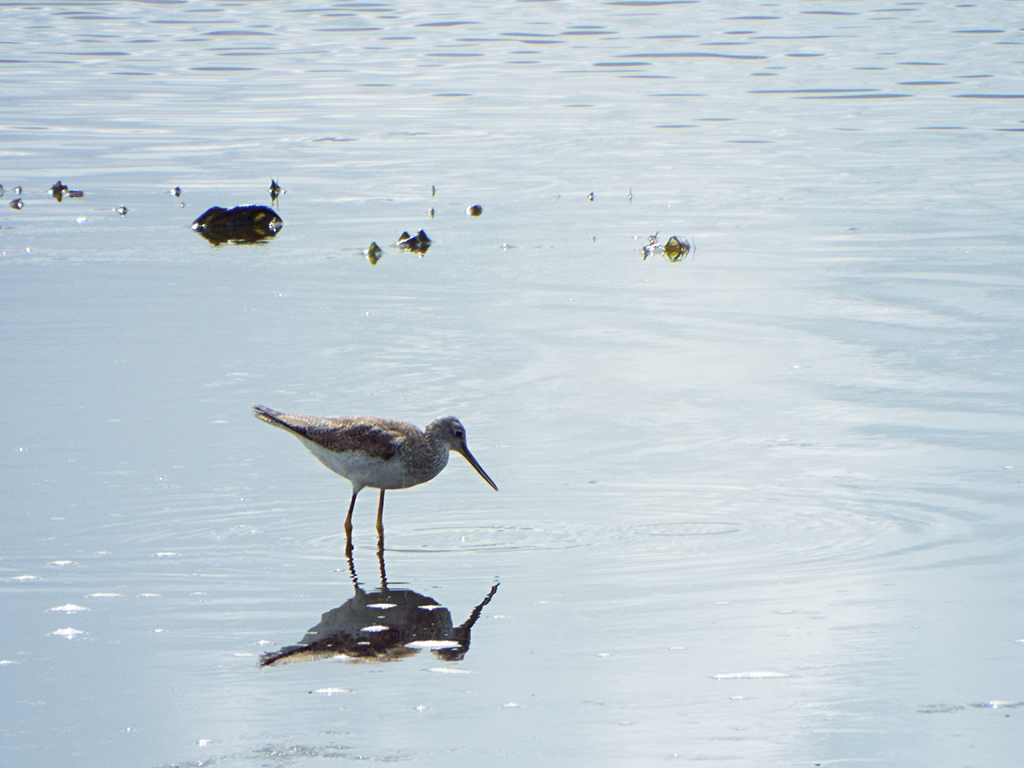
Many shorebirds, like this Greater Yellowlegs, have a long trek ahead to their Arctic tundra breeding grounds. This bird was taking maximum advantage of the warm Florida days to fatten up for the journey.
Of course, as smaller birds start to make their way, predators will follow. Raptors time their migrations to coincide with their prey, who have conveniently put on plenty of fat (i.e., energy and calories).
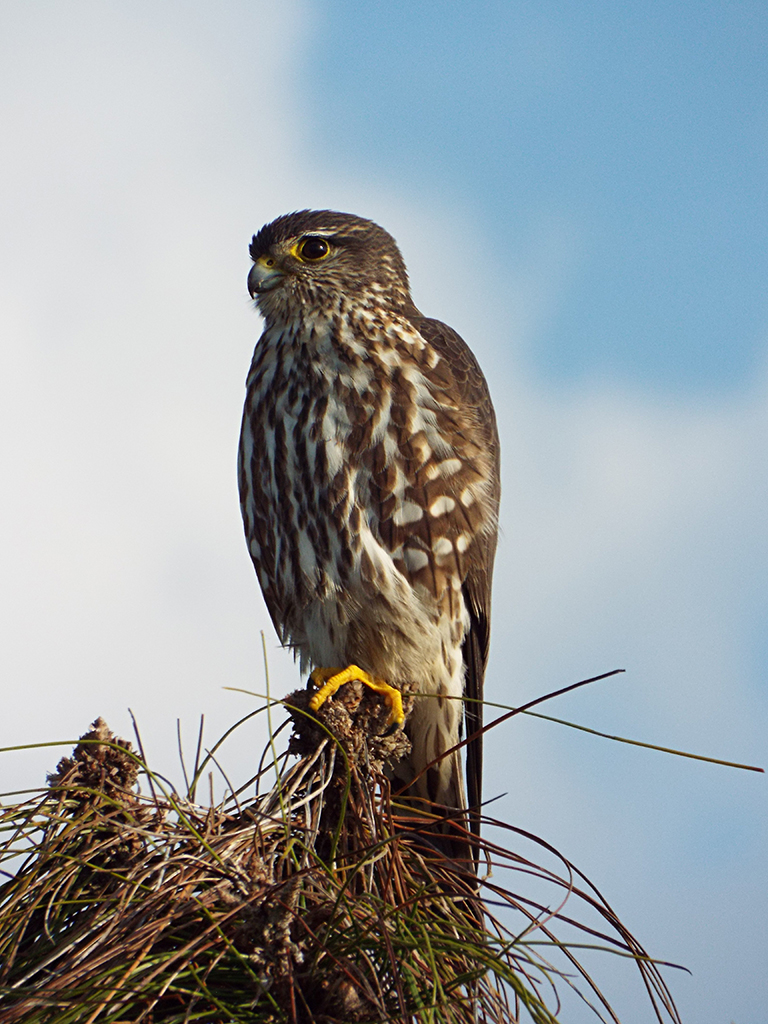
A Merlin, scoping out her targets at the Viera Wetlands. She’ll be leaving Florida as well, following food and fortune perhaps as far as the Arctic Circle to breed.
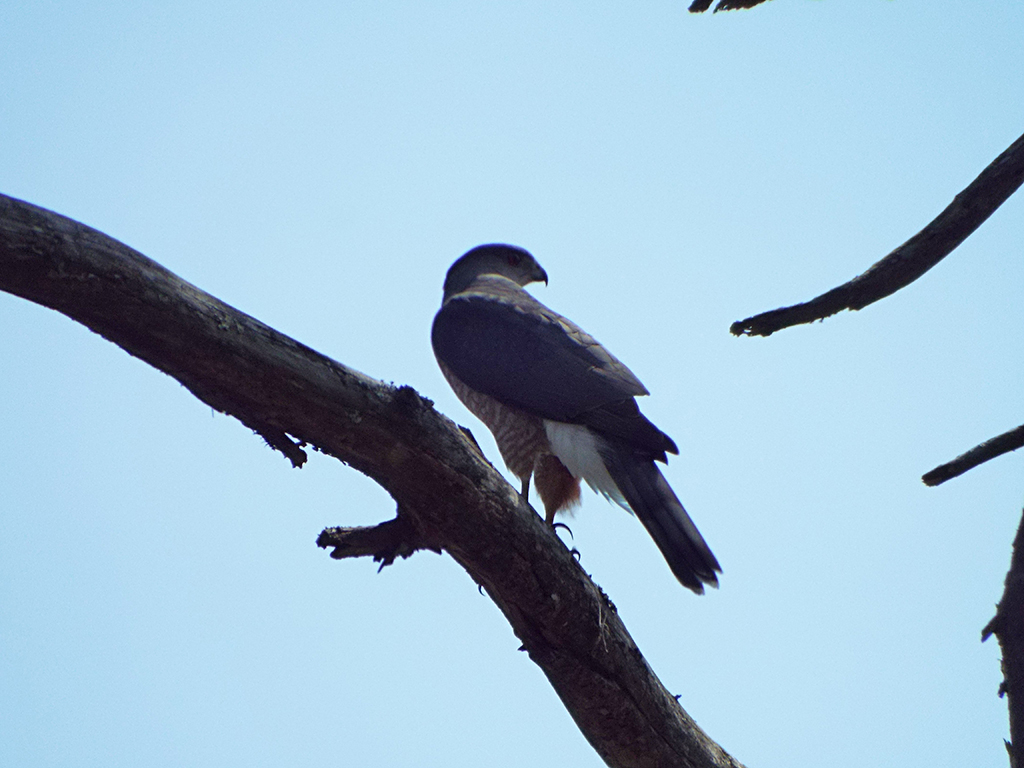
Other raptors, like this Cooper’s Hawk, stay in Florida all year, taking advantage of the various prey that make their way here.
Readers of this and other Florida birding blogs may already know, but the past several years have been disturbingly “slow” for migration, particularly through the east-central part of the state. Many bird populations have been in a documented decline since the 1960s (or before), and Florida has seen immense residential and commercial development since that time. Even with protected habitat like our city, county, state and national parks, the continued fragmentation and elimination of key habitats are taking their toll.
What can you do to help (both in Florida, or in your own location)? Support conservation initiatives and land protection plans. Even if residential or commercial development seems inevitable, there are ways that are less harmful that the typical “bulldoze and pave”methods. Developments can be designed to work more with the environment than in spite of it. These methods may cost a bit more to implement up front, but the long-term savings and value in a better looking and healthier community are worth it. Support politicians and legislation that protect our air and water. Business can coexist with these laws, and have done so for decades. Unbridled growth may reap a lot of cash in the short term, but we all pay for it in the long run with expensive clean-ups and degraded, less livable spaces.
At Three Sisters Springs Wildlife Refuge [map], a lovely male Northern Cardinal was enjoying some fresh fruit for breakfast, until I interrupted him by playing paparazzi!
Hey everyone! Enjoy these photos taken from this past weekend’s adventure to Pine Island Conservation Area. It’s been quite a while since I visited this spot, and it did not disappoint. Although not really an island itself (at least not any more), it is on Merritt Island, very near the Kennedy Space Center (the Vertical Assembly Building is easily visible) and the wildlife refuge.
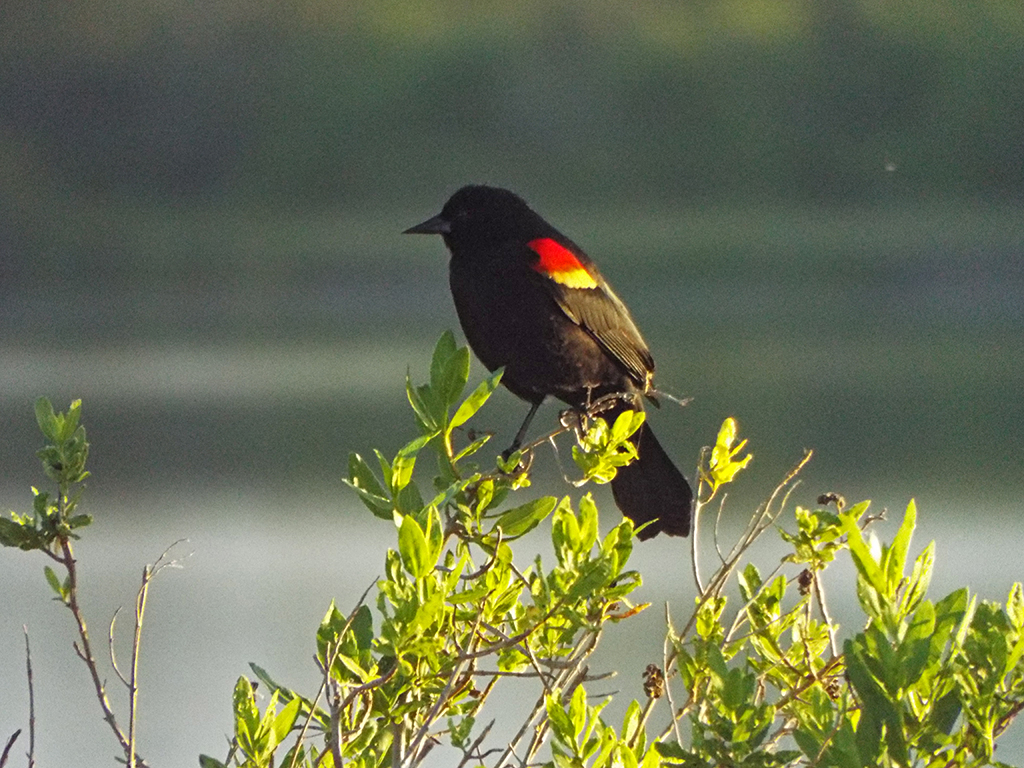
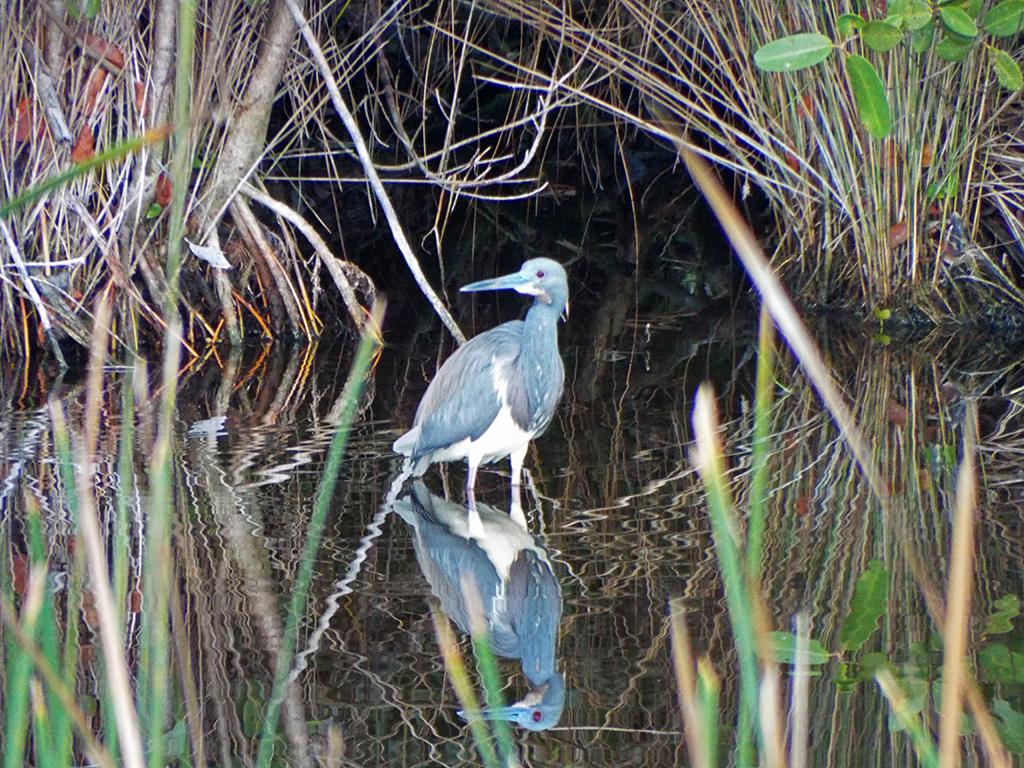
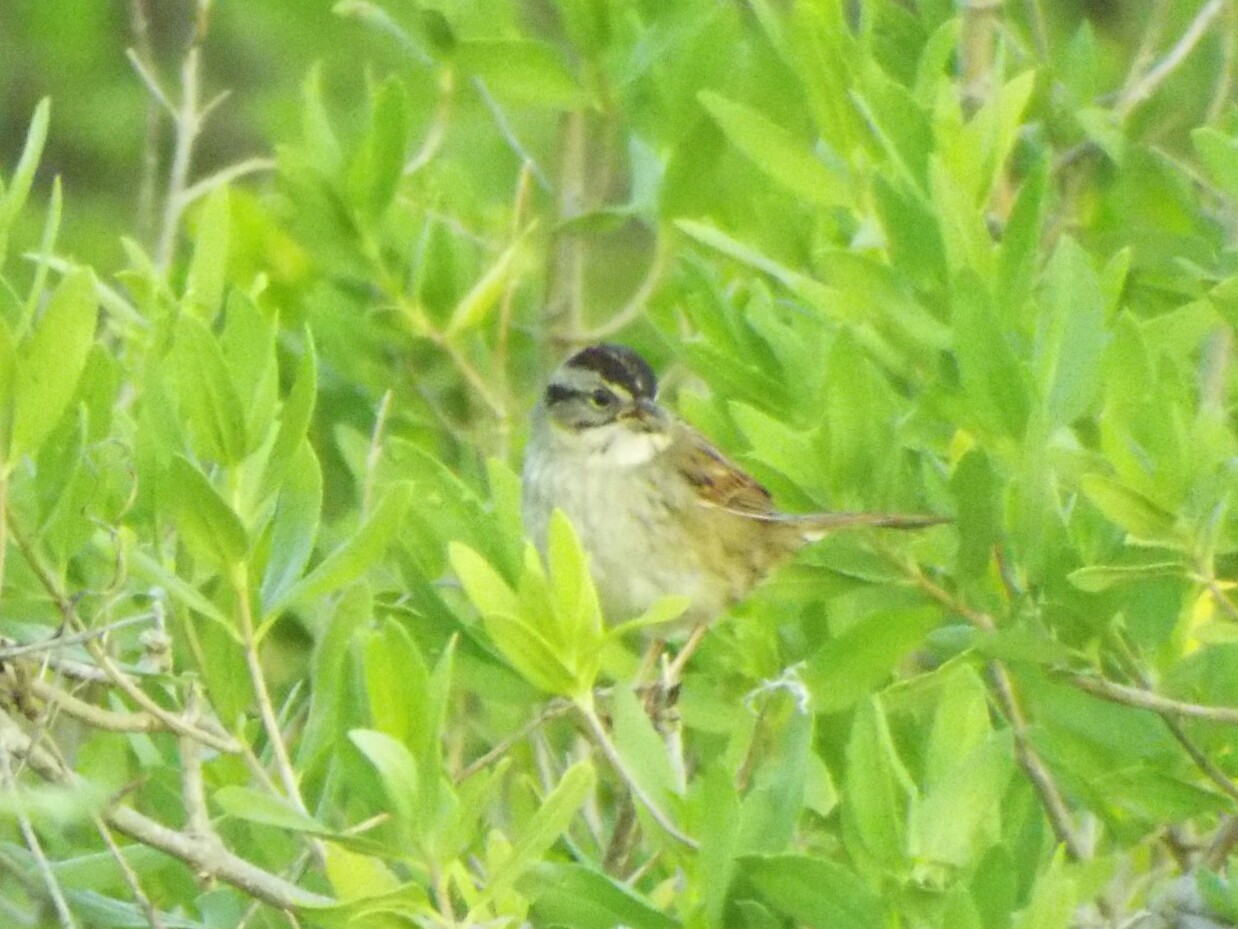
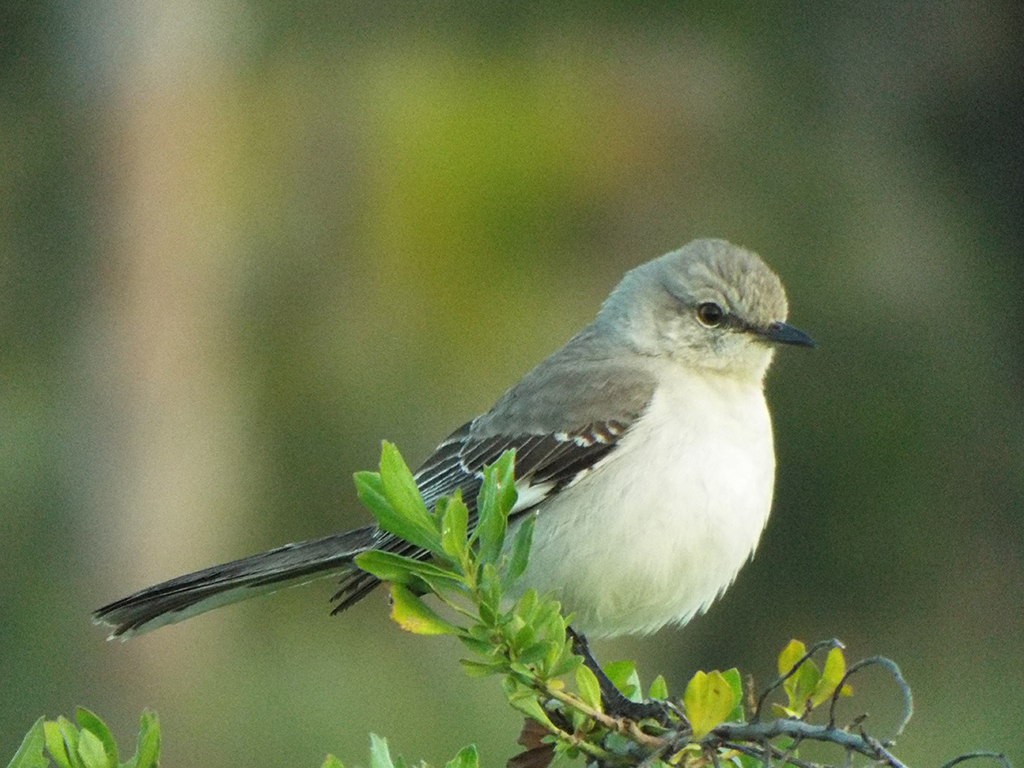
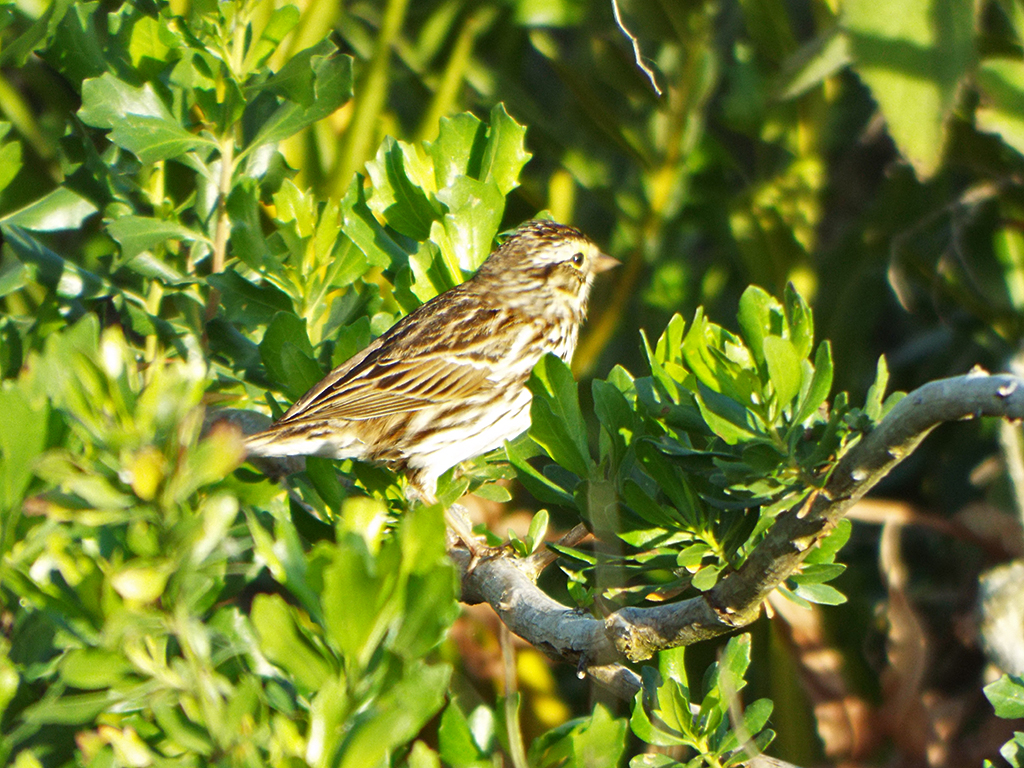
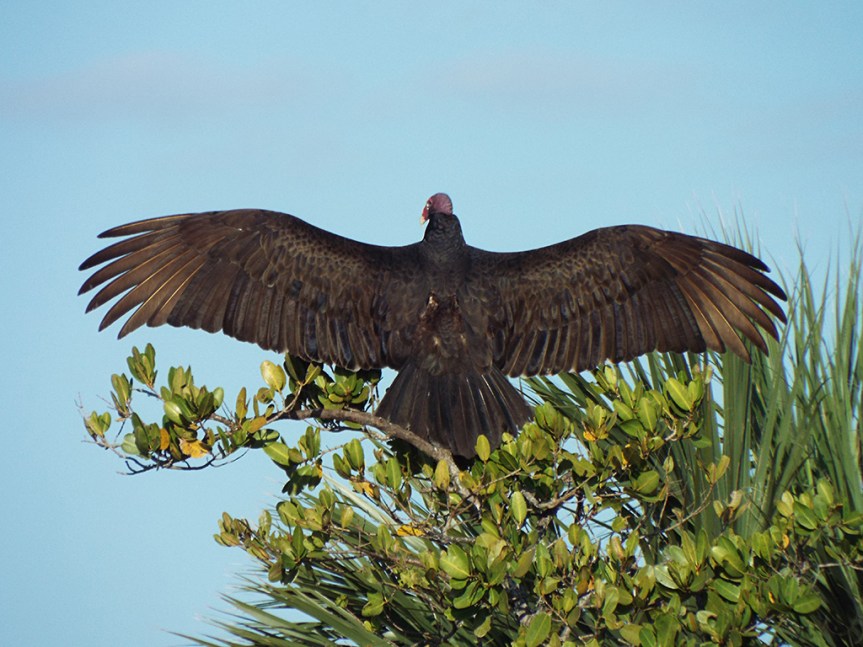
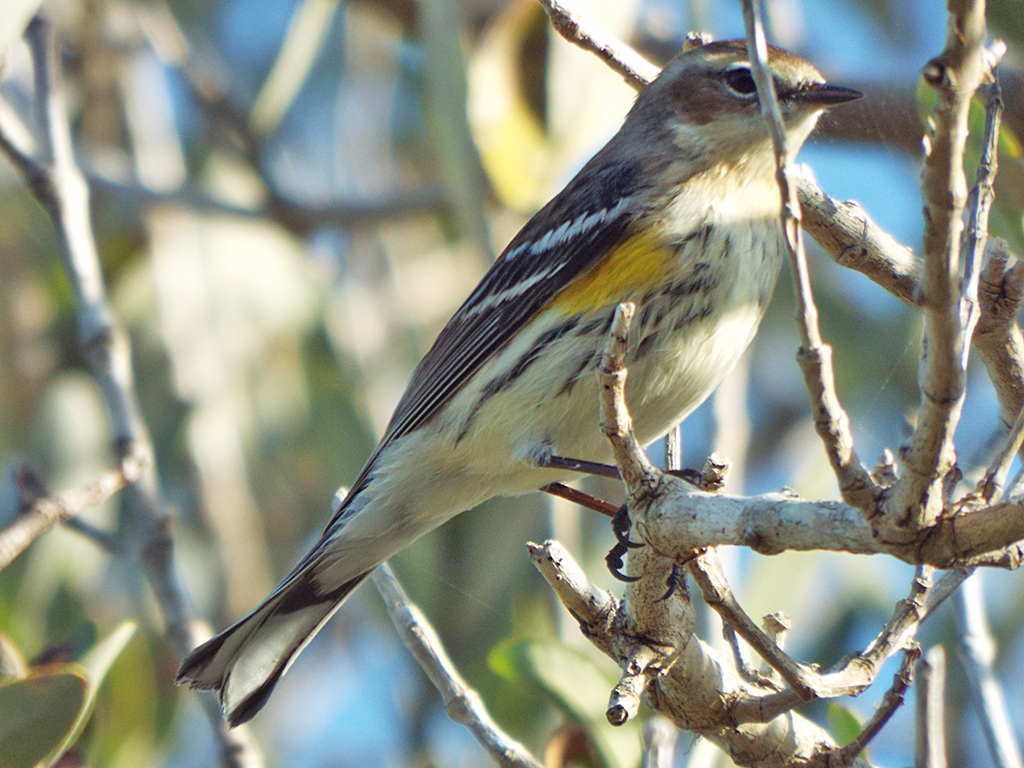
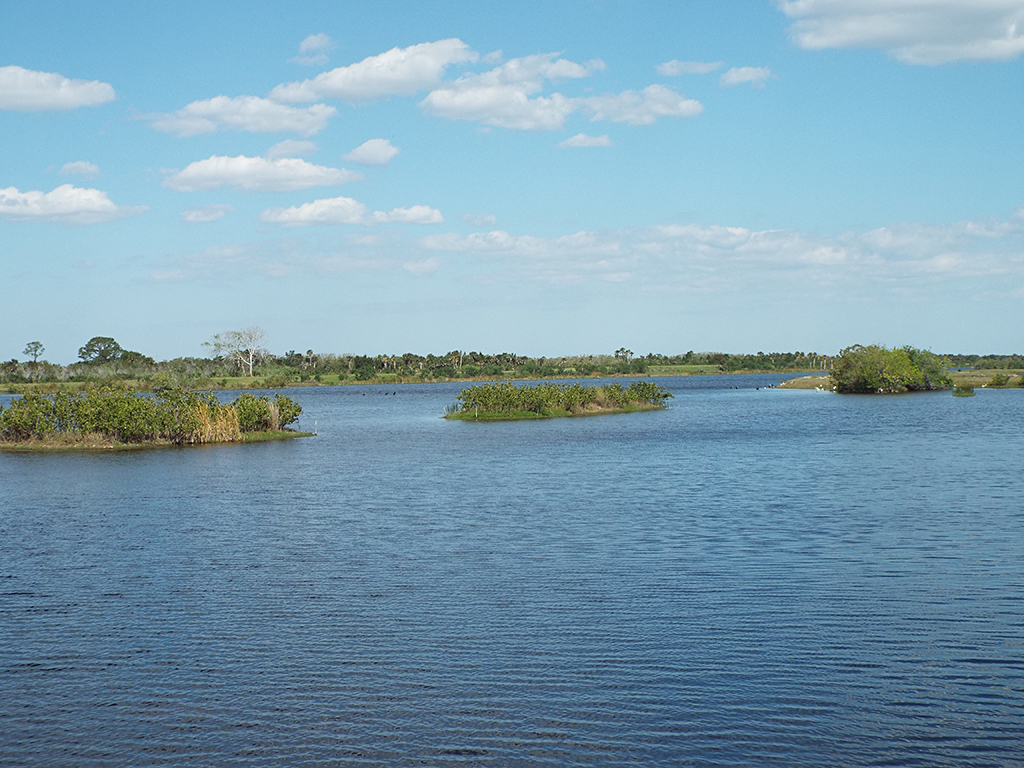
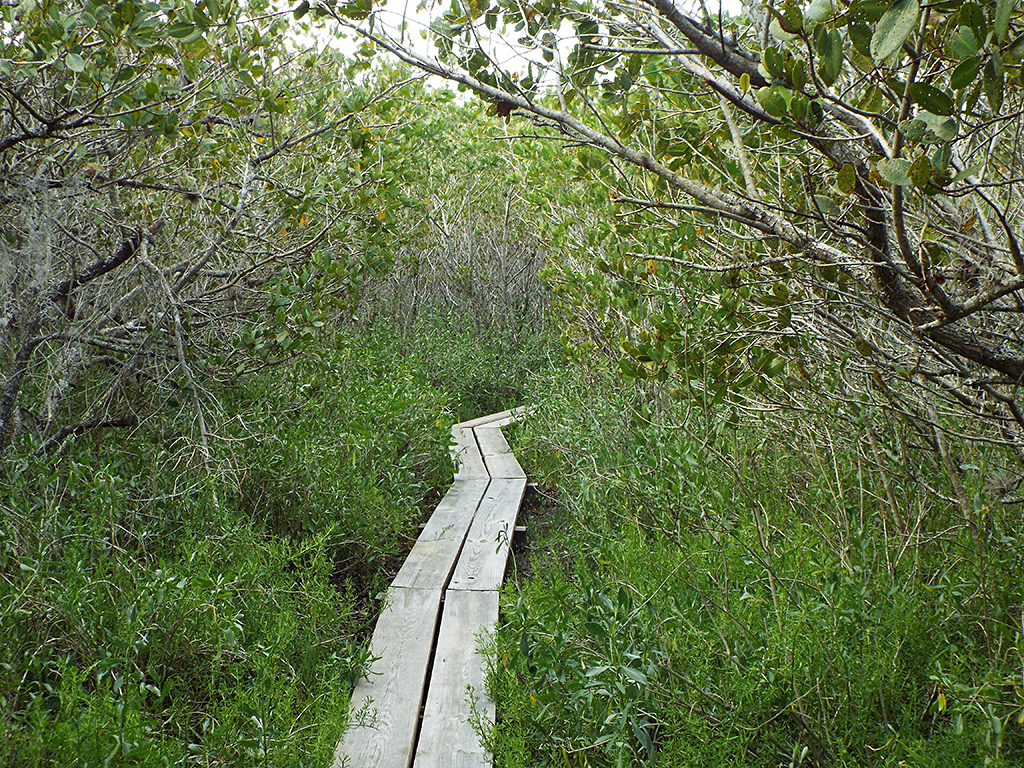
The north pond does support decent recreational fishing. There were very few alligators than usual.A male Redwing Blackbird, showing his epaulets. He was singing and displaying for a mate.Female Painted Bunting; one of very few green birds native to the US.Male Tricolored Heron in full breeding plumage. This individual is showing no throat stripe.This Swamp Sparrow almost had me fooled into thinking it was a White-throated Sparrow. You can tell it was a chilly morning by how puffy this Northern Mockingbird is.Savannah Sparrows are fairly common in central Florida, but it’s always a pleasure to see them.A Turkey Vulture using its large wing area to warm up for the day.Yellow-rumped Warblers are still hanging around. Soon they’ll be north, in their breeding range.It’s a little hard to see, but this breeding male Tricolored Heron is less blue than the one pictured above, and he has a white stripe from belly to chin.By late morning, it had warmed considerably, but the day was gorgeous.A raised wooden path provides dry access to a wildlife blind (with no wildlife to see today, sorry).
My thanks to Jim Eager for helping me properly identify the really blue Tricolored Heron. I had not realized the variation in breeding males, and had almost committed to calling the bird a Little Blue/Tricolored Hybrid!
Also thanks to the members of the Brdbrains e-mail list for helping me sort out the Swamp Sparrow identification. I tell you what, sparrow ID is HARD, even for experienced birders. If you struggle with these “little brown jobs”, don’t give up and know you’re in good company.
The transition into Spring continues, here in Florida. The wild weather roller-coaster some of my northern friends have been experiencing is more of a gentle ride here. Even so, summer-like (for Florida) temperatures have been happening, and the effect on Spring migration is being debated by birders and ornithologists. With the meteorological see-saw this winter, the departure of some winter residents seems delayed, at least in comparison to last year. There are still American Robins and Tree Swallows in the skies and trees; Hooded Mergansers are still swimming in the retention ponds, diving for who knows what.
In that spirit, I trundled myself down to St. Sebastian River Preserve State Park to try and find the “trifecta” of pine flatwoods birds: Red-cockaded Woodpeckers, Bachman’s Sparrows, and Brown-headed Nuthatches. Two of the three are endangered, but while relatively common in the southeast US, the Brown-headed Nuthatch does face habitat pressure in Florida, especially south of the Panhandle.
The park is divided into four sections: east-west by Interstate 95 and north-south by the C-54 canal (which drains the land west of the park and flows into the St. Sebastian River). The Red-cockaded Woodpeckers are generally found in the northeast section, which is home to a small breeding colony. These paths are named and marked as the “Yellow Trail” on the park maps. I hiked a loop from the easternmost parking area, north along the “Red-cockaded Woodpecker Link”, around to the west, then south toward the horse camp and back across to where I started.
Although it took a while to hike in to the heart of the NE preserve, I was serenaded by many male Bachman’s Sparrows along the way. Pine Warblers also had a strong presence in the park, flitting from tree to tree, even as a stiff breeze began to blow as the Sun climbed.
Sometimes this is the best view you get…
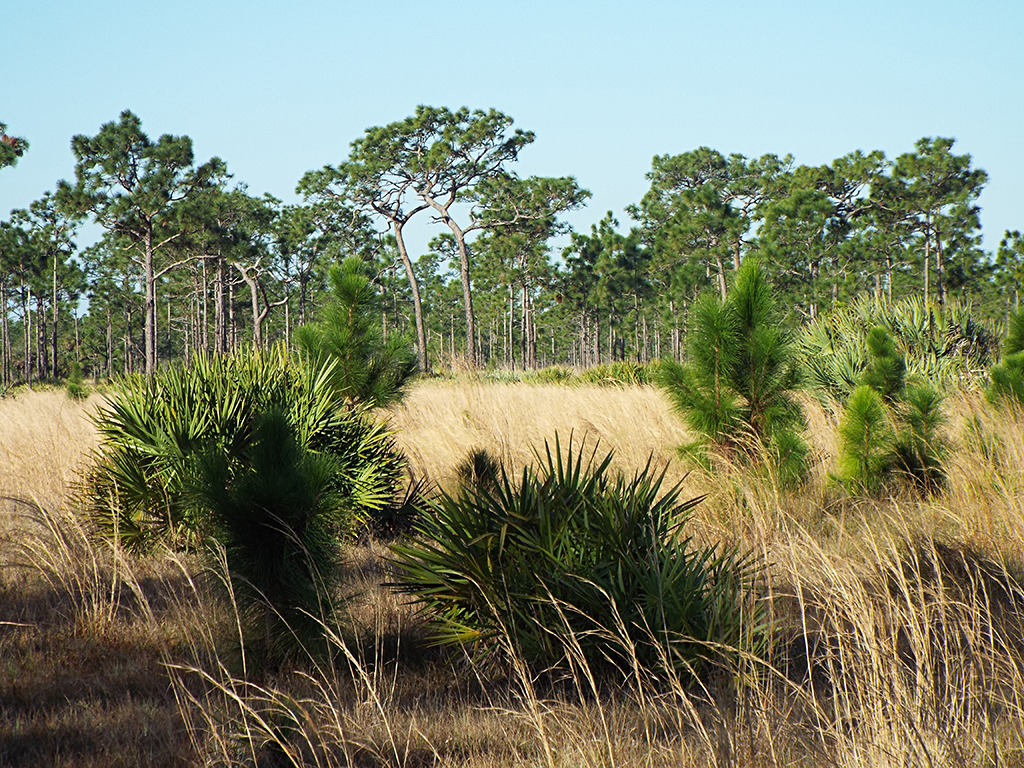
St. Sebastian River Preserve State Park is large enough that managed burns are done on various parcels every few years. That has resulted in a very healthy pine flatwoods habitat, as evidenced by the prevalence of wiregrass, instead of Saw Palmetto along the ground.
Some palmettos are alright in a pine flatwoods, but many residents (Bachman’s Sparrows in particular) prefer wiregrass.
There were also pockets of Brown-headed Nuthatches, but these birds are almost constantly in motion. Coupled with the rising wind, photo opportunities were non-existent.
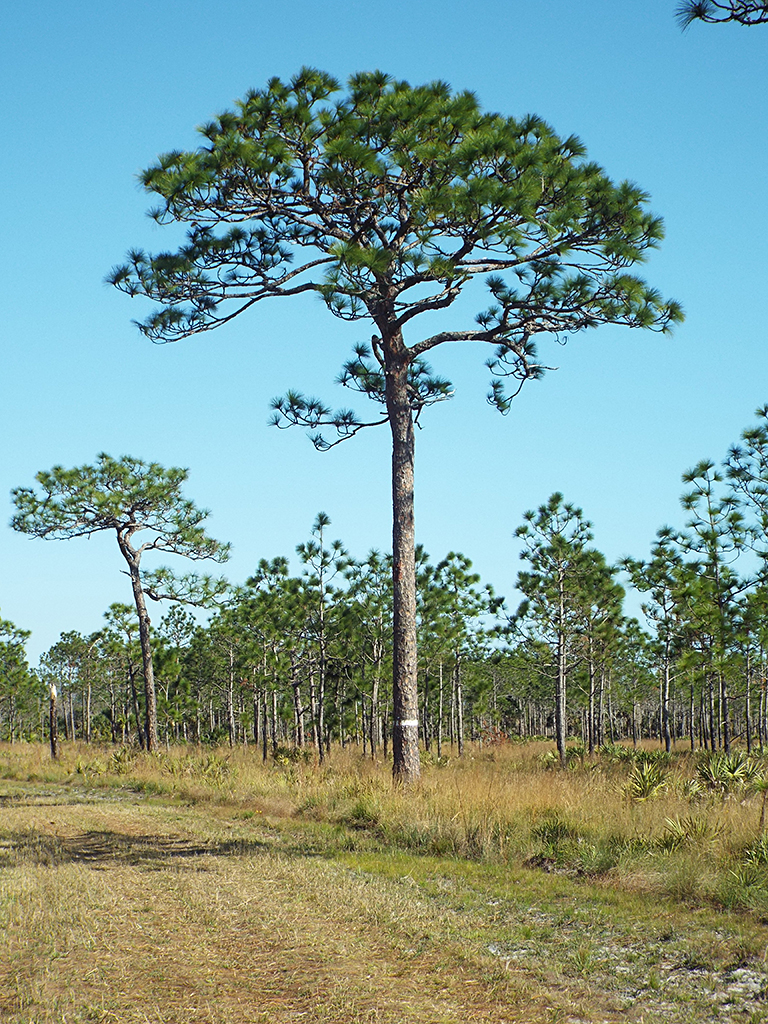
I was happy to have gotten 2 of the “big 3” to that point, but really wanted to get some decent photographs. As I walked along the “Red-cockaded Woodpecker Link” trail, I came across the various nesting trees, so marked with a white stripe.
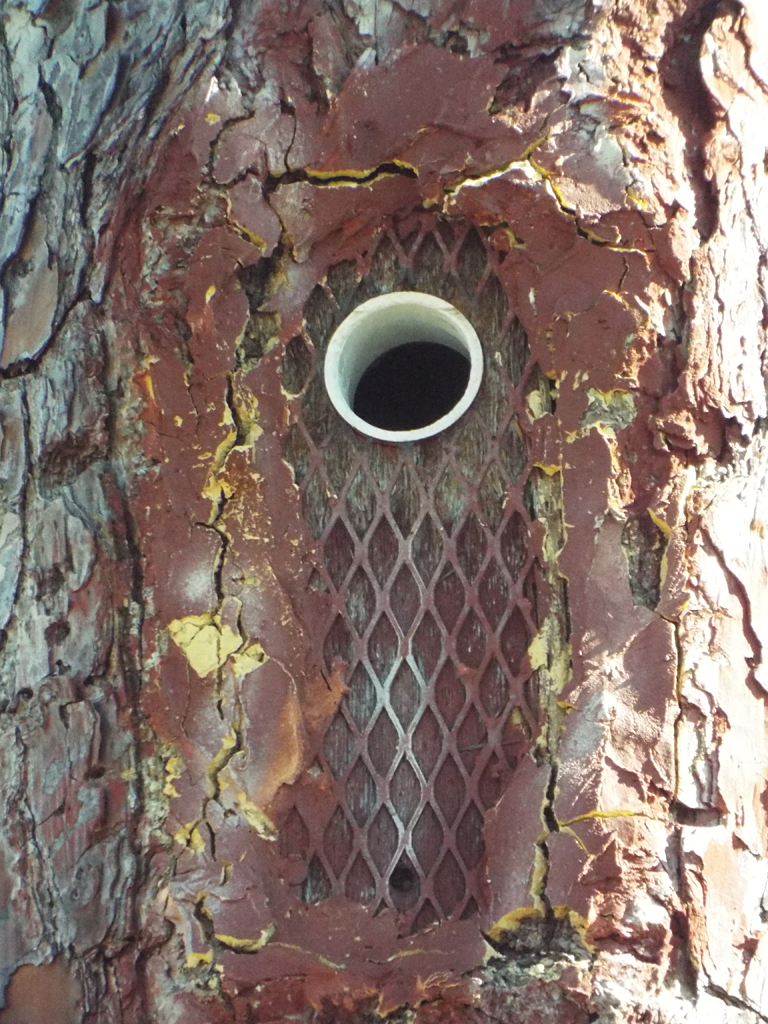
RCW nest tree.Although some of the “stucco” front has come off, this is a functional nest box, likely in use.
Sure enough, nearby were at least one pair of Red-cockaded Woodpeckers (RCWs, as they are often called by birders). The birds have a distinctive call note, which they use to stay in almost constant contact and I heard them long before I saw them.
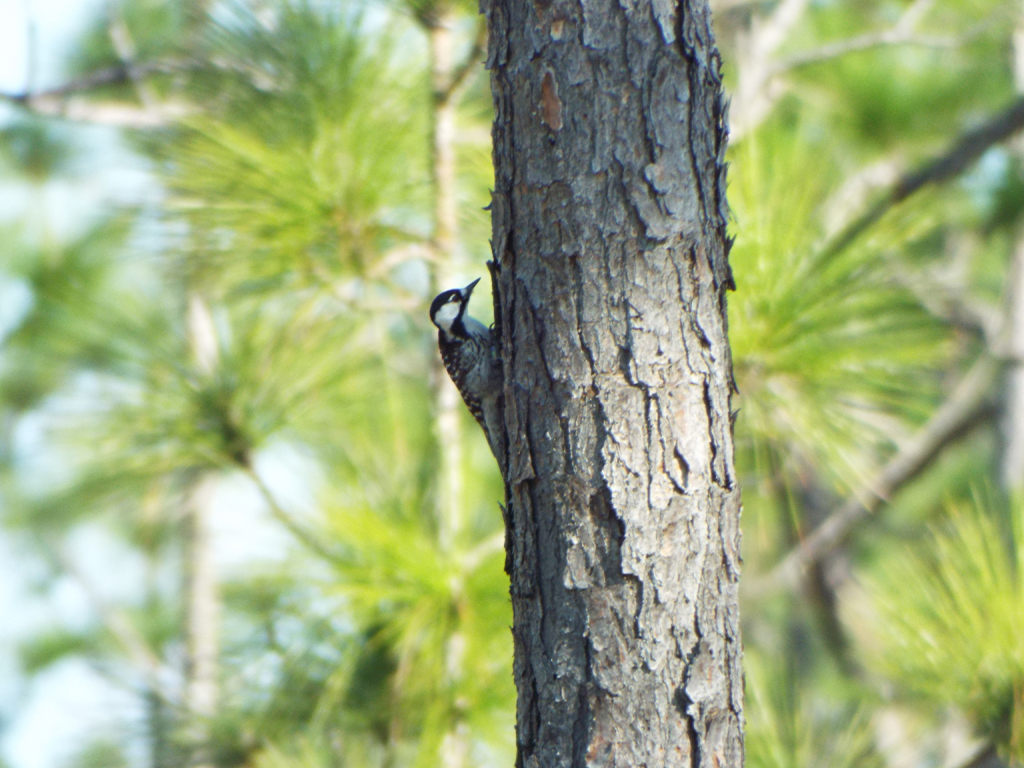
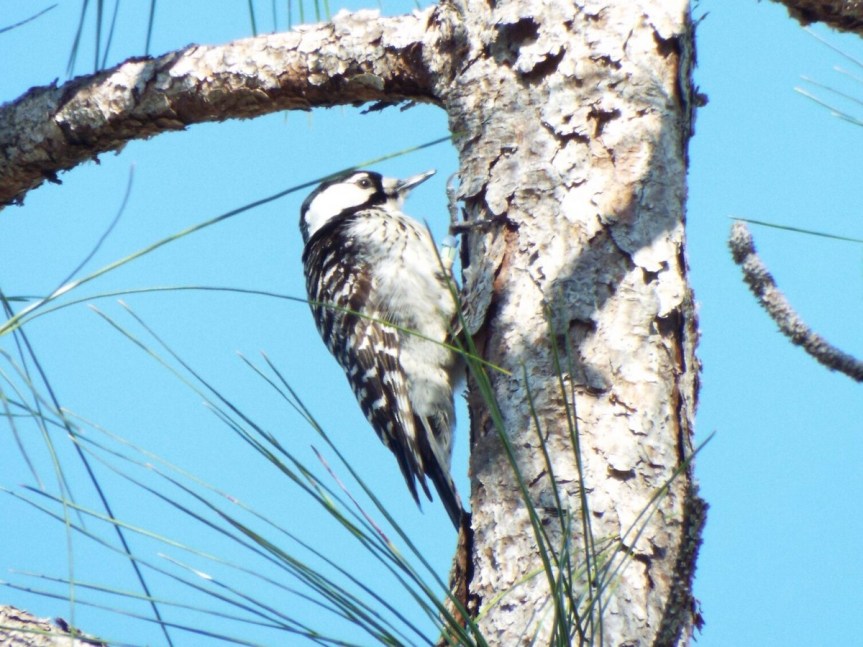
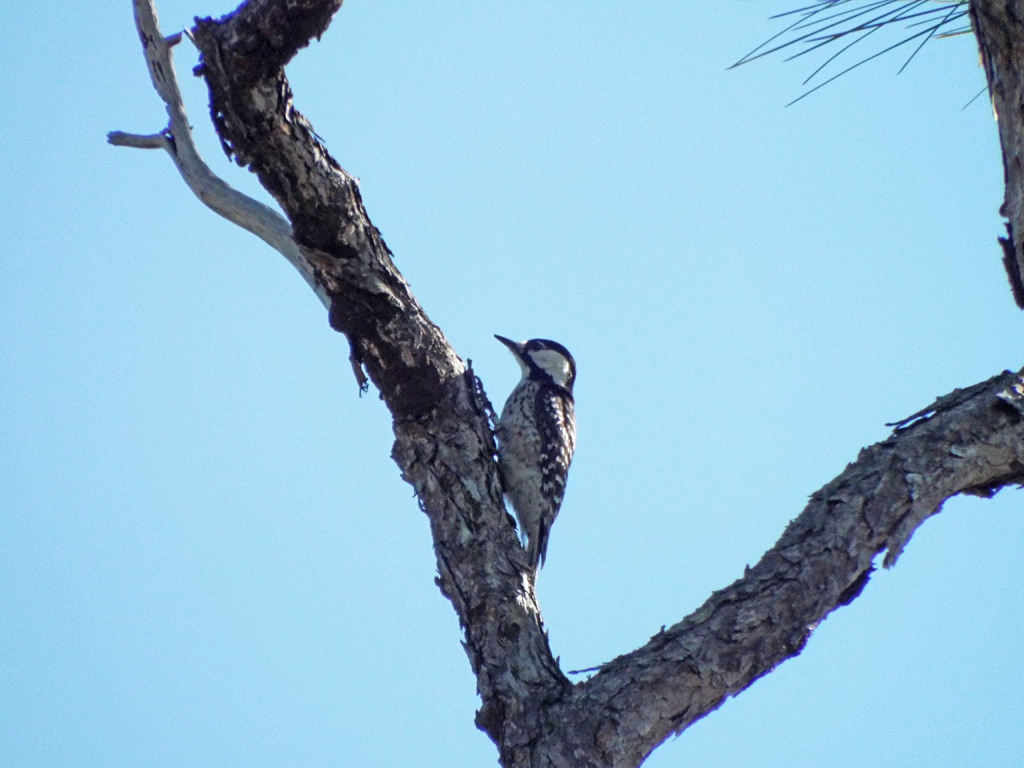
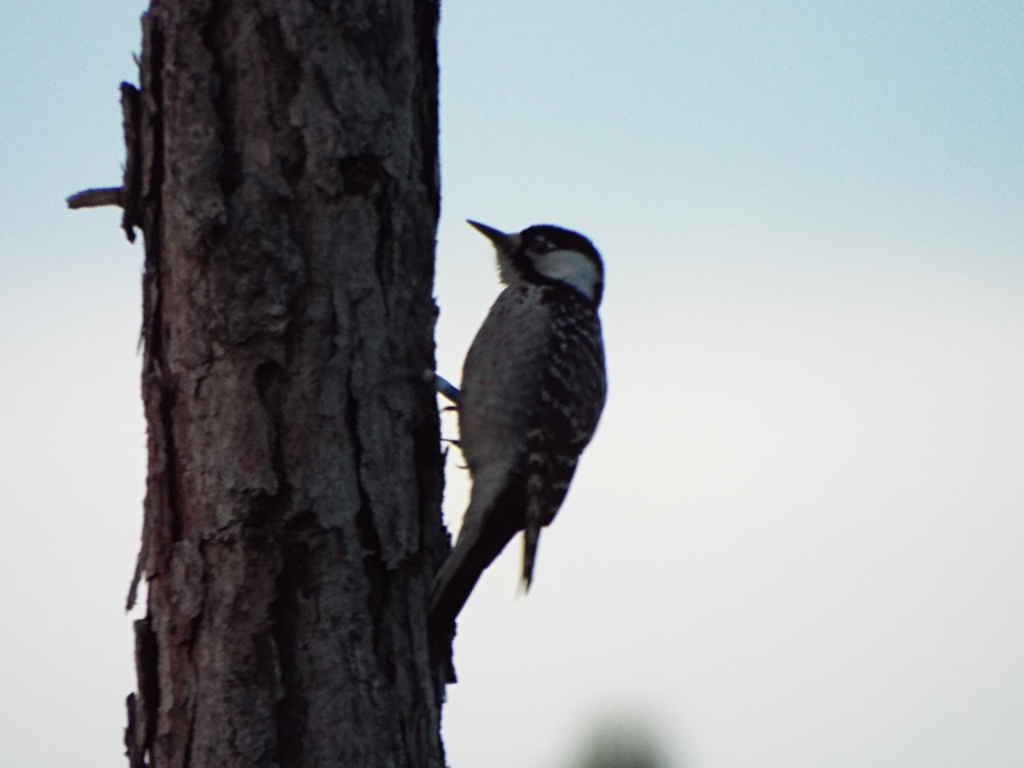
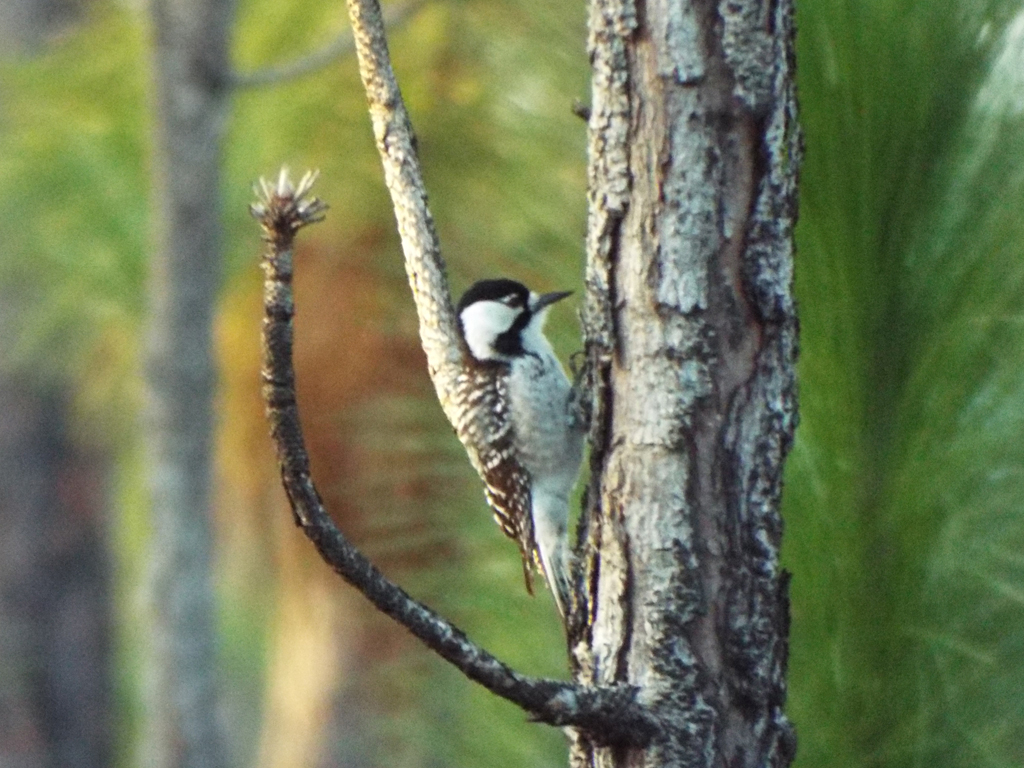
RCWs will often fly to the base of a tree, then work their way up, looking for insects.Like all woodpeckers, RCWs use their stiff tail feathers to help prop them up against the trunks of trees.This bird was near the top of a tree, ready to fly out and across to the base of another.
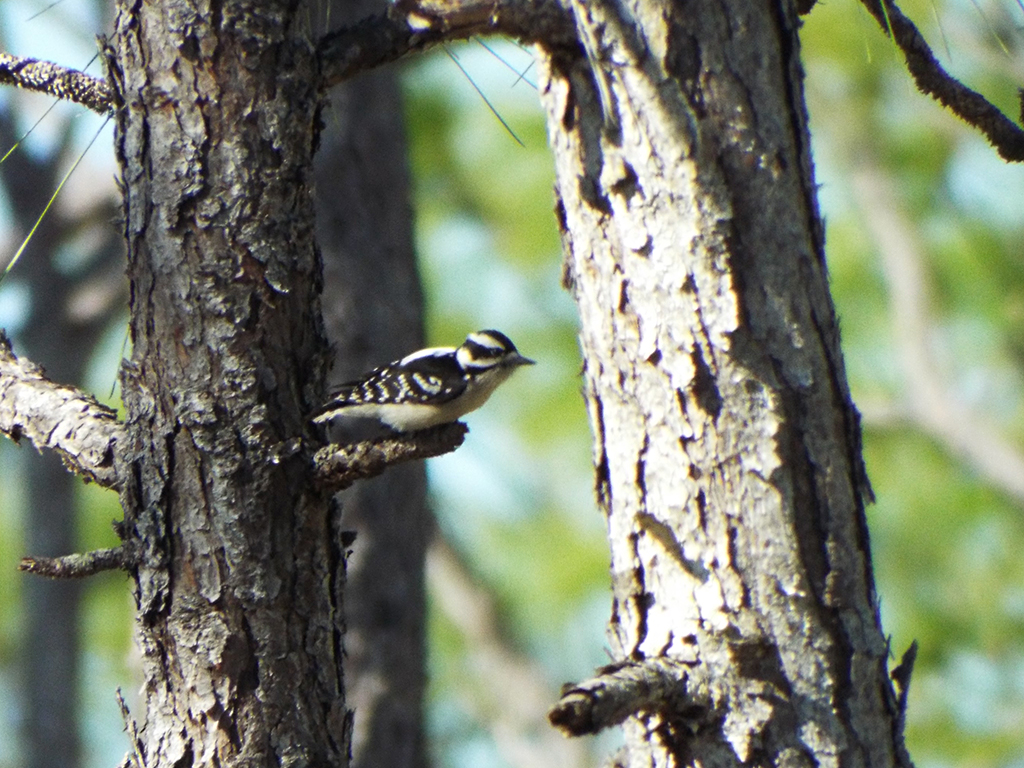
In addition to the RCWs, the park had numerous Red-bellied Woodpeckers, a few Downy Woodpeckers and, what is becoming increasingly rare, a Hairy Woodpecker. The reasons for the Hairy Woodpeckers’ decline isn’t exactly known. Although almost identical in markings to the Down Woodpecker, the Hairy is about the size of the Red-bellied. It’s possible Red-bellied Woodpeckers (as well as European Starlings and House Sparrows) are out-competing Hairy Woodpeckers for nest sites, but there could be other factors, too.
A Downy Woodpecker about to take flight.
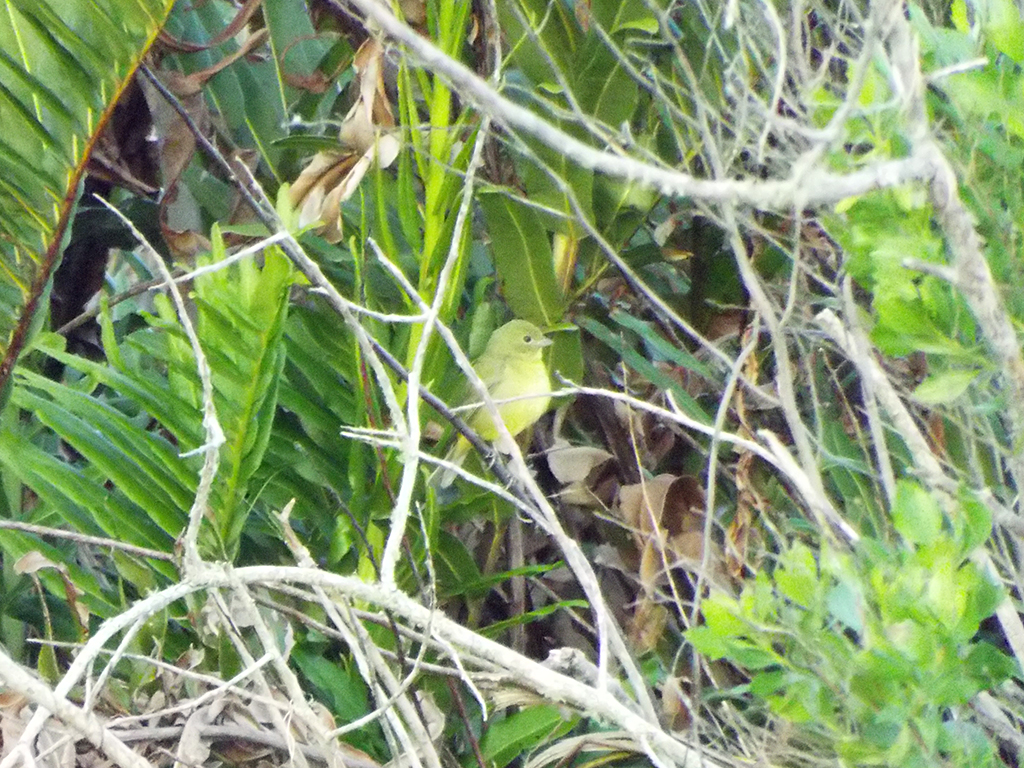
As I passed the 1/2 way point in my hike, I came upon a large flock of mixed warblers on the ground a few meters ahead of me. The flock consisted of Pine Warblers and Palm Warblers, either catching aquatic insects in the water at the side of the path, or taking sips of water. As I was bringing my binoculars up to my face, a flash of yellow caught my eye to the right. At first I thought I had glimpsed a very yellow Pine Warbler, but when I got the bird in my binoculars I saw it did not look like a Pine Warbler.
Mentally, I started noting location, shape, and movement, then field marks from the head down. The thought process went something like this:
“Just at or above eye-level in some palm scrub near some hardwoods.”
“Bright yellow front.”
“Yellow on face with some black/dark near eye.”
“Dark gray or black necklace mark, more defined in the center of the chest”
“Bird has turned sideways to me.”
“Faint light eye-ring.”
“Gray upper parts, no wing-bars.”
“White under-tail coverts.”
Then the bird flew out of my field of view and I was unable to relocate it.
This combination of field marks and behavior point to a Canada Warbler. That was a life bird for me (I’ve had unconfirmed personal sightings before, but this time I got a really good look to feel comfortable claiming the ID), and a rare find in Florida, especially this early in the Spring! I believe the bird was either a female, though it could have been a male that hasn’t molted yet or a very worn bird.
After that encounter as the heat of the day built (it was unseasonably warm), the birds had quieted down a bit. I did see a few distant glimpses of Eastern Bluebirds, had the occasional hawk overhead, and heard several more Bachman’s Sparrows.
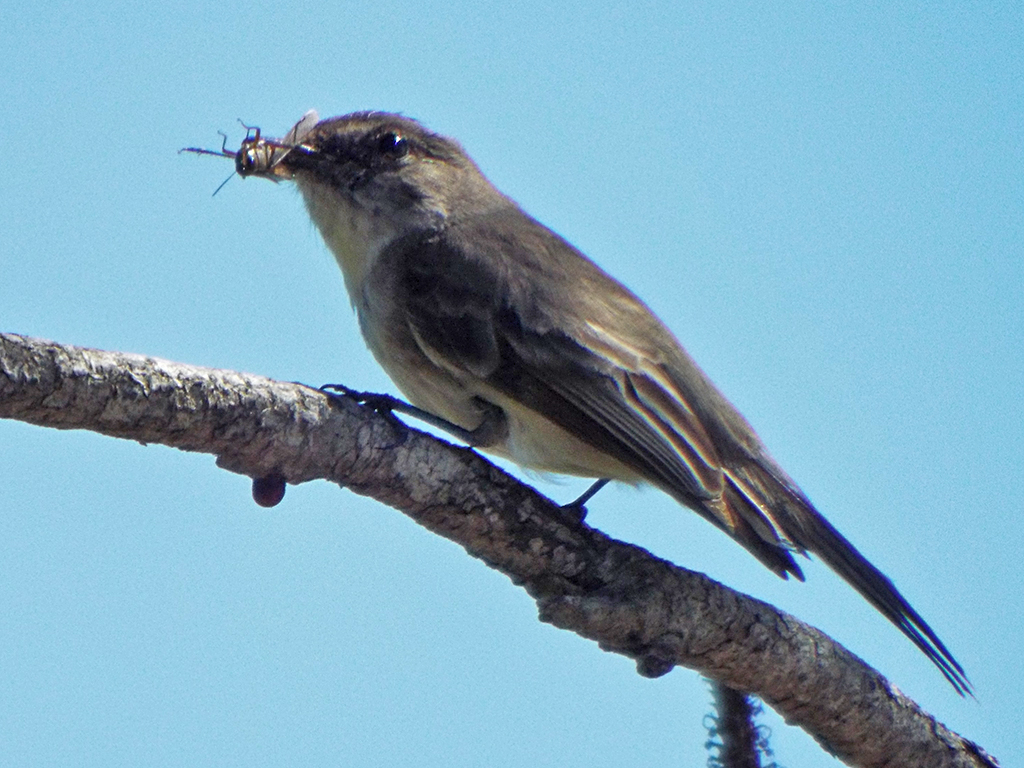
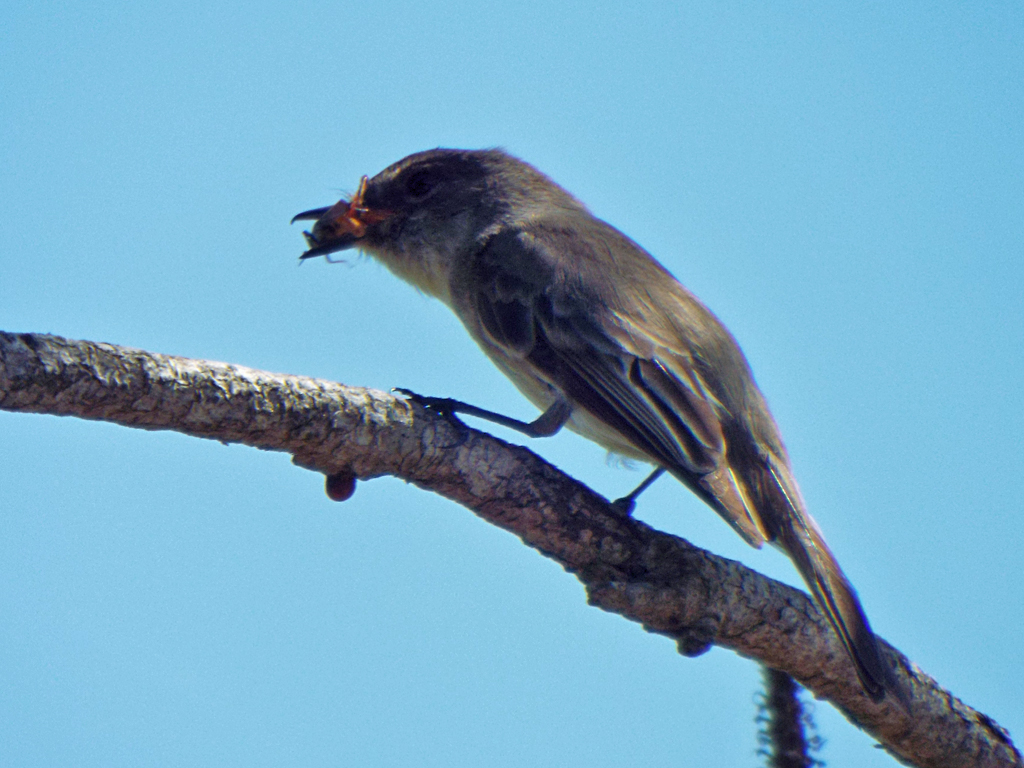
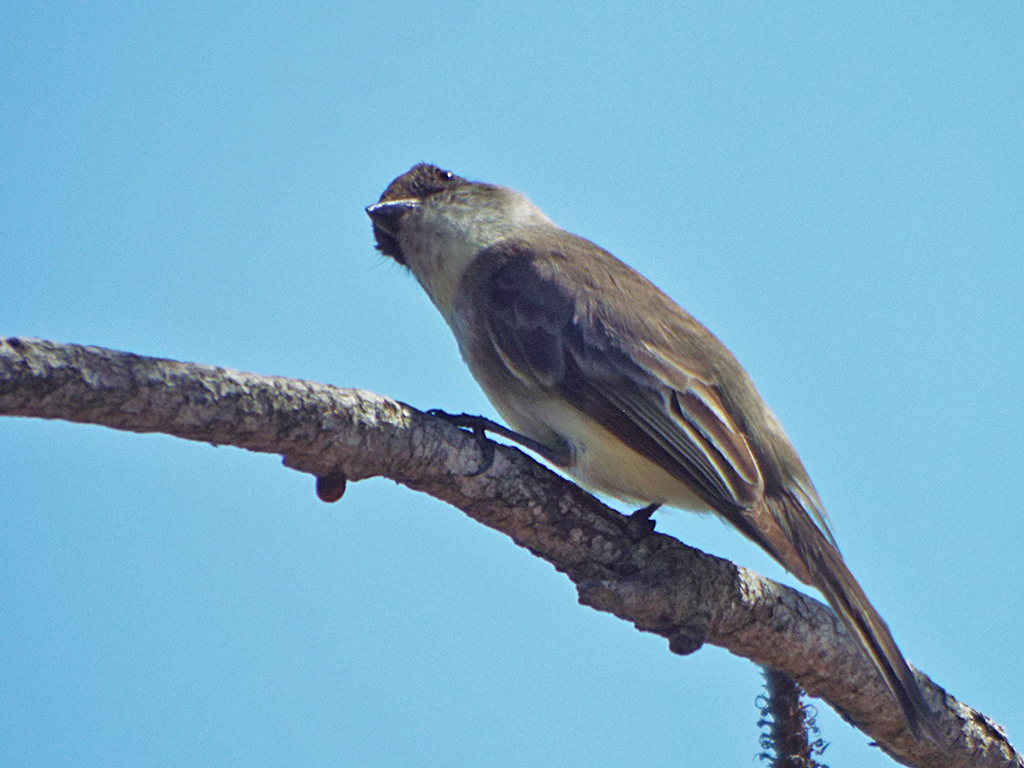
I had unsuccessfully tried to get some photos of perfectly posed Eastern Phoebes, just to have them dart off as I depressed the shutter. Finally, near the trailhead as I was exiting the trail, I managed to get quite close to a phoebe that was enjoying a bit of lunch.
Who doesn’t love live grasshopper for lunch?Down the hatch!All gone!
This was the longest hike I’ve done in a while – over 9.5km (almost 6 miles) – so I expected to be dealing with a bit of soreness. Thankfully, so far, just my feet have suffered from some tightness and a little chafing. St. Sebastian River Preserve State Park is a great place for some species not easily found in Brevard County, so it’s well worth a visit. I suggest planning a hike or a birding adventure before the heat of summer, and get an early start. The park officially opens at 8:00am (though you might find the gate open a wee bit early sometimes). There are trails at the other three quadrants of the park, too, but each one could easily fill up a day of walking.
It was a good day. I saw four rare or endangered birds (one of which I never expected to see) and got to unwind before another work week. It won’t be long now until the songbird migration makes it way through Florida. Stay tuned for more adventures.
The Helen and Allan Cruickshank Sanctuary is a small but important conservation property here in Brevard County [map]. As their brochure says:
The Helen and Allan Cruickshank Sanctuary was originally part of a larger span of high, dry scrubby habitat. Whenever possible, the EEL Program acquires land to help connect existing natural areas. However, as landscapes are developed with buildings and roadways, natural habitats become fragmented (broken up and isolated). Because scrub is favored for development, the Cruickshank Sanctuary has become an “island” in the midst of a developed landscape.
You can learn more about Brevard County’s EEL ( Environmentally Endangered Lands) Program by visiting their website.
As a scrub habitat adjacent to residential development, near the Indian River Lagoon, a diversity of species is to be expected, and that’s what I saw, including a heron fly-over. There were some Tree Swallows near the entrance, and a smattering of American Robins (small groups of robins were also seen, here and there, throughout the morning).
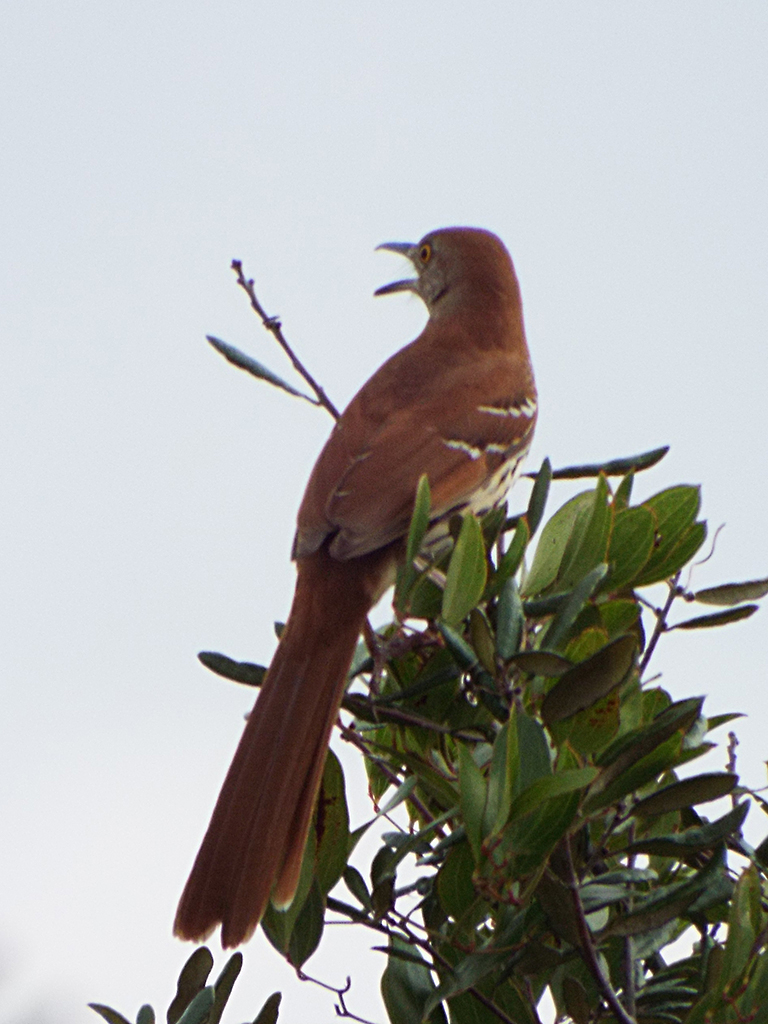
As with the Northern Mockingbirds around the county (and the state), the thrashers are singing in preparation of mating and reestablishing their territories. A sure sign of spring.
One of several Brown Thrashers I saw throughout the morning. Note the rich, russet brown of the back and wings.
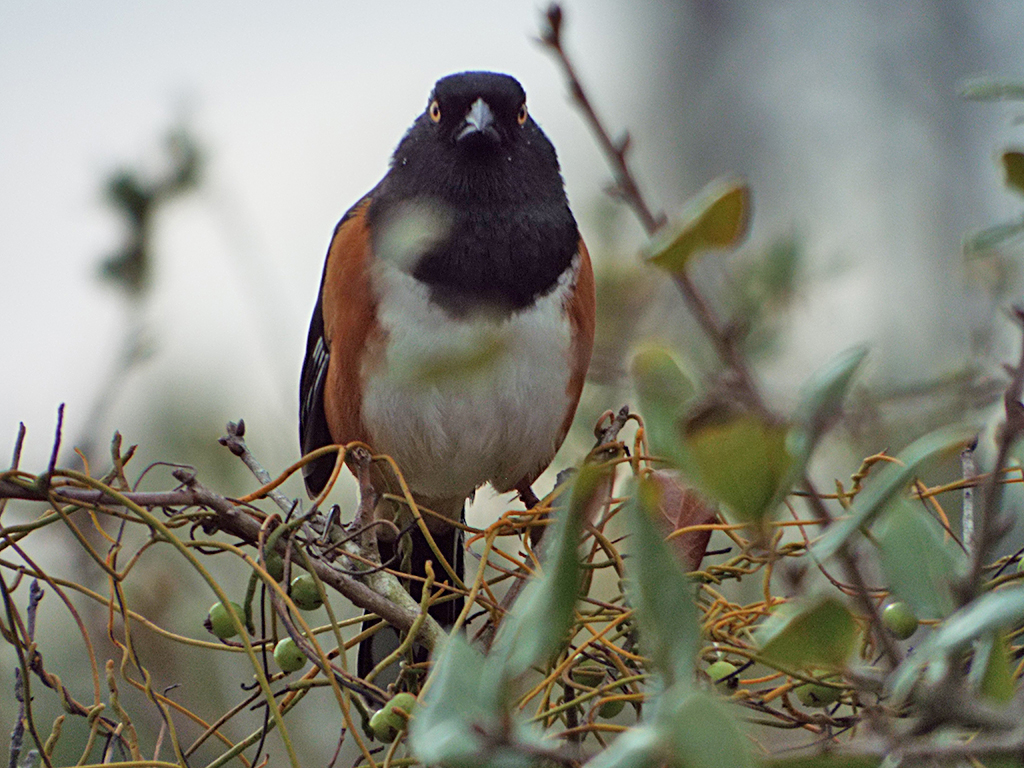
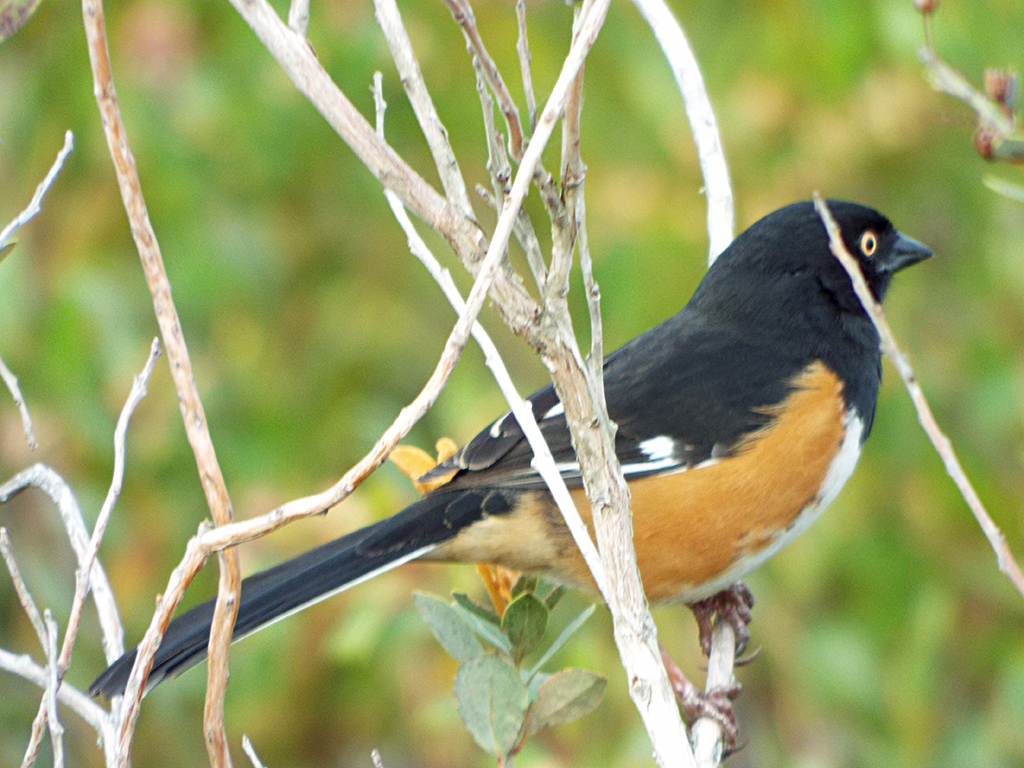
Male and female Eastern Towhees were scrambling around in the underbrush, scratching for insects in the leaves and other debris. The birds were calling out to each other a lot, with their “chewINK” calls, but very little singing by the males. The males were more bold and inquisitive when I approached a few times, popping out into the open to check out what I was doing, and sometimes scolding me.
“Hey! Get off of my scrub!”Before the mid 1990s, Eastern and Spotted Towhees were considered a single species, “Rufous-sided Towhee”. Here, you can see why that was an apt name.
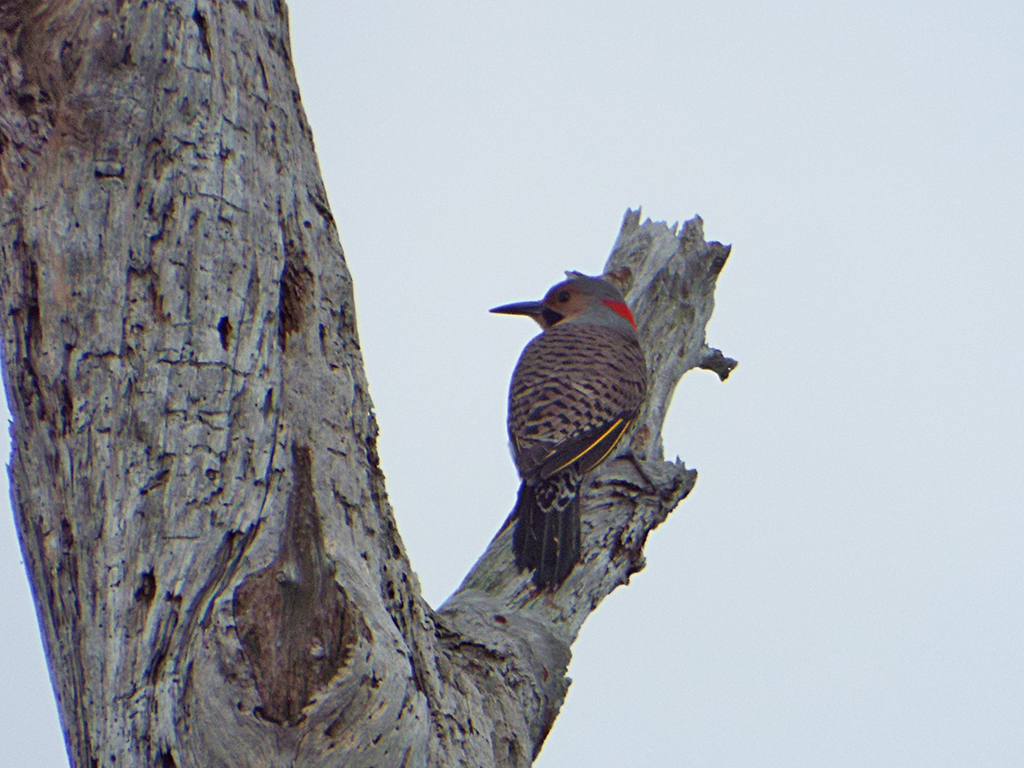
The Sanctuary is a great home for various woodpeckers, including the elsewhere-rare Northern Flicker. I heard it mentioned during the Space Coast Birding and Wildlife Festival that Northern Flicker numbers are declining, with the exact cause not yet known (though habitat loss and development pressure are always likely candidates). In addition to several flickers, I also saw Downy, Pileated, and Red-bellied Woodpeckers. A Red-headed Woodpecker was reported earlier in the week, but I did not find that bird during my visit.
Even in bad light, you can see the yellow feather shafts that gave this species it’s former name “Yellow-shafted Flicker” before it was merged with the “Red-shafted” variety into the Northern Flicker. A reminder that genetics aren’t always as ordered and simple as we think.
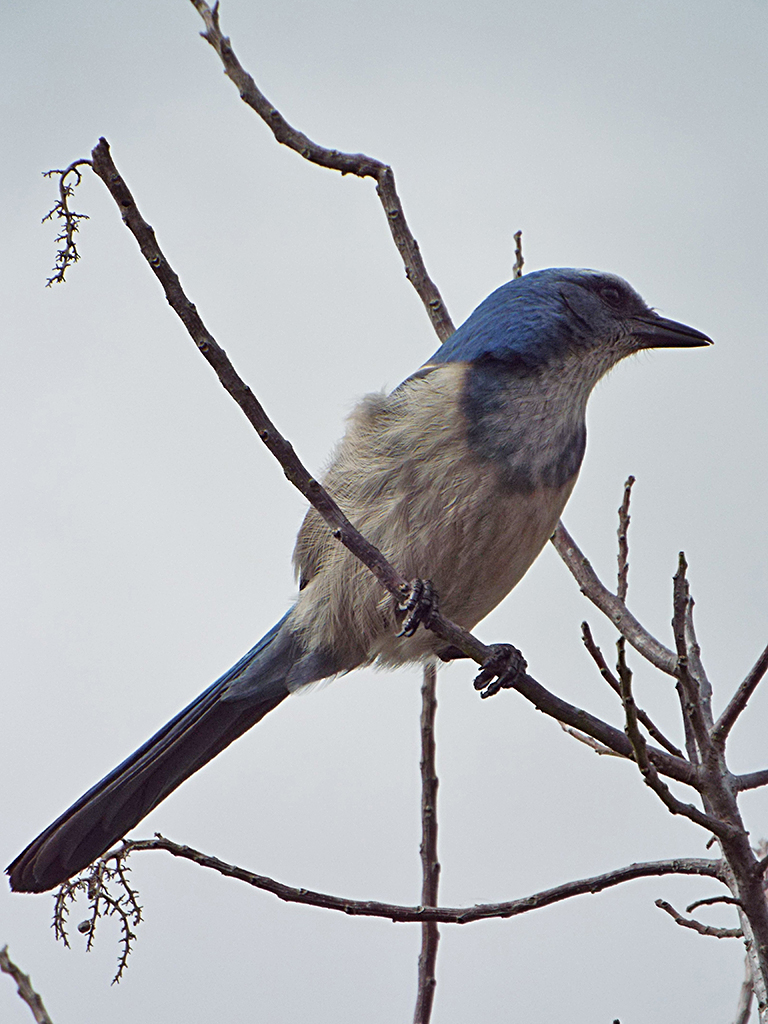
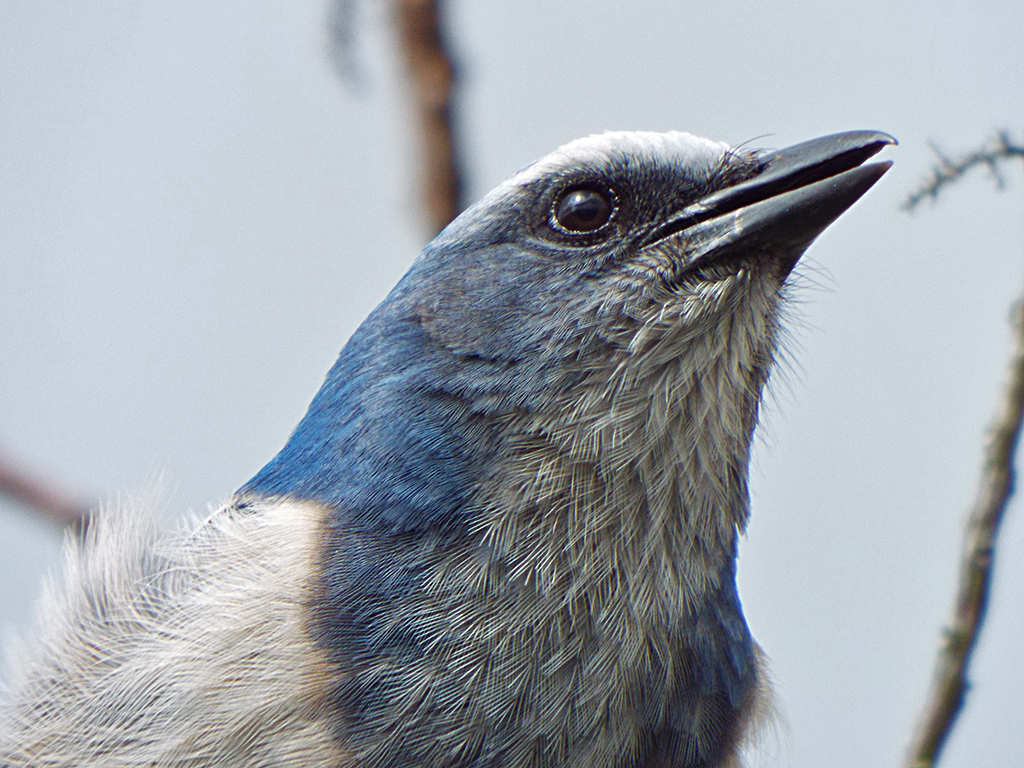
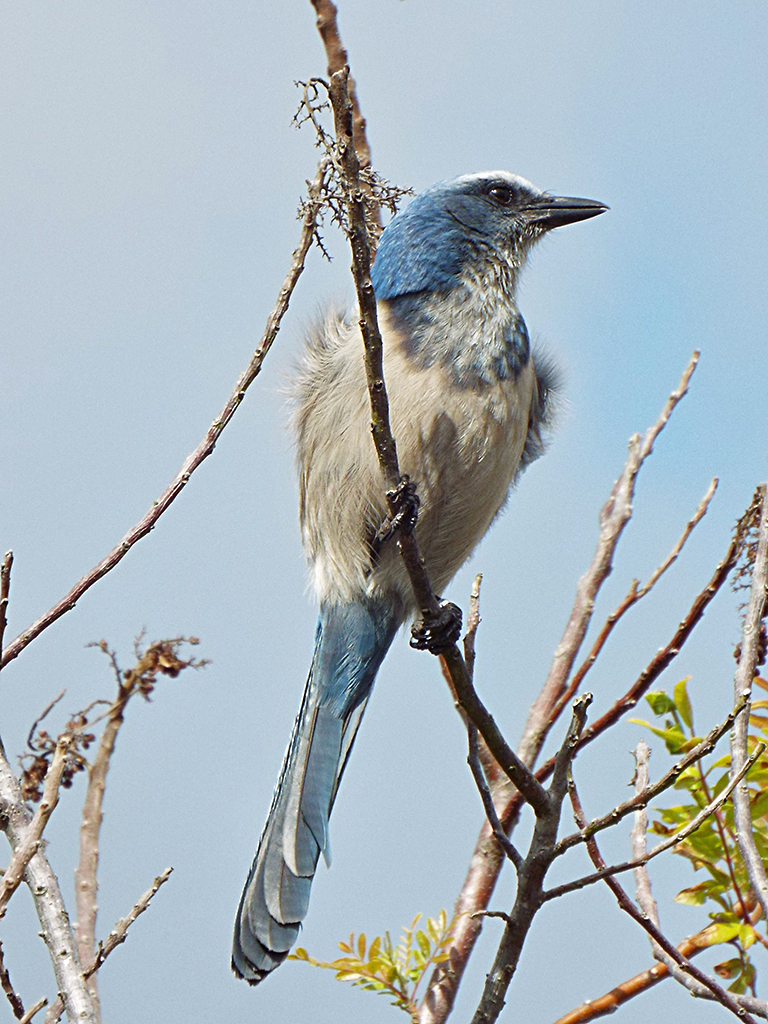
Of course the star “attractions” of the Sanctuary are the Florida Scrub-Jays.
As usual, one of two birds will perch up on higher branches to act as look-outs for the rest of the family group as they forage and fly around their territories.
Many of the jays are banded, as researchers use these birds (and other scrub-jays on other properties) to research and conserve this endangered species. Naturally inquisitive and bold, this long-running research has also made the birds acclimated to human presence, making them approachable and easily photographed.
Long-time readers of my blog have seen some of the photos of Florida Scrub-Jays perched on my head. The birds look for people to hand them food (usually peanuts), as researchers had trained them to make it easier to band and examine the birds, and returning visitors used that “trick” to get close and personal with the jays.
Much of that has stopped, and with education and signage, the birds seem to expect handout less, and not a single bird landed on my head this time.
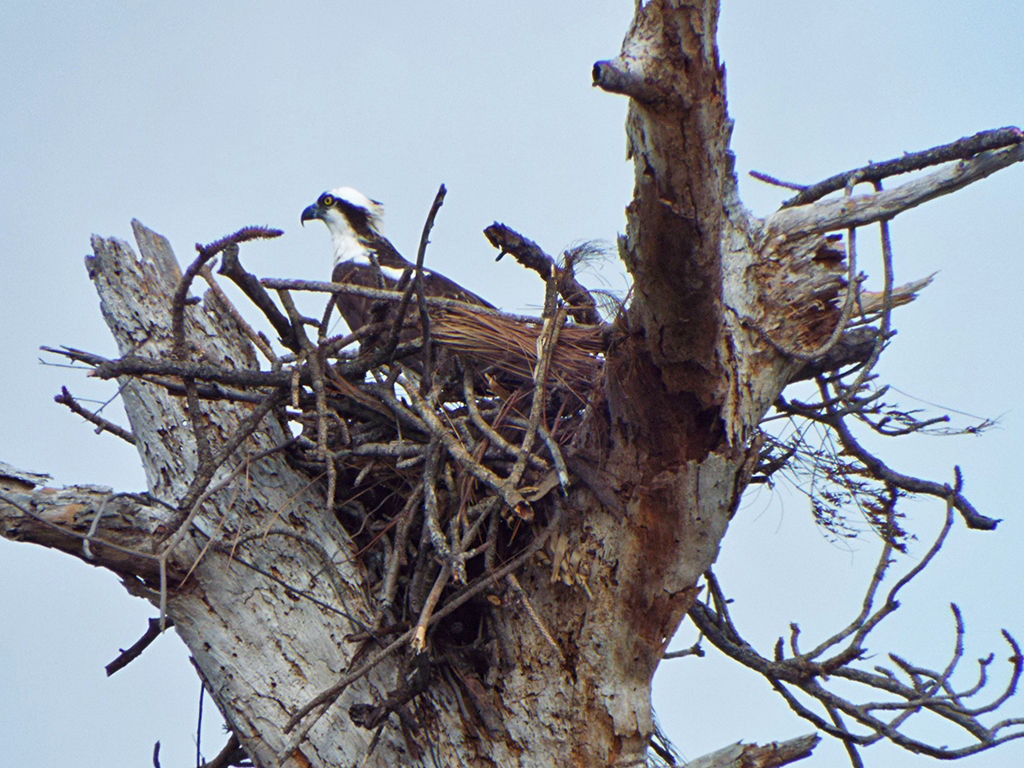
This bird was warily watching a pair of Ospreys build a nest nearby.
There was an Osprey pair building a nest, carefully placing large twigs and branches, one by one. Although Ospreys are fish eating raptors, small birds and other animals are always careful to watch for anything hawk or eagle-like in their skies.
There had been a largely complete nest here last year, but winds (likely from Hurricane Matthew) knocked it down.
After placing some branches another Osprey couple approached. There was a brief fight over the nest site, with the building couple chasing the others away.
Meanwhile, the scrub-jays looked on and continued on their business. There were other raptors around, including a Red-shouldered and a Red-tailed Hawk, but they did not seem interested in the jays.
Another sentinel.
I also scared up a flock of mixed sparrows into some scrub, where they lingered for a few minutes, allowing me to get some reasonable looks at them. There were Savannah, Field, and Chipping Sparrows, as well as two rare Clay-colored Sparrows.
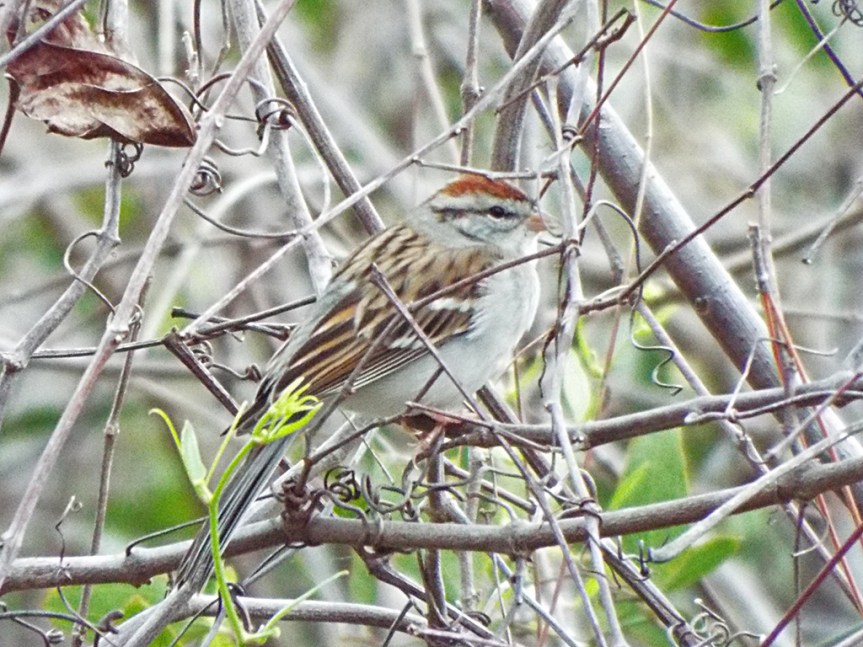
One of the Chipping Sparrows, with the distinctive rusty cap and black eye-line.
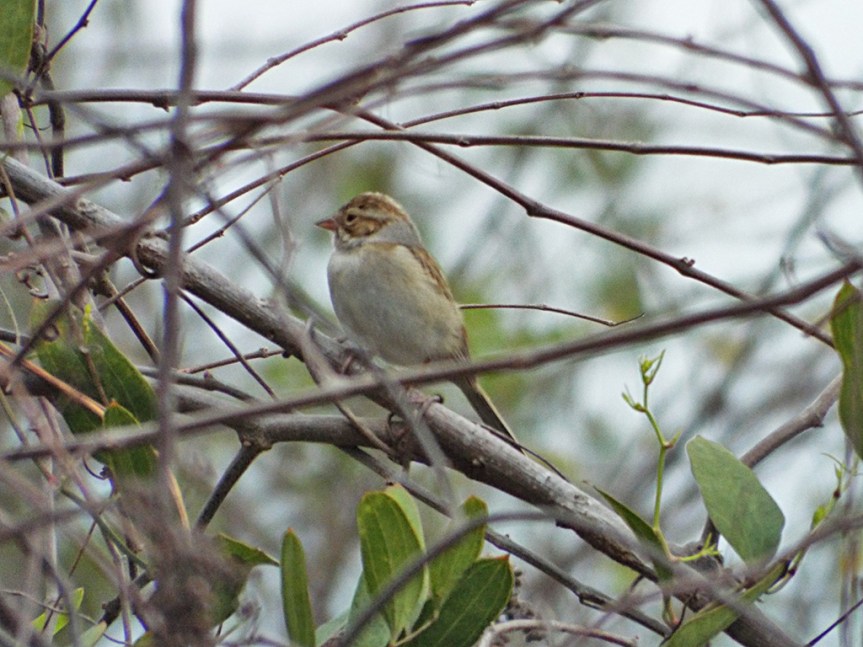
Clay-colored Sparrows are rare visitors to Florida. They breed in the north-central United States and south-central Canada and winter in Mexico. According to published information, they like to stick to scrub and brush along field edges, even in winter, so finding it in a scrub sanctuary, surrounded by residential development made this species a nice find.
Clay-colored Sparrows have a bold cheek pattern and darker grey collar, on an unstreaked breast, which help identify them.
Most of these sparrows will soon be departing for their breeding grounds, well north of here. Their presence, along with the Osprey nest-building and increased singing and displaying of resident species indicates that we’re on Spring’s doorstep.
For those who like to follow along with eBird, here’s the “official” list.
I haven’t been posting links to my eBird lists lately, but I think there’s some value to making that information more easily available, so I’ll start doing it again more regularly.
After wrapping up my hike at the sanctuary, I did a quick stop by Riverwalk Family Park, but it was mostly quiet there, so I headed for home.
[Welcome back to the CormoRANT. I know it’s been a while, but here’s another in my series of opinion pieces regarding birds, conservation, and probably politics!]
Humanity is a superstitious lot. Our ability to piece together scant information and form a pattern in our minds was probably instrumental in our evolutionary success. But in the modern world we have never fully shaken these ideas. Broken mirrors. Opening umbrellas indoors. Walking under a ladder. Knocking on wood. You know these, and probably countless others.
It’s no surprise that birds have also figured into human superstition for ages. For example, albatrosses are seagoing birds (sometimes called pelagic) that can spend months at a time in the air, only landing to breed, nest, or feed their young. Centuries ago, sailors saw the albatross as a good omen, and if it was killed, you were doomed to be lost at sea or worse.
In Samuel Coleridge’s Rime of the Ancient Mariner, the story takes a truly supernatural turn, and the mariner’s life is only saved when he blesses all creatures after a harrowing ordeal, atoning for his killing of the bird.
It probably makes sense that the albatross was seen as bringing good luck. If one was flying behind a ship, it likely meant favorable weather. If it was a fishing boat, the birds were probably attracted to other birds that were feasting on the by-catch. This would associate the birds with good fishing.
On the other hand, consider the much-maligned cormorant.
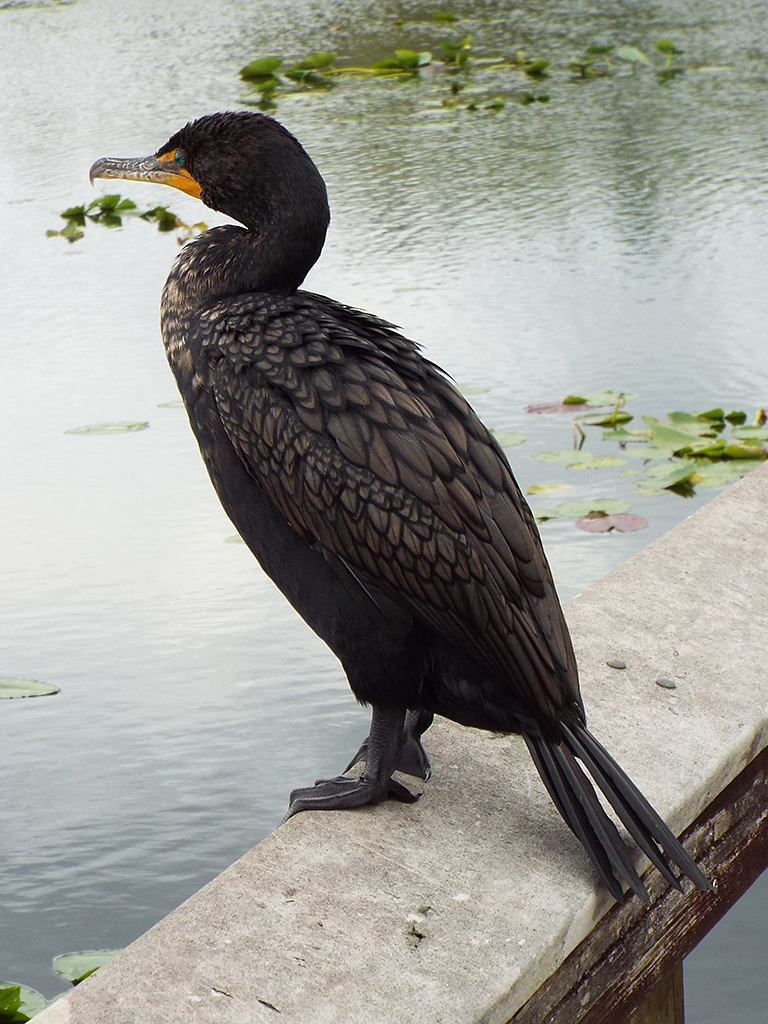
The word “cormorant” loosely translates to “sea crow”. Large, mainly black birds, these master divers and fishing birds have a long history of superstition. They have been associated with oncoming storms and great evil. The root of distrust and hate for this birds has a more practical source: perceived competition. According to Dr. Tom Kazo, Ph.D. and Donna McVicar Kazo:
“The gluttonous behavior patterns of the cormorant, combined with its devilish appearance and almost supernatural fishing abilities, have for centuries caused superstitious fears and enmity in the hearts of fishermen.”
For years there has been an ongoing war between the cormorant and the U.S. Army Corps of Engineers. Last year tens of thousands of Double Crested Cormorants were killed, and thousands of nests ruined, to cut the population down.
The problem, according to the Corps (and, more importantly, the U.S. Fish and Wildlife Service) is that the birds were eating a huge number of young salmon and trout as they made their way downstream from hatcheries.
Never mind the fact that the reason for the massive decline in wild salmon and steelhead is due to the damming of western rivers, particularly in the Columbia River watershed. Responsible conservation will require that the hydroelectric system be reviewed and in some cases, certain dams be decommissioned. Non-lethal methods for dealing with the cormorants were not adequately considered.
Here are some links to articles dealing with last year’s cormorant slaughter. When or how often this type of “management” strategy gets used in the future depends on pubic input and sound science.
The irony of this is that the consideration and eventual decision to slaughter tens of thousands of birds lay with the nominally pro-environment/conservation Obama Administration. With the current anti-science, anti-conservation, and pro-development attitude of the current occupiers of the Executive Office, who knows what horrors await.
It is interesting that prior to the perceived problem with the cormorants, another opportunistic species was taking advantage of the artificially constructed concentration of young fish along the same stretch of river: the more socially accepted Royal Tern.
Terns are elegant birds; they are the more graceful and buoyant relatives of gulls. The terns were afforded the consideration of non-lethal methods, and plans were enacted that forced the birds to relocate and refocus their attention to smaller, less commercially valuable fish. I’m sure the cormorants are a “harder nut to crack” in this regard, but given the root cause of the problem (i.e., us) and the greater environmental stakes, we owe it to these birds, and all other species, to think and act compassionately and peacefully.
My second (and longest) field trip this year was the Central Florida Specialties trip, led by my friend Dave Goodwin. I’ve done this trip several times, though I skipped it last year. The trip includes stops in many different habitats in Osceola County.
It was one of the coldest mornings of the season as we began, before dawn, to find Red-cockaded Woodpeckers at Three Lakes WMA [map].
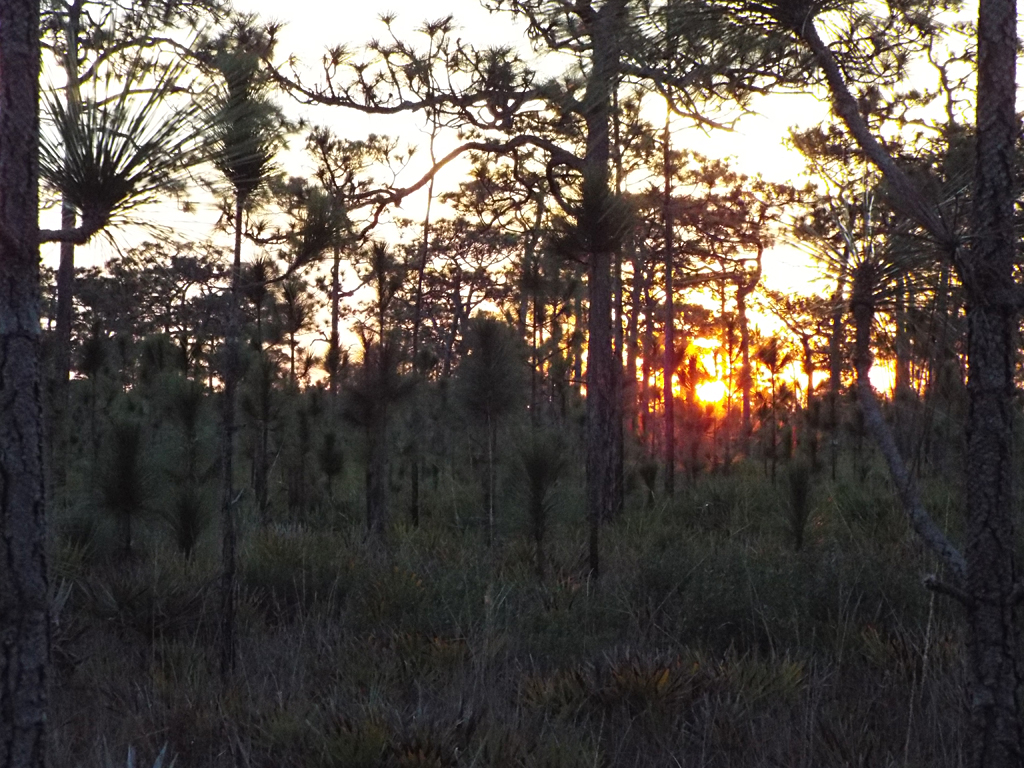
Sunrise over the pine flatwoods.
Although we arrived at our target area before sunrise, the woodpeckers were already active, flying low among the trees making their squeak-toy calls to one another. Red-cockaded Woodpeckers are cooperative, family nesters. Previous years’ offspring help parents raise the current brood in a territory, helping with things like feeding and defense.
The white cheek-patch on this species is a “diagnostic” field-mark. No other small woodpecker in North America has this feature. The tiny red “cockade” feathers on the side of the head are nearly impossible to see in the field.As the sun came up, it got easier to see the birds, and they were fairly unconcerned with our proximity.
As the sun climbed higher and the temperature (slowly) with it, other birds of the pine flatwoods began to stir. We got a few Brown-headed Nuthatches, Eastern Bluebirds, and perhaps an Eastern Towhee call or two.
Our other target species for the day in the flatwoods was the Bachman’s Sparrow. Late January is still a little early for this species to begin singing for mates and territory, but we tried calling them out a few times, with no success. I did hear one very distant song as we were beginning to move out and back to our group’s bus, but that was all.
Our next stop was at Lake Jackson [map]. We did not stay long. The wind was blowing from the north across the lake, creating a natural air conditioner. It was cold enough to start with, and that just made it almost impossible to stand and scope out the lake for birds. After just a few minutes, Dave got us back in the bus for the next stop, out of the wind!
Lake Jackson.
After a brief stop on Prairie Lake Road to call for Bachman’s Sparrows again (to no avail), we headed to a couple of stops on Lake Marian
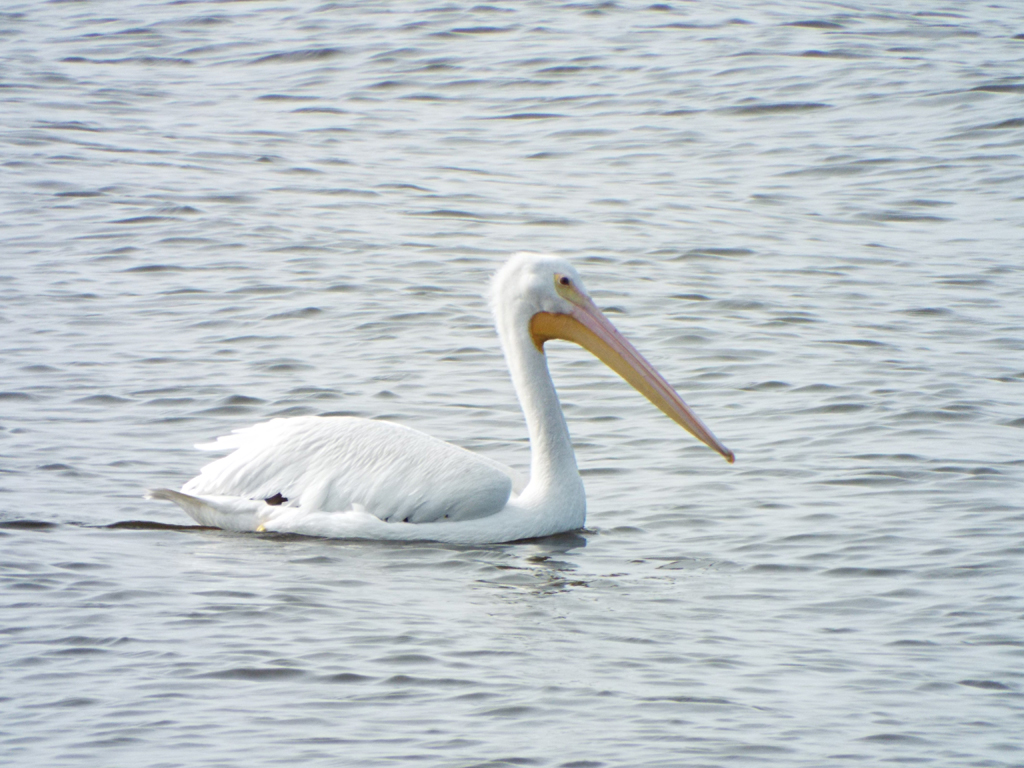
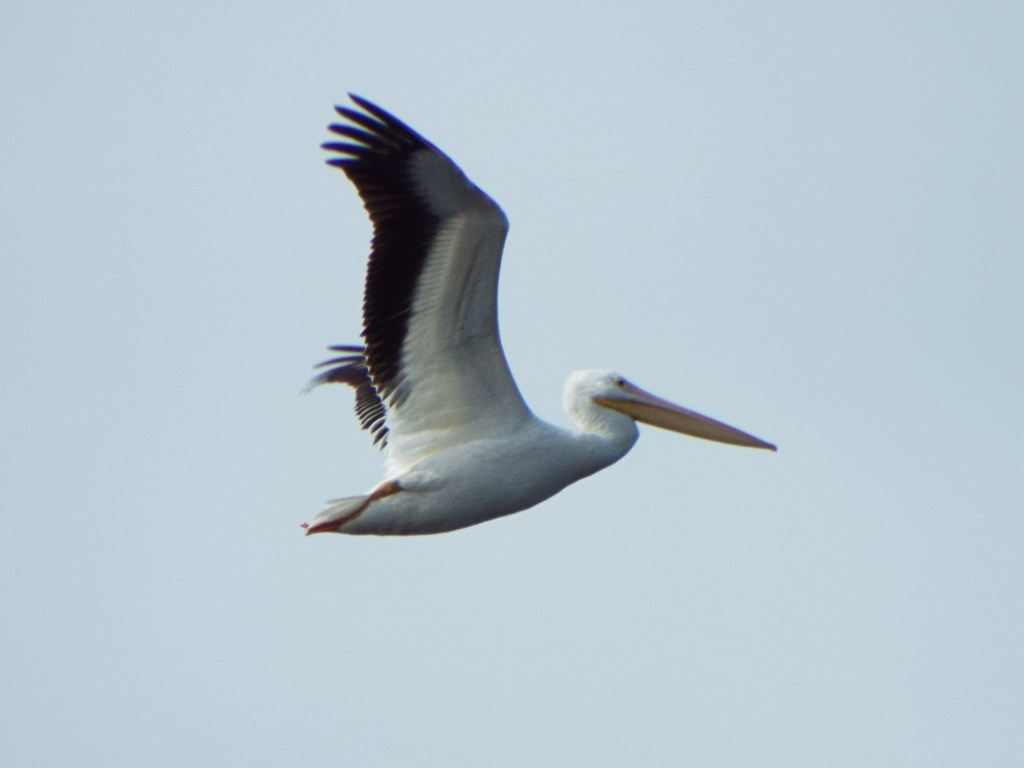
At the marina [map] there were hundreds of Tree Swallows swarming around, providing a backdrop for some of the more dramatic species, like Limpkins, American White Pelicans, Bald Eagles, and even a pair of Bonaparte’s Gulls.
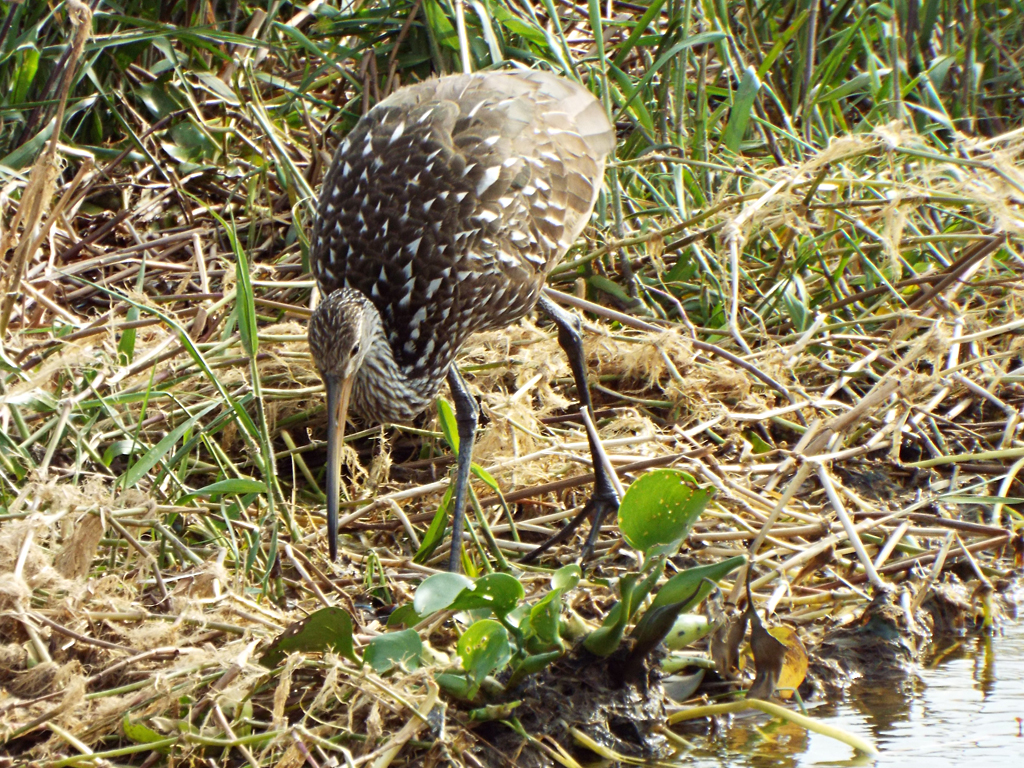
Limpkins were relatively abundant, not just at this stop, but throughout the festival.
The proportions of the American White Pelican, when swimming or on the ground, can seen quite awkward.Once airborne, pelicans are surprisingly graceful birds.
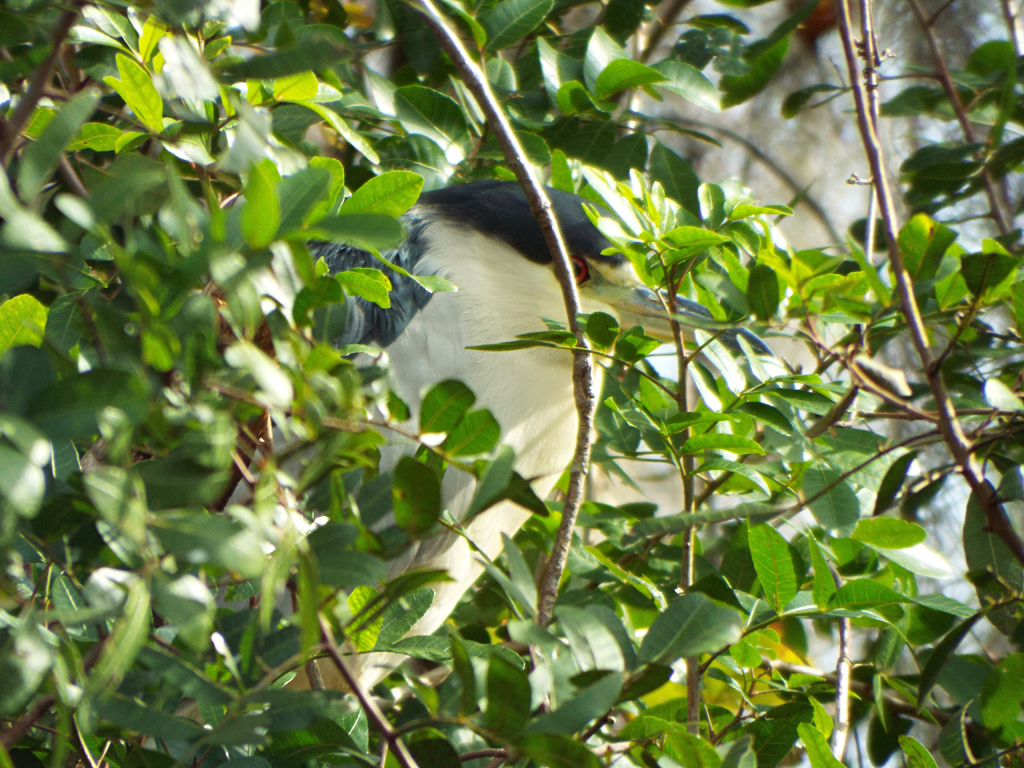
At the boat ramp [map] on the lake, we had a pair of Baltimore Orioles feeding among Yellow-rumped Warblers and American Robins. The vegetation that provided both food and concealment for these smaller birds was also the day roost for at least one Black-crowned Night Heron.
A Black-crowned Night Heron hiding out.
After wrapping up at Lake Marian, we headed down Joe Overstreet Road to the Landing, on the shore of Lake Kissimmee [map]. As you head along the road, toward the lake, the habitat changes from upland and ranch agriculture to wetlands and lacustrine (that means “lake related”) landscapes.
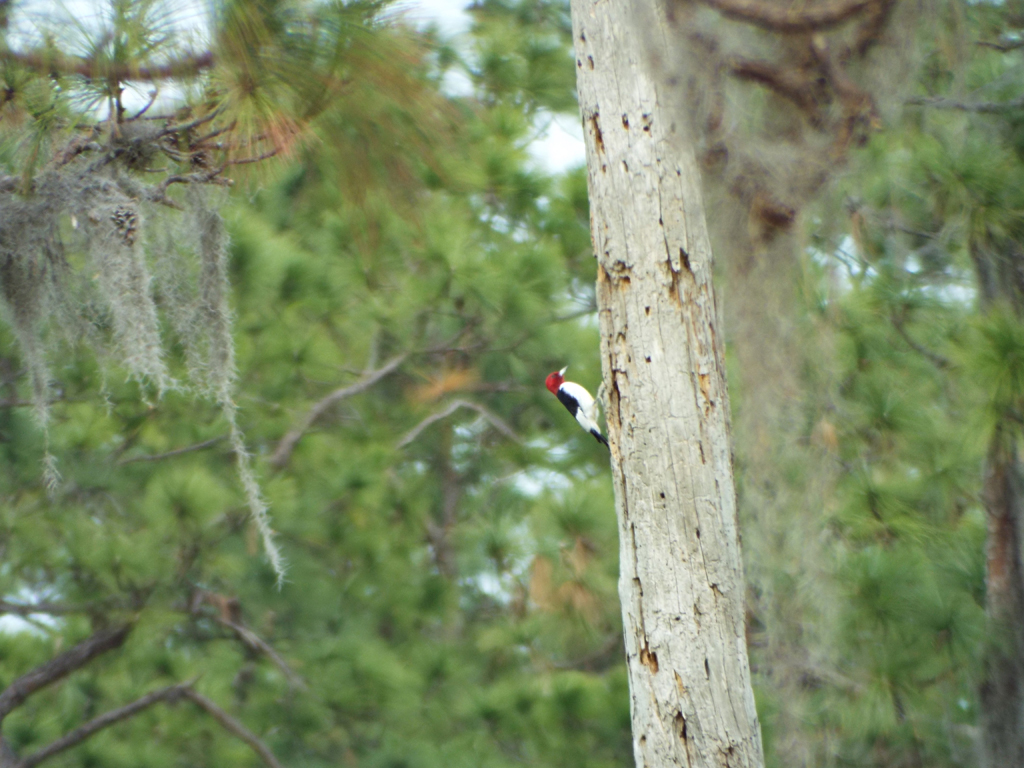
Adult Red-headed Woodpeckers really stand out, even from a distance!
There is usually a family of Red-headed Woodpeckers near the start of the road, associated with some dead trees and farm buildings. We did not see them at first, but at least one adult came out to investigate some woodpecker calls we played.
Further along, we had a few raptors, including a Bald Eagle harassing an American Kestrel on some irrigation equipment. The lands on either side of the road are still owned by the Overstreet family and include cattle and sod farms.
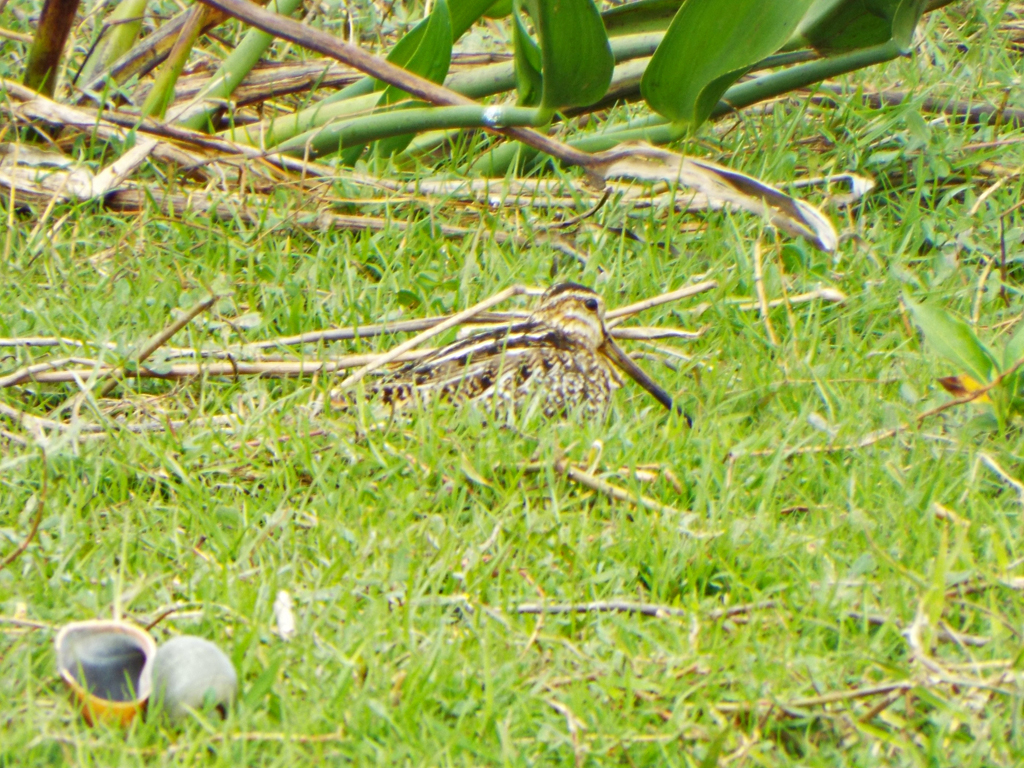
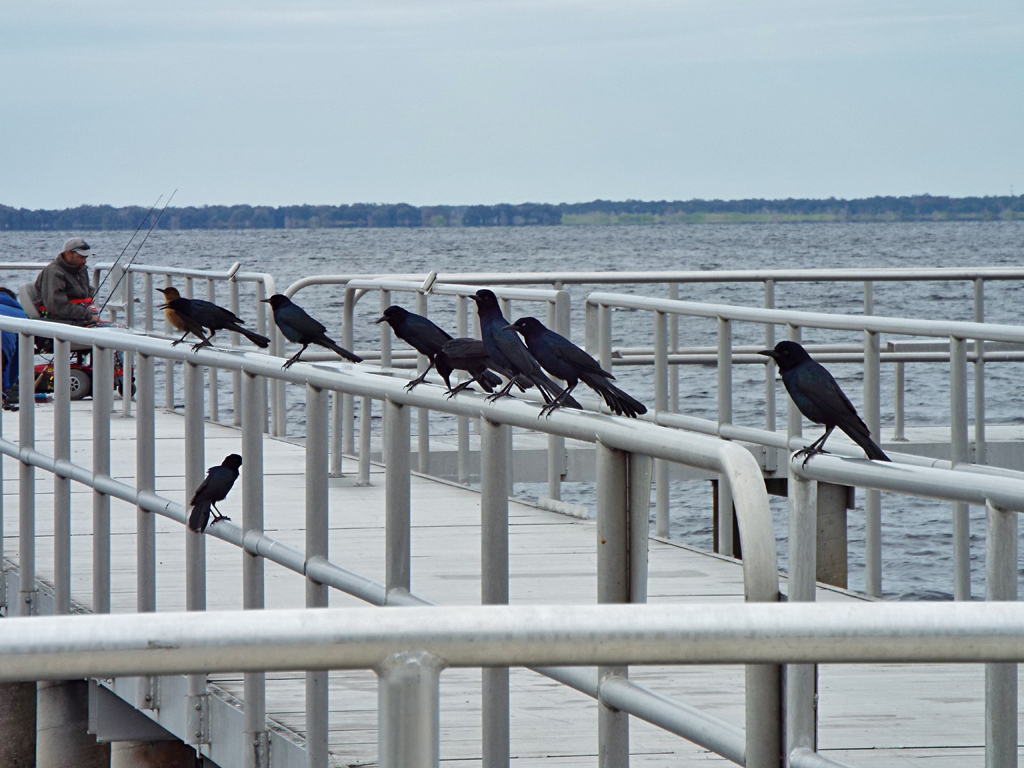
Down by the water, the wind wasn’t as bad as earlier at Lake Jackson, but it was still a bit breezy. Some Wilson’s Snipes were slinking along nearby in the grass while Boat-tailed Grackles made a racket at the boat dock.
One of the nearby Wilson’s Snipes, probing the wet ground for insects. Note the large, invasive Apple Snail in the foreground. These are much larger than our native snails, but the Limpkins and Snail Kites seem to enjoy them.
A single distant Snail Kite was seen in one of the spotting scopes, and one Bald Eagle, too. There were a few wading and diving birds out on the water, but nothing in very large numbers except for a flock of Cattle Egrets that made its way through.
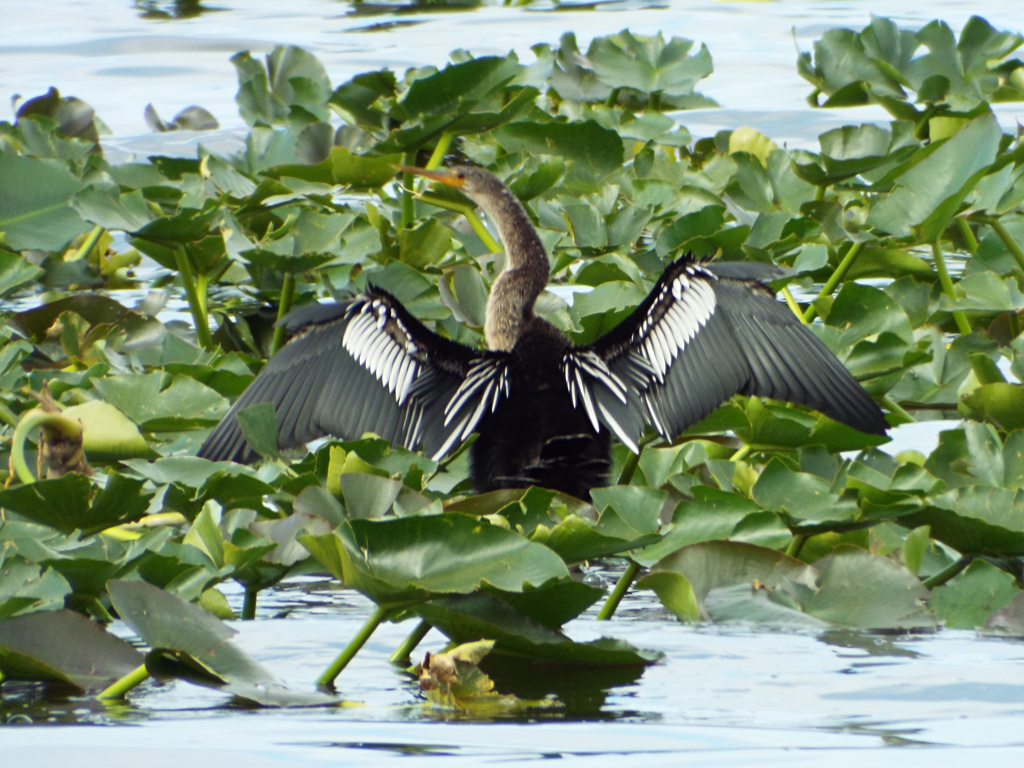
An Anhinga drying its wings among the lily pads.
From Joe Overstreet we briefly stopped by the Double C Bar ranch [map], where the last known non-migratory Florida Whooping Crane sometimes hangs out. It was not seen, and Dave Goodwin talked a bit about how the non-migratory flock was a failed experiment, with most of the birds succumbing to bobcats and other predators. The focus now is on the migratory flock that winters in the panhandle and flies to Wisconsin in the spring.
Our last stop of the day, at Lakefront Park on East Lake Tohopekaliga [map]. This place is known to have Snail Kites that pass close to the park and restaurant, and we hoped to get some good views. Unfortunately the weather got windier and colder, and a few of us got only one extremely distant view of a Snail Kite in one scope.
Boat-tailed Grackles defying the wind.Not a Snail Kite.
That was about it for the trip. We headed back to Festival HQ after a long but fun day around central Florida. We didn’t get all our “hoped for” birds, but honestly, that’s only a small disappointment for me. We have to remember the birds are not there for us; we have the privilege to go and seek them out, but it has to be on their terms as much as possible. Conservation and education should take precedence over consumption and exploitation.
I can’t believe it’s been 2 weeks since the 2017 Space Coast Birding and Wildlife Festival. I apologize for the delay, but here are some photos and experiences I’d like to share with you.
First of all, I scaled back a lot this year, primarily for budgetary reasons. Last year I had a packed schedule, with many night hikes and early mornings. I was completely exhausted and mentally spent. Since I had done a pelagic trip at the end of September of last year, I decided (after much hand-wringing) to forgo the offshore trip this year. This turned out to be a bit of a blessing, as I understand the Monday trip had to come inshore and essentially do a lagoon tour amid rough seas, wind, and frigid (for Florida) temperatures.
In any case, I did three day-time trips, one night-hike, and a few side-trips for rarities in the area.
That first trip was the Little Big Econ State Forest hike [map]. Now, you might be wondering what a “Little Big Econ” is. It’s a combination of the two rivers that flow near and through the state forest and the inclusive wildlife management area (the Little Econ actually joins the “Big” Econ southwest of the state forest). You can read about the Econlockhatchee River at this St. Johns River Water Management District page. We hiked in at the Barr Street trailhead.
Along with other familiar faces at the festival, it was nice to see Bert Alm there. I met Bert at a Florida Master Naturalist Program class almost two years ago. Bert and his wife have gotten quite involved in conservation and wildlife rehabilitation since moving to the area, and it’s always a pleasure to see him.
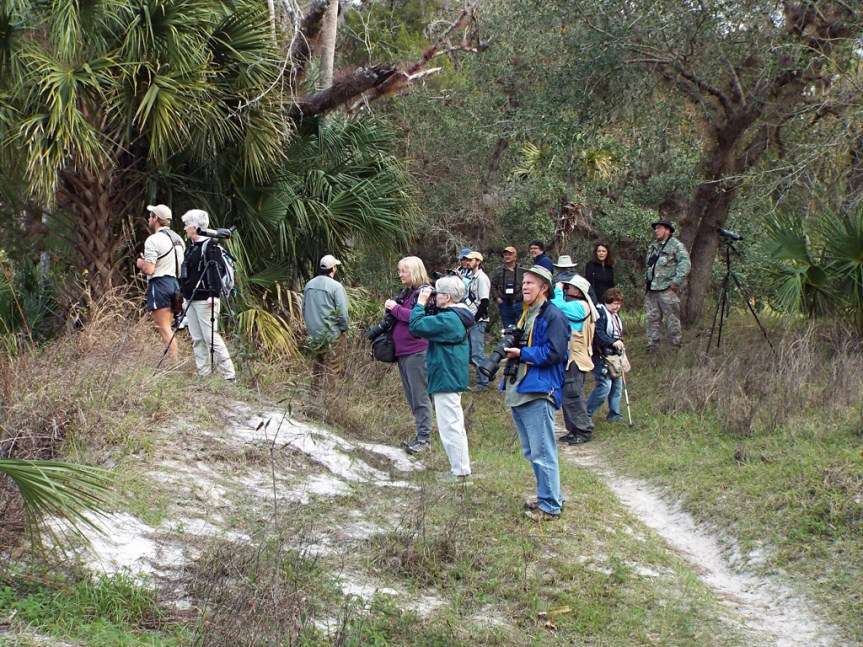
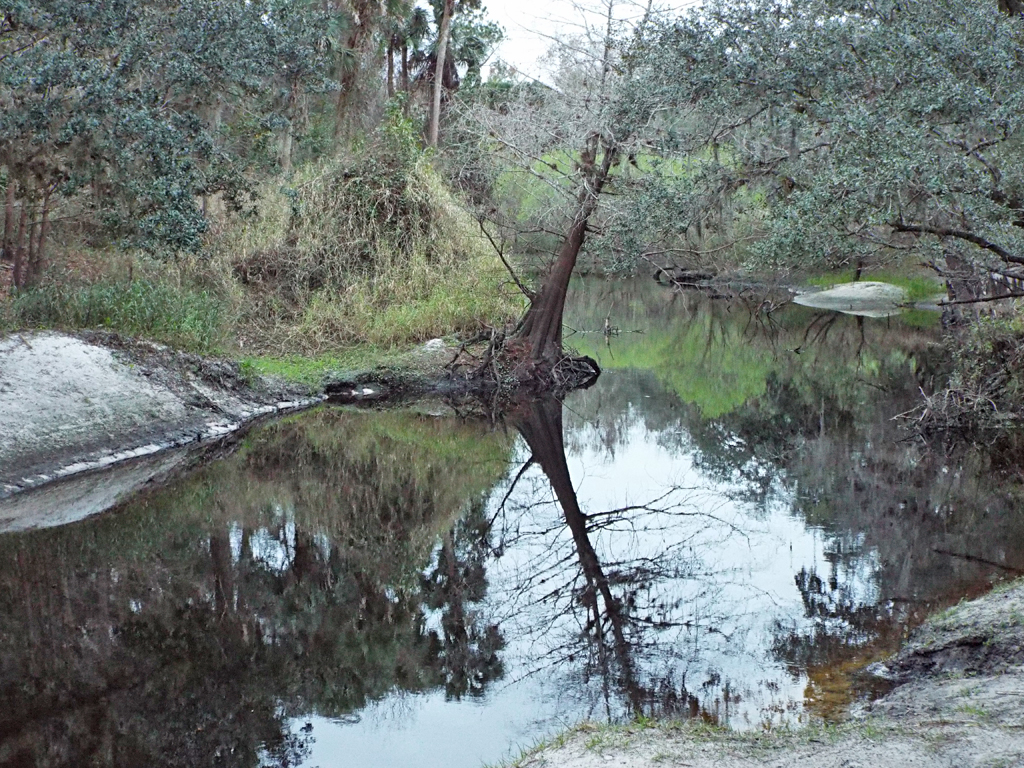
This is most of our trip group. Trip leader L0rne Malo is in the camo to the right, Camille is in the purple fleece at the center, and there’s Bert, in the aqua shirt and pale ochre vest, partly obscured.The Econlockhatchee River is a “black water” river, so named because of the tea-colored water, stained by tannins from organic sediments and particles.
Like most typical black water rivers, the Econ (and Little Econ) are stained a dark brown from organics and have steep, sandy sides. In many ways the ecosystem here is similar to Turkey Creek (in Brevard County), which is a smaller black water river in a more built-up area.
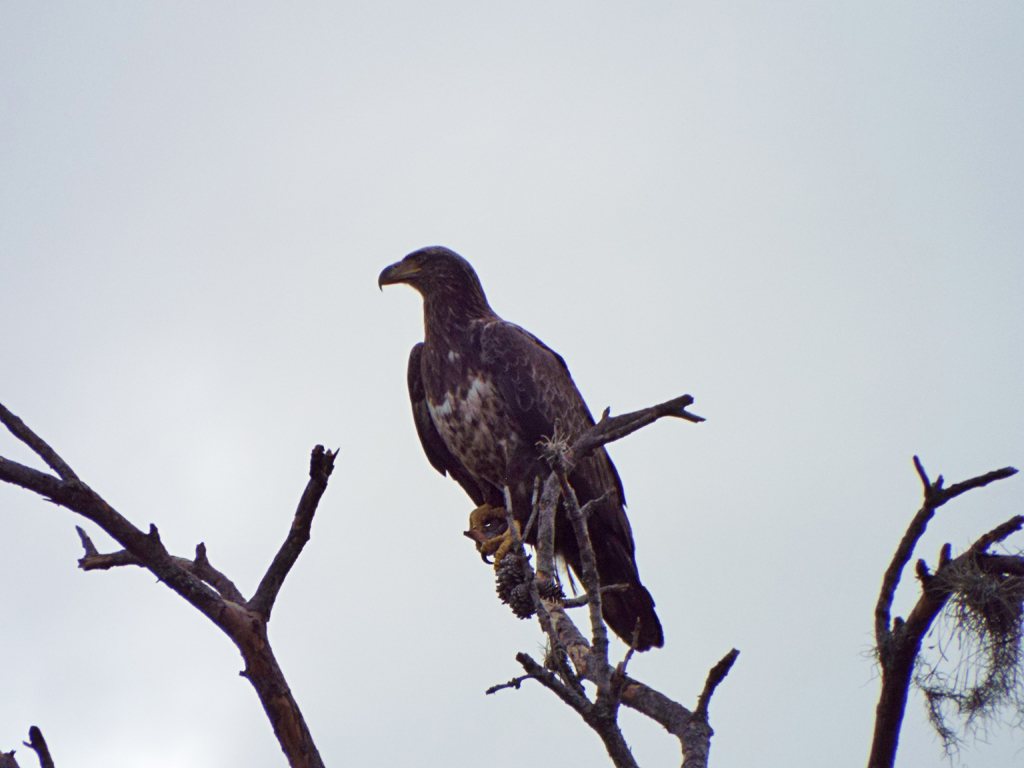
A pair of adult Bald Eagles near their nest. They raised a couple of chick this year, and one fledged youngster was still nearby.This Bald Eagle youngster had recently fledged and stayed in view of its parents.
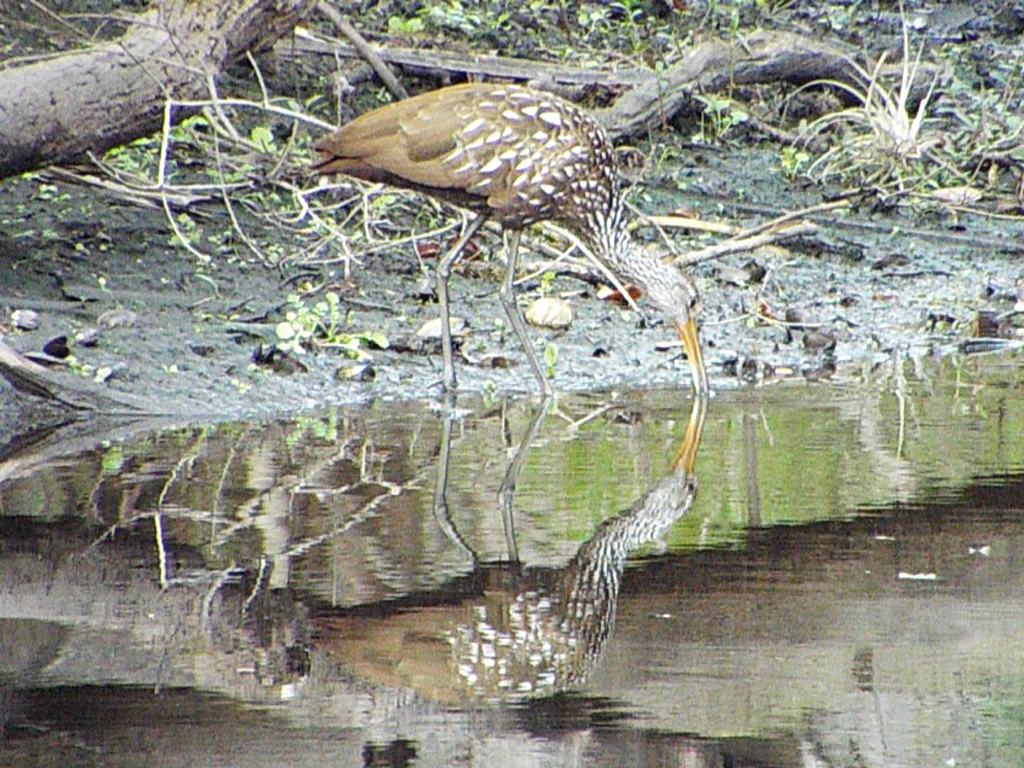
We had the expected winter residents, like Red-bellied and Downy woodpeckers, Blue-grey Gnatcatchers, Yellow-rumped Warblers, and more. There is one nesting Bald Eagle pair (see above). At one bend in the river I was surprised to see a Limpkin along the bank. Limpkins eat Apple Snails (both the native and introduced varieties), which I did not think lived in rivers and creeks.
This Limpkin found a stash of Apple Snails near the river bank.
There was one surprise that cropped up when some of the trip co-leaders started “pishing” to call in some of the warblers and other small songbirds. Along with titmouses, gnatcatchers and kinglets, a Blackburnian Warbler came into view high up in a mostly bare tree. It only stayed in view for a couple of seconds, but was long enough to get a look at the yellow-orange and black facial markings, as well as the sides and wings. This is extremely early for this species to be in Florida. Blackburnians winter over mainly in northern South America and Central America. Without photographic proof, this sighting won’t be “official”, but that doesn’t take away from the exhilaration and puzzlement of seeing it, for me.
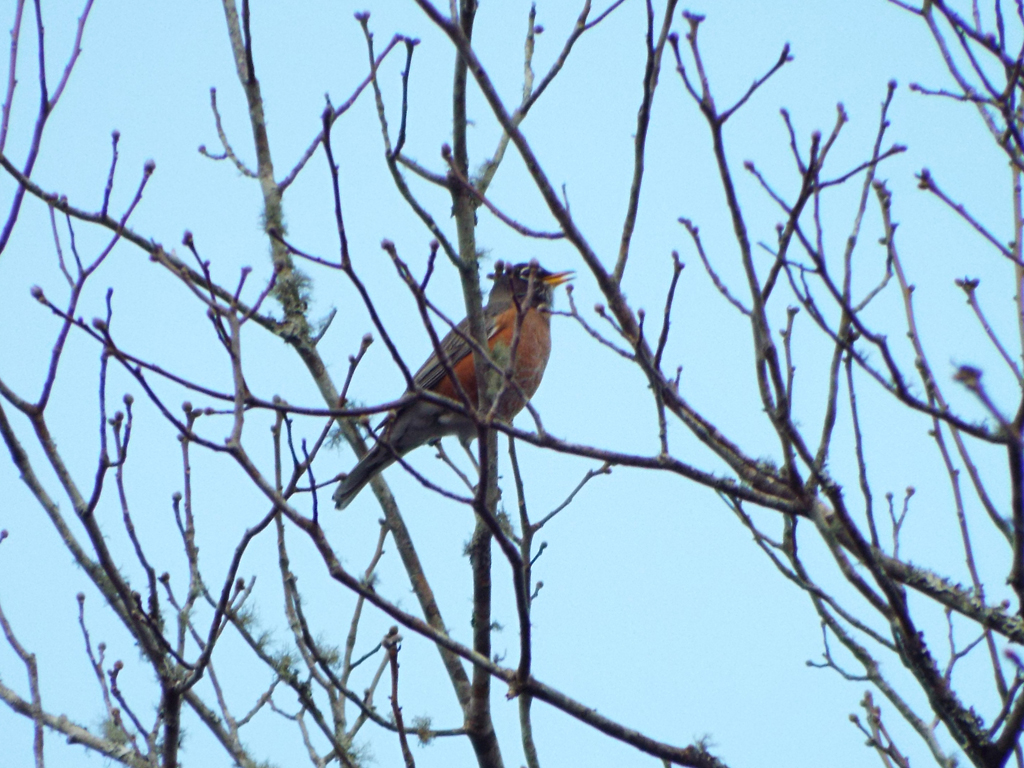
A more typical (but handsome) bird species for Florida winters, the American Robins will start leaving in a couple of weeks as spring returns.
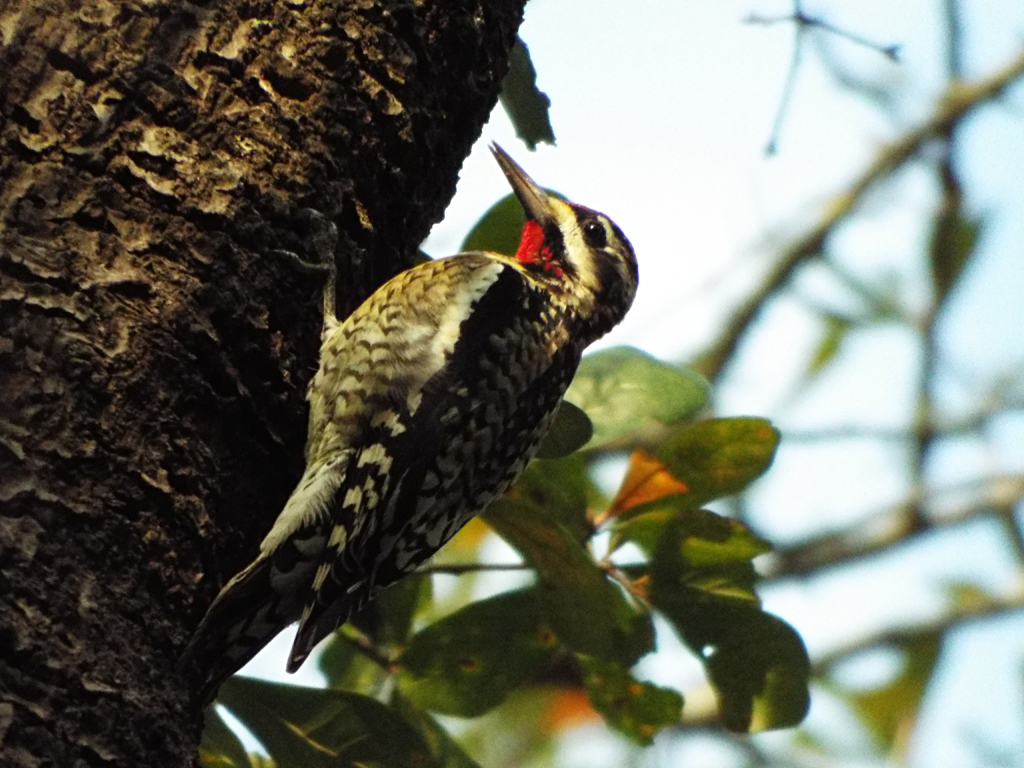
Throughout the morning, we kept hearing the cat-like calls of Yellow-bellied Sapsuckers (in fact, I think their call sounds more like a cat than Grey Catbird calls). It took a while, but one finally came in close and stayed for a photo-op.
The red throat of this bird indicates it’s a male. Yellow-bellied Sapsuckers drill rows of holes to tap tree sap, which it licks up (along with any protein-rich insects that get in the sap).
We hiked a total of about 5 kilometers (3 miles) on part of the Florida Trail and back before leaving the park. Most of the group then stopped at C.S. Lee Park (a small park and boat ramp off SR-46) [map] on the way back to Titusville where we saw some wading birds, among others, in the adjacent wetlands and flood plain of the St. Johns River.
Since the day was only half over, it was decided to take a trip to the Space Coast Regional Airport [map] and find the Scissor-tailed Flycatcher. Mrs. Lonely Birder and I tried finding this bird before New Years, with no success.
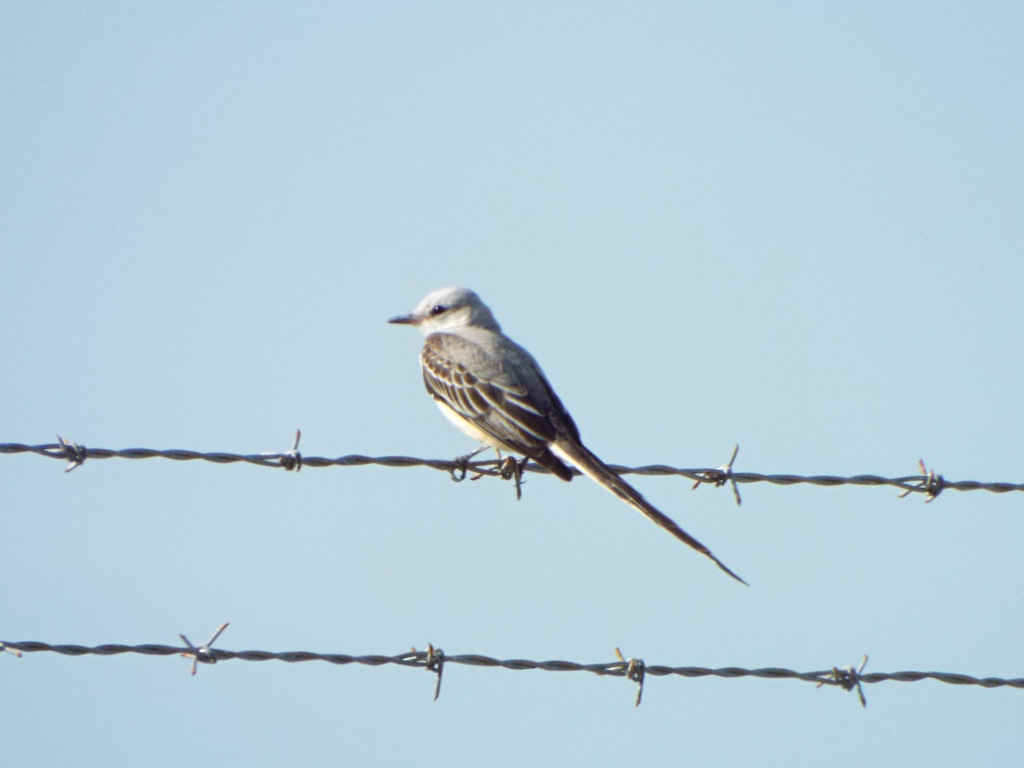
This time the bird was out, catching large grasshoppers on the airports barbed-wired fence!
The relatively short tail of this bird indicates it’s an immature bird. Yes, believe it or not, adult Scissor-tailed Flycatchers have even longer tails than this.
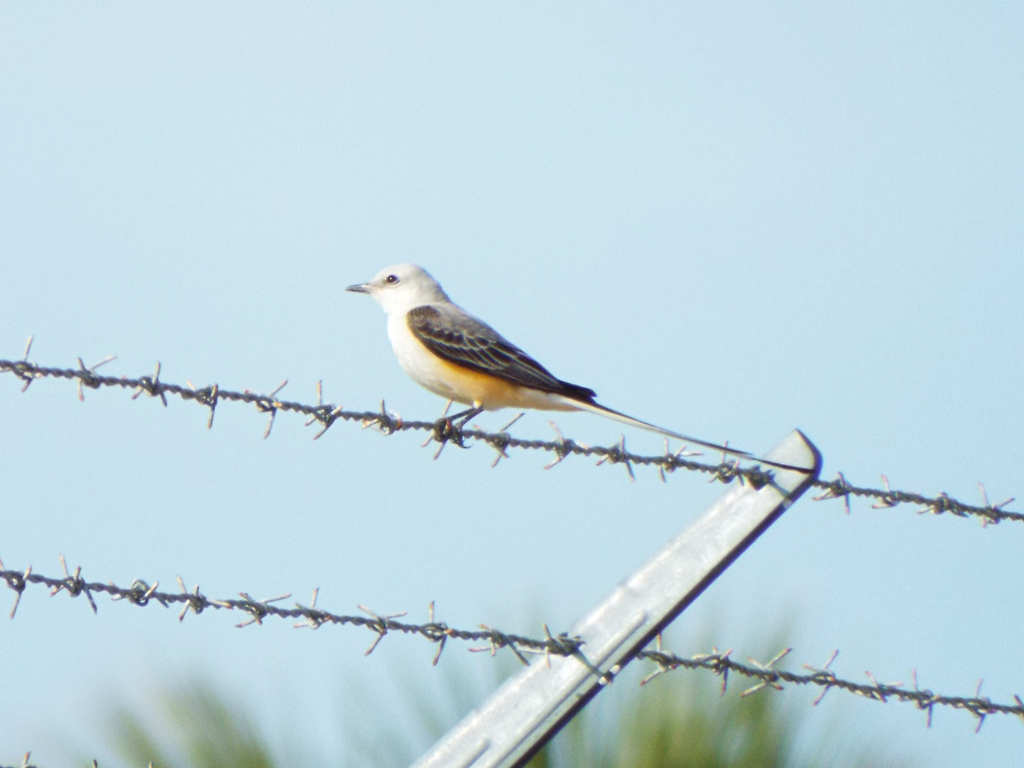
Bonus bird number one, and a life bird! Scissor-tailed Flycatchers are rare but regular visitors to central Florida; there’s at least one every winter. As I’ve mentioned in this blog before, many flycatcher species have site affinity – that is, they often return to the same places year after year. If this bird decides this makes a fine winter home, we may have several years to look forward to seeing this bird as an adult!
I was trying to capture the salmon colored flanks in this shot, but here it almost looks yellow.
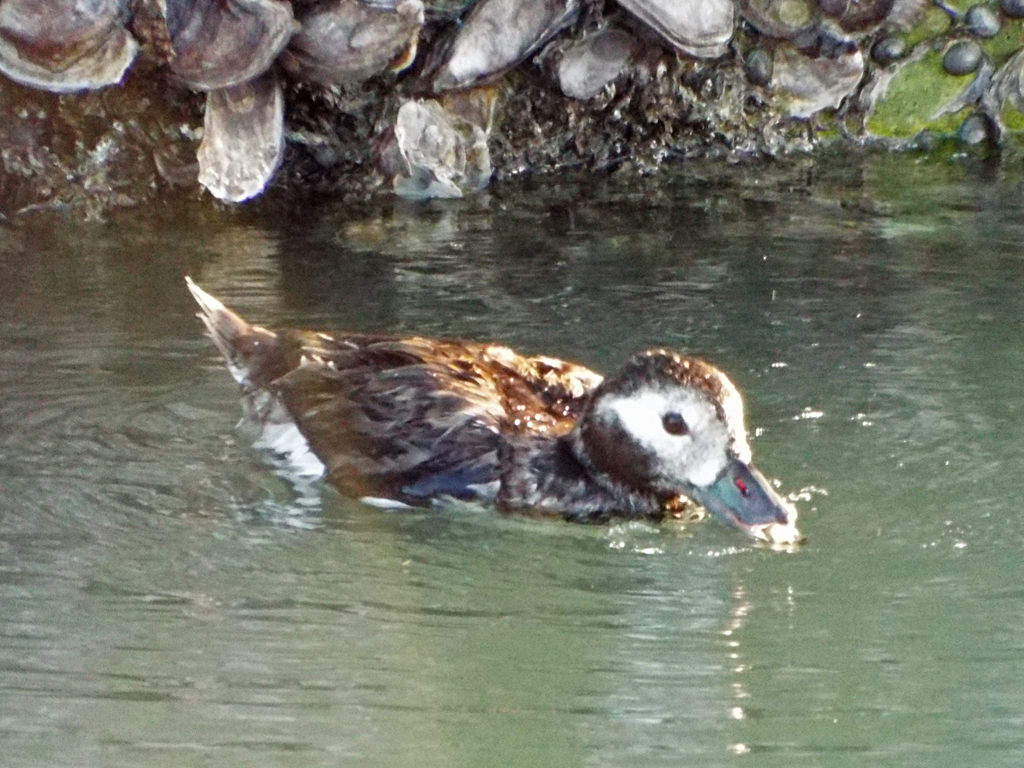
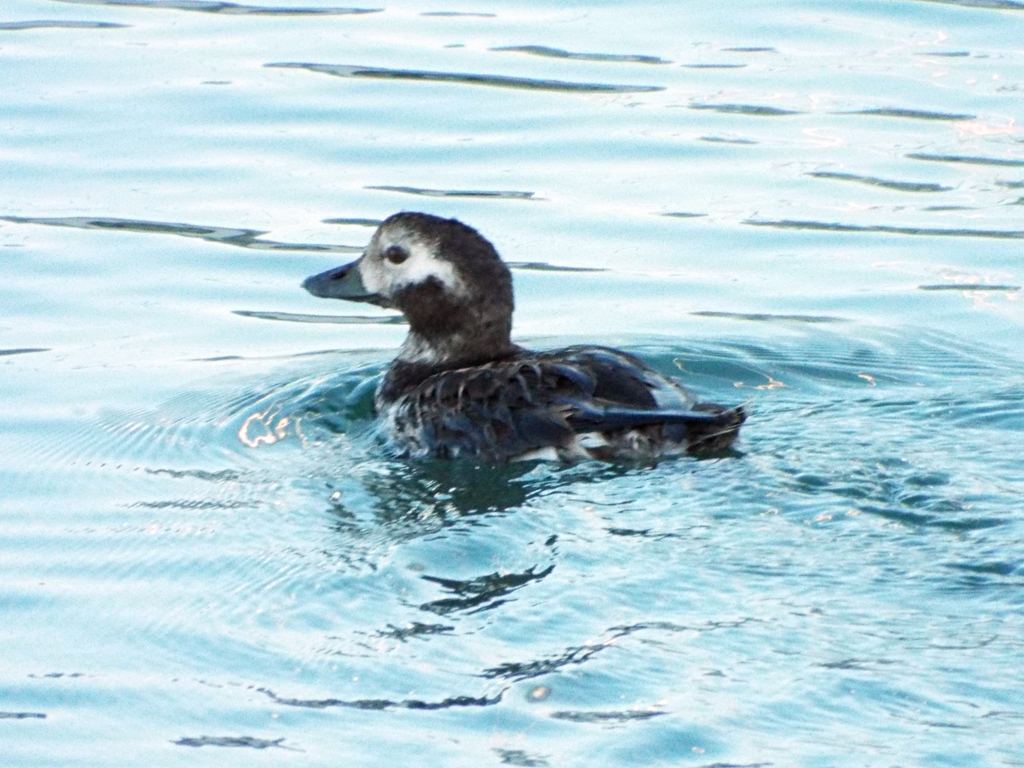
After hawking grasshoppers and other insects for a few minutes along the fence line, the bird flew off a distance onto some power lines, so we left and decided to try and see another reported rarity: a Long-tailed Duck seen near the Canaveral Locks, at the Rodney S. Ketcham Boat Ramp [map].
It took some patience, but the duck finally did emerge from behind some cement pilings and out toward the adjacent marina.
The plumage details and lack of long central tail feathers indicate that this is a female.
Bonus bird number two! I’ve seen this species once before, when a male was seen near Parrish Park, under the causeway bridge between Titusville and the Merritt Island National Wildlife Refuge, a couple of years ago.
So long, little duck! She started getting annoyed at our ogling and headed for the marina.
That ended the daytime activities for the festival. The Florida Ornithological Society didn’t have a booth this year, but I did run into a few members, including Gina and Adam Kent, at the exhibitor area. Most of the usual vendors, organizations, and tour operators were there, including the Florida Wildlife Hospital with their animal ambassadors (Bella, the American Kestrel and Copper, a Red Rat Snake).
That just left a night hike with the Enchanted Forest Sanctuary. This was the only night hike I did, and it has always been fun and educational. There were two main changes this year, though. One is that the sanctuary no longer calls owls in. I was mildly disappointed, but there is growing uncertainty as to the ethics of calling for birds in general, with some parks and organizations eliminating the practice. Whatever the specific reasons for not calling owls, the hike was still great fun. The second change was a result of the main Southern Flying Squirrel nest getting blown down during Hurricane Matthew in October. The squirrels relocated to other nests, so they were not easily enticed to the feeder for viewing through a night vision camera.
It was a busy and fulfilling day (and evening), with one life bird and exploring a new place (Little Big Econ).







 Lonely Birder