Beach Day!

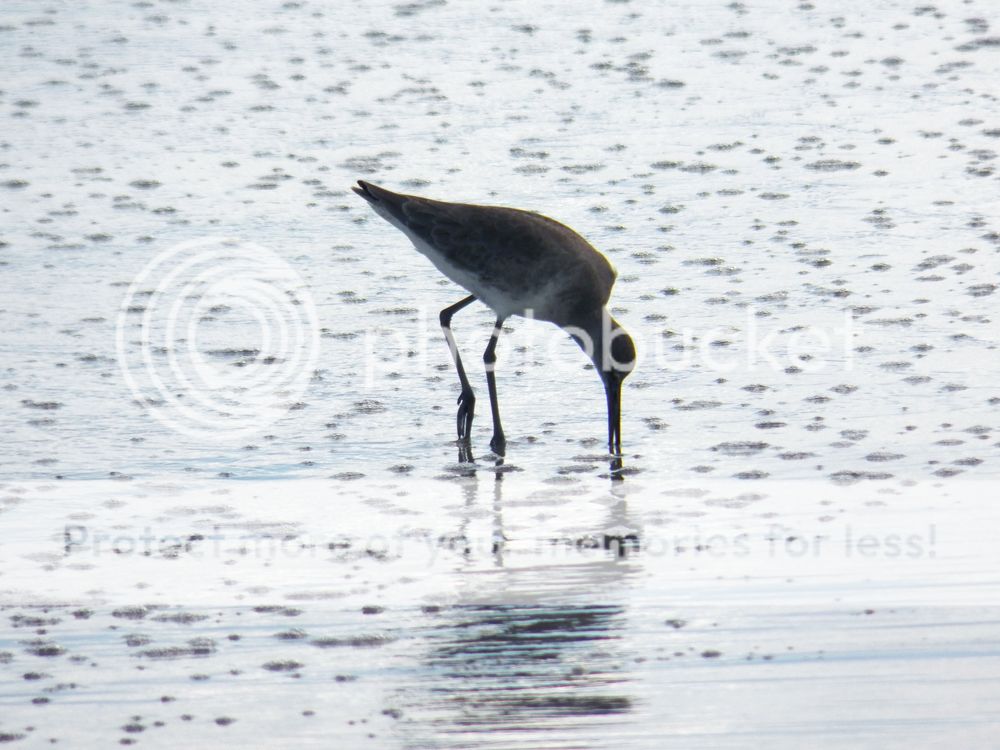
I spent a lovely afternoon with my wife and my mother-in-law at a local beach today. The usual shore birds were present: Sanderlings, Ruddy Turnstones, and Willets. The Willets, of course, are in winter plumage.

photo winter-willet1.jpg
Winter Willet.

photo winter-willet2.jpg
Typical Willet foraging posture.

Most of the Brown Pelicans I saw today were staying quite a bit offshore. Pelicans can appear ponderous, especially while sitting on the water’s surface, but in flight they are surprisingly graceful.

photo brown-pelican1.jpg

photo brown-pelican2.jpg
I still think “graceful as a pelican” has a ways to catch on, though.

While enjoying the beach and the birds, there was some other flight activity going on to our south.

photo black-diamond-jet-team-three-planes-2.jpg
Birds of a different feather!

The Black Diamond Jet Team was practicing for this coming weekend’s air show! We watched them do some various maneuvers in groups and individually.

photo black-diamond-jet-team-one-plane.jpg
Black Diamond Jet Team Aero L-39 Albatros.

The birds seemed pretty indifferent to their airspace being shared by these loud metal contraptions.

photo sanderling-resting.jpg
Sanderling is not impressed.

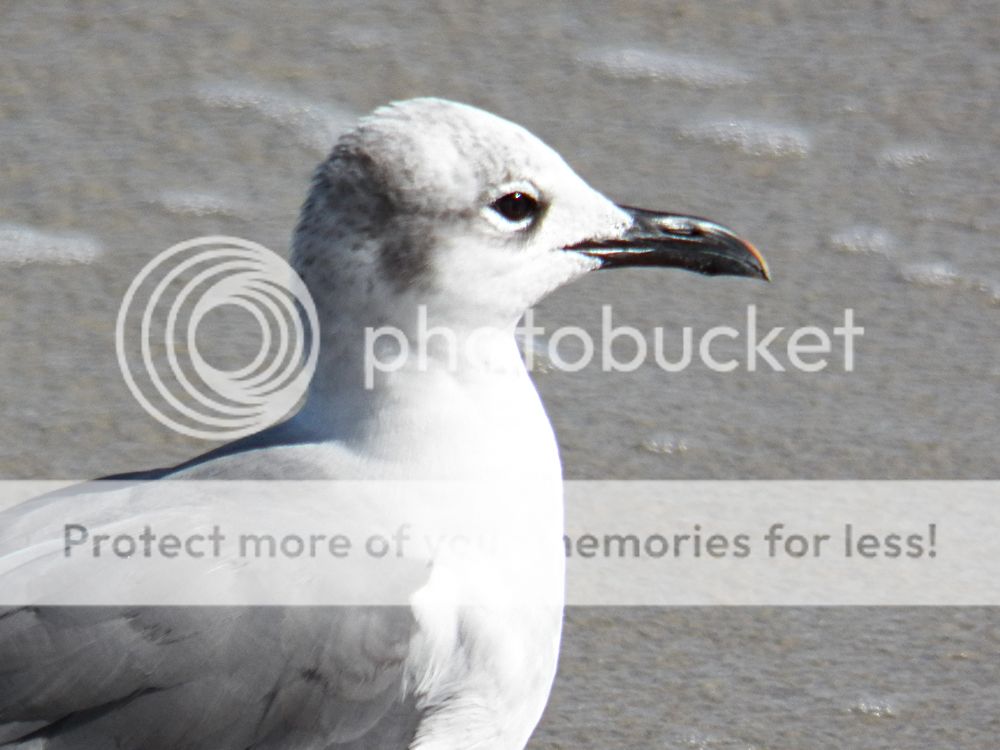
Here’s a good look at the winter plumage of a Laughing Gull, many of which were walking along the beach.

photo laughing-gull-winter3.jpg
Laughing Gull showing off its winter wardrobe.

As the tide came in more people arrived at the beach to surf and swim, most of the birds flew off. The impromptu air show ended, and even the Coast Guard called it a day.

photo coast-guard.jpg
Time to head to port.

Gnatcatcher, Gnatcatcher Catch Me A Gnat…

I spent another very quiet Sunday morning at Turkey Creek. I had hoped my hunch that the early part of the weekend was more “birdy” than it had been would extend into yesterday. That proved fruitless, but I did have a nice walk through the woods again, and added one species to my 2013 list.

The most active birds in the Sanctuary continue to be the Blue-grey Gnatcatchers. One large Live Oak had a virtual cloud of them, darting out and around while making their wheezy little call notes (scroll to the second sound recording). I remember my very first field guide, using comparative identification methods, describing Blue-grey Gnatcatchers as “miniature mockingbirds.” This is not a bad description, in some ways. They will even bob their tails in a similar fashion to some mockingbirds.

The Grey Catbrids have arrived in force for the winter. Whereas the individuals in the park last week seemed excessively shy, the ones I saw yesterday were much bolder. In fact, I managed to get a decent photo of one.

photo catbird.jpg
The cat’s meow. Oh, and it’s perched on Beauty Berries!

The catbirds were particularly vocal. They (along with the Northern Cardinals) provided the only significant bird noise in the Sanctuary, making me yell “QUIET!” a couple of times because they were drowning out any other bird sounds. Of course that worked for all of about 2 seconds.

At two different points along my walk through the park, I spotted a raccoon in a tree. I’ve seen a lot of racoons this year, compared to the past few.

photo coon.jpg
Raccoon 20 feet over the creek.

Near one of the creek overlooks on the Hammock Loop, I spent a few minutes watching the fish and turtles swim in the sunlight. One large Florida Softshell Turtle came by, so I got its photograph while it was still under water.

photo soft-shelled-turtle.jpg
Florida Softshell Turtle.

At the weir, I saw one verifiable Palm Warbler (I heard a great many more) as well as a Spotted Sandpiper, American Coot, Common Gallinule, Great Blue Heron, Green Heron, Little Blue Heron, Tri-colored Heron and an unidentified white heron/egret of some kind (it flew off before I could be sure what it was).

On the way out along the western edge of the Sanctuary, I heard some finch-like scolding among the Northern Cardinals near the chain-link fence. I managed to get a couple of good observing minutes of some Indigo Buntings. The male had molted out of almost all his blue feathers – just a few flecks remaining among the brown. The two females were a very pretty warm brown color. They bickered and chased each other around some Sabal palms before flying off. This is the first time I’ve seen this species this year, and the unofficial 2103 species count is now 140.

Other species seen yesterday:

  • Red-shouldered Hawk
  • Black Vulture
  • Turkey Vulture
  • Blue Jay

This marks the first time this year that I haven’t seen or heard a White-eyed Vireo at Turkey Creek Sanctuary. That’s not to say they aren’t still in the park, but I neither saw nor heard any evidence of them.

Timing

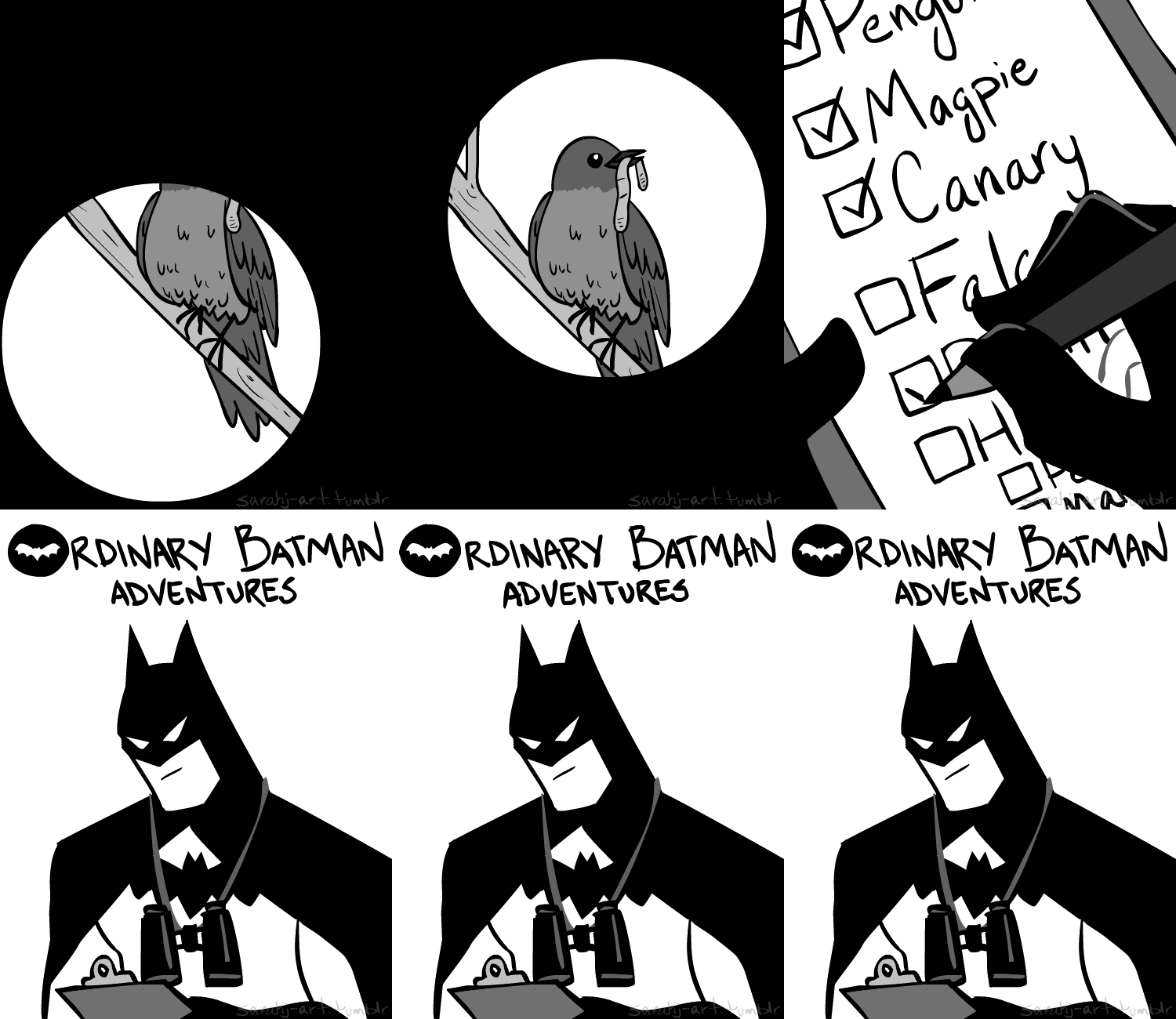
Oh no! Based on an increase in warblers even in some of the parking lots (mostly Pine and Palm Warblers) and the weather change, I think tomorrow is going to be the first big day for migrants this fall… and it’s a work day!

image
NOOOOO!!!!!!

KHHHAAAAN!!!!!!!!

richuv replied to your post: richuv replied to your po…

Nice! I live in Lexington. Did you move for college? And perhaps, but I haven’t been birding long so I don’t have a sense of what fall migration should be like. It could have felt quiet to me because I’m too inexperienced to see everything out there.

I left for graduate school in 1996 and eventually made my way to Florida. As I recall, fall in the northeast can tend to be somewhat quiet, in that by October most of the migrants have already left. But you should be getting some birds – like titmice, chickadees and nuthatches – beginning their loose winter flocks, and as the weather gets bleaker, if you keep some feeders stocked (if that’s an option for you), you get lots of winter residents stocking up on bonus meals. Keep an eye to your field guide and the range maps to see what might still be lurking around your neck of the woods.

richuv replied to your post: Underwhelmed

I’m so sorry about your bad luck this season! It’s been pretty quiet for me too but I’m in eastern MA haha 🙂 I love that shot of the skipper/moth!

I grew up in eastern MA, in Bridgewater. Where are you? 

Yeah, I suppose we could even be seeing decadal population and migration path fluctuations, so I am not *that* worried about the birds (well, more than usual), it does suck from a birding perspective of course. Thanks for the photo compliment.

Underwhelmed

It was another pin-drop-quiet day at Turkey Creek Sanctuary today. I had entertained the thought of going elsewhere, but trying to decide on an alternate destination for my birding just confused me, so before I came to any decision, I was already at the Sanctuary. The first part of my morning was almost painfully quiet. Things picked up near the end as I came back to the exit. Along the creekside along McKinnon’s Way, before the Canoe Deck, I did see a small alligator, which was neat. And I got a good shot of a strange moth or skipper of some kind.

photo gator.jpg
See you later, alligator!

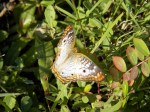
photo weird-skipper.jpg
Weirdy skipper

Birds seen on in the Sanctuary this excursion:

  • Grey Catbird
  • Blue-grey Gnatcatcher
  • Yellow-throated Warbler
  • Northern Cardinal
  • Northern Mockingbird
  • Black-throated Blue Warbler
  • Pine Warbler
  • Blue Jay
  • Black Vulture

I have to admit, it was cool to see the Black-throated Blues in the park, as I had seen some during spring migration as well. Many of the ones today were in immature or fall plumage, some females, and at least one male showing a lot of blue.

I may not make it out next weekend, due to prior non-birding commitments, but next time I think I’ll try to go outside the envelope a little and see what can be salvaged from this abysmal migration season in eastern Florida.

I Can’t Wait for the 2014 SCBWF!

The 2014 Space Coast Birding & Wildlife Festival is coming in January. The full website doesn’t premiere for 12 days yet, but they have some exciting preliminary information!

  1. The theme is Raptors, with classes and field trips!
  2. They are planning 2 Black Rail field trips!

I am really looking forward to it this year. I hope to do the pelagic trip again, too. I had a blast last time, despite the rough seas.