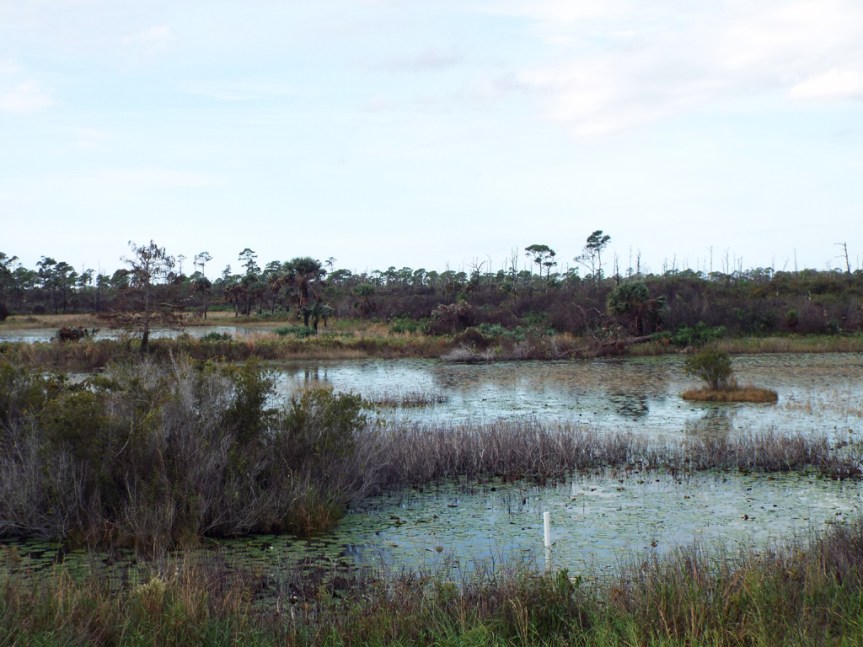
I hope everyone had a grand Christmas or whichever holiday you celebrated, and that you are all looking forward to the New Year. This past weekend I headed out for a quick trip to Shiloh Marsh Road. Predictably, this road ends at the Shiloh Marsh. The marsh marks the northernmost end of the Indian River Lagoon. In the map below, I parked just north of the 90-degree “L-bend” in the road and walked in along the road for about 1/4 of a mile.
Several weeks ago there were some duck species starting to show up in the marsh, so I was hopeful that by now there’d be a decent representation of ducks to see. I was also hoping to see some the Nelson’s Sparrows reported the week before.
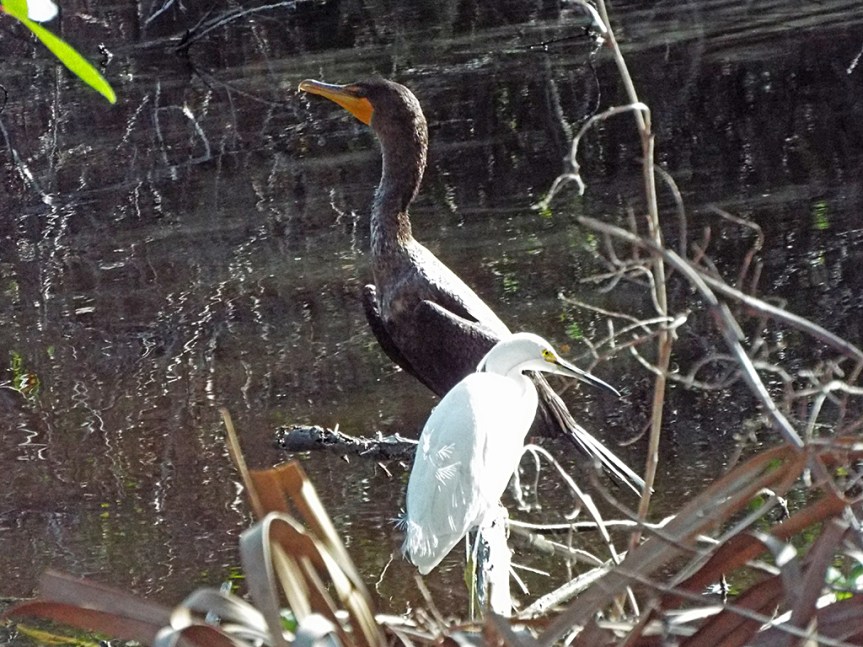
Most of the canal edges along Shiloh Marsh Road are wooded. Seeing wading, diving, and dabbling birds in it can seem strange.
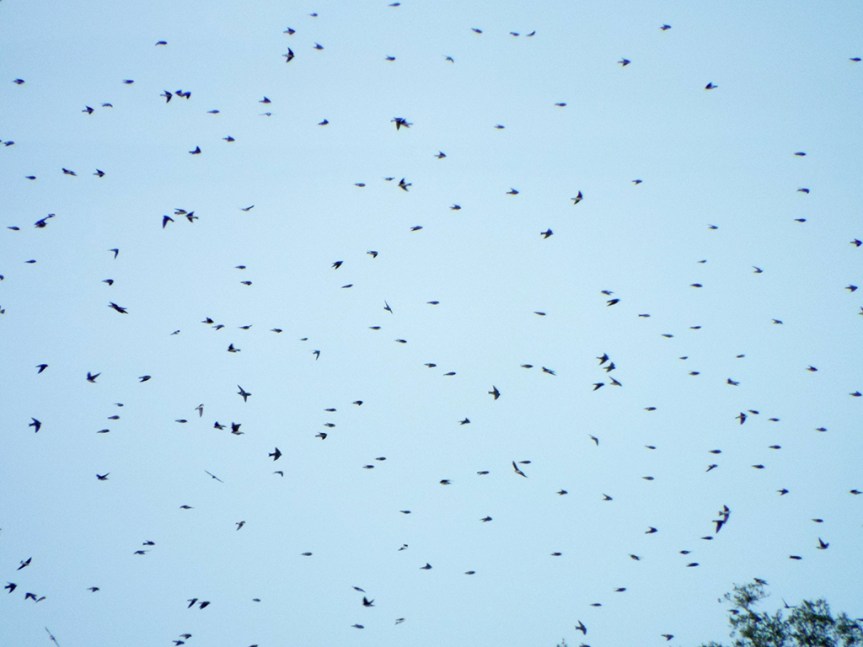
Unfortunately, neither of those things worked out for me, but I did get a reasonable diversity of birds, overall. The biggest thrill was the absolutely HUGE vortex of Tree Swallows nearby. The vortex itself never went directly over my location, but the number of birds was staggering. I estimated 3,000 for my eBird list, but I think that was a gross underestimate.
A tiny portion of the giant Tree Swallow vortex.
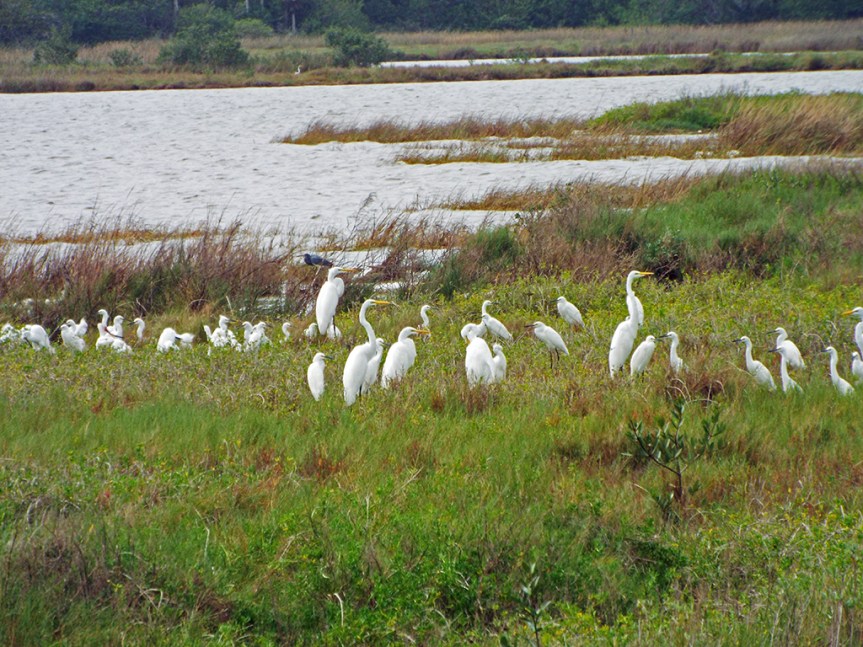
I am sure you’ve heard the old axiom, “Birds of a feather flock together.” This was borne out by a large mixed flock of egrets, White Ibises, and even an American White Pelican that were congregated on the west side of the road along what’s sometimes labeled as “Coot Creek.”
A bunch of white dudes hanging out.
Coot Creek would seem to be apt, as American Coots were the most plentiful bird on the water, all along the road and on the marsh itself. I tried to see if any ducks were hiding amongst the large coot rafts, but I did not see any.
I was surprised to see a Horned Grebe, though. They have been showing up a bit more than usual around the area this fall.
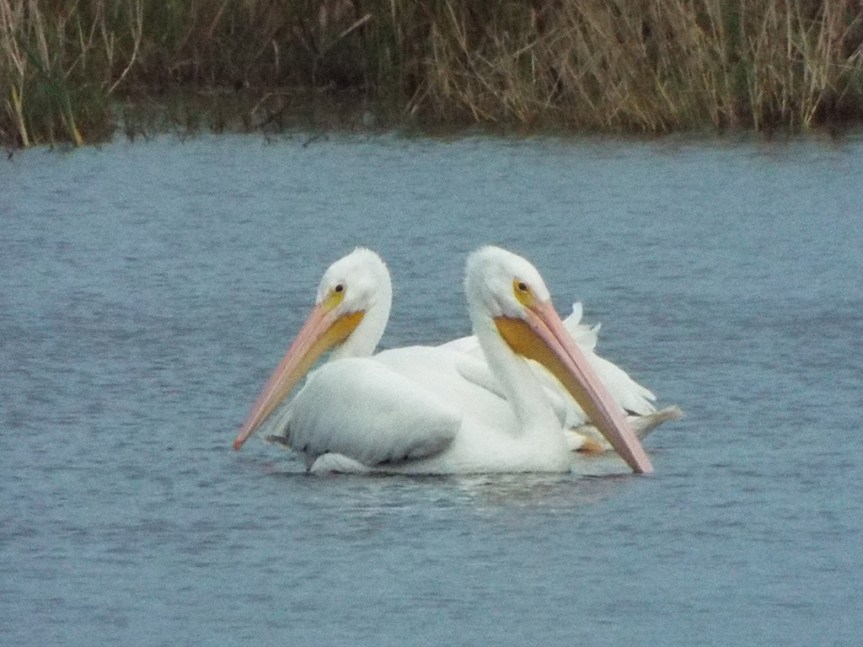
Several small groups of American White Pelicans were flying overhead, and two landed together on the nearby open water. I don’t know if that means they are a mated pair.
Lovey couple, or just good friends?
On the way back I saw the season’s first large flocks of both American Robins (nearly 200) and Cedar Waxwings (about 50). A Loggerhead Shrike watched as I approached the exit.
I have one more outing planned for 2015, then it’s on to the Christmas Bird Count (the team I am on has January 2nd), the Freshwater Systems module for the Florida Master Naturalist Program, and SCBWF at the end of January!
Hello! Merry Christmas and happy holidays to everyone! There have been a series of technical issues here at the Lonely Birder blog, but I have ironed most of that out. Please, enjoy these outtakes from my December birding in and around central Florida!
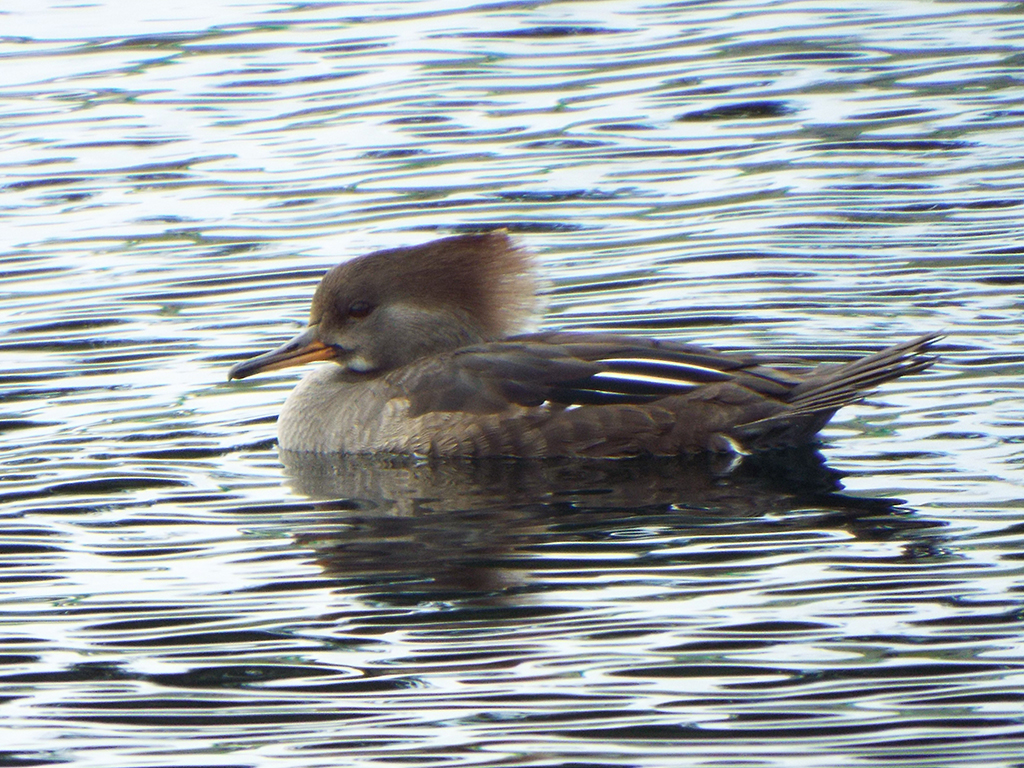
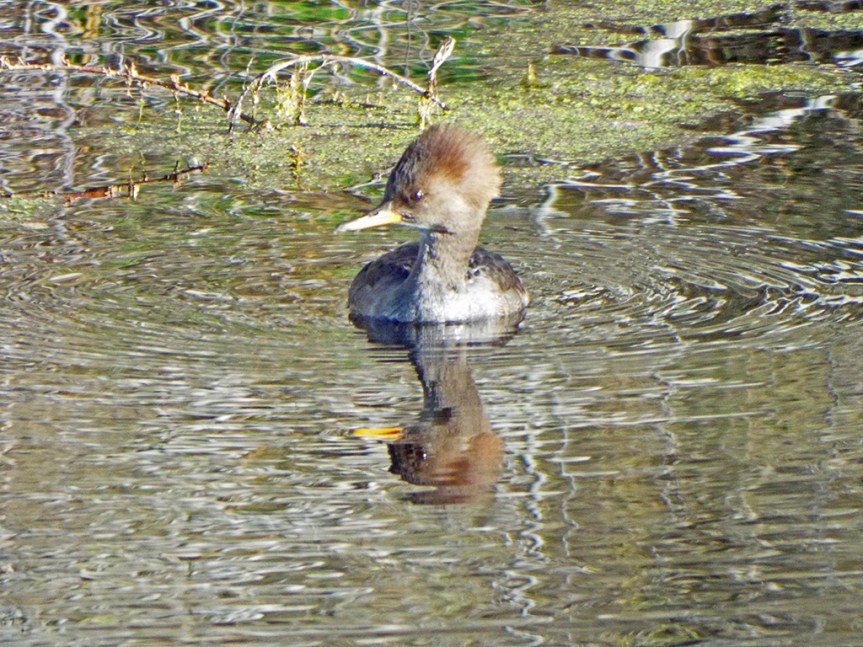
Female Hooded Merganser
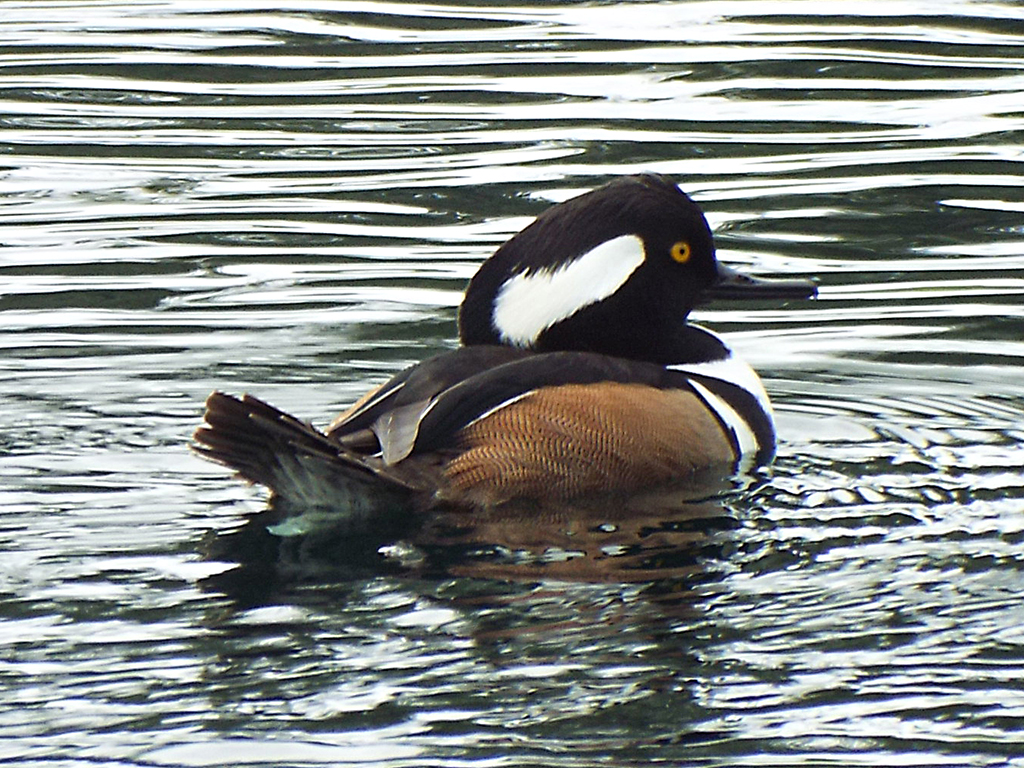
Male Hooded Merganser
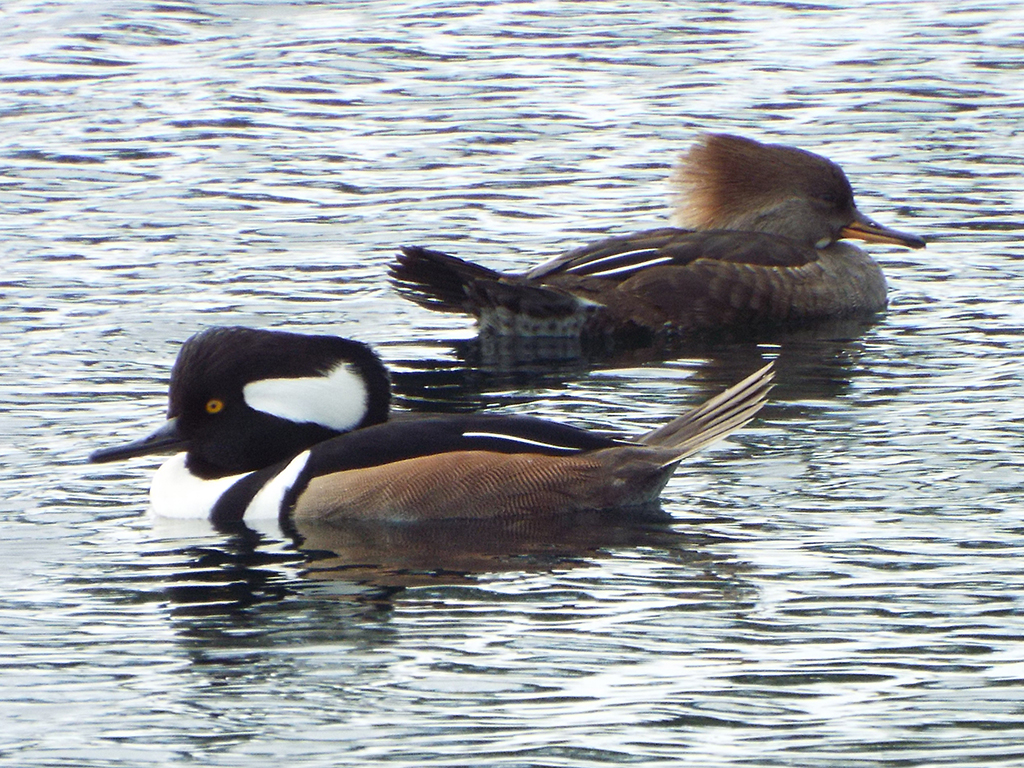
Hooded Merganer pair
Savannah Sparrow
Redheads in the mix
Common Loon with a fish
Common Loon
Red-breasted Merganser
I hope you are having a great holiday, whatever you choose to celebrate! If I don’t get to blog before the end of the year, Happy New Year, too!
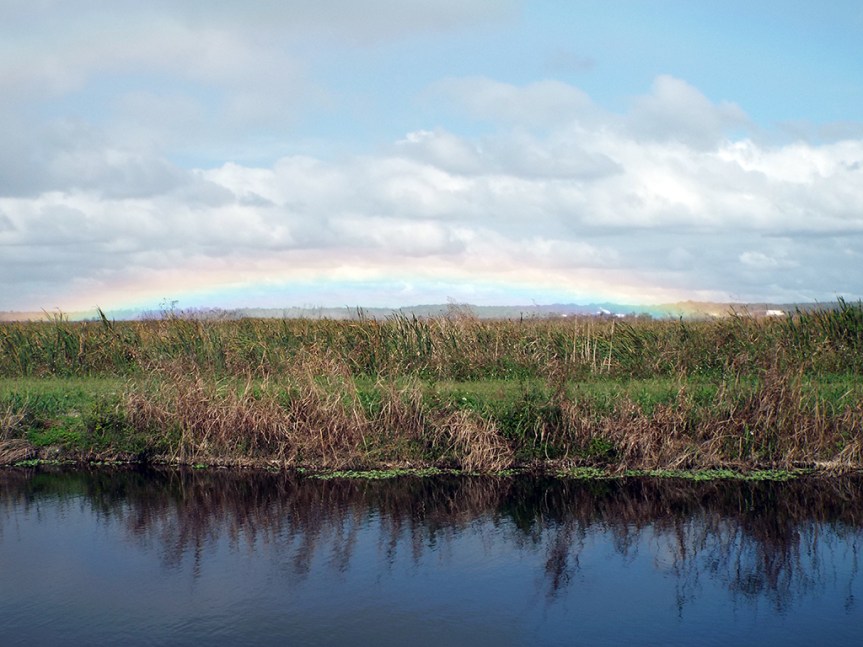
On a recent visit to Lake Apopka, it was “splash and dash” showers all morning. The sun was still just low enough for this rainbow, which seemed to hug the ground.
Just as in Merritt Island, ducks are coming in for the winter all across Florida, though they seem to be late in coming to the big parks and refuges. I have seen reports of larger numbers of scaups in neighborhood and commercial development ponds.
Female Hooded Merganser.
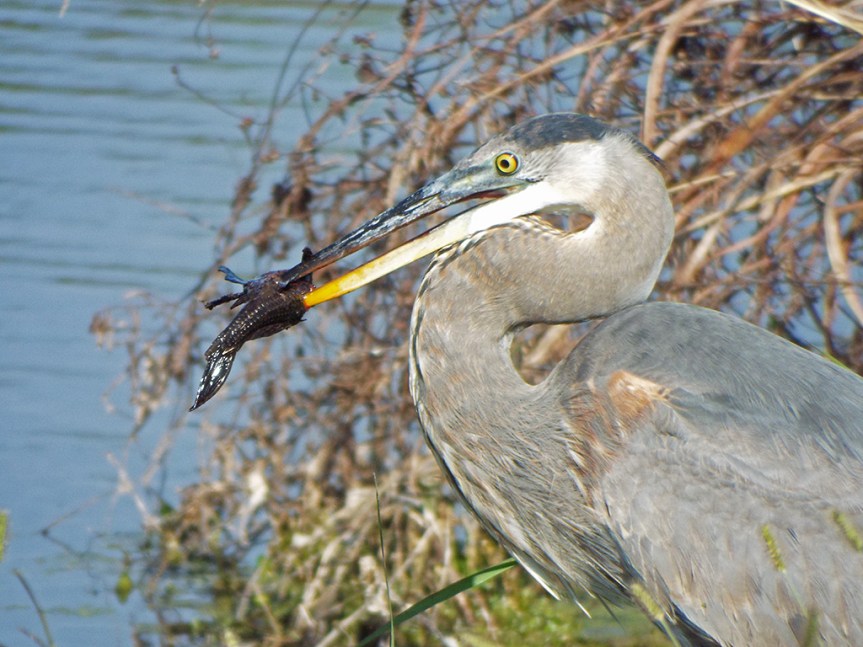
The first Great Blue Heron of the day had speared a large catfish, but seemed to be having trouble figuring out how to eat it.
Breakfast!
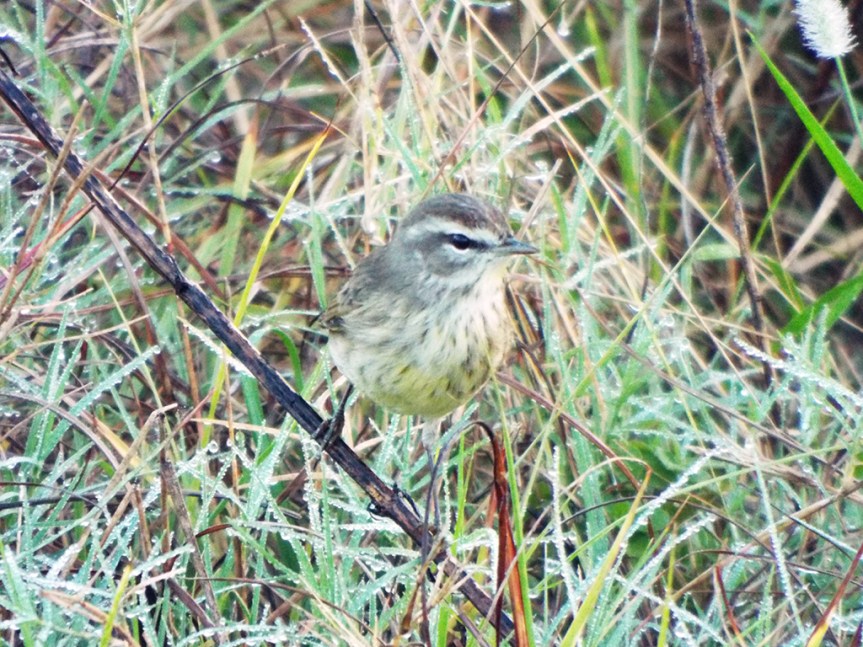
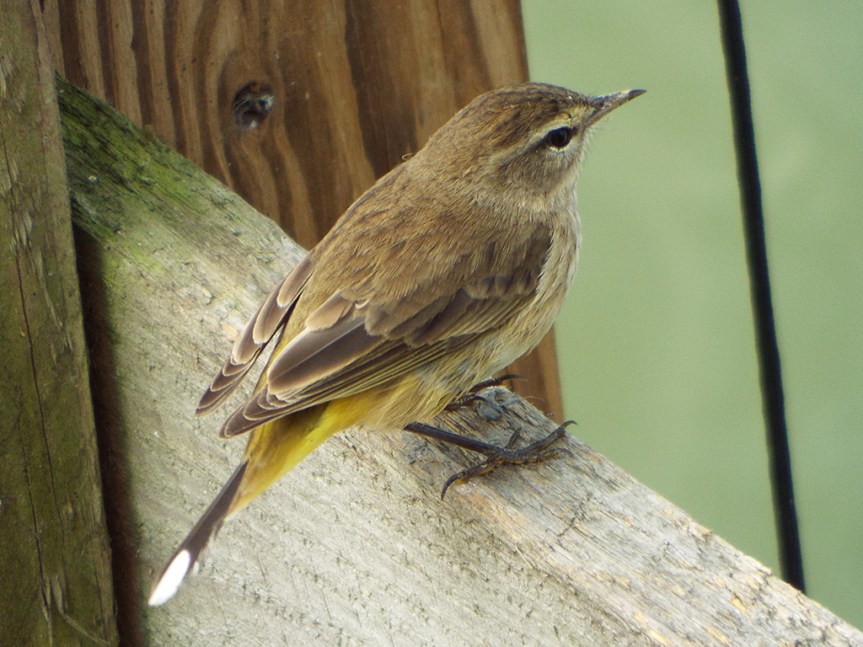
As is typical of central Florida in winter, there were large numbers of Palm and Yellow-rumped Warblers. Palm Warblers will usually allow you to get somewhat closer to them, especially if there are many of them in the same place. They always seem curious and will stop to watch as I fumble with my binoculars or camera.
Recently a rare Brown Booby (well, rare for inland central Florida) had been seen around the old pumphouse. I did catch one distant look at a bird that looked suspiciously like a booby, but it was just too far away to be sure. There were Eastern Phoebes, ibises, Ospreys, and (of course) more Palm Warblers around.
Here you can see the yellow under-tail coverts and white tail spots that are good field-marks when the birds are actively flitting around.
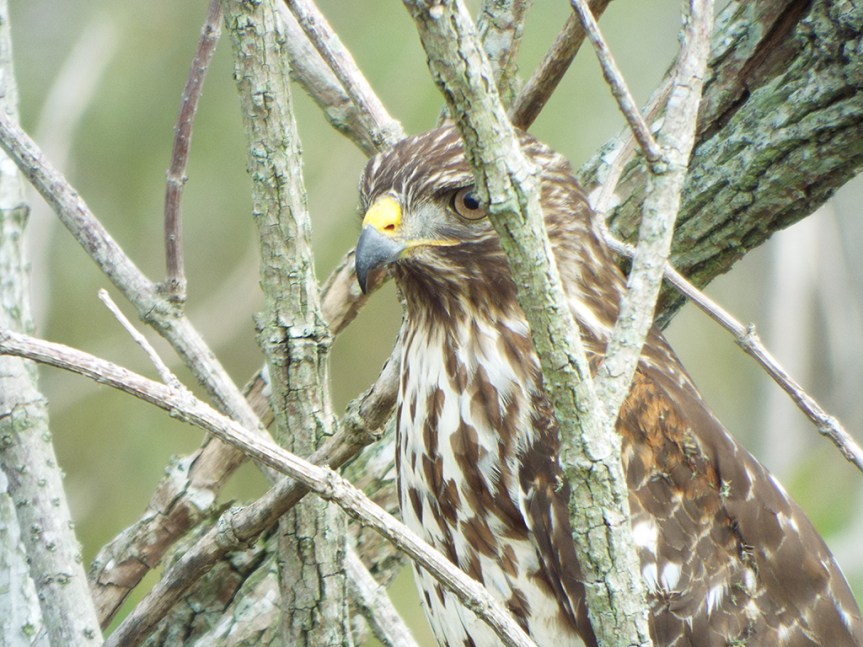
Nearby a juvenile Red-shouldered Hawk was sitting very close to the roadway in some trees. Both the typical and pale “Florida form” varieties were present throughout the morning.
When this bird matures, into next year, it will have a red, finely-barred breast and rufous shoulders (hence the common name of the species).
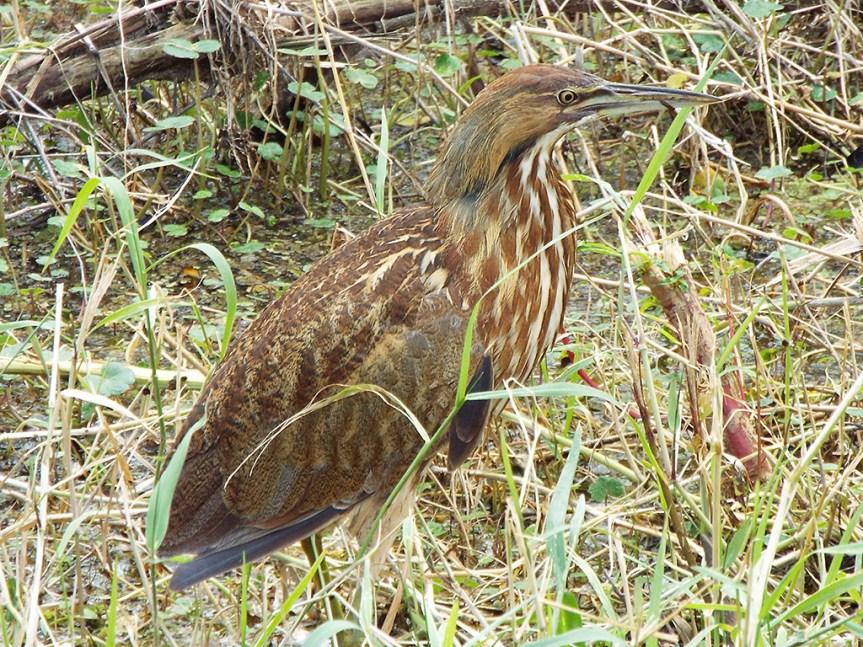
American Bitterns have been back in the area for a while now, but I finally saw my first of the season (FOS) birds on the first pass through the wildlife drive. One was quite close to the car, much more interested in stalking prey than anything else.
American Bitterns will often hide in tall reeds and rely on their coloration and pattern to stay concealed. But it’s not uncommon to find them out in the open if they feel secure and hungry, as this bird clearly did.
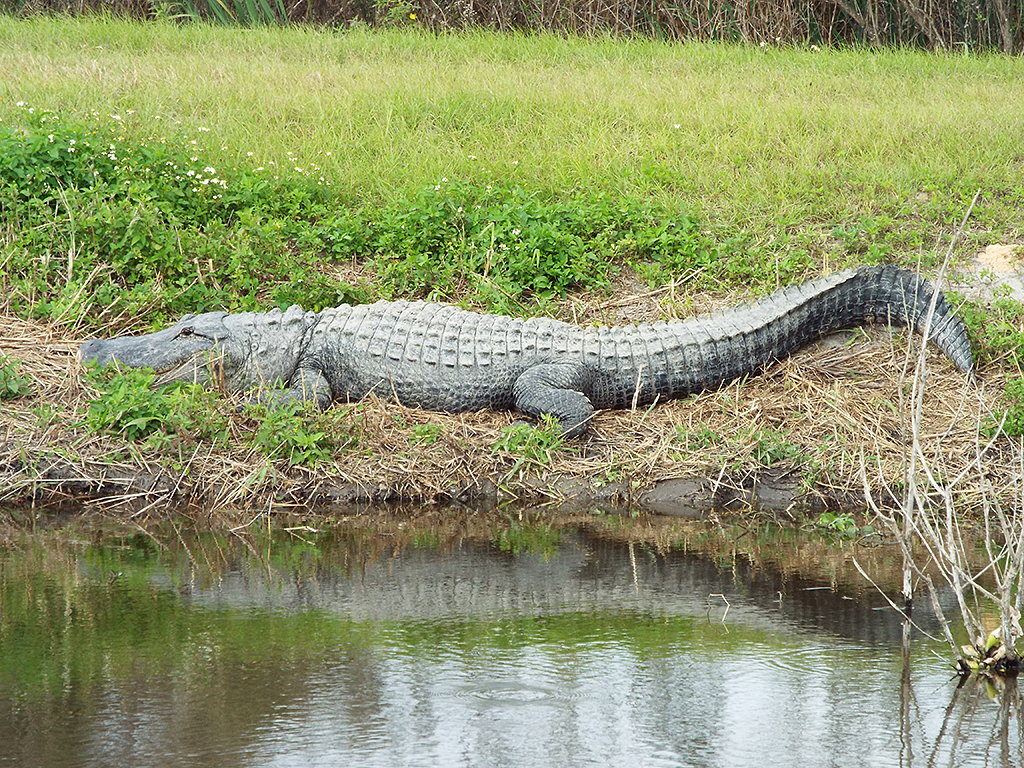
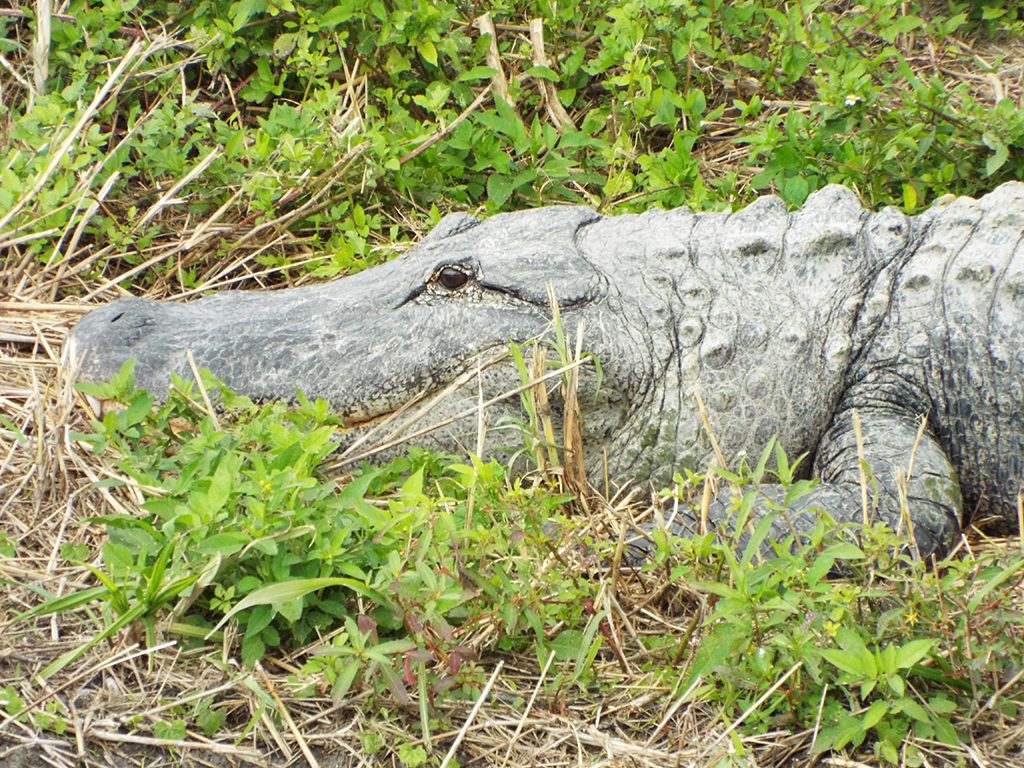
There a quite a few larger alligators along the drainage canals that parallel the roads. Many were well over 2 meters (6.5 feet) long. They were taking advantage of the sun, between rain showers.
One of the larger American Alligators along the wildlife drive.
When you’re this big, you generally have very few worries.
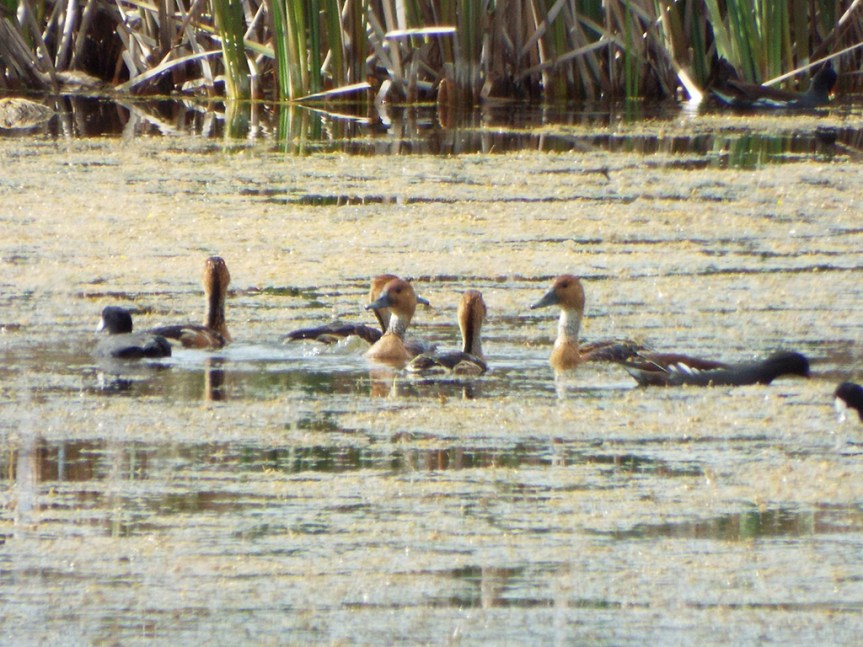
What was really great was seeing Fulvous Whistling ducks for more than 2 seconds! I have this bird on my life list from seeing a bird fly quickly over the car and out of sight one afternoon back in the spring. Since then, any birding adventure where these birds were alleged to be found, I came up empty. It took a second drive around to get them, but this time, I got some really good unaided-eye, binocular, and camera looks at them.
The first group of Fulvous Whistling-Ducks was a bit distant, but their profiles and coloration were unmistakable.
The second group of Fulvous Whistling-Ducks were much closer and were mainly preoccupied with preening. I tried to get two of the duck to look up at the same time, but to no avail.
There are certainly “greener” ways to bird, but some areas are better birded from a car. I try to work harder to reduce my carbon footprint and other disturbances as a result. Also, many birds that are skittish when approached on foot don’t seem to give automobiles much concern.
On Saturday, I went out with Camille to Canaveral National Seashore again, in hopes of getting more pelagic (oceanic/marine) birds, but the combination of weather and circumstance that had hundreds of scoters, gannets, and other off-shore birds coming south along the beach was gone, and very few birds could be seen.
We did make good use of the day to do Blackpoint Wildlife Drive, which was closed when we attempted it last weekend. It seems the ducks are finally arriving, though most of them stayed well away from the roadway.
I made pretty good use of an entry-level spotting scope that was generously given to me over the summer. With it we were able to identify far-off Canvasbacks, Redheads, and Northern Pintails.
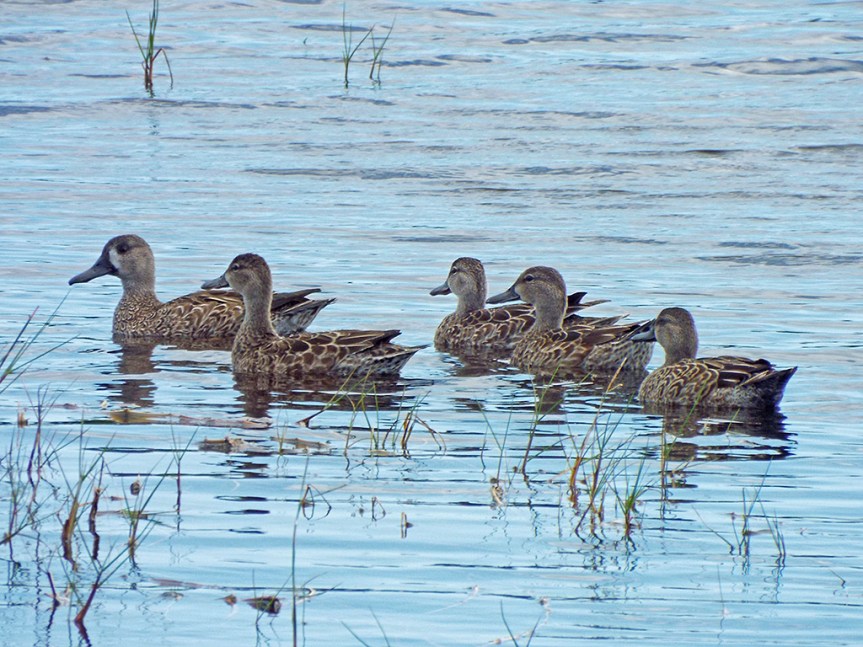
Blue-winged Teals. Some of the huge clouds of incoming ducks we saw all morning were probably teals, although I am sure some were wigeons.
Here’s a gallery of some of the other sights in and around MINWR:
This Caspian Tern stood apart from the larger flock nearby.
Another mixed flock of terns and gulls
Injured Horned Grebe taking refuge in the Refuge
One of two Painted Buntings making use of the Visitor Center’s feeder.
We ended the adventure with a sighting of 3 Buffleheads. They appeared to be either 1st winter males or females, but it was a nice bonus!
It was nice to see the duck activity increase, and hopefully we’ll have the usual numbers of scaups, Ring-necked Ducks and Northern Pintails keeping us company until spring!
Sunday was an epic day-trip around much of Merritt Island National Wildlife Refuge and part of Canaveral National Seashore. It was overcast and windy with intermittent showers, but the birding was worth it. I’ve highlighted a few of the stops here, but you can link to all the hotspots and bird lists at the end of the post, via eBird, for everything seen.
On Playalinda Beach, there were huge flocks of Northern Gannets and Brown Pelicans, as well as various terns, scoters, and shore birds.
One small group of White-winged Scoters flew quickly by, as well as more distant, large flocks of likely Black Scoters. There was at least one predatory jaeger (unknown species) and what seemed to be a shearwater of some sort, far offshore.
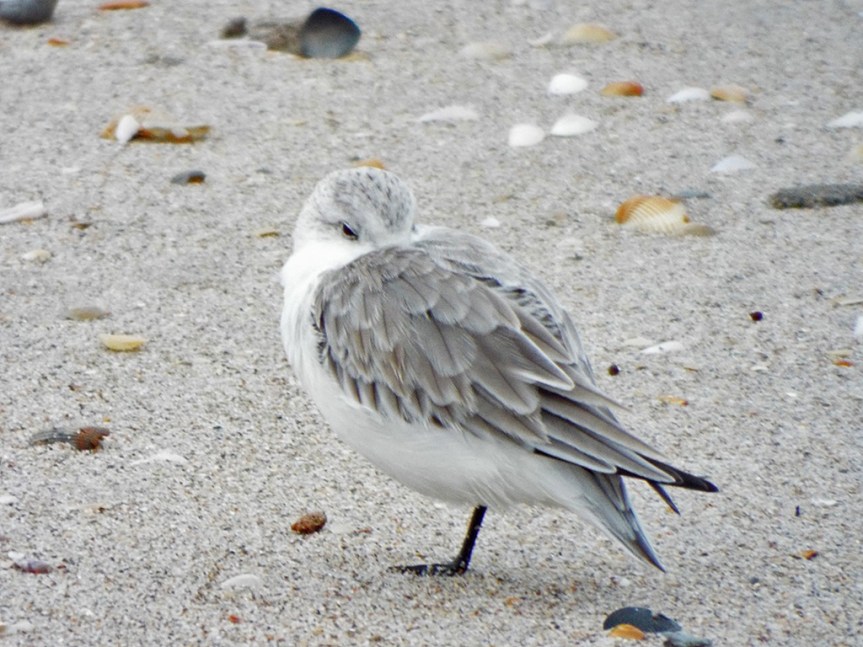
One Sanderling, well up from the surf, caught my eye. It seemed to be resting, but it kept peeking its eyes out, watching.
Many shorebirds and waders will stand on one leg, even to the point of hopping away when disturbed before finally putting both legs down.
After watching for a while, I noticed it was swiveling gently, back and forth. Like a weather vane, the bird was turning to align with the wind, perhaps to keep from getting blown over while it rested on one leg.
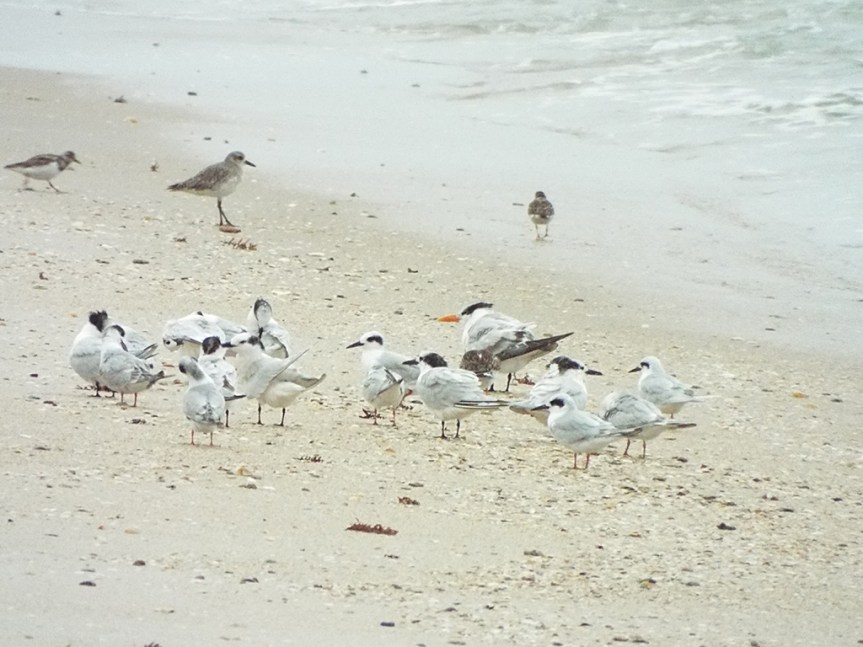
There was a mixed group of terns, which included Royal, Forster’s, Sandwich, and at least one Common.
Mixed flock of terns (with bonus shorebirds behind).
A few Black-bellied Plovers were working the beach. These birds’ winter plumage is much less dramatic than their breeding plumage, but the way this species moves and stands usually makes it quite easy to pick out in any case (to me they look almost delicate and timid at times).
At the end of Shiloh Road, at the extreme northern end of the Indian River Lagoon, there were hundreds of American Coots. In fact if you include the many rafts of coots along the canal, there was easily over a thousand! There were a few scattered Northern Shovelers, but not much else in the way of duck species. In fact, so far this fall, it seems the ducks have been slow to arrive. There have been no reports of Northern Pintails yet, and just a smattering of Redheads and Ruddy Ducks.
Most of Peacocks Pocket is closed for hunting until February, and a search for reported Nelson’s and Saltmarsh Sparrows along the first part of the road didn’t come up with much.
Blackpoint Drive was unexpectedly closed, perhaps due to one of the massive downpours that were blowing in and out of the area.
Bio Lab Road, however, proved more fruitful, if a bit hard on the nose. From time to time, due to algal blooms and other phenomena, the lagoon will really, really, smell. The wind coming off the water and right into the car (with open windows for birding, of course) was nearly overwhelming at times. It didn’t seem to bother the many Dunlins and Least and Western Sandpipers who were foraging among the stench filled foam at the water’s edge.
Dunlin
Least Sandpiper
Western Sandpiper
Here are all the stops and eBird lists for the day, which include the first of season Ruddy Duck at Vista #8, and first-in-forever White-winged Scoters at Playalinda Beach.
It was a really good day, despite the closure of Peacocks Pocket and Blackpoint Drive. I had never been to Playalinda Beach before, and it was a real treat. If you want a fairly good idea of what the beaches of the Space Coast would be like in their “natural” state, have a visit – but tread lightly. Beach habitats are especially sensitive to human disturbance.
This past Saturday, I traveled south to Jonathan Dickinson State Park (map) with Camille to have a look at the Smooth-billed Ani that had been reported there over the past several weeks. In fact, earlier this year a Smooth-billed Ani was reported at the nearby Loxahatchee area, so this may have been the same bird. The park is also near Jupiter and Hobe Sound, and this was my first visit to the area.
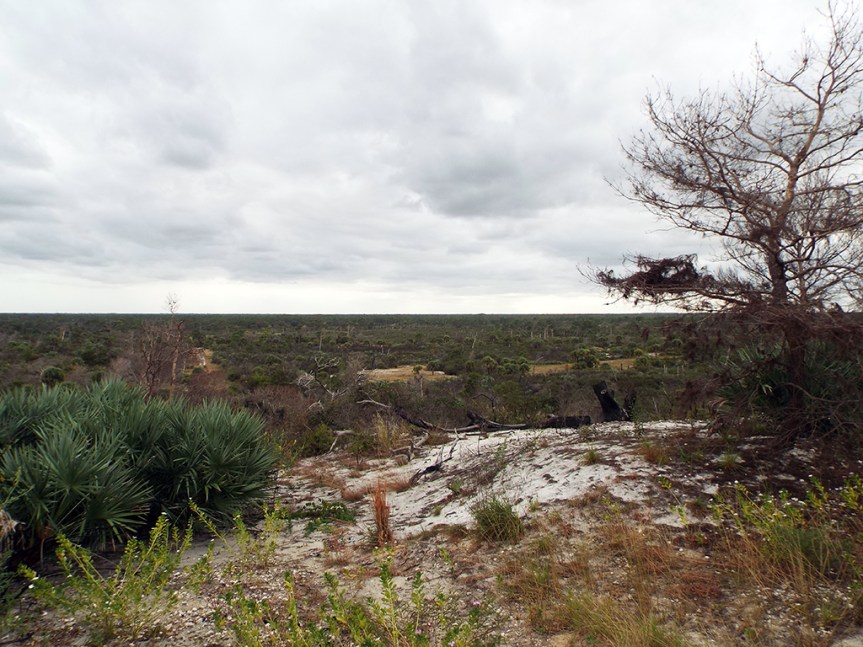
Jonathan Dickinson State Park comprises a large area of ancient sand dunes covered in mixed scrub vegetation. Some of the dunes are relatively high. In fact, the highest elevation south of Lake Okeechobee (well, its nothern limit anyway) is Hobe “Mountain”, at 26 meters (86 feet) above sea level.
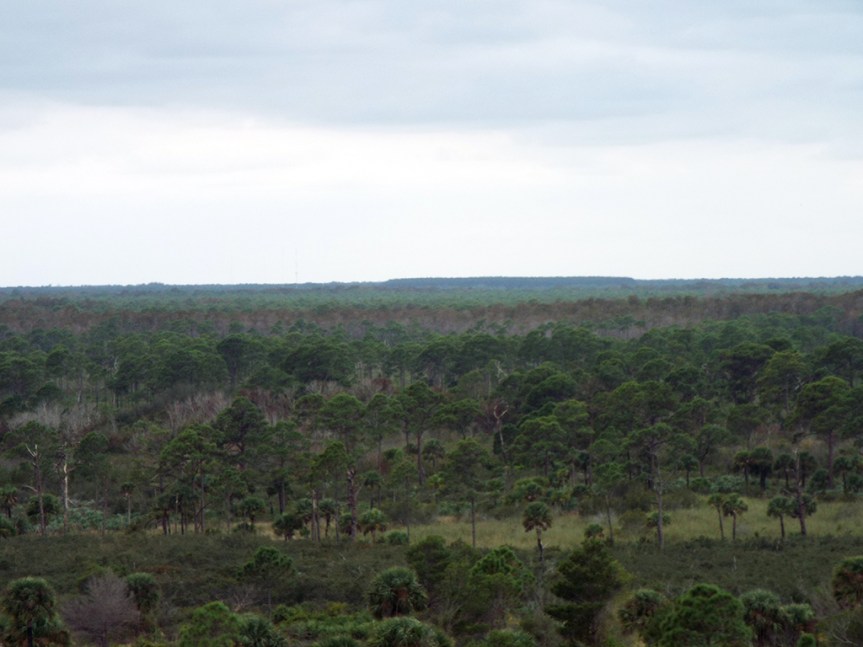
Looking across the ancient dunes of the park from up near Hobe Mountain.
It isn’t evident in my photos, but the park is fighting several invasive plant species. The most visible is Love Vine, which covers large areas of the scrub. It’s a bright orange vine that looks like spaghetti has been draped over the other plants. The only thing that slows its growth is prescribed fire. There was evidence of at least 2 large fires in both the state park and the Hobe Sound NWR. The native plants are fire tolerant. In fact, many rely on fire for their life-cycles.
Much of the morning was spent staking out an area in front of a pond feature where the bird was most frequently seen. We met with Edna, from New Jersey, who had made the trip specifically to see the bird (later on her husband and son also arrived). She had a sound recording of the calls it was making a day or so prior, and had some tips for where else to look.
The weather was mostly overcast and quite breezy. I know from this past winter that the Groove-billed Anis that were at Lake Apopka were very keen to stay out of sight during the very brisk field trip I attended during the Space Coast Birding and Wildlife Festival.
A short while later, I did catch sight of a large-ish black bird low in the dormant vegetation along the pond. It was the right size and shape for an Ani, but the glimpse was so brief that it was not possible to tell what it was.
Paul Huber came by, too and we saw him a few times near the gazebo by the road near the pond. It’s nice to see familiar faces when you’re out, especially in new places.
Camille also caught a very brief glimpse of a bird in there, but as there were several Gray Catbirds in the same area, it was not conclusive. The breeze kicked up more as the day wore on, likely pinning the Ani down in the dense brush.
Ani, are you OK?
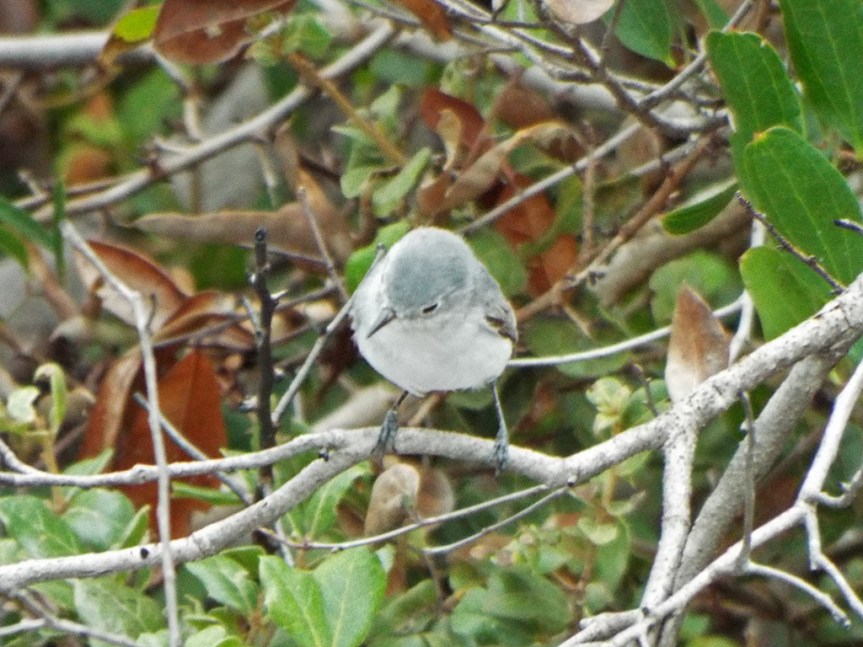
We walked part of a Mountain Bike loop, both tp get a feel for the park and to perhaps get a better angle where the bird may have been. In the course of that walk, we did see some birds, including Blue-gray Gnatcatchers, Palm Warblers, a Northern Flicker, some Red-bellied Woodpeckers and a Florida Scrub-Jay.
Blue-gray Gnatcatcher.
The ani had also been seen in the nearby campground, so we walked over and had some tantalizing glimpses of some warbler species and what I am sure was a Scarlet Tanager. I had one good look at the bird in profile: dull yellow with black wings, no wing bars, and a stout bill. It was the right size and shape for a tanager, but mid-November would be VERY late for this species in that area.
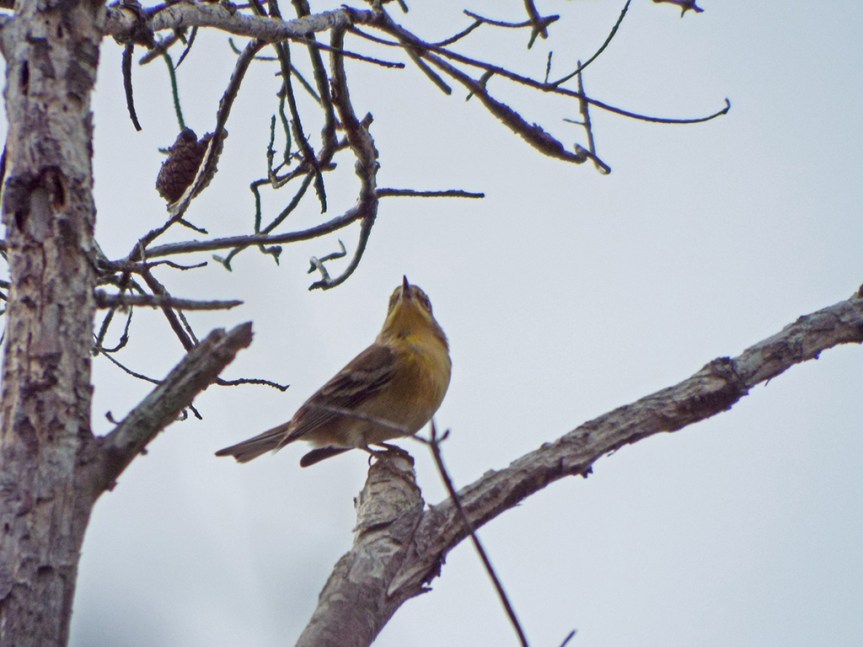
We broke for lunch at the Time To Eat Diner restaurant in Tequesta, FL (a very comprehensive menu!) and visited the neighboring Hobe Sound National Wildlife Refuge. They have a nice nature center there that purportedly has a Red-tailed Hawk and a Barred Owl on display; however, they were having a “day off” when we were there. We hiked one of the loop trails among the dunes there and saw an American White Pelican, more gnatcatchers and a Pine Warbler, among a few others.
We took the walk up to Hobe Mountain and had a look around at the expanse that is Jonathan Dickinson State Park and the adjacent Loxahatchee River and Cyprus Creek Natural Areas.
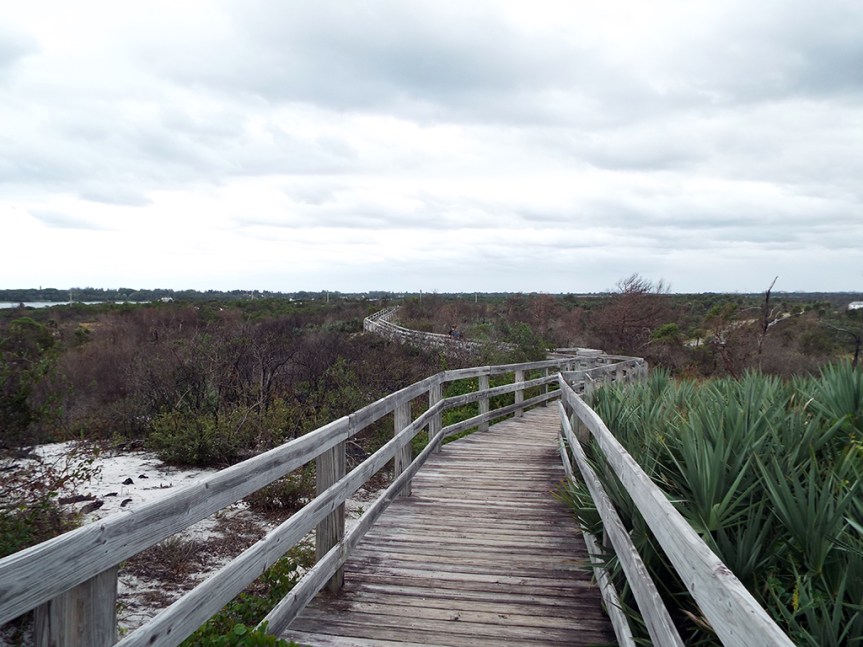
Looking down the long boardwalk that leads up and down Hobe Mountain.
A nice view across the park from the observation deck.
We checked back with Edna and her husband and son by the pond, but the Ani still had not shown itself. We spent the rest of the afternoon waiting for the bird to show, but there was no evidence it was anywhere nearby.
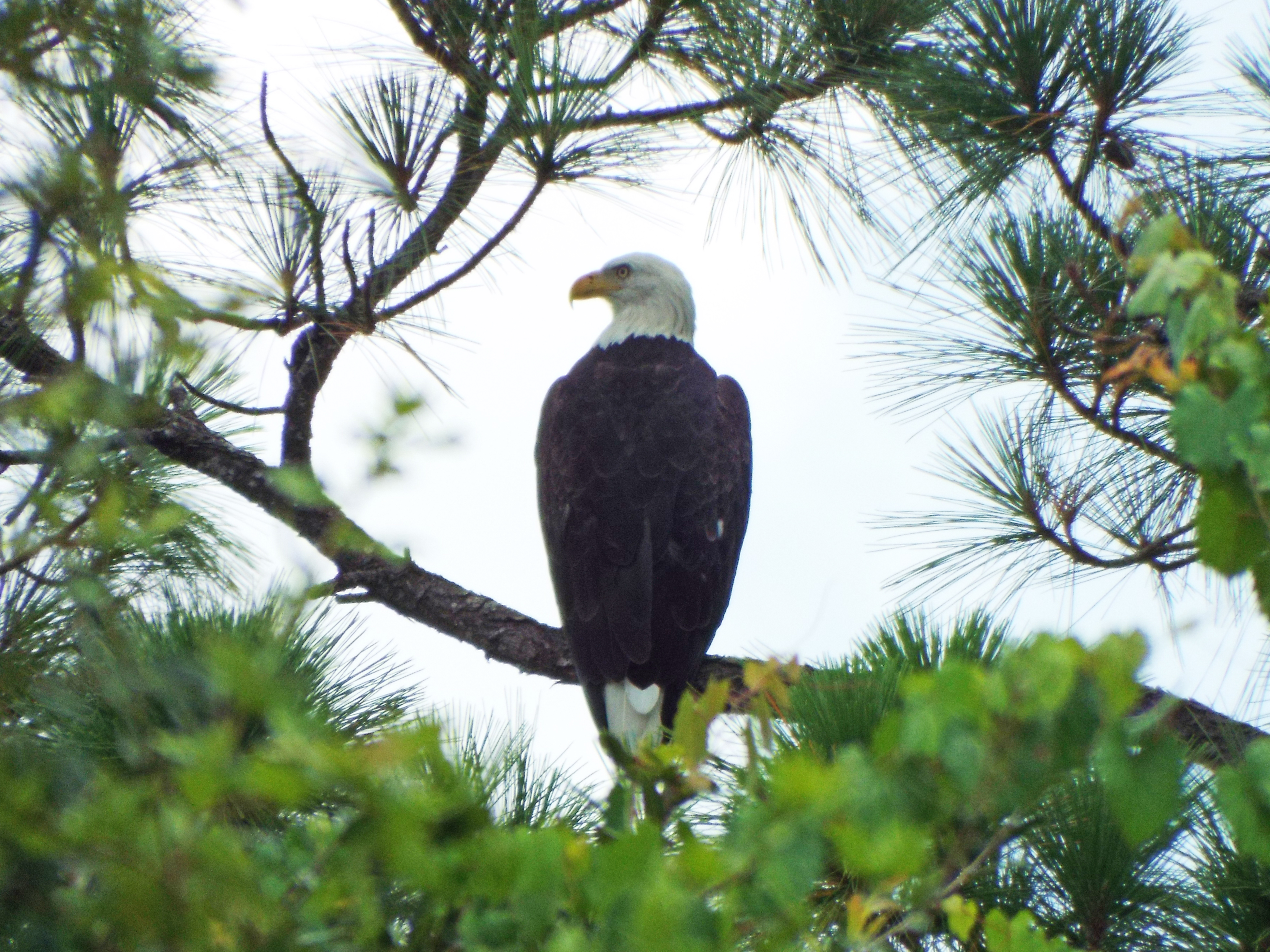
While there, we did see an American Kestrel, a Merlin, a Bald Eagle and several more woodpeckers. An Eastern Phoebe was working the pond edge along with several more Palm Warblers.
Eventually we had to call it a day. Here are links to the eBird lists and a comprehensive list of all the birds we saw on Saturday.
That’s the way it works sometimes. It was a good reminder that the birds are not there primarily for our enjoyment or edification. They are living out their lives and we should feel privileged to have the opportunity to observe and record them. Whenever I feel the urge to crash through the brush or run through a thicket in pursuit of a bird (especially a rarity or a life-bird), I try to check myself. We should never let our zeal for any bird cause us to scare, stress or damage wildlife. It can be hard sometimes, I know.
Here are some photos from this past weekend’s Orlando Wetlands Park adventure (map). It was a nice day, with slightly broken overcast skies, which cut down on the glare.
A first-year male Vermilion Flycatcher and Scissor-tailed Flycatcher had been reported there last week. If you recall my blog from earlier this year, an adult male Vermilion Flycatcher has spent most of the last few winters there. It’s interesting to me that another of that species has shown up. There has been no sign of the bird from this past winter, yet.
Eastern Phoebe
One of several Black-bellied Whistling Duck families.
Belted Kingfisher
Juvenile male Vermilion Flycatcher
One of my best looks at a Yellow-billed Cuckoo
There was no sign of the Scissor-tailed Flycatcher (and it hasn’t been listed on eBird or the mailing lists for over a week now), but plenty of other birds were around, as well as some non-avian friends. There were a few Black-bellied Whistling-Ducks with chicks. Being a relatively new arrival to the area, I’m wondering if these ducks are figuring out they can breed year-round or at least stick around longer in Florida. I suppose time will tell.
An American Alligator trying to catch some sun
Wood Stork
Wading Tricolored Heron
Handsome Turkey Vulture
A cute River Otter
There was an impressively large aggregation of Blue-winged Teals, but no other duck species that I noticed (besides the Black-bellied Whistling-Ducks). More should be arriving soon.
Other birds of note include Purple Martins (quite late in the year for them), Royal Terns (unusual this far inland), and a Solitary Sandpiper (hanging out with some Lesser Yellowlegs).
Orlando Wetlands Park closes to the general public on November 15th and will reopen February 1st. According to the Friends of the Orlando Wetlands website:
In order to purchase the property for the Wetlands, a 50 year agreement was made with the landowners allowing them to hunt the property during the closed season.
Oh, the deals you sometimes have to make. Looking forward to 2037…
It finally happened! I finally made a trip out to Ft. De Soto Park. Whether it’s on eBird on the e-mailing lists, the birding there has become legendary. Even as birding along the Space Coast has wavered these past few years, some of the lists from Ft. De Soto have been epic. Hundreds of terns. Dozens of warblers. Specialties. Rarities.
Fort De Soto is essentially an island in the Gulf of Mexico south of Tampa. As such, it acts as a migrant trap for birds making their way along Florida’s coast. This time of year shorebirds are starting their treks south, as terns gather for their winter dispersal.
We did a quick walk of the trail by the rangers’ residence in case of some early migrant warblers and such, but the trail was fairly quiet, except for the terns calling along the nearby beach. There are some benches and a fountain nearby that must be a lovely spot when migrant songbirds are passing through. We then walked out onto the nearest fishing pier and saw some gulls, terns and Black Skimmers along the narrow beach. There were some Snowy Egrets hanging around the shop on the pier, but not much else was happening here either.
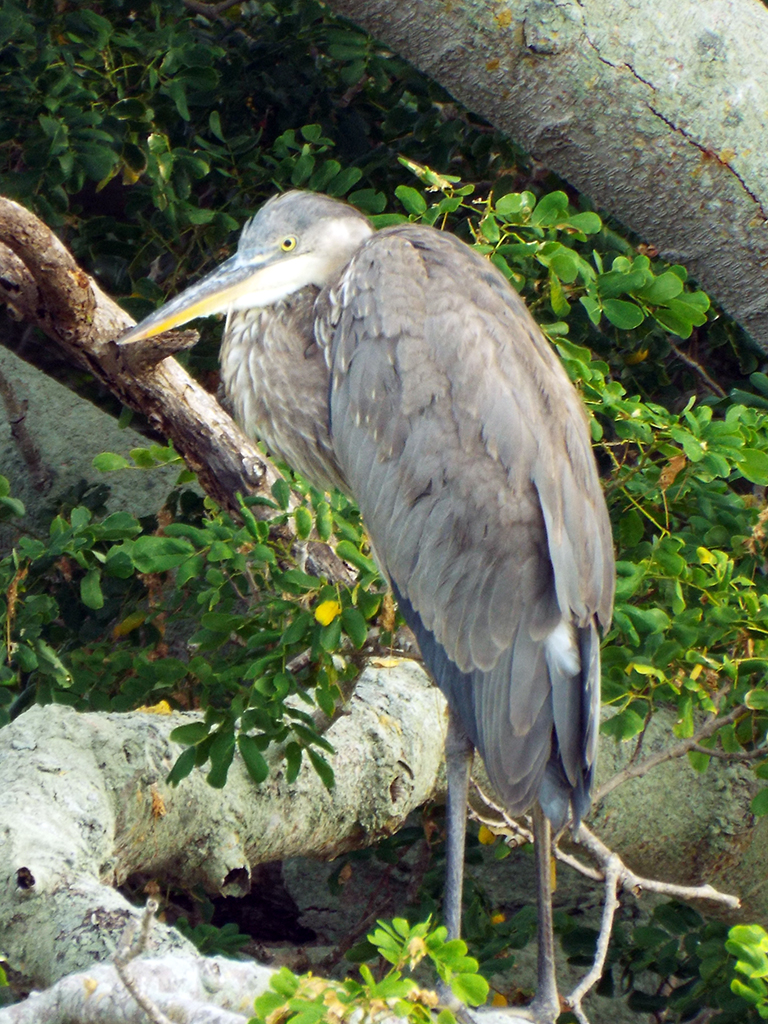
A solitary immature Great Blue Heron.
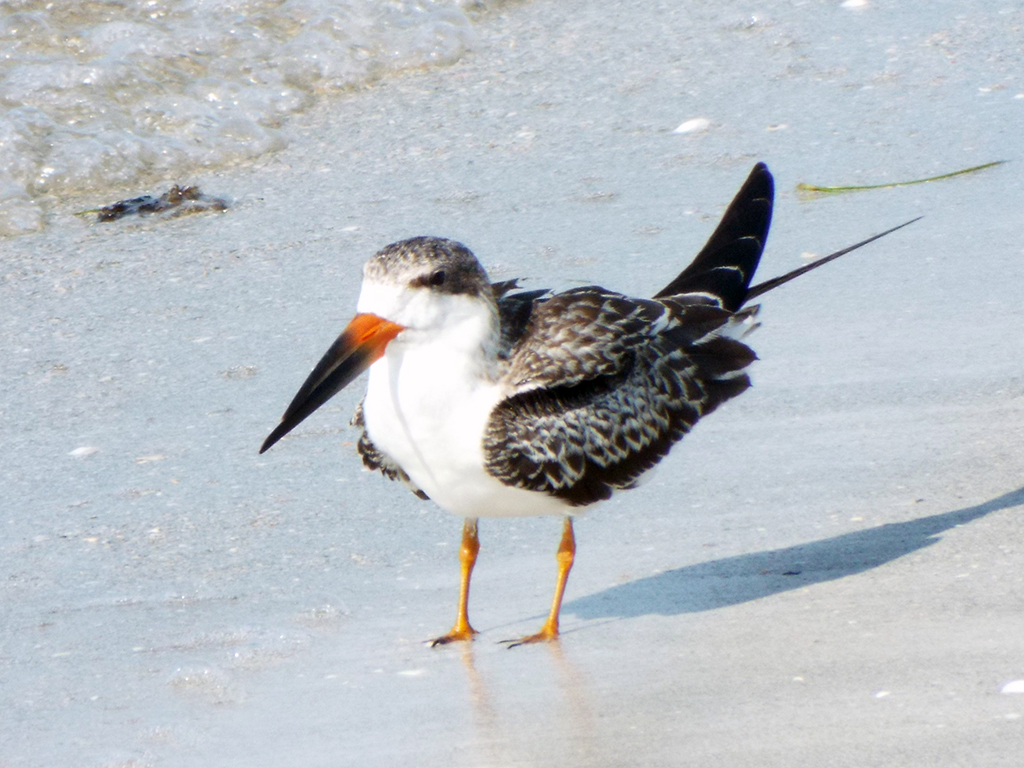
Young Black Skimmer near the pier.
Along North Beach a lovely collection of Black Skimmers, various terns, Marbled Godwits, Short-billed Dowitchers, Semipalmated Plovers, Laughing Gulls and more were congregated on the protected sandbar. Many of these birds are the first of the year for me. In the second photo below, notice the immature skimmer resting it’s long bill on the sand – a common posture when these birds aren’t flying.
Cutest shorebird ever? Piping Plover (note the banded legs).
Lots of Black Skimmers on the sandbar.
Mixture of gulls, terns, and shorebirds.
Even a Marbled Godwit!
Black-bellied Plover hanging on to breeding plumage.
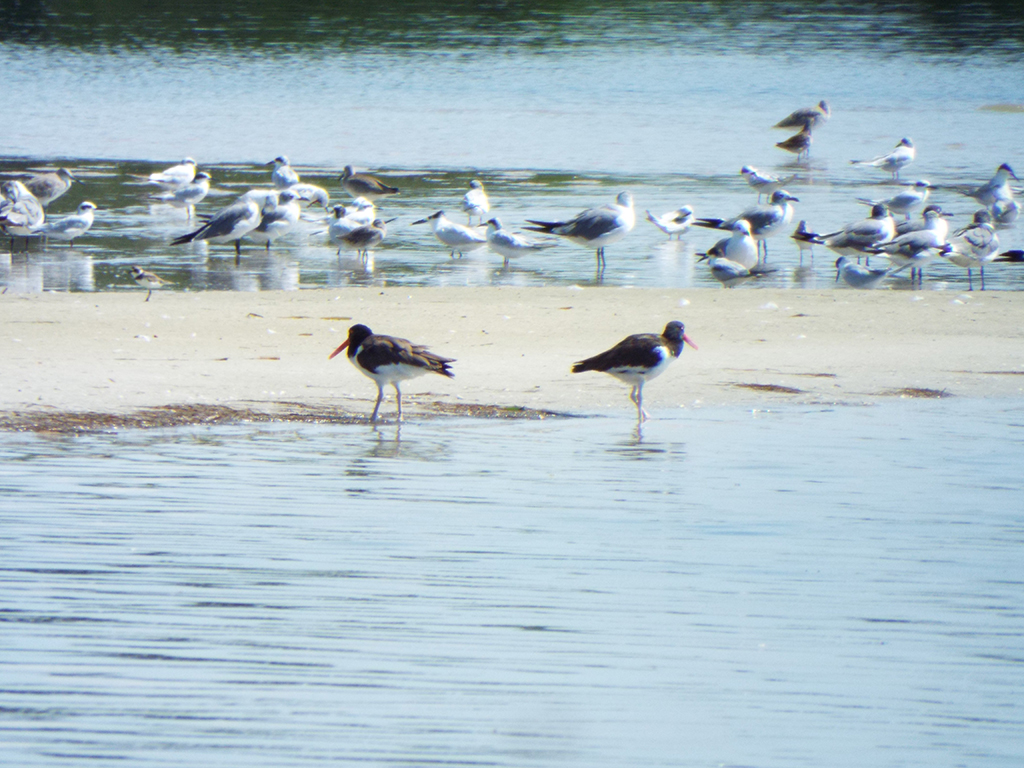
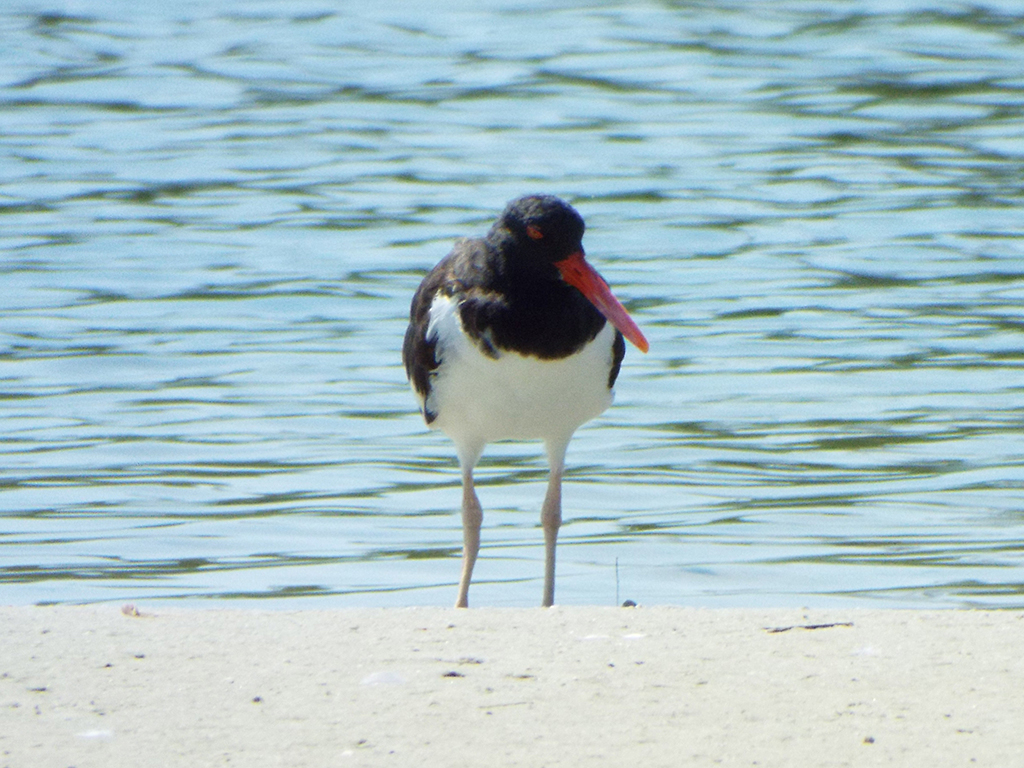
There was a nearby mudflat full of Willets, peep sandpipers, gulls, terns and a few other shorebirds. One of the elusive species both Camille and I have been hoping to see all summer is the American Oyster Catcher. There were some very nice birders who were staked out by the North Beach sandbars with a spotting scope and educational material. They pointed out that some oystercatchers were seen at this mudflat. They also gave us some other tips that proved very useful throughout the day. Local knowledge is invaluable at times.
Even from a distance, the American Oystercatcher is distinctive.The oystercatchers’ stout, chisel-like bills are great for forcing open bivalves (e.g., oysters, clams, and mussels).
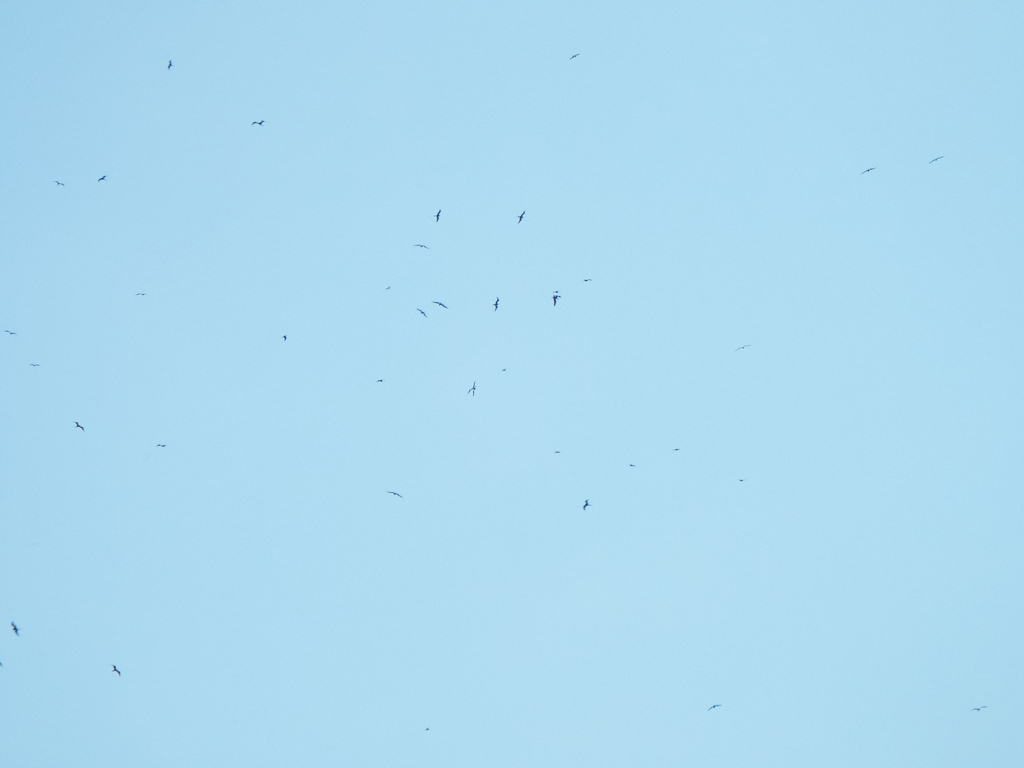
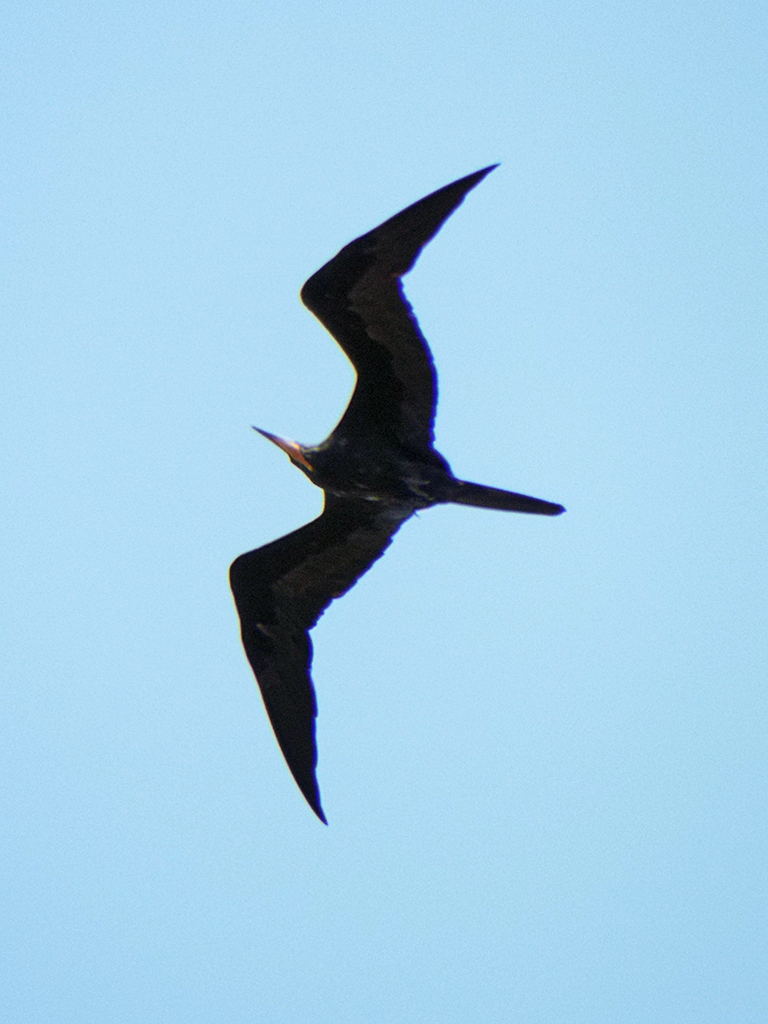
As we took a break for lunch, we noticed that a large number of Magnificent Frigatebirds had begun soaring in kettle just outside the park. The women at North Beach had said that by afternoon their numbers would increase, but I was thinking maybe two dozen at most.
From a distance you might first mistake this for another of umpteen vulture kettles riding a thermal.
There were at least FIFTY frigatebirds, swirling around, mostly over a residential community outside the park. They were surprisingly hard to photograph, even when they swooped down fairly low. Magnificent Frigate birds have a very long wingspan – up to 2.4 meters (8 feet)!
Back in the park, there were more mixed flocks of terns and shorebirds on the East Beach, including more Short-billed Dowitchers.
A Short-billed Dowitcher still in (worn) breeding plumage.
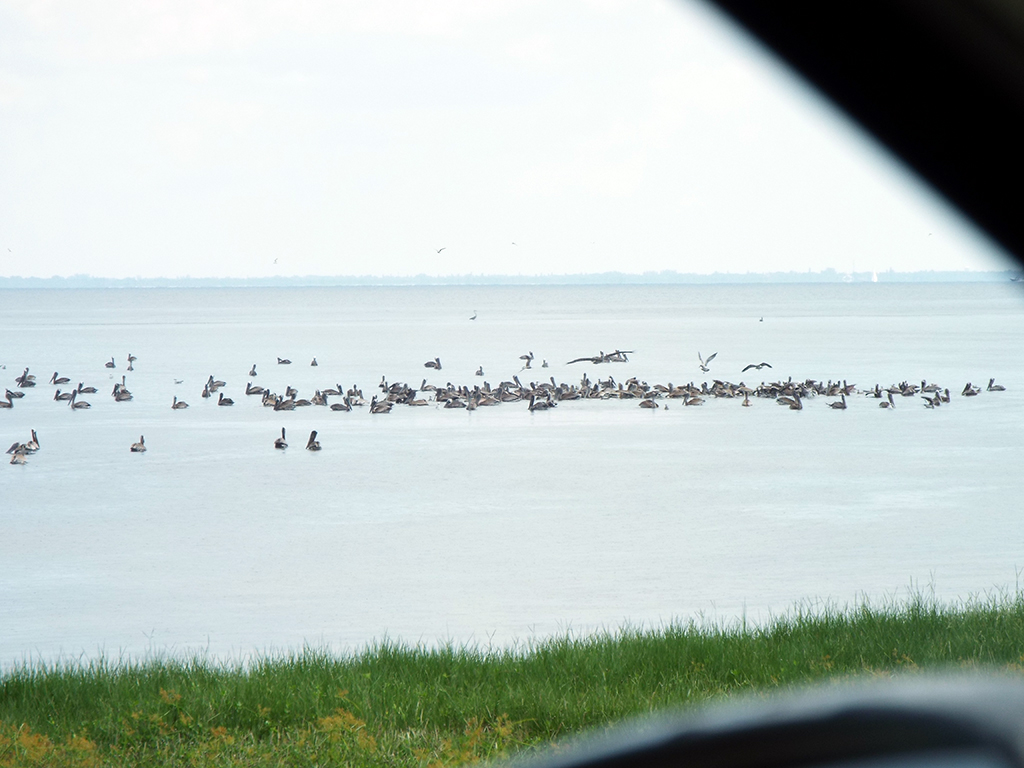
There was a large assemblage of Brown Pelicans off the East Beach – dozens in large rafts – offshore from East Beach. I’ve never seen that many Brown Pelicans in one place.
In addition to the beach and mudflat habitats, Fort De Soto Park has some wooded and upland/scrub areas as well. Although it was near the peak heat of the day, we walked through one area in case some early fall migrants were making their way through.
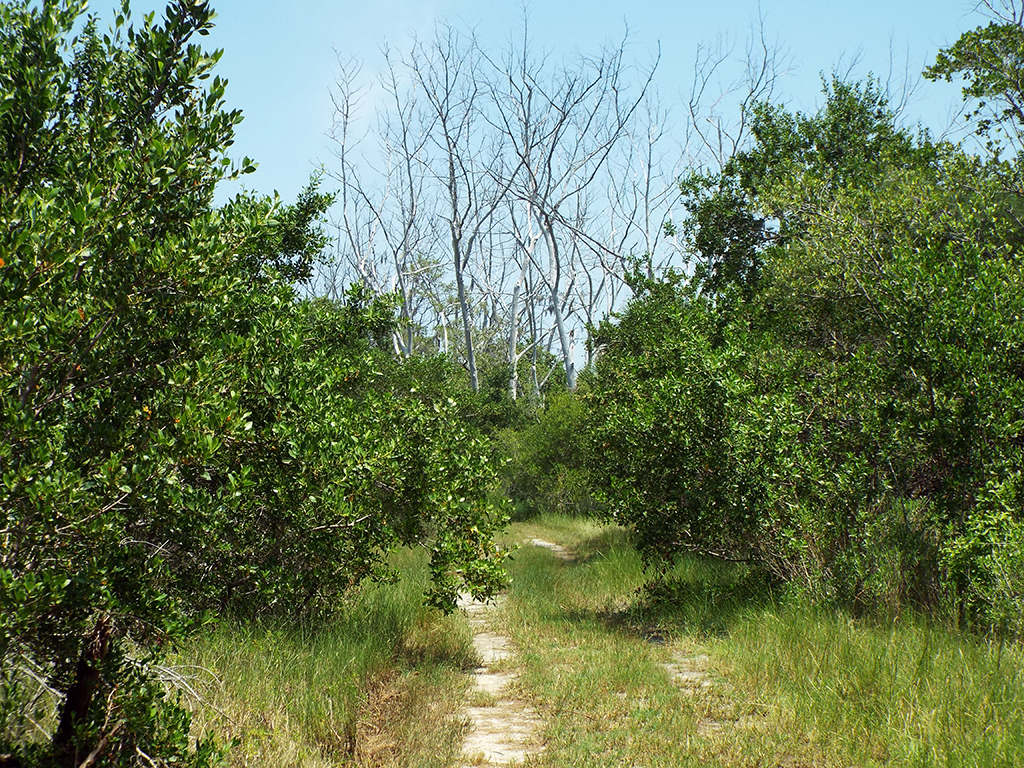
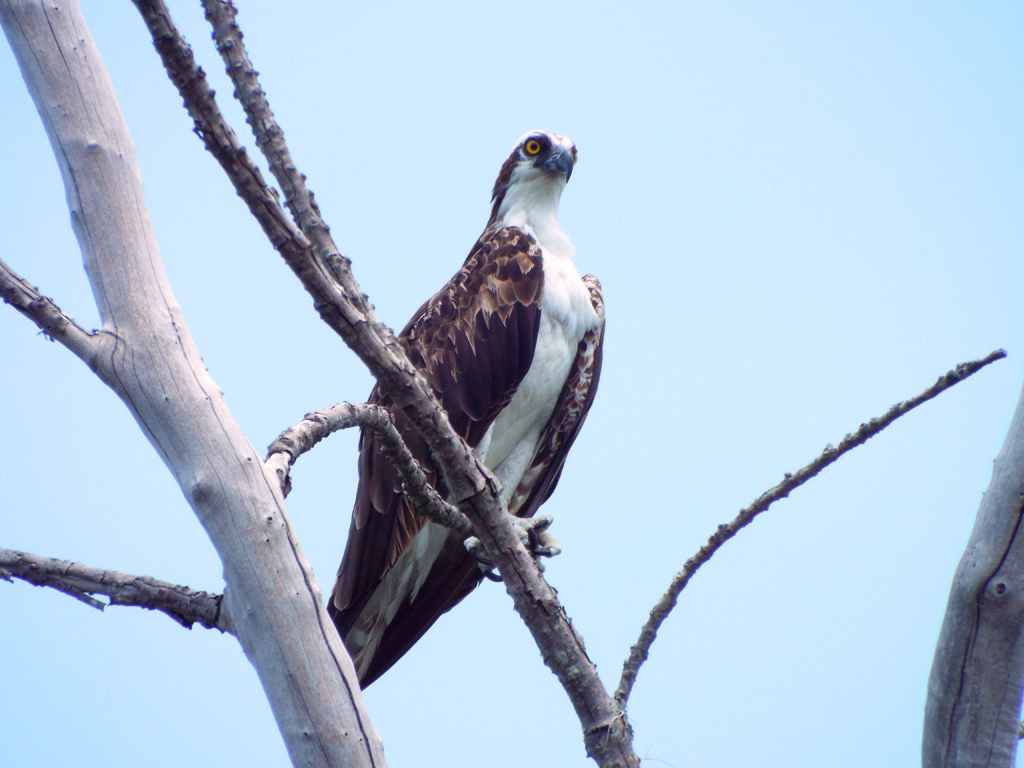
The most we saw were several Ospreys in the dead trees. We did see a few Common Ground-Doves and hear some cardinals, but there were no small passerines anywhere.
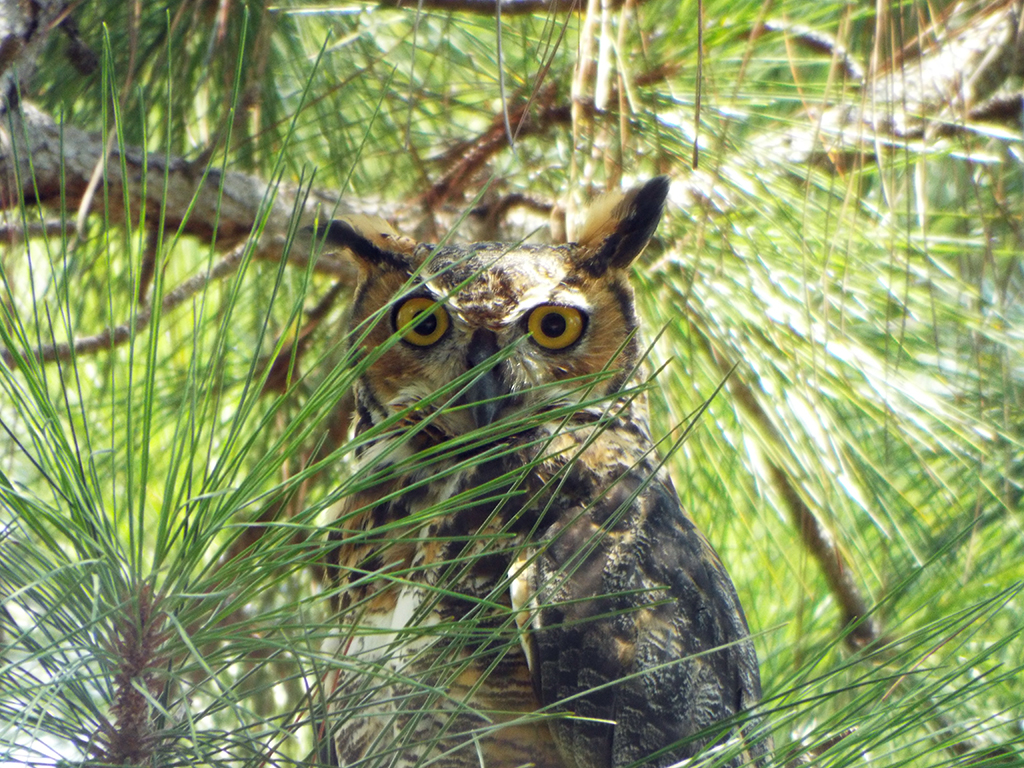
Our final stop was where Camille had seen probable Great Horned Owls when she visited the week before (a nesting pair is known to be there), but never got a great look. We retraced her steps and came up on a pair of owls! It’s a rare and awe-inspiring sight to see any owl, but to see this large species in broad daylight made my spine tingle.
Who goes there?
Who’s this?
Other than another run at North Beach, showing much the same mix of birds as the morning, that ended the day at Fort De Soto on a super high note!
Since there was still some reasonable amount of daylight left, we drove over to Gandy Beach (alongside the Gandy Bridge) to see what might be going on there. This turned out to be a very good decision! Among the many terns, gull and shorebirds there were a large assemblage of Black Terns (over 100!). I would never have suspected so many. In addition, there was a pair of Wilson’s Plovers, more dowitchers and even a Western Sandpiper.
I am really looking forward to coming back to Fort De Soto (and environs) – especially during the spring migration. The legend lived up to the hype, as far as I am concerned.
Some photos from this past weekend’s adventure to MINWR (Both Bio Lab Road and Black Point Drive). I had never been on Bio Lab Road before, but it looks to be a good place for shorebirds and waders, much like a lot of Black Point Drive.
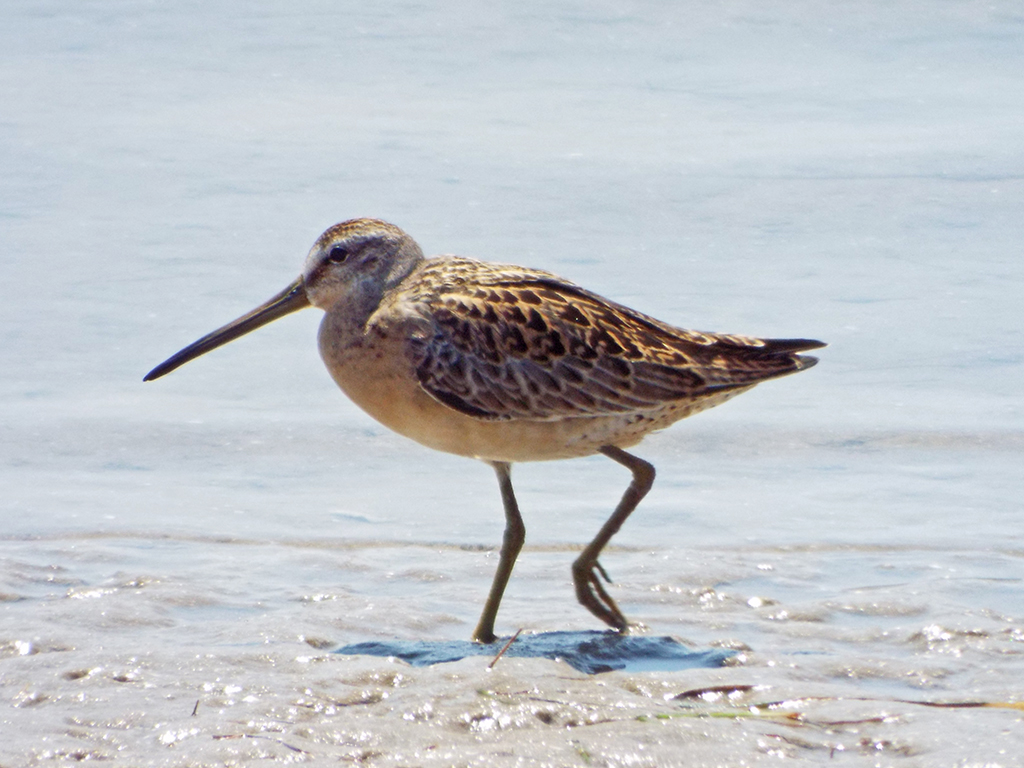
While both locations didn’t offer the best photographic opportunities, the birding was good, and I did finally to manage to get my first Spotted Sandpipers of the year.
There was a duck on Bio Lab Road that was hard to ID at first, but was also maimed, with his right wing partially missing. I had to do some digging and questioning (thank you Brdbrains!) to positively identify him, but it seems this is a Ring-necked Duck drake that had been injured in the early spring and has been cruising around all summer. I was glad he seemed healthy and I am sure he’ll be happy to see his kin in the fall.
Black-necked Stilt. The vignetting was a happy accident!
As the summer is moving on, some of the early shorebird migration is getting started, and even some larger numbers of gulls and terns are starting to gather. Some of the lists at Fort DeSoto over on the Gulf coast are already getting impressive (at least from these meager Atlantic birding grounds!).


















 Lonely Birder