Driving down the Overstreet

September 30, 2017

Joe Overstreet Road and Landing are among Osceola County’s most interesting birding “hotspots”. The road heads down to the northeastern edge of Lake Kissimmee, through ranch and farm lands. At the landing, wading birds are common, and the lake’s resident Snail Kites are usually around. Last weekend was a good opportunity to check them out.
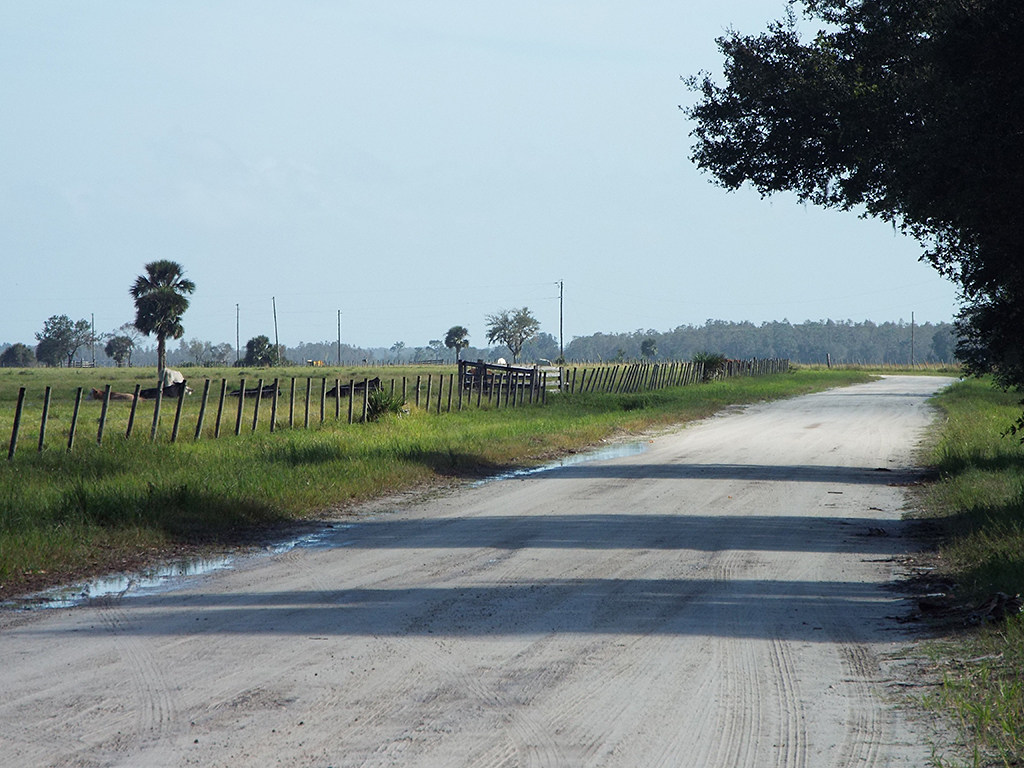
joe-overstreet-road
Joe Overstreet Road.
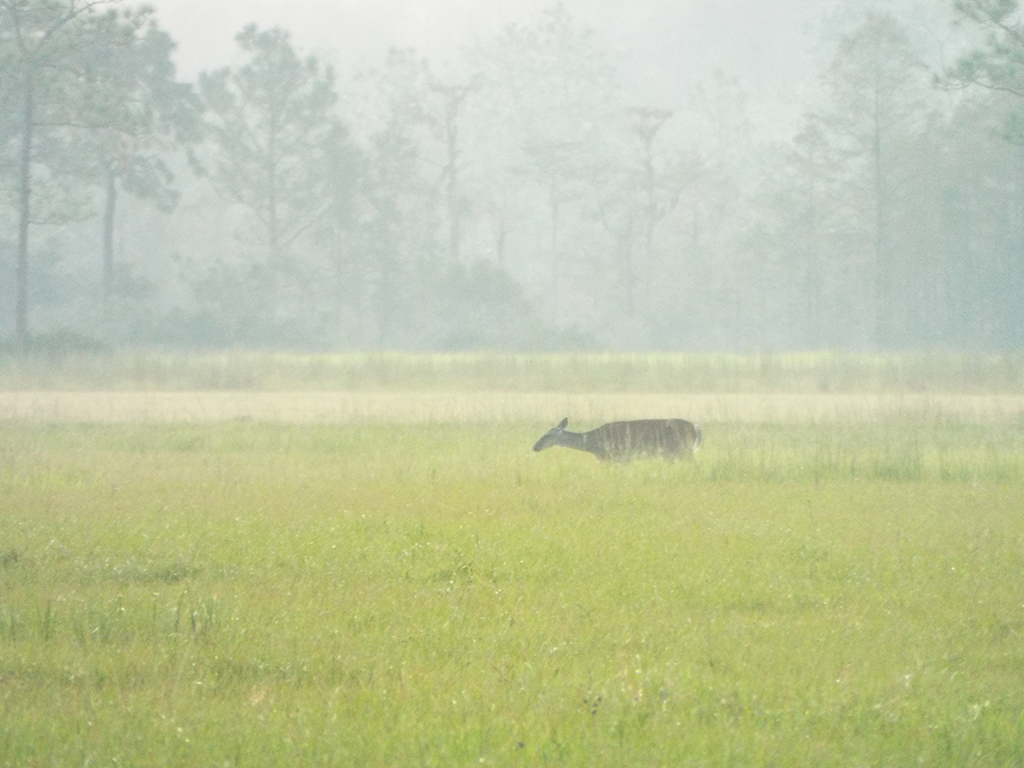
morning-deer
A White-tailed Deer in the morning mist.

The trees and shrubs along the road edges are often a good place to stop and watch for warblers or other small songbirds. Sometimes the early morning light can be a challenge, especially if the birds are back-lit. But I had some good luck this time around for some White-eyed Vireos and friends.
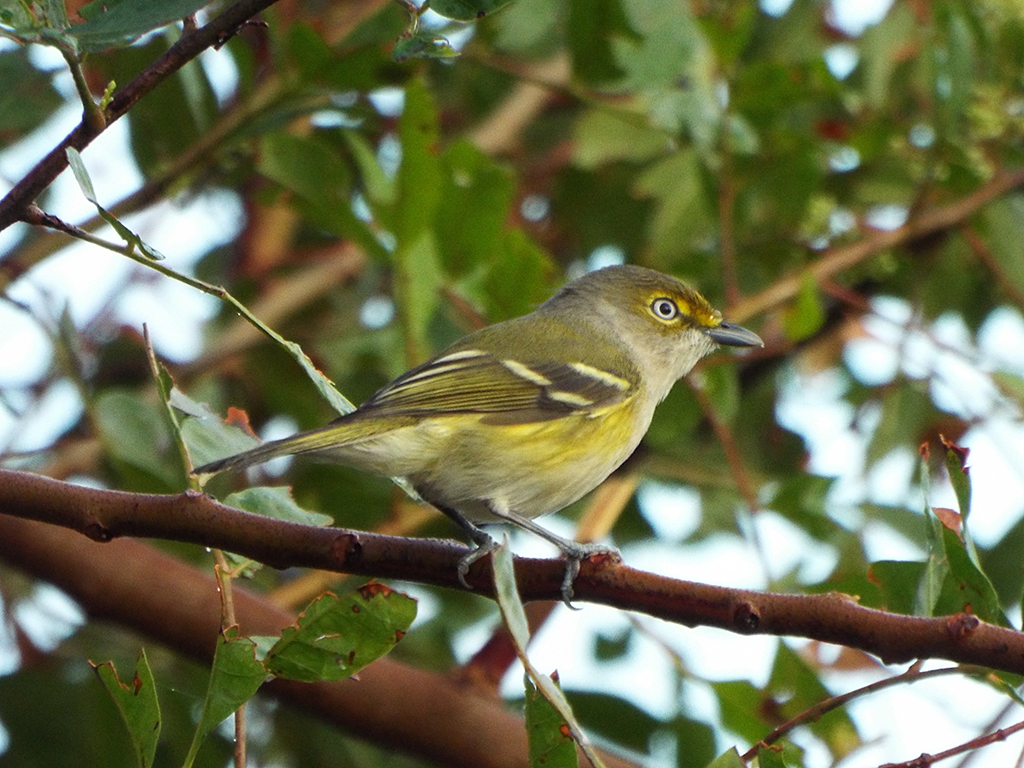
white-eyed-vireo
One of several White-eyed Vireos, going about morning duties.
common-yellowthroat
This first year male Common Yellowthroat doesn’t have his complete mask, or “domino” yet.

Wherever small birds are (or other prey items, like large grasshoppers or katydids), you have predators. There were Loggerhead Shrikes staking out the road edges, and further out over the fields I could hear Red-shouldered Hawks calling out.

loggerhead-shrike
This Loggerhead Shrike was looking quite interested at the Common Yellowthroats down below.

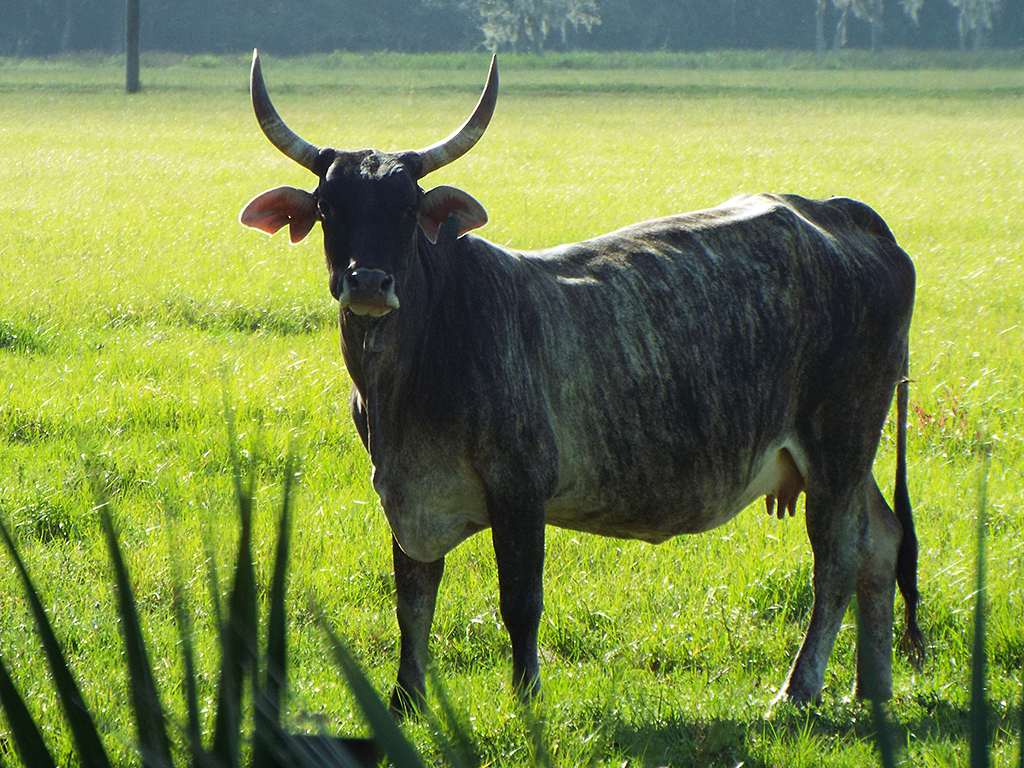
During Spring and Summer there are usually a large number of Cattle Egrets along with the cattle, but with the advent of Autumn there were very few of any sort of heron or egret species.
cattle
“What are yoooou looking at?”

Barn Swallows were working the open land and pausing in little groups on the wires and fence lines. Many were youngsters themselves, and trying to beg off of the adults who, to their evolutionary credit, were ignoring them. The young birds were certainly capable of feeding themselves.

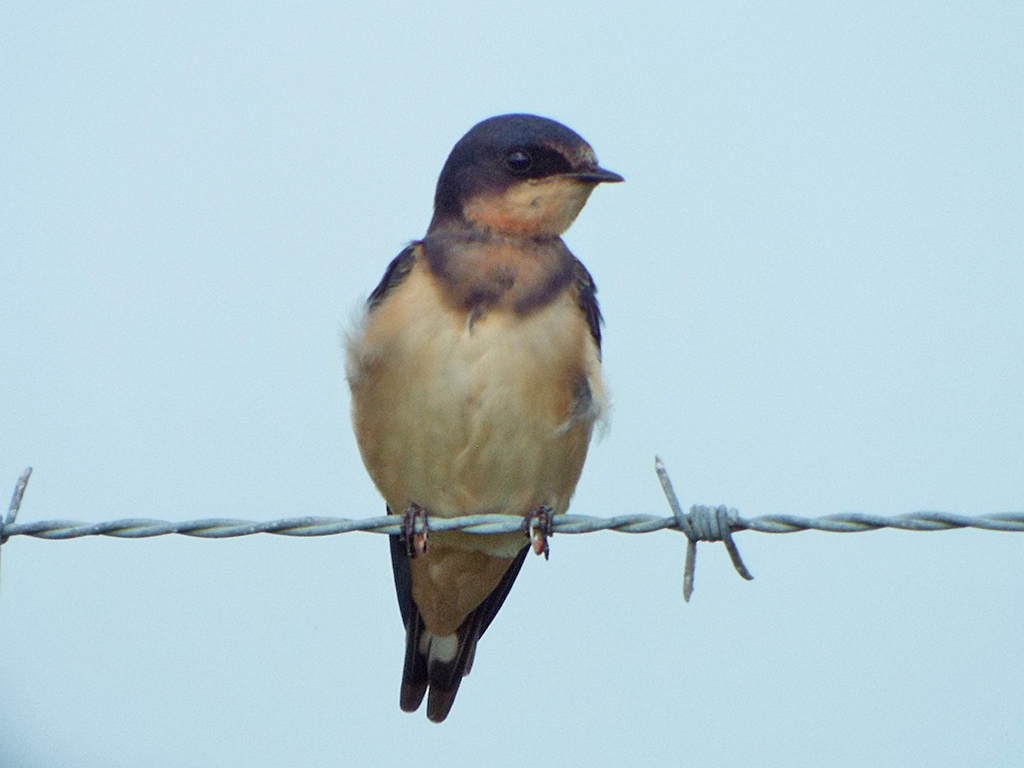
barn-swallow
This Barn Swallow is nearly in adult plumage.
barn-swallow2
This is a younger Barn Swallow, with some downy feathers still remaining, and a little more tail to grow.

In addition to the Barn Swallows, there were a few Cliff and Bank Swallows in the mix as the birds swooped and darted around, catching insects.

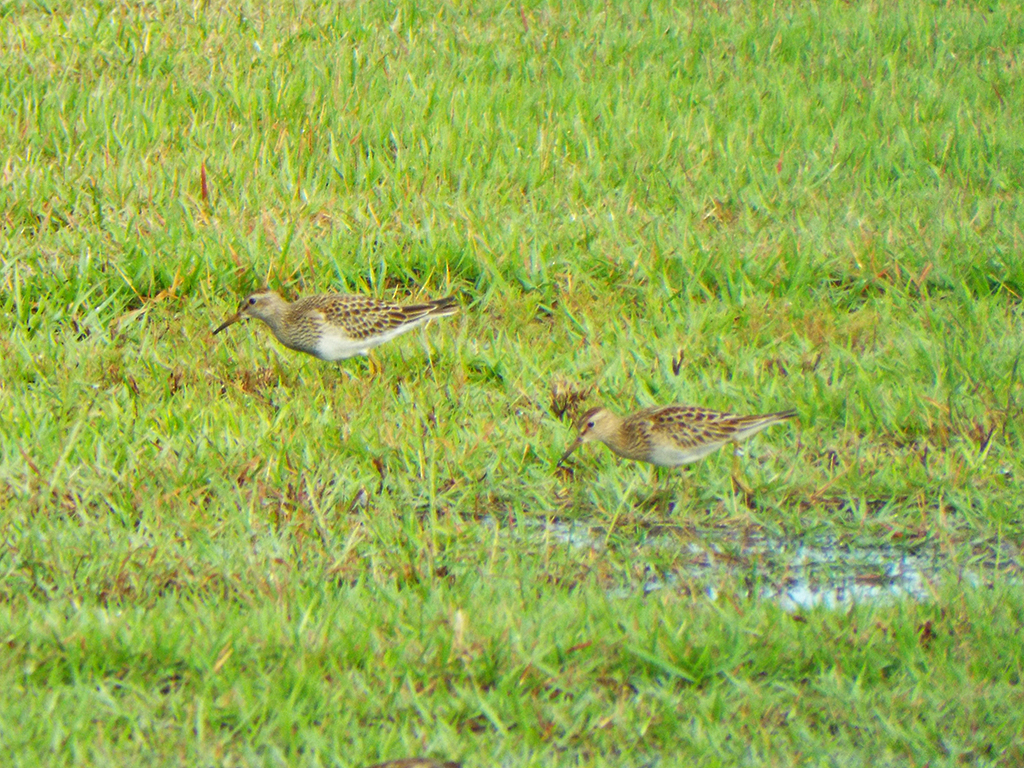
The wet sod fields near the midpoint of the road had produced reports of shorebirds, including some American Golden Plovers and various sandpipers. I did not see any plovers (besides Killdeers) on the way to the lake, but  I did see some Least and Pectoral Sandpipers
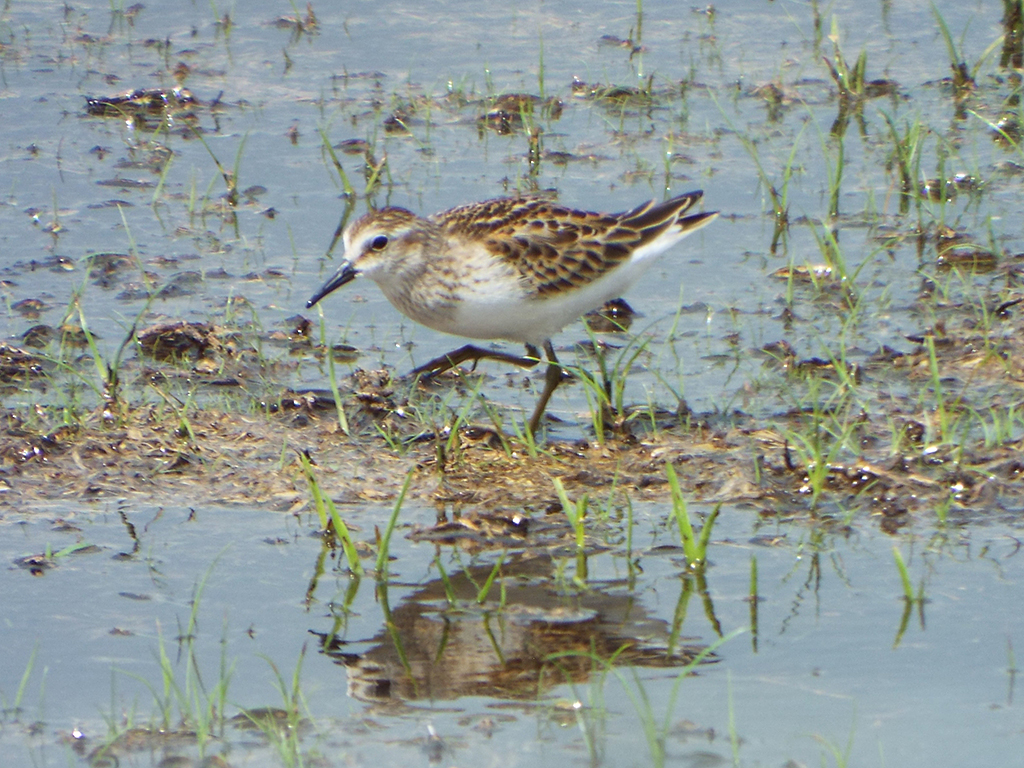
least-sandpiper
Quite a few Least Sandpipers were making use of the flooded sod fields.
pectoral-sandpipers
Pectoral Sandpipers are larger than the “peeps”, like Least Sandpipers, and can usually be distinguished by the sharp transition of their breast markings to their bellies.

At the landing, I was almost immediately greeted by a family of Limpkins. The youngsters were almost full grown, and still looking a bit gangly as they ran to catch up with the adults.
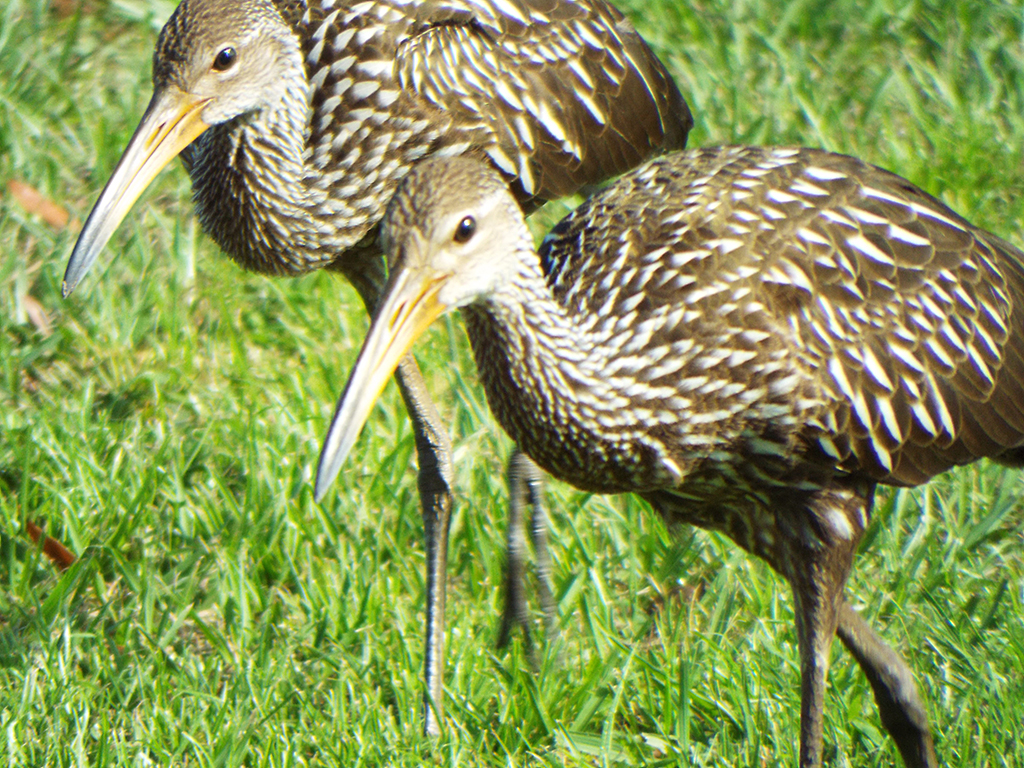
limpkins
A pair of “teenage” Limpkins, running by.

One could liken these birds to “teenage” birds, and it won’t be long before they leave the proverbial nest (they left the actual one weeks ago).
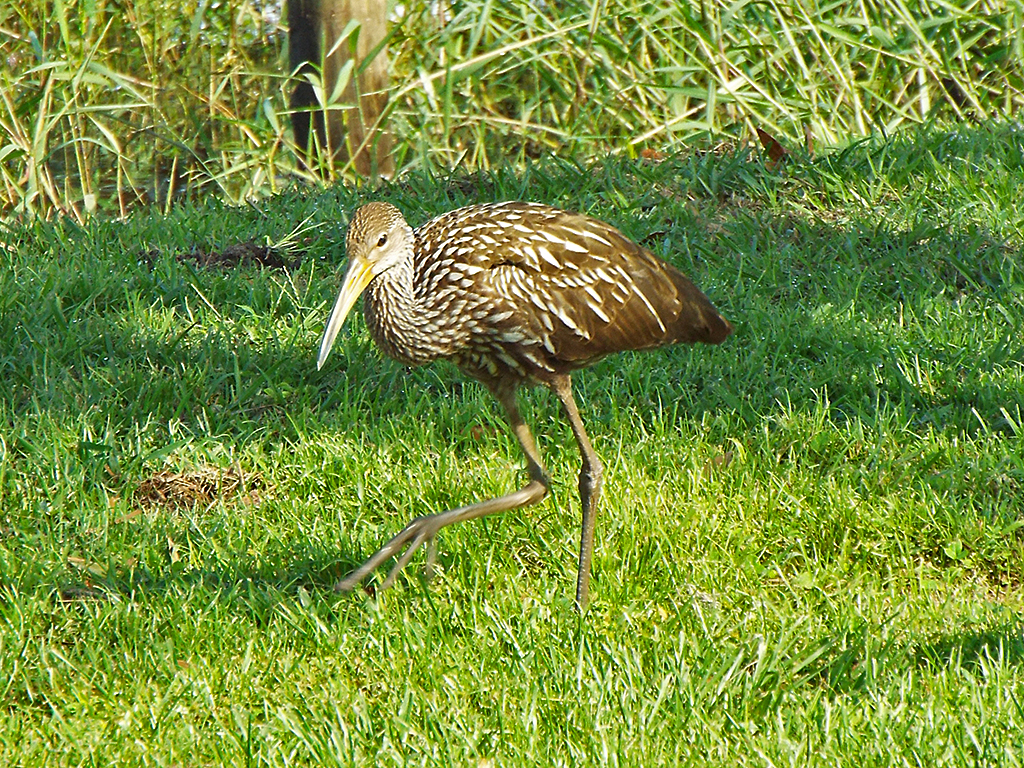
limpkin-legs
This bird was legging it, to catch up with its siblings.

A few of them decided to take a rest on a nearby picnic table, fairly unconcerned with the people and boats. They even had a squirrell join in!

limpkin-picnic
Limpkin picnic.

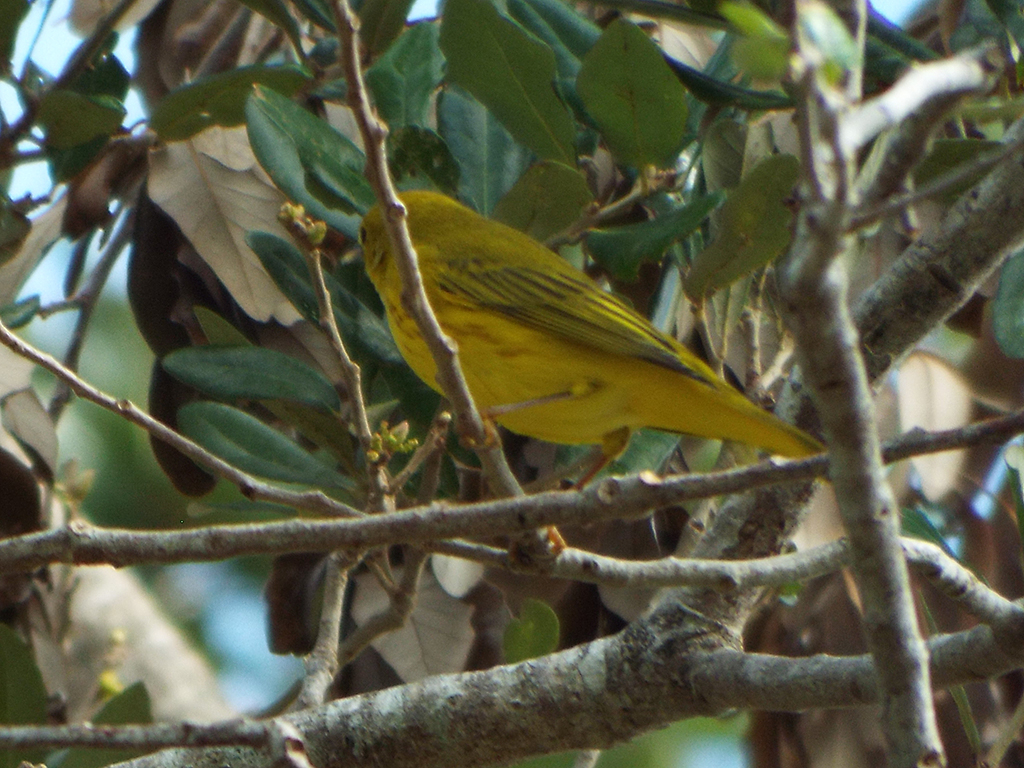
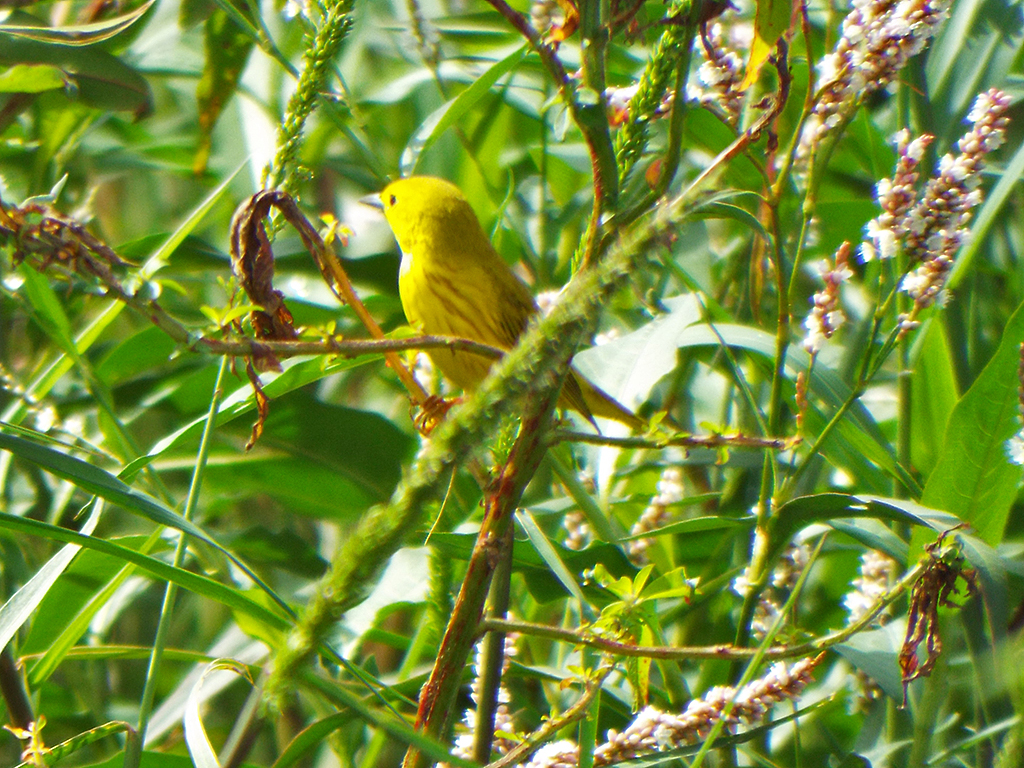
The trees around the boat ramp usually have a Yellow Warbler or two around, and I was happy to see both a female and at least two males. One male hadn’t lost his bright yellow breeding colors quite yet. It always amazes me how a bird this bright yellow can be hard to find in a green tree. But they are.
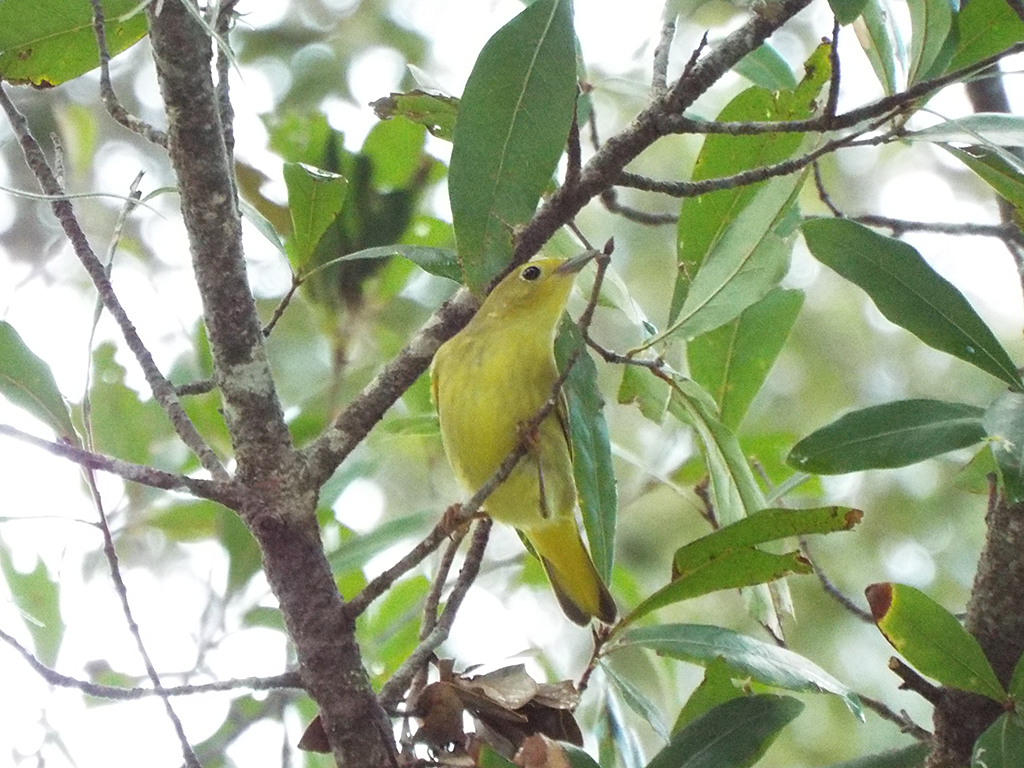
yellow-warbler-female
Female Yellow Warbler.
yellow-warbler-male2
A male Yellow Warbler, in the sun.
yellow-warbler-male1
In the shade, even these bright birds can blend into the green foliage.

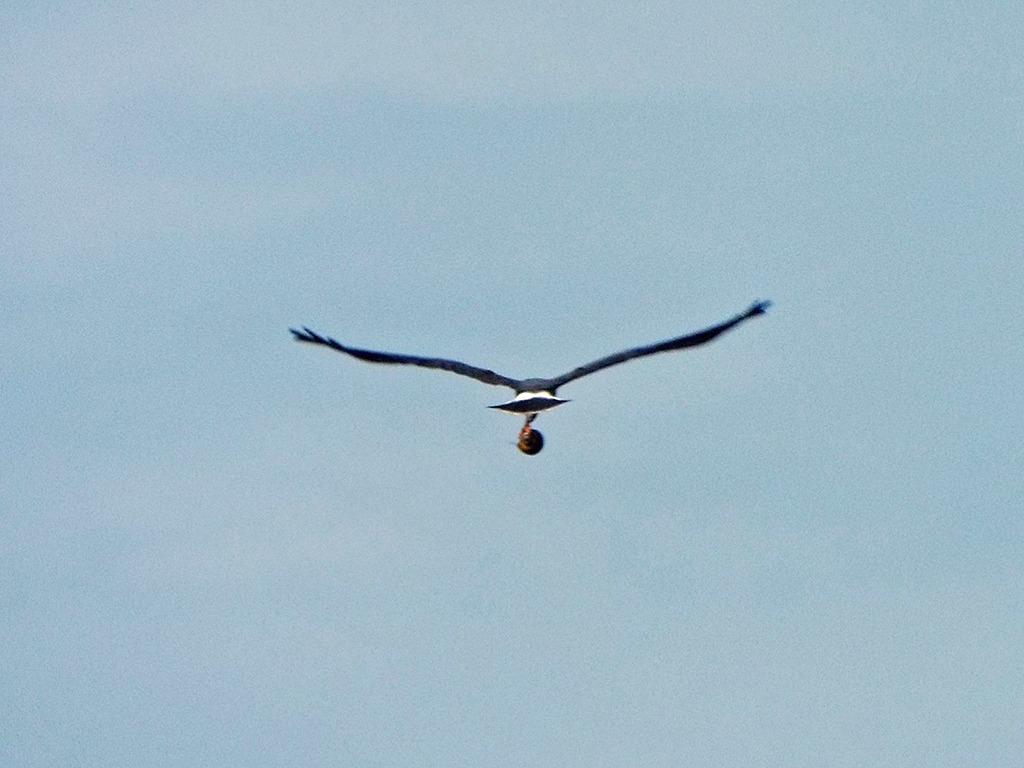
Snail Kites were catching a large invasive variety of Apple Snail that seems to have taken over the lakes in central Florida. At least they (and the Limpkins) seem to be having no trouble with them. Ecologically, the invasive snails can do a lot of harm and are outcompeting the already threatened native snails.
snail-kite
A Snail Kite departing with a large Apple Snail.

One the way back up Joe Overstreet Road, I stopped one more time to scope out for American Golden Plovers. It took a while, and the help of two birders with a more stable and functioning scope (my Audubon “Light” scope had some failures), several of these somewhat rare visitors were seen and identified! This is the best photograph I could obtain.

plover
It’s hard to see here, but this American Golden Plover’s identifying features were clear in a scope.

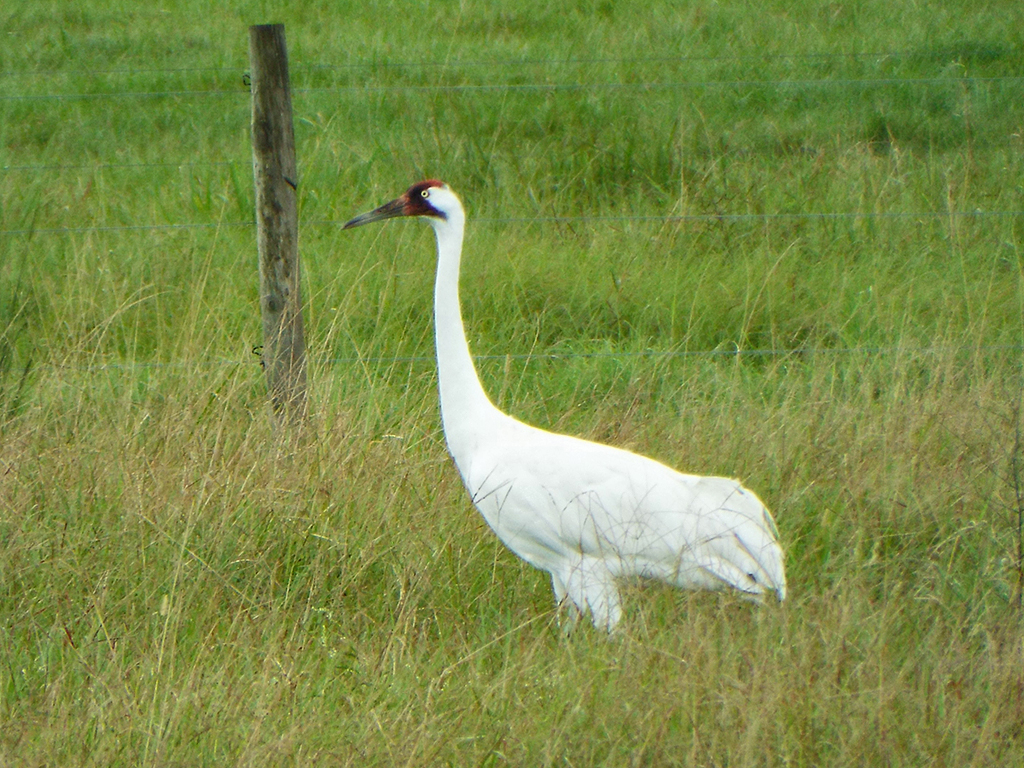
As a final treat, I made it a point to stop on the “main road” by the Double C Bar ranch, in case a Whooping Crane was in view. My life-sighting of this species was on my first Central Florida Specialties trip with David Goodwin at the Space Coast Birding and Wildlife Festival, several years ago. Since then, I’ve unsuccessfully tried to find these birds at this ranch (and elsewhere). Fortune favors the prepared, I suppose!
whooping-crane
This crane is one of the last survivors of a non-migratory Whooping Crane flock. The establishment and management of that flock was a failure, with resources now being put into a migratory flock that winters in the panhandle and spends the summer in Wisconsin.

That seemed like the cap on a pretty good birding day. While neither the American Golden Plovers nor the Whooping Crane were life birds, it was a thrill to see them, along with the other resident birds.

Here are the various eBird lists, for those who care.

Joe Overstreet Road (inbound to lake):
http://ebird.org/ebird/view/checklist/S39362311

Joe Overstreet Landing:
http://ebird.org/ebird/view/checklist/S39363297

Joe Overstreet Road (incidental, outbound from lake):
http://ebird.org/ebird/view/checklist/S39365025

Double C Bar Ranch:
http://ebird.org/ebird/view/checklist/S39365703
End of Summer 2017 Outtakes

Autumn has “officially” started, at least in the astronomical sense. The effects of Hurricane Irma on our area parks are continuing to be dealt with, and the shorter days will eventually lead to cooler temperatures (although the heat index was near 100 this week). Here are several photos taken the second half of this Summer that never made their way into the blog.

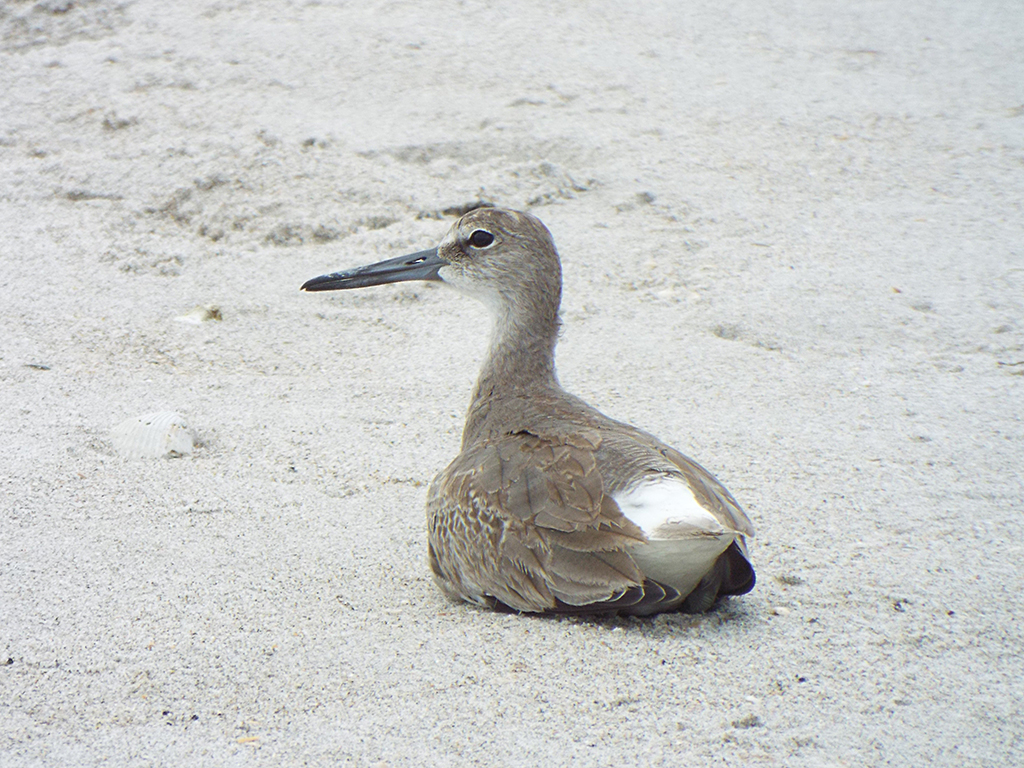
willet
Willet resting on the beach at Indialantic, FL.
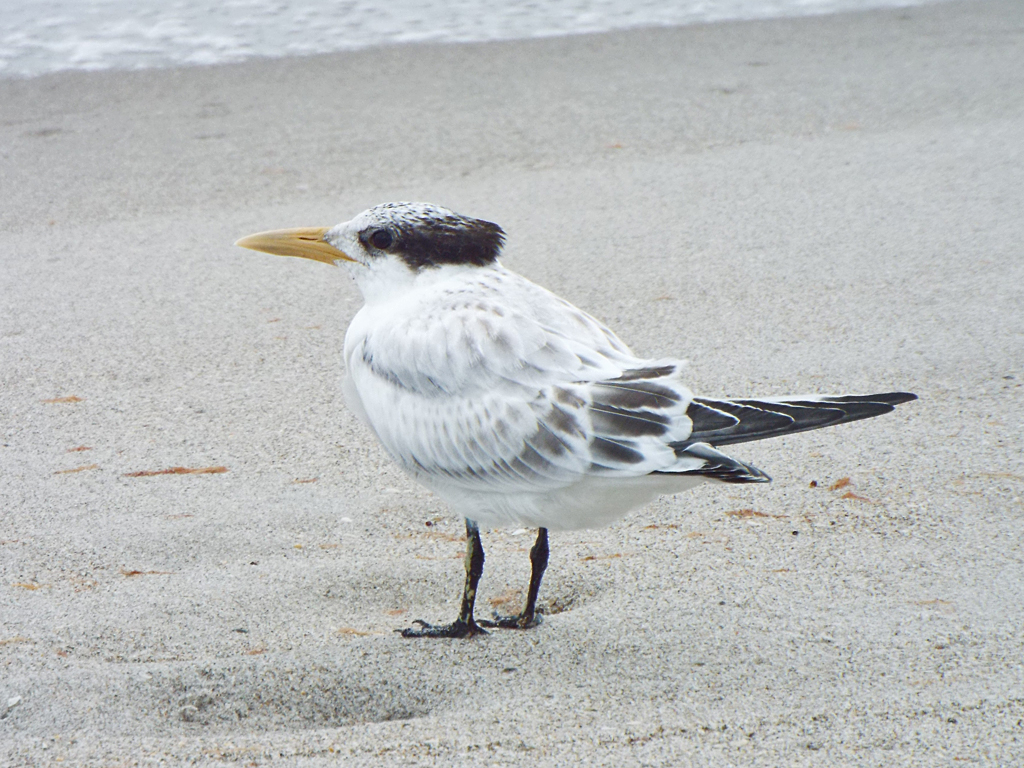
young-royal-tern
Immature Royal Tern at Indialantic, FL.
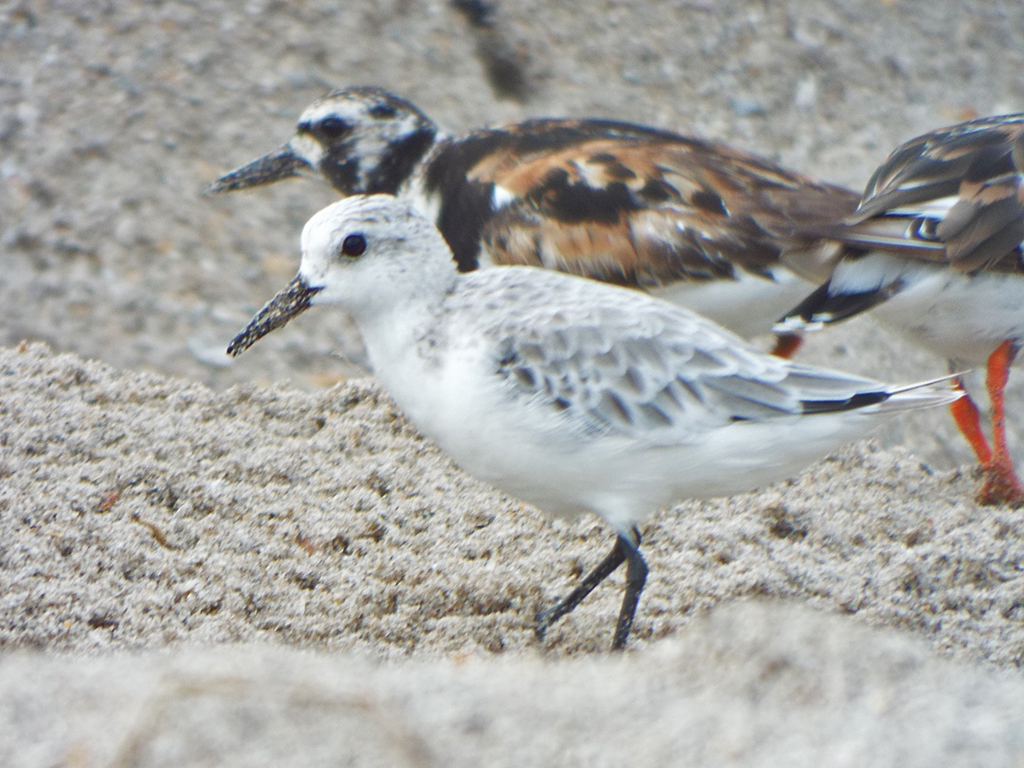
sanderling
Sanderling (and Ruddy Turnstones) at Juan Ponce de Leon Landing.
purple-gallinule2
Immature Purple Gallinule (alternate view) at Orlando Wetlands Park.
roseate-spoonbill
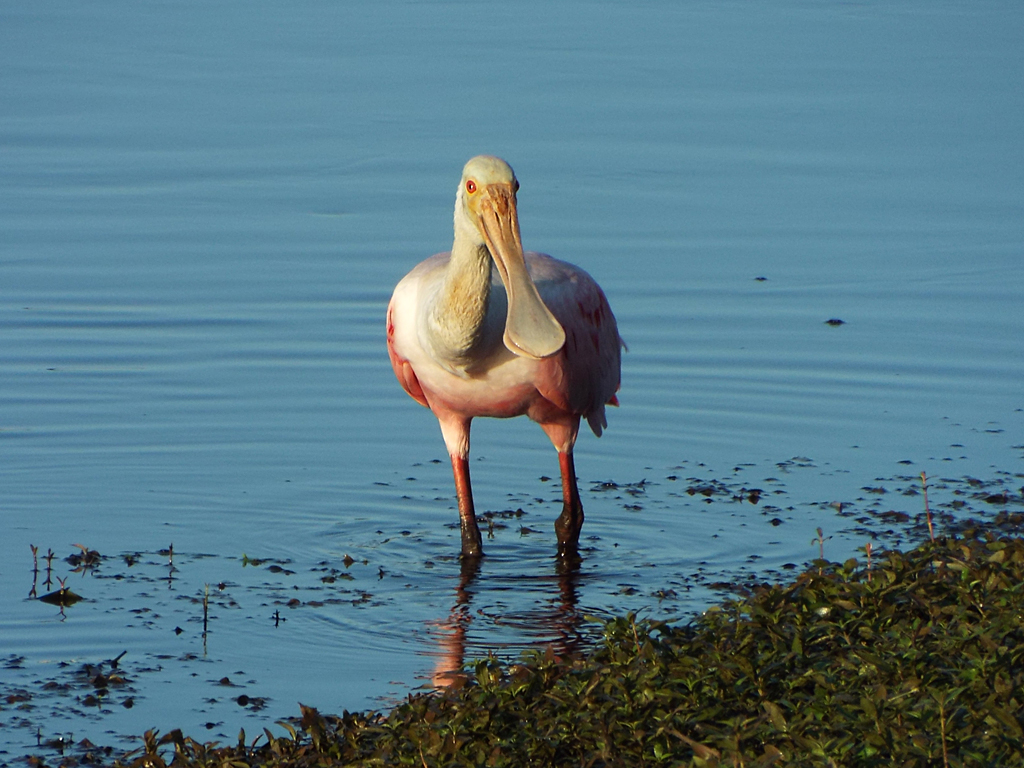
Young Roseate Spoonbill at the Melbourne-Tillman Canal, Palm Bay, FL.


I’ve already had my first birding adventure of the Fall. Stay tuned for that, coming soon!

Out in the Open at Orlando Wetlands Park

September 19, 2017

Everything is slowly getting back to “normal” here in Florida, and particularly on the Space Coast, where we managed to get through Hurricane Irma without a major catastrophe. Power has been restored to almost everyone in the area, thanks to the hard-working linemen and linewomen from around the country.

The area parks, sanctuaries, and conservation lands are going to have a bit longer of a time getting squared away. Most of the Merritt Island National Wildlife Refuge is still closed, and smaller parks, like Turkey Creek Sanctuary are closed as debris is removed and water levels recede.

Out at Lake Apopka the storm damaged infrastructure so severely, there’s no timetable for it to reopen yet. Assessments are still being made there, and at many other public lands. Everyone will need to be patient and work around what’s available as the main part of migration nears.

But some places managed to get through the onslaught relatively unscathed. Orlando Wetlands Park got through the storm with minimal damage and was open within days. I met up with Camille and we headed over to Christmas, Florida for some late-summer birding.

orlando-wetlands-park1
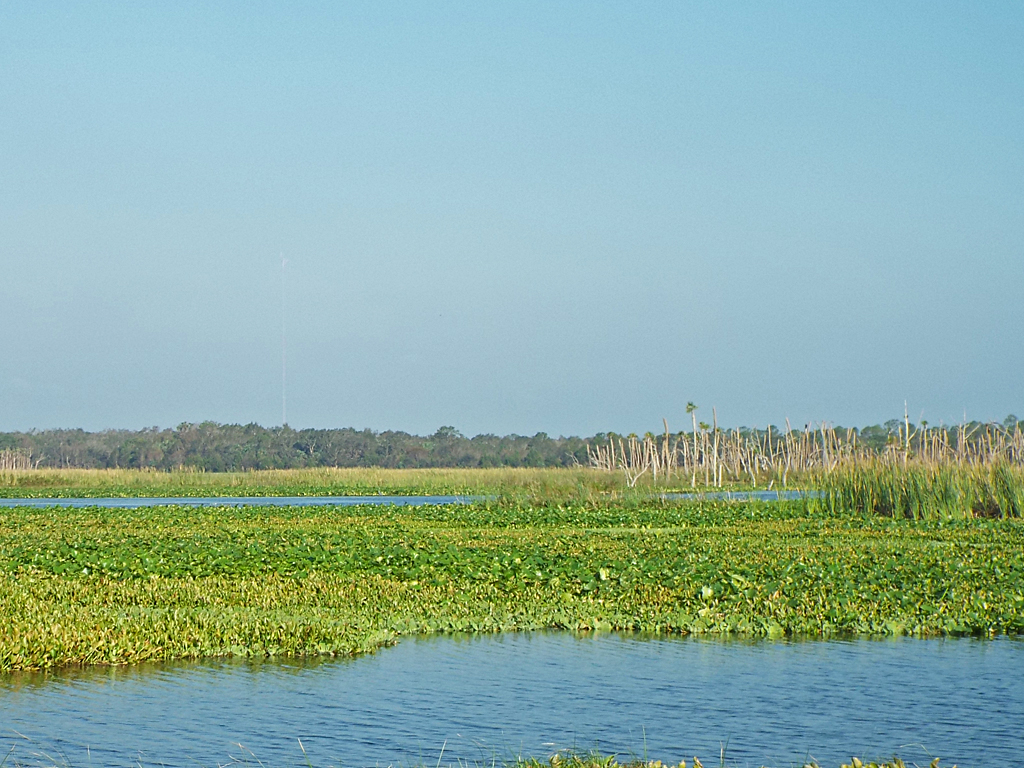
Most of Orlando Wetlands Park consists of very large open cells of water with groves of relatively wind resistant (particularly the dead ones!) palms.

While some early migrants have been through the area since the end of August, most of central Florida is still in between the end of breeding and fledging season and the start of migration. The hurricanes in the region (both Irma and Jose now, and Maria later in the week) have not made for favorable winds to help move birds out from the north, but that will change as Fall begins.

The morning started off comfortable, but the weather would quickly turn oppressive before the end of the morning. We kept our hike short, only doing the main “birding” loop and not the far reaches of the park.

OWP-map
We mainly stuck to the red-dashed route here on the map. You can see how large the park is – just that loop is 4 kilometers (2.5 miles).

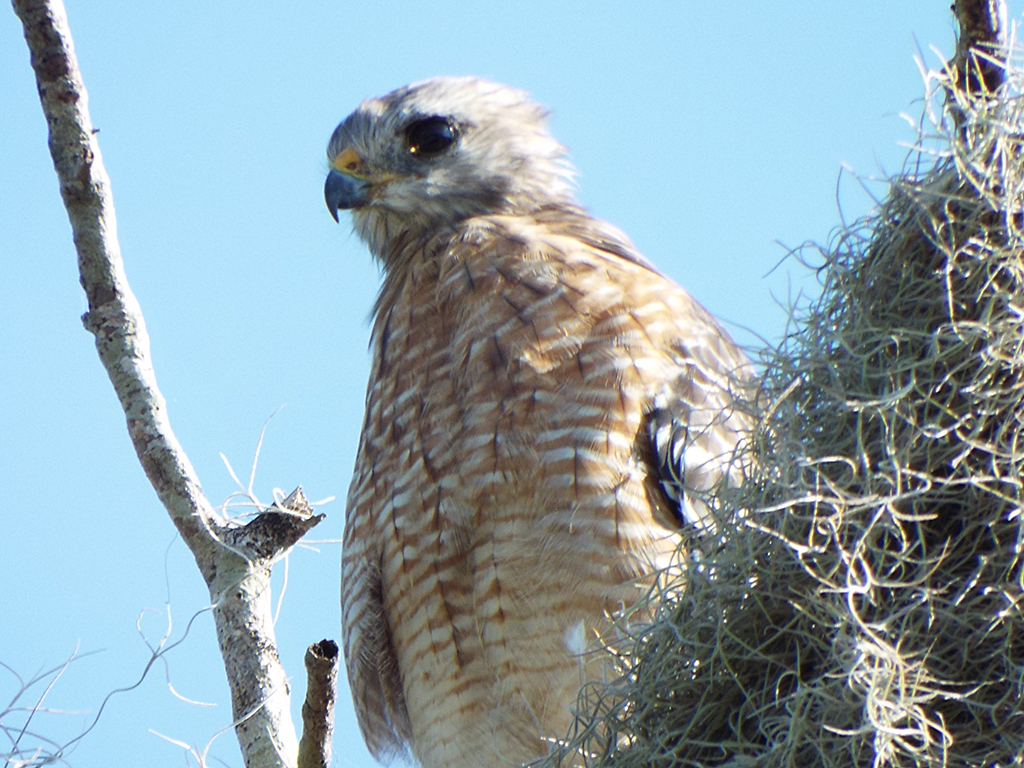
There were several Red-shouldered Hawks perched, looking for breakfast. All appeared to have adult plumage, but some were missing tail feathers. This is indicative of molting, and in fact many of the other birds in the park were missing all or some of their tails.

red-shouldered-hawk
The Red-shouldered Hawks seemed unconcerned with our activities and let us get close a few times.

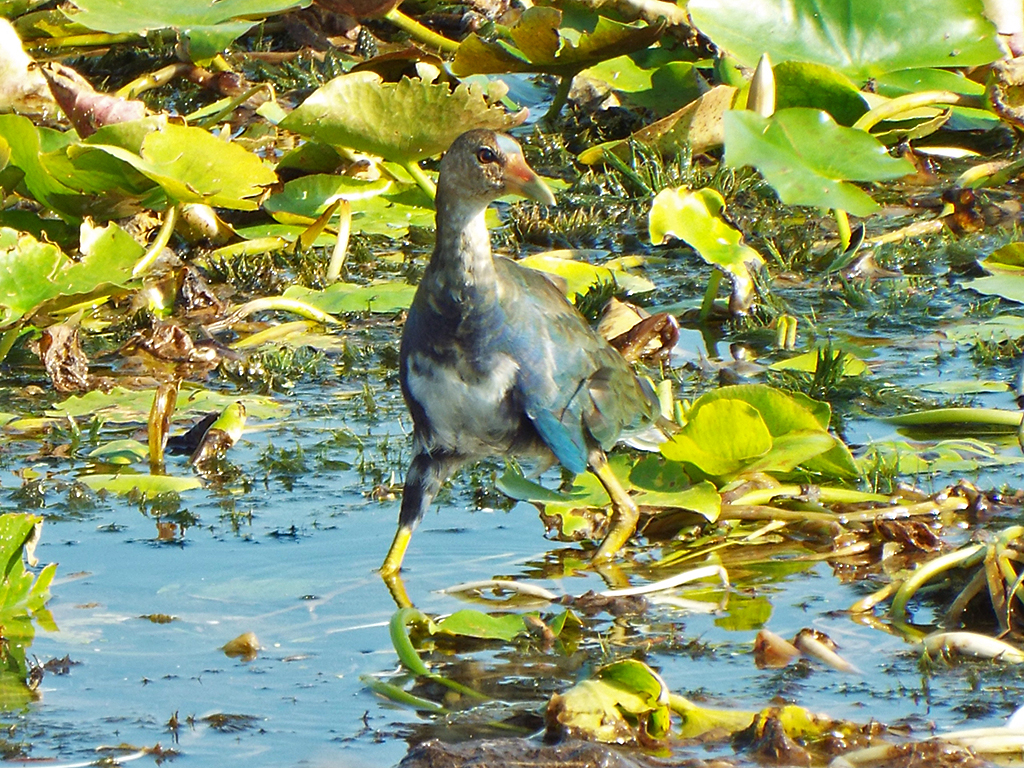
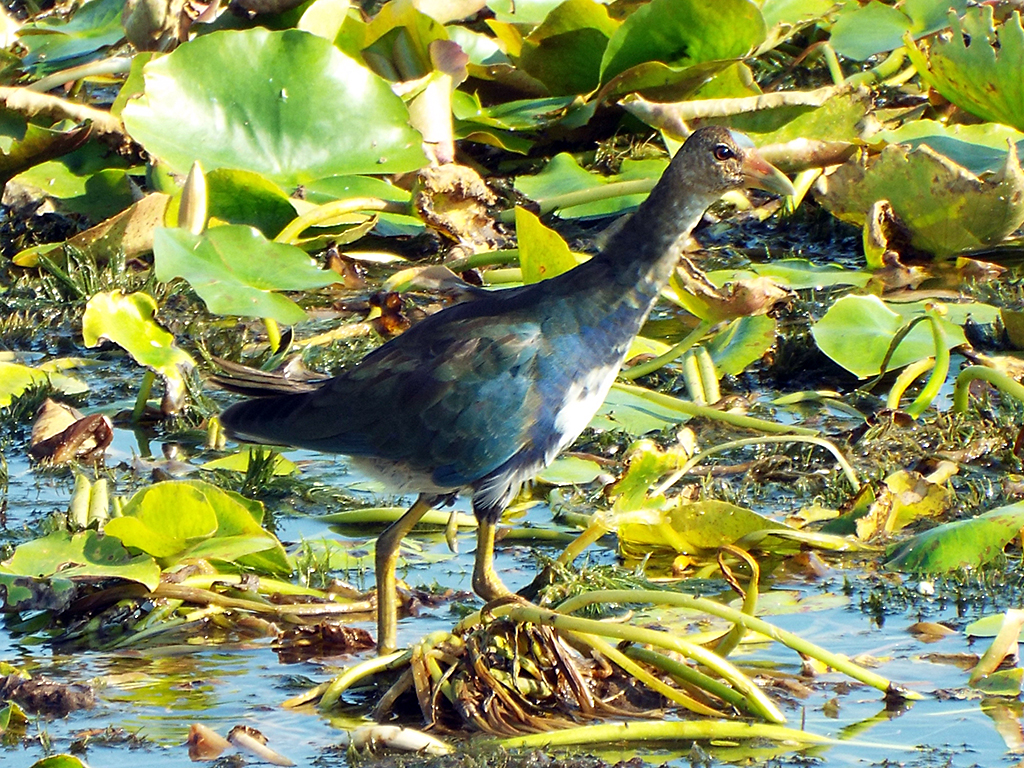
By now, most of the Common and Purple Gallinules have raised their broods and the surviving youngsters are getting their adult plumage as well.

purple-gallinule
This sub-adult Purple Gallinule’s patchy plumage will eventually grow into the beautiful glossy and iridescent colors that give the species its common name.  

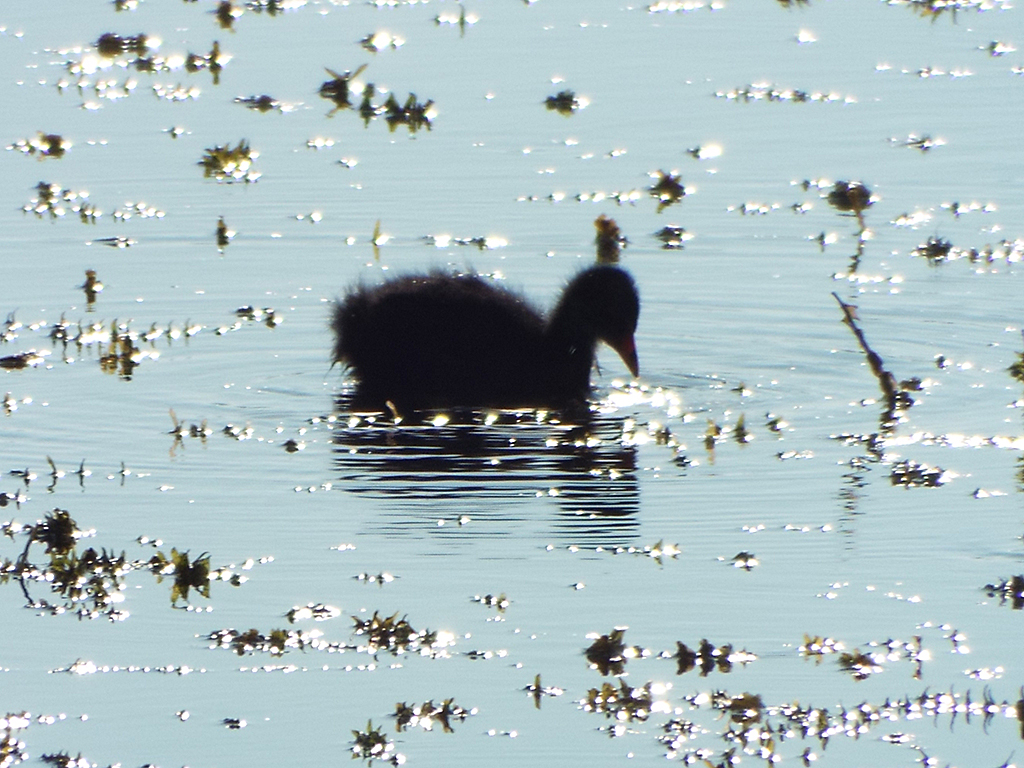
Of course there are always late breeders, and there were still a few Common Gallinule pairs that had small chicks, but they were few and far between.

common-gallinule-chick
This chick was probably about a week old. Gallinule chicks are precocious – the hatch with eyes open, covered in down, and able to swim and feed within hours. Any species that shares space with alligators needs to be mobile and alert as soon as possible.

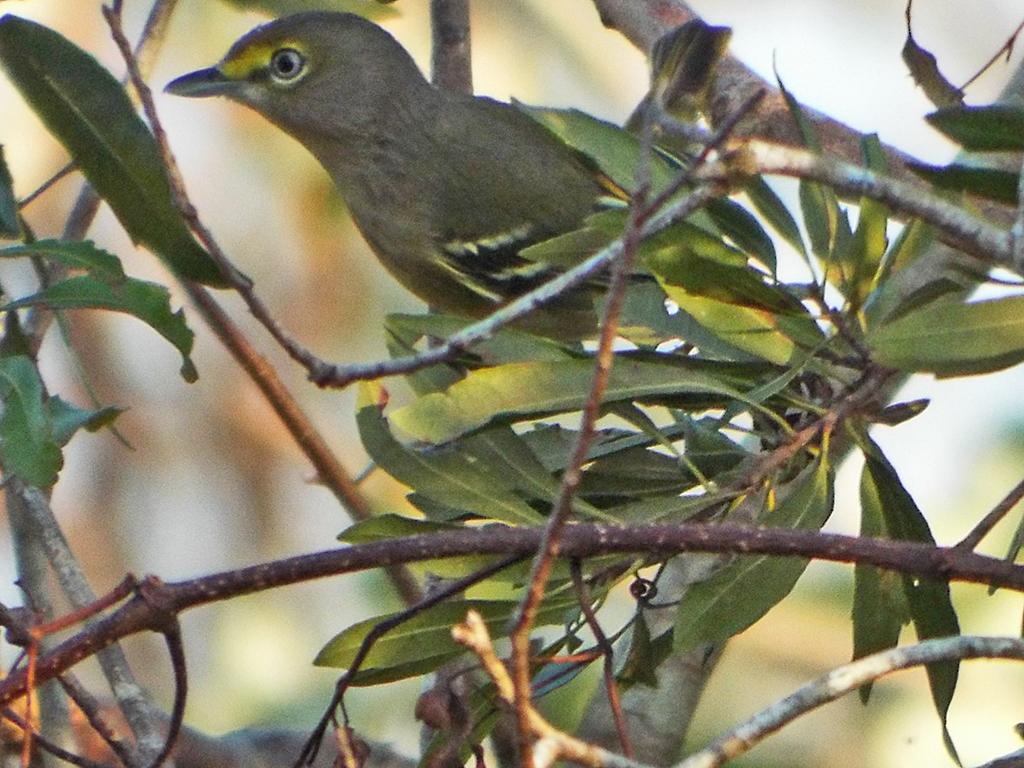
There were not many songbirds present, though several Prairie Warblers (a resident breeder) in fall plumage flew past us a few times, and both Red-eyed and White-eyed Vireos were actively feeding in the woody edges near the park entrance and nature center.

white-eyed-vireo
An adult White-eyed Vireo about to jump out of frame.

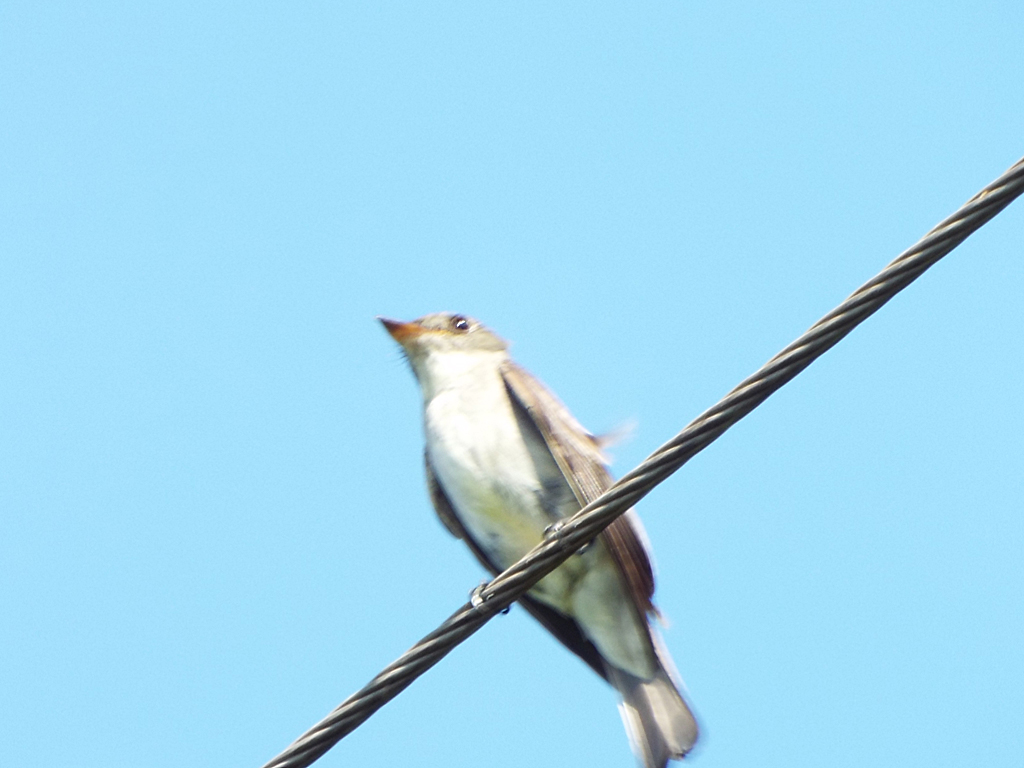
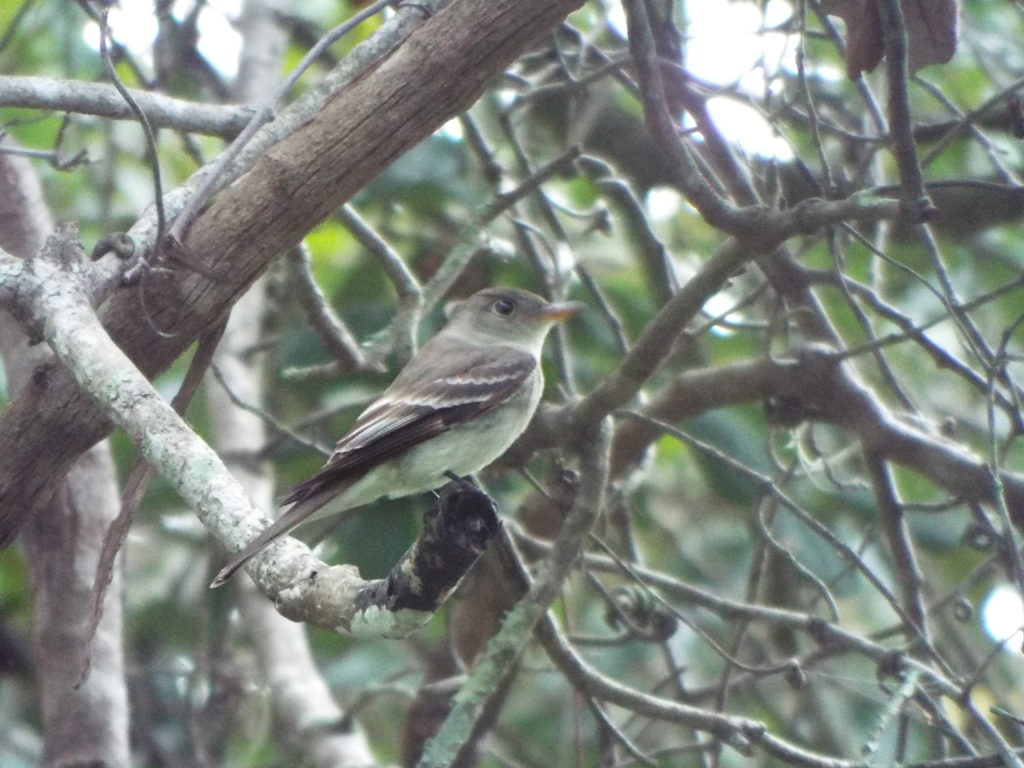
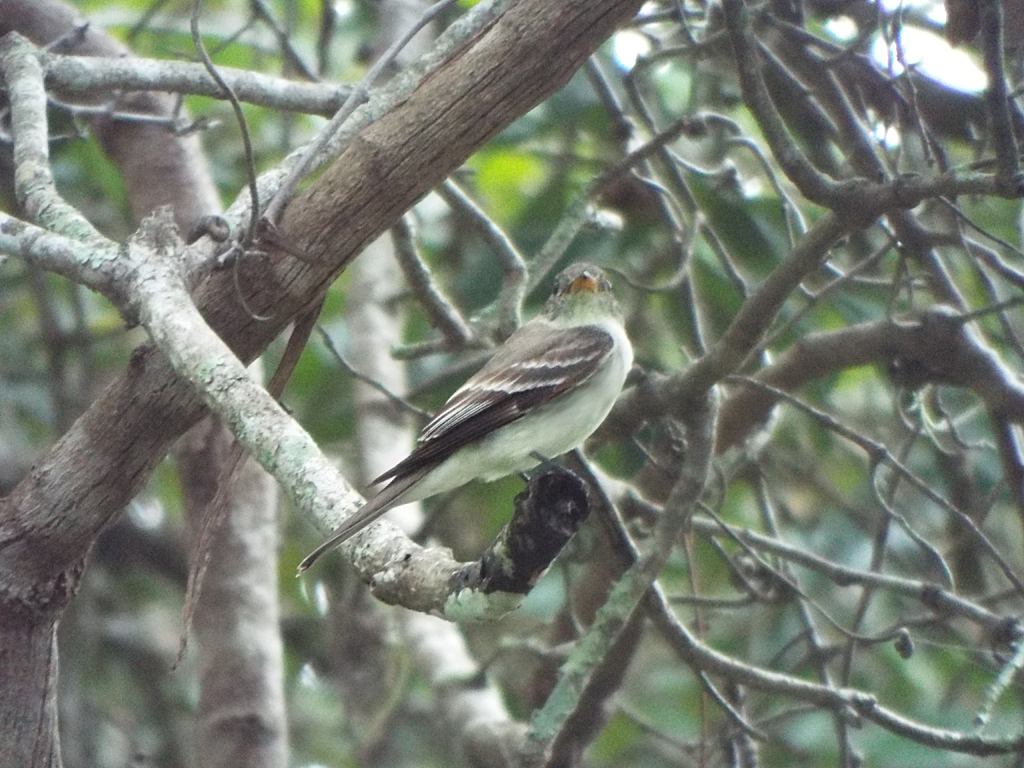
All in all it wasn’t too bad of a morning, for mid-September in central Florida. As a bonus, we saw a small flycatcher on the road just outside the park entrance. There seems to have been an influx of Empidonax flycatchers through the state over the last few weeks. I’ve certainly seen more of this genus this year than previous. This particular bird did not vocalize, though it did seem to perk up at a recorded call of a Willow Flycatcher. Unfortunately, that is not enough to identify this bird beyond its genus.

empid2
I apologize for the blurry photo here. I was taking this photo while contorted out a vehicle’s window, bracing against the top of the door while the engine was running! But you can see the essential field marks for an Empid – species unknown.

Here’s the complete eBird list, if you’re interested.
http://ebird.org/ebird/view/checklist/S39226562

It was a real treat that this park was open and relatively clear of debris after such a wide-ranging and destructive storm. And of course, just a few years ago this park was closed over the fall and first part of winter. Now it’s open to the public year-round, so it should have a lot to offer as migration gets under way.

[Note: Our friends in the Caribbean, including the Virgin Islands and Puerto Rico have been and are being devastated by both Hurricane Irma and Maria. Please donate if you can. Here’s the link to Charity Navigator so you can find somewhere to donate that feels right for you: https://www.charitynavigator.org/]

Migration Preamble at MINWR

August 27, 2017

It’s been an Empidonax-filled late summer here in central Florida, with reports of the little flycatchers coming in about every day so far in the last week or so. I saw two Acadian Flycatchers near where I work and have seen several unidentified “Empids” in my travels around Lake and Sumter, and Brevard Counties.

On Sunday, I met up with Camille to check out flycatcher and warbler activity reported at Merritt Island National Wildlife Refuge’s (MINWR) Pine and Oak Hammock Trails [map].

Yes. Warblers. It turns out that the first vanguard of migrant warblers has already been moving through the state, and we managed to get a nice mixed flock or two along the Pine Hammock trail (the Oak Hammock Trail was closed). We had a couple of dozen (!) American Redstarts, and a good showing of Worm-eating Warblers along with Black-and-whites and Northern Parulas. We did not catch the reported Prothonotary or Cerulean warblers that have been reported, however.

But the star of the day was an Alder Flycatcher (a life bird for me). This species was first reported by Mitchell Harris earlier in the week, and we managed to find the bird on the way out of the trail (well, Camille spotted it and called me back on the trail to her location). At first the bird was quite still and silent (in migration, it is nearly impossible to separate the Empids if they do not vocalize. The visible proportions and field marks overlap too broadly). After watching it fly-catch a few times and change perches, it finally called out a few times, and even answered some limited recordings (yes, I used a recording). The lighting was bad, but I fired off a couple of shots.

alder-flycatcher1
Without vocalization, this bird could almost as easily be a Willow Flycatcher (the most similar) or even any other Empid or an Eastern-wood Pewee. Luckily for us, it did call a few times.
alder-flycatcher2
Here’s a good view of the orange/yellow underside of the bill that is common to most Empids and Wood-pewees.

For those of you interested, here’s the entire eBird list for the trail:
https://ebird.org/ebird/view/checklist/S38847183
We finished up the morning by cruising the open part of Peacocks Pocket [map] and East Gator Creek [map].

Peacocks Pocket:
http://ebird.org/ebird/view/checklist/S38848022

East Gator Creek:
http://ebird.org/ebird/view/checklist/S38848439

It was a nice little migration preview, but we’ll have to see how the autumn plays out and if any of this seemingly early movement means anything significant.


Sometimes It Works Out

August 8, 2017

One of the frustrations when birding while working a full-time job is the timing of rare or unusual birds. I don’t normally flake-out on important appointments or max out credit cards to chase down birds around the state or country, but I will make a long day trip on occasion, providing it doesn’t unduly risk my employment. Getting the Bahama Woodstar and to some degree, stumbling upon the Kirtland’s Warbler on workdays this spring worked out because of their relative nearness to the office. But when rare birds are found a little more afield, it can get frustrating to not be able to “chase” them until the next day off.

Luckily it worked out today that when a rare bird (the presumed 2nd county record) was seen a little farther away from work, my afternoon had stalled out (both my boss and project lead were out). Jim Eager sent out a text that a Bahama Mockingbird was seen at Playalinda Beach, and Camille and I were in the unusual position to be able to chase it down on a workday afternoon!

The first bird we saw (apart from the ubiquitous Boat-tailed Grackles) was a mockingbird, but it seemed oddly plumaged. While not showing all the field marks of a Northern Mockingbird, it retained enough of that “look” to make us uncertain of the Bahama Mockingbird identification.

mockingbird1
This bird was seriously heat-stressed. I noted how much browner the wings of this bird looked compared to other immature Northern Mockingbirds I’ve seen. Read on to find out what this might mean.

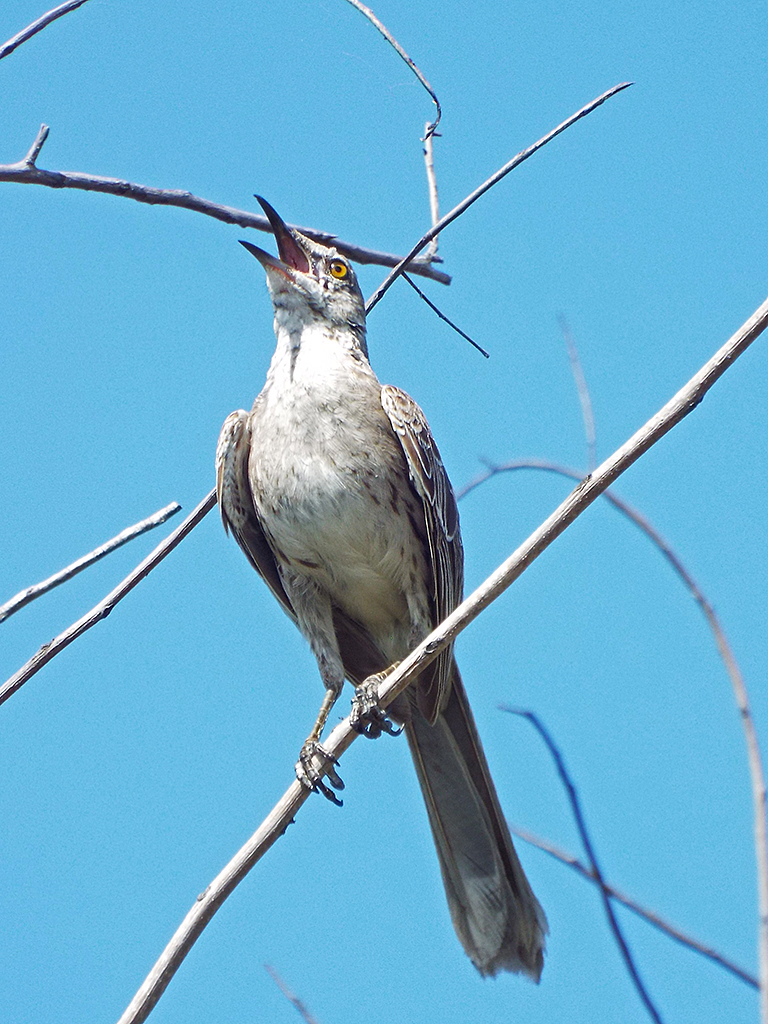
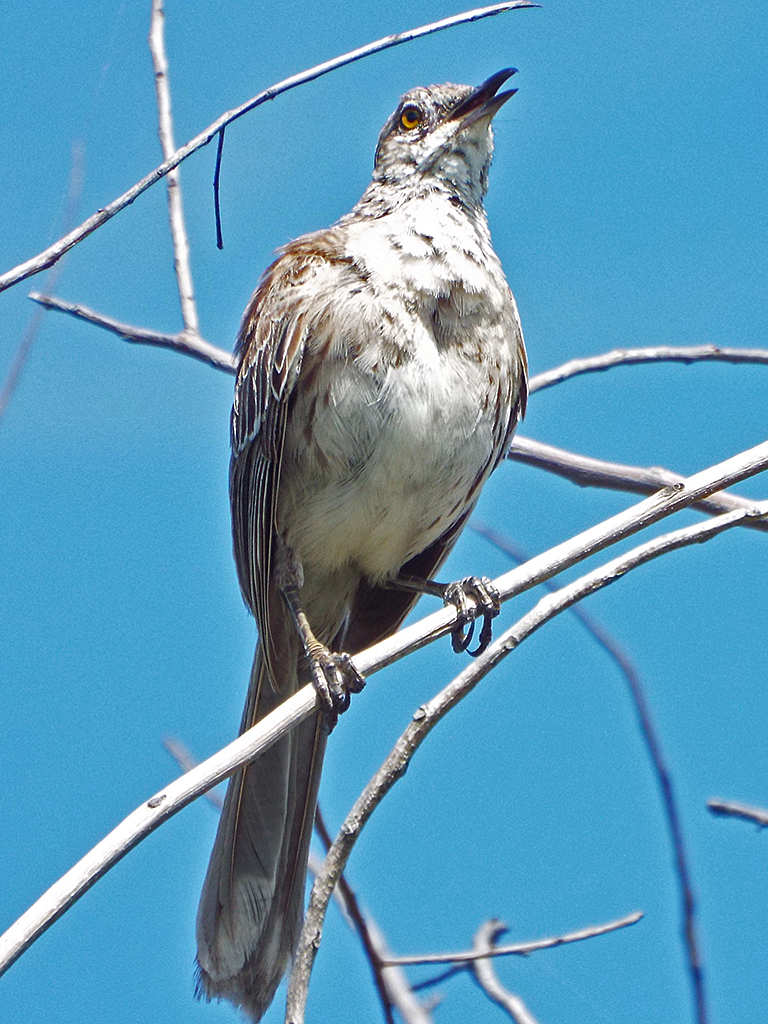
We weren’t sure about what a juvenile Bahama Mockingbird should look like, but we tentatively considered our find a “success”. But then, another birder played a recording, to get familiar with what we might hear should the bird sing, another mockingbird flew into a nearby shrub, and this one was clearly not a Northern Mockingbird and even sang back to us, confirming the ID as a Bahama Mockingbird!

bahama-mockingbird1
While this bird did in fact sing for us, that’s not what you’re seeing here. This bird is panting hard to stay cool. The heat-index was miserably high.

As the bird moved about, we could see some feather separation on the breast. This is often an indication of a brood pouch when a parent bird is on the nest with eggs or young.

bahama-mockingbird3
In addition to the possible brood pouch, the side streaking and (barely visible) malar stripe (moustache) that mark this bird as a Bahama Mockingbird can be seen.

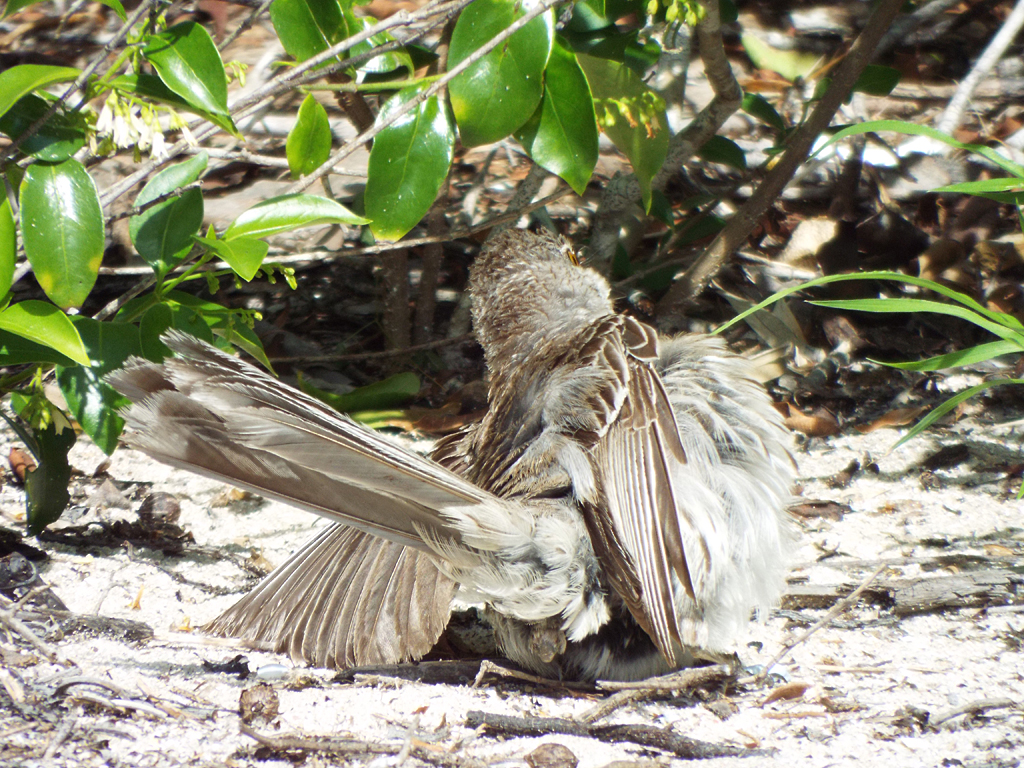
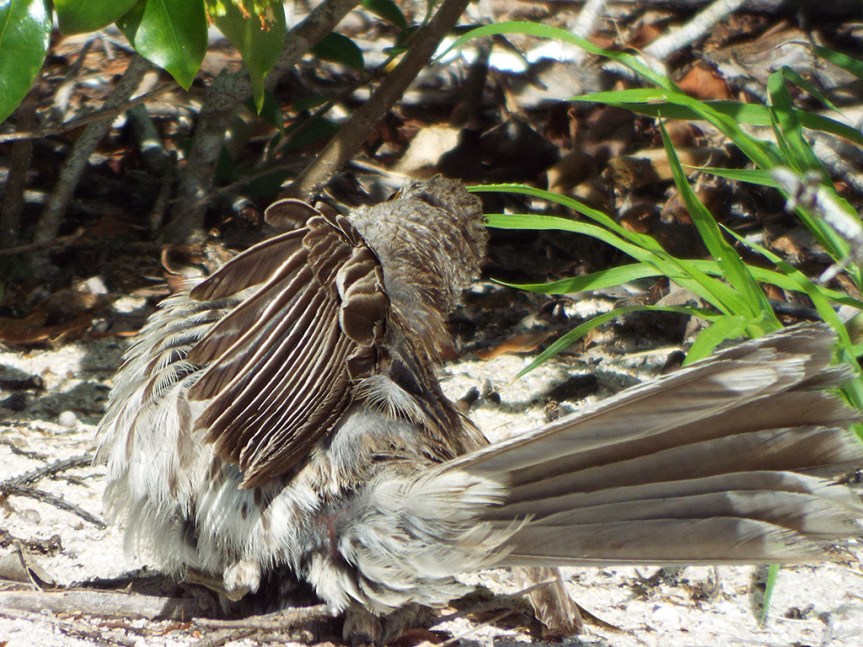
Meanwhile, the first bird we had seen was intermittently flying in and out of an area in the scrub that was visible to us. As we (and some other birders) advanced in toward the brush, the second bird flew down in front of us and then fluttered out its wings and slowly tilted down onto its side, as if it had fainted or was injured. It actually first tilted one way and then the other, in quite a melodramatic performance.

bahama-mockingbird-faux1
An adult Bahama Mockingbird doing its best to act injured to lure predators away.
bahama-mockingbird-faux2
After several seconds of this display, seeing as we continued to look in on the other bird, this one hopped up and promptly began eating bugs in the sand.

Birds will do this to lure predators away from a nest, eggs, or young. If you take into consideration the brood pouch, the injury display, and the slightly-odd looking fledgling/immature bird, it seems probable that this Bahama Mockingbird has mated with a Northern Mockingbird and produced at least one hybrid offspring. This is not unheard of, as a general rule, but it may be the first recorded instance of this happening in Brevard County. Ultimately, that may be up to the Fish and Wildlife biologist and the Florida Ornithological Society Records Committee.


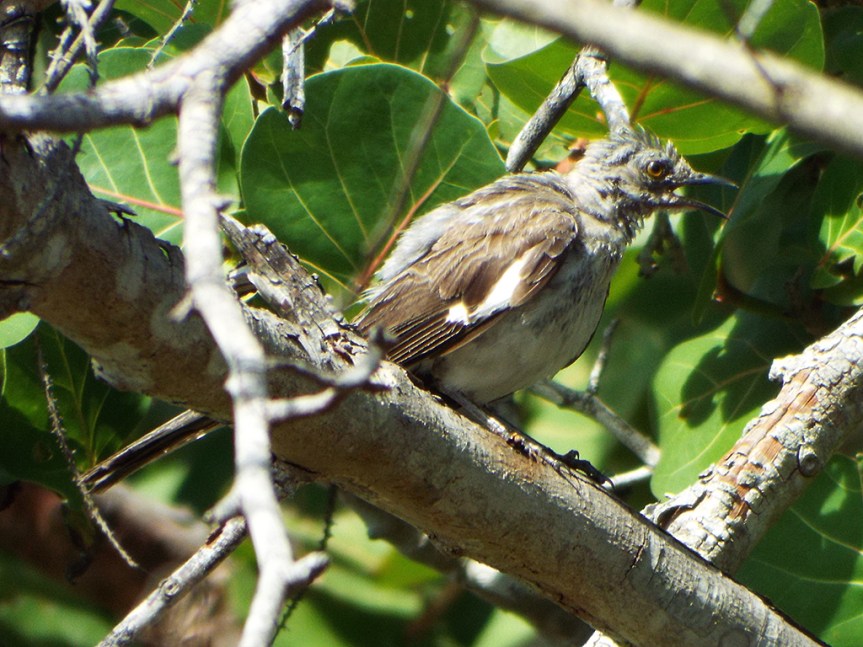
mockingbird2
Another view of the immature mockingbird. The broad white wing-patch all but rules out a pure Bahama Mockingbird, but the other circumstantial evidence and plumage aberrations make for a compelling case for hybridization. 

Whatever the final determination is, it was nice to be able to have an opportunity to “get” this life bird and document possible breeding activity of this species.

[Edited to add: not all people who saw the immature bird or its photographs feel it is a hybrid, but just a normal Northern Mockingbird. I leave it up to the readers to investigate and decide, if they want.]


Whooping it Up at Lake Eola

June 26, 2017

This past weekend, I paired up with my erstwhile protégé Camille to pick up some easy “gets” for our birding lists: swans. These birds are mostly introduced or from feral stock but various organizations, like the ABA and local organizations (and eBird) have been allowing some of these birds to be “officially” counted as they become established breeders or long term residents well outside their native ranges. Introduced animals are always a potential problem, but that’s hardly the birds’ faults.

Like the swans of Lake Morton in Lakeland, the swans in Orlando’s Lake Eola [map] are a source of pride and attraction to the downtown area. The lake and its park are central both geographically and culturally for many of Orlando’s events.

lake-eola-fountain
Lake Eola’s large fountain is especially pretty at night, but remains impressive even on an overcast morning.

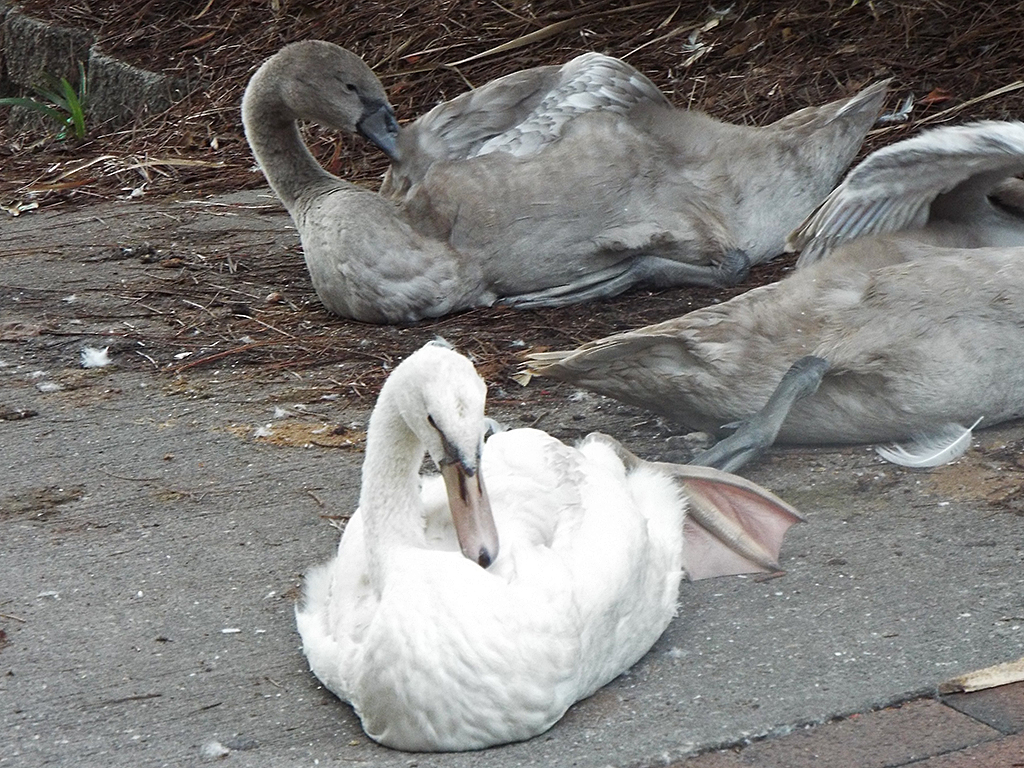
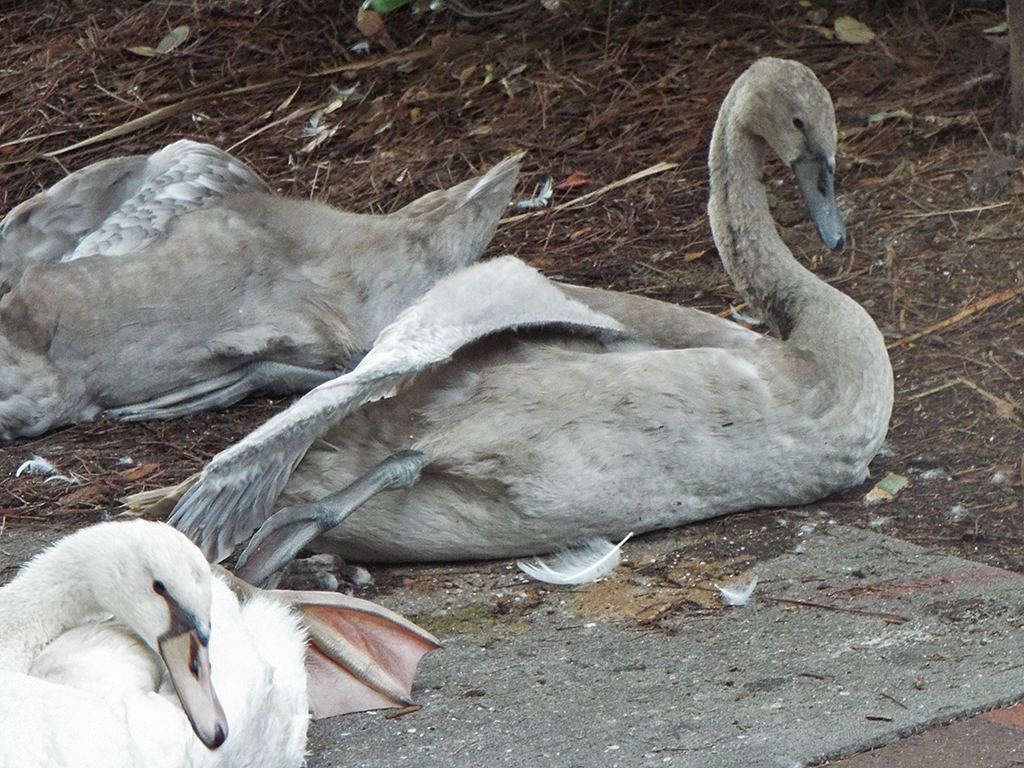
By and large the lake is dominated by Mute Swans. These birds are breeding here, just as they are in Lakeland. Most Mute cygnets (the term for young swans) are brownish-gray, but some have a genetic expression that makes them more white right out of the egg.

mute-cynets1
Mute cygnets of 2 different color morphs.
mute-cynets2
With parents on guard nearby, these youngsters were able to stretch and relax.

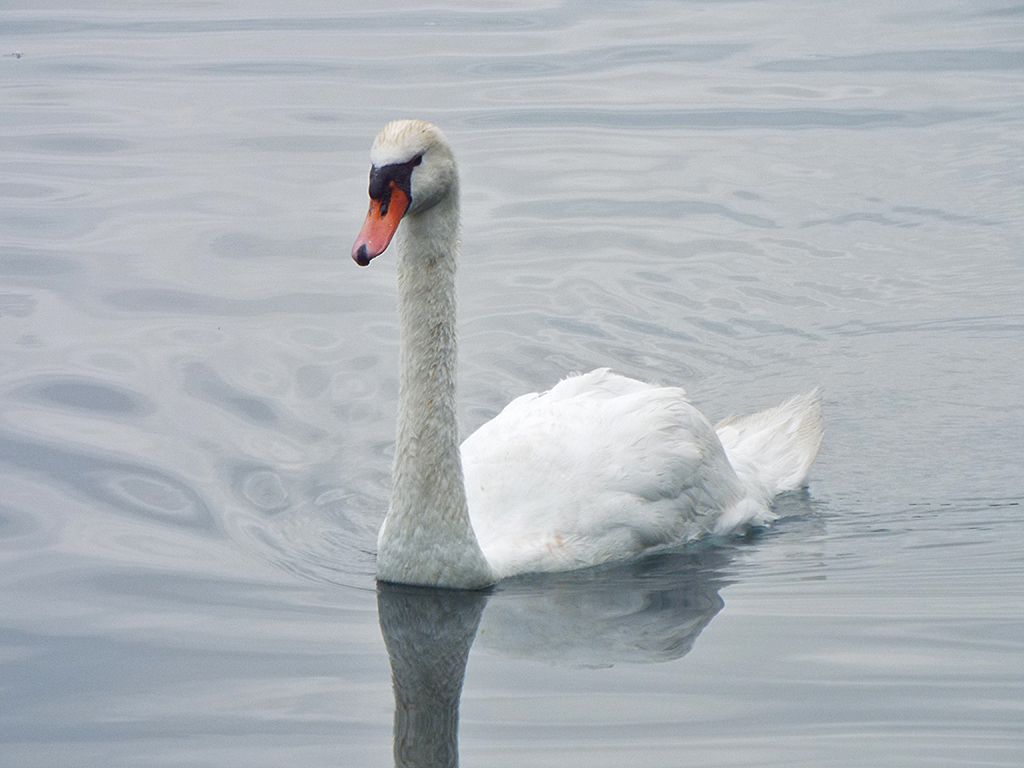
Mute Swans are native to Europe but have been introduced extensively around the world. Despite their beauty and grace, they can be ruthless and domineering when threatened or challenged. Luckily for us, they were mostly content to lets us walk by while their children relaxed and preened.

mute-swan2
Mute Swans adults are distinguished by the large knob at the base of the bill.
mute-swan
Grace and power.

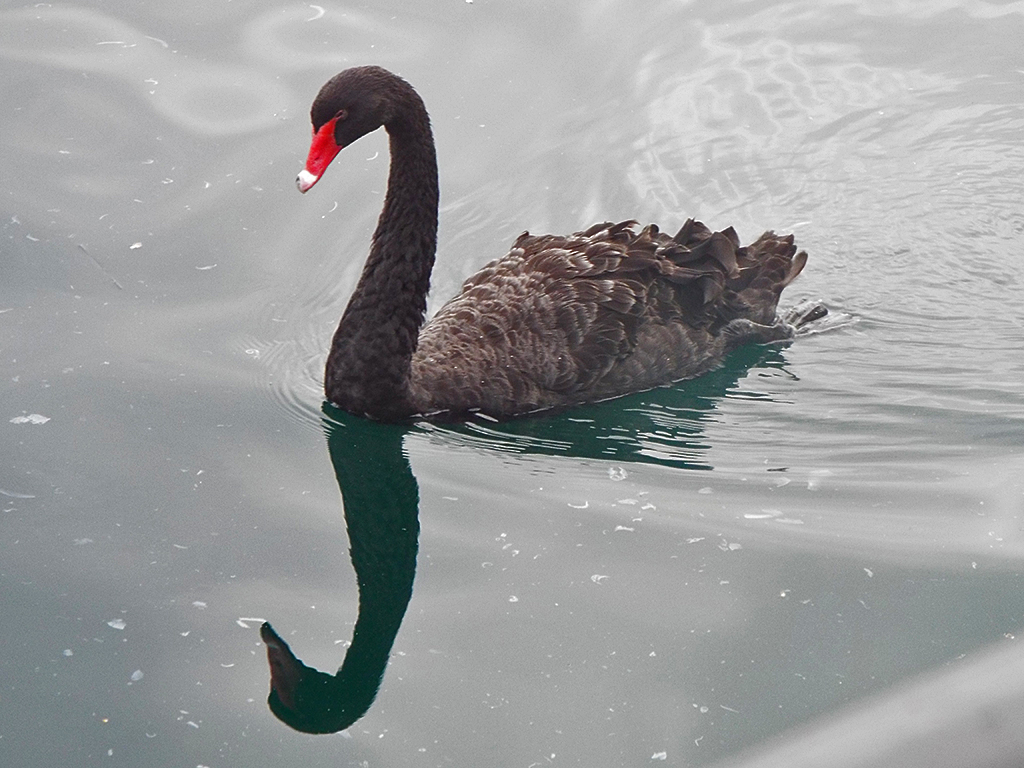
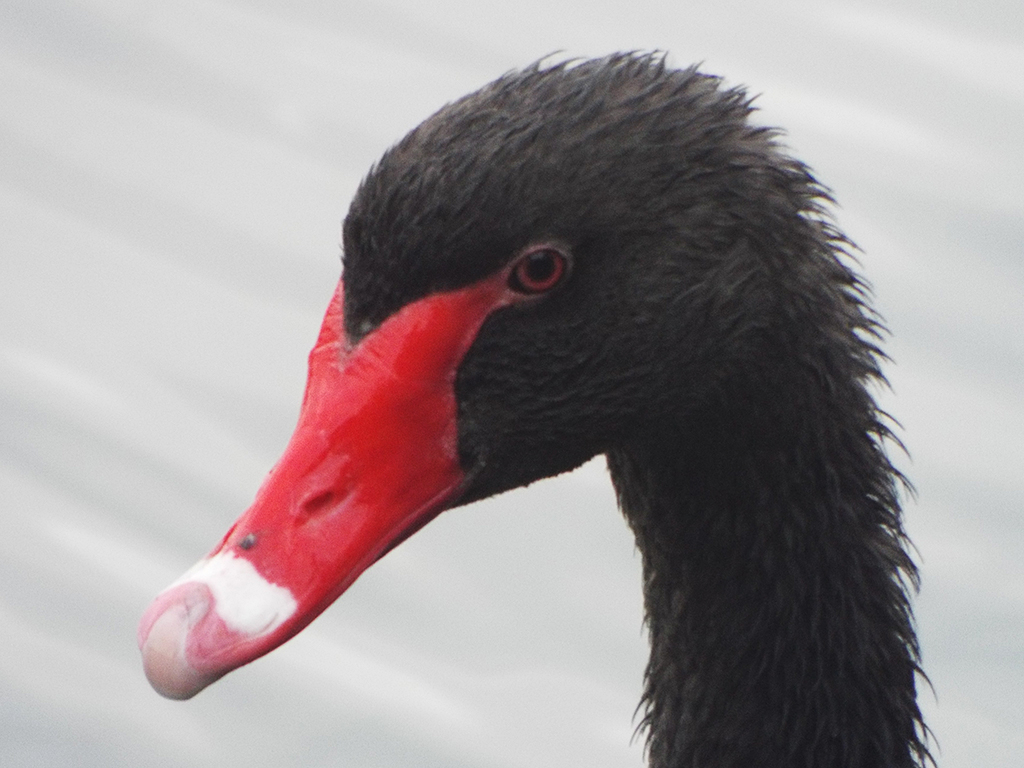
Several pairs of Black Swans were there as well. Black Swans are native to Australia, but introduced widely in the USA and Europe (my lifer Black Swan is from London during my honeymoon).  Their bright red bills really stand out against the birds dark plumage.

black-swan2
I can only imagine how novel and strange a black swan would have been to Europeans arriving in Australia.
black-swan-head
Close-up of a Black Swan’s head.

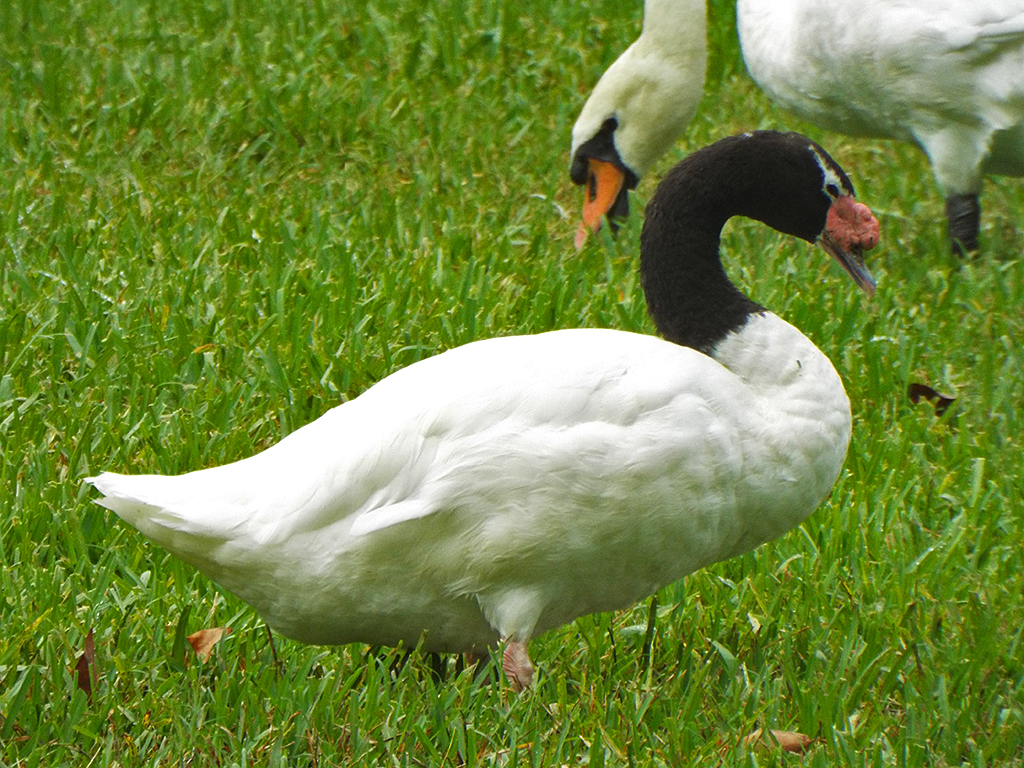
South America has the Black-necked Swan, of which one was visible on our visit. The contrasting body and neck as well as the red facial knobs (carunculations) are diagnostic for this species of swan.

black-necked-swan
Black-necked Swans are comparatively small, for swans, but are South America’s largest waterfowl.

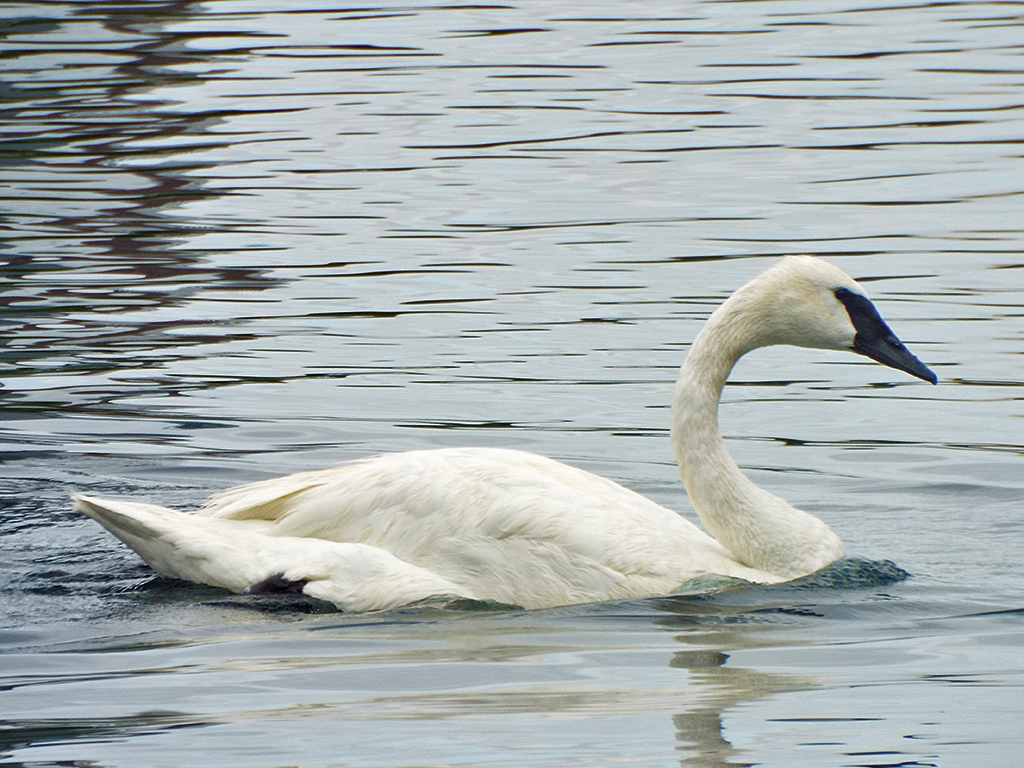
I’ve seen Trumpeter Swans in flight in New England as a child and young adult, but never up close or floating on the water. It was a treat to see one mingling with the other swans.

trumpeter-swan
Trumpeter Swans have an all black face a bill, contrasted with the Whooper Swans’ mostly yellow bill.

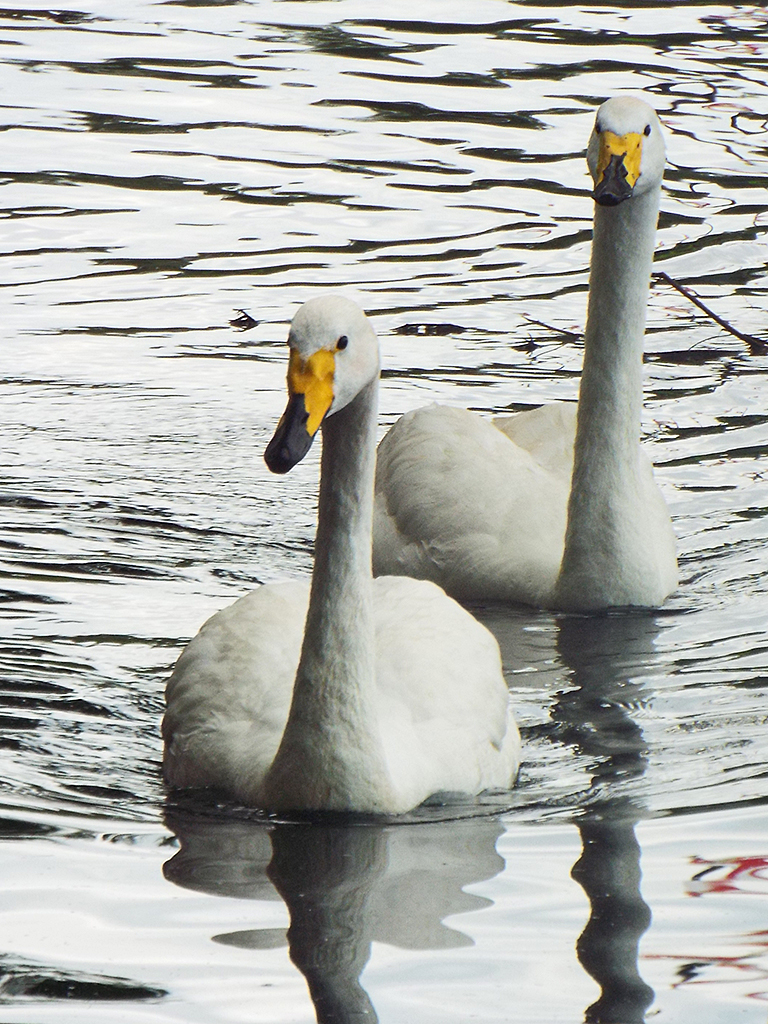
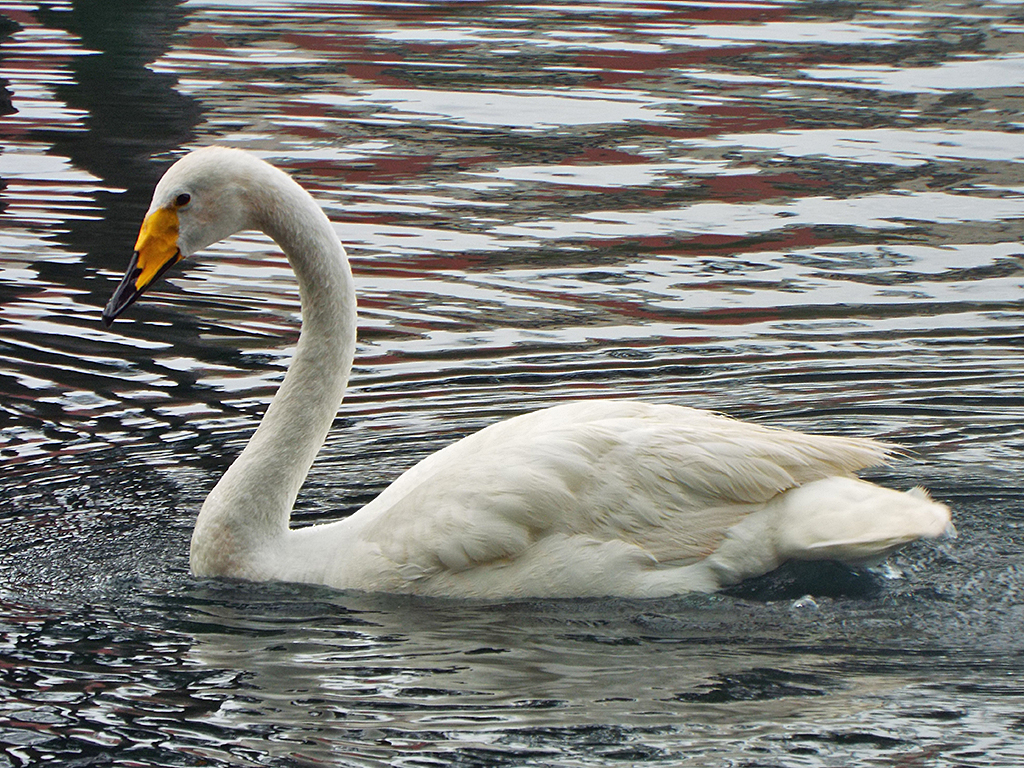
Whooper Swans are also present at Lake Eola, with several presumably mated pairs. They are native to Europe and Asia, and are closely related to Trumpeter Swans. The main visible difference between the two is their bill color. Whooper Swans are the Eurocentric “prototypical” swan as evidenced by their scientific name, Cygnus cygnus (the Latin word for swan).

whooper-swans1
One of several pairs of Whooper Swans on the lake.
whooper-swans3
Swans can use their long necks to reach for food deeper than what ducks and geese can reach.

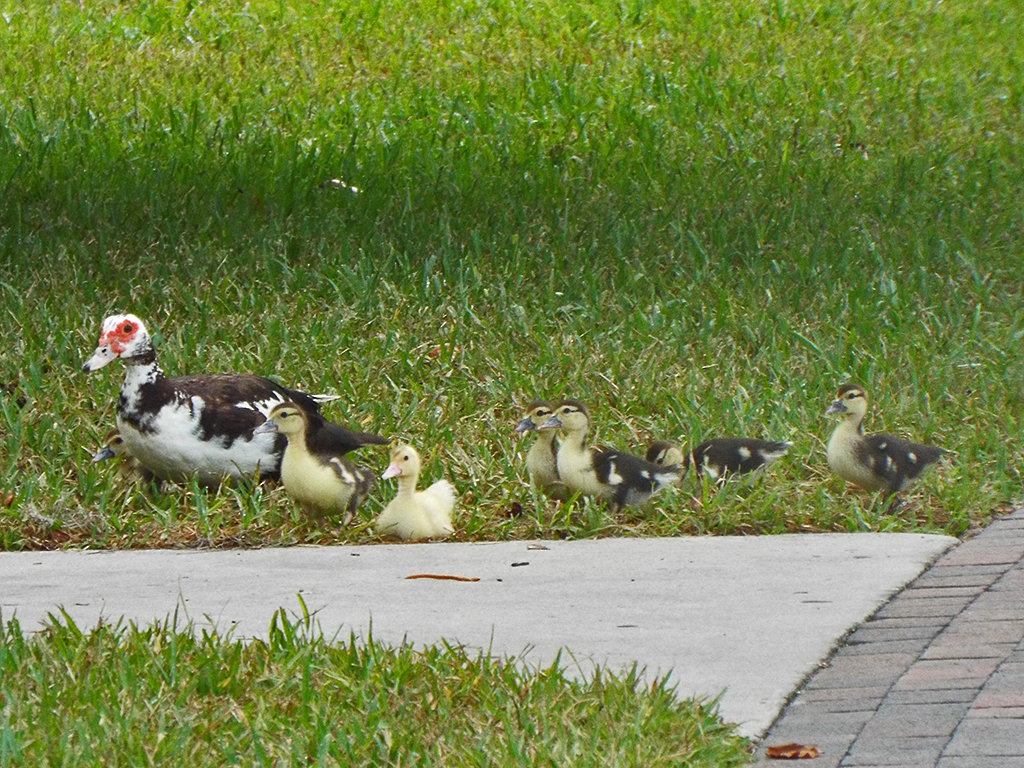
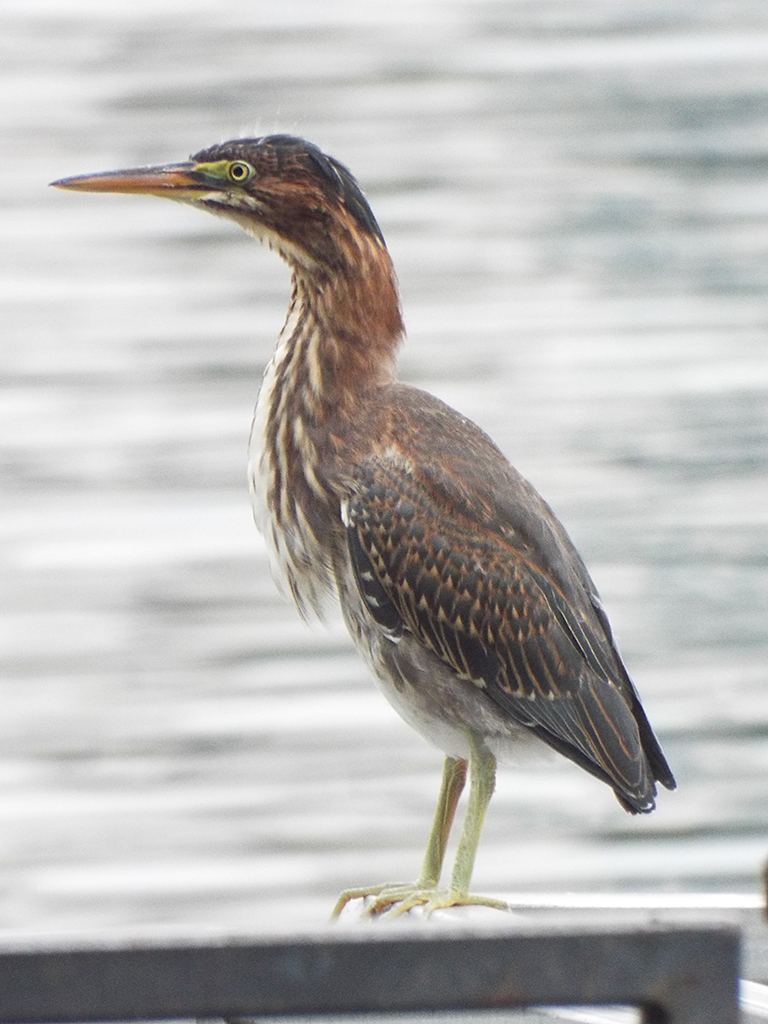
There was a surprisingly wide range of bird species from the expected, like Mottled/Mallard crosses and Muscovy Ducks, to local natives like herons and egrets.

muscovy-with-ducklings
This proud mama Muscovy Duck paraded right down the sidewalk, quacking loudly, head high and chest out as her babies followed. Everyone (people, dogs, birds, and squirrels) made a path for her.
green-heron
Fledgling Green Heron.

Here’s the full eBird list for those interested:
http://ebird.org/ebird/view/checklist/S37788160

Lake Eola is a beautiful setting right in downtown Orlando, and though it can get crowded at times (especially if special events are taking place) I recommend a visit if you’re in the area.


Am I Blue?

Last weekend I made the trek over to the Lake Apopka Wildlife Drive [map]. I haven’t birded much outside Brevard County this spring. This was my first visit to the lake since last Fall. With temperatures rising into Summer, birdwatching outings like this are generally easier on the body, even in the car with the AC turned off.

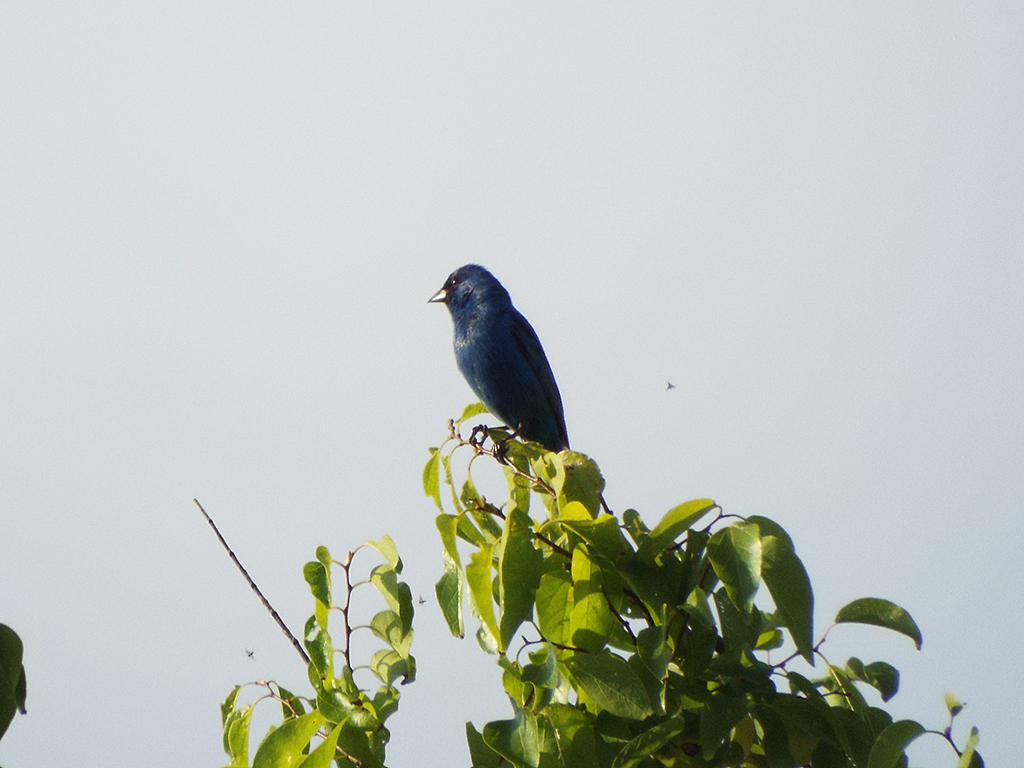
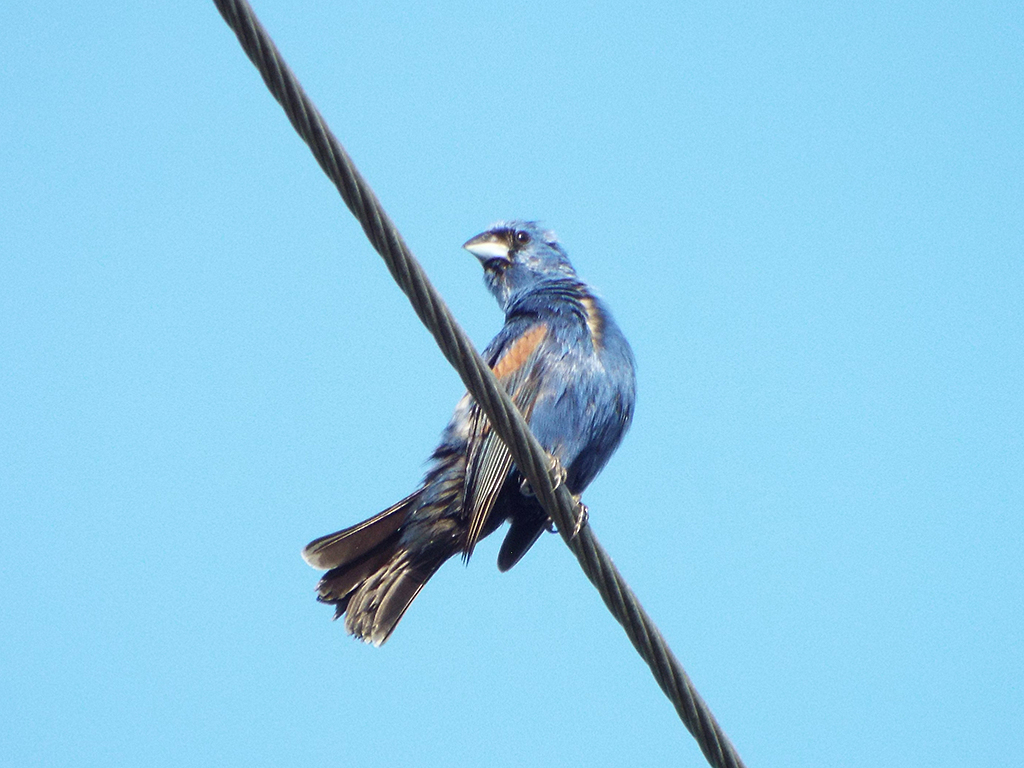
The area between the entrance gate to the North Shore Restoration Area and the Wildlife Drive proper is referred to as the “Gate Area” and even has its own eBird hotspot. I usually forget this and all my eBird reports get lumped into the Wildlife Drive hotspot. I am probably not unique in this. In any case, in the Gate Area it is typical to find both Indigo Buntings and Blue Grosbeaks. Sure enough within 30 seconds of driving in, there they were.

indigo-bunting-1
A male Indigo Bunting in partial sun, backlit. Notice how his blue plumage is dark and unsaturated.
indigo-bunting-2
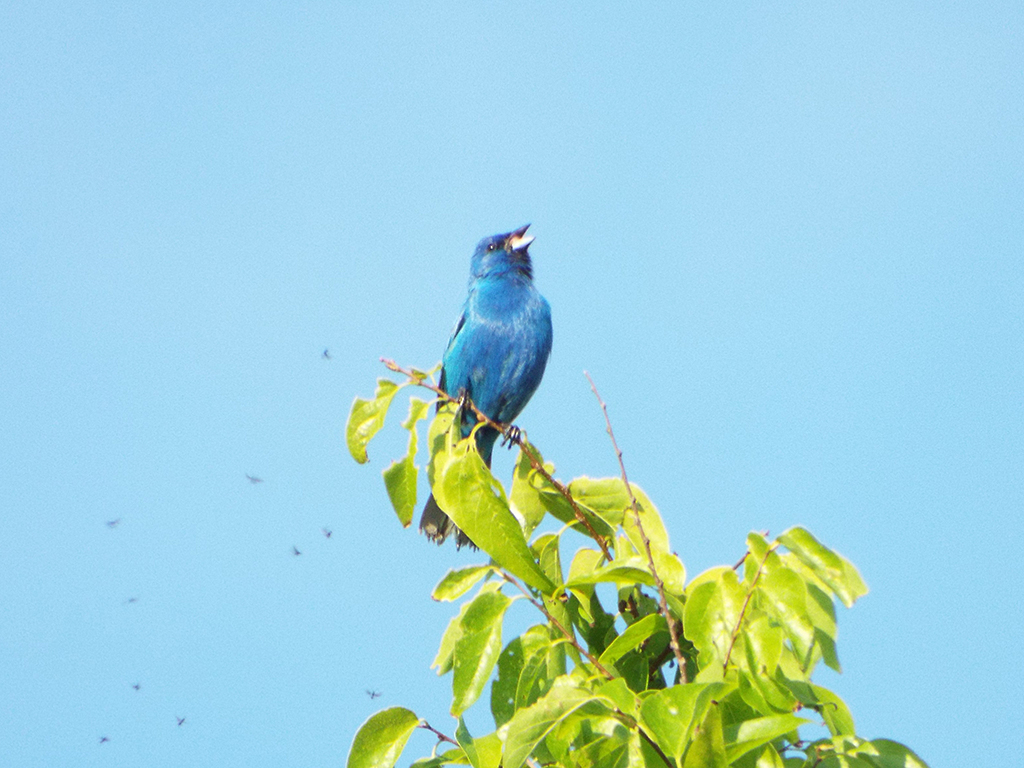
This is the same bird as above, but in full sun.

Seeing these birds early in the morning with passing low clouds made for interesting changes, as illustrated in the two photographs above. While most colors on a bird, like red, yellow or green (and even black or white) result from light reflecting off pigments in the feathers, birds that are blue look that way for a different reason. Instead of a “simple” reflection off pigments, blue colors come about because of a particular way that light reflects through a feather’s 3D structure. Red and green light interfere and cancel themselves out inside the feather, while blue light gets amplified before coming back out. The result is that brilliant blue you see. But that also means that when there’s less light, due to backlighting or clouds, the light coming into and out of the feathers lowers the color blue levels. This is even obvious in more “common” birds, like Blue Jays. On really overcast days I joke and call them “Grayish Jays”. OK, not the pinnacle of humor, but hey. Here’s a link to a Smithsonian Magazine article that explains it if you want to know more.

blue-grosbeak
This Blue Grosbeak isn’t quite in full breeding or adult plumage – he had quite a bit of brownish gray streaked throughout. That heavy bill (gros is French for big) and brown wingbars are diagnostic field marks for this bird.

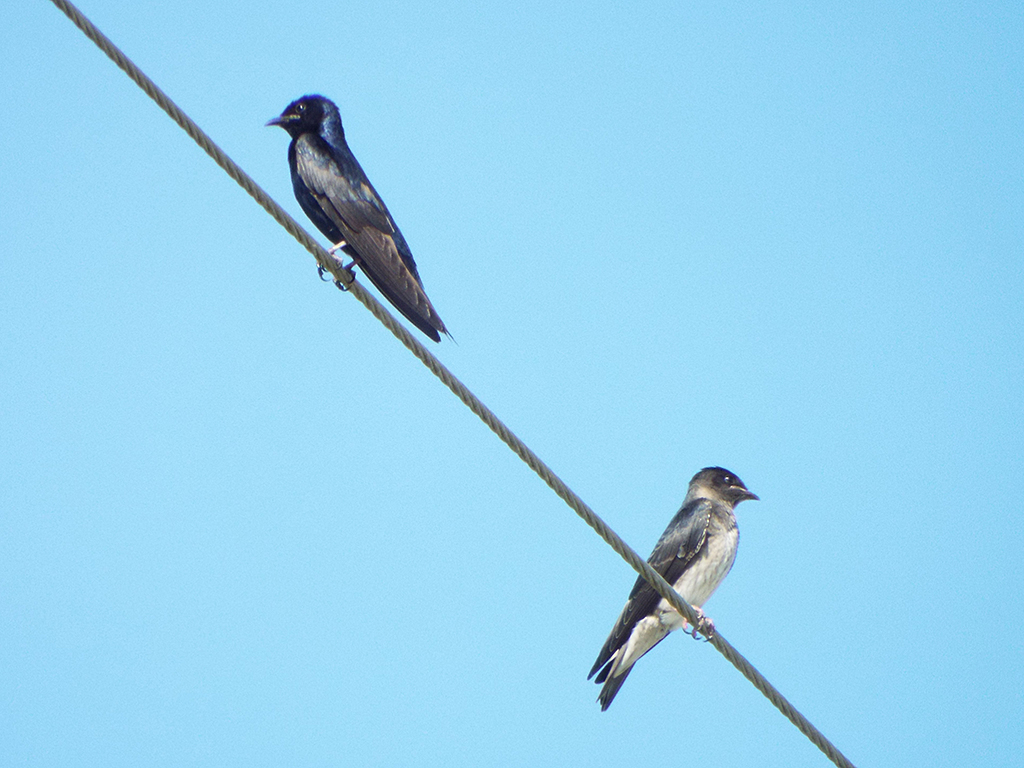
The Wildlife Drive can also be counted on for swallows, especially Barn Swallows and Purple Martins. Often less common swallows, like Northern Rough-winged, Bank, or Cliff Swallows can be found. The martin babies are fledged but still depending on parents for much of their food.

purple-martin-couple
I have to chuckle at this photo. It looks like this Purple Martin couple had an argument and aren’t speaking. In fact, they had just been cozied up to each other but their fledgling brood swooped past, looking for a meal. They are about to divide and conquer. This won’t last long. Martin parents are pretty strict in getting their babies to fend for themselves.

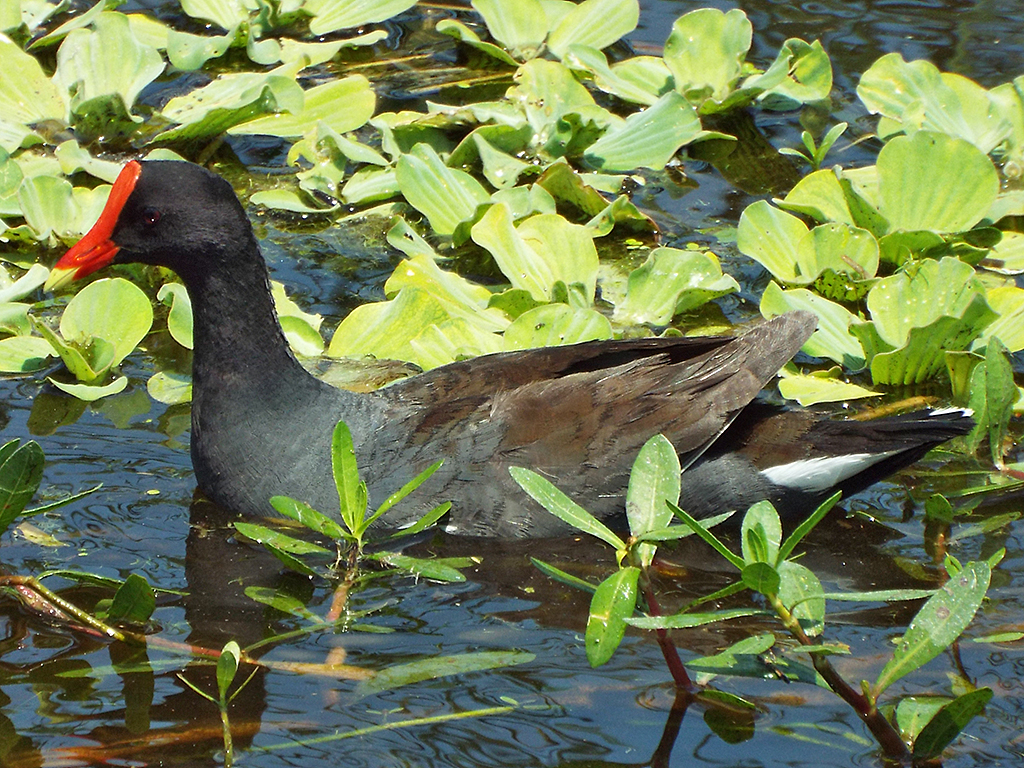
Florida has continued in a mostly dry pattern but we’ve had some showers and storms lately. The wetland areas around the Lake weren’t dry; almost anywhere there was sufficient water there were Common Gallinules, many with chicks of various ages.

common-gallinule
This female gallinule had chicks nearby (I could hear them squeaking), but they stayed wisely hidden in the adjacent weeds.

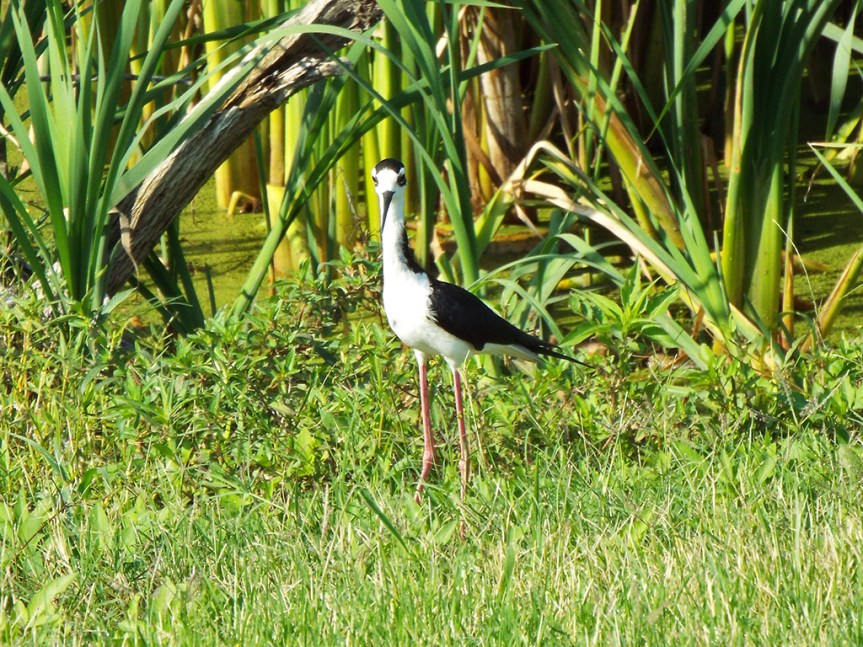
Black-necked Stilts were present as well. Although I didn’t see any chicks, I did see a few of the birds engaging in faux injury displays and diversionary flights. This indicates to me that there were probably some chicks around but mostly out of sight.
black-necked-stilt

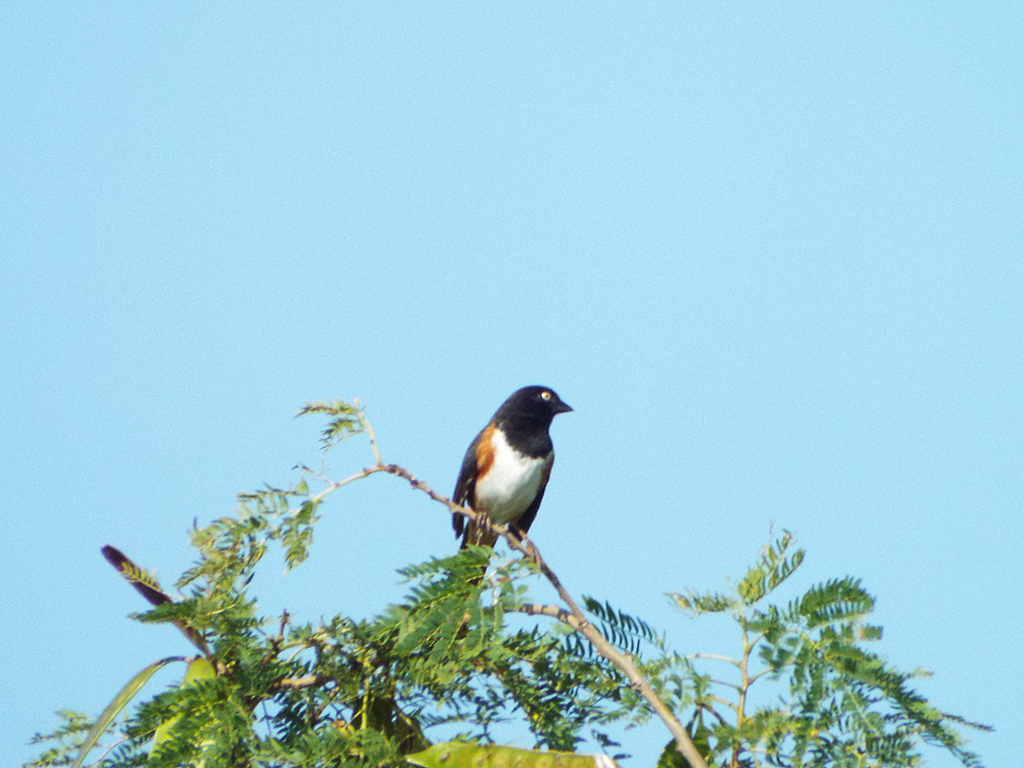
These birds, as well as the numerous Boat-tailed Grackles and Red-winged Blackbirds were reason enough to smile and enjoy the morning. I even had a quick look at an Eastern Towhee.

eastern-towhee
This towhee was singing his heart out. This specific location usually has a towhee in spring, but I can’t be sure it’s the same bird.

The weather was unseasonably hot and as the morning wore on the number of active birds diminished. I did see a pair of Orchard Orioles and caught brief glimpses of Least Bitterns and Fulvous Whistling-Ducks as I made my way along the eighteen-or-so kilometer (eleven-or-so mile) drive.

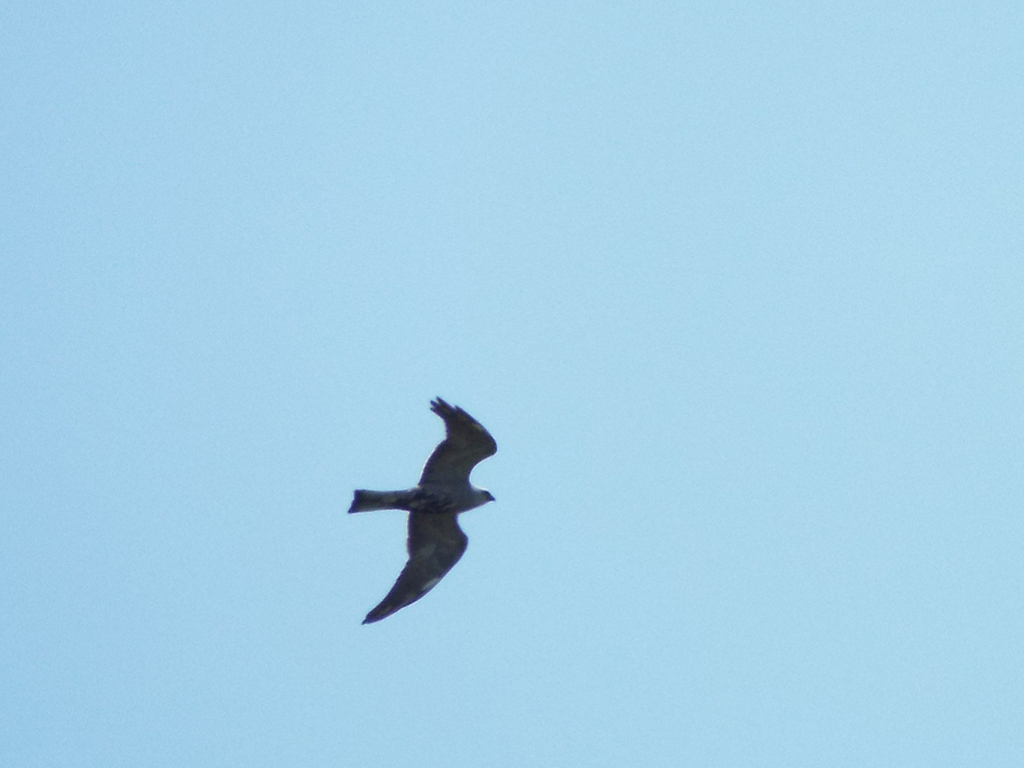
While it’s not unusual to see a Swallow-tailed Kite or two in the skies by the lake, Mississippi Kites are a bit less common. It was nice then to see one quickly glide across the skies as more buntings and grosbeaks sang along the road toward the exit.

mississippi-kite
Seeing kites in flight is similar to watching ballet. There is beauty, grace, agility, strength, and speed. In a flash, this Mississippi Kite was gone from view.

As I neared the end, I saw some vehicles had quickly pulled off the side of the road to the west of the sod fields. One couple was walking rapidly to the side of the road with a scope – a sure sign of seeing something remarkable. Initially I thought about stopping and heading over to ask what they were tracking. Here’s the thing about birding in Florida: sometimes out-of-state birders will nearly run each other down to get a good view of a Limpkin or a pale-form Red-shouldered Hawk – birds that are rare and exciting for them but not quite so for the locals. For this reason, I did not immediately pull over myself to see what was causing the commotion. I carefully drove around the next corner which looked across to the area they – and by now others – were checking out. On some large brush piles I saw an afore-mentioned pale-form (or “Florida Form”) Red-shouldered Hawk hunting lizards on the ground. Satisfied that I had seen what the commotion was, I completed the drive before heading for home. I was especially happy with my blue feathered friends I saw that morning.

Here’s the complete eBird list for my day:
http://ebird.org/ebird/view/checklist/S37209748

To my dismay, I found a way to be blue myself the next morning. It turns out that on those very same brush piles a Fork-tailed Flycatcher was seen. This is another rare bird for Florida; one that had been seen the previous week in Clewiston (near Lake Okeechobee) but I was unable to make that long drive at the time. To add insult to injury, it turns out I had likely driven by a White-faced Ibis earlier in the drive. White-faced Ibises are also rare in peninsular Florida, though a more common visitor than a Fork-tailed Flycatcher. I had seen a White-faced Ibis at Lake Apopka several years ago, but passing by two Florida rarities in one afternoon was a little disappointing.

Reports of both birds are still coming in, including this past weekend but I just didn’t have the motivation to make the two-hour drive out there again (plus the weather was much more uncooperative). We’ve had several days of much needed rain but this makes birding, even from one’s car, difficult.

The lessons I learned is this: trust your gut and if there’s any smidgen of doubt, pull over! Even it if had “only” been the Red-shouldered Hawk instead of the flycatcher, it would have been a nice view, a special moment with other birders, and a chance to welcome visitors to a favorite hot-spot. What else could matter as much as that?

A bit late, but we’re humming along…

It’s been awhile since my last post, and while things have quickly quieted down into a more “summer” pattern here along the Space Coast (especially with the way above average temperatures), the last few weeks haven’t been without some birding drama.

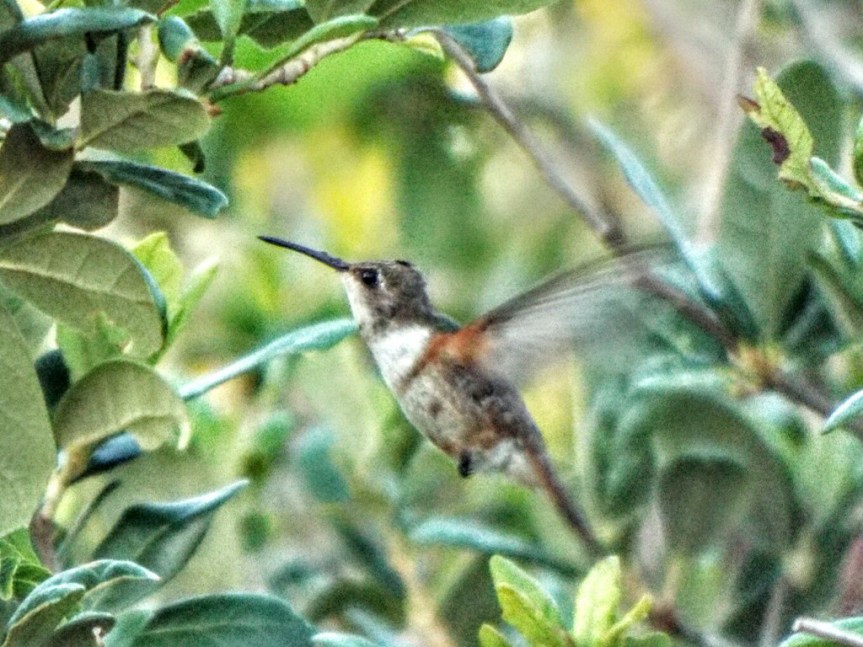
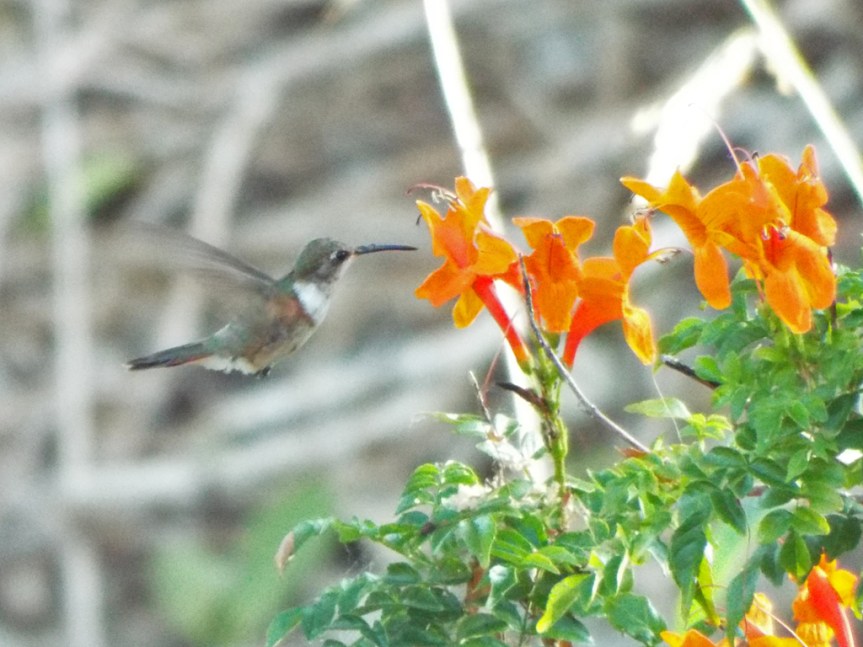
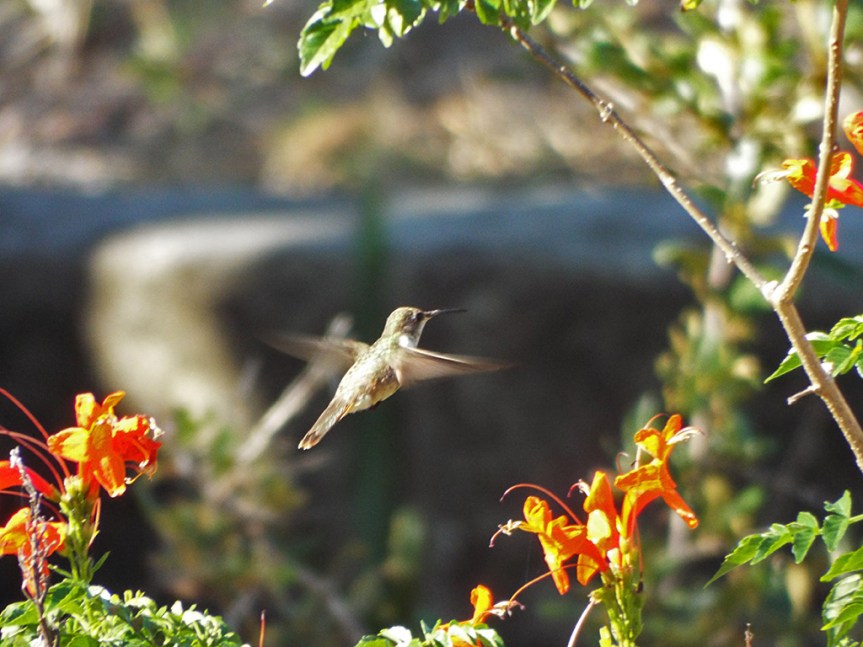
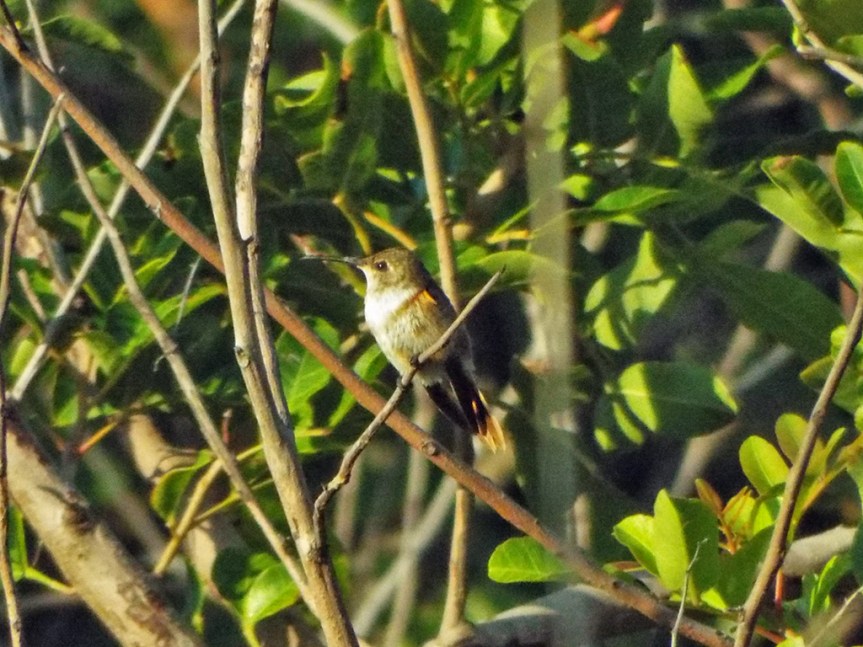
It started with a report from Mitchell Harris, via eBird and the Brdbrains listserv of a potential Bahama Woodstar hummingbird at a local sanctuary. There had been only 2 “official” state records of this bird since the 1970s, and since many female and juvenile North American hummingbirds look quite alike, there was a brief collective pause as the data and photographs were evaluated. The sighting was quickly confirmed, and birders from all over the state and the country descended upon the oft-overlooked Maritime Hammock Sanctuary, south of Melbourne Beach.

Myself included, after a few days of anxiety over missing it due to work obligations. I managed to get there super early one day and, along with 25 or so other birders, got a nice look at this rare gem of a bird. Enjoy these few photos.

bahama-woodstar1
The rufous “armpits” are a good indicator this is a Bahama Woodstar.
bahama-woodstar2
The bill is a bit stouter than that of a Ruby-throated Hummingbird (it also looks like the bill was damaged or deformed a little at some point).
bahama-woodstar3
Although not well pictured here (or above) the tail pattern – rufous outside of green central tail feathers – was seen as the bird occasional spread its tail.
bahama-woodstar4
The bird would rest for several minutes before heading back to forage, primarily among honeysuckle flowers. When the flowers began to wilt and fall off, the bird must have gone on its way.

Having likely been transported over water from the Bahamas via the continuing, strong south and southeastern winds this spring, this hummingbird used the time to rest and refuel while waiting for conditions to allow it to return to it’s usual range. After being seen consistently for four or five days, once the honeysuckle ran out and the winds calmed down, the reports stopped.

A rare and exciting find, and by chance my 300th Florida life bird!

Migrant Days

They say patience is a virtue, so you may understand that many of us birders along the Space Coast have felt seriously virtuous this Spring. It was long overdue for something more serious to happen, along with the fall-outs at the end of April (see previous blog entries).

The last few weeks have seen some of the best birding around parts of the Space Coast in years, though in perhaps a different manner than one might expect. While it’s true that not all warblers migrate at the same time, it’s more typical for several species to come through an area at a time. For example, years past it was normal for Blackpoll Warbler and American Redstarts to come through Turkey Creek Sanctuary around the same time each year.

This time, we seem to have gotten specific warbler days, with dozens (and in one case I’ve heard, hundreds) of one species to fall out for a couple of days, to be replaced by another after that species moved out.

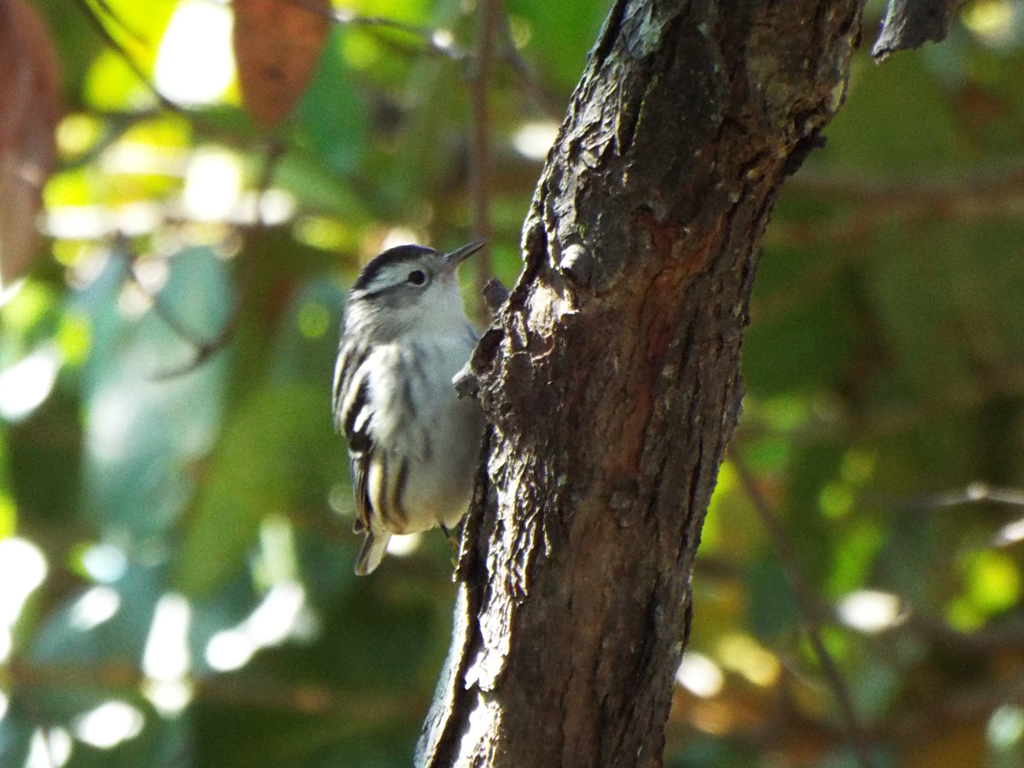
It started with a “Black-and-White Warbler Day”, in which dozens of that species were moving through most of the park.

black-and-white-warbler2
A Winter resident in Florida, the Black-and-White Warblers were fueling up on tiny insects in preparation for migration and breeding.

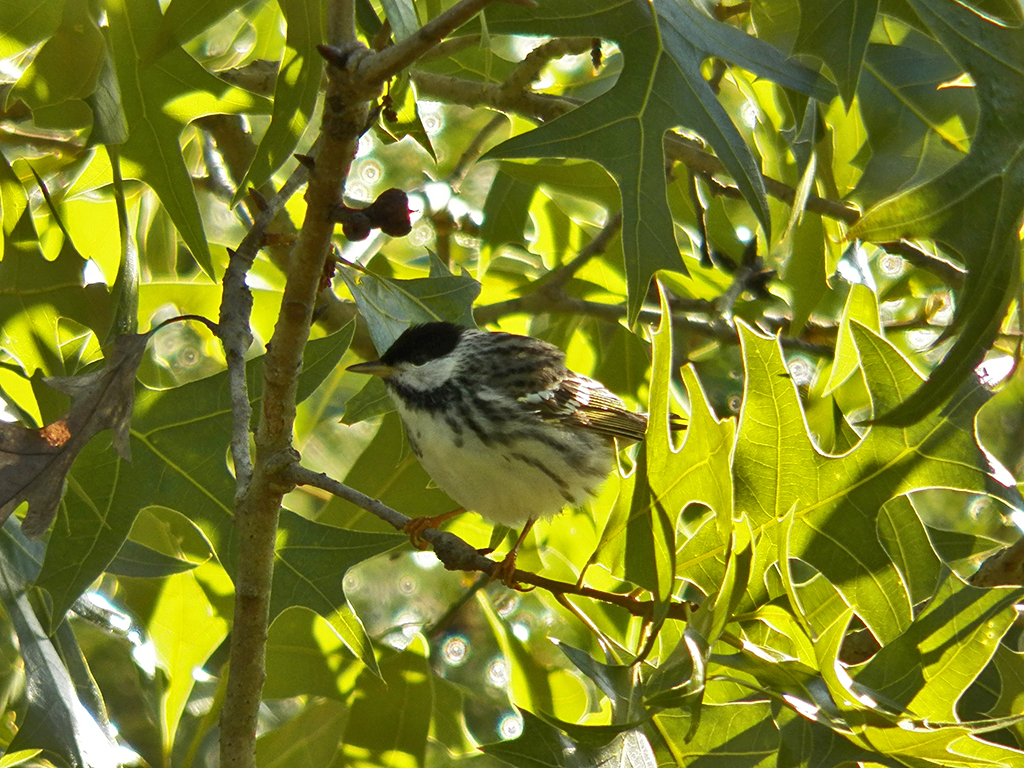
The very next day was a “Blackpoll Warbler Day”. The Black-and-White Warblers were still numerous, but the Blackpolls outnumbered them almost 3-to-1.

blackpoll-z
A Blackpoll male, showing his distinctive black cap (or “poll”) and characteristic orange legs and feet.

Of course, other birds were also present, though in smaller numbers. There have been steady trickles of Worm-eating, Cape May and Black-throated Blue Warblers all through these fall-outs.

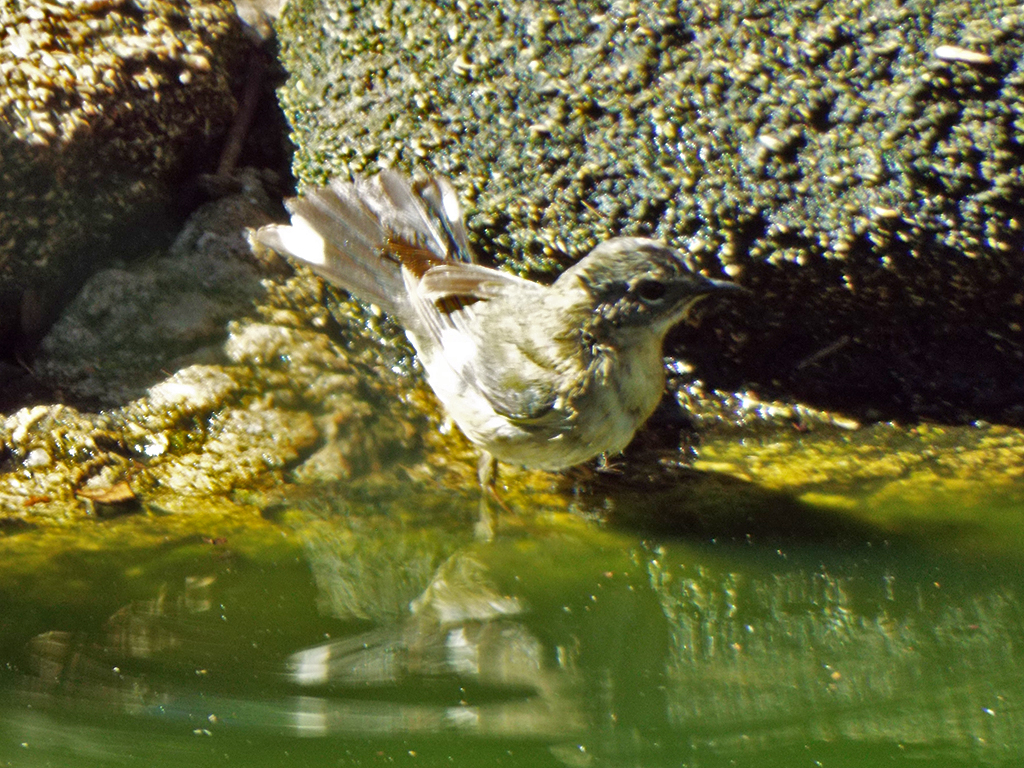
After a dip in activity, another weather system moved through and we had two “American Redstart Days”, where many dozen of these quite active birds were flying all through the area parks.

american-redstart
Many redstarts were first-year males, just starting to get black feathers, and displaying their flashy tails, even while grabbing a drink of water.

Later in the week, Tom Ledford and others reported hundreds of Common Yellowthroats (a year-round resident in Florida, though the population changes as birds fly in and through from South America) along the coastal areas. There were still quite a few at the Maritime Hammock Sanctuary this week.

Some off-the-beaten-path birding was in the offing, too. Having heard reports of a Yellow-billed Cuckoo in the residential areas near Turkey Creek, Camille and I took a quick look into an area north of the park in hopes of seeing it. We struck out on the cuckoo, but wound up seeing a small mixed flock of warblers that included Chestnut-sided, Magnolia, and Yellow-throated Warblers.

All this activity culminated in a surprise sighting for me this week.

For the past few weeks, I’ve been part of a Kirtland’s Warbler survey, using eBird to try and get a better handle on the migratory habits and travels of this species. Just a couple of decades ago, the Kirtland’s Warbler was on the brink of extinction as its breeding grounds were disappearing. With a better understanding of what is needed to manage it (fire, as it turns out), the population is rebounding. The entire population of this bird winters in the Bahamas, and we know where the birds should travel to get to their breeding grounds (Wisconsin, Michigan, and Ontario), but they are almost never seen en route.

So far, the suggested survey points have not shown any Kirtland’s Warblers, and as the end of the survey period is approaching, I was resigned to the fact that I’d not be seeing this bird this year (or probably at all).

While birding the Maritime Hammock Sanctuary, I so happened to turn to face some scrub vegetation near a pond while searching for a Great Crested Flycatcher I heard nearby, when out popped a Kirtland’s Warbler! It stayed well in the open for several seconds, even bobbing its tail several times (a trait the species shares with just a few other North American warblers). My photos, however, are not so grand. I was so shocked to see the bird that I watched it in stunned silence in binoculars before it occurred to me to take a photo.

kirtlands1s
Maybe just enough to see the gray face and white eye-ring?
kirtlands2
Gray back with black streaks are a species fieldmark.

I tried using the survey audio to call the bird back, but to no avail. As I’ve said, it is extremely rare to see this species in migration. I felt honored and privileged to get just a few precious seconds with this bird.

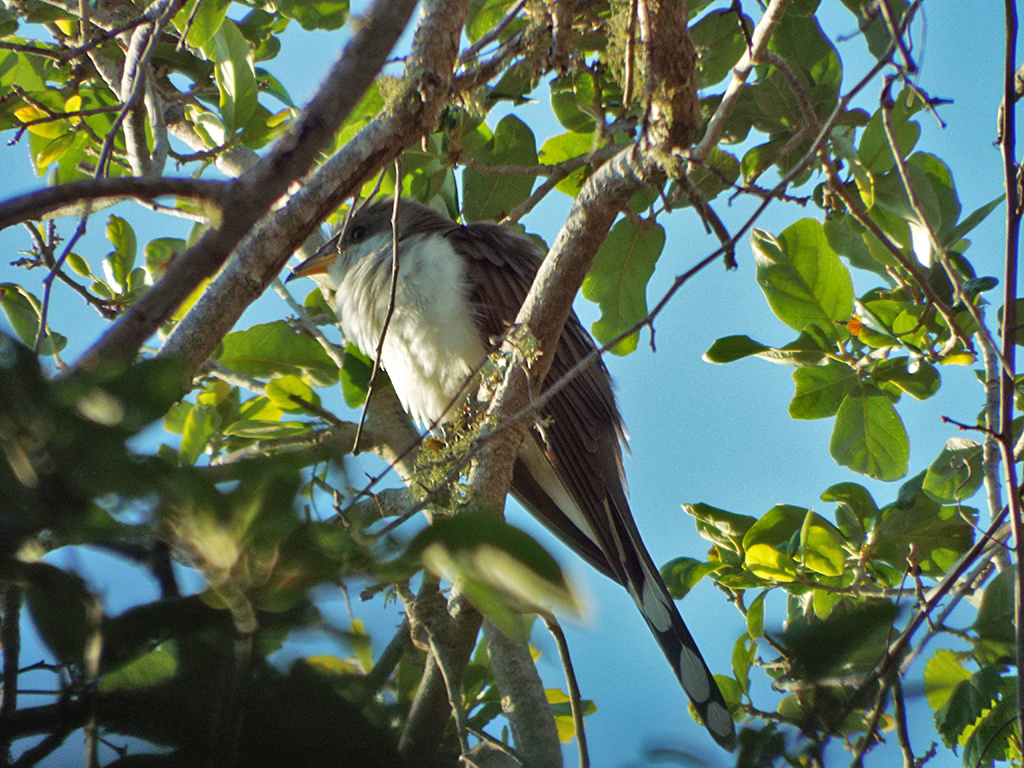
As a final note, I also finally got my Yellow-billed Cuckoo for the county this Spring. I’ve been sort of chasing this species for the last few weeks, with sightings reported just hours after a leaving a park.

yellow-billed-cuckoo
Sitting high in a tree, this Yellow-billed Cuckoo was also calling out, which is the first clear vocalization from this species I’ve heard since my early birding days in Massachusetts.

Here are the various eBird lists, since April, documenting the Spring migration as it nears its end.

Micco Scrub Sanctuary (May 1, 2017):
http://ebird.org/ebird/view/checklist/S36449690

Turkey Creek Sanctuary (May 2, 2017):
http://ebird.org/ebird/view/checklist/S36477711

Turkey Creek Sanctuary (May 3, 2017):
http://ebird.org/ebird/view/checklist/S36507623

Turkey Creek Sanctuary (May 4, 2017):
http://ebird.org/ebird/view/checklist/S36533233

Turkey Creek Sanctuary (May 5, 2017):
http://ebird.org/ebird/view/checklist/S36558035

Pumphouse north of Port Malabar Road (May 5, 2017):
http://ebird.org/ebird/view/checklist/S36570163

Lori Wilson park (May 6, 2017):
http://ebird.org/ebird/view/checklist/S36584330

Maritime Hammock Sanctuary (May 8, 2017):
http://ebird.org/ebird/view/checklist/S36650839
[not including Kirtland’s Warbler on survey list]

There are sure to be a few more migrants coming through the rest of the month, but the bulk of the season is over. Strong southerly winds for much of the Spring probably caused most of the Hooded and Prothonotary Warblers (among others) to overshoot our area. And you know, that’s fine. The birds take advantage of any energy saving method to get them to their breeding ground in peak condition. If that means they overfly the parks around my home, I’m glad they made the safe journey. It’ll try to catch up with them in the Fall.