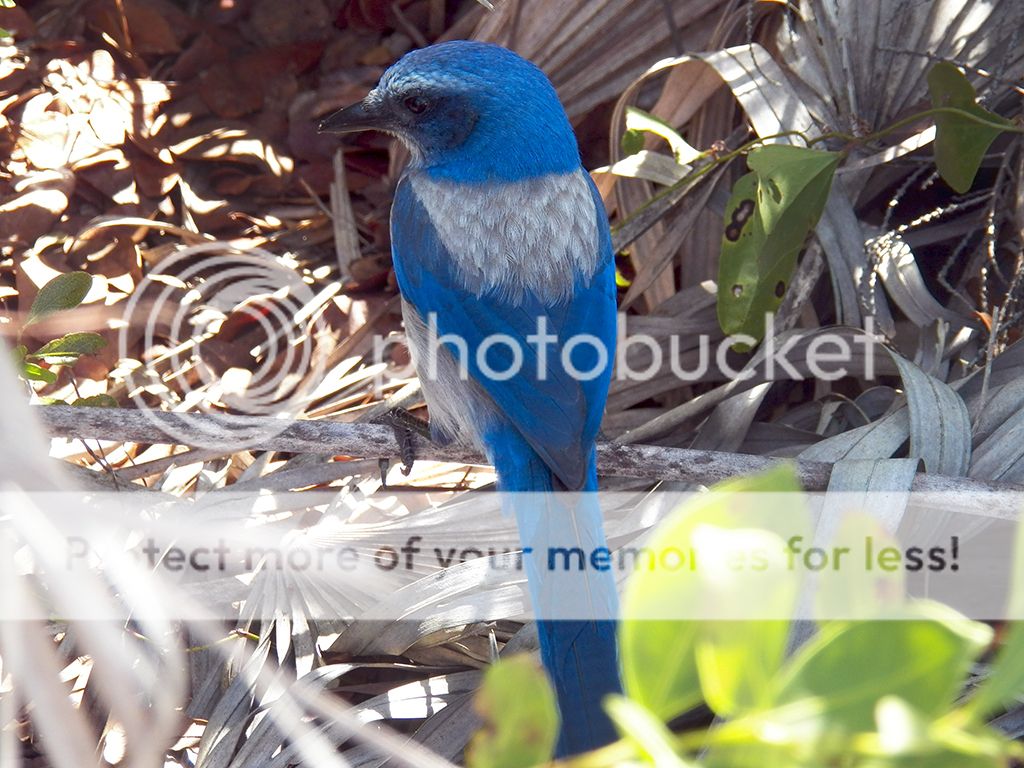
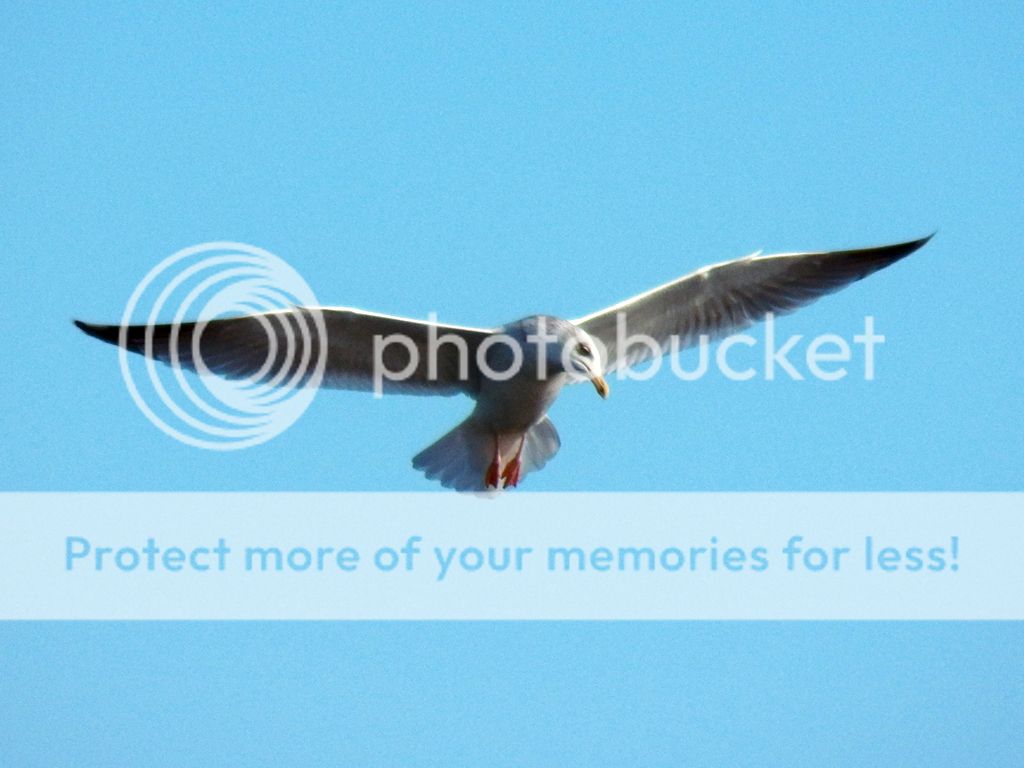
Return to Pine Island, June 1, 2014

At sunrise on Sunday, I drove out to the Pine Island Conservation Area to see how the area is like in summer. Although astronomical summer doesn’t “officially” start until June 21st, it’s important to note that just about everywhere in North America is in meteorological summer by early June.

In any event, as you’ll see by my species list, things have mainly stabilized here in central Florida as far as bird movements and the species that are present. You’ll see the same mix, more or less, through the summer until the early migrants appear in September. That’s not to say things can’t be exciting. There are chicks fledging and late in the summer some birds will start to gather in larger groups and move into different habitats.

photo cardinal.jpg
Plenty of cardinals about. I think this was a juvenile male.

For this trip to Pine Island, I kept off the path that I encountered a feral pig on a past visit. I stuck to the central and western portions of the park. Despite the closeness of the Indian River Lagoon and the pond and wetlands in the center of the park, many of the birds I encountered were upland species. The ecosystems change over short distances in this part of Merritt Island, which can lead to a wide diversity of wildlife at times.

Near a pump-house at the southern end of the North Pond there was a small gathering of Black Vultures sunning themselves before starting their day. This one was particularly obliging to my photo-taking.

photo black-vulture.jpg
A very accomodating Black Vulture.

I went out to what a sign near the parking area said was a “wildlife blind.” The path clearly hadn’t been used in a while. Much of it was elevated wood planks. The blind itself seems oddly constructed. If you stand, there a trellis panel in the way of good observing, and if you sit to look through the area below it, there’s not much visibility except for the mangrove canopy. In any case, there wasn’t much to see so I came back out and decided to walk some paths I’ve not tread before at this park.

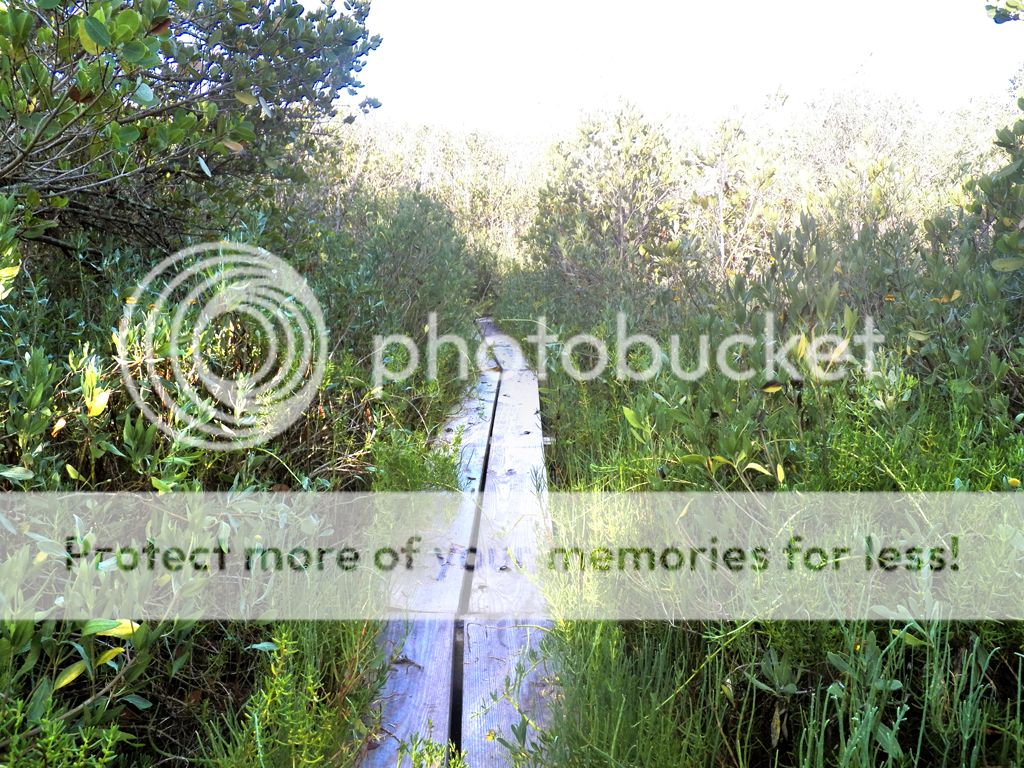
photo bling.jpgphoto planks.jpg
The wildlife blind, as advertised. Plank walkway, as not.

Along the long canal path heading toward the lagoon, I could hear herons squawking and barking to my left, and I managed to flush several species out. Most stayed out of sight. I wonder if that is their rookery, but most of the birds seemed to be on the ground rather than in the tree tops.

This nervous Turkey Vulture let me take a few photographs before flapping off to its mate nearby. Vultures have a bad rep, and I sort of understand why. They eat dead things (and have naked heads to keep the blood from caking on), they poop on their own legs to keep cool, and they use projectile vomit as a weapon. Gross, right? Yeah, but I love them anyway. Vultures are an essential part of a healthy environment. They help clear away the dead and decaying animals, stopping the spread of disease and parasites.

photo turkey-vulture.jpg
You don’t really appreciate how big these birds are until you’re this close. But there was no menace in its eyes at all. In fact it seemed intensely curious and a bit reserved.

The most obvious bird species of note were the Purple Martins. This year I’ve seen more of these birds than ever. At Pine Island it appeared that many were fledglings, testing out their flight skills and diving around the sky with their siblings and parents. A few were resting on some dead trees between the pond and the lagoon.

photo martins.jpg
Purple Martin youngsters taking a break.

Along the narrow shore of the canal, I kept seeing movement and hearing little splishes when my shadow fell along the water’s edge. I looked closer, and there were hundreds of tiny crabs foraging along the sand. They’d dart to the comparative safety of the deeper water in the canal if they felt threatened (like, say, the shadow of a large bipedal predator).
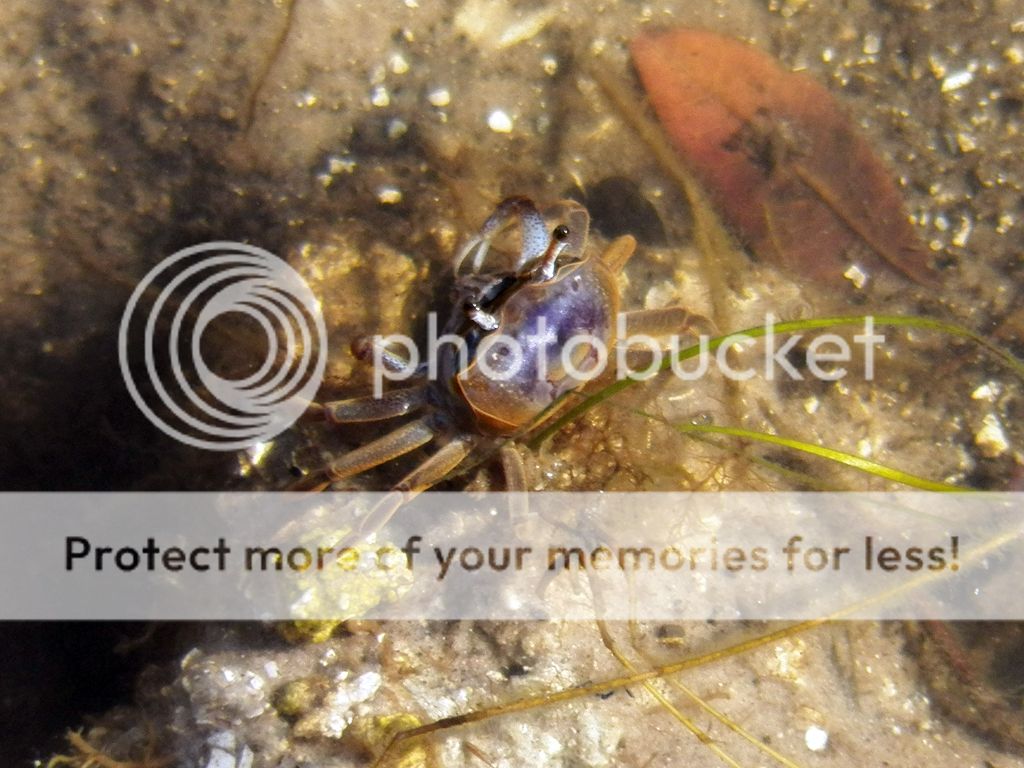
photo crab.jpg
One of hundreds of tiny blue crabs in the canal.

Out over the lagoon, there was a pod of dolphins, with some interesting industrial infrastructure as a back drop. I don’t know what these are, but they’d make a great movie setting or something.

photo things.jpg
Power plant related things?

I also flushed a Southern Leopard Frog out from the canal. You can see that with its coloration and the spots/squares over its skin that is can actually blend in pretty well with sandy stream or pond bottoms and even dead palmetto fronds.

photo frog.jpg
Southern Leopard Frog.

While walking around I had all the usual summertime birds: Carolina Wrens, Northern Cardinals, White-eyed Vireos, Eastern Towhees, various doves and more. Most conspicuously absent here, and from many areas this spring, have been birds of prey. There are plenty of Ospreys, to be sure, but very few hawks or falcons have been evident just about everywhere. This puts a little more credence behind the thought that it’s not just bad luck that make some populations seem so lackluster, but perhaps a real population dip in this area. No prey, no predators. It could be part of a natural cycle, or it could be an environmental indicator. Time, observation and experience will tell.

I did see this large stick nest. It seemed perhaps too small for eagles, but not really located well for an Osprey nest. It was unoccupied, but I may try to keep tabs on it through the fall and into next spring to see who takes up residence there.

photo nest-tree.jpgphoto nest.jpg
Nobody home at this impressive address.

By this point I had run out of water and headed back to the car to call it a day. The species list wasn’t too bad for early June.

  • Mourning Dove
  • Northern Cardinal
  • Carolina Wren
  • Fish Crow
  • White Ibis
  • Glossy Ibis
  • Great Egret
  • Cattle Egret
  • Little Blue Heron
  • Great Blue Heron
  • Green Heron
  • Tri-colored Heron
  • Double-crested Cormorant
  • Anhinga
  • Common Ground Dove
  • Downy Woodpecker
  • Red-bellied Woodpecker
  • Pileated Woodpecker
  • White-eyed Vireo
  • Eastern Towhee
  • Osprey
  • Purple Martin
  • Red-winged Blackbird
  • Boat-tailed Grackle
  • Great-crested Flycatcher
  • Killdeer
  • Black Vulture
  • Turkey Vulture
  • Common Gallinule
  • American Brown Pelican

It’s getting to be that time of year where I’ll need to be up very early to catch most of the birds in action, as it’s just too hot even by 9am for both the birds and the birder. I went through 2 quarts of water before 11:00am.

Out in the Flat

My wife and I had a guest the past few days, named Stanley. Flat Stanley. He was mailed to us (on account of a bulletin board flattening him in class one day), which seems a darn great way to travel. I took Stanley out to Turkey Creek and Malabar Scrub Sanctuaries so he could experience some of central Florida’s natural world.

photo stanley.jpg
Flat Stanley chilling out by Turkey Creek.

We started the day at Turkey Creek, but I had us do most of the park in reverse order from my usual walks. I started by heading out to the weir, but recent heavy rains washed most of the mucky debris behind the orange flotation barrier. This is where most of the wading birds would hang out, but there was just one Green Heron skulking along the shore. There were plenty of bird songs along the rest of the walk. Stanley and I identified quite a few birds by voice and by sight.

photo red-bellied-woodpecker.jpg
Red-bellied Woodpecker feasting on ants.

After exiting via the Sand Pine Trail, we drove to the Malabar Scrub Sanctuary. Stanley wanted to do the “Red Loop Trail” and I thought that was fine. We identified more birds and even saw a large snake! About midway around the trail we came across a loud group of Florida Scrub Jays. Stanely was excited to see them, as I had shown him my photos from last week in the sanctuary.

photo florida-scrub-jay.jpg
Florida Scrub Jay. Unlike last week, this was just one of about a dozen we saw in 2 separate family groups.

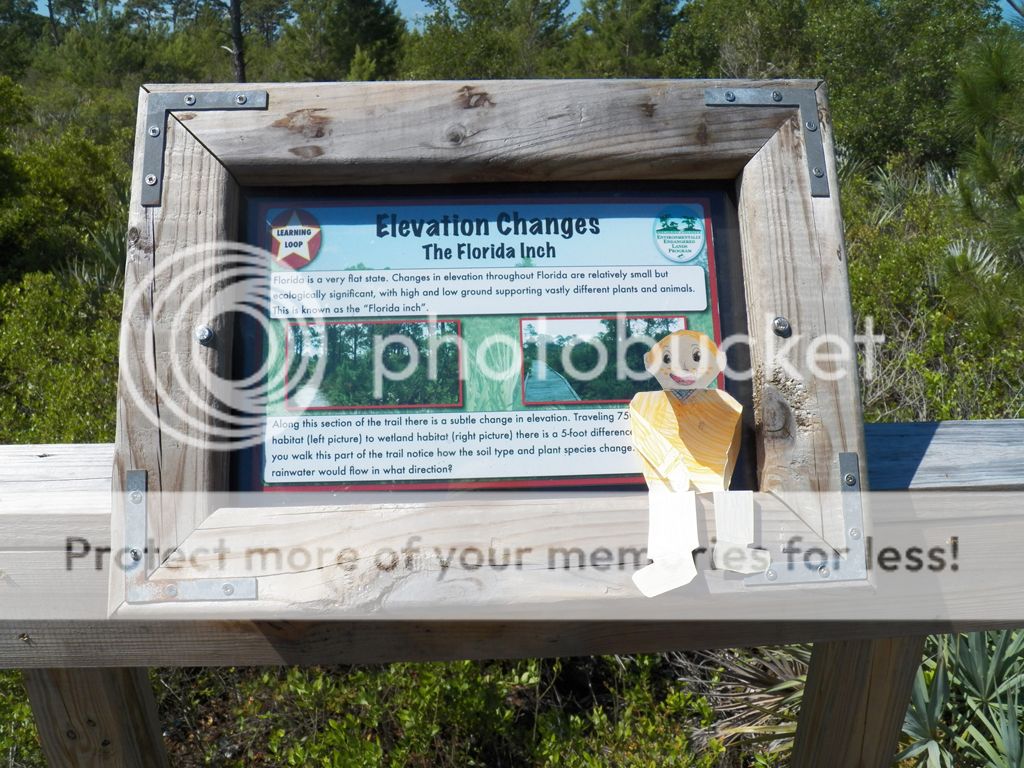
One of the area middle schools built an educational platform in the heart of the sanctuary. Stanley and I learned a bit more about Florida’s scrub habitat and had a nice view of the surrounding landscape.

photo educational-stanley.jpg
Educational board showing how “flat” Florida is.

The second half of the trail was through some habitats I hadn’t seen there before, with lots of scrub oaks making archways over the path, and pockets of Blue-gray Gnatcatchers here and there.

Here is our list of bird species for both parks (loosely grouped by family rather than order seen).

  • Mourning Dove
  • Eurasian Collared Dove
  • Rock Pigeon
  • Common Ground Dove
  • Hairy Woodpecker
  • Downy Woodpecker
  • Pileated Woodpecker (♫)
  • Red-bellied Woodpecker
  • Blue-gray Gnatcatcher
  • Northern Mockingbird
  • Brown Thrasher
  • Carolina Wren
  • Northern Cardinal
  • Indigo Bunting
  • Eastern Towhee
  • Fish Crow
  • Florida Scrub Jay
  • Blue Jay
  • Ovenbird (♫)
  • Yellow Warbler (♫)
  • American Redstart
  • Northern Parula
  • Wood Stork
  • European Starling
  • Black Vulture
  • Turkey Vulture
  • Boat-tailed Grackle
  • Common Grackle
  • Red-winged Blackbird
  • Osprey
  • Green Heron
  • Snowy Egret
  • Cattle Egret
  • Great Egret
  • Great Blue Heron
  • White Ibis
  • American Brown Pelican
  • Great-crested Flycatcher
  • Eastern Kingbird (FOY)
  • White-eyed Vireo
  • Northern Rough-winged Swallow
  • Chimney Swift

It was great having Stanley around, but he has to leave early tomorrow. We’re having him head home in style, though, in a USPS Priority envelope, along with photos and descriptions of his time with us here in Florida.

photo me-and-stanley.jpg
Me (actual photo!) and Flat Stanley at Turkey Creek Sanctuary.

It’s Alive!

I had a much more exciting morning at Turkey Creek Sanctuary than I anticipated yesterday (Sunday). Having bemoaned the lack of bird activity in my last post, it seems the birds had to prove me wrong. Which is fine by me!

After a nice “good morning!” song from this Carolina Wren near the main trail-head, I headed off through the relatively new Turkey Oak Trail.

photo carolina-wren.jpg
Nothing could be finer than a Thryothorus ludovicianus in the morning…

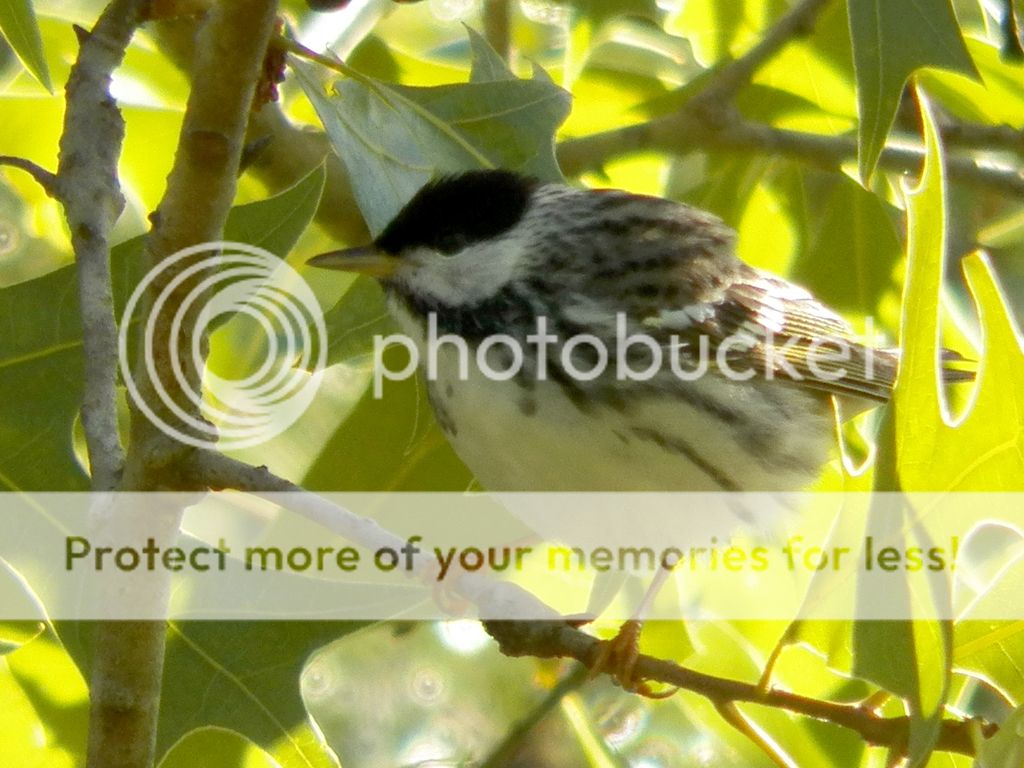
I was immediately surrounded by warbler call notes and fluttering activity. Blackpoll Warblers were everywhere. Some were quite curious about me and would momentarily perch just feet away and cock their little heads at me before zooming off.

photo black-poll-male.jpg
Puffball – er, I mean Blackpoll Warbler.

One female was a little more defensive and wary, following me along the path and looking at me as if to say, “I’ve got my eye on you.”

photo blackpoll-female.jpg
Several ounces of latent hostility.

I know from experience that some warbler species come in pairs. Usually when there are Blackpoll Warblers there are American Redstarts. Sure enough, there were many of those as well, in all stages of plumage. Pretty much anywhere in the sanctuary I went, there were American Redstarts nearby Blackpoll Warblers. The only exception was one spot near the end of the Turkey Oak Trail where instead of redstarts, the Blackpolls were mingling with Black-throated Blue Warblers. I find American Redstarts somewhat difficult to photograph with my current equpiment. They seen to almost never sit still, and the leap out of frame just as i get my finger on the shutter button.

photo american-redstart.jpg
This little guy stopped long enough for me to get this shot.

The Black-throated Blues were almost as numerous as the redstarts, but tended to stay lower in the canopy and among the Sabal palms.

Further along the way, I got a good look at a yellow warbler but was having an issue getting a good ID. I manged some photos that showed the facial markings pretty well, and decided to check at home with my Warbler’s Guide to pin down what it was. As it turns out, the Warbler’s Guide led me to conclude it was perhaps a Hooded Warbler – either a female or a male that had yet to molt into its bold head pattern. In the end, I posted the photo to Facebook and asked some of my friends what they thought. Corey Finger immediately IDed it as a Prairie Warbler. Upon another look I can see the distinctive “mustache” facial pattern. So not a FOY bird, but cool none-the-less.

photo prairie.jpg
Prairie Warbler.

The Turkey Oak Trail was uncharacteristically productive for me, as I also cataloged my first of the year (FOY) Scarlet Tanager, heard a Blue-headed Vireo, and a very secretive Ovenbird.

There were also several noisy Great-crested Flycatchers that were more-or-less moving in the same direction as me. They stayed pretty high up in the canopy, but came close enough to harrass me a few times, but never got in a good position for a photo-op.

By the time I got to the boardwalk, I was feeling pretty good. The boardwalk itself was a little quieter, but I did get a quick look at an Indigo Bunting male as well as more Black-throated Blues and American Redstarts.

I scared up a couple of Solitary Sandpipers as I got off the boardwalk on the path toward the jogging trail (I guess they weren’t so “solitary” if they were a pair?).

The biggest question, though, is what kind of thrush did I see as I made my way to the emergency boat ramp? I got a very clear look and I can say it was either a Gray-cheeked Thrush or a Bicknell’s Thrush. These two species are almost impossible to distinguish in the field. There is an accepted but challenged difference in their songs, but neither this bird, nor the one I saw further down the jogging path later, did any singing.

photo thrush.jpg
The only shot of the thrush I was able to get. Anyone see anything diagnostic?

At the weir and canal there were some Spotted Sandpipers, a few Green Herons, Cattle Egrets and a Common Gallinule.

That was about it as I walked back toward the picnic area and saw a few more Black-throated Blue Warblers and heard a few bickering Blue-gray Gnatcatchers.

Here’s the total species list for the outing yesterday morning:

  1. Blackpoll Warbler (FOY)
  2. American Redstart
  3. Black-throated Blue Warbler
  4. Black-and-white Warbler
  5. Northern Parula
  6. Prairie Warbler
  7. Ovenbird
  8. Scarlet Tanager (FOY)
  9. Great-crested Flycatcher
  10. Downy Woodpecker
  11. Red-bellied Woodpecker (♫)
  12. Fish Crow
  13. Blue-gray Gnatcatcher
  14. Blue-headed Vireo (♫)
  15. Spotted Sandpiper
  16. Green Heron
  17. Cattle Egret
  18. Common Gallinule
  19. Northern Cardinal
  20. Carolina Wren
  21. Common Grackle
  22. White Ibis
  23. Black Vulture
  24. Turkey Vulture
  25. Blue Jay (♫)
  26. Northern Mockingbird
  27. Indigo Bunting
  28. Solitary Sandpiper
  29. Mystery thrush

It was good to see the old place looking more “birdy” this spring. I am wondering if the migration was a bit delayed, given the brutal winter most of eastern North America had this year, but we’ll see.

Blue-crowned Conures

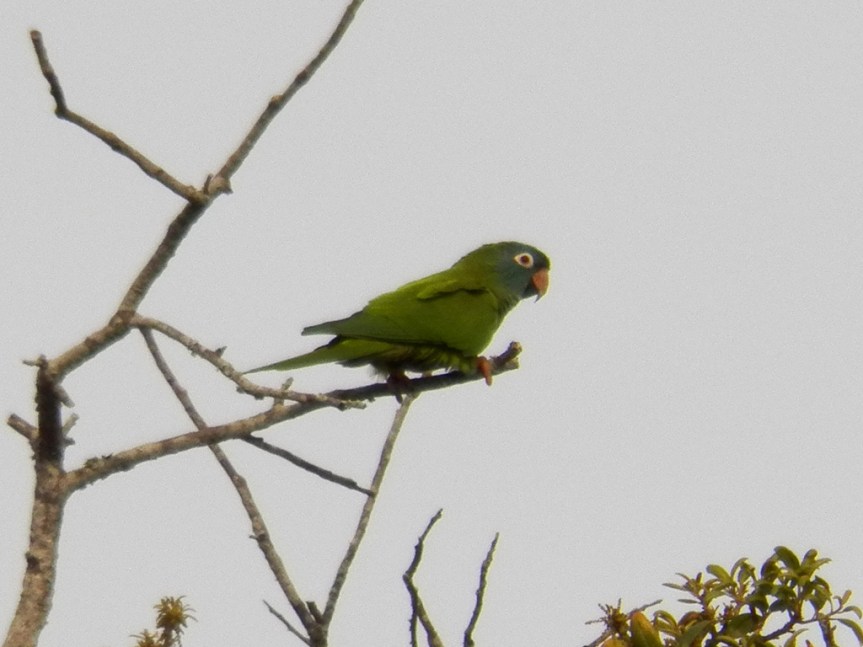
My wife and I had two unexpected parrot encounters today. The first was a small flock of parrots that flew past the car while we were waiting in traffic. I didn’t get a good enough look at them for identification.

When we got to our destination, two parrots flew into a tree nearby (where I took this photograph). It took a bit of web and field guide research to determine these are Blue-crowned Conures (the small flock was likely the same species). I saw them last year near the Post Office (along US 1). The small flock was seen not far from the Post Office, and this photograph was taken just a mile or so north of there. I’ve heard there is a nesting colony beachside of the causeway, but I don’t know if these are the same birds or not.

Over My Head I Hear Music

Yesterday’s birding time was shortened again due to my knee issue, and I returned to the Turkey Creek Sanctuary. It was not a very active morning, though I did manage three FOY birds.

I started out on the north side of the creek (on the mountain bike trails) and did one of the loop trails. I could hear several species of warbler, but was frustrated in my attempts to identify anything by my lack of warbler song knowledge and the birds hiding too well in the foliage overhead. I recognized Northern Parulas and Yellow Warblers, but the other 2 or 3 songs I have not yet figured out. Just before returning to the car, I followed some woodpecker drumming to a Hairy Woodpecker (FOY) hammering on a dead tree.

I drove to the main part of the sanctuary and walked the boardwalk loop. Again, I heard a couple of warbler songs high in the canopy, but was unable to see anything long enough for an identification. I suspected one song was a Black-throated Blue Warbler (FOY), and it took a good deal of stalking to catch a solitary male.

I heard more Blue-gray Gnatcatchers than I had for a couple of weeks, and there was one Gray Catbird that crossed my path. The Northern Cardinals are growing more vocal every time I come out, but they have not yet reached the distracting cacophony they will later in the spring.

High above, I also heard what was probably a vireo of some species, but it flew away too quickly for me to definitively identify.

The only other bird species of note that I’ll mention here was a White-winged Dove (FOY) that flew over the car as I drove home.

Here’s the species list for the day (including drive to and from the sanctuary):

  • Northern Mockingbird
  • Common Grackle
  • White Ibis
  • Cattle Egret
  • Mourning Dove
  • Eurasian Collared Dove
  • Common Ground Dove ♫
  • Blue-gray Gnatcatcher
  • Northern Cardinal
  • Blue Jay
  • Fish Crow
  • Black Vulture
  • Turkey Vulture
  • Gray Catbird
  • Northern Parula ♫
  • Black-throated Blue Warbler (FOY)
  • Hairy Woodpecker (FOY)
  • Red-bellied Woodpecker
  • White-winged Dove (FOY)
  • Carolina Wren ♫
  • Osprey
  • Sandhill Crane
  • European Starling

A Short Walk In The Woods: Turkey Creek Sanctuary

We had some strong weather move through the area late on Saturday, so I was hoping for a small “fallout” of migrants Sunday morning. For my non-birding or novice birding followers, a “fallout” is when an event, such as a strong weather front or a storm forces birds to land, either to take shelter or to rest from the extra exertion. Often these birds will spend some time after the fallout foraging to get their reserves back up to continue their journey. Unfortunately, there didn’t seem to be much of any fallout activity in the Sanctuary (though there were lots of windblown twigs, leaves and branches in places).

photo backlit-rbwp.jpg
Red-bellied Woodpecker enjoying the sunrise.

I’ve been having some issues with one of my knees, and by doctor’s orders I am limiting my walking distance and time until we figure out what to do; therefore, my outing on Sunday was abbreviated and I mainly stuck to the boardwalk.

I heard more Yellow Warblers high in the canopy (and may have glimpsed one), but otherwise it was still mostly the locals and winter residents. I heard just one Blue-gray Gnatcatcher and there was no evidence Gray Catbirds, so there are changes happening as daylight increases and temperatures rise.

photo n-parula.jpg
Northern Parula playing peek-a-boo with a leaf.

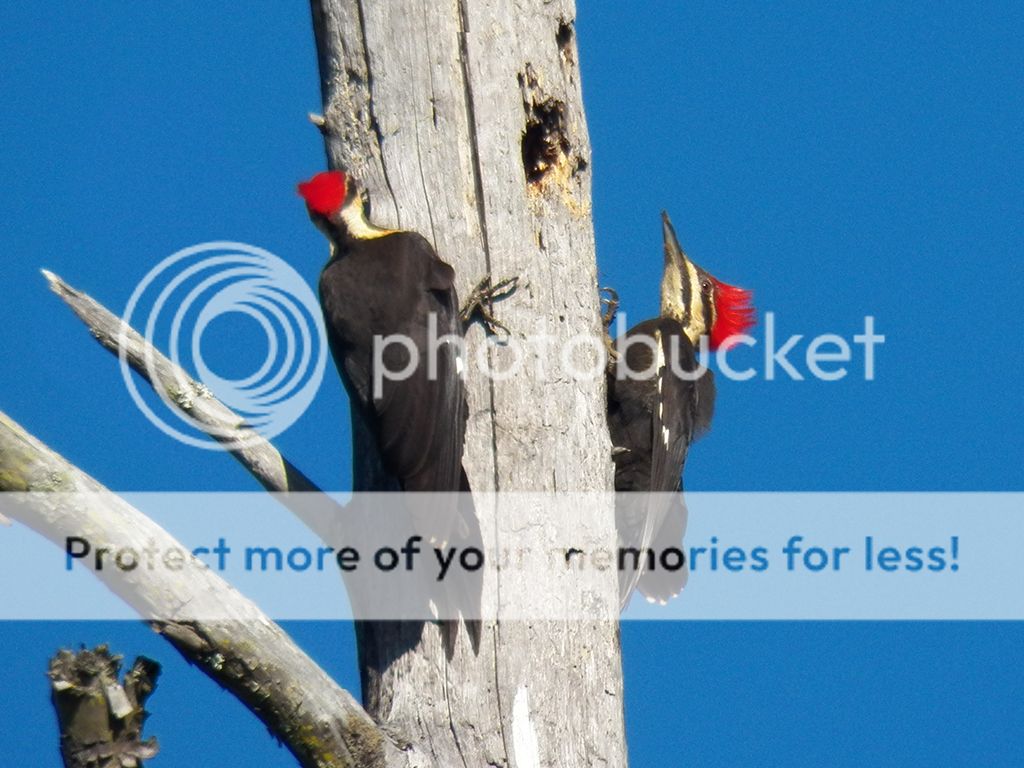
The best watching opportunity happened near the Pileated Woodpeckers’ nest tree, where I saw a total of three at once. One was on the nest tree while the other two (which I think are fledgling juveniles) chased each other around a nearby tree (which has a Red-bellied Woodpecker nest hole in it) and flew awkwardly in circles before heading north and out of sight. The other bird (one of the parents, I assume), stayed a bit longer before flying off in the same direction.

photo pileateds.jpg
Pileated Woodpeckers playing around a Red-bellied Woodpecker nest hole.

The new Floodplain Trail boardwalk I reported on last time is now 100% complete (though there is still a small cache of boards that need to be removed).

photo boardwalk-name.jpg
Future civil engineer?

Since I didn’t walk the southern part of the jogging trail, nor go out by the weir and canal, this weekend’s list is shorter than might otherwise be expected.

  • Yellow Warbler ♫
  • Northern Parula
  • Black-and-white Warbler
  • Blue-gray Gnatcatcher ♫
  • Northern Cardinal
  • Pileated Woodpecker
  • Red-bellied Woodpecker
  • Turkey Vulture
  • Black Vulture
  • Osprey
  • Red-shouldered Hawk
  • Bald Eagle
  • Carolina Wren ♫
  • Black-bellied Whistling Duck
  • Mallard

I am looking forward to getting this knee issue resolved so I can resume “normal birding operations.”

Malabar Scrub Sanctuary: March 2, 2014

I apologize for the delay in getting this post up, but here’s a summary of my last birding excursion, this past Sunday.

My last visit to the Malabar Scrub Sanctuary was memorable, in part, because of how close I got to some Florida Scrub Jays. To be honest, my main goal was to see some of these birds again.

The sanctuary itself is divided into two main parts, an eastern and western section, with the Cameron Preserve in the middle. This forms a more or less contiguous open space ranging from low scrub to mature second-growth forest.

I started the morning in the western section, nearby the Turkey Creek Sanctuary. This part of the park is mainly forested with a semi-closed canopy. Northern Parulas were numerous and vocal. Almost everywhere I saw or heard Northern Parulas, Yellow-rumped Warblers were nearby. The males are molting into their breeding plumage and are looking quite sharp! The warblers tended to move through the trees just ahead of Blue-gray Gnatcatchers.

The Northern Cardinals are ramping up their activity as well. Most years, the cardinals in this area only show a slight decrease in activity through the winter. Some years I have even seen fledgling birds in late January, meaning at least some of these birds are nesting and breeding through the winter. This year, however, the cardinals have been more laid back and quiet through most of the winter. Things are changing now, though, and soon I expect these handsome birds will be singing and chirping their way to distraction, as always.

At one point, I heard a distinctive bird-like chatter up in the trees and looked up at some tall pines, trying to find what was making the sound. I heard a similar response about 100 feet away in another treetop, but could not see anything. The first noise came from a tree with a nest in it, though I could not tell if the nest was occupied. The nest was 2-3 feet wide and make of sticks. I’ve embedded this video below, mostly for the sound recording. If anyone knows what this is, please let me know.

Mysterious chattering call. Does anyone know what this is?

I heard several small groups of American Goldfinches at various places, and the constant calls of the Carolina Wren at times challenged the cardinals for predominance. In both sections of the sanctuary I heard White-eyed Vireos singing their odd, semi-mimicked songs, but the one I did see was too quick to grab a photograph (if you follow this blog, you’d know it took almost a year for me to actually photograph one of these birds, despite hearing them almost the entire spring and summer).

After completing one of the loop trails through that part of the sanctuary, I drove to the eastern portion, where I saw the scrub jays last year. They did not disappoint. After one “false alarm” by this Northern Mockingbird, I was visited by a couple of jays, who let me get quite close and seem to be people watching as much as I was birdwatching.

photo n-mockingbird.jpg
Perhaps I was being silently mocked?

Florida Scrub Jays are intensely curious birds, and also quite social (like most corvids). One pair hung around the tree I was near, trying to catch a glimpse of a bird that was noisily rustling in the brush along the trail. One of the two let me get within a few feet of it (the rustling turns out to have been Eastern Towhees foraging in the leaf-litter).

photo s-jay.jpg
When I said, “I don’t have any snacks for you,” this bird actually did turn up its nose.

Further along the trail this bird followed me and let me get closer and even take a short video. The video starts when the jay notices a large wasp flying around. The loud sound at the end is the camera’s zoom mechanism.

Florida Scrub Jay goes after a wasp (not in frame).

When it flew off and ran around, it was chasing the wasp, which it then summarily caught, dismembered and ate after scurrying into the brush. I managed some photographs after the meal was complete, but I love the picture shown here because it shows off the beautiful blue plumage on this handsome bird.

photo s-jay-back.jpg
Florida Scrub Jay after just eating a large wasp.

After a few more minutes, the jays got bored with me and flew off (I heard several other individuals in the vicinity).

During the wildlife festival in January, a group of us were talking about various state birds, and it was mentioned that Florida’s state bird is the Northern Mockingbird. I offhandedly said I voted for the Swallow-tailed Kite, but Laura Erickson immediately piped up and said, “I think it should be the Florida Scrub Jay.” And she’s right.

The Florida Scrub Jay is completely endemic to the state. No other Florida bird is as emblematic of the struggle in Florida of wildlife and open space vs. development or of natural Florida vs. the tropical paradise we’re trying to force it to be. While it might lack appeal for citizens for whom the Scrub Jay is not found nearby, any benefit the species might get by elevating it to official status would be welcome, in my eyes.

I finished up the morning by walking to the end of the paved road before turning around and walking back out. One pleasant surprise there was a trio of Brown-headed Cowbirds on the powerline.

Once again, here is the species list from Sunday (including the drive to and from the sanctuary):

  • Northern Mockingbird
  • Fish Crow
  • Brown Pelican
  • Great Blue Heron
  • Yellow-rumped Warbler
  • White-eyed Vireo
  • Blue-gray Gnatcatcher
  • Northern Cardinal
  • Eastern Towhee
  • Florida Scrub Jay (FOY)
  • Boat-tailed Grackle
  • Osprey
  • Turkey Vulture
  • Black Vulture
  • Brown-headed Cowbird (FOY)
  • Palm Warbler
  • Carolina Wren
  • Northern Parula
  • Blue Jay
  • Pileated Woodpecker (voice)
  • Tree Swallow
  • Red-shouldered Hawk
  • American Goldfinch (voice)

SCBWF January 27, 2014: Pelagic Birding Trip

What event would make one get up at 4:00am, be ready to ship off at 6:30am and spend 12 plus hours on the open sea for just a handful of birds?

If you guessed the SCBWF Pelagic Birding Trip, you are a winner!

photo ponce-light-predawn.jpg
Ponce Inlet Light before dawn. This is the second tallest lighthouse in the USA.

Although we waited out some rain while at the dock, by the time we headed out, the skies were clearing. It was a gorgeous day, and the seas were very calm.

photo brown-pelican.jpg
Brown Pelican at dawn.

Unlike last year, where we had 6 ft. seas with a 6 second period (leaving a large portion of our contingent moaning for their lives in the cabin), this year we had nearly flat seas and I didn’t see a single person contribute to the chum slick at the back of the boat.

photo herring-gull.jpg
Herring Gull deciding if fish parts, oil and popcorn are totally worth it or not…

As glorious as the conditions were (the worse pitching we had was about 40 miles out when we had some 2-3 ft seas that pitched us around a bit for a few minutes), the birding was quite sparse once we got to the open sea. We had barely any followers at the stern either (unlike last year). To me it seemed that there was much less chumming of the water, but I can’t be certain of that. We had long periods of quiet cruising punctuated by minutes of excitement. I saw my first confirmed shearwaters (Audubon’s), whose appearance caused quite a stir, and some jaegers (Pomarine and Parasitic). In any case, the birds we did see before our approach back to Ponce Inlet, were worth the trip to me. I had a blast.

We saw about half a dozen sea turtles (not including the 4 rescued babies we had on board that we returned to some sargassum).

photo baby-turtle.jpg
Baby Loggerhead Sea Turtle.

We were visited by pods of both Atlantic Bottle-nosed Dolphins and Spotted Dolphins. Spotted Dolphins rode our bow wake at least a couple of times, and some of the mother dolphins even showed off their calves, which was a real treat.

My trip list (including the lagoon and inlet):

  • Brown Pelican
  • Ruddy Turnstone
  • Purple Sandpiper
  • Northern Gannet
  • Laughing Gull
  • Ring-billed Gull
  • Herring Gull
  • Great Black-backed Gull
  • Lesser Black-backed Gull
  • Black Skimmer
  • Common Tern
  • Royal Tern
  • Bonaparte’s Gull
  • Common Loon
  • Audubon’s Shearwater
  • Pomarine Jaeger
  • Parasitic Jaeger
  • Black Scoter
  • Black-crowned Night Heron
  • Great Blue Heron
  • Greater Yellowlegs
  • American Oystercatcher
  • Osprey

We had hoped to see a Red Phalarope or maybe even a Razorbill, like last year, but we had no such luck. The action really picked up as we headed back in to the inlet. First, we saw many small groups of mixed-year Northern Gannets as we approached. Then, right near the jetty, we saw a feeding frenzy of gull, terns, gannets, and pelicans on schools of bait fish.

photo frenzy.jpg
Feeding frenzy at dusk.

It was a grand ending to a fun-filled and exhausting festival. Special thanks go to Laura Erickson, Corey Finger, Dave Goodwin and all the organizers, sponsors, trip leaders, and fellow briders for making everything so fun and successful.