This past weekend, I paired up with my erstwhile protégé Camille to pick up some easy “gets” for our birding lists: swans. These birds are mostly introduced or from feral stock but various organizations, like the ABA and local organizations (and eBird) have been allowing some of these birds to be “officially” counted as they become established breeders or long term residents well outside their native ranges. Introduced animals are always a potential problem, but that’s hardly the birds’ faults.
Like the swans of Lake Morton in Lakeland, the swans in Orlando’s Lake Eola [map] are a source of pride and attraction to the downtown area. The lake and its park are central both geographically and culturally for many of Orlando’s events.
Lake Eola’s large fountain is especially pretty at night, but remains impressive even on an overcast morning.
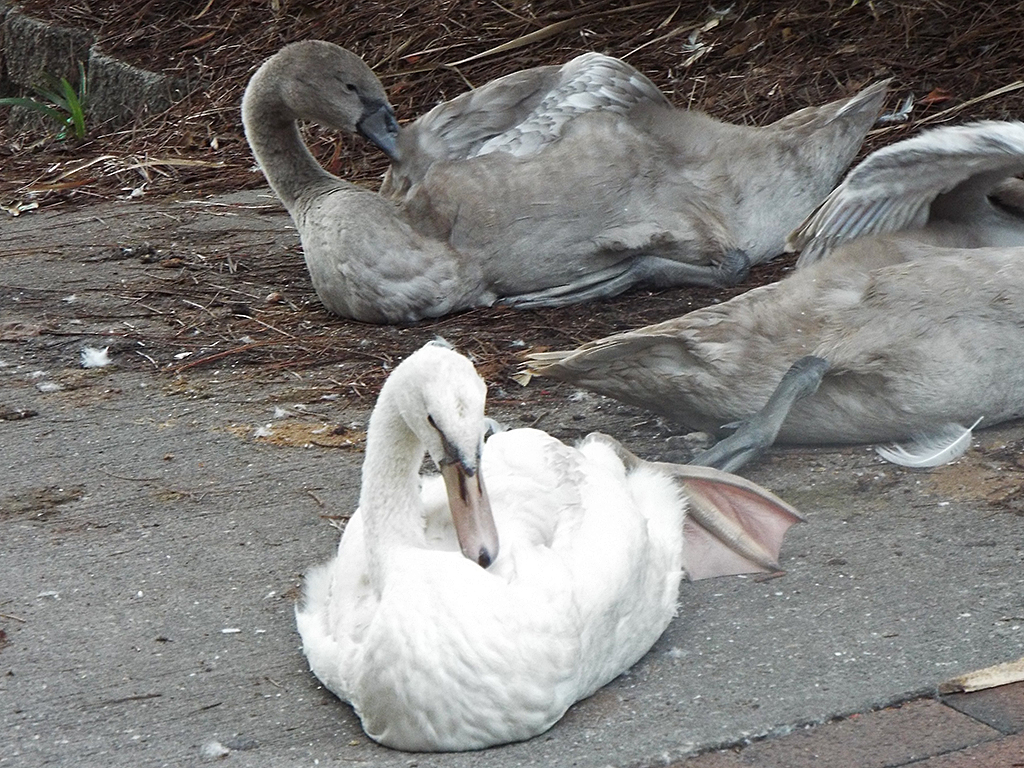
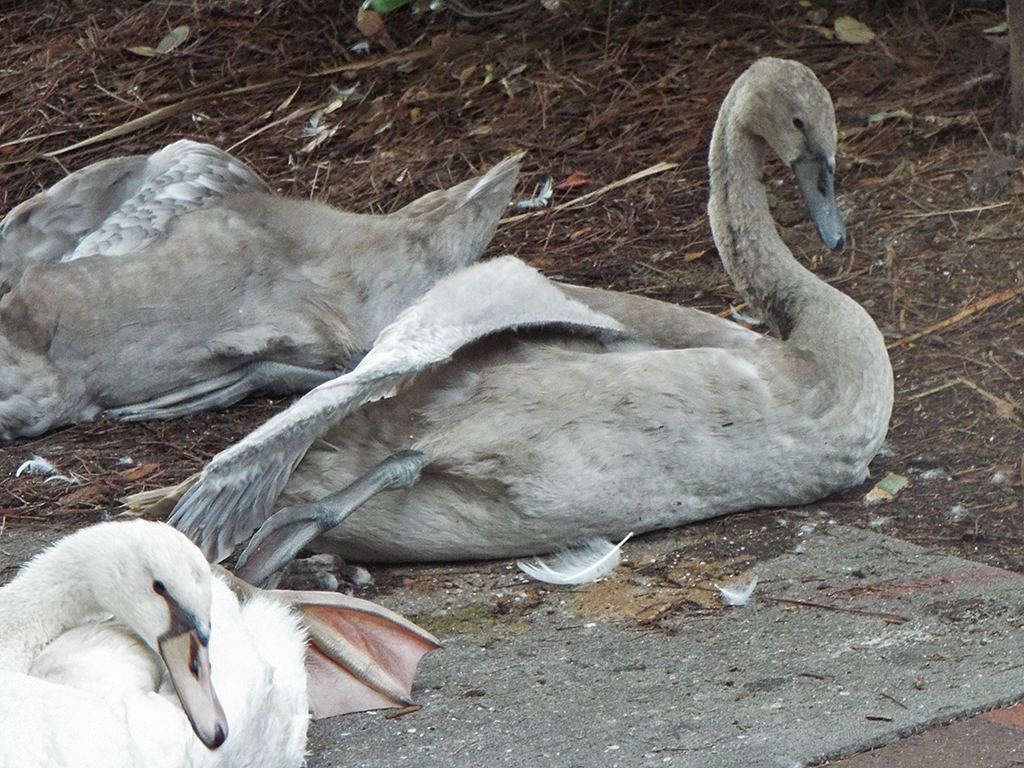
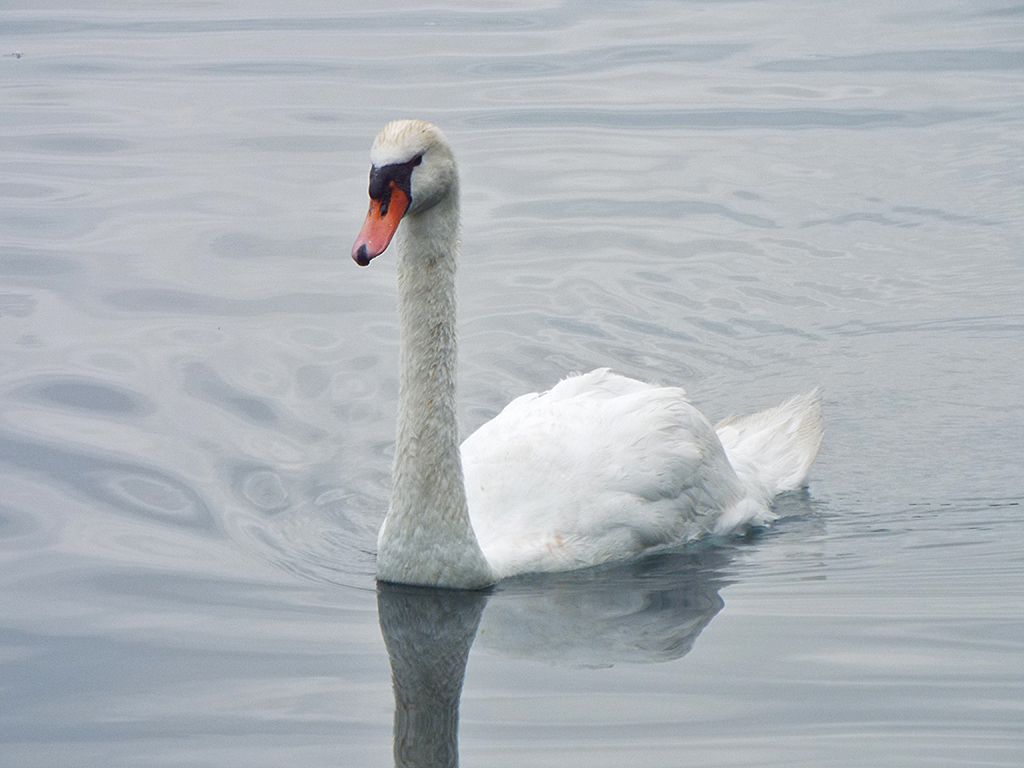
By and large the lake is dominated by Mute Swans. These birds are breeding here, just as they are in Lakeland. Most Mute cygnets (the term for young swans) are brownish-gray, but some have a genetic expression that makes them more white right out of the egg.
Mute cygnets of 2 different color morphs.With parents on guard nearby, these youngsters were able to stretch and relax.
Mute Swans are native to Europe but have been introduced extensively around the world. Despite their beauty and grace, they can be ruthless and domineering when threatened or challenged. Luckily for us, they were mostly content to lets us walk by while their children relaxed and preened.
Mute Swans adults are distinguished by the large knob at the base of the bill.Grace and power.
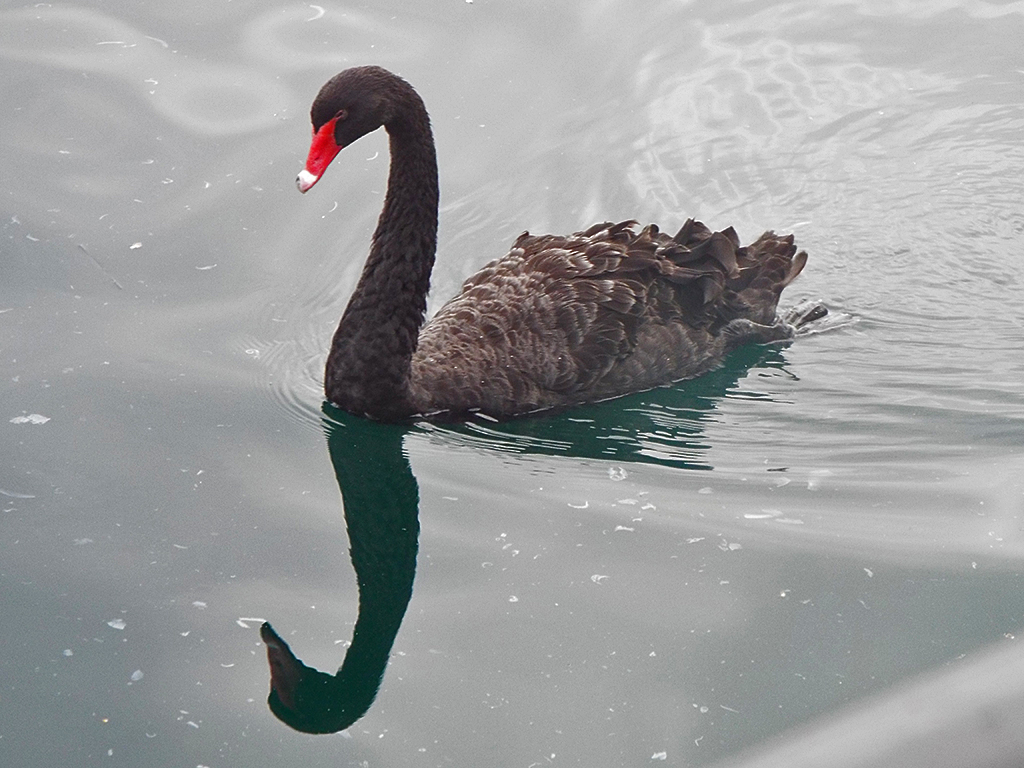
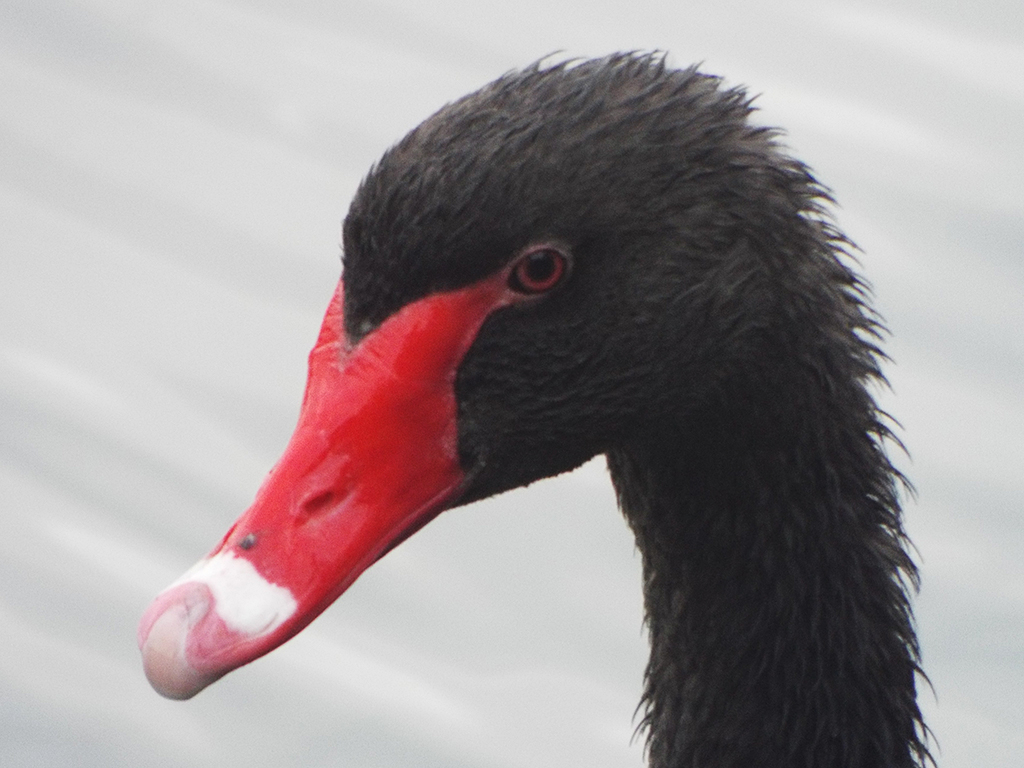
Several pairs of Black Swans were there as well. Black Swans are native to Australia, but introduced widely in the USA and Europe (my lifer Black Swan is from London during my honeymoon). Their bright red bills really stand out against the birds dark plumage.
I can only imagine how novel and strange a black swan would have been to Europeans arriving in Australia.Close-up of a Black Swan’s head.
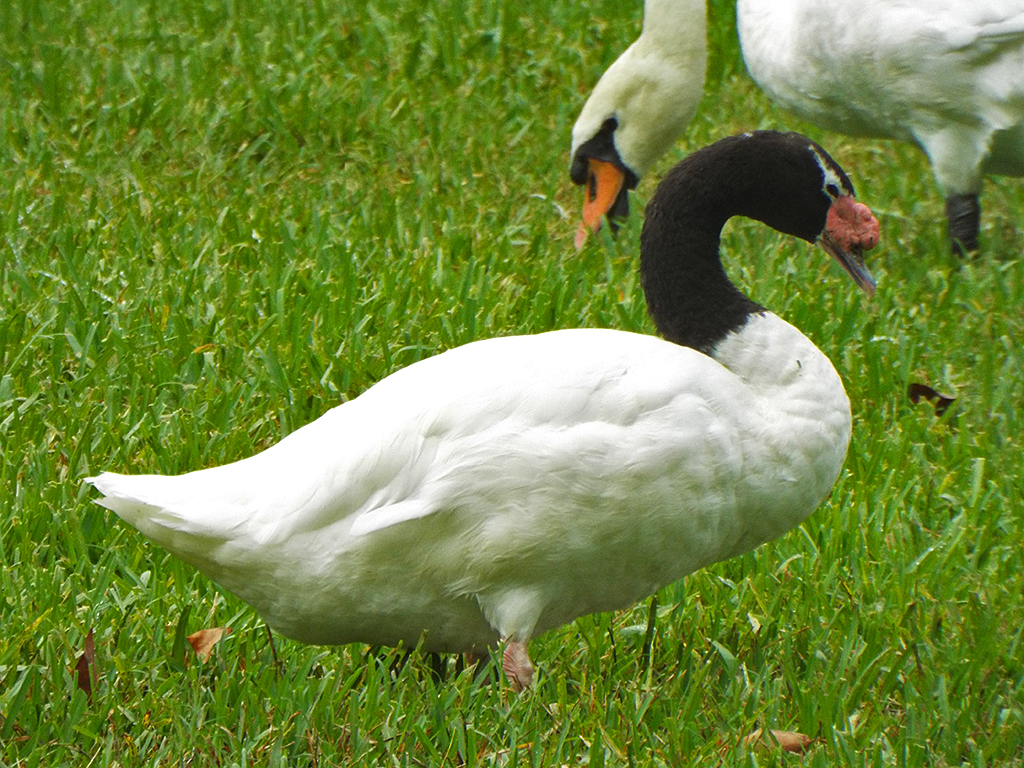
South America has the Black-necked Swan, of which one was visible on our visit. The contrasting body and neck as well as the red facial knobs (carunculations) are diagnostic for this species of swan.
Black-necked Swans are comparatively small, for swans, but are South America’s largest waterfowl.
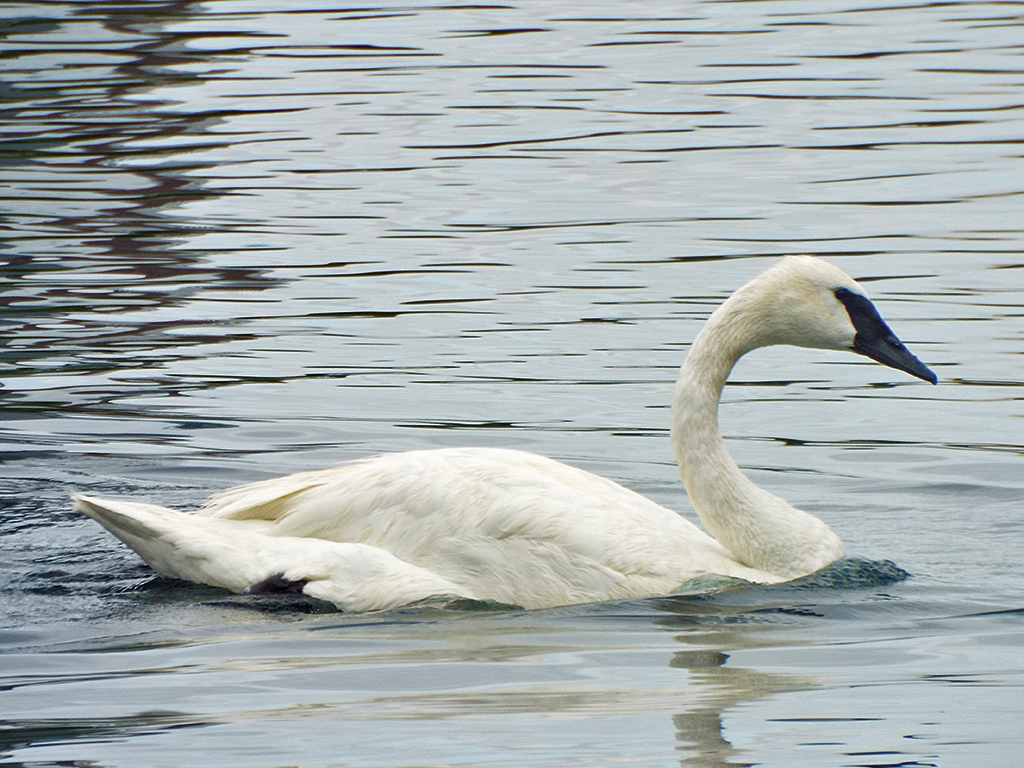
I’ve seen Trumpeter Swans in flight in New England as a child and young adult, but never up close or floating on the water. It was a treat to see one mingling with the other swans.
Trumpeter Swans have an all black face a bill, contrasted with the Whooper Swans’ mostly yellow bill.
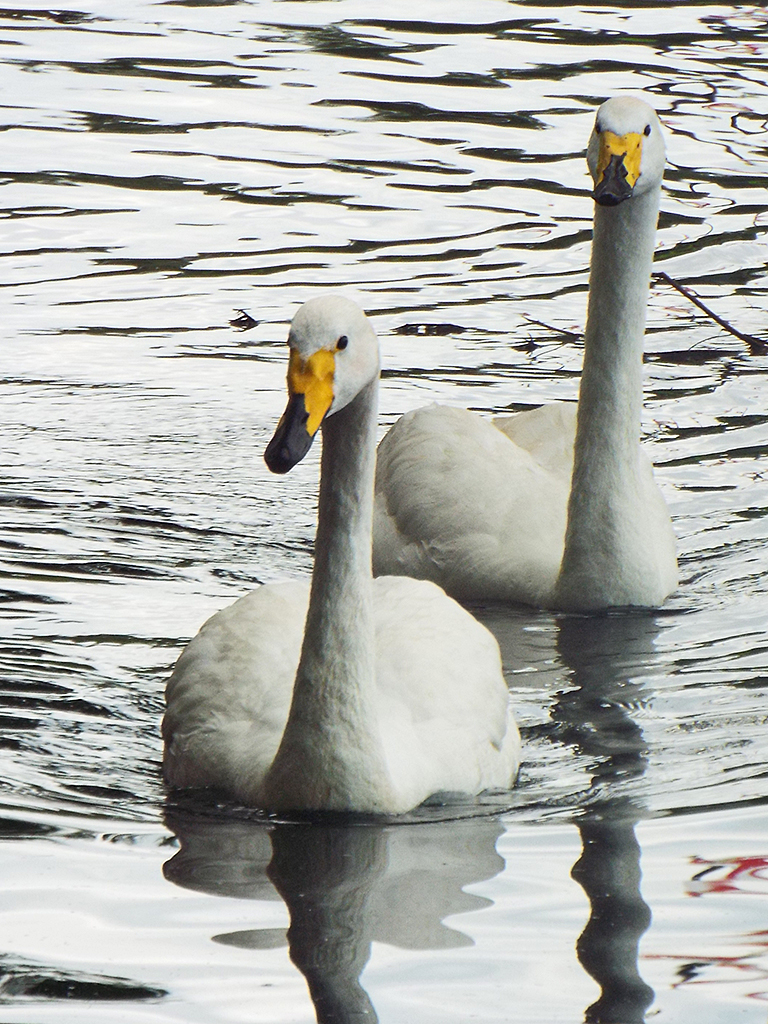
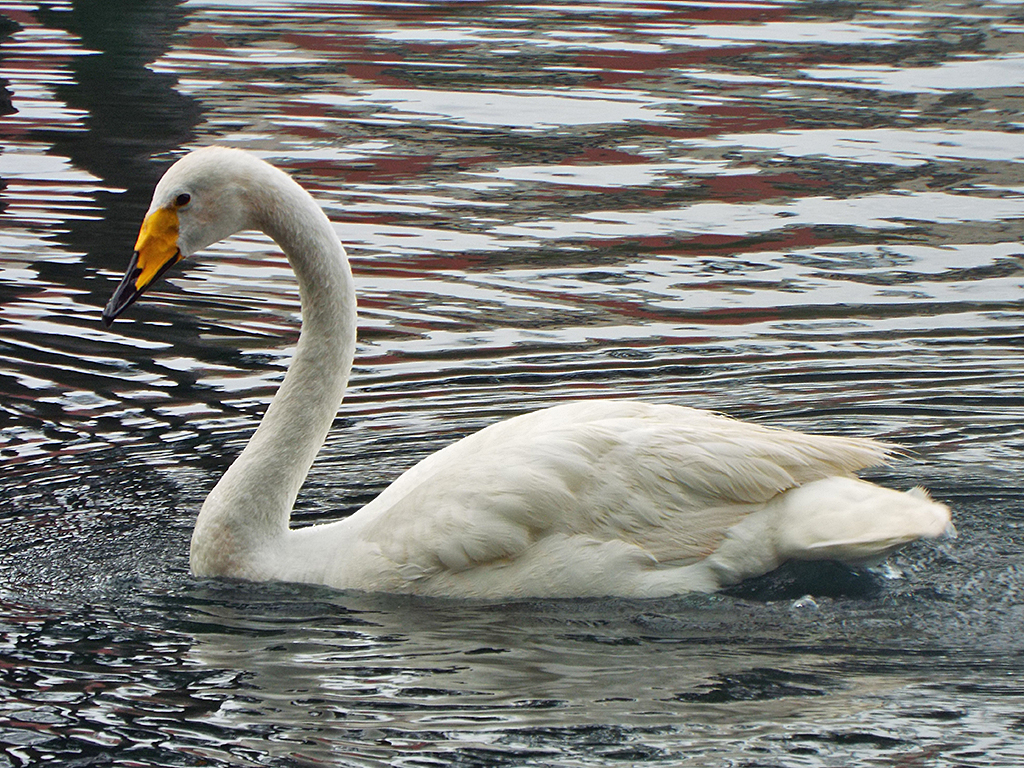
Whooper Swans are also present at Lake Eola, with several presumably mated pairs. They are native to Europe and Asia, and are closely related to Trumpeter Swans. The main visible difference between the two is their bill color. Whooper Swans are the Eurocentric “prototypical” swan as evidenced by their scientific name, Cygnus cygnus (the Latin word for swan).
One of several pairs of Whooper Swans on the lake.Swans can use their long necks to reach for food deeper than what ducks and geese can reach.
There was a surprisingly wide range of bird species from the expected, like Mottled/Mallard crosses and Muscovy Ducks, to local natives like herons and egrets.
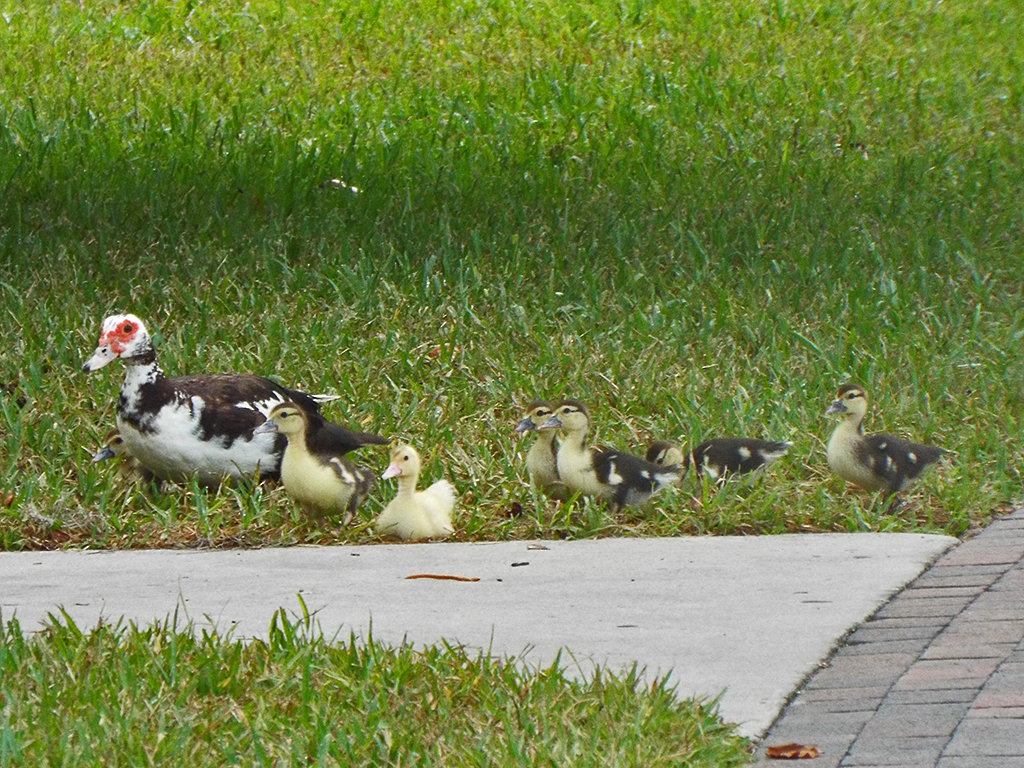
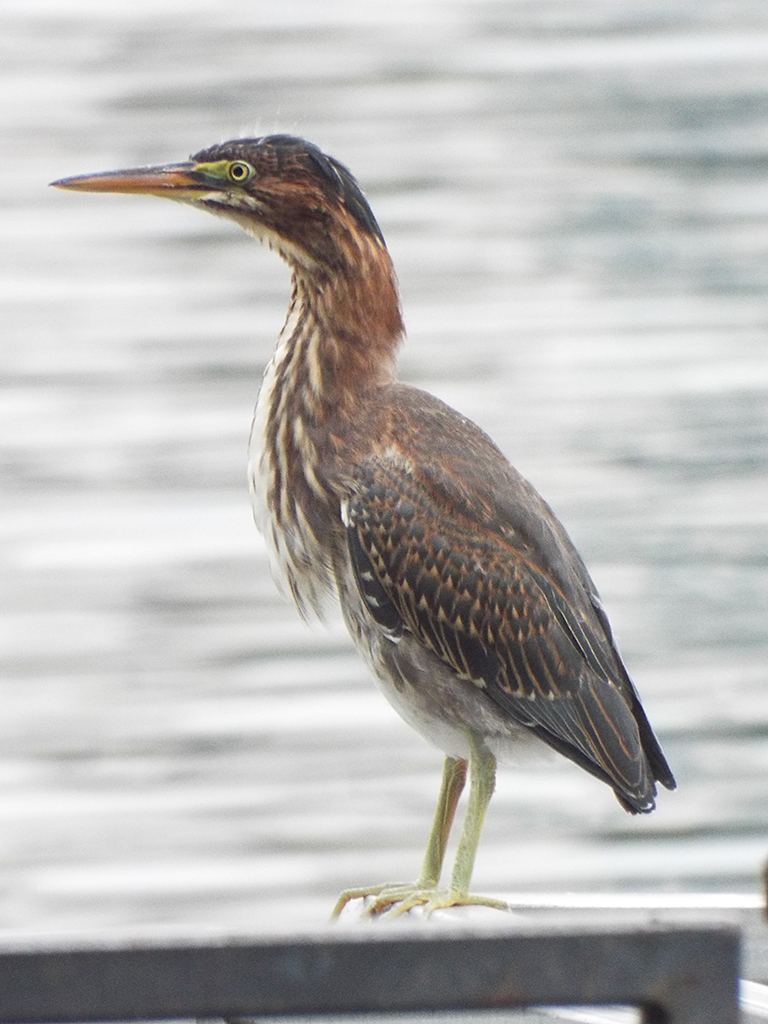
This proud mama Muscovy Duck paraded right down the sidewalk, quacking loudly, head high and chest out as her babies followed. Everyone (people, dogs, birds, and squirrels) made a path for her.Fledgling Green Heron.
Lake Eola is a beautiful setting right in downtown Orlando, and though it can get crowded at times (especially if special events are taking place) I recommend a visit if you’re in the area.
I had the opportunity to bird some parts of south Florida on two different days this past week. Mrs. Lonely birder booked some travel to Cuba and since she didn’t want her family to worry (especially given the upcoming travel announcement from the executive office), asked me not to let anyone know she was out of the country until her return. I had some fun playing Cloak-and-dagger, hiding my eBird lists and not letting anyone else know where I was, either (I’m easily amused).
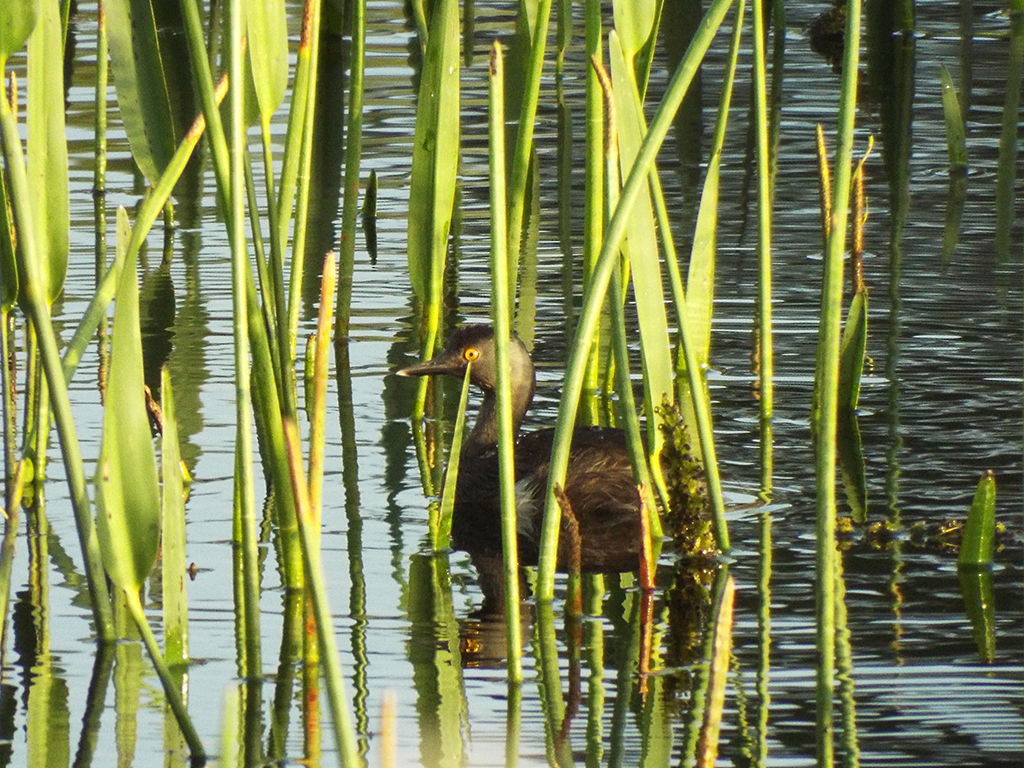
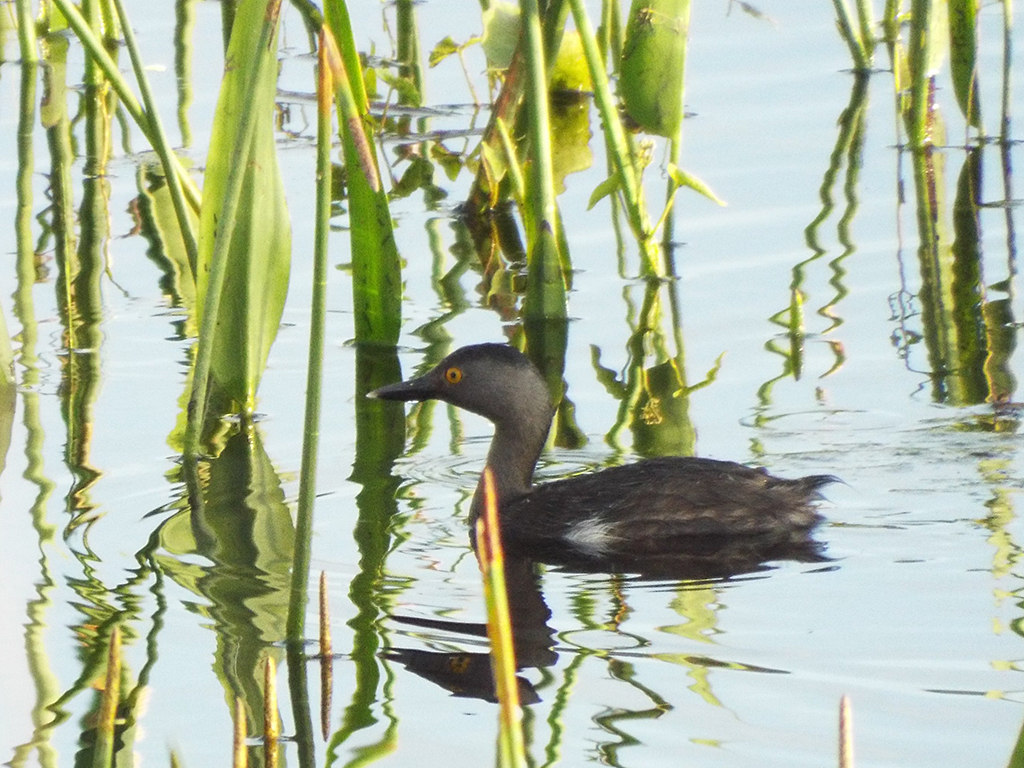
My first stop was the Yamato Scrub Natural Area on Tuesday morning to see the Least Grebe that had been reported this month. It took a lot of patience (thanks for that advice, Dave Goodwin), I had success! This species has only been recorded in Florida a few times.
It took a while, but eventually this Least Grebe (and they are small) swam out of the reeds.The bird was out and visible for about 5 minutes before vanishing into the reeds again.
Here’s my full eBird list for the visit: http://ebird.org/ebird/view/checklist/S37564770
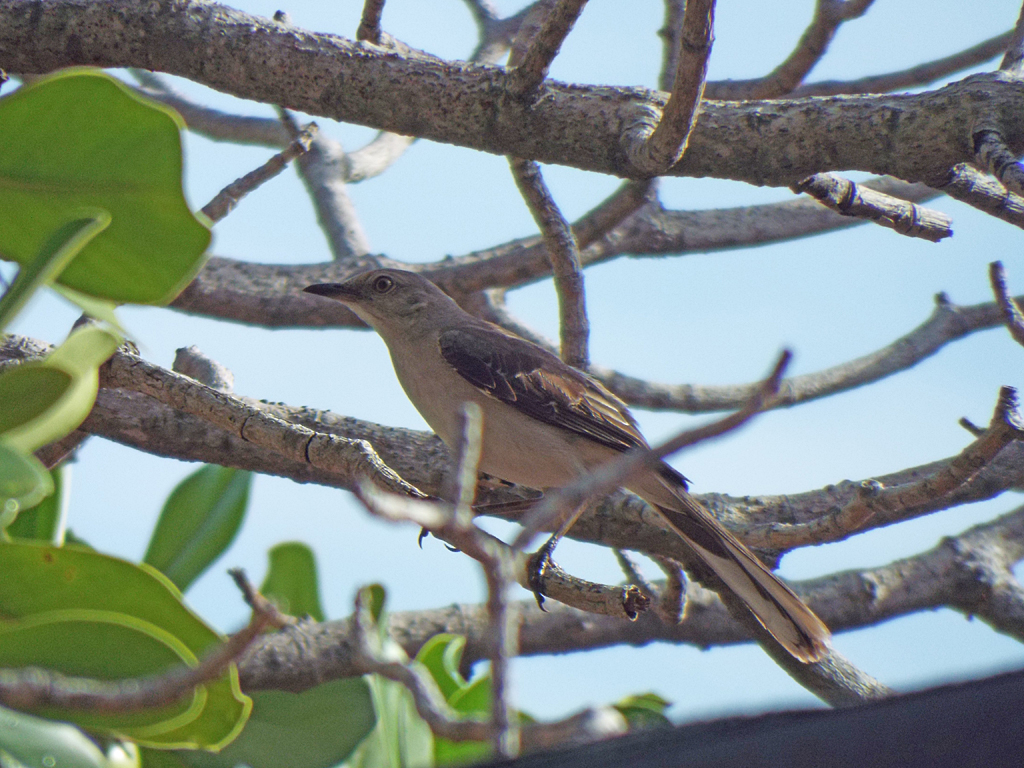
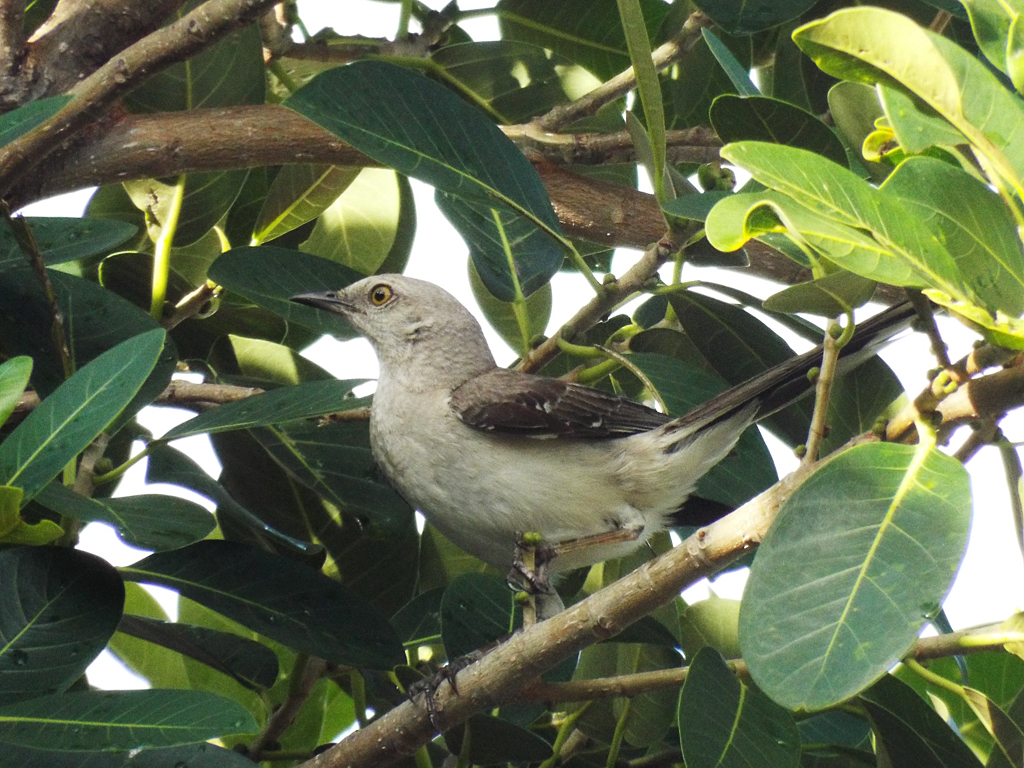
Another rare bird had been seen not too far away and I took the opportunity to locate it as well. Reports of a Tropical Mockingbird started coming into the Brdbrain e-mail list, and later confirmations started coming in via eBird a couple of weeks ago. This is a pretty big deal, as there have been no official state records of this bird until now.
The bird was associating with (and reportedly engaging in nest-building activities!) a Northern Mockingbird at some beach parking in Lake Worth. Sure enough, that’s what I found.
This bird was grabbing either berries or insects from the trees and harassing Fish Crows.Tropical Mockingbirds lack wingbars and have white tail markings restricted to the lower part of the tail.Like all birds, this one is functionally illiterate, so knows it is always where it belongs.
The bird diversity was a lot lower here, and even the beach seemed devoid of much in the way of wildlife (there’s a large pier with a restaurant on it). The most numerous species were European Starlings and Rock Pigeons, but here’s the eBird list:
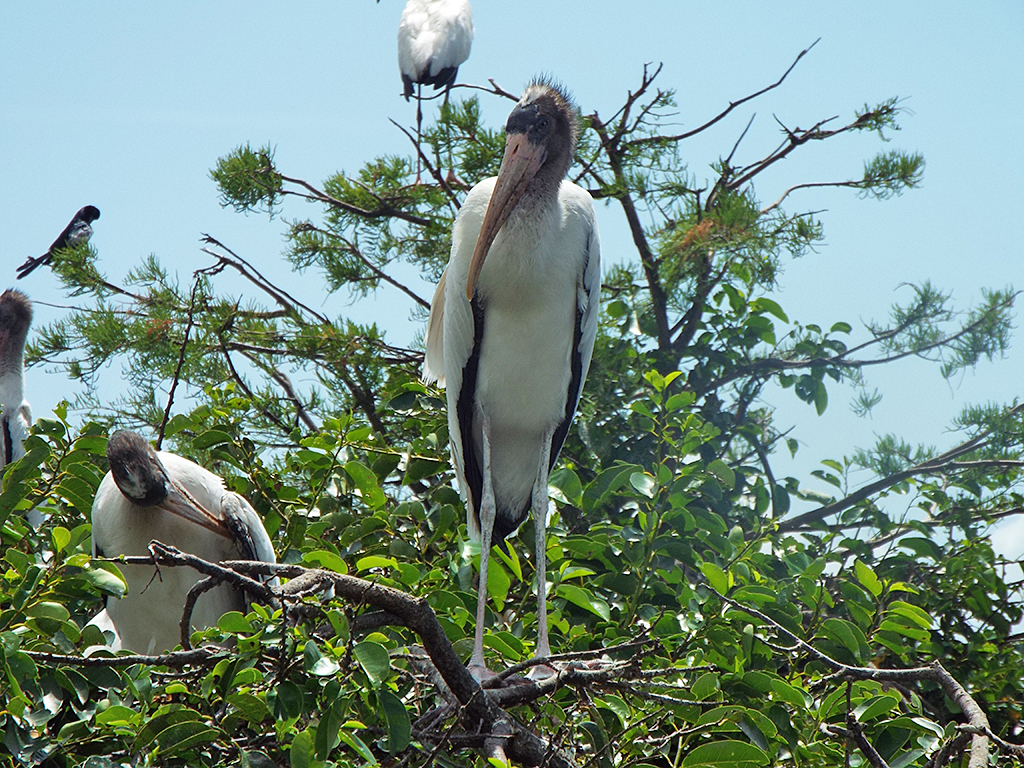
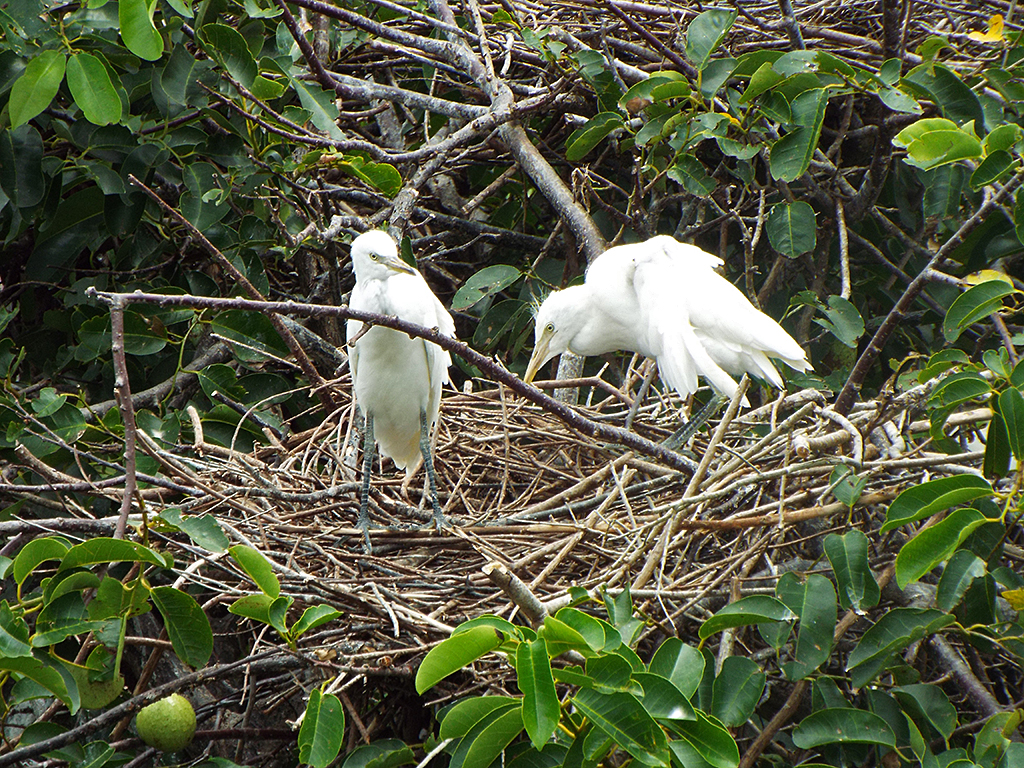
When it came time to drive to Ft. Lauderdale to pick up my wife on Saturday, I stopped at Wakodahatchee Wetlands to find a rare but regular visitor there: a Neotropic Cormorant. I was ultimately unsuccessful in locating that bird, but it was fun to see all the chicks and fledglings on the various small island rookeries. There were many Wood Stork chicks, as well as various egrets and herons tending young of all ages.
Many of the Wood Stork youngsters were about ready to fledge.I think these are Great Egret chicks, given their size and bill color.
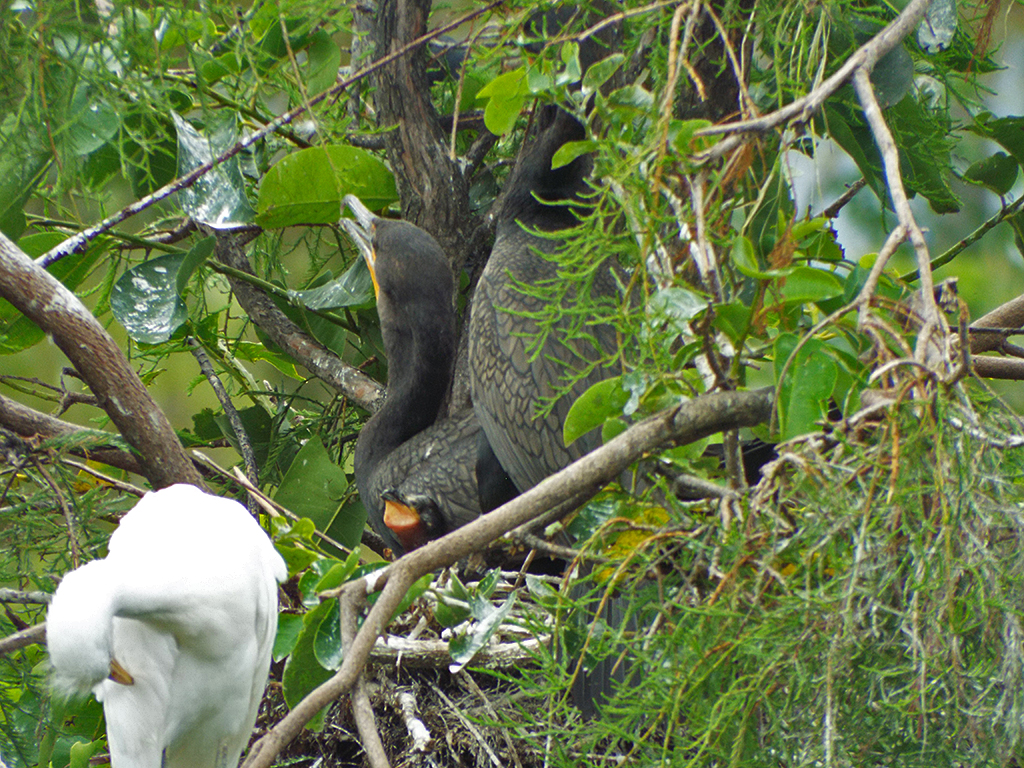
There were cormorants around, including several on nests. One nest had at least one small chick, which would poke its head out every once in awhile as a parent protected it from both the sun and the rain (there was a large thunderstorm nearby that held off for the duration of my visit).
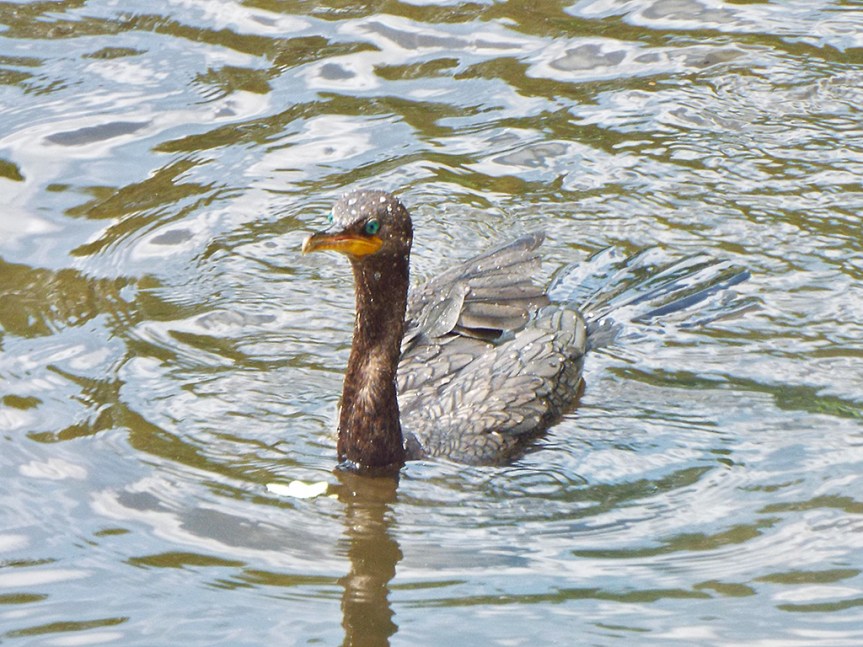
Yes, that orange blob just below and left of center is a Double-crested Cormorant chick.I still get almost mesmerized by the turquoise eyes of cormorants.
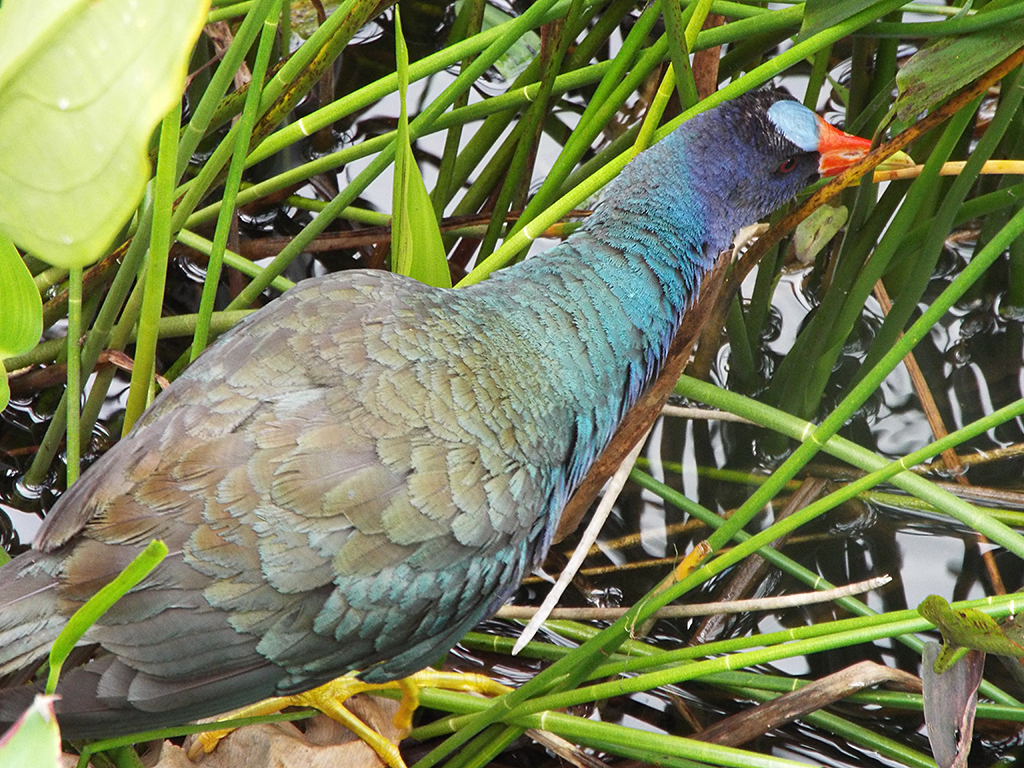
I walked the boardwalk twice, hoping the Neotropic Cormorant would come in to roost or feed, but it was not to be. I did have a couple of nice encounters, though. First, an adult Purple Gallinule walked out from under the boardwalk where I was standing, letting me watch it forage for a couple of minutes.
Purple Gallinules are less common than their “Common” cousins, and may be getting displaced by the Grey-headed (or Purple) Swamphen – a recently established feral/escapee species.
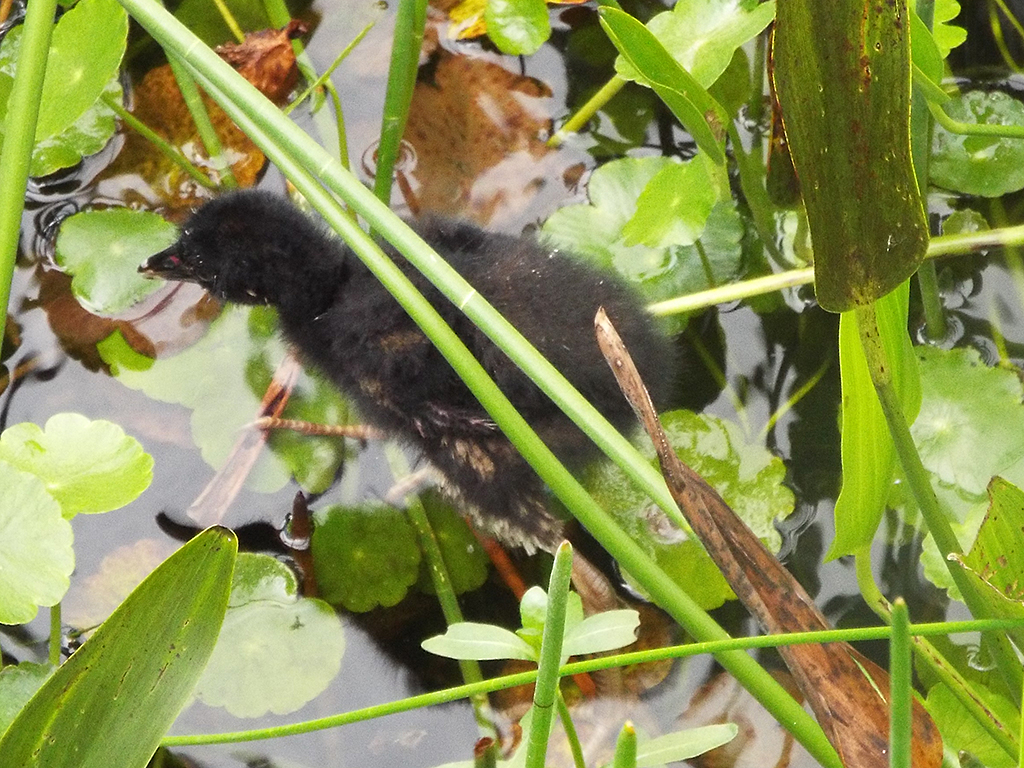
Then some quick movements caught my eye a bit further down the boardwalk, and I saw a small, black shape darting among the water plants. A single Purple Gallinule chick was running around. I don’t know if the adult I had just seen was a parent or not, but this is the first time I’ve seen a Purple Gallinule chick at this young of an age.
Gallinule chicks are born precocious, meaning they are alert and mobile within hours of hatching.
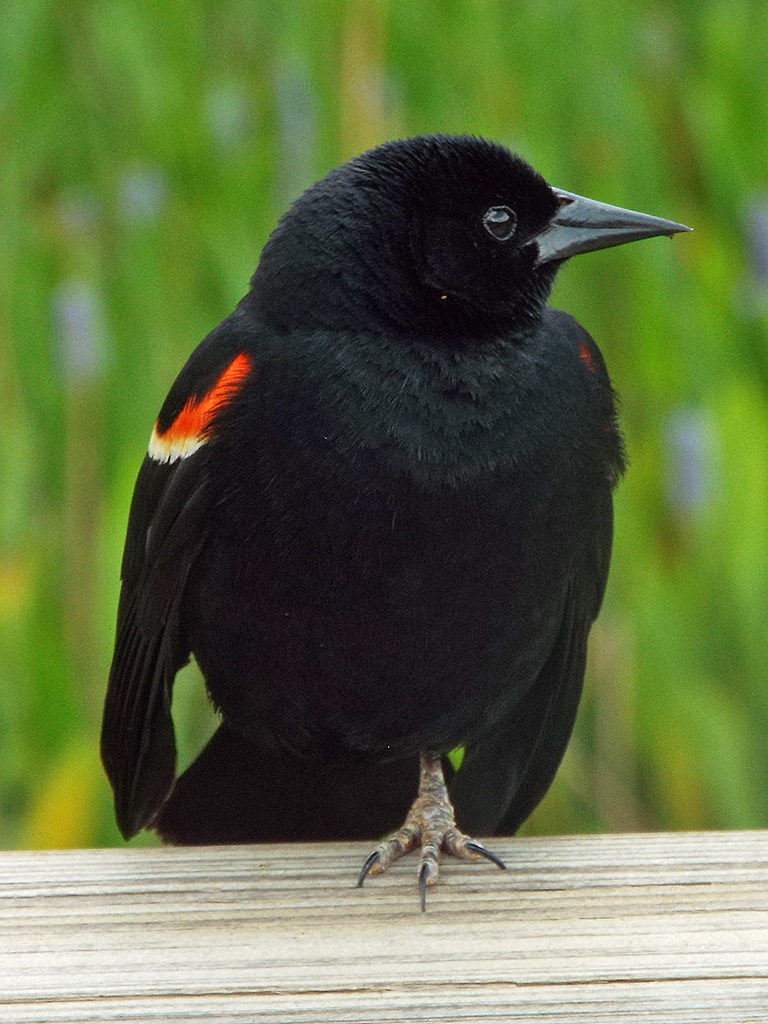
As I was photographing the gallinule chick, I heard a Red-wing Blackbird call from nearby. I turned around to see this guy right behind me on the boardwalk railing. He was missing a leg. Sometimes birds (especially shorebirds) will tuck a leg up and keep it concealed, even when hopping about, but this bird was actually missing his leg (when he flew off I saw the remaining stub). But he seemed otherwise quite healthy and was unperturbed by my presence.
This male Red-winged Blackbird was singing and displaying right next to me. He was missing a leg, evident as he flew away a short time later.
I circled around the rest of the boardwalk, and looked one more time for the Neotropic Cormorant, but to no success. The sky darkened some more and rather than risk getting caught in the open during a Florida thunderstorm, I headed for the exit.
Overall, it was a nice couple of days worth of birding in south Florida. It’s always fun documenting rare or new species for an area, as well as seeing familiar faces in different places. Once my wife was home safe and sound I unhid my eBird lists (a dubious endeavor, as it turns out), mission complete!
It’s been awhile since my last post, and while things have quickly quieted down into a more “summer” pattern here along the Space Coast (especially with the way above average temperatures), the last few weeks haven’t been without some birding drama.
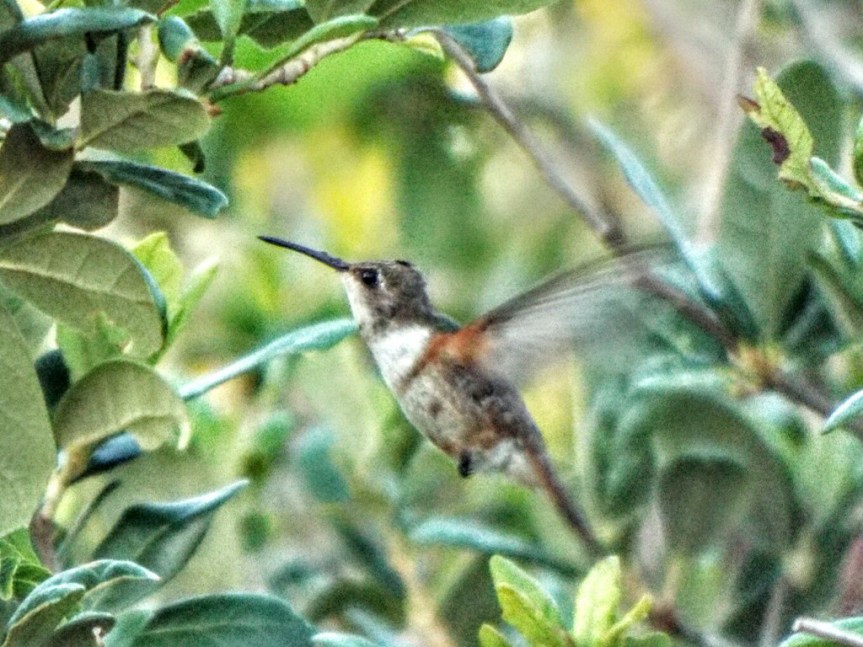
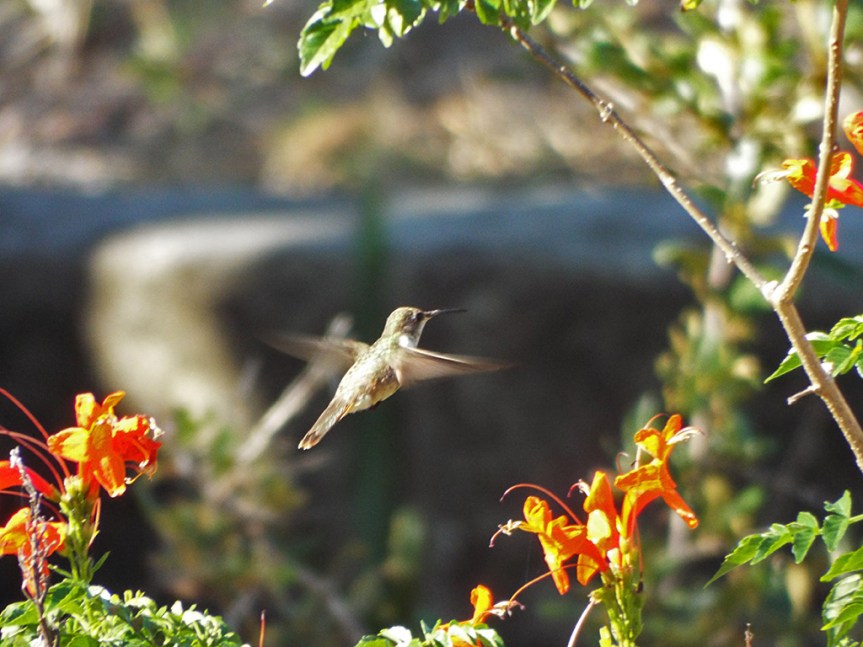
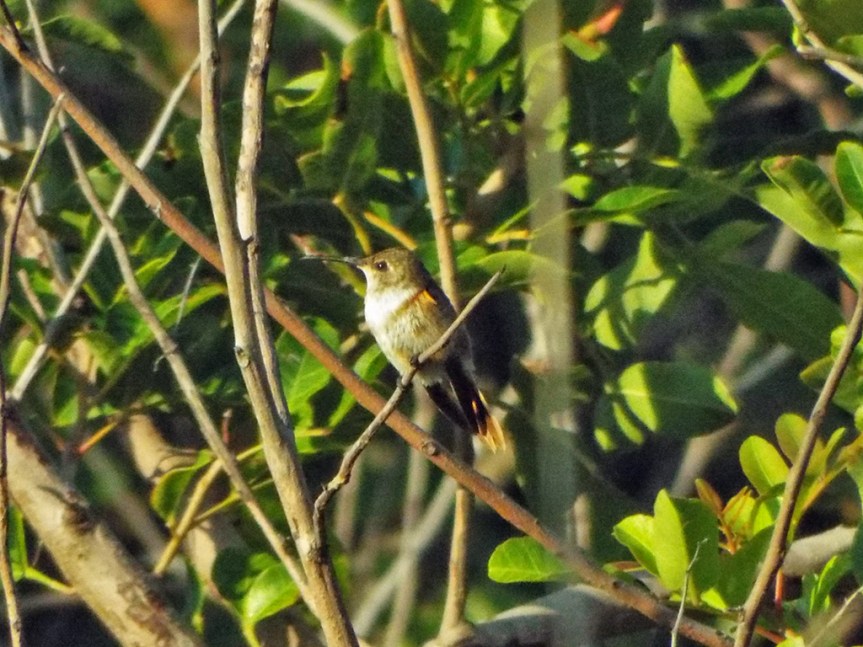
It started with a report from Mitchell Harris, via eBird and the Brdbrains listserv of a potential Bahama Woodstar hummingbird at a local sanctuary. There had been only 2 “official” state records of this bird since the 1970s, and since many female and juvenile North American hummingbirds look quite alike, there was a brief collective pause as the data and photographs were evaluated. The sighting was quickly confirmed, and birders from all over the state and the country descended upon the oft-overlooked Maritime Hammock Sanctuary, south of Melbourne Beach.
Myself included, after a few days of anxiety over missing it due to work obligations. I managed to get there super early one day and, along with 25 or so other birders, got a nice look at this rare gem of a bird. Enjoy these few photos.
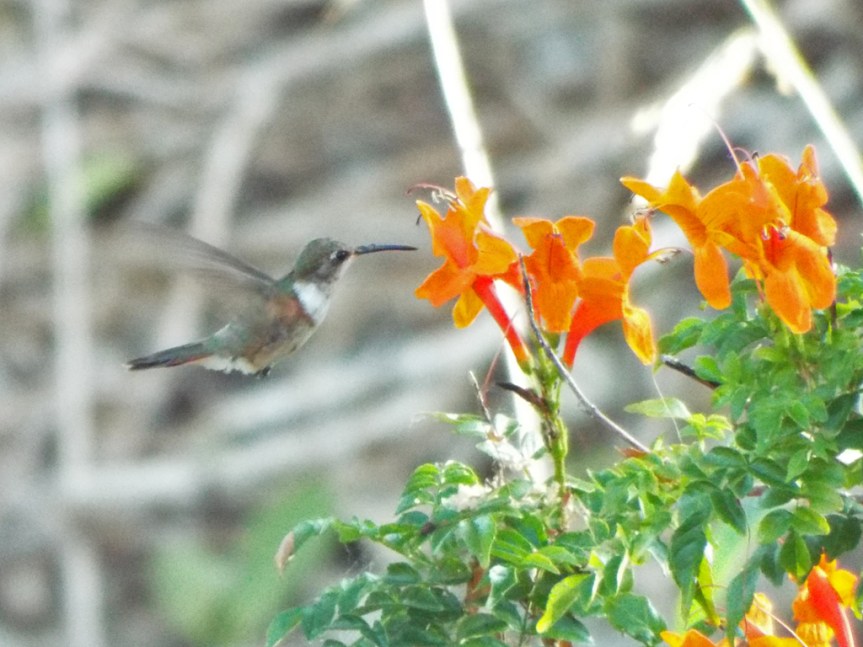
The rufous “armpits” are a good indicator this is a Bahama Woodstar.The bill is a bit stouter than that of a Ruby-throated Hummingbird (it also looks like the bill was damaged or deformed a little at some point).Although not well pictured here (or above) the tail pattern – rufous outside of green central tail feathers – was seen as the bird occasional spread its tail.The bird would rest for several minutes before heading back to forage, primarily among honeysuckle flowers. When the flowers began to wilt and fall off, the bird must have gone on its way.
Having likely been transported over water from the Bahamas via the continuing, strong south and southeastern winds this spring, this hummingbird used the time to rest and refuel while waiting for conditions to allow it to return to it’s usual range. After being seen consistently for four or five days, once the honeysuckle ran out and the winds calmed down, the reports stopped.
A rare and exciting find, and by chance my 300th Florida life bird!
They say patience is a virtue, so you may understand that many of us birders along the Space Coast have felt seriously virtuous this Spring. It was long overdue for something more serious to happen, along with the fall-outs at the end of April (see previous blog entries).
The last few weeks have seen some of the best birding around parts of the Space Coast in years, though in perhaps a different manner than one might expect. While it’s true that not all warblers migrate at the same time, it’s more typical for several species to come through an area at a time. For example, years past it was normal for Blackpoll Warbler and American Redstarts to come through Turkey Creek Sanctuary around the same time each year.
This time, we seem to have gotten specific warbler days, with dozens (and in one case I’ve heard, hundreds) of one species to fall out for a couple of days, to be replaced by another after that species moved out.
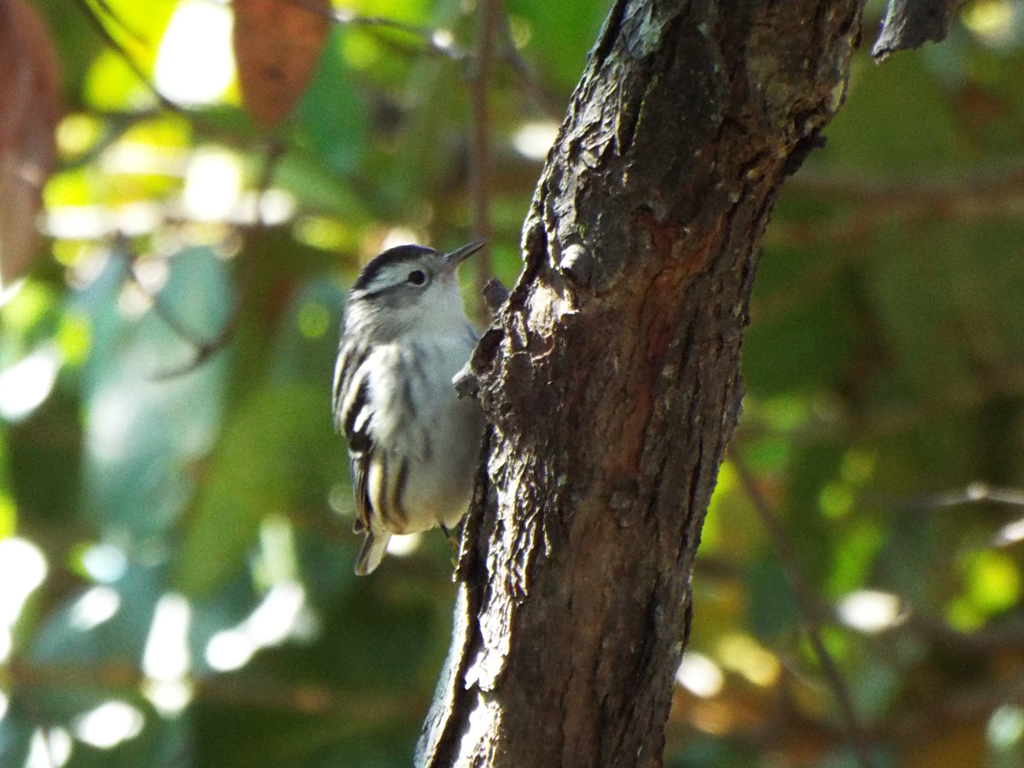
It started with a “Black-and-White Warbler Day”, in which dozens of that species were moving through most of the park.
A Winter resident in Florida, the Black-and-White Warblers were fueling up on tiny insects in preparation for migration and breeding.
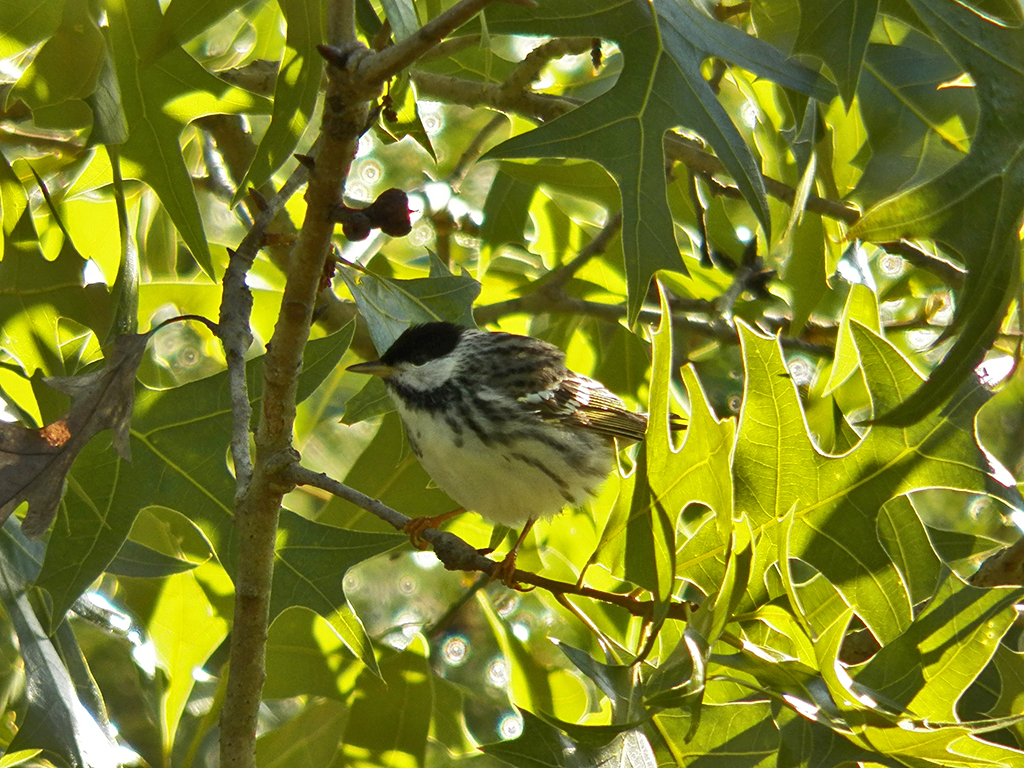
The very next day was a “Blackpoll Warbler Day”. The Black-and-White Warblers were still numerous, but the Blackpolls outnumbered them almost 3-to-1.
A Blackpoll male, showing his distinctive black cap (or “poll”) and characteristic orange legs and feet.
Of course, other birds were also present, though in smaller numbers. There have been steady trickles of Worm-eating, Cape May and Black-throated Blue Warblers all through these fall-outs.
After a dip in activity, another weather system moved through and we had two “American Redstart Days”, where many dozen of these quite active birds were flying all through the area parks.
Many redstarts were first-year males, just starting to get black feathers, and displaying their flashy tails, even while grabbing a drink of water.
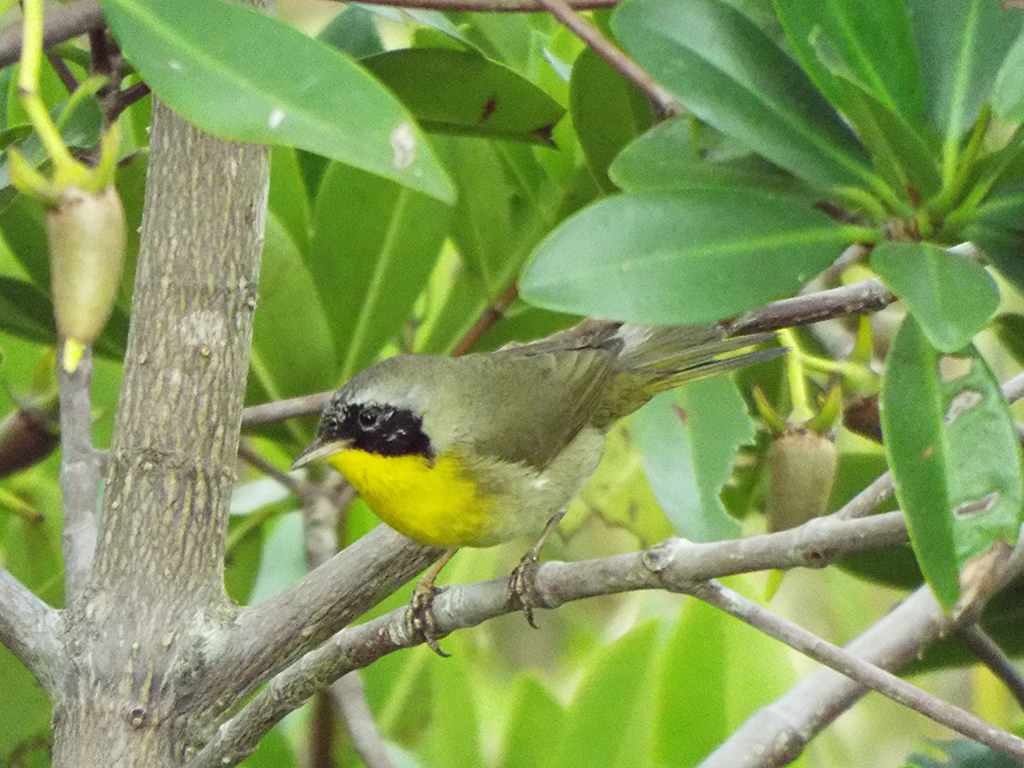
Later in the week, Tom Ledford and others reported hundreds of Common Yellowthroats (a year-round resident in Florida, though the population changes as birds fly in and through from South America) along the coastal areas. There were still quite a few at the Maritime Hammock Sanctuary this week.
Some off-the-beaten-path birding was in the offing, too. Having heard reports of a Yellow-billed Cuckoo in the residential areas near Turkey Creek, Camille and I took a quick look into an area north of the park in hopes of seeing it. We struck out on the cuckoo, but wound up seeing a small mixed flock of warblers that included Chestnut-sided, Magnolia, and Yellow-throated Warblers.
All this activity culminated in a surprise sighting for me this week.
For the past few weeks, I’ve been part of a Kirtland’s Warbler survey, using eBird to try and get a better handle on the migratory habits and travels of this species. Just a couple of decades ago, the Kirtland’s Warbler was on the brink of extinction as its breeding grounds were disappearing. With a better understanding of what is needed to manage it (fire, as it turns out), the population is rebounding. The entire population of this bird winters in the Bahamas, and we know where the birds should travel to get to their breeding grounds (Wisconsin, Michigan, and Ontario), but they are almost never seen en route.
So far, the suggested survey points have not shown any Kirtland’s Warblers, and as the end of the survey period is approaching, I was resigned to the fact that I’d not be seeing this bird this year (or probably at all).
While birding the Maritime Hammock Sanctuary, I so happened to turn to face some scrub vegetation near a pond while searching for a Great Crested Flycatcher I heard nearby, when out popped a Kirtland’s Warbler! It stayed well in the open for several seconds, even bobbing its tail several times (a trait the species shares with just a few other North American warblers). My photos, however, are not so grand. I was so shocked to see the bird that I watched it in stunned silence in binoculars before it occurred to me to take a photo.
Maybe just enough to see the gray face and white eye-ring?Gray back with black streaks are a species fieldmark.
I tried using the survey audio to call the bird back, but to no avail. As I’ve said, it is extremely rare to see this species in migration. I felt honored and privileged to get just a few precious seconds with this bird.
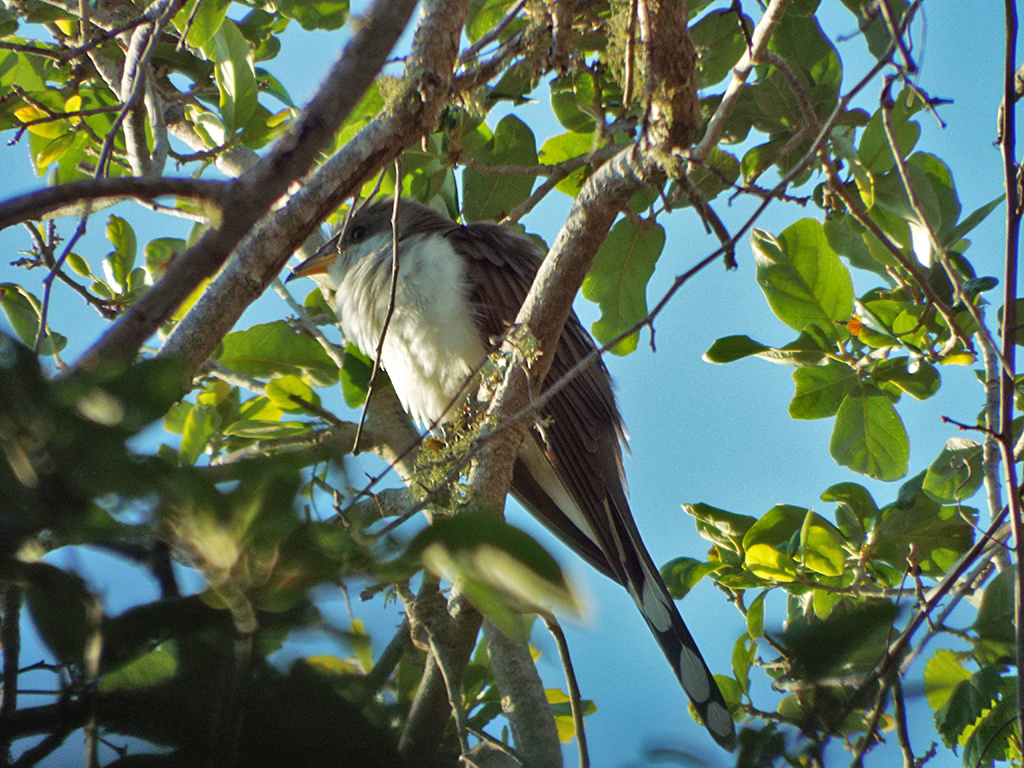
As a final note, I also finally got my Yellow-billed Cuckoo for the county this Spring. I’ve been sort of chasing this species for the last few weeks, with sightings reported just hours after a leaving a park.
Sitting high in a tree, this Yellow-billed Cuckoo was also calling out, which is the first clear vocalization from this species I’ve heard since my early birding days in Massachusetts.
Here are the various eBird lists, since April, documenting the Spring migration as it nears its end.
There are sure to be a few more migrants coming through the rest of the month, but the bulk of the season is over. Strong southerly winds for much of the Spring probably caused most of the Hooded and Prothonotary Warblers (among others) to overshoot our area. And you know, that’s fine. The birds take advantage of any energy saving method to get them to their breeding ground in peak condition. If that means they overfly the parks around my home, I’m glad they made the safe journey. It’ll try to catch up with them in the Fall.
Since my last entry we’ve had one small and one larger “fall out” of migrating birds here along the Space Coast. A fall out happens when birds encounter a weather event that forces them from flight to stop and seek shelter or food – or both – for a time before resuming their paths. Flying takes a tremendous amount of energy. Over a long period of time, many birds have developed methods to save that energy in flight. Neotropical migrants, like warblers, use approaching winds and weather fronts to time their overnight flights. For much of this spring there have been unusually strong southerly winds along the entire peninsula of Florida, allowing many migrants to fly very long distances with a tail-wind, often bypassing the state altogether. That has made for another fairly quiet migration, for the most part.
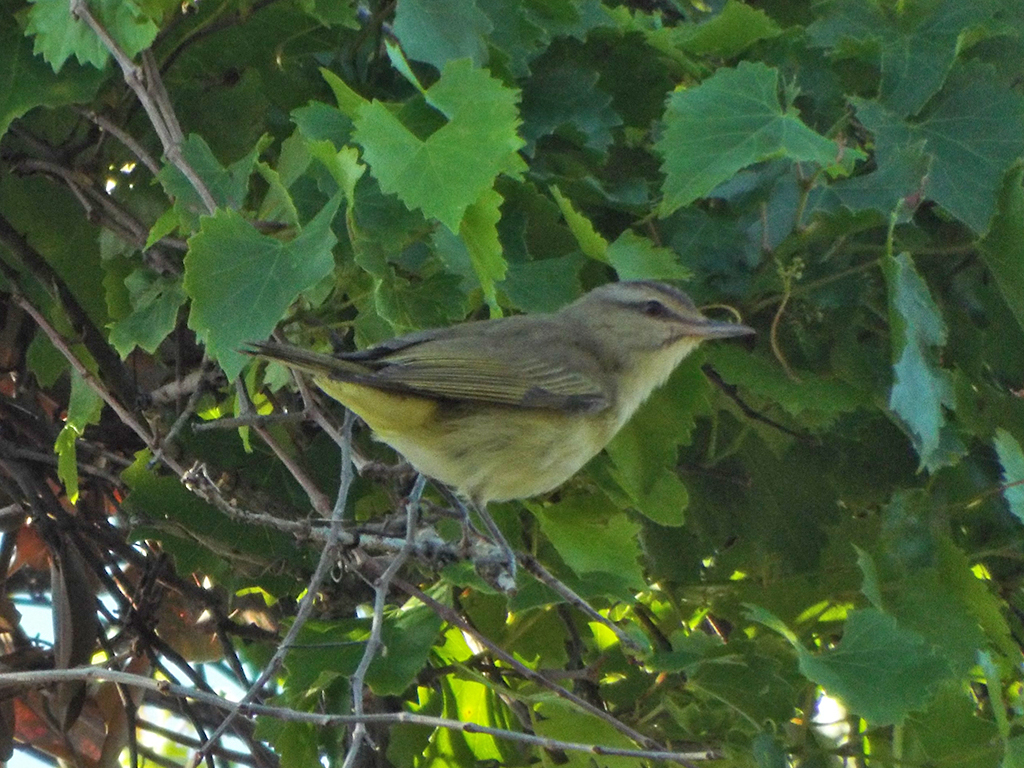
At the beginning of April, a cold front did sweep across the state, and some early migrants were forced down into area hotspots. At Lori Wilson Park, that generated some excitement as a rare Black-whiskered Vireo stopped for a couple of weeks. This is likely the same bird that also stopped there last year, so it remembered the park as a safe haven and place to refuel.
Like many recurring and rare visitors, this bird had a favorite hang-out in the park. In this case a mature Gumbo Limbo tree, producing berries that vireos seem to love.
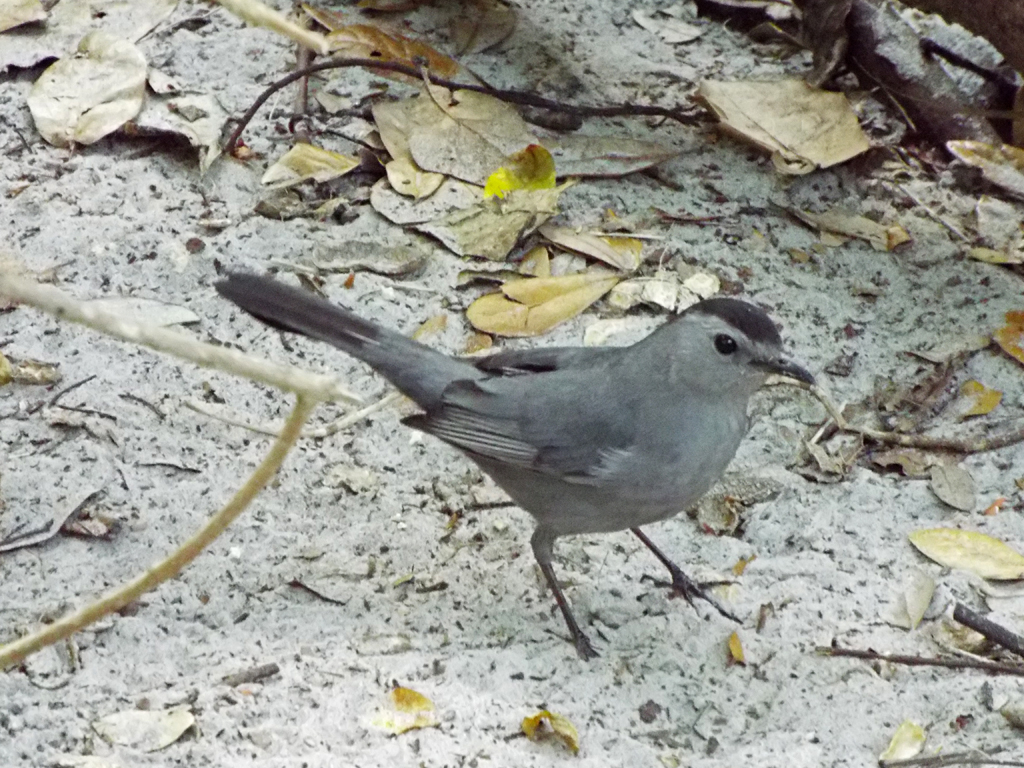
The season’s first Red-eyed Vireos were also present, as well as familiar faces that hadn’t found their favorable winds quite yet. Prairie and Yellow-rumped Warblers were still there, as well as the park’s large contingent of Gray Catbirds.
Catbirds generally prefer to skulk in the underbrush, but this bird had come out in the open to get some water.
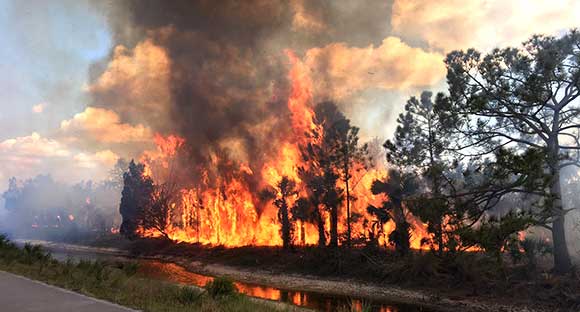
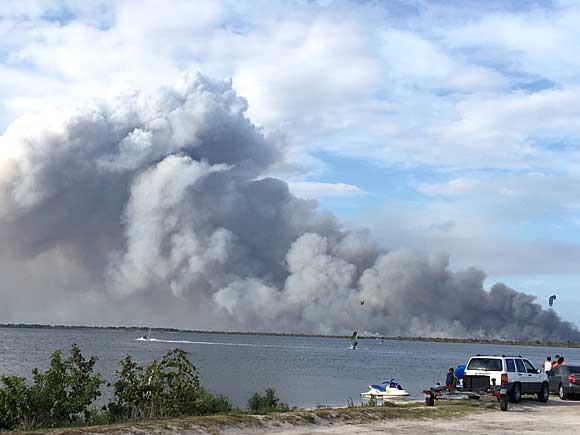
A complication this spring for any migrants that do need to stop and “top-up their tanks” is the lack of rainfall since the end of winter. Many places around the state are in drought and fire hazard warnings were up for much of the first part of April. The conditions only got worse as the month has worn on. The marsh habitat of Black Point Wildlife Drive on Merritt Island caught fire last week and about 5,000 acres burned. Fire is a natural and necessary force in shaping central Florida’s natural landscape, but only in area adapted for it. The area around Black Point is a wetlands habitat, dominated by mangroves. A hot burn there stands to do damage, even to the soil. It’s early days yet to know how much damage may have been done. The fire is suspected to be human induced, though the origin might never be truly known. If you smoke, please properly extinguish whatever you’re smoking and don’t light up when in areas prone to fire (which in recent days is just about anywhere outside).
Fire at Black Point. (Photo courtesy USFWS)Photo courtesy of USFWS.
After the small fall out at the start of April, conditions returned to strong, southerly winds again, even through the Spring meeting of the Florida Ornithological Society. The FOS meeting was in Ruskin this year, near Tampa. I’ll have a little to say about that coming up in another blog entry.
Finally, this weekend we had another front come through. Though not as strong as the one a couple of weeks ago, there were more birds in the sky as we’ve reached peak migration time for many species. The results were dramatic. Over at Fort De Soto park (just days after I left the area after the FOS meeting), dozens of tanagers and grosbeaks descended on the park, though the warbler numbers were low.
Closer to home, Turkey Creek Sanctuary finally saw its largest number of migrant warblers of the season. Over two days this week I went out before work to see what made pit stops there.
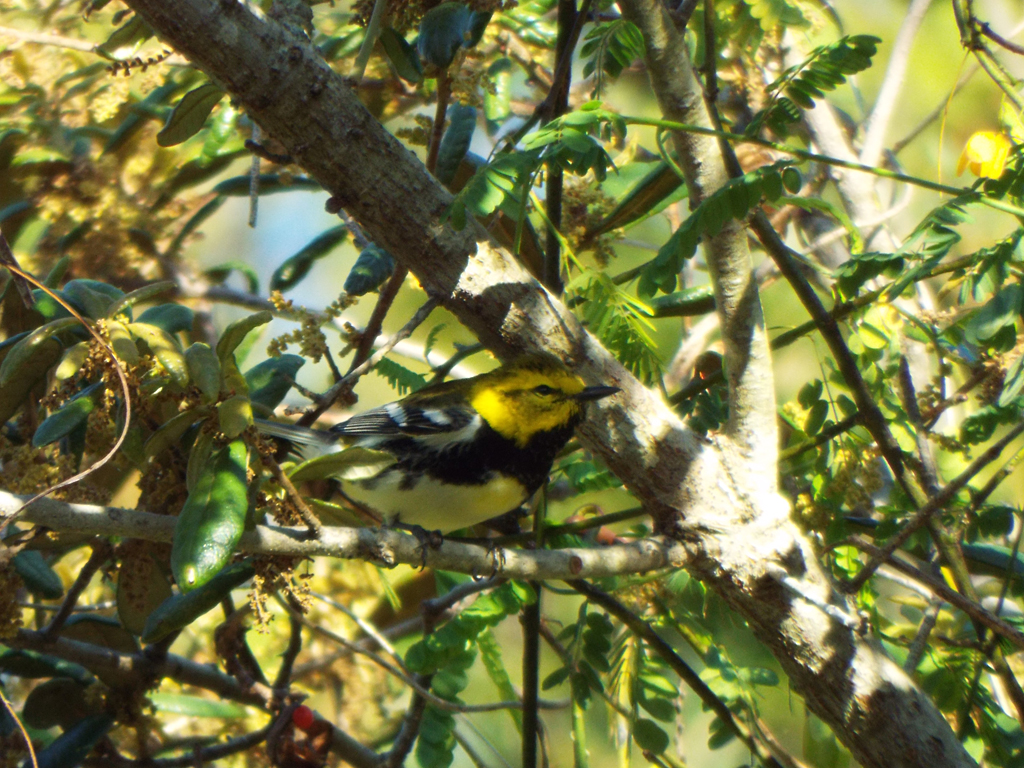
Tuesday morning had large numbers of Black-and white Warblers on the move. This species winters in Florida, Mexico, Central America, and parts of South America. It breed throughout much of the eastern US and Canada. There were also Black-throated Blue Warblers, American Redstarts, and Blackpoll Warblers throughout Turkey Creek Sanctuary. Small numbers of Cape May and Worm-eating Warblers were also there, and at least one Black-throated Green Warbler – a long anticipated life bird for me!
Finally! I’ve been hoping for this bird for a while. The extensive black throat feathers identify this Black-throated Green Warbler as a male.
Many of the birds were moving west, out of the sanctuary and into the adjacent neighborhood. I think this might be because of the limited food supplies in the park itself. The native and ornamental trees in the neighborhood might be irrigated, thus producing more fruit and attracting more insects.
The following morning saw much the same mix, except the predominate bird was the Blackpoll Warbler. I saw at least 3 dozen, mostly males, throughout the entire southern part of the Sanctuary (the northern area – specifically the Sand Pine and Turkey Oak trails – remain closed as trees and debris are being cleared, due to last Fall’s hurricane Matthew.
Here are three eBird lists from Monday, Tuesday, and Wednesday. I included Monday’s list for a comparison to what happened after the fall out conditions.
Food supplies in the sanctuary are still low, but these birds are finding enough for at least a brief stopover.
I expect things will taper off again as the winds are already turning more southerly. There are still a few weeks to go for migration, so hopefully there will be more chances for birds to make stops along the Space Coast. Many of these species won’t be seen here again until October.
I know this entry is a little light in the photographs, but such is the way with small, fast moving targets. I was excited that my Black-throated Green Warbler was as accommodating as he was!
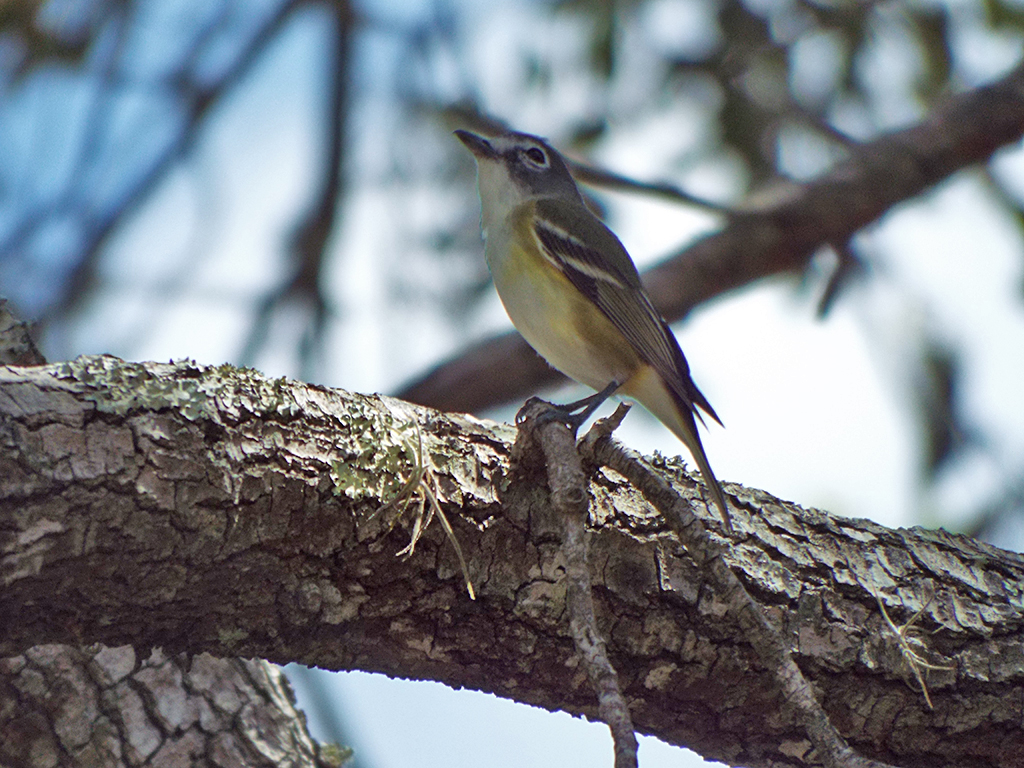
It’s that strange in-between time again. The nominally “dry” season in Florida is nearing an end, and the trees are blooming. The ducks have mostly left, along with the American Robins. But the Blue-headed Vireos, along with Yellow-rumped and Palm Warblers are hanging about. Some of the winter “rare-but-regulars” like the Scissor-tailed Flycatcher haven’t gone yet.
The Blue-headed Vireo’s song sounds like a sweet, “Be seein’ you! See you later!” which is apt for this time of year.
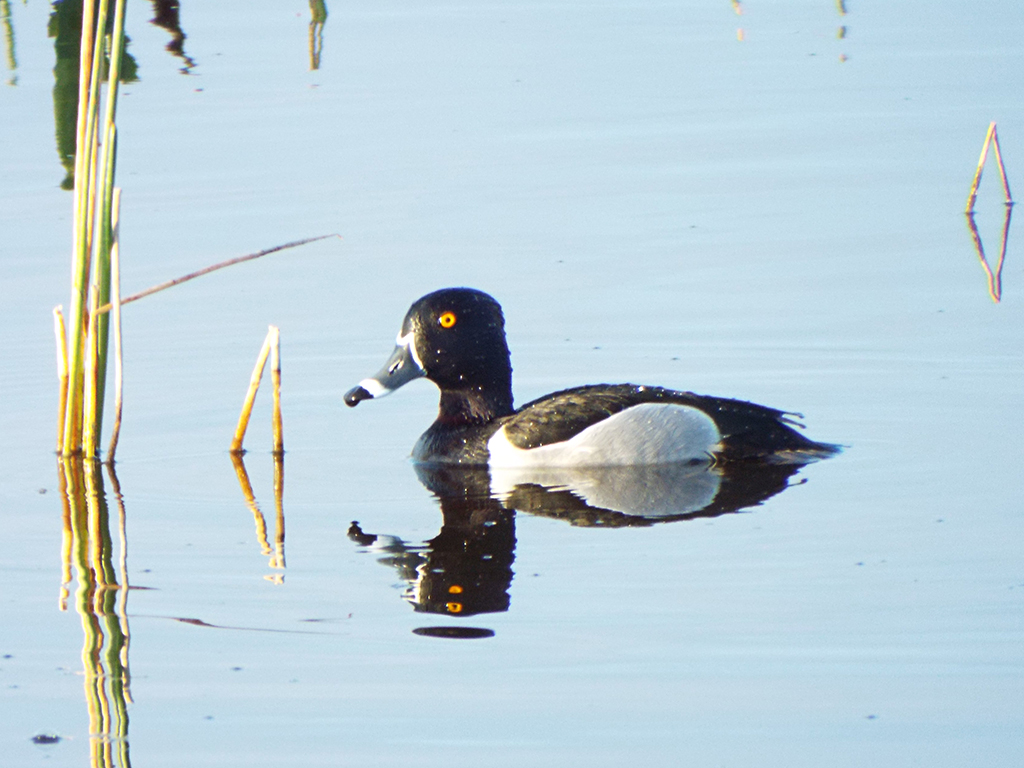
Since this photo was taken a couple of weeks ago at the Viera Wetlands, the Ring-necked Ducks have mostly left.
But within a few weeks, the migrants will be heading north, stopping in Florida to rest and refuel, as many will still have thousands of kilometers to go to get to their breeding grounds. The local winter residents will make a similar journey and we’ll be saying “good-bye” to them until fall.
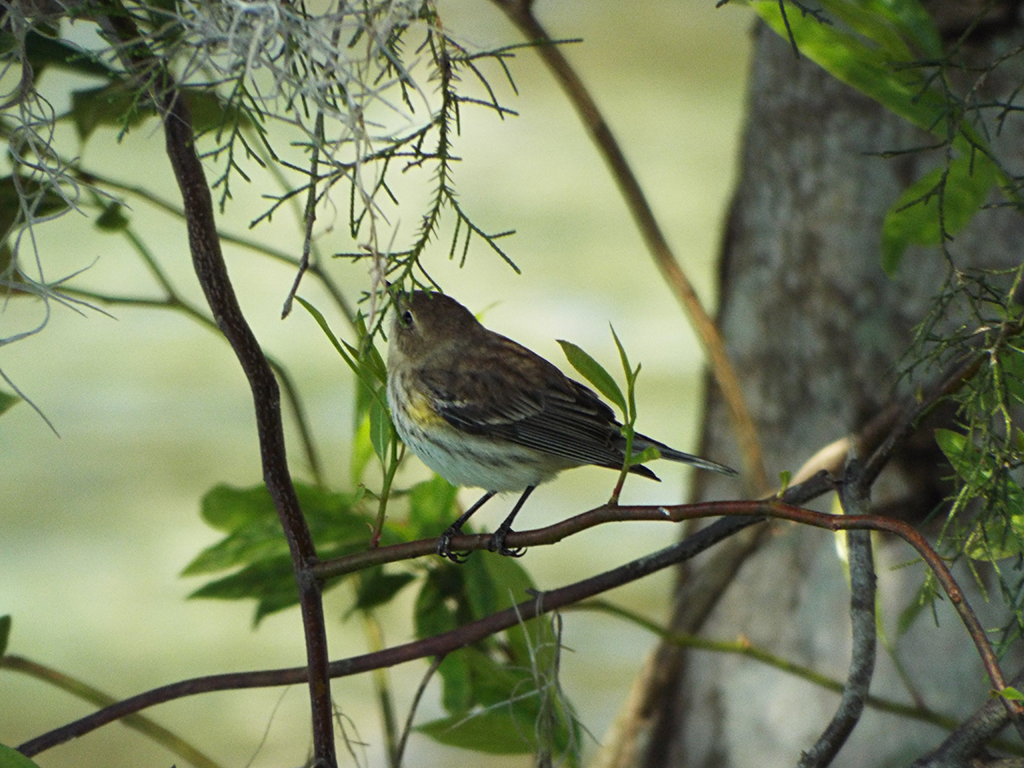
A Yellow-Rumped Warbler, finding tiny insects and mites on Spanish Moss.
During this quiet time, I’ve been out to the Viera Wetlands, Pine Island Conservation Area, Turkey Creek Sanctuary, Spruce Creek Park, and Fay Lake Wilderness Park. They all seem to be holding their breath. To me it seems like the winter residents have been holding on longer this year. This may be because, despite the record-warm winter in the U.S. (particularly the southeast), there have been strong storm systems moving through, some dumping quite a bit of snow.
This male Common Yellowthroat, at Spruce Creek, hasn’t quite got his full “domino” (black facial feathers) yet.
However birds sense weather, it seems they “know” to hang back and wait sometimes. It’s tempting to think this is an ancient and fail-safe wisdom animals share, but the truth is weather is a major hurdle that migrating birds have to face, twice each year. Many do not make the journey due to winds or extreme temperatures. If a food source fails to appear for them during a “fallout” or a rest, or is covered in too-deep snow, they may actually starve. But nature has given birds some innate abilities to read their environment and make the best choices they can. The ability to fly gives them an edge, too. If food is scarce, they can move on – as long as they have the energy to spare.
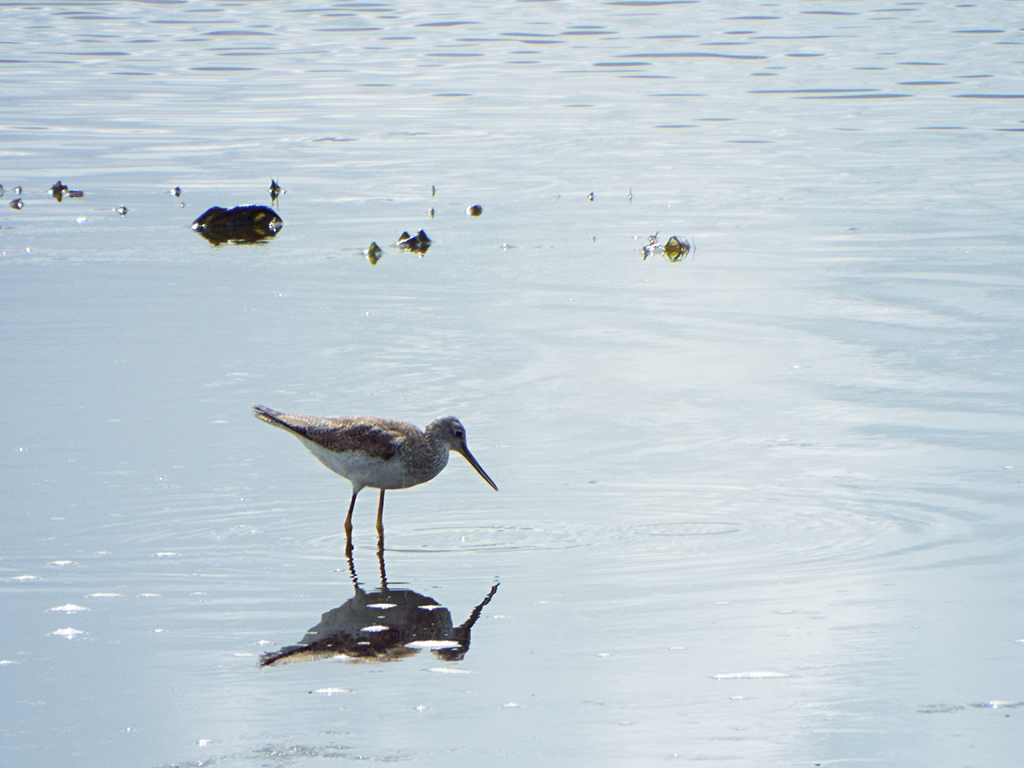
Many shorebirds, like this Greater Yellowlegs, have a long trek ahead to their Arctic tundra breeding grounds. This bird was taking maximum advantage of the warm Florida days to fatten up for the journey.
Of course, as smaller birds start to make their way, predators will follow. Raptors time their migrations to coincide with their prey, who have conveniently put on plenty of fat (i.e., energy and calories).
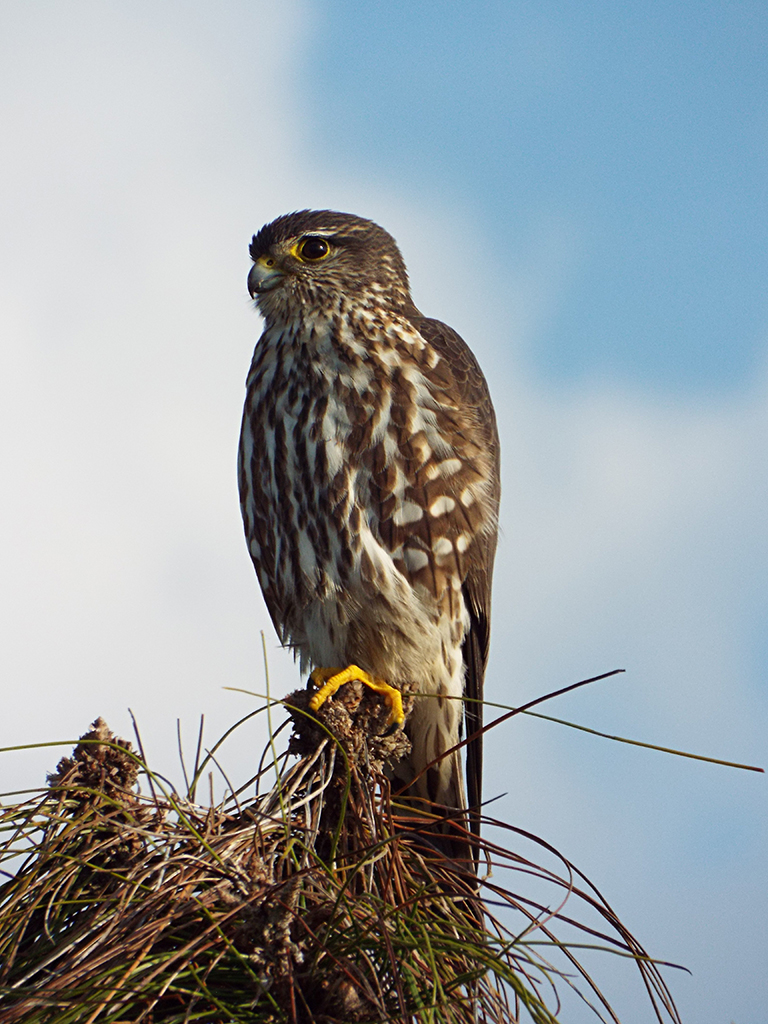
A Merlin, scoping out her targets at the Viera Wetlands. She’ll be leaving Florida as well, following food and fortune perhaps as far as the Arctic Circle to breed.
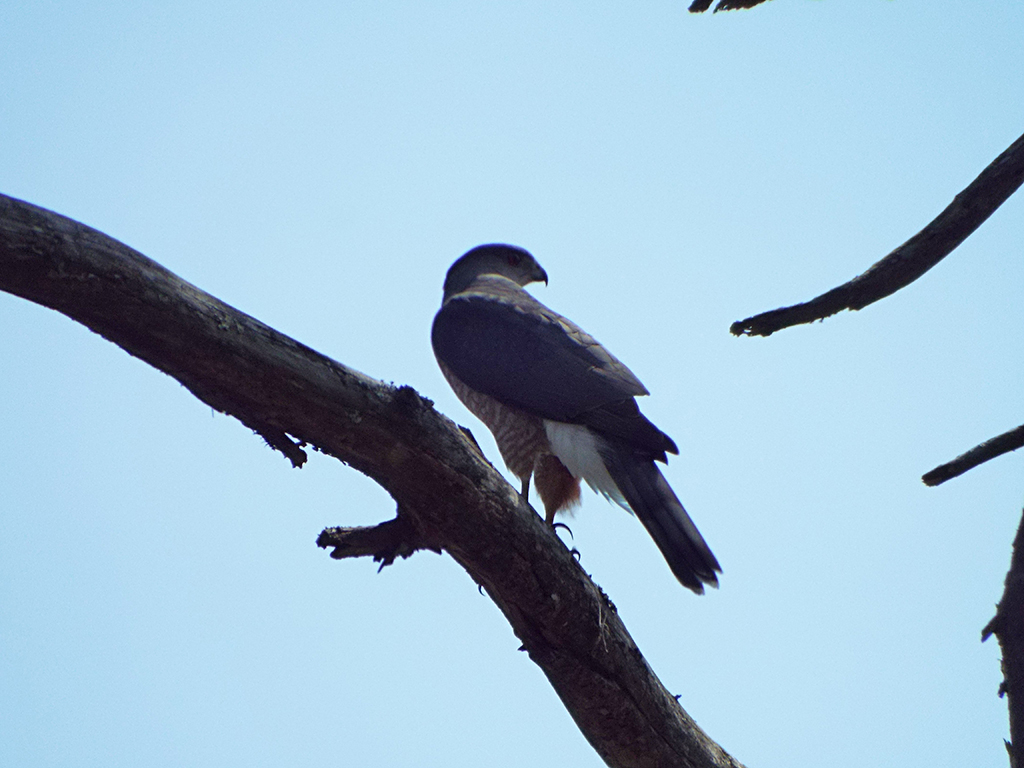
Other raptors, like this Cooper’s Hawk, stay in Florida all year, taking advantage of the various prey that make their way here.
Readers of this and other Florida birding blogs may already know, but the past several years have been disturbingly “slow” for migration, particularly through the east-central part of the state. Many bird populations have been in a documented decline since the 1960s (or before), and Florida has seen immense residential and commercial development since that time. Even with protected habitat like our city, county, state and national parks, the continued fragmentation and elimination of key habitats are taking their toll.
What can you do to help (both in Florida, or in your own location)? Support conservation initiatives and land protection plans. Even if residential or commercial development seems inevitable, there are ways that are less harmful that the typical “bulldoze and pave”methods. Developments can be designed to work more with the environment than in spite of it. These methods may cost a bit more to implement up front, but the long-term savings and value in a better looking and healthier community are worth it. Support politicians and legislation that protect our air and water. Business can coexist with these laws, and have done so for decades. Unbridled growth may reap a lot of cash in the short term, but we all pay for it in the long run with expensive clean-ups and degraded, less livable spaces.
At Three Sisters Springs Wildlife Refuge [map], a lovely male Northern Cardinal was enjoying some fresh fruit for breakfast, until I interrupted him by playing paparazzi!
The transition into Spring continues, here in Florida. The wild weather roller-coaster some of my northern friends have been experiencing is more of a gentle ride here. Even so, summer-like (for Florida) temperatures have been happening, and the effect on Spring migration is being debated by birders and ornithologists. With the meteorological see-saw this winter, the departure of some winter residents seems delayed, at least in comparison to last year. There are still American Robins and Tree Swallows in the skies and trees; Hooded Mergansers are still swimming in the retention ponds, diving for who knows what.
In that spirit, I trundled myself down to St. Sebastian River Preserve State Park to try and find the “trifecta” of pine flatwoods birds: Red-cockaded Woodpeckers, Bachman’s Sparrows, and Brown-headed Nuthatches. Two of the three are endangered, but while relatively common in the southeast US, the Brown-headed Nuthatch does face habitat pressure in Florida, especially south of the Panhandle.
The park is divided into four sections: east-west by Interstate 95 and north-south by the C-54 canal (which drains the land west of the park and flows into the St. Sebastian River). The Red-cockaded Woodpeckers are generally found in the northeast section, which is home to a small breeding colony. These paths are named and marked as the “Yellow Trail” on the park maps. I hiked a loop from the easternmost parking area, north along the “Red-cockaded Woodpecker Link”, around to the west, then south toward the horse camp and back across to where I started.
Although it took a while to hike in to the heart of the NE preserve, I was serenaded by many male Bachman’s Sparrows along the way. Pine Warblers also had a strong presence in the park, flitting from tree to tree, even as a stiff breeze began to blow as the Sun climbed.
Sometimes this is the best view you get…
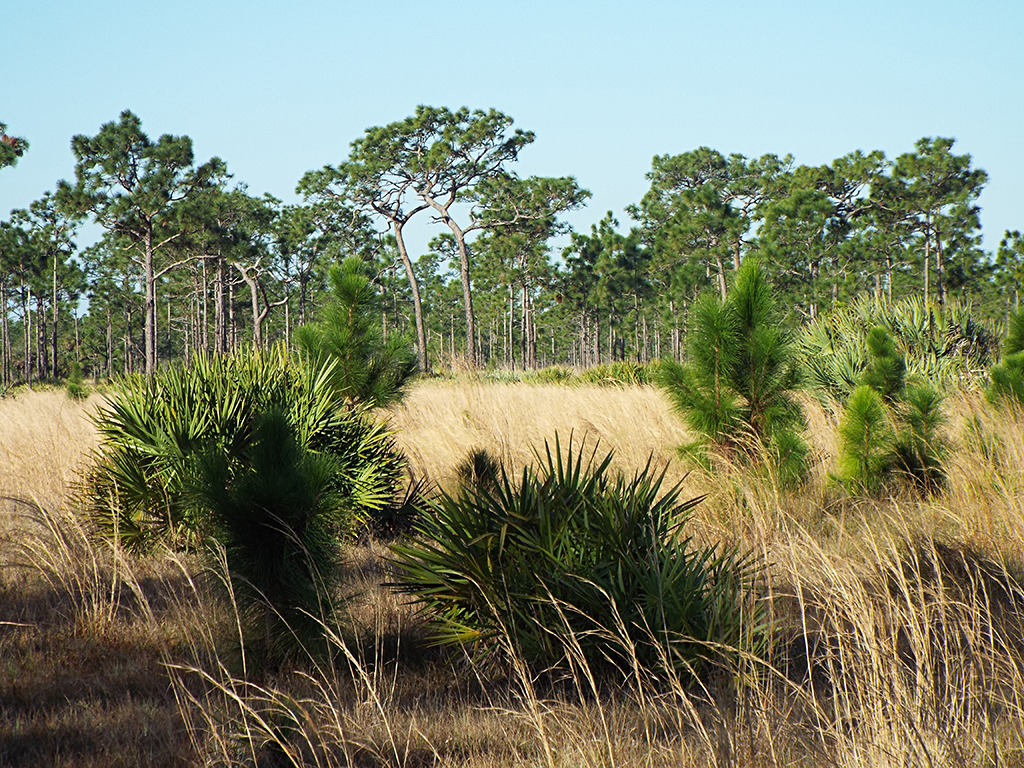
St. Sebastian River Preserve State Park is large enough that managed burns are done on various parcels every few years. That has resulted in a very healthy pine flatwoods habitat, as evidenced by the prevalence of wiregrass, instead of Saw Palmetto along the ground.
Some palmettos are alright in a pine flatwoods, but many residents (Bachman’s Sparrows in particular) prefer wiregrass.
There were also pockets of Brown-headed Nuthatches, but these birds are almost constantly in motion. Coupled with the rising wind, photo opportunities were non-existent.
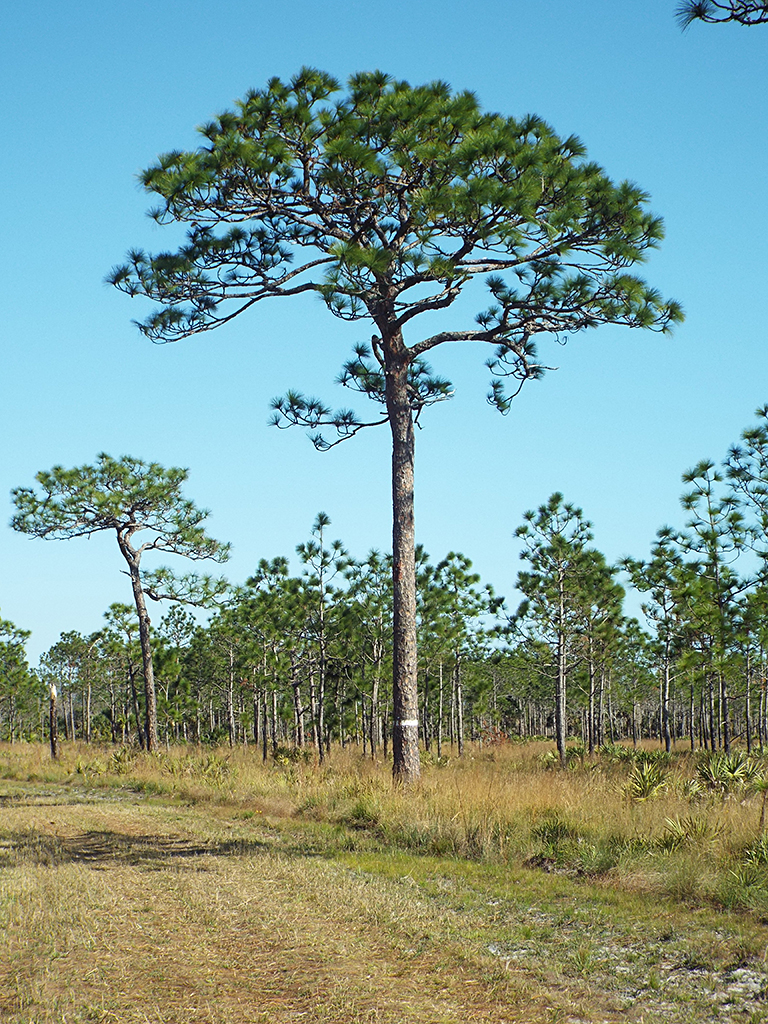
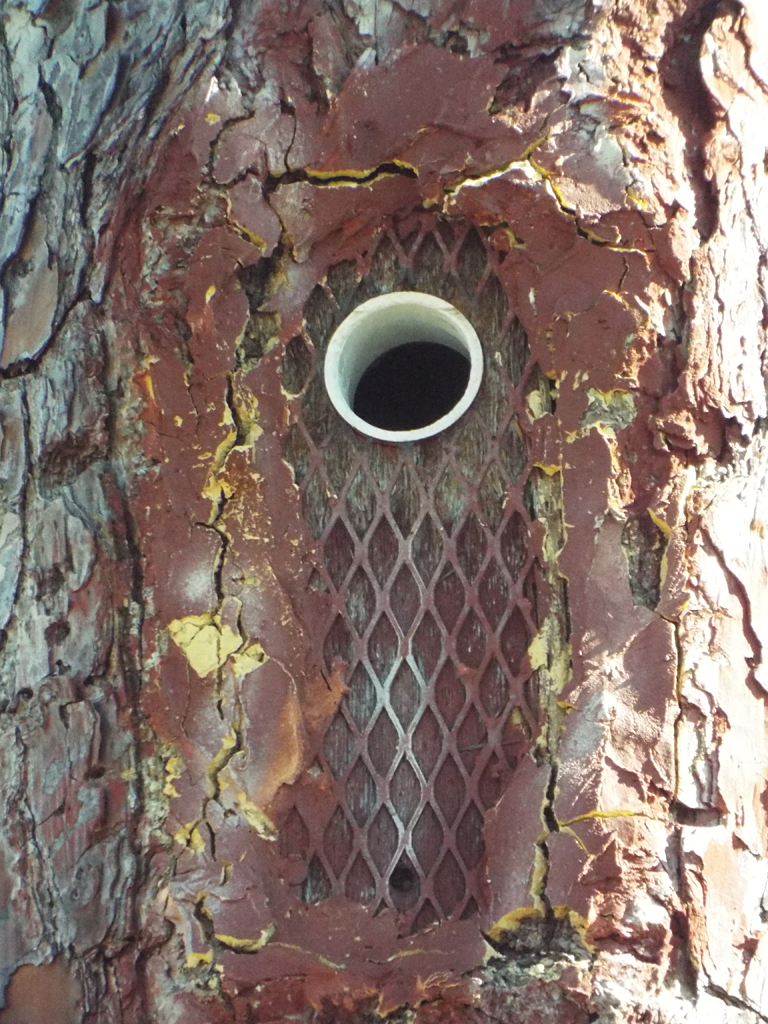
I was happy to have gotten 2 of the “big 3” to that point, but really wanted to get some decent photographs. As I walked along the “Red-cockaded Woodpecker Link” trail, I came across the various nesting trees, so marked with a white stripe.
RCW nest tree.Although some of the “stucco” front has come off, this is a functional nest box, likely in use.
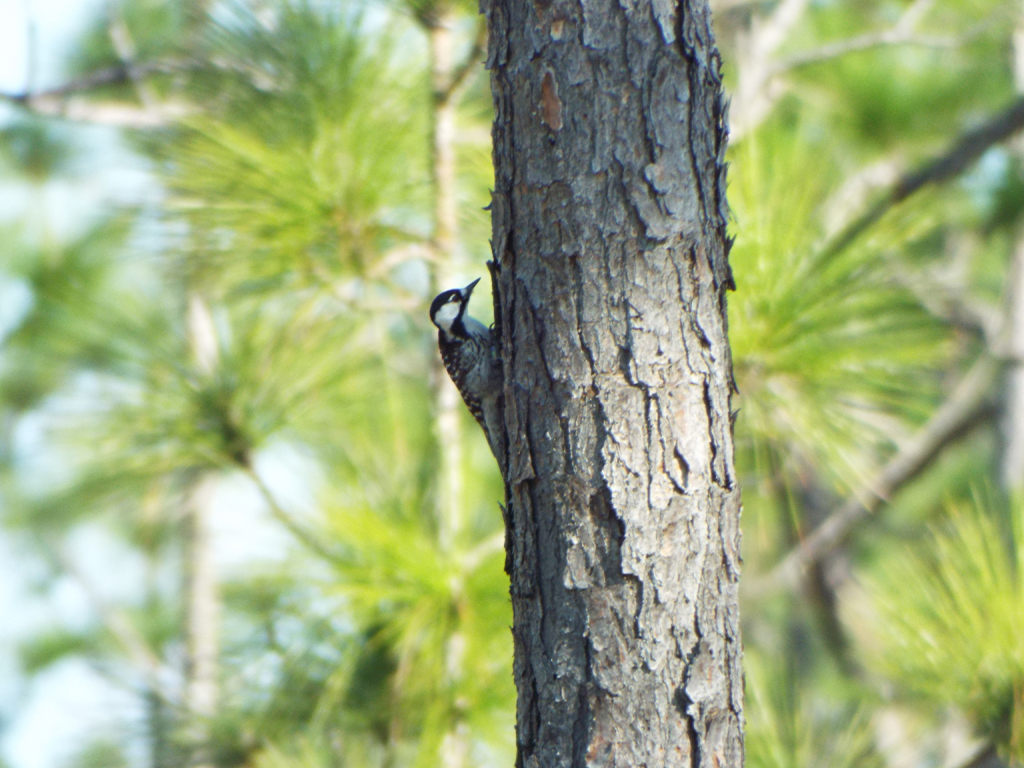
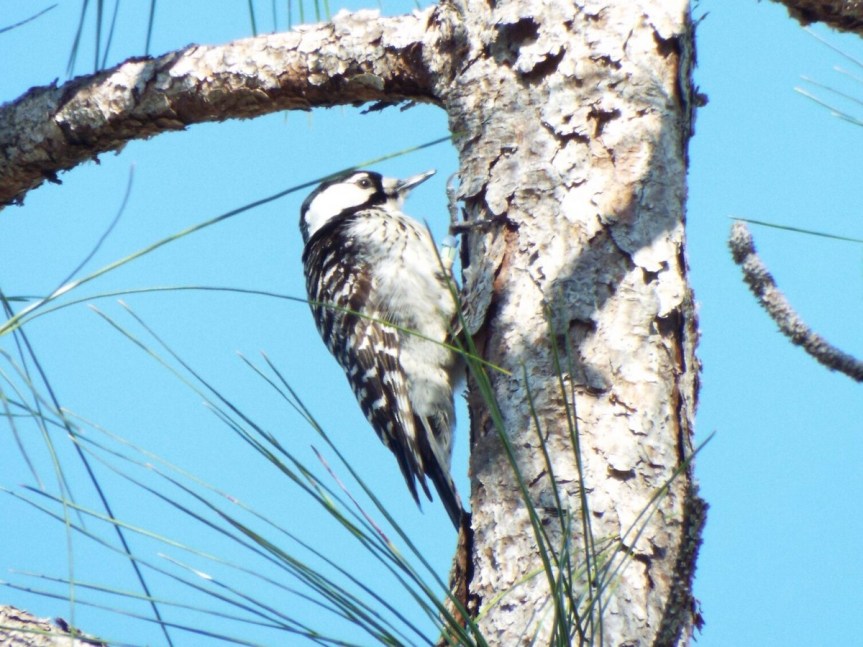
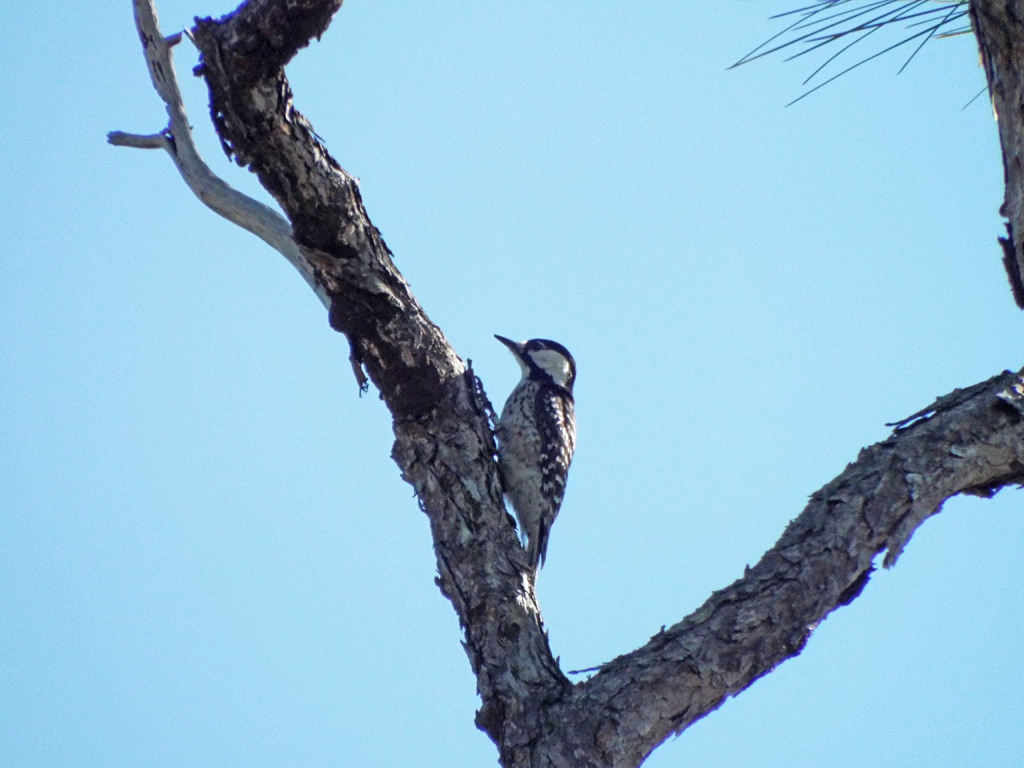
Sure enough, nearby were at least one pair of Red-cockaded Woodpeckers (RCWs, as they are often called by birders). The birds have a distinctive call note, which they use to stay in almost constant contact and I heard them long before I saw them.
RCWs will often fly to the base of a tree, then work their way up, looking for insects.Like all woodpeckers, RCWs use their stiff tail feathers to help prop them up against the trunks of trees.This bird was near the top of a tree, ready to fly out and across to the base of another.
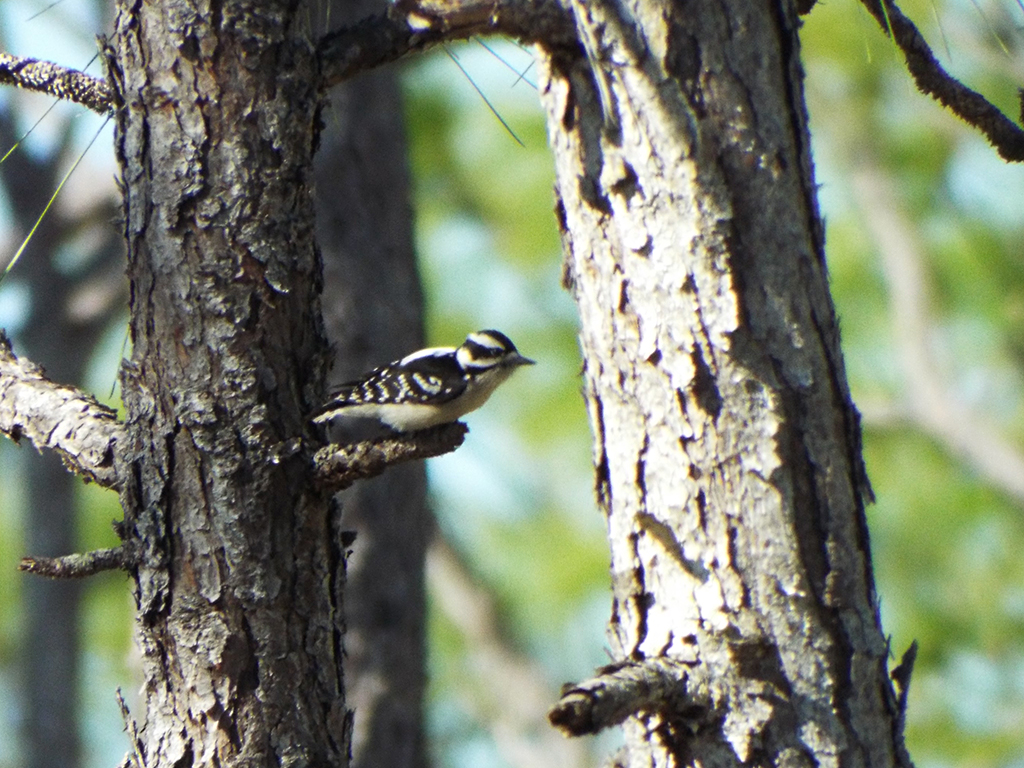
In addition to the RCWs, the park had numerous Red-bellied Woodpeckers, a few Downy Woodpeckers and, what is becoming increasingly rare, a Hairy Woodpecker. The reasons for the Hairy Woodpeckers’ decline isn’t exactly known. Although almost identical in markings to the Down Woodpecker, the Hairy is about the size of the Red-bellied. It’s possible Red-bellied Woodpeckers (as well as European Starlings and House Sparrows) are out-competing Hairy Woodpeckers for nest sites, but there could be other factors, too.
A Downy Woodpecker about to take flight.
As I passed the 1/2 way point in my hike, I came upon a large flock of mixed warblers on the ground a few meters ahead of me. The flock consisted of Pine Warblers and Palm Warblers, either catching aquatic insects in the water at the side of the path, or taking sips of water. As I was bringing my binoculars up to my face, a flash of yellow caught my eye to the right. At first I thought I had glimpsed a very yellow Pine Warbler, but when I got the bird in my binoculars I saw it did not look like a Pine Warbler.
Mentally, I started noting location, shape, and movement, then field marks from the head down. The thought process went something like this:
“Just at or above eye-level in some palm scrub near some hardwoods.”
“Bright yellow front.”
“Yellow on face with some black/dark near eye.”
“Dark gray or black necklace mark, more defined in the center of the chest”
“Bird has turned sideways to me.”
“Faint light eye-ring.”
“Gray upper parts, no wing-bars.”
“White under-tail coverts.”
Then the bird flew out of my field of view and I was unable to relocate it.
This combination of field marks and behavior point to a Canada Warbler. That was a life bird for me (I’ve had unconfirmed personal sightings before, but this time I got a really good look to feel comfortable claiming the ID), and a rare find in Florida, especially this early in the Spring! I believe the bird was either a female, though it could have been a male that hasn’t molted yet or a very worn bird.
After that encounter as the heat of the day built (it was unseasonably warm), the birds had quieted down a bit. I did see a few distant glimpses of Eastern Bluebirds, had the occasional hawk overhead, and heard several more Bachman’s Sparrows.
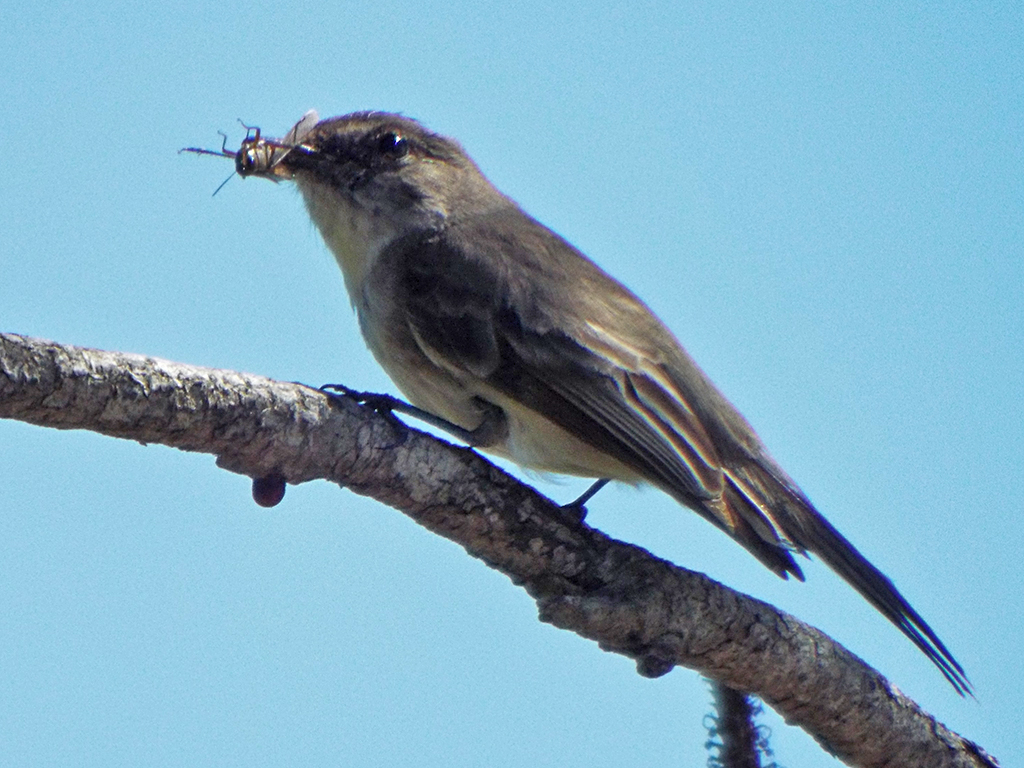
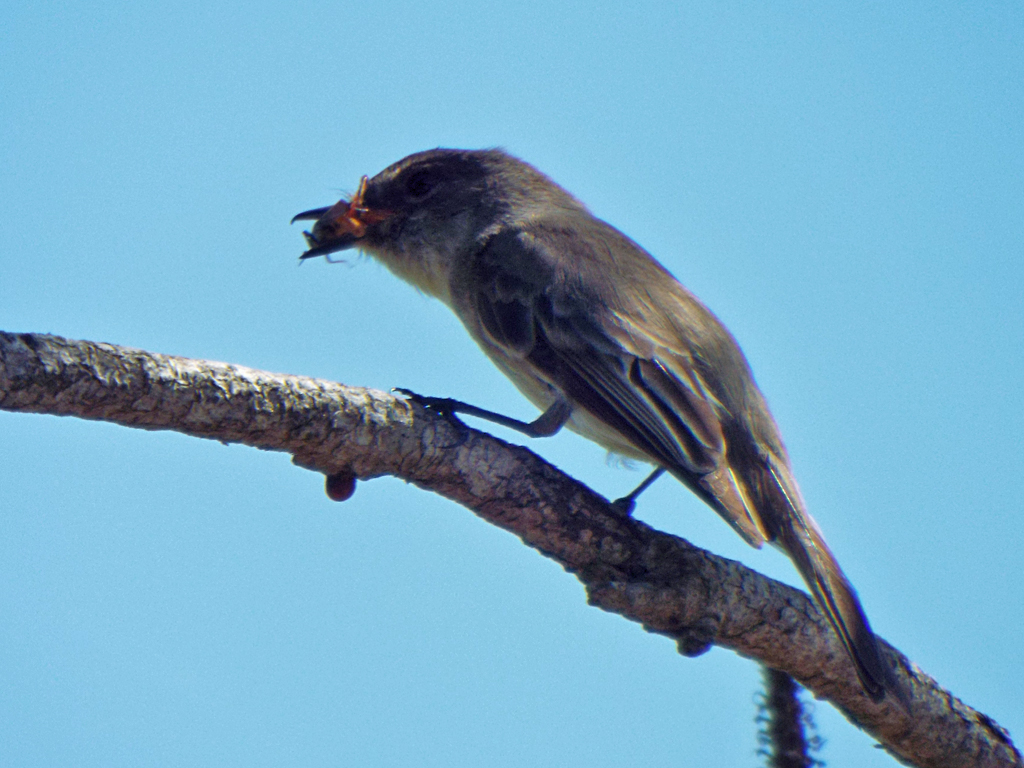
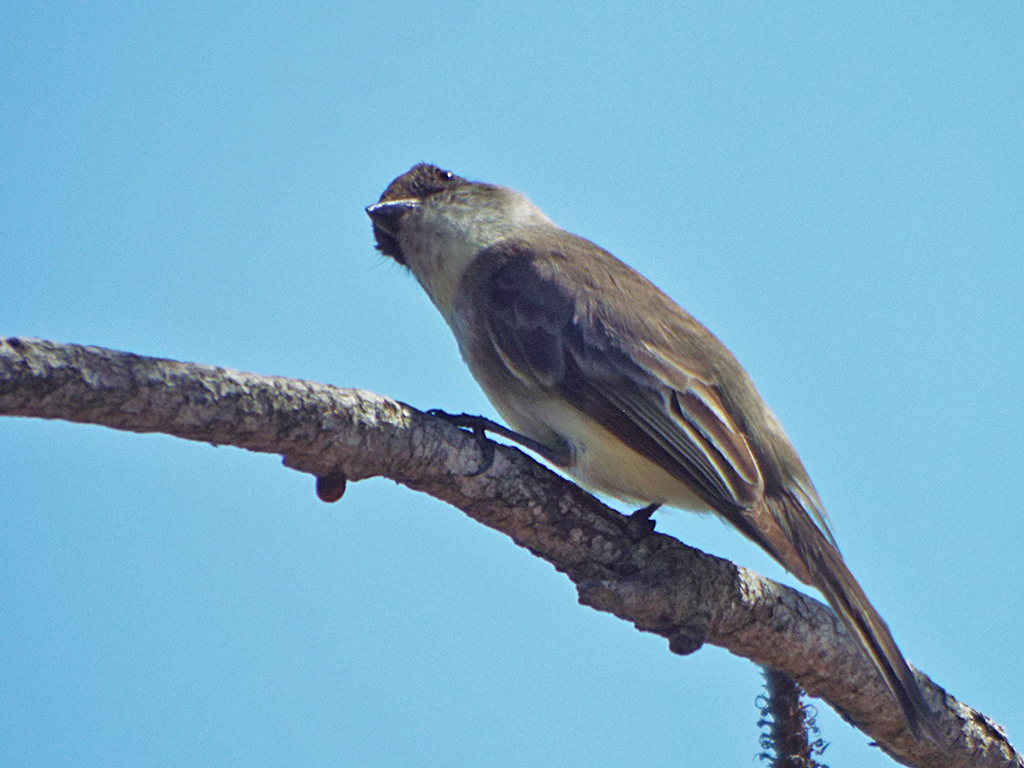
I had unsuccessfully tried to get some photos of perfectly posed Eastern Phoebes, just to have them dart off as I depressed the shutter. Finally, near the trailhead as I was exiting the trail, I managed to get quite close to a phoebe that was enjoying a bit of lunch.
Who doesn’t love live grasshopper for lunch?Down the hatch!All gone!
This was the longest hike I’ve done in a while – over 9.5km (almost 6 miles) – so I expected to be dealing with a bit of soreness. Thankfully, so far, just my feet have suffered from some tightness and a little chafing. St. Sebastian River Preserve State Park is a great place for some species not easily found in Brevard County, so it’s well worth a visit. I suggest planning a hike or a birding adventure before the heat of summer, and get an early start. The park officially opens at 8:00am (though you might find the gate open a wee bit early sometimes). There are trails at the other three quadrants of the park, too, but each one could easily fill up a day of walking.
It was a good day. I saw four rare or endangered birds (one of which I never expected to see) and got to unwind before another work week. It won’t be long now until the songbird migration makes it way through Florida. Stay tuned for more adventures.







 Lonely Birder