Outtakes from Turkey Creek Sanctuary, September 7, 2013

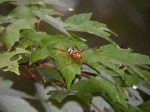
  • Strange wasp that landed in front of me and shook it’s head “no” (I heeded it and went the other way, which led to me IDing my first Swainson’s Warbler).
  • Visions of creepy clowns. Thanks Uncle Stevie (King)!
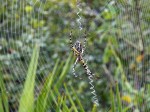
  • Our area’s OTHER large orb-weaver, “Black and Yellow Garden Spider” (Argiope aurantia). Not as large as a Banana Spider, but still impressive.
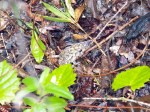
  • D’AWWWW! A cute little toad!!

Turkey Creek Heats Up As Things Cool Down

It seems now that September is here and some slightly cooler morning weather has arrived, that things are picking up in Turkey Creek Sanctuary. Notable and active birds seen today inlcuded:

  • American Redstart
  • Blue-grey Gnatcatcher
  • Black-and-white Warbler
  • Swainson’s Warbler (new for me!)
  • Northern Parula
  • Blue Jay
  • Caronlina Wren
  • Northern Cardinal (was there a doubt?)
  • Downy Woodpecker

Voice-only IDs included Hairy Woodpecker (more monotone and deeper version of the Downy’s calls), White-eyed Vireo (again!), Pileated Woodpecker. There was also a Belted Kingfisher that flew overhead at one point. The day was not very good for soaring, though. I saw no hawks or vultures in the air over the park at all.

As you can see from the list above, warbler activity is on the rise as we get closer to the fall migration. 

Today, I tried shifting my birding to Saturday monring (instead of Sunday). As expected, there were a lot more people in the sanctuary than I am used to. As I was on my way to the new Turkey Oak Trail, a woman came down the path and asked me if I knew how to tell the difference between a King Snake (non-venemous) and a Coral Snake (venemous). Various incomplete versions of the rhyme designed to help tell the difference went through my head, which was no help at all. In any case, whatever snake she saw was no longer present, so we both walked and talked along the entirety of the trail. 

Thus ended my first Saturday morning birding adventure of the year.

Enchanted Forest Sanctuary

This is part 2 of my birding adventures this weekend. Thanks to the generous help of one of the Enchanted Forest Sanctuary (EFS) volunteers, I had batteries for my camera and thus a lot more photographs to share.

I had last been to EFS during the Florida Birding and Wildlife Festival in January, so it was nice to go back now in the summer, although it was much more quiet (in terms of people and birds).

photo efs-sign.jpg
Enchanted Forest Sanctuary

The first creature I encountered was a LARGE “Banana Spider” (Nephila clavipes, also known as a golden silk orb-weaver spider). In fact, they were all over the park, in paths and up in trees. Here’s a link to a photo album of some of the spiders. (I won’t post them directly  here out of respect for my arachnophobic followers).

The sanctuary has several “loop” paths through different biomes. I started on the Coquina Ridge path, which parallels an old unfinished canal cut. Remnants of the coquina that was removed are strewn throught this part of the park, some of them arranged as ornaments. The holes in the center are from natural erosion when the coquina was under water.

photo coquina.jpg
Ornamental coquina

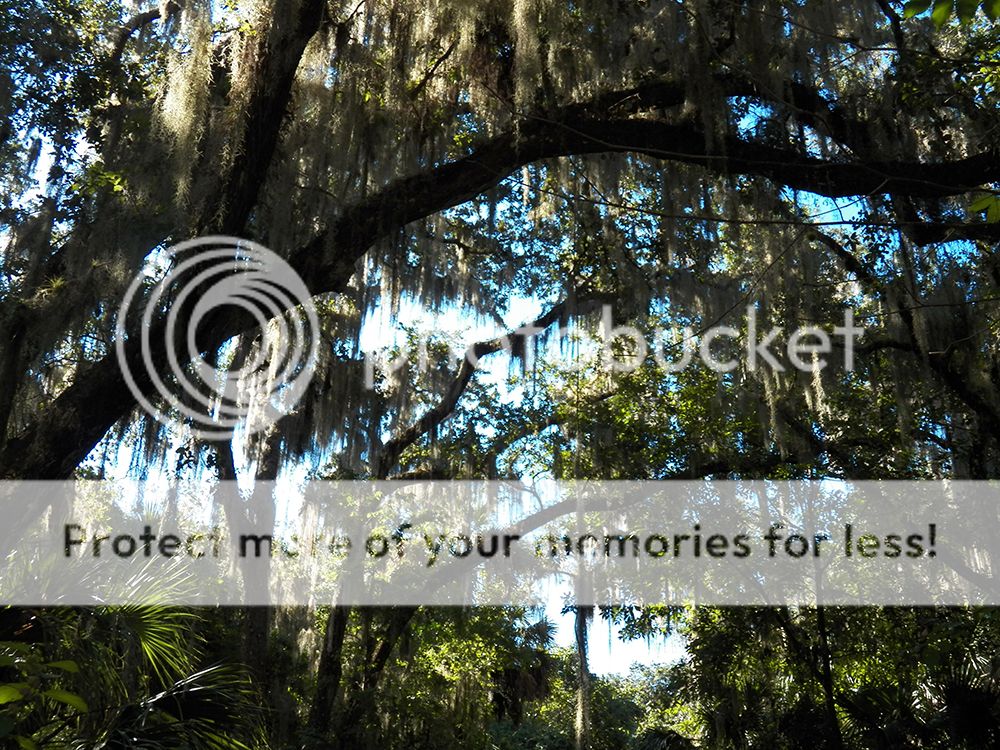
After dodging a few spider webs, I turned onto the Biodiversity Loop. The park was noticably more cool, humid and mosquitoey (but my bug repellant seemed to be working). The canopy had some dramatic draping of Spanish Moss and other plants hanging off the Live Oaks and other trees.

photo efs-spanish-moss.jpg
Dramatic Spanish Moss is dramatic.

As is typical of late summer in Florida, the bird presence was pretty minimal, but there was still plenty of wildlife around, and the plants were pretty too.

Quite a few butterfly species were in evidence. They can be difficult to photograph without a really big lens on an SLR, so I did my best with my Kodak Easyshare Max Z990. I captured this Zebra Longwing early-on in the hike through the Sand Pine loop. photo zebra-longwing.jpg
Zebra Longwing enjoying some summer nectar, as one does.

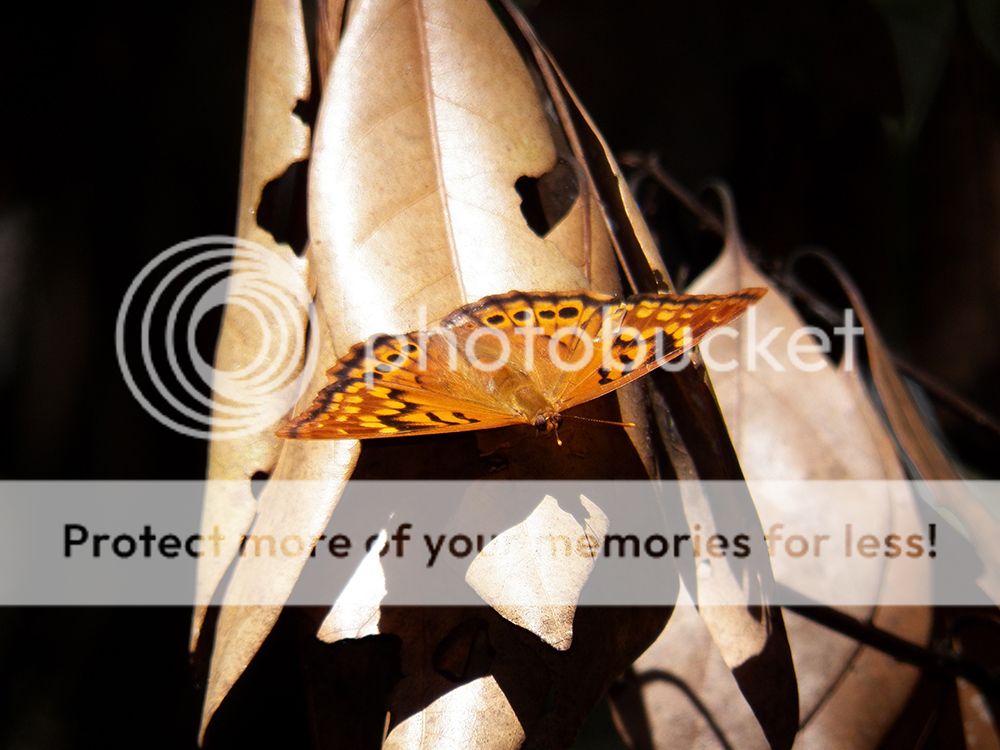
Later in the hike I also shot this orange butterfly. My Internet searching hasn’t positively identified it, but if any of my followers know what it is, please let me know. photo orange-butterfly.jpg
One of many butterfly species and individuals at EFS.

Along one of the upland and sandy trails I came across a Gopher Tortoise and got some glamor shots.

photo efs-path2.jpg
You never know who you might cross paths with!

photo gopher-tortoise-front.jpg
Gorgeous!

photo gopher-tortoise-close.jpg
Head shot!

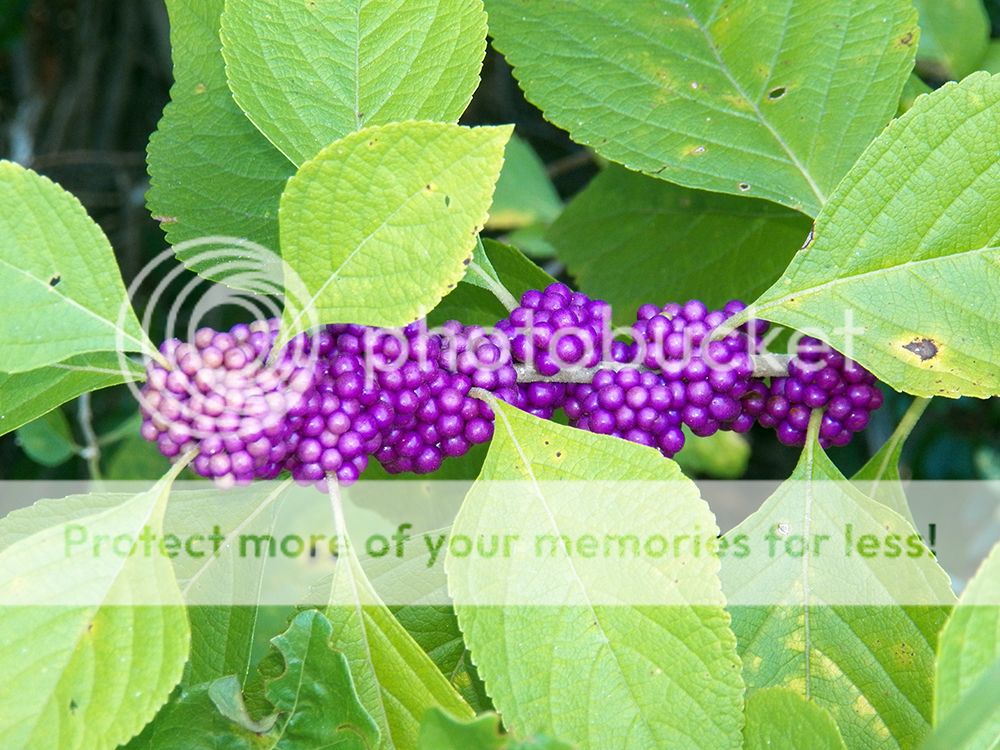
I know I’ve shot Beauty Berry a few times this summer, but they are a very photogenic plant. Here’s a bunch of those and some goldenrod which was quite prevalent along one of the trails. Plenty of flowering plants and other vegetation of the butterflies and other insects

photo efs-beuty-berry-again.jpg
Beauty Berry, again
photo efs-goldenrod.jpg
Goldenrod.
photo green-cicada.jpg
A green cicada.
photo mini-lubber-again.jpg
Mini-lubbers were here, too.

Before heading for the exit (dodging spiders all the way), I caught some Blue-grey Gnatcatchers skulking along the trail.
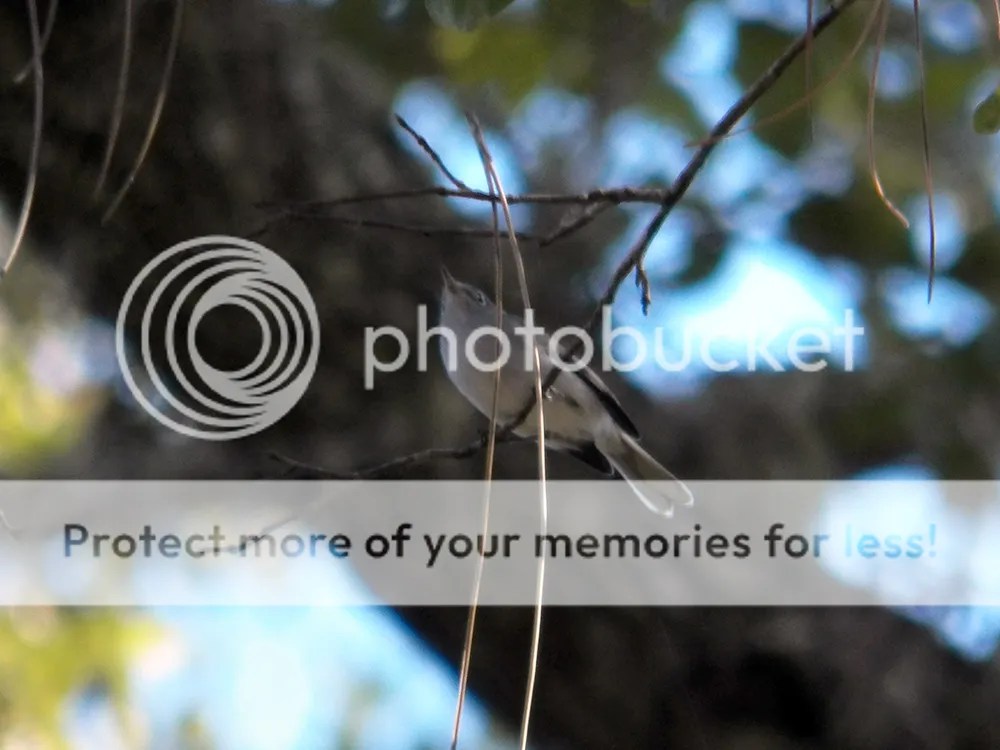
photo gnatcatcher.jpg
It is a birding blog, after all.

I expect both EFS and Pine Island Sanctuary will get busier with respect to bird activity as the month of October arrives, and I aim to visit both as the fall migration gets under way.

photo efs-path1.jpg
Until our paths cross again.
Pine Island Conservation Area

This is part 1 of my birding adventures this weekend. I decided to scout out the Pine Island Conservation Area for future trips, since I hadn’t been there before.

Pine Island is very pretty, but as I elected to park on the west side of the lake, I was looking into the sun most of the time I was there. Then, after only a few photographs, my batteries gave out on my camera.

photo sun-strike.jpg
Pretty, but headache-inducing lighting.

The most significant sightings here were 2 new life-listers!

  1. Dark morph of a Short-tailed Hawk on a bare nest platform outside the park
  2. Least bitterns (including 2-3 chicks!) in the reeds (more on that below).

Conservation areas like this are usually multi-purpose. Pine Island is advertised, somewhat, as a sport fishing spot, and that is what most of the people I saw there were doing. I have mixed feelings on fishing, as I do with hunting, livestock farming and the like. I do my best to integrate my ideals with reality, and it’s possible many of my more activist friends feel that’s not enough. In any case, i was heartened to overhear a conversation between two fishermen that went something like:

“So, I make sure I have these hooks. They break-down pretty quickly and don’t stay in the fish’s mouth.”

“Oh, I hadn’t ever thought of that. I hate it when you step on or accidentally grab an old rusted hook, too.”

“Well, yeah, but it’s better for the fish and the environment.”

That was somewhat heartening.

There were Barn Swallows making periodic runs along and over the lake, and quite a few Ospreys. Watching the Ospreys soar overhead really made the sky feel open and free.

photo osprey-wide-shot.jpg
Osprey commanding a endless sky.

I also saw one Common Gallinule (I so keep wanting to call these birds Common Moorhens, but such is the way with the IOU), a pair of Snowy Egrets, some Common Ground Doves, Boat-tailed Grackles and a Turkey Vulture.

Then, my eye caught some motion in some reeds in the lake. Though quite backlit, the silhouette of a small heron was unmistakable as it flew from one clump of reeds to another. Then, I saw more movement the first bunch of reeds. Through my binoculars I could make out the same small heron shapes, but with a noticable amount of downy fuzz. The only reasonable photo I got was at the limit of my camera’s zoom. Least Bittern chicks!

photo least-bittern-chick.jpg
Baby Least Bitterns!

They and at least one adult were straddling and climbing through the reeds. The only reason I could reliably pick them out was the backlit haloing of the down on the chicks. Otherwise they were very hard to spot. This is how bitterns avoid preadators.

It was at this point that my batteries went out. That, plus the really bad sun angle convinced me to head out and drop by the nearby Enchanted Forest Santuary and see what was happening there. I’ll have a separate post for that.

Pictures from Sunday (August 25, 2013).

  • Sand Pine Trail, Turkey Creek Sanctuary in the early morning.
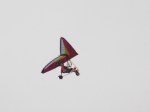
  • Ultralight over Turkey Creek! NEATO!
  • Beauty Berry (notice how it’s more purple than pink now).
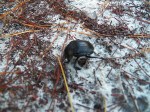
  • Large black beetle of some kind (over 1” long!).
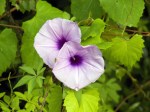
  • I think these are sweet potato flowers.
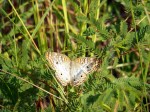
  • While Peacock butterfly.
  • Zebra Longwing (Florida’s State Butterfly!).
  • Juvenile/Fledgling Northern Mockingbird resting on my shed.

Click images to enlarge and browse.

Youth Day!

Sunday was another quiet morning at both Turkey Creek Sanctuary and Erna Nixon Park. What activity there was revolved around juvenile Northern Cardinals (making the usual racket) and some Northern Parulas and Blue-grey Gnatcatchers high in the canopy (at least at Turkey Creek; almost nothing was to be had at Erna Nixon). Still, it was a pleasant enough morning and not too hot since it was mostly overcast. Toward the end of my Turkey Creek hike it started to rain rather steadily, but the rain hadn’t affected Erna Nixon Park when I drove there later in the morning.

After returning home, at some point during the early afternoon, my wife excitedly drew my attention to the antics of a bird on the wire between our house and the utility pole. It was a fledgling Northern Mockingbird leaping off the wires and making short almost flycatcher like sorties before landing back on the wire. We watched it for a few minutes and then noticed another fledgling along the power lines running along the right-of-way behind our house. And then ANOTHER. Then I noticed a fly-catcher along the same wire. It was a bit tougher to identify, but I finally figured out it was a juvenile Great-crested Flycatcher. It seemed a bit more adept at flying, so likely was past fledgling stage.

Looks like the day belonged to the youngsters.

[Edited to add: I’ll have a few photos from the parks later this week (more flowers, bugs and trees), and I’ll see how my only shot of one of the youngsters turned out.]

Life List Audit – Breaking 200!

I found some notes from our San Diego trip (2011) and was able to finally verify several more species for my life-list:

  • Cassin’s Kingbird
  • Black-chinned Hummingbird
  • Pelagic Cormorant

The new total is 201. I realize that for someone birding as long as I have (since 1990) 201 seems pretty small for a life-list. That doesn’t really bother me too much. There have been chunks of time (including grad school) where birding took a back seat to other pressing matters. My goal when birding is to observe behavior over tick-marks on a list. I also don’t have much of a travel budget (even for regional trips) so I don’t forge far and wide to get my list up. Don’t get me wrong, when an opportunity does come for me to get to new places and new habitats, I am all for it. But life list growing isn’t my main priority.

In any case, I’ve passed the 200 mark for my life list, and that is at least some milestone worth being happy about.