
- This blog has been going for one year now!
- The Sandhill Cranes are nesting again. I saw momma crane on a nest with 2 eggs. She’s nesting up on the bank of the landscaping pond because the unusually wet weather has kept the pond level above her preferred nesting site.
- I’m mirroring this blog on WordPress (lonelybirder.wordpress.com) to see how it goes over there. It’s not a simple as Tumblr but more flexible.
Category: Birding
Return to Moccasin Island (and Viera Wetlands)
It’s about 10 months since I last visited the Moccasin Island Tract, so I thought it was a good place to resume my post-festival birdwatching. It also gave me another opportunity to check out the “Dan Click ponds” adjacent to the Viera Wetlands property.
By far the most numerous bird species on the ponds were Green-winged Teals. There were also many Blue-winged Teals, and a smattering of dowitchers, American Avocets, White Pelicans, and some other shore birds and gulls.
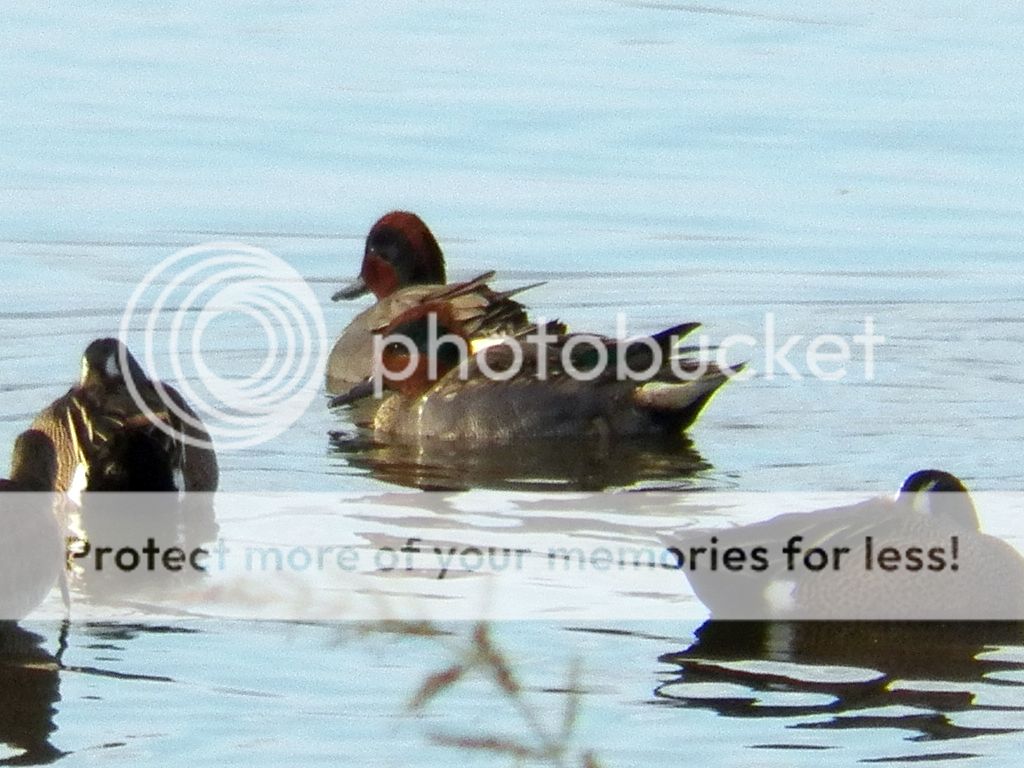
Green-winged Teals (with some Blue-winged Teals nearby).
Both yesterday and a previous “drive by” of the ponds were curious to me in that the “first” pond (the southernmost one) was devoid of any visible bird life, while the “second” pond seemed almost overcrowded (especially when I drove by them a couple of weeks ago).
The Click ponds are a great place to see wintering shorebirds and ducks, but since I hadn’t made time to stop there this winter, I know I missed some rarer sightings.
The drive to the Moccasin Island Tract is on a 3 mile dirt road along ranch land and through some wooded areas. This afforded some diverse species to see in a short time-frame.
First, over the roadway and some adjacent fields a trio of immature Bald Eagles were playing and squabbling in the air. They even knocked each other out of the sky a couple of times.
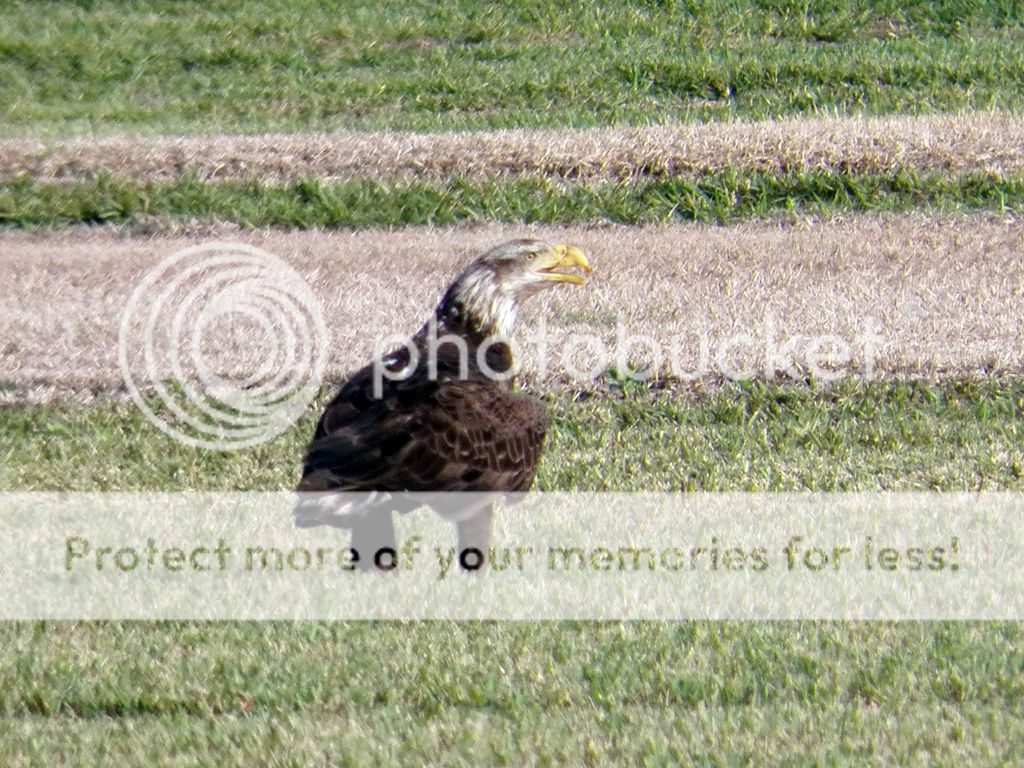
“Hey! No fair knocking me down! MOM!”
There were quite a few Sandhill Cranes, too. Mostly in pairs (more on that later). These cranes are so habituated to humans in this area now that it’s possible to get amazingly close. Large birds like cranes can really reinforce the notion that we are in fact living with dinosaurs.

Welcome to Quaternary Park!
The fence-line between the road and the ranch lands had Eastern Phoebes spaced at regular intervals. This would seem to indicate that Eastern Phoebes are territorial outside of the breeding season.
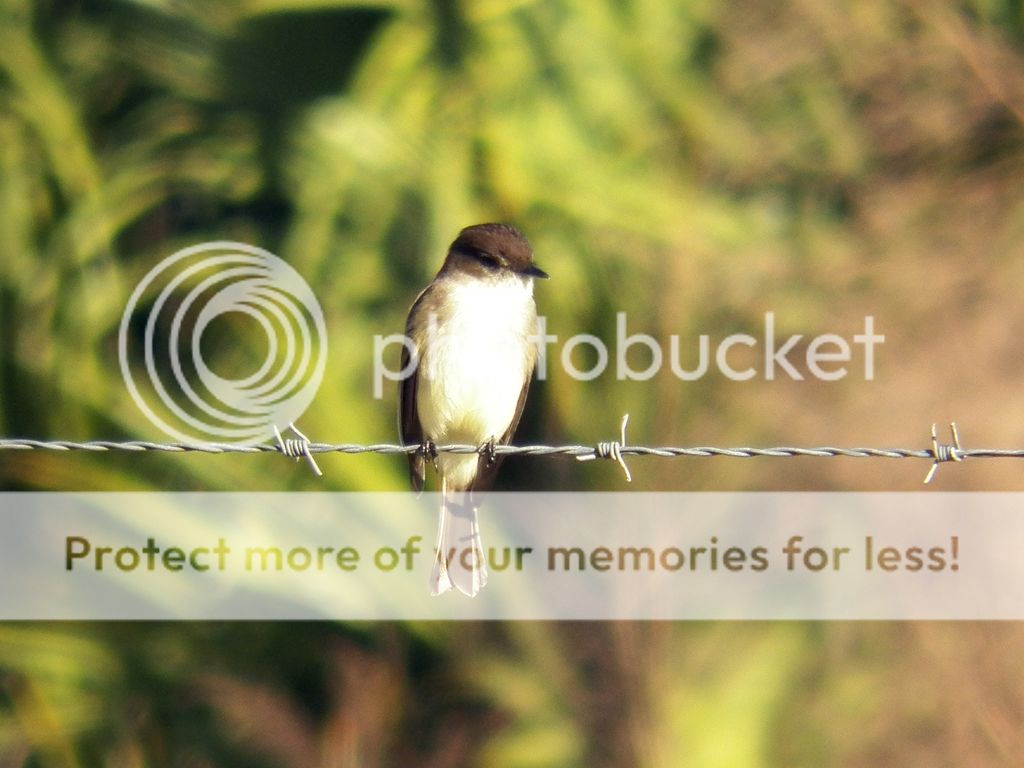
Eastern Phoebe, king (or queen) of all it surveys…
Driving into the Moccasin Island Tract, I was greeted by this Turkey Vulture, doing its best to emulate and old western scene. The only thing missing was the cow skull laying on the ground.

“Over here’s we have The Last Chance Saloon, and Next To The Last Chance Saloon...”
I saw a few American Kestrels, including one right by the parking area. Its presence seemed to keep the robins away (though there were dozens further inside the tract to the south).

American Kestrel.
Just like last year the Eastern Meadowlark was the bird of the day. They could be seen and heard singing everywhere. Their song is very beautiful and flute-like, though not as ethereal as some thrushes’ songs.

Like orioles, meadowlarks are colorful relatives of blackbirds.
There is a Bald Eagle nest on the property, though I don’t know if it is where the three juvenile eagles I saw earlier were hatched and raised. One adult eagle was nearby, watching over the fields. I like to think it was the young eagles’ mom, basically enjoying some alone time while the kids roughhoused down the road.
On the way back out of the tract I saw this Loggerhead Shrike. Right after taking this photograph, it almost succeeded in catching a Yellow-rumped Warbler. Another reminder that these handsome birds are lethal carnivores.
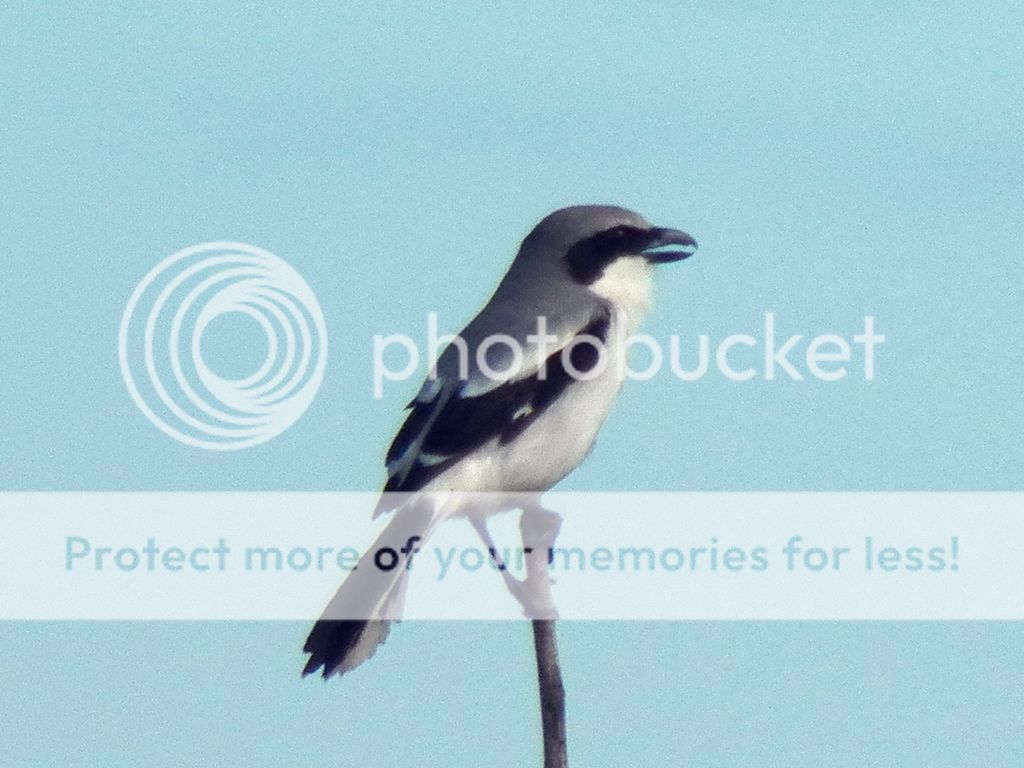
Loggerhead Shrikes are sometimes called Butcherbirds.
February is springtime in Florida, and many of the overwintering birds are starting to gather and head north. We’ve had rising pollen levels for weeks now, and buds are forming on the trees (in fact, the tree in our front yard is already starting to show leaves).
As I mentioned above, the Sandhill Cranes were seen all over the area, pairing up and starting their nesting behaviors. But perhaps the best evidence for Florida Spring yesterday was at the Ritch Grissom Wetlands. There were hundreds of herons and egrets along the pond and marsh edges, many of them showing breeding plumes and lancet feathers. Some were beginning territorial squabbles, too. It was fun watching the herons jostle each other and the numerous ibises and Wood Storks that were also trying stake out areas along the water’s edge.
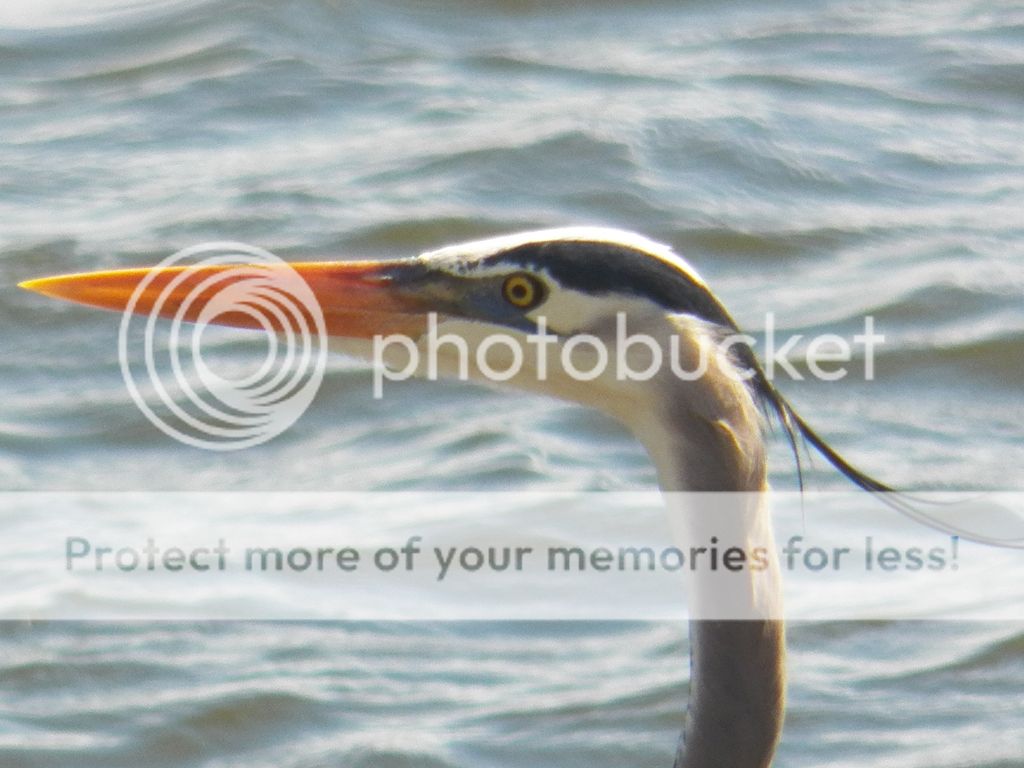
This Great Blue Heron is getting ready for Valentine’s Day.
The winter resident warblers are still here, though. Here you can see why Yellow-rumped Warblers have their common name, and are nick-named Butter Butts. The Yellow-rumps outnumbered the Palm Warblers, actually.

Some warblers have the most descriptive names…
Some of the Pied-billed Grebes were showing their breeding plumage as well. In winter the dark bill stripe (making it “pied-billed”) is obscured and their plumage tends to be browner. Here you can see a grayer, more “pied-billed” grebe.
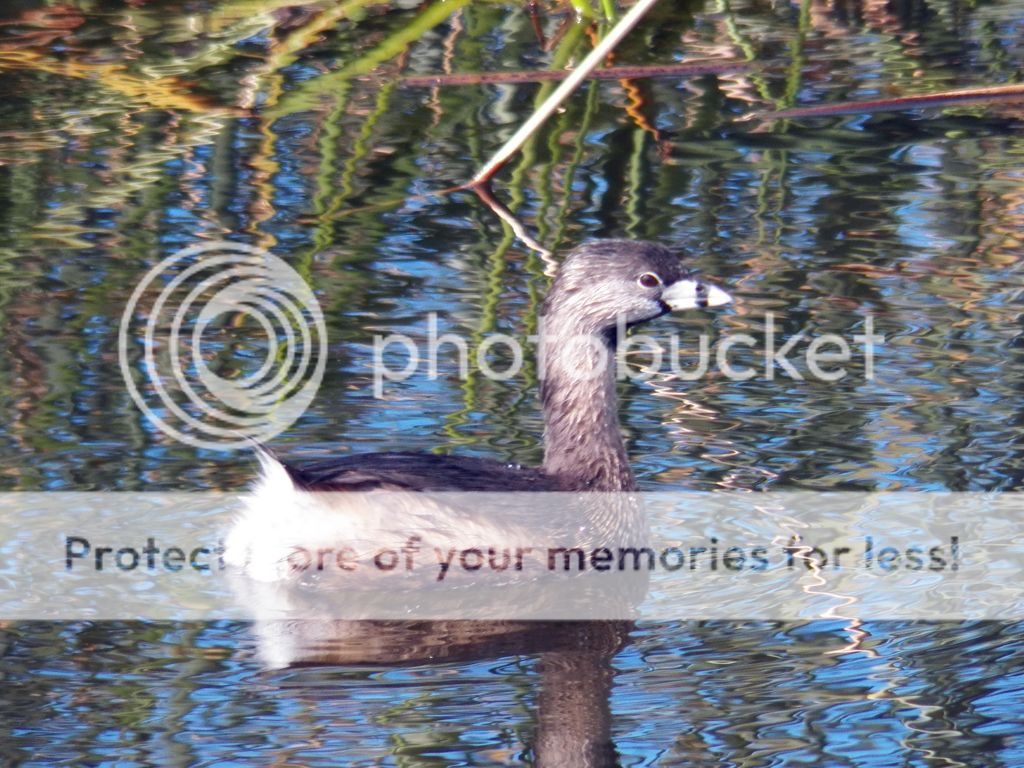
Pied-billed does not mean these birds eat pastries.
A great aspect of the wetlands in Viera is how close you can sometimes get to the wildlife. I was able to take this photograph of a male Blue-winged Teal just after he and his mate came up from dabbling at the edge of the pond. I love how you can see the water beading up on his feathers as it runs off his bill.

Facing off with a Blue-winged Teal.
A large mixed flock of gulls and terns was also enjoying the day. They’d alternate between rafting together on the pond and then rising up, diving for fish. The Common Terns were the most numerous, along with a few Forster’s Terns and Bonaparte’s Gulls.
Birds seen yesterday:
- Sandhill Crane
- Bald Eagle
- Green-winged Teal
- Blue-winged Teal
- American Avocet
- White Pelican
- Ring-billed Gull
- Bonaparte’s Gull
- Ring-necked Duck
- American Coot
- Common Gallinule
- Great Blue Heron
- Little Blue Heron
- Snowy Egret
- Great Egret
- Tri-colored Heron
- Yellow-rumped Warbler
- Palm Warbler
- Savannah Sparrow
- Northern Shoveler
- Double-crested Cormorant
- Wood Stork
- Anhinga
- Red-shouldered Hawk
- American Robin
- Eastern Phoebe
- Northern Mockingbird
- Cattle Egret
- Loggerhead Shrike
- Eastern Meadowlark
- Red-winged Blackbird
- Boat-tailed Grackle
- Turkey Vulture
- Black Vulture
- White Ibis
- Glossy Ibis
- Hooded Merganser
- Common Tern
- Forster’s Tern
- Long-billed Dowitcher
- Mute Swan
- American Kestrel
- Mourning Dove
All things considered, it was a lovely day in and around Viera. I expect the birding landscape will be rapidly changing over next few weeks as we head toward the spring migration in March.
Firebirds
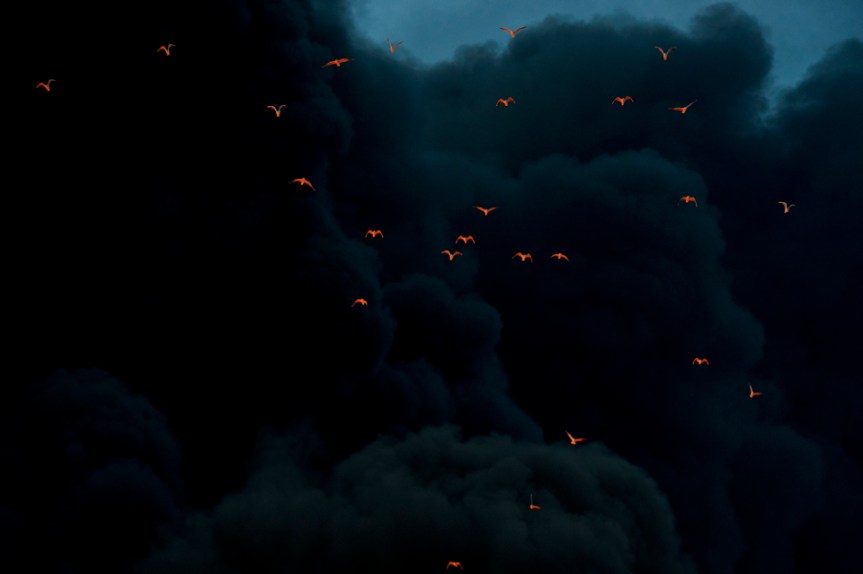
Fire reflected on birds in smoke – fire at Moerdijk, the Netherlands. (©Coen Robben)
Submitted by 7skeletons
Whoa.
SCBWF January 27, 2014: Pelagic Birding Trip
What event would make one get up at 4:00am, be ready to ship off at 6:30am and spend 12 plus hours on the open sea for just a handful of birds?
If you guessed the SCBWF Pelagic Birding Trip, you are a winner!

Ponce Inlet Light before dawn. This is the second tallest lighthouse in the USA.
Although we waited out some rain while at the dock, by the time we headed out, the skies were clearing. It was a gorgeous day, and the seas were very calm.

Brown Pelican at dawn.
Unlike last year, where we had 6 ft. seas with a 6 second period (leaving a large portion of our contingent moaning for their lives in the cabin), this year we had nearly flat seas and I didn’t see a single person contribute to the chum slick at the back of the boat.
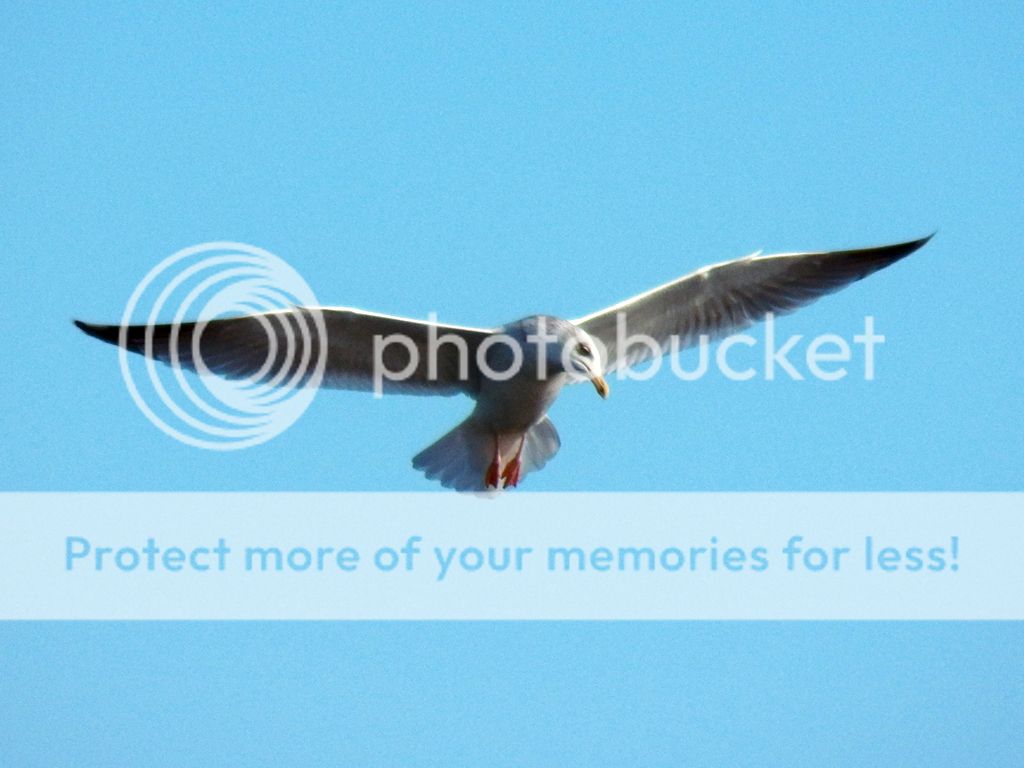
Herring Gull deciding if fish parts, oil and popcorn are totally worth it or not…
As glorious as the conditions were (the worse pitching we had was about 40 miles out when we had some 2-3 ft seas that pitched us around a bit for a few minutes), the birding was quite sparse once we got to the open sea. We had barely any followers at the stern either (unlike last year). To me it seemed that there was much less chumming of the water, but I can’t be certain of that. We had long periods of quiet cruising punctuated by minutes of excitement. I saw my first confirmed shearwaters (Audubon’s), whose appearance caused quite a stir, and some jaegers (Pomarine and Parasitic). In any case, the birds we did see before our approach back to Ponce Inlet, were worth the trip to me. I had a blast.
We saw about half a dozen sea turtles (not including the 4 rescued babies we had on board that we returned to some sargassum).

Baby Loggerhead Sea Turtle.
We were visited by pods of both Atlantic Bottle-nosed Dolphins and Spotted Dolphins. Spotted Dolphins rode our bow wake at least a couple of times, and some of the mother dolphins even showed off their calves, which was a real treat.
My trip list (including the lagoon and inlet):
- Brown Pelican
- Ruddy Turnstone
- Purple Sandpiper
- Northern Gannet
- Laughing Gull
- Ring-billed Gull
- Herring Gull
- Great Black-backed Gull
- Lesser Black-backed Gull
- Black Skimmer
- Common Tern
- Royal Tern
- Bonaparte’s Gull
- Common Loon
- Audubon’s Shearwater
- Pomarine Jaeger
- Parasitic Jaeger
- Black Scoter
- Black-crowned Night Heron
- Great Blue Heron
- Greater Yellowlegs
- American Oystercatcher
- Osprey
We had hoped to see a Red Phalarope or maybe even a Razorbill, like last year, but we had no such luck. The action really picked up as we headed back in to the inlet. First, we saw many small groups of mixed-year Northern Gannets as we approached. Then, right near the jetty, we saw a feeding frenzy of gull, terns, gannets, and pelicans on schools of bait fish.

Feeding frenzy at dusk.
It was a grand ending to a fun-filled and exhausting festival. Special thanks go to Laura Erickson, Corey Finger, Dave Goodwin and all the organizers, sponsors, trip leaders, and fellow briders for making everything so fun and successful.
Laura’s Conservation Big Year: 2013
Have a look through Laura Erickson’s Conservation Big Year blog. She gave a talk during the Space Coast Birding and Wildlife Festival that touched upon her adventures a bit, but the whole blog is worth the read.
SCBWF January 26, 2014: Marl Bed Flats, Lake Jesup
As a general rule, anywhere that you have water, you increase your chances of seeing a great diversity of birds. The wetlands near Lake Jesup are no exceptions. The Marl Bed Flats area is surrounded by some more upland and hammock type areas as well, which made for a spectacular day of birding. Corey and Laura were co-leaders for this trip as well, and it was great to have them along.
Across the flats towards some reeds and more open water, we got a great view of some shorebirds and waders. We flushed out a few Wilson’s Snipes, which is always fun.
The big event was the appearance of an American Pipit foraging in the mud. I tried to stalk close enough to get a descent photograph, but in the end that just made it fly away (after everyone else was moving on, thank goodness).
As with the short walk along the Little Big Econ on the previous day, our walks though some of the wooded areas where we expected a bonanza of songbirds yielded very little bird activity.
We tried to flush out some sparrows through some of the brushy fields between the flats and the highway. The majority of the sparrows were no doubt Savannah Sparrows, but Tom, our trip leader, was sure he saw evidence of Grasshopper Sparrows in the mix. But sparrows’ natural camoflage and small size made it almost impossible to verify it.
We then took a quick drive over to Lake Jesup Park to see what sort of warbler activity we might catch. First, we checked out some birds at the boat ramp. The usual waders and other wetland birds were present, including a pair of Mottled Ducks, lots of Anhingas and varioius Egrets. Further out on the water we saw some Bonaparte’s Gulls, too.
The very first thing to happen, though, was that we flushed out a pair of Great Horned Owls from the Live Oaks. This led to very loud protestations from a pair of Red-shouldered Hawks.
We did encounted a nice little mixed flock of songbirds at the edge of the park, which netted us some various warblers and other small birds.
My trip list (47):
- Fish Crow
- Bald Eagle
- Boat-tailed Grackle
- Mourning Dove
- Blue-gray Gnatcatcher
- Yellow-rumped Warbler
- Cattle Egret
- Little Blue Heron
- Red-winged Blackbird
- Killdeer
- Snowy Egret
- Hooded Merganser
- Tree Swallow
- Wilson’s Snipe
- Least Sandpiper
- Greater Yellowlegs
- Lesser Yellowlegs
- American Pipit
- Savannah Sparrow
- Red-shouldered Hawk
- Glossy Ibis
- White Ibis
- Tri-colored Heron
- Great Egret
- Ring-billed Gull
- Double-crested Cormorant
- Loggerhead Shrike
- Eastern Meadowlark
- Yellow-bellied Sapsucker
- Northern Cardinal
- Gray Catbird
- Red-bellied Woodpecker
- Mottled Duck
- Forster’s Tern
- Bonaparte’s Gull
- Great Blue Heron
- Anhinga
- Turkey Vulture
- Pied-billed Grebe
- Common Yellowthroat
- Great Horned Owl
- Palm Warbler
- Prairie Warbler
- White-eyed Vireo
- Ruby-crowned Kinglet
- Tufted Titmouse
- Yellow-throated Warbler
I apologize for the lack of photographs for this trip, but trying to get eyeballs on the various birds we did see, and trying to track down sparrows was just not compatible with picture taking. The only shot I did get off was this one of a Great Egret by the boat ramp. You can see some of the breeding plumes coming in on the tail. Spring is just around the corner for Florida!
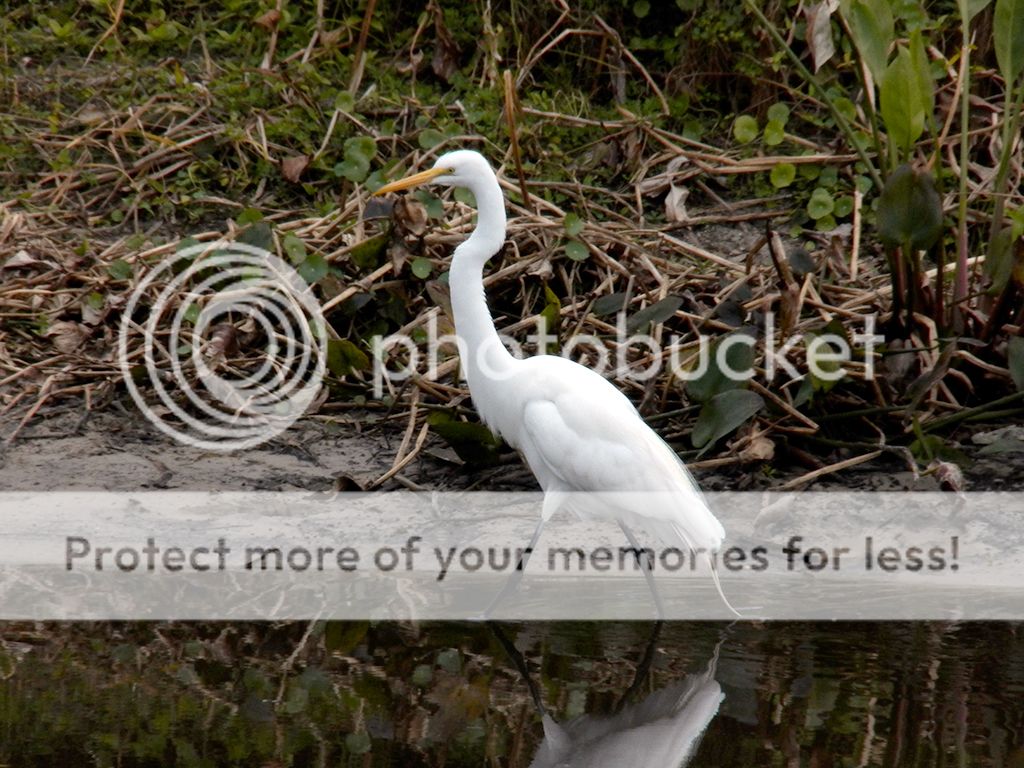
Isn’t this Egret Great?
SCBWF January 25, 2014: Red-cockaded Woodpeckers & More
Saturday morning was the earliest start to field trips for the entire festival, for me. We had to be sure to be ready to catch the endangered Red-cockaded woodpeckers as they woke up for the day.
Last year, we attempted to catch this species at the Three Lakes Wildlife Management Area for the Central Florida Specialties trip, but were largely unsuccessful. For this particular trip this year, we were led by Maria Zondervan and Duff Swan, who are part of the ongoing management of this species in the Hal Scott Regional Preserve and Park. They had a game plan for maximizing our ability to see these birds, and proved to be excellent trip guides for us (our third leader had other issues).
The downside of stalking (or in this case, staking out) a bird that can be as shy as a Red-cockaded Woodpecker (or “RCW” as our guides refer to them) is that you have to stay a certain distance back. This meant no photographs for my camera, tough my 8×42 Carson bins were certainly up to the task.
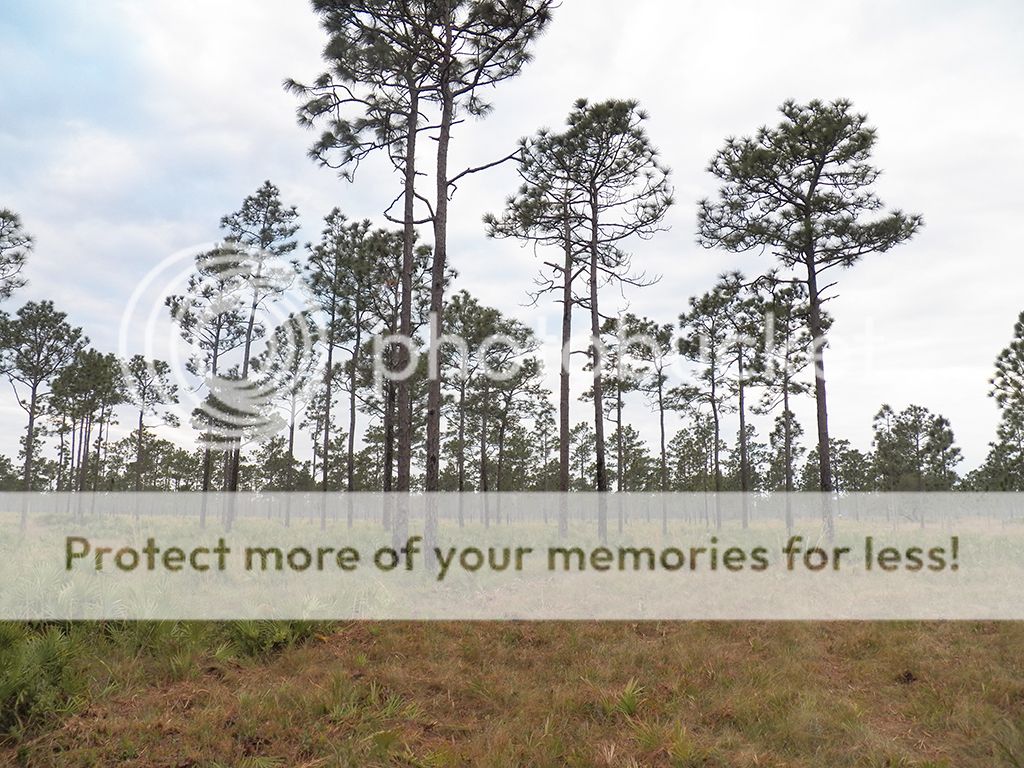
Typical pine flatwoods habitat. You can see some evidence for understory burning at the base of the trunks.
Red-cockaded woodpeckers live in family groups and are cooperative breeders. Younger birds will help their parents raise successive broods until they get their own mates and territories. As the birds wake up in their individual roosts, they’ll call out to each other to make sure everyone’s awake before they start the day.
Maria had us split into 3 groups, each staking out a different nest tree. This kept the number of people near each tree low so the birds wouldn’t feel intimidated. It was a chilly and cloudy day, and our bird, a second year female, was very reluctant to get up. Her parents called out and even flew over toward her nest hole to get her going, but like a stereotypical teenager, she was having none of it. Finally, after more woodpeckers called out and an incursion from a neighboring family group got her up and out of the nest.
We watched the birds start their day as other residents became more active. The Eastern Bluebirds were more cooperative and photogenic. We even watched a mated pair harass and chase away a Red-bellied Woodpecker that tried to commandeer their nest hole.
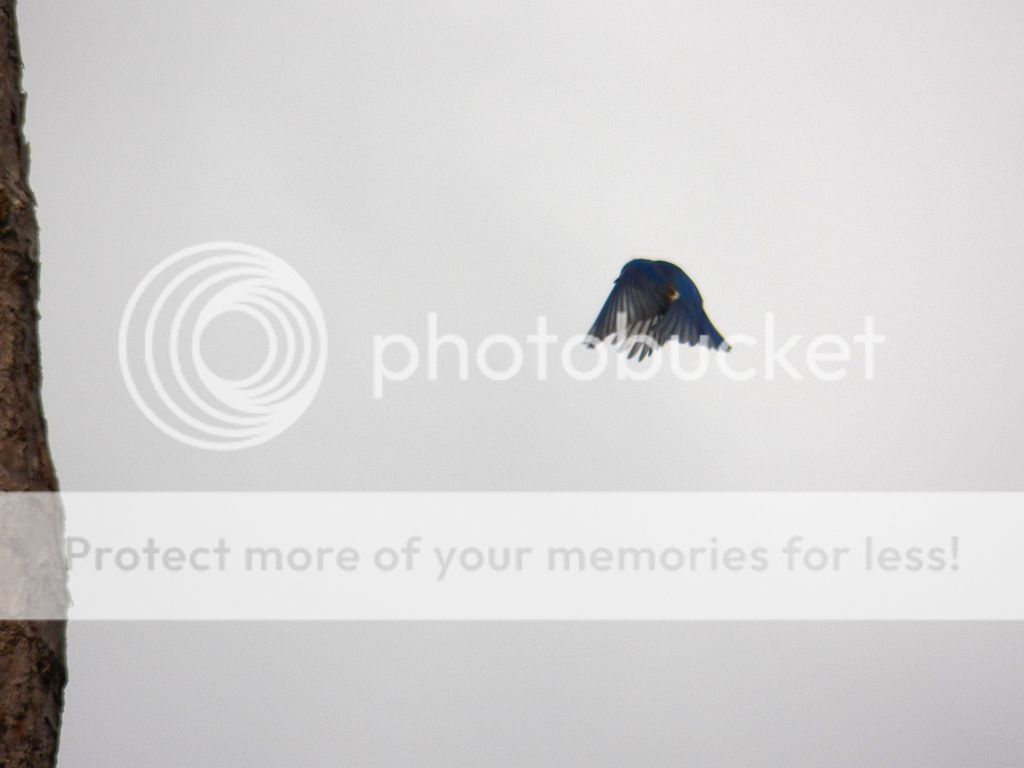
This Eastern Bluebird’s mood was as cloudy as the weather after having his home invaded.
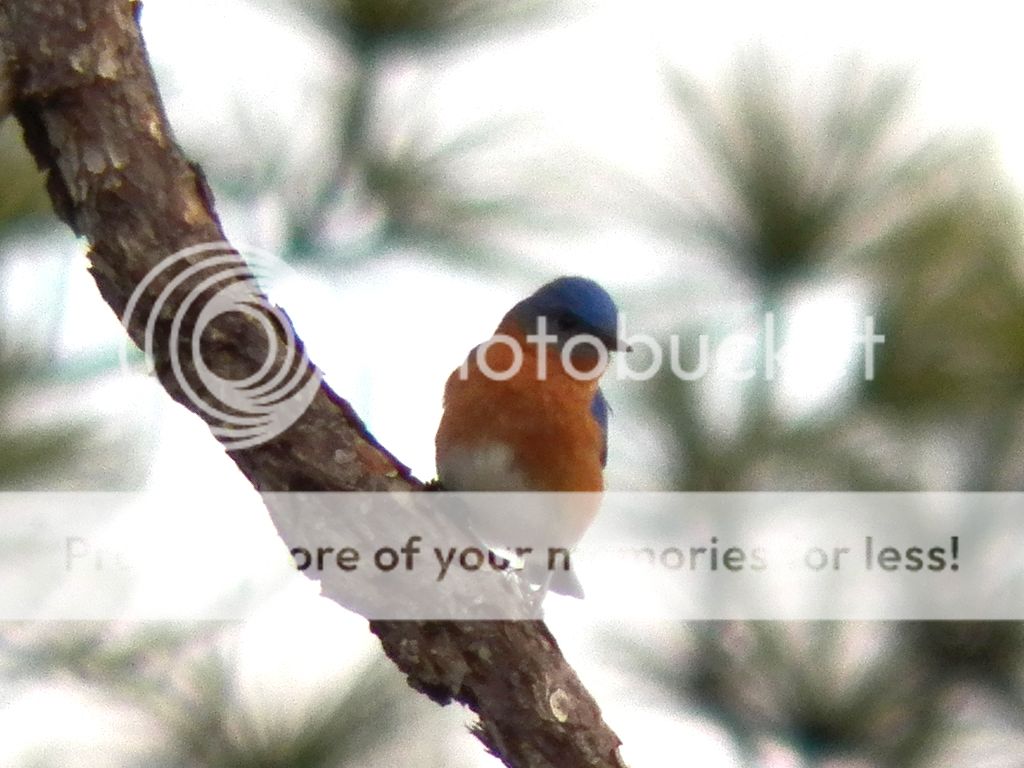
“Take a picture, it’ll last longer!” Umm… ok then…
We saw a lot of evidence of feral pigs (which are a real problem across most of the southeastern USA, not just Florida). They tear up sections of ground, ripping up roots and soil. It can take years for some areas to recover.
After the “RCWs” dispersed a bit for their daily foraging and inter-family bickering, we successfully stalked a Bachman’s Sparrow (it flew right past my head, so I got a very decent look at it), and had many opportunities to see other various woodpecker species, and the adorable Brown-headed Nuthatches.
My species list for this trip (15):
- Red-cockaded Woodpecker
- Eastern Bluebird
- American Robin
- Bachman’s Sparrow
- Savannah Sparrow
- Red-bellied Woodpecker
- Yellow-bellied Sapsucker
- Downy Woodpecker
- Brown-headed Nuthatch
- Prairie Warbler
- Palm Warbler
- Yellow-rumped Warbler
- Northern Mockingbird
- Red-winged Blackbird
- Great Blue Heron
We ended the morning with a quick walk by part of the Little Big Econlockhatchee River, but bird activity was essentially nil. My personal belief is that one of our trip leaders was trying to rely too much on “pishing” and playing a Screech Owl call as the group walked along. Pishing and the use of calls can be effective, if used judiciously. I don’t know what was going through this man’s mind to think that a continuous play of a Screech Owl and incessant pishing would in any way enhance our ability to see the birds.
SCBWF January 24, 2014: Hearing Black Rails at St. Johns National Wildlife Refuge
I’ve already posted some photographs from the Black Rail field trip last week, but I wanted to blog about it in more detail.
In order to maximize our chances at identifying Black Rails, the trip was set to begin just before dusk and last through sunset. This, plus the open space and cold air aloft (it had warmed a bit on the ground through the afternoon) set up a the conditions for the brilliant sun pillar many of us photographed. Here’s another shot of it, in case you missed it.

Sun pillar.
We took a hayride out to the area we would most likely encounter the rails. This was my first hayride since I was a teen.
My experience with this field trip brought up an interesting point. As far as “official” birding goes – that is marking whether or not you’ve “got” a particular bird or not for a list – it is perfectly legitimate to count birds that are identified by voice only.
When I first started birding and getting familiar with bird songs and calls, I kept separate lists. One for birds I definitely ID’ed by eye and one for those I only ID’ed by voice. In my mind’s eye, though, I only wanted to “officially” count birds I had seen. “Ear only” birds were meant to be temporary or curiosities.
I’ve come to learn that many birders do not separate their “eye” and “ear” identifications, and there is sound logic behind this.
For some secretive birds, like rails, you might never see one, but the birds’ calls and settings are so specific that the voice alone positively identifies it. As far as groups like the ABA are concerned, any method by which you can definitively identify the bird counts. Naturally, we’d all LOVE to see every bird we hear or encounter, but that’s not always possible nor necessary to “count” it for a list (whether it’s a day list, a Big Year, a life list, etc.).
Having said that, I also realize that some birders, especially those with a lot of experience and very long life lists like to challenge themselves and start making their criteria for “getting” a bird more and more challenging.
That gets to the heart of the matter for me. No matter how you choose to count your birds, the most important thing, I believe, is to have fun and be challenged. After all, why else are we out there in freezing temperatures for hours on end just to catch a glimpse or a call? I spent over 12 hours on a boat, 40 miles out to sea, just to catch a glimpse of a shearwater or a jaeger. Maybe even the momentary flash of a phalarope head against the dark sea. And even seeing just ONE of those would be worth it to me.
We did hear the Black Rails call at sunset. It was perhaps made all the more sweet in that the first call was heard before our trip leader played a call on his smart phone. Those brief squeaky calls together with a brilliant sunset made everything worth it.
Here is my species list (16 – short and sweet):
- Northern Harrier
- Yellow-rumped Warbler
- Palm Warbler
- Red-winged Blackbird
- Loggerhead Shrike
- Belted Kingfisher
- Tree Swallow
- American Robin
- Great Blue Heron
- Snowy Egret
- Black Rail
- Glossy Ibis
- White Ibis
- Anhinga
- Northern Mockingbird
- Gray Catbird
Please note that my lists might differ from the shared eBird lists as my personal criteria for ID tends to be more on the strict side, and I may not have seen every bird that the entire group reported.
SCBWF January 24, 2014: Charles H. Bronson State Forest
The morning of Friday the 24th was windy and freezing. Luckily the field trip consisted of mostly driving in a van from hot-spot to hot-spot through the relatively new Charles H. Bronson State Forest.
We did see a fair amount of bird species; however, many were somewhat distant or obscured by vegetation.
Among the more interesting sightings were simultaneous views of eastern and western type Palm Warblers together. Based on what Corey told me later in the festival, western Palm Warblers are paler and browner, overall than their more yellow eastern cousins. This would seem to indicate that the majority of the Palm Warblers I have seen this winter are, in fact, western birds.

Eastern (left) vs. western (right) Palm Warbler (the eastern bird was photographed at the state forest, the western bird at the Marl Bed Flats later in the festival).
The parts of the state forest we drove and walked through were devoted, in large part, to ranching rather than forests, with lots of wet meadow areas and drainage ditches. This made for a rich combination of upland and wetland species in close proximity.
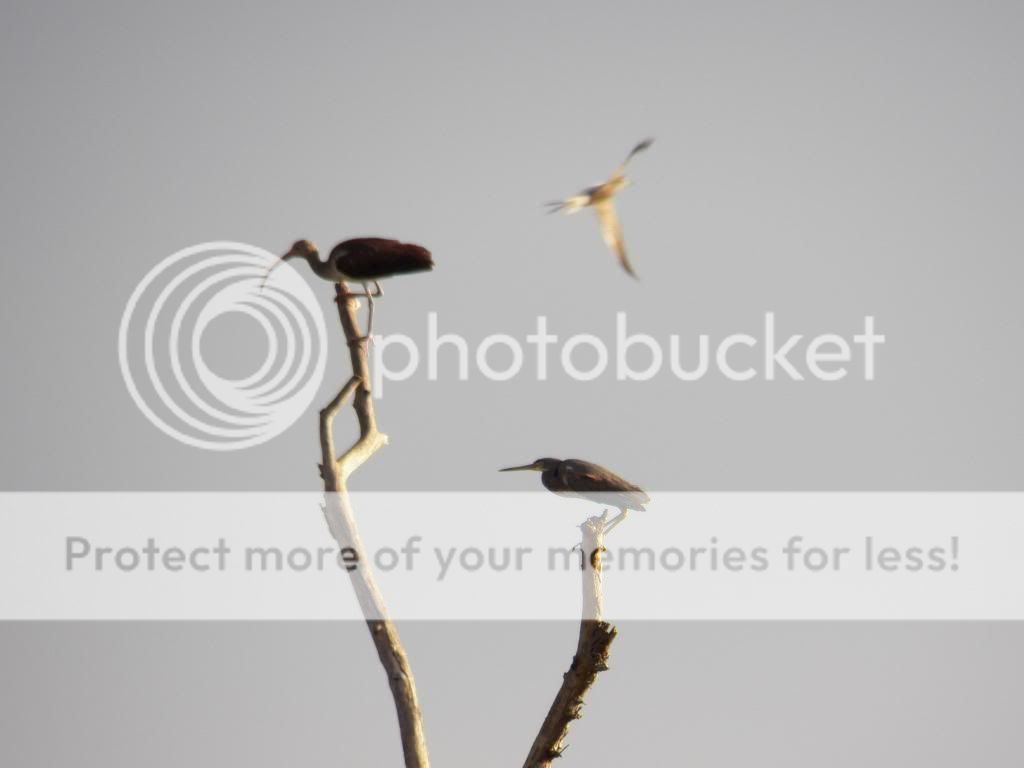
This image was posted before, but here it is in context. Immature White Ibis and Tri-colored Heron photobombed by a Killdeer.
We flushed at least one Wilson’s Snipe and had some good views of Wood Storks and various egrets and herons. When things warmed up a bit more, we had some raptors over head, including a Bald Eagle and some vultures.
Songbirds were scarce for the most part (it was cold and windy), but along one wooded segment of a path we hit a mixed flock of warblers and other small birds and managed to see a Black-and-white Warbler, a Tufted Titmouse and some Blue-gray Gnatcatchers, among others.
The ponds and ditches also gave up Least Sandpipers, Dunlins and other shorebirds. Nearby we had a good amount of Eastern Meadowlarks, sweetly singing.

Eastern Meadowlark.
We finished up the trip after heading to the St. Johns River. Among the Greater Yellowlegs and other shore birds we saw some Bald Eagles and a few sparrows. There were cattle to our north, not far from a native burial mound (which, for some reason I didn’t think to take a picture of).

St. Johns River plain looking (and feeling!) a little tundra-like.
This is my species list for the field trip (33):
- Wild Turkey
- American Robin
- Great Blue Heron
- Red-shouldered Hawk
- American Kestrel
- Eastern Phoebe
- Turkey Vulture
- Wood Stork
- Belted Kingfisher
- White Ibis
- Great Egret
- Lesser Yellowlegs
- Eastern Meadowlark
- Dunlin
- Savannah Sparrow
- Wilson’s Snipe
- Killdeer
- Palm Warbler
- Pileated Woodpecker
- Cattle Egret
- Song Sparrow
- Sandhill Crane
- Coopers Hawk
- Tri-colored Heron
- Little Blue Heron
- Bald Eagle
- Least Sandpiper
- Greater Yellowlegs
- Long-billed Dowitcher
- Northern Cardinal
- Black-and-white Warbler
- Blue-gray Gnatcatcher
- Ruby-crowned Kinglet
After driving out from the state forest, I explored a little around the Christmas,FL area and attempted to drive to the Orlando Wetlands Park. Unfortunately, that park is closed until February 1st. I also located the entrance to the Tosahatchee Wildnerness area, but did not park or go in (I just wanted to see where it was in relation to the main road). I headed back to EFSC to prepare for the evening’s Black Rail trip.
SCBWF January 23, 2014: Swallow-tailed Kites and Owl Prowl
After my adventure with Laura and Corey, and a quick trip to the MINWR Visitors’ Center, I had a classroom presentation given by Gina Kent for the Avian Research & Conservation Institute (ARCI).
ARCI tracks and researches various endangered and threatened species in the United States. They’ve been tracking Swallow-tailed Kites from Florida and other southeastern states along their migration paths to and from South America.
It was an interesting presentation, and they elicit information on kite sightings by interested parties to get a better picture of how these magnificent birds are faring year to year throughout their lives. For more information, visit the ACRI website and their Swallow-tailed Kite project.
When the presentation ended, I wandered the exhibit hall and bumped into Dave Goodwin at the Florida Ornithological Society booth. I talked a bit with Dave last year during the field trips he led (including the pelagic trip), and it was good to see him again.
I proceeded to head to the Sams House at Pine Island Conservation Area, on Merritt Island for an owl prowl. Despite the frigid start to the day, the evening was pleasant (particularly after putting on my fleece pullover), as we waited for sunset to see the area Barred Owls.
The prowl had a promising start, as we heard two owls calling loudly to each other while still getting organized around the campfire (yes, we did have marshmallows, by the way, and mine were quite delicious!).
Once on the trails in the dark, however, the owls were silent and we had no evidence of them until some of the group saw one fly overhead as we came back to the campfire. We only ever caught fleeting glimpses of them against the starlight and heard them call once more as the group headed home. It was a beautiful night, and I caught some great views of Jupiter and its Galilean moons, and the Orion Nebula in my binoculars.
On the way home, I stopped off of FL-405 to watch a rocket launch from Cape Canaveral, which was a spectacular end to the day.
 Lonely Birder