
The influx of owls in the area is being described as a substantial incursionAlert for my NE friends!
Author: Lonely Birder
Do You See What I See?
Today was a pleasant day at Turkey Creek Sanctuary. The winter and year-long residents seem to be settling into their routines. The overall bird density was still low, but the number of species was greater than any point since the summer.
Most importantly, after almost an entire year, I finally managed to get that elusive White-eyed Vireo photograph! I almost missed it and I had time to fire off one shot in the shadows of the underbrush before it dashed off. But my quest is at an end!
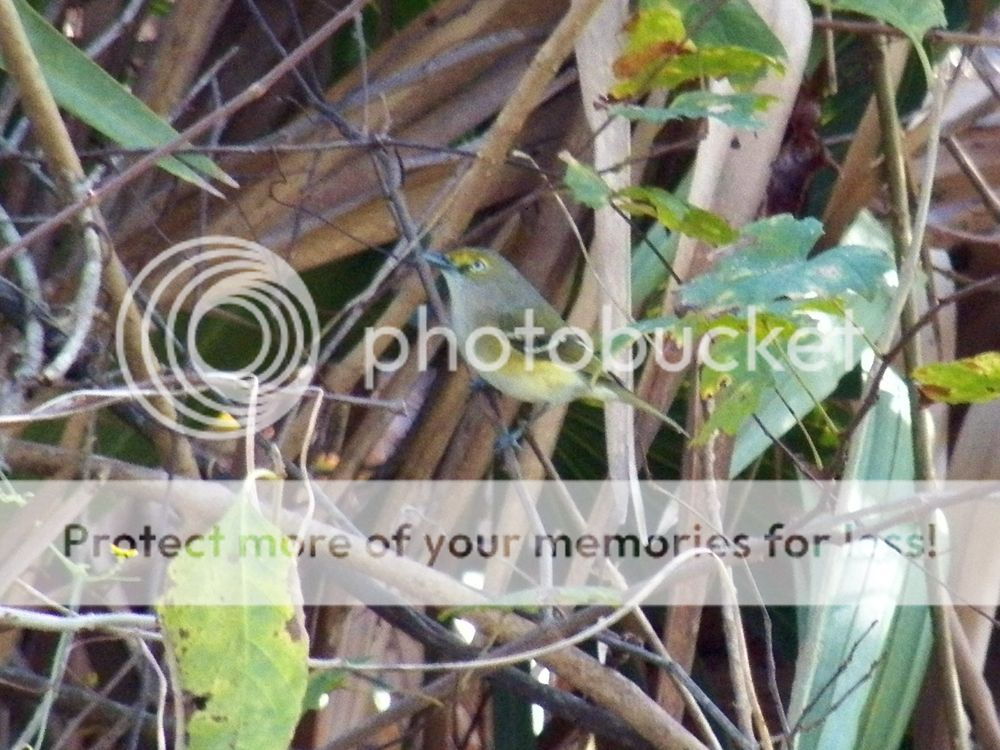
A photograph 11 months in the making!
Speaking of vireos, I had a somewhat mysterious encounter with one near the start of my walk. I managed to observe the bird for a good while (sorry no pics – too busy birdwatching 😉 ), and my visual assessment doesn’t quite match with anything in my Peterson guide. The bird was clearly a vireo by shape and size. It was an almost uniform gray with white wing-bars and white spectacles. The best fit is a Blue-headed Vireo; however, both my Peterson field guide and my Sibley guide indicate there should be some sense of yellow and/or greenish cast on the flanks and back. Here, some further explanation is needed.
During the late 1990s, the Solitary Vireo was “officially” split into 3 separate but closely related species, the Plumbeous Vireo of the intermountain west, Cassin’s Vireo of the Pacific coast and northwest, and the Blue-headed Vireo of eastern North America. Generally the three species form what Sibley refers to as a “cline” from east to west of decreasing contrast and color.

An illustration by Keith Hansen showing the plumage variation among “Solitary” Vireos.
I mention all this because as I was making careful observations of “my” vireo, I had the distinct impression that it was almost completely devoid of color and of fairly low contrast. Upon further review, it most closely resembles the plumage of a Plumbeous Vireo. I will note though, that Sibley says there is hybridization and overlap in all plumages and even voice. Where that leaves me with proper identification, I am unsure as this species has not been reliably recorded this far east.
As has been the case for most of the autumn, the most numerous and active birds in the Sanctuary are the Blue-gray Gnatcatchers. If you haven’t had a chance to observe these birds, let me just say that they are the tiniest balls of energy you’ll see in a bird, surpassed only by some hummingbirds. Despite their often being within only feet of me, it’s nearly impossible to get a decent photograph. My attempts today did yeild a fairly unique image. It’s a bit blurry, but I find it fascinating. This was taken in the split second it takes one of these tiny birds to hop from one branch to another.

Geronimo!
Some other species that I observed today include the Black-and-white Warbler, Northern Cardinal, Gray Catbird, Ruby-crowned Kinglet, Red-bellied Woodpecker, Turkey Vulture, Palm Warbler, Tri-colored Heron, American Coot, Cattle Egret, and American Kestrel (the last four by the weir at the Melbourne-Tillman Canal).

Hello, my monochromatic friend.

Red-bellied Woodpecker enjoying a little breakfast.
Today was extra active for the Gopher Tortoises that live in the Sanctuary. Here are a couple of examples of coloration difference within the species.

This dark green tortoise had a shell about 12” from front to back.

This larger tortoise’s shell was about 18” long. Notice the reddish coloration.
One very noticeable absence from the time I was at the Sanctuary was a total lack of squirrels. The last several trips there the squirrels were everywhere. Dozens and dozens. Today, I heard one scolding call deep in the underbrush, and that was it. I suppose all the frenzy of activity before could have been the squirrels fattening up for the “winter” here, and now they’re just lazing about, waiting for spring. But it was darn strange from my perspective!

Outtakes from the Viera Wetlands on December 1st.
Left to right, by row:
- Loggerhead Shrike
- Pied-billed Grebe
- Northern Shoveler amongst American Coots
- Boat-tailed Grackle
Click to enlarge and browse.
Return to Viera Wetlands
This past Sunday, I headed to the Ritch Grissom Memorial Wetlands at Viera (a.k.a. The Viera Wetlands) to check out the winter resident bird situation. I was last there this spring with my friend Cedric.
It was a cloudy and misty day, which will be evident in some of the pictures.
Just as in years past, these wetlands attract large congregations of waterfowl (mainly ducks and certain members of the rail family).

One of many rafts of American Coots.
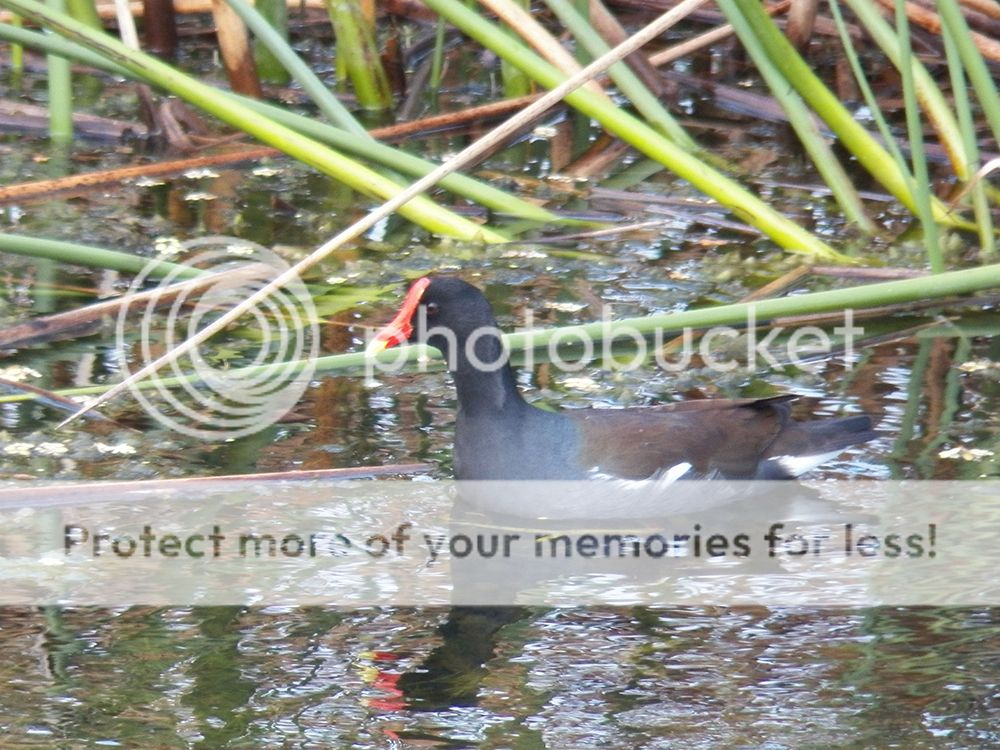
Common Gallinule.
Right now, the American Coots are by far the most visibly numerous, but on closer inspection, there were a few interlopers among the rafts of chattering coots, including Pied-billed Grebes, Blue-winged Teals, Lesser Scaups, Hooded Mergansers, and Northern Shovelers (a first!).

Pied-billed Grebe in winter plumage.
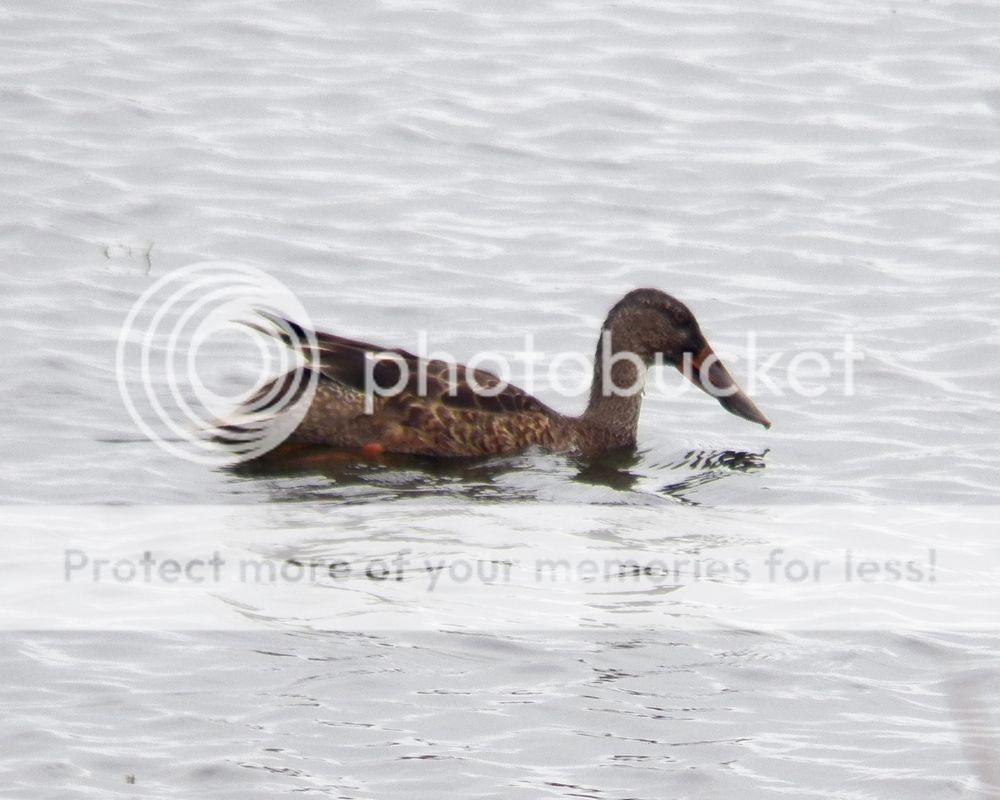
A Nothern Shoveler female, can you dig it?
Of course, the usual waders were present as well, though there seemed to be a larger concentration of Tri-colored Herons than I’ve seen anywhere recently.
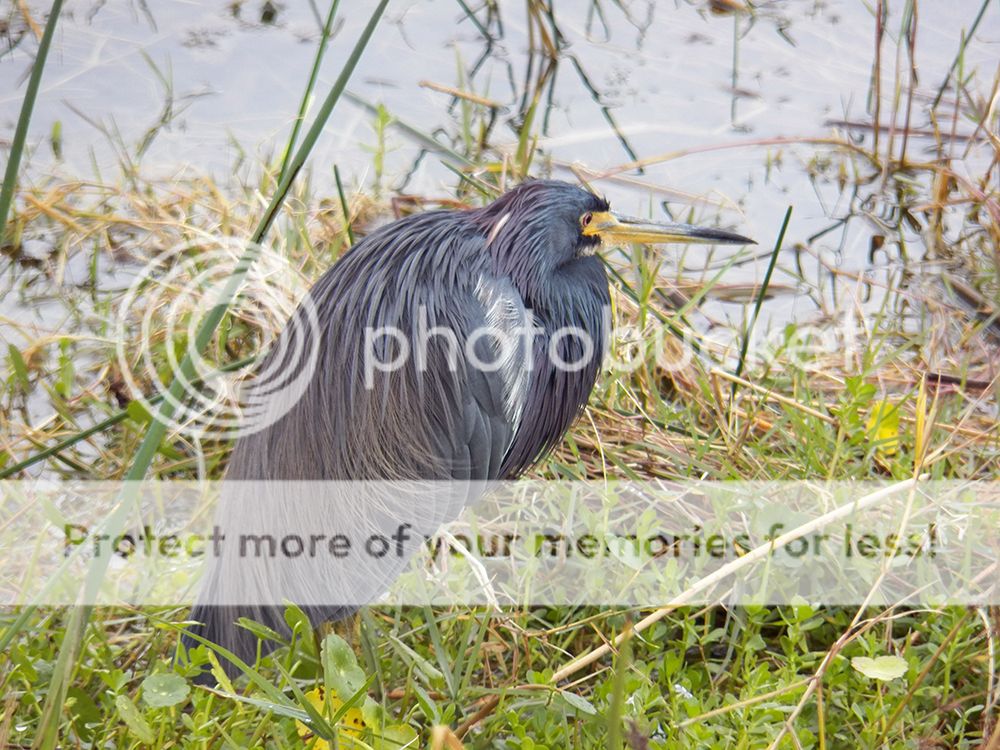
You can see how blustery and damp it was by this Tri-colored Heron, balled up to conserve heat.

Great! Egret!
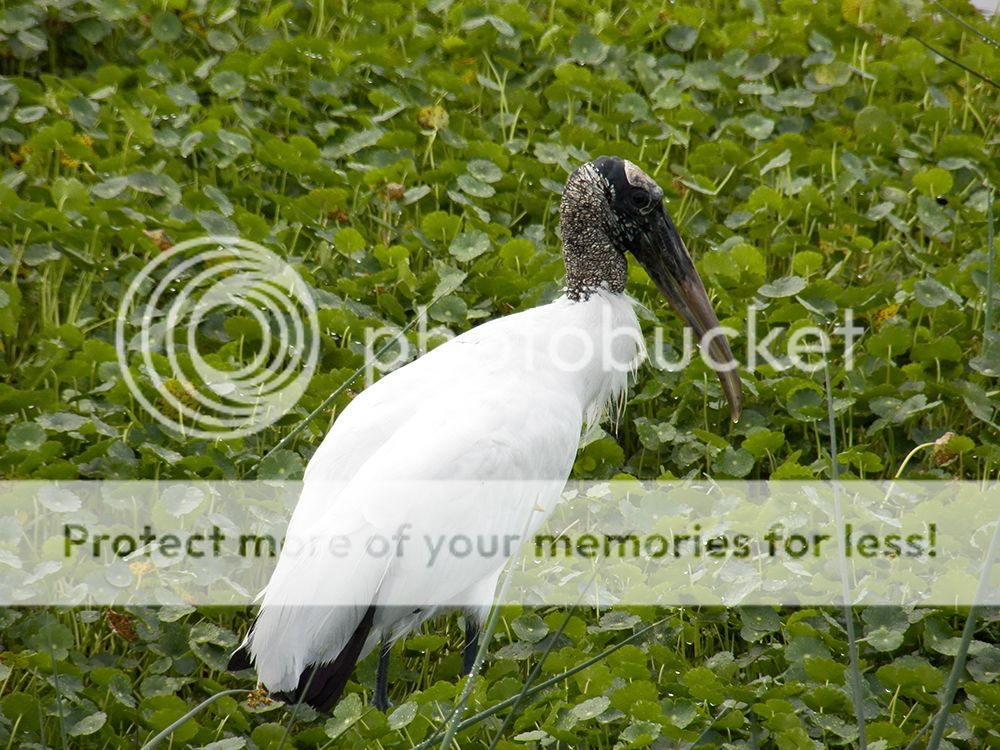 Wood Stork.
Anhingas outnumbered cormorants, though most had already done their morning fishing by the time I arrived. I’ve not often seen an Anhinga’s feet, but here you can see one of the reasons why they are such strong swimmers.

I bet there are divers who would kill for a pair of flippers like these.
It was fun to see more Palm Warblers and Savannah Sparrows, too. Savannah Sparrows are quickly getting my vote as Bird with Personality!
 Personality Plus.
But this Boat-tailed Grackle was campaigning pretty hard, too. He landed about 2 feet from me. His total attitude had me laughing out loud. Boat-tailed Grackles seem to think they are Hot Stuff!
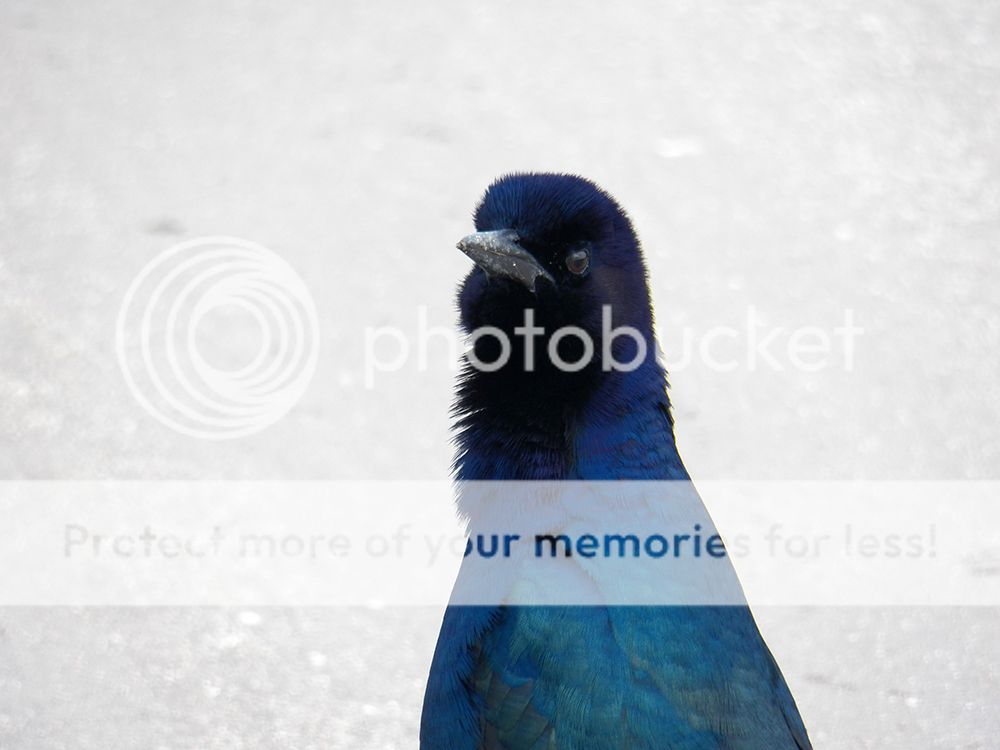
Attitude without the Platitude.
There were non-avian residents as well. Along the wetland’s perimeter a pair of White-tailed Deer ran past. I think a mother and a yearling (is that a deer thing?). I was a bit surprised they were out in the open that late in the morning, but they soon found some brush to take cover in.
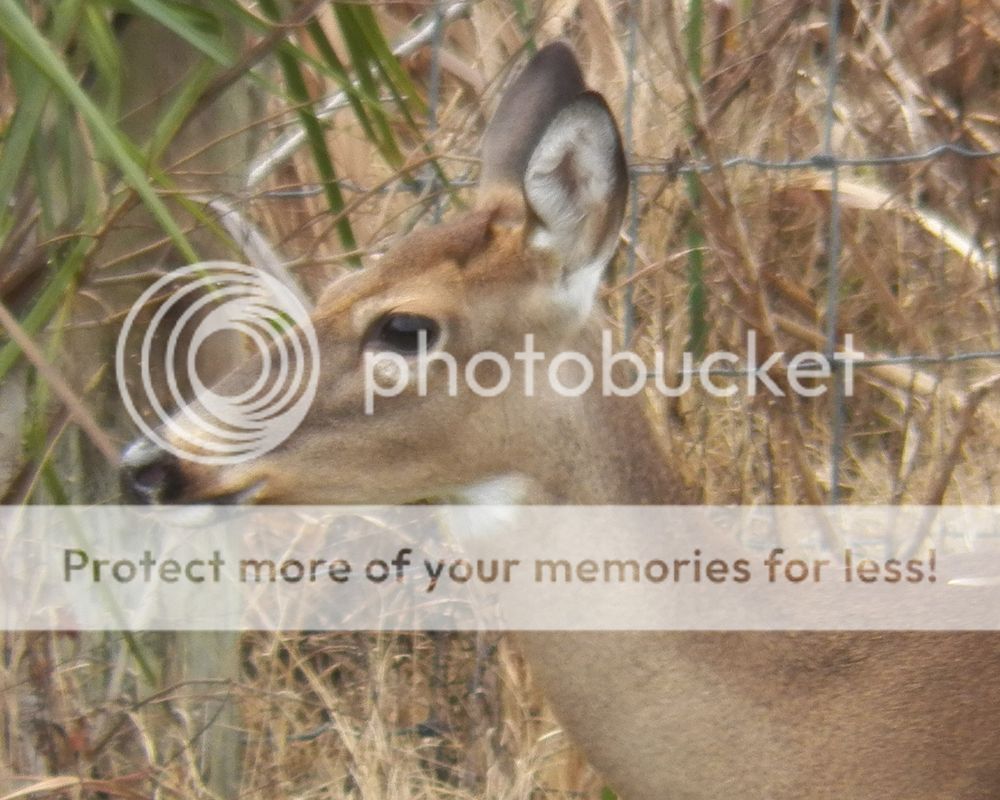
Oh, deer!

White tail showing.
At least 2 species of terns were present as well. The most common were Forster’s Terns (another first) which were diving for fish and frogs. In this photograph you can see the characteristic “ear” markings of the species’ winter plumage.

Forster’s Tern.
Unlike my spring-time visit, there were only a few Crested Caracaras around, and with the weather, very few vultures. Apart from a brief glimpse of an unidentified buteo species, the only other predatory birds not hunting fish were the Loggerhead Shrikes.
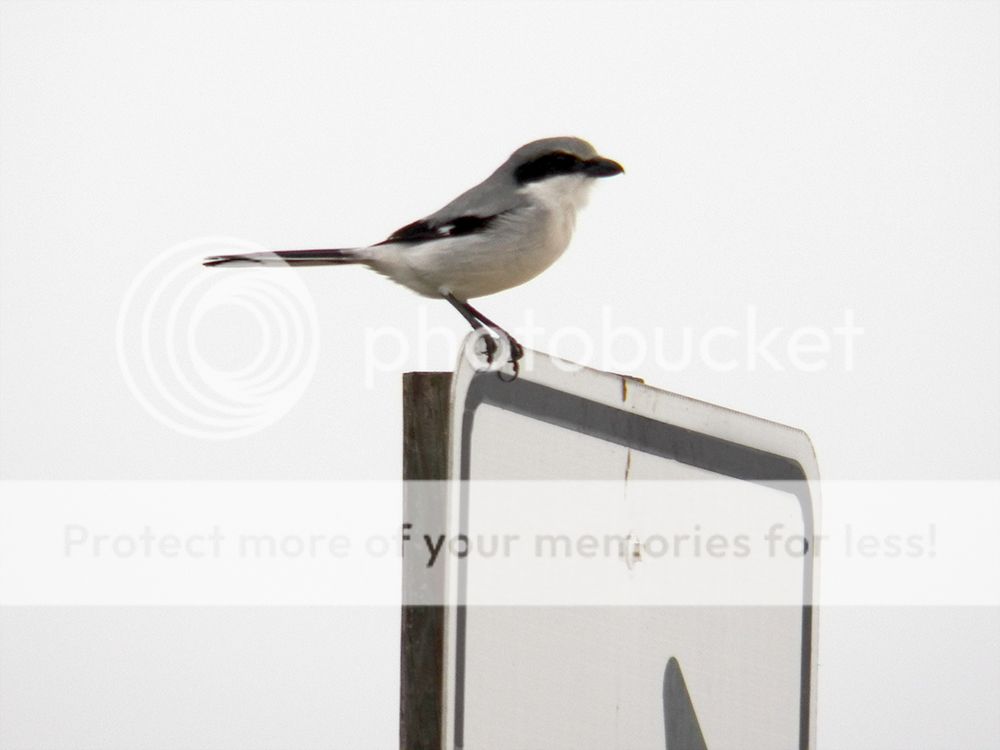
Don’t let the songbird schitck fool you. Loggerhead Shrikes are deadly.
As far as total species count, this trip was nearly as productive as Pine Island was two weeks ago.
Total species list:
- Pied-billed Grebe
- American Coot
- Common Gallinule
- Wood Stork
- Anhinga
- Snowy Egret
- Tri-colored Heron
- Boat-tailed Grackle
- Little Blue Heron
- Great Blue Heron
- Great Egret
- Common Ground Dove
- Loggerhead Shrike
- Lesser Scaup
- Blue-winged Teal
- Northern Shoveler (new!)
- Hooded Merganser
- Crested Caracara
- Turkey Vulture
- Forster’s Tern (new!)
- Common Tern
- Green Heron
- Black-crowned Night Heron
- Belted Kingfisher
- Savannah Sparrow
- Palm Warbler
- Red-winged Blackbird
- Double-crested Cormorant
- Northern Cardinal
- Common Yellowthroat
- European Starling
- Fish Crow
- Sandhill Crane
With the addition of the Forster’s Tern and Northern Shoveler, my 2013 species count is at 144.
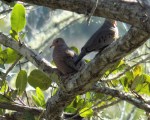
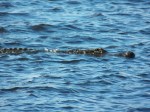
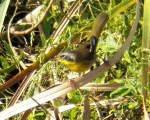
Some outtakes from the Pine Island Conservation Area last week.
Left to right, by row:
- Double-crested Cormorant
- Common Ground Doves
- American Alligator
- Common Yellowthroat
Click to enlarge and browse.
Short and Sweet.
Erna Nixon Park was at one time a green jewel in the middle of Melbourne’s suburban spread and light industrial areas near the airport. When I first moved to the Space Coast, I would often stop there before work each morning and walk the 1/2 mile or so boardwalk. If I was there before the joggers, I’d often have to dodge a few spiderwebs, but it usually made for a great start of the day. There were usually birds around, including Ruby-throated Hummingbirds, American Redstarts, Common Yellowthroats, Blue-headed Vireos, and many others. It’s listed as a hot spot on the Great Florida Birding Trail.
Of late, though, it’s become very much changed. Even during the spring and fall migrations, bird-life has been very sparse and spotty. This year, I did see some hummers and warblers (as well as the ubiquitous Blue Jays, Carolina Wrens and Northern Cardinals0, but overall it has been quieter than Turkey Creek Sanctuary was this fall. Whether this is a symptom of the park, the neighborhood or the birds themselves, I don’t know.
I decided to take an hour or so to walk the boardwalk this morning and see what the winter resident situation was. True to form, it was eerily quiet in the park. The most noticible noise was from the various aircraft taking off and landing at the airport, the commercial contruction down the road adjacent to the airport, and the traffic along the main road. And yet it still seemed to spooky.
I saw no birds at all, and only heard a single Blue-grey Gnatcatcher for most of the boardwalk. I took the loop “backwards” today – that is, I ended up passing the various “vista” points along the walk in reverse numbered order. As I paused near “Vista I” I did finally catch some movement in the brush below, and saw a small grouping of warlbers. While I did get some very good binocular views, I was unable to get the camera to take any decent photographs through the dense brush. Here’s the list:
- Worm-eating Warbler (a first!)
- Yellow-rumped Warbler (with decidedly un-yellow rumps. All the other field marks match up, though, so I might have to chalk that up to a trick of the light)
- Palm Warbler
So, not a totally unproductive walk, as far as birding goes. It started spooky and sad, but ended up pretty sweet. At least there was some action. I think it might be a little odd to see a Worm-eating warbler here this time of year, but there are always stragglers after the main migration (or migration is much more spread out and running later now?). It was the bird I got the best look at, and it’s always exciting to see a new “lifer.” At least I’m still an inexperienced enough birder to have many of those opportunities left.
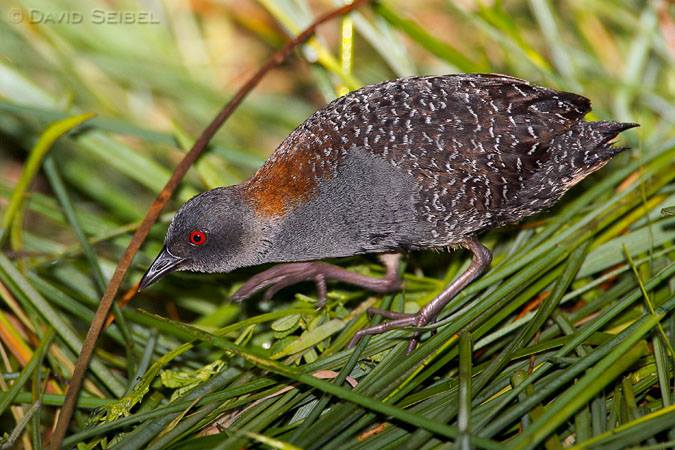
Scientists Meet About Status of Elusive Bird
Experts met last week at Savannah National Wildlife Refuge, in South Carolina, to share information about the Black Rail (Laterallus jamaicensis) – a secretive bird that for many represents one of the “Holy Grails” of North American birding. Seen by few and studied by fewer still, its status is poorly known and feared to be tenuous. It is not known if the dramatic losses in the mid-Atlantic region in recent years extend to the south Atlantic and Gulf coasts. Participants reviewed methods most likely to give good answers.
The workshop was led by The Center for Conservation Biology and supported by USFWS Migratory Birds.
(via: USFWS_Migratory Birds)
This piques my interest in part because one of the field trips I am going on at the Space Coast Birding and Wildlife Festival this coming January is to see Black Rails. In a small way, maybe we can help answer some of these questions
Pine Island Jackpot
What a difference a few months make! After the disappointing fall migration in the area, I am turning my focus to the winter residents that have arrived (with more to come). I went to the Pine Island Conservation area thinking I’d mostly be seeing the winter resident ducks and other waterfowl. Instead, I had one of the biggest single-day (well, half day for me) species haul that I can remember, outside of the SCBWF. The list I posted yesterday will follow this entry.
It took a bit of work to see 30+ species of bird yesterday. Unlike Turkey Creek Sanctuary (on a good day) or Erna Nixon Park in its hey-day, Pine Island had a fairly low bird density, apart from a few gatherings of Killdeer and Black Vultures. I walked A LOT. The morning started out promising right out of the gate.
First, I had not noticed this on my first visit here. Through the morning haze the top part of NASA’s huge Vehicle Assembly Building (VAB) was visible over the tree-tops. This means I was closer to the Kennedy Space Center than I realized! I am seriously mulling over this place as a launch-viewing opportunity, especially when human flights resume.
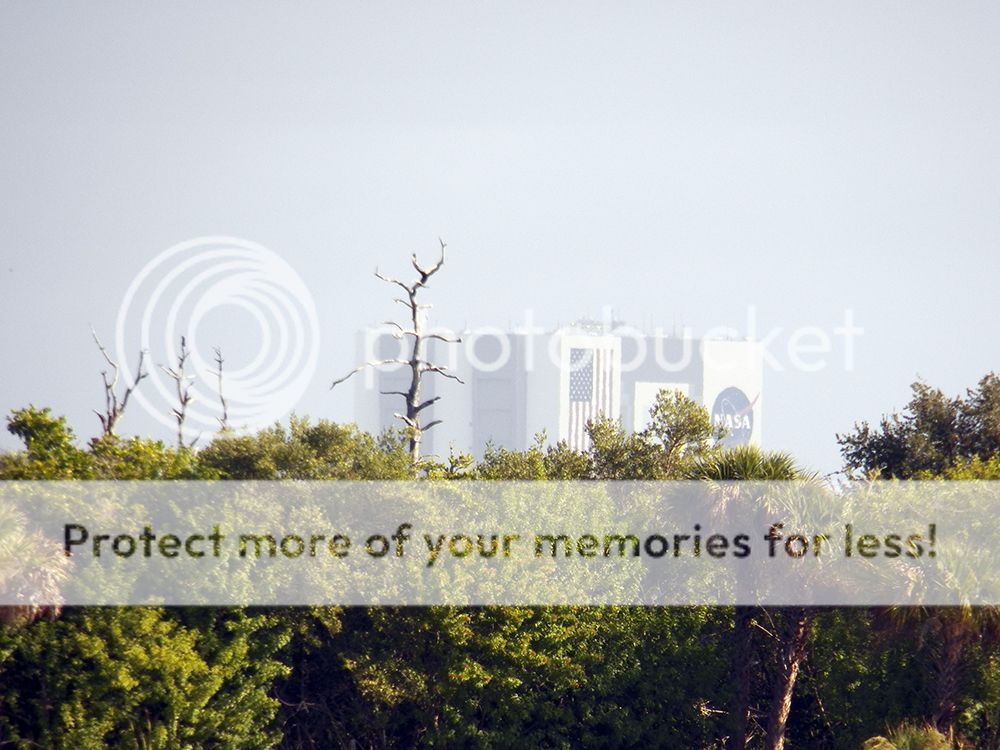
NASA’s VAB looms in the distance.
After scaring off a noisy contingent of Killdeers, I saw some Yellow-rumped Warblers, some sparrows (later IDed as Song Sparrows), and a Downy Woodpecker.
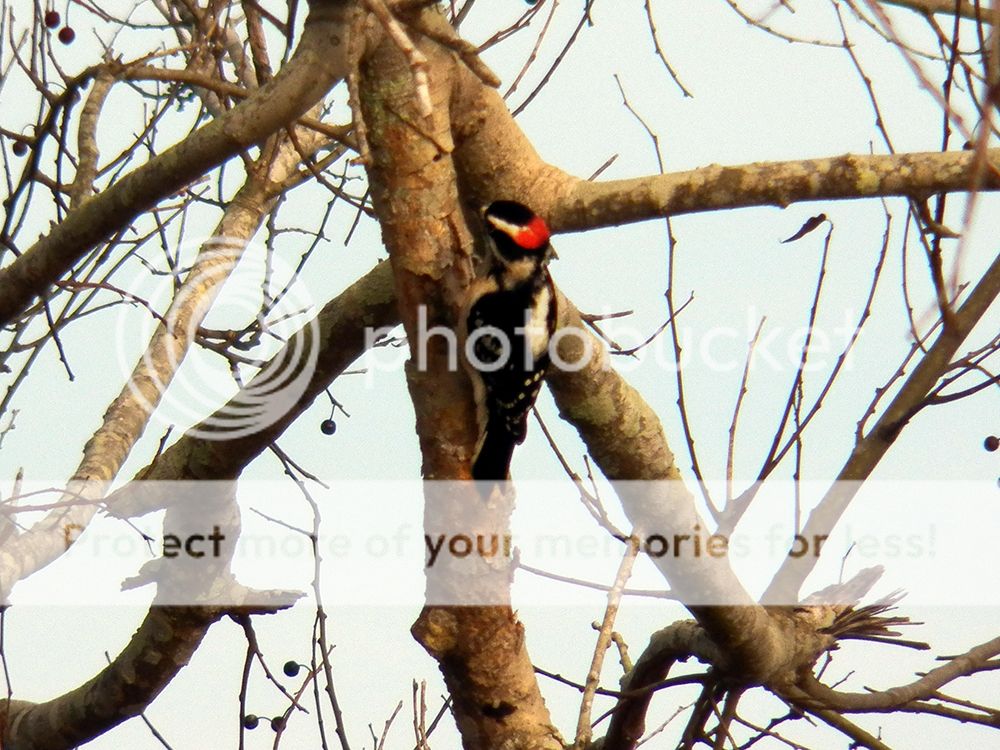
Just like a Hairy Woodpecker, only more portable!
The day’s first great photo-op went to these photogenic Black Vultures. The one on the right was a bit shy, and snuggled up and behind its companion as I went by. I don’t know if they are a mated pair, or an adult and immature.
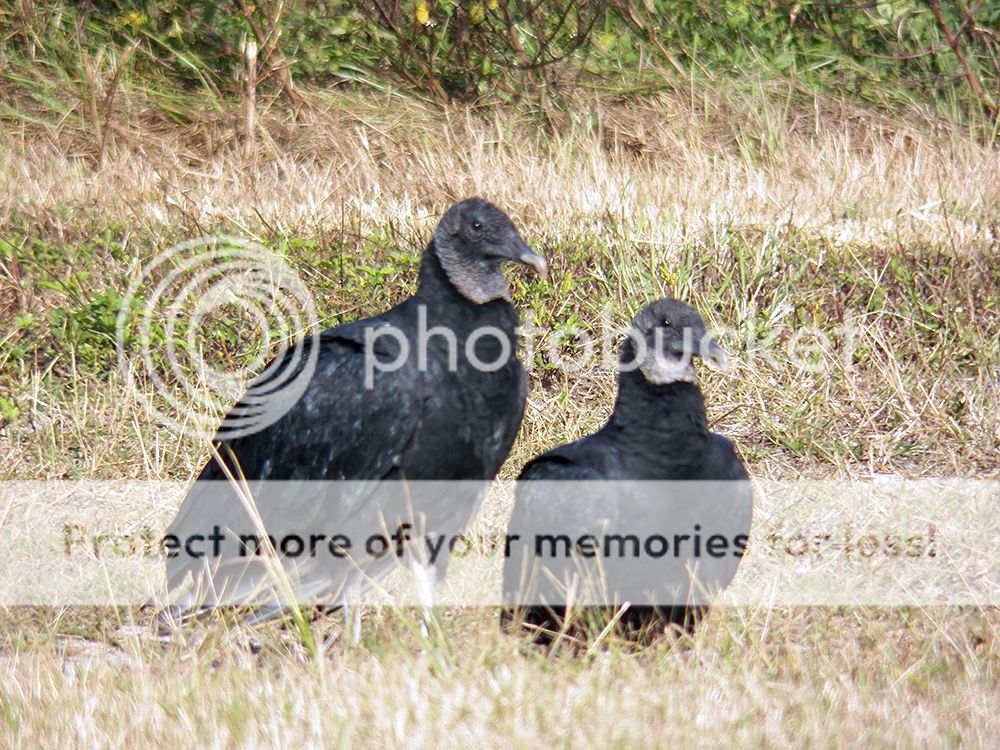
The family that scavenges together, stays together.
Farther along the path around the pond, there was activity on the ground, with more Song Sparrows and Savannah Sparrows foraging and then flitting off the path and diving over the embankment to my left as I got too close. This Savannah Sparrow stayed behind as some sort of picket.
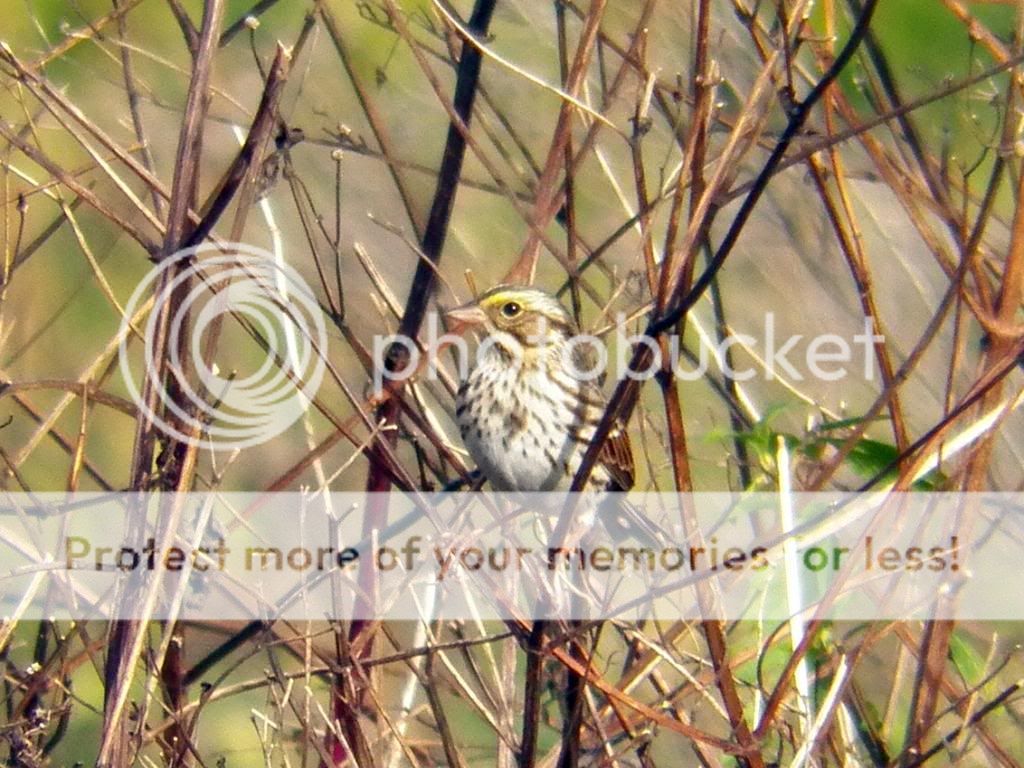
“I’ve got my eye on you!”
There was also an Eastern Phoebe catching insects from a sallying perch in a palm tree. There were a few phoebes around the park, as well as an Eastern Wood-pewee.

This phoebe was very shaded, but the relative lack of field-marks is evident (is that any oxymoron?).

For comparison, here’s a better lit individual!
Out on the pond, quite a distance away, was a scaup, but I could not tell if it was a Lesser Scaup or a Greater Scaup. It was very wary, staying well away from me no matter where along the pond shore I was.
A few Double-crested Cormorants flew overhead, and I noticed some White Ibises along the shoreline.
A bit further down, I noticed another bird mixed in with the sparrows, showing more yellow than anything I’d seen to that point. There was a pair of Common Yellowthroats in the brush. The male took a moment to pose for me.

Common Yellowthroat, ready for action!
There were a handful of Anhingas, drying their wings from a morning fishing expedition along the pond, and several egrets. I also flushed out an aggravated Great Blue Heron.
When I arrived at the north end of the pond, I turned left down a path. The north side of Pine Island borders the Merritt Island National Wildlife Refuge (marked by a low wire fence). As I walked along this section, I distinctly heard the call of a Yellow-billed Cuckoo. I paused but was unable to see it, nor did it call again. The last time I’d seen or heard this bird was in the early 1990s in Massachusetts, so even just one call was thrilling to hear!
After another left, the path led south, parallel to the pond, but on the other side of some mangroves and other swampy vegetation. I noticed some rather large animal droppings, most of which had berries in them. There was also areas of the ground tore up and the soil turned over. It took a while for my brain to figure out what I was seeing, but my thoughts were interrupted by some large splishing in the wooded swamp to my right. I saw some brown animal legs, and though, “Oh, a deer!” and stopped and tried to peer into the underbrush to get a look as it passed by. I could hear walking, but nothing came into view. I stepped back onto the path and caught my breath.
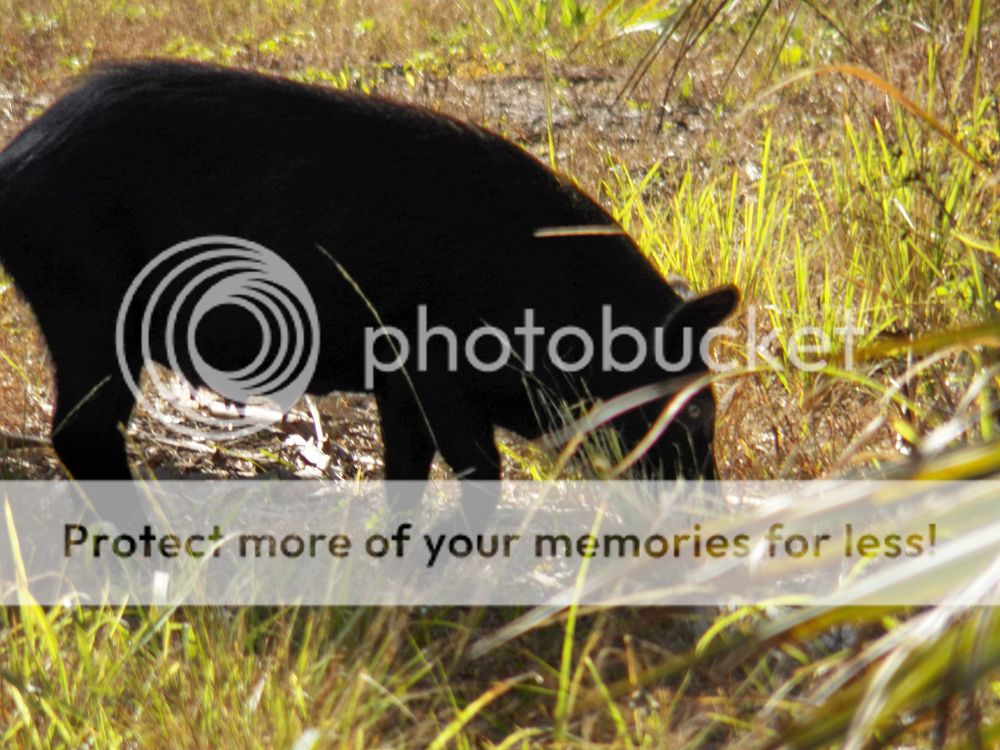
Wild pig, hogging the path. I kid. Sort of.
Wild pigs can be aggressive, so I was unsure what to do. I only managed this photo, because my presence was not welcome. She grunted at me a couple of times, then splashed back into the swamp. I took a few breaths and continued on the path, looking back into the swampy area to catch another look. I did this a few times, and each time, I heard a low grunting growl that sounded “big”. I realized that while the legs I saw were a light brown or tan, the female I saw was decidedly dark. There was a good chance I was being threatened by a male, so I stopped looking back and headed briskly down the trail.
Along this section, there were some Grey Catbirds and Northern Cardinals, but not much else visible. I assumed the path would eventually join up at the south end of the pond and I could get back to where i started. Unfortunately, the path ultimately broke right, away from where I needed to go, so I had to hike the whole length back.
Just before getting to the end of the path again, I saw another flycatcher. I have not yet been able to identify it. The main field mark I noted was a distinctly yellowish throat and breast. I did not see any strong head markings, and I was unable to tell if it had wing-bars or not. It was about the size of a phoebe (perhaps a bit larger). If any of my blog readers would like to suggest candidate birds, they are most welcome to offer them. There were some Palm Warblers along this path, too.
When I got back out to the pond, I decided to circle around to the east side and around. As I looked across the pond, I saw something a bit peculiar.

Mokele-mbembe, is that you?
What manner of monster was this? Seconds later the beast’s head appeared.
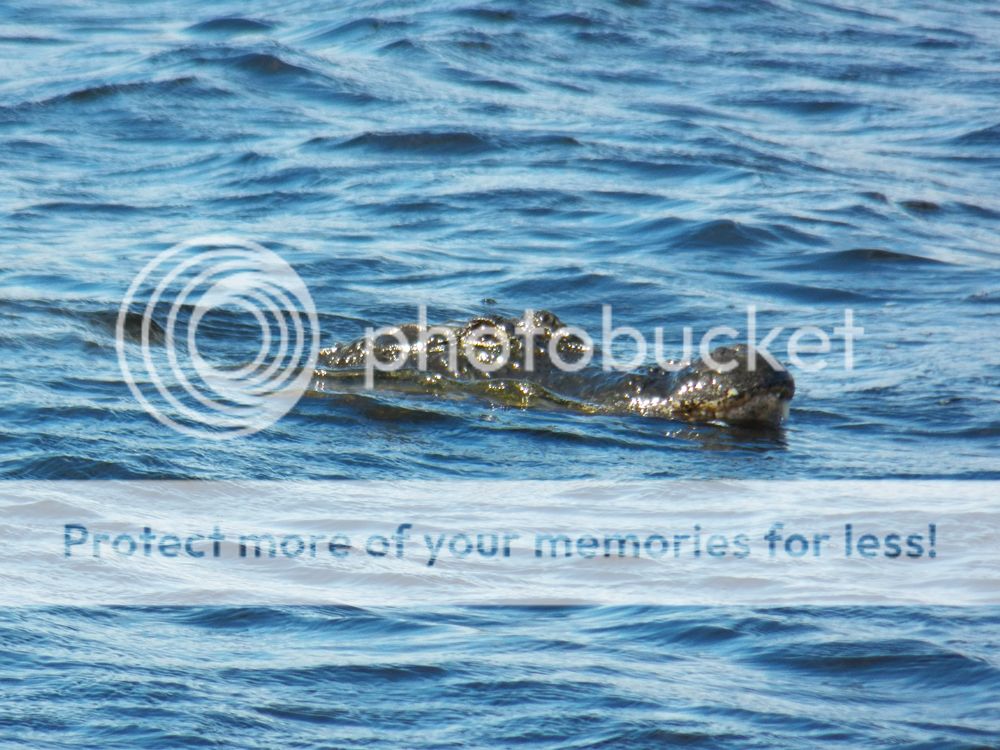
Oh, what great teeth you have!
This was the largest of 5 adult alligators I saw. This one was at least about 8 feet long. Some of them were basking along the pond’s shore and were not very pleased with my disruption of their morning. Luckily, they all chose to break for the water, making a tremendous splash each time.

It was careful to keep facing toward me as I walked past.
As I approached the southern end of the pond, there were more Killdeers, some Cattle Egrets, a Great Blue Heron and, on the water, some Pied-billed Grebes. I love grebes. In Massachusetts, where I started birding as a teenager, a old traditional name for Pied-billed Grebes was “Water Witch” because of the ability of these birds to slowly submerge while swimming upright, then “disappearing” without a ripple only to reappear some distance away in the same manner. Early and, unfortunately, superstitious settlers thought it was by dark magic, and that these birds might in fact be witches disguising themselves as birds.

Which is witch and who is who?
As nuts as this sounds, recall that the Great Auk was thought to be a witch as well (though its demise was a much due to exploitation as a food source).
There were more herons at the southern most end of the pond. This pair of cousins paused in their foraging to pose for this lovely shot.

Tri-colored Heron and Snowy Egret, sychronized staring.
At this point it became clear that the path along this side of the pond did NOT connect around to the other side, so I had to hike my way all the way back around to get to my car. At first I was fairly aggravated, as my feet and ankles were very sore (and ant-bit from earlier). But there wasn’t much I could do about it, so I held my head up and started back. I saw a Red-shouldered Hawk and more Anhingas, among other birds. Back on the western side of the pond were more Savannah Sparrows and Palm Warblers.
I took one more look across the pond to the VAB, this time in full sun (with heat ripples). My feet were tired, and it was about an hour beyond when I expected to be finished, but it was a banner day with 33 definitive species identifications! Just think of how it will be when the waterfowl and other winter residents arrive.

VABulous parting shot.
Here’s the complete list of birds (taken from yesterday’s quick post):
Winter residents FTW! (not in order seen)
- Black Vulture
- Boat-tailed Grackle
- Palm Warbler
- Song Sparrow
- Savannah Sparrow
- Yellow-rumped Warbler
- Killdeer
- Osprey
- Downy Woodpecker
- Great Blue Heron
- Common Gallinule
- Belted Kingfisher
- Common Yellowthroat
- Anhinga
- Double-crested Cormorant
- White Ibis
- Great Egret
- American Kestrel
- Turkey Vulture
- Eastern Phoebe
- Northern Cardinal
- Grey Catbird
- Common Ground Dove
- Red-bellied Woodpecker
- Yellow-bellied Sapsucker
- American Coot
- Pied-billed Grebe
- Snowy Egret
- Tri-colored Heron
- Cattle Egret
- Red-shouldered Hawk
- Tree Swallow
- Eastern Wood-pewee
Bonanza!
I accidentally blogged this to my main blog! Sorry for the cross post in this case.
Great morning at Pine Island today!
Expanded blog entry to come, but I didn’t want to lose the list from today. Winter residents FTW! (not in order seen)
- Black Vulture
- Boat-tailed Grackle
- Palm Warbler
- Song Sparrow
- Savannah Sparrow
- Yellow-rumped Warbler
- Killdeer
- Osprey
- Downy Woodpecker
- Great Blue Heron
- Common Gallinule
- Belted Kingfisher
- Common Yellowthroat
- Anhinga
- Double-crested Cormorant
- White Ibis
- Great Egret
- American Kestrel
- Turkey Vulture
- Eastern Phoebe
- Northern Cardinal
- Grey Catbird
- Common Ground Dove
- Red-bellied Woodpecker
- Yellow-bellied Sapsucker
- American Coot
- Pie-billed Grebe
- Snowy Egret
- Tri-colored Heron
- Cattle Egret
- Red-shouldered Hawk
- Tree Swallow
- Eastern Wood-pewee
In additon to these, I saw one scaup (it was too far away to know if it was a Lesser Scaup or a Greater Scaup) and an unidentified flycatcher. It seemed to have a yellowish throat and breast, but I couldn’t see any other field marks before it flew away.
Coming Up Next…
I did not go birding this weekend, but birding has been on my mind. I’ve registered for The Space Coast Birding & Wildlife Festival, coming this January, with several exciting field trips! I’ll be going (weather willing) on the pelagic trip again, plus one for Black Rails and some other specialty trips. My birding friend Laura Erickson is giving a talk on her Conservation Big Year, which should be fun. I’ve missed her this past year, so it will be nice to see her.
Looking farther ahead, the Big “O” Birding Festival, around Lake Okeechobee, is in March. David Goodwin is usually heavily involved in that festival. I missed getting to see him this summer due to personal and financial reasons (which I hope he can forgive). I met him at the SCBWF last year, and really wanted to see him before the summer had gone. Such is life, I suppose. I’m making every effort to go this coming year. Registration seems more affordable than last year, if I am remembering correctly.
Besides that, the winter bird residents are settling in, so it’ll be time to make the rounds of Pine Island and the Viera Wetlands soon for waterfowl and such. Those will be my last pushes for my 2013 bird count, which still sits officially at 140.
 Lonely Birder