My apologies for the extended break. Things got a little crazy here lately, and then I had some field work two weekends in a row for the Florida Master Naturalist Program. I’ll have something up sometime soon. If you miss me too much, you can always check out the archives for past adventures and photos!
It finally happened! I finally made a trip out to Ft. De Soto Park. Whether it’s on eBird on the e-mailing lists, the birding there has become legendary. Even as birding along the Space Coast has wavered these past few years, some of the lists from Ft. De Soto have been epic. Hundreds of terns. Dozens of warblers. Specialties. Rarities.
Fort De Soto is essentially an island in the Gulf of Mexico south of Tampa. As such, it acts as a migrant trap for birds making their way along Florida’s coast. This time of year shorebirds are starting their treks south, as terns gather for their winter dispersal.
We did a quick walk of the trail by the rangers’ residence in case of some early migrant warblers and such, but the trail was fairly quiet, except for the terns calling along the nearby beach. There are some benches and a fountain nearby that must be a lovely spot when migrant songbirds are passing through. We then walked out onto the nearest fishing pier and saw some gulls, terns and Black Skimmers along the narrow beach. There were some Snowy Egrets hanging around the shop on the pier, but not much else was happening here either.
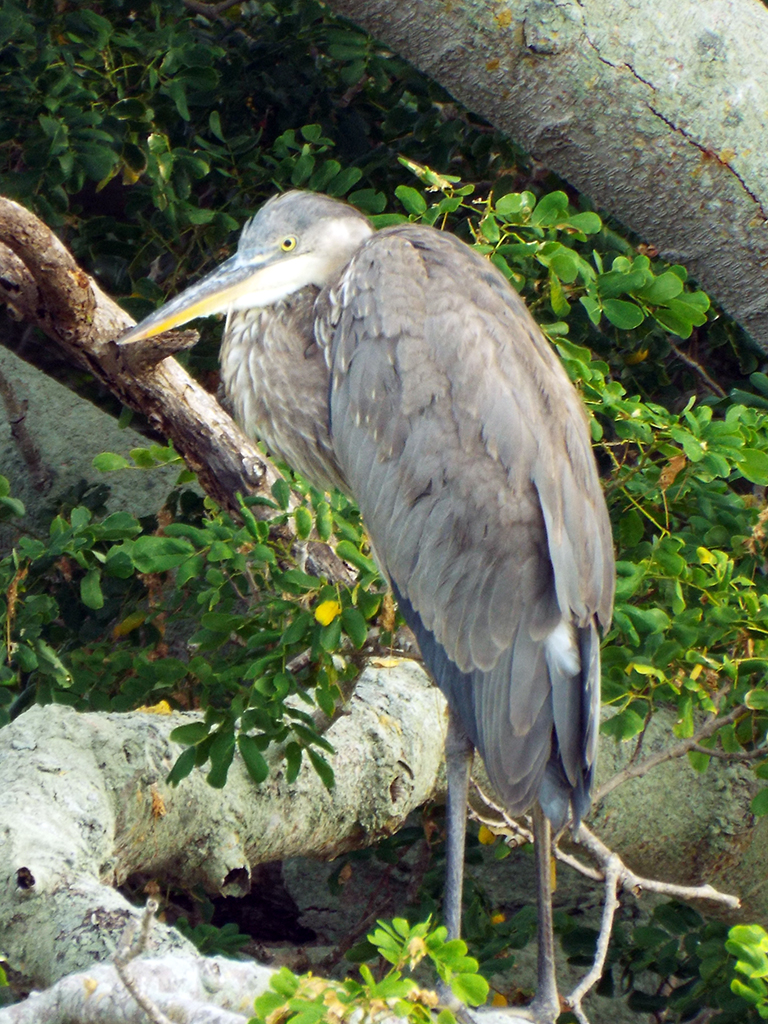
A solitary immature Great Blue Heron.
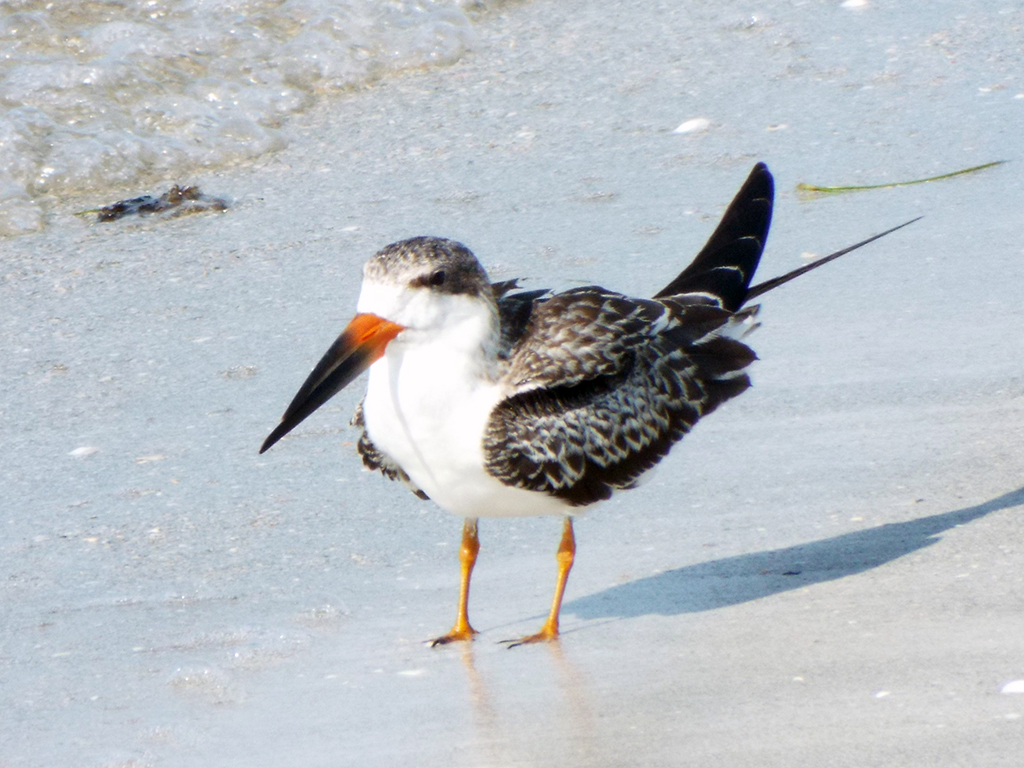
Young Black Skimmer near the pier.
Along North Beach a lovely collection of Black Skimmers, various terns, Marbled Godwits, Short-billed Dowitchers, Semipalmated Plovers, Laughing Gulls and more were congregated on the protected sandbar. Many of these birds are the first of the year for me. In the second photo below, notice the immature skimmer resting it’s long bill on the sand – a common posture when these birds aren’t flying.
Cutest shorebird ever? Piping Plover (note the banded legs).
Lots of Black Skimmers on the sandbar.
Mixture of gulls, terns, and shorebirds.
Even a Marbled Godwit!
Black-bellied Plover hanging on to breeding plumage.
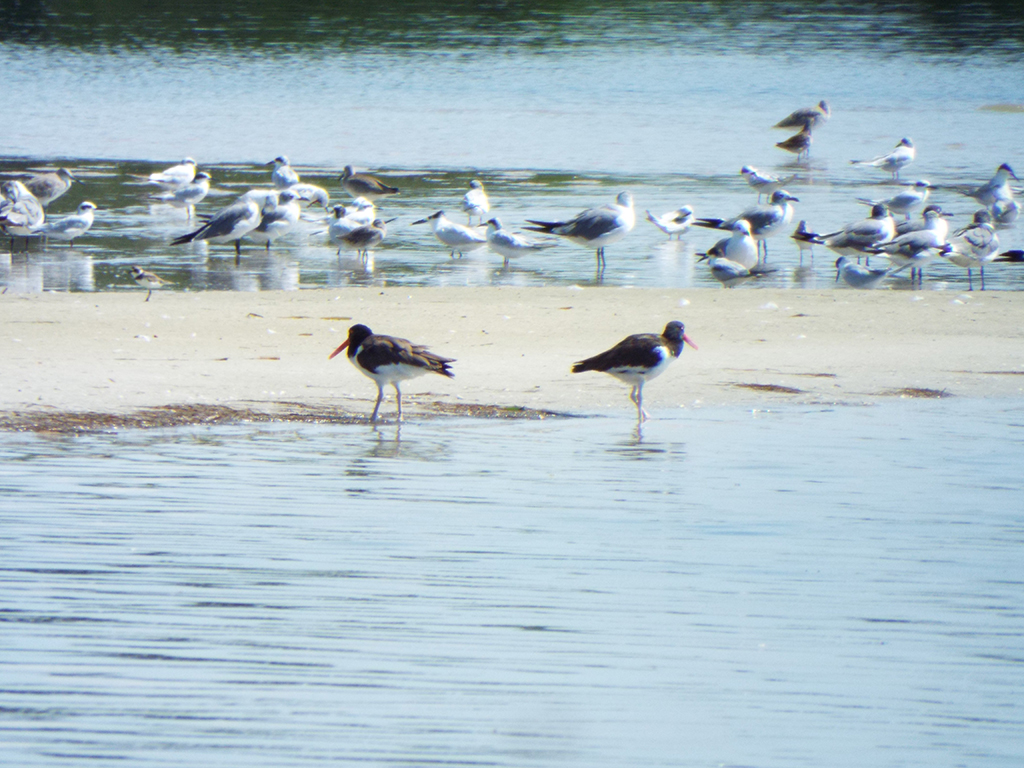
There was a nearby mudflat full of Willets, peep sandpipers, gulls, terns and a few other shorebirds. One of the elusive species both Camille and I have been hoping to see all summer is the American Oyster Catcher. There were some very nice birders who were staked out by the North Beach sandbars with a spotting scope and educational material. They pointed out that some oystercatchers were seen at this mudflat. They also gave us some other tips that proved very useful throughout the day. Local knowledge is invaluable at times.
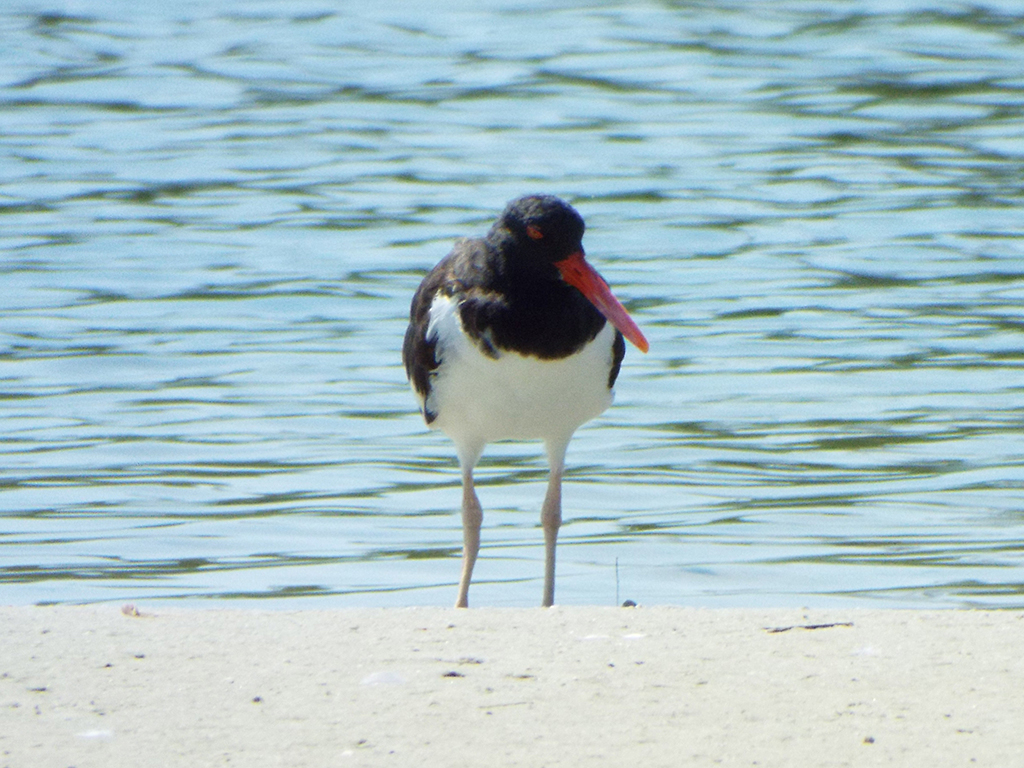
Even from a distance, the American Oystercatcher is distinctive.The oystercatchers’ stout, chisel-like bills are great for forcing open bivalves (e.g., oysters, clams, and mussels).
As we took a break for lunch, we noticed that a large number of Magnificent Frigatebirds had begun soaring in kettle just outside the park. The women at North Beach had said that by afternoon their numbers would increase, but I was thinking maybe two dozen at most.
From a distance you might first mistake this for another of umpteen vulture kettles riding a thermal.
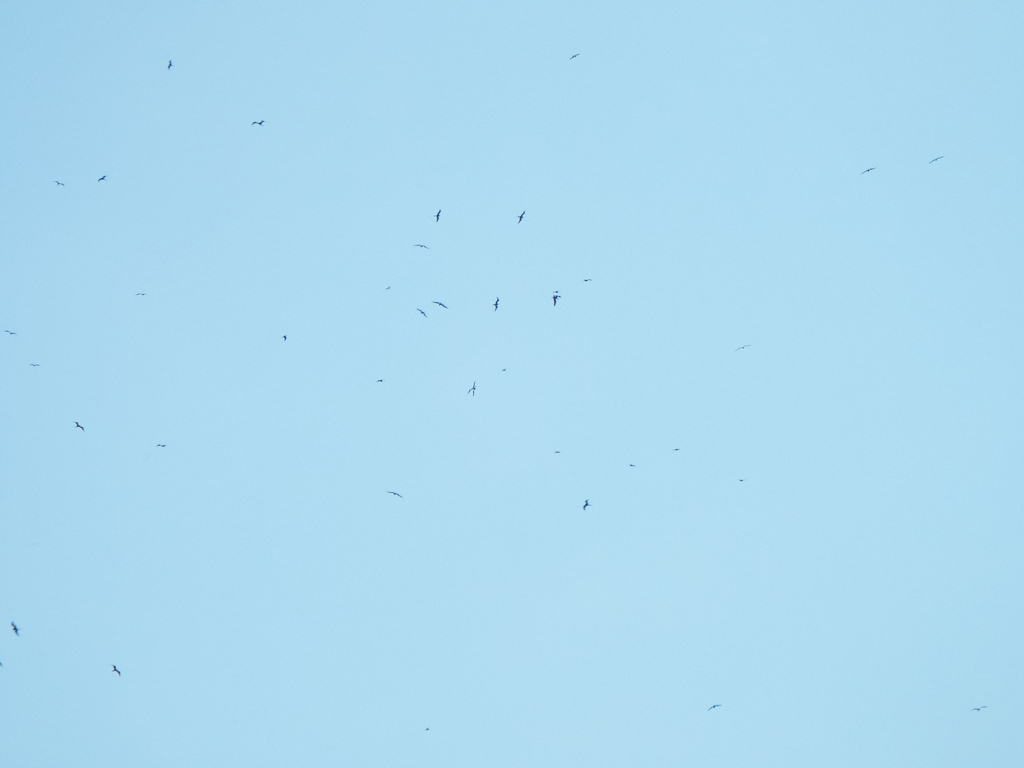
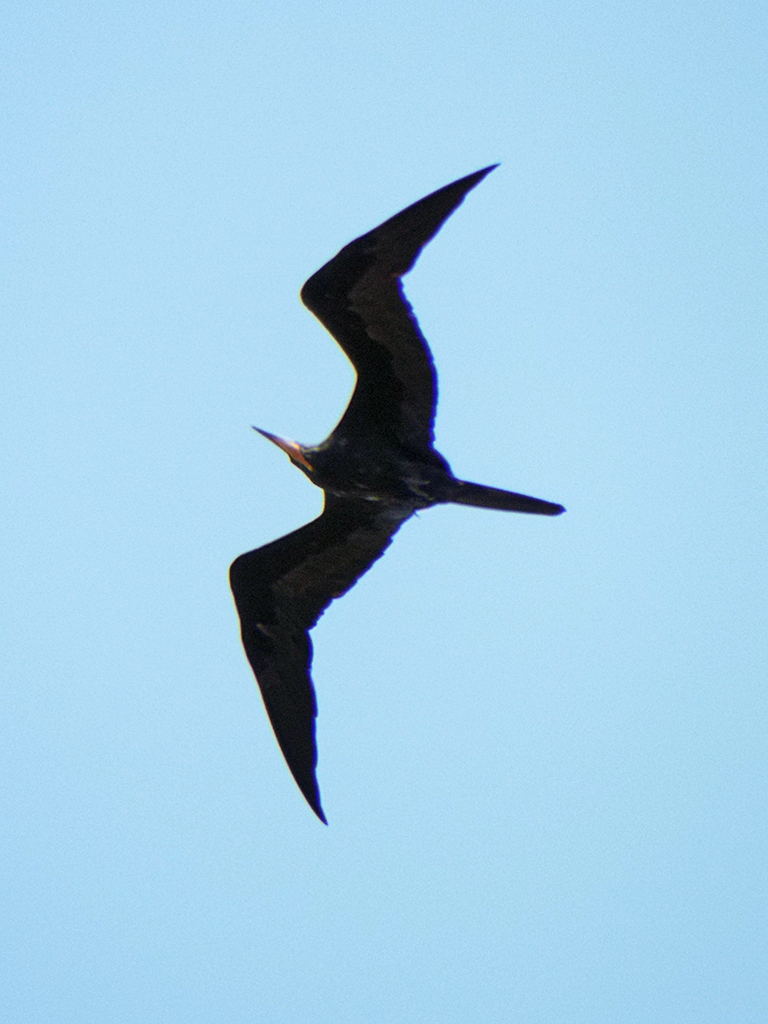
There were at least FIFTY frigatebirds, swirling around, mostly over a residential community outside the park. They were surprisingly hard to photograph, even when they swooped down fairly low. Magnificent Frigate birds have a very long wingspan – up to 2.4 meters (8 feet)!
Back in the park, there were more mixed flocks of terns and shorebirds on the East Beach, including more Short-billed Dowitchers.
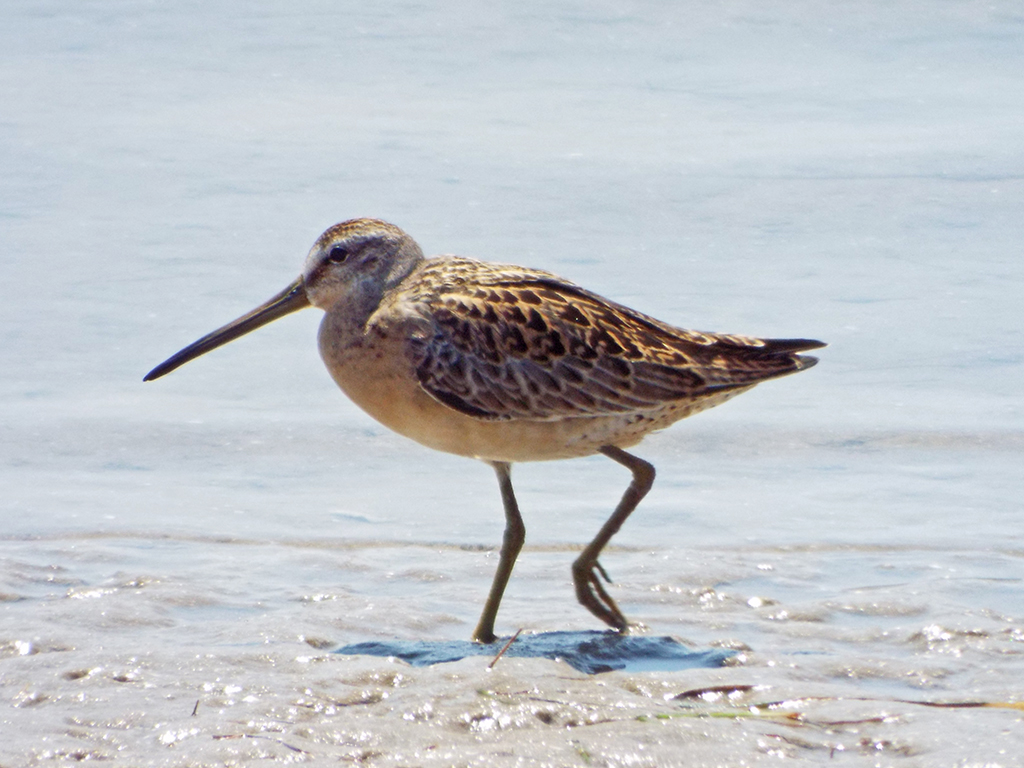
A Short-billed Dowitcher still in (worn) breeding plumage.
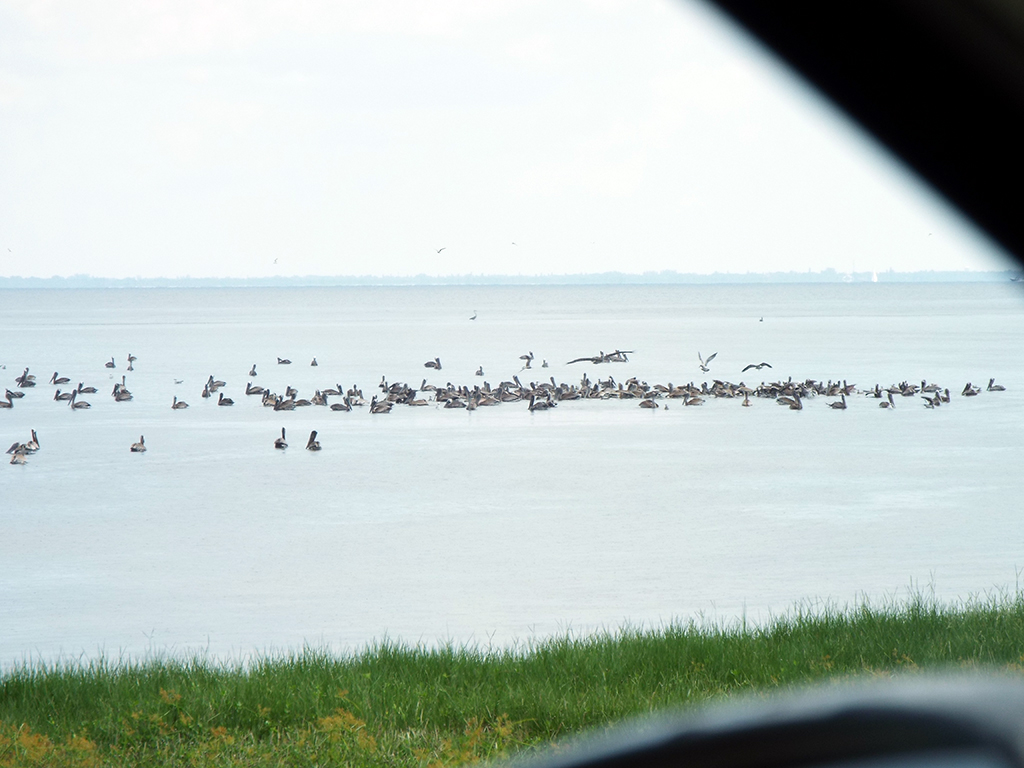
There was a large assemblage of Brown Pelicans off the East Beach – dozens in large rafts – offshore from East Beach. I’ve never seen that many Brown Pelicans in one place.
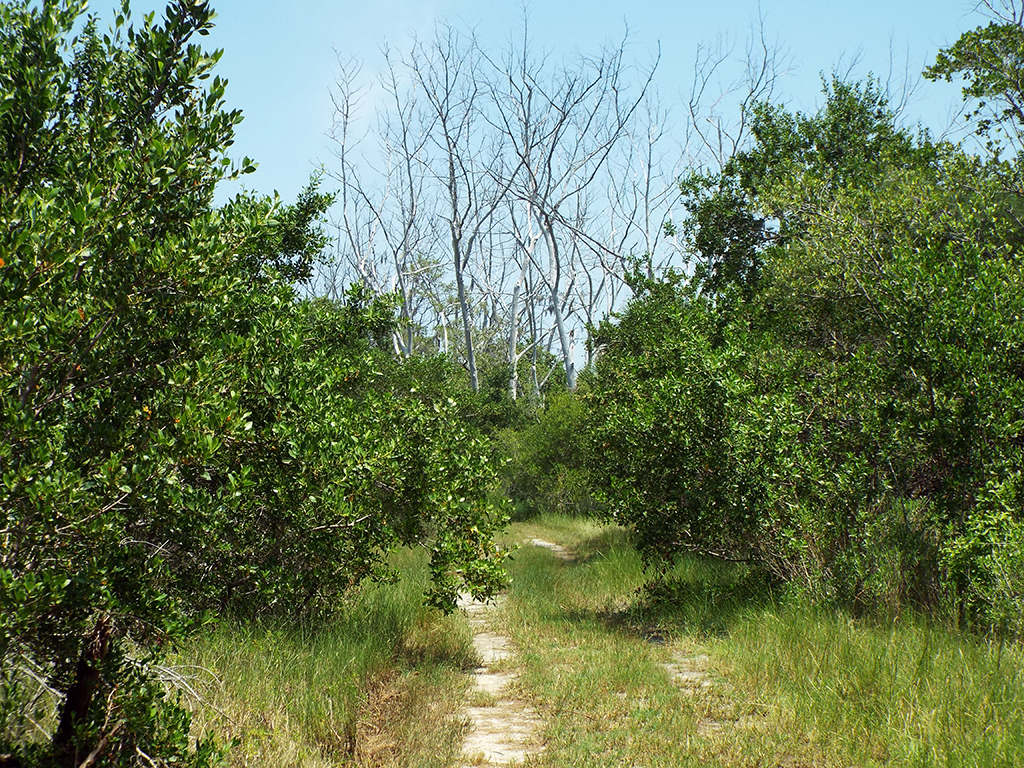
In addition to the beach and mudflat habitats, Fort De Soto Park has some wooded and upland/scrub areas as well. Although it was near the peak heat of the day, we walked through one area in case some early fall migrants were making their way through.
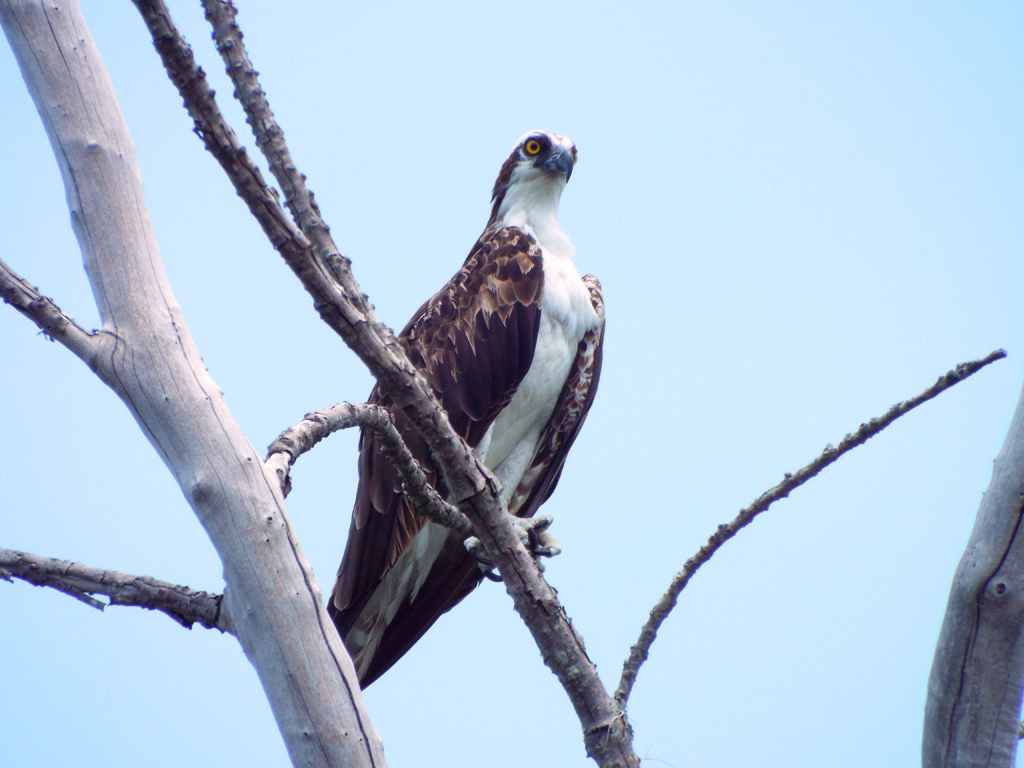
The most we saw were several Ospreys in the dead trees. We did see a few Common Ground-Doves and hear some cardinals, but there were no small passerines anywhere.
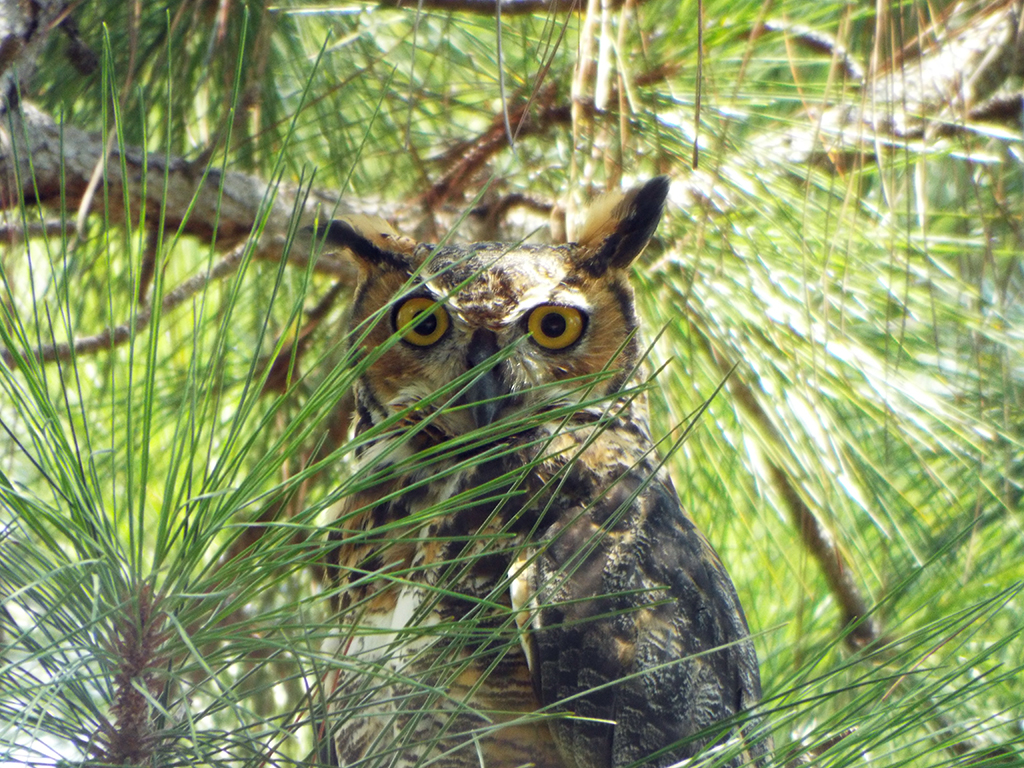
Our final stop was where Camille had seen probable Great Horned Owls when she visited the week before (a nesting pair is known to be there), but never got a great look. We retraced her steps and came up on a pair of owls! It’s a rare and awe-inspiring sight to see any owl, but to see this large species in broad daylight made my spine tingle.
Who goes there?
Who’s this?
Other than another run at North Beach, showing much the same mix of birds as the morning, that ended the day at Fort De Soto on a super high note!
Since there was still some reasonable amount of daylight left, we drove over to Gandy Beach (alongside the Gandy Bridge) to see what might be going on there. This turned out to be a very good decision! Among the many terns, gull and shorebirds there were a large assemblage of Black Terns (over 100!). I would never have suspected so many. In addition, there was a pair of Wilson’s Plovers, more dowitchers and even a Western Sandpiper.
I am really looking forward to coming back to Fort De Soto (and environs) – especially during the spring migration. The legend lived up to the hype, as far as I am concerned.
Some photos from this past weekend’s adventure to MINWR (Both Bio Lab Road and Black Point Drive). I had never been on Bio Lab Road before, but it looks to be a good place for shorebirds and waders, much like a lot of Black Point Drive.
While both locations didn’t offer the best photographic opportunities, the birding was good, and I did finally to manage to get my first Spotted Sandpipers of the year.
There was a duck on Bio Lab Road that was hard to ID at first, but was also maimed, with his right wing partially missing. I had to do some digging and questioning (thank you Brdbrains!) to positively identify him, but it seems this is a Ring-necked Duck drake that had been injured in the early spring and has been cruising around all summer. I was glad he seemed healthy and I am sure he’ll be happy to see his kin in the fall.
Black-necked Stilt. The vignetting was a happy accident!
As the summer is moving on, some of the early shorebird migration is getting started, and even some larger numbers of gulls and terns are starting to gather. Some of the lists at Fort DeSoto over on the Gulf coast are already getting impressive (at least from these meager Atlantic birding grounds!).
After taking the previous week off from birding, I went back out to Lake Apopka with Camille, but instead of starting at the Wildlife Drive, we first attempted to drive up to the small ponds and marshes to the west of the lake. Last time here, we drove to the Apopka-Beauclair Canal Lock and Dam and saw there might be access along the canal to the ponds, but we did not stop there. This time we attempted to go in, but were stopped by a facility employee who told us the area was actually off limits. I found this to be odd, as the location is listed as an eBird hotspot. Before leaving we did see a few dozen Barn Swallows, along with some other birds.
Since access to the ponds proved to be fruitless that way, we parked at the Loop Trail entrance and walked part of the trail, eventually getting out near the canal, south of the locks. As we approached a bridge over the canals, a bright yellow bird caught my eye in some brushy vegetation. At first I thought it might be a Yellow-breasted Chat, but on closer inspection I saw that it was a tanager! In fact there were three tanagers – all female Summer Tanagers, to be specific. Their appearance caught me off guard, and at first there was some confusion as to what they were. But after checking the field guides and some online photographs, I was satisfied that these were Summer Tanagers. This species was a life bird for the both of us, so that was something to cheer about.
Instead of crossing the bridge to continue on the trail, I realized the only way back to the parking area was to walk up the east side of the canal. This meant not being right adjacent to the ponds, but there were good views of it nonetheless. Apart from more of the usual suspects (egrets, herons, blackbirds, Osprey), nothing much was happening. Eventually getting back to the car, we decided go to the Wildlife Drive.
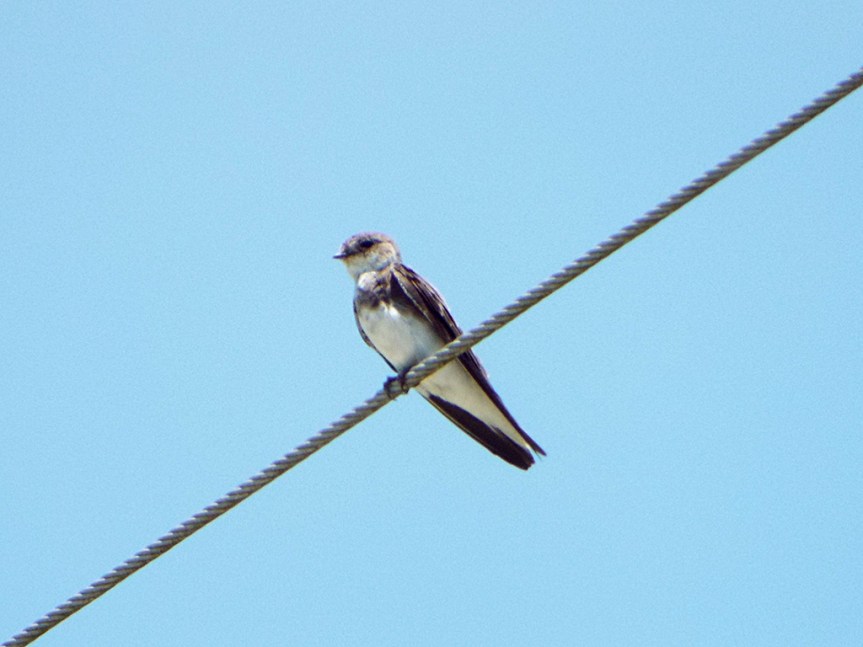
There had been reports of a Bank Swallow hanging out with the Barn Swallows (much like the lone Tree Swallow from a few weeks ago). As we approached the area the swallows seem to favor, I scanned the wires. To my delight, there was the Bank Swallow!
A Bank Swallow staying in FL for the summer.
Otherwise, as we drove the most notable species were the Anhingas (dozens), Cattle Egrets (several dozen) and Common Gallinules. Many of the gallinules had immatures with them – only a few had very small chicks, as the summer is wearing on.
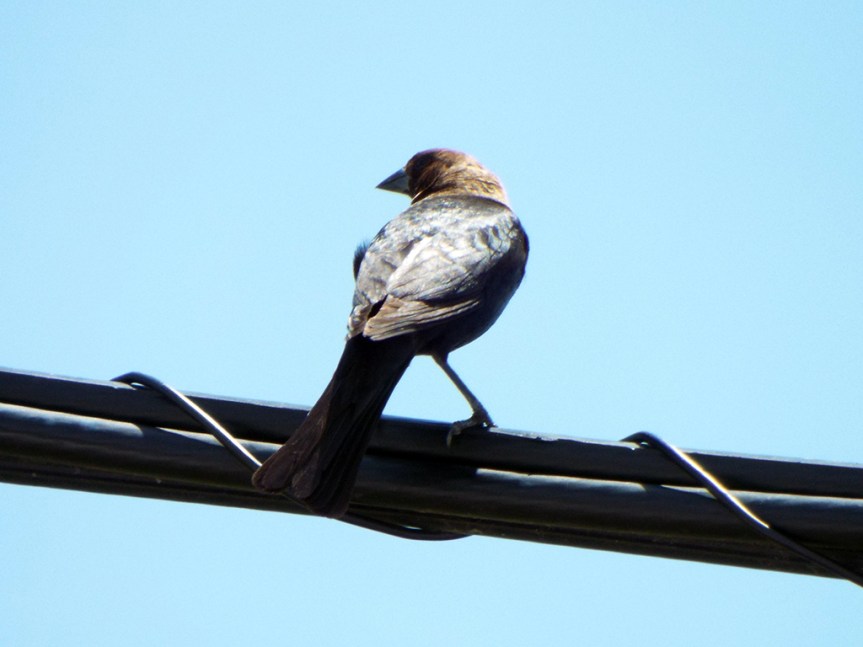
At the area we saw the Swallow-tailed and Mississippi Kites last time, there were several Swallow-tailed Kites very high up and this Brown-headed Cowbird, but that was all.
Brown-headed Cowbird
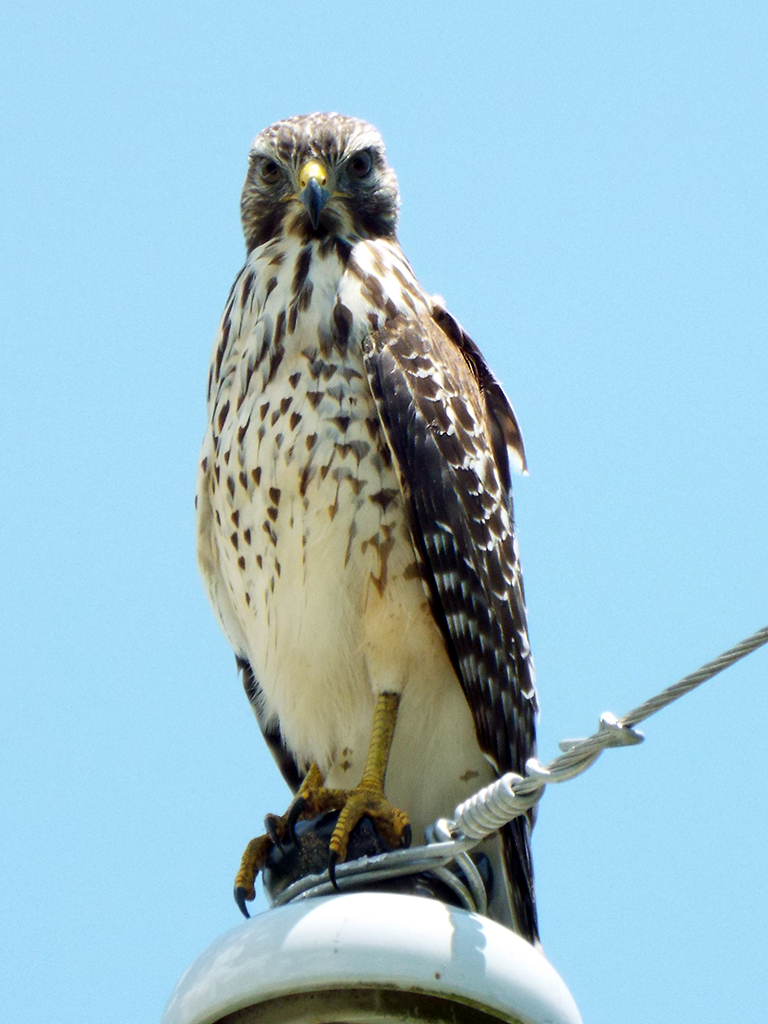
There were a few Red-shouldered Hawks, including one young bird that posed on a utility pole for a while. Further along the drive as we approached the exit, a Cooper’s Hawk and an adult Red-shouldered Hawk had a disagreement over airspace, with the Cooper’s actually driving the Red-shouldered Hawk away.
Another satisfying trip to Lake Apopka. It’s going to be really great birding there in the fall when the shorebirds and waterfowl come in, and again in the spring. During the normally quiet summer this has been one of the few productive birding spots in Central Florida.
This collection of images is from this week, taken at the Viera Wetlands and the Cruickshank Scrub Sanctuary. Click on an image to enlarge it. eBird lists are at the end of the post. Enjoy!
Two weeks ago, I headed to the recently opened Lake Apopka Wildlife Drive with Camille in an attempt to see a few select species that have been reported there on eBird and in the e-mail lists. I was most hopeful to see both an Orchard Oriole (last seen by me in Marlinton, WV over a decade ago) and a Yellow-breasted Chat (which I last saw at Bear Rocks Lake in West Virginia in the same time-frame). There had also been reports of a Shiny Cowbird, which is quite rare.
The oriole and chat were no-shows, but for summer-time birding, you can’t go wrong with Lake Apopka. We hooked up with some other birding folks and convoyed our morning away.
At one point, while trying to observe a distant Yellow-crowned Night Heron, I flushed a Bobcat out of the grass and right past Camille! By the time I turned around, it was gone! Below are some photographs from the trip.
Even from this distance, the white eye of a Florida Eastern Towhee is startlingly evident.
Possible King Rail voice. Where are you?
Historic Pumphouse
Old pumphouse intakes.
Line of mostly Barn Swallows. What’s that 2nd from the right?
Female Tree Swallow
Canal near swallows.
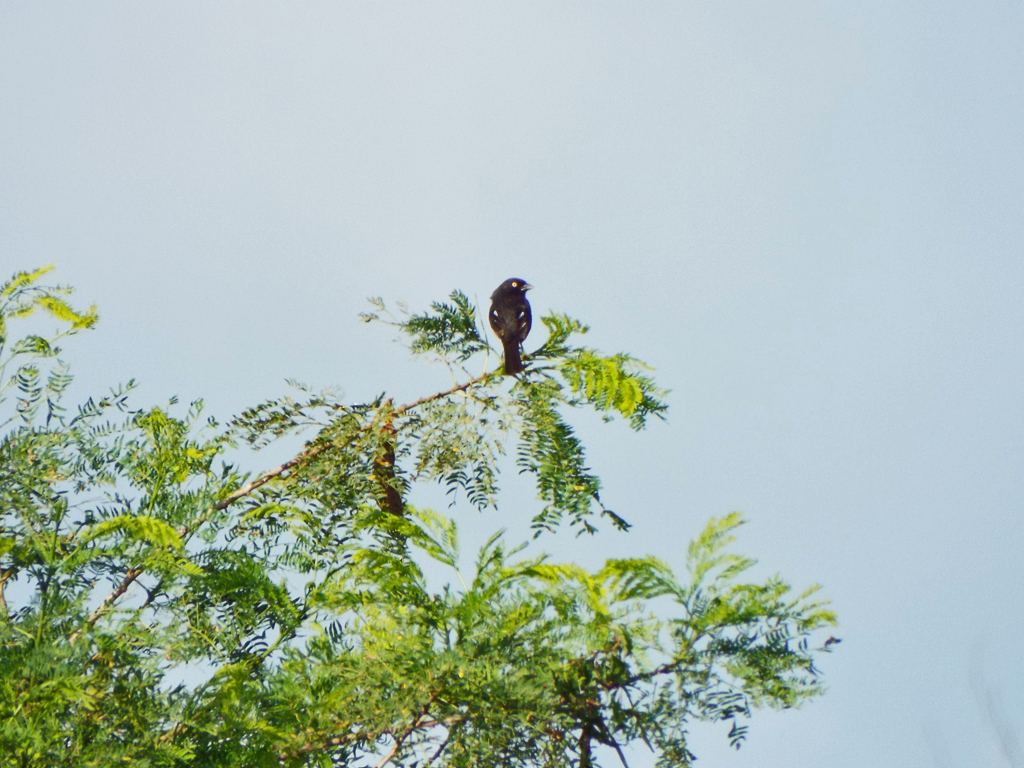
Shiny Cowbird! A first!
I would have thought this bird was a grackle if I hadn’t known beforehand to expect it.
This Purple Gallinule had several fledglings.
Young birds make good meals.
Chick nearly adult-sized.
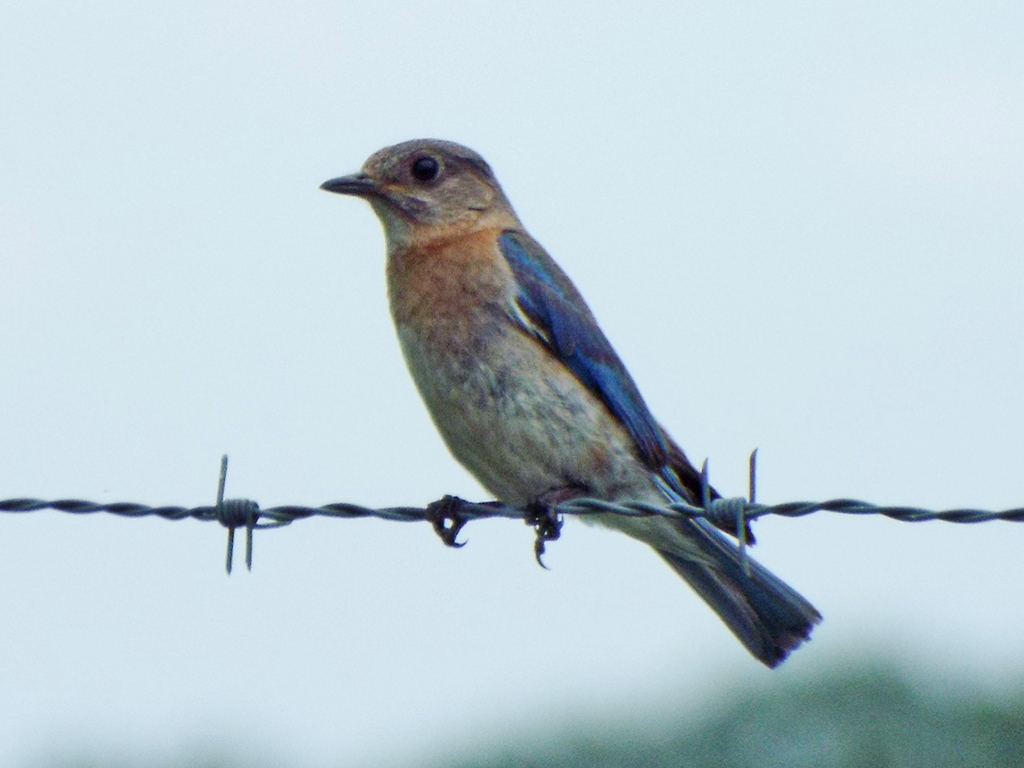
After the Wildlife Drive, we drove around to the North Shore Restoration Area loop trails for a few minutes to look for Blue Grosbeaks (we did find one!), then drove around the general area north of the lake before heading back home. Near the canal by the northwest side of the lake an adult female Eastern Bluebird was perched while an adult male flew around nearby.
Bluebirds are in the thrush family, and are close relatives of the American Robin. Can you see the resemblance in the shape of the face and bill?
The final highlight for me was the quick glimpse of a Gray Kingbird on West Jones Ave. This species is usually found along the coast, but a few have been regularly reported near the lake this summer.
Here are the links to the eBird lists for the follow species:
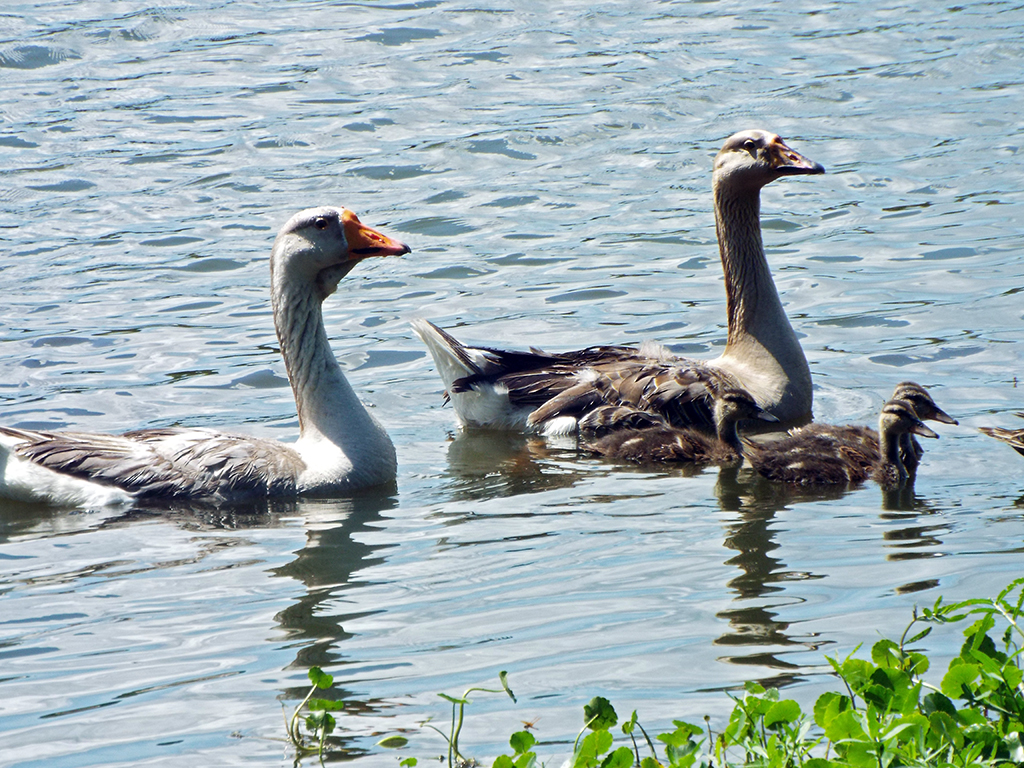
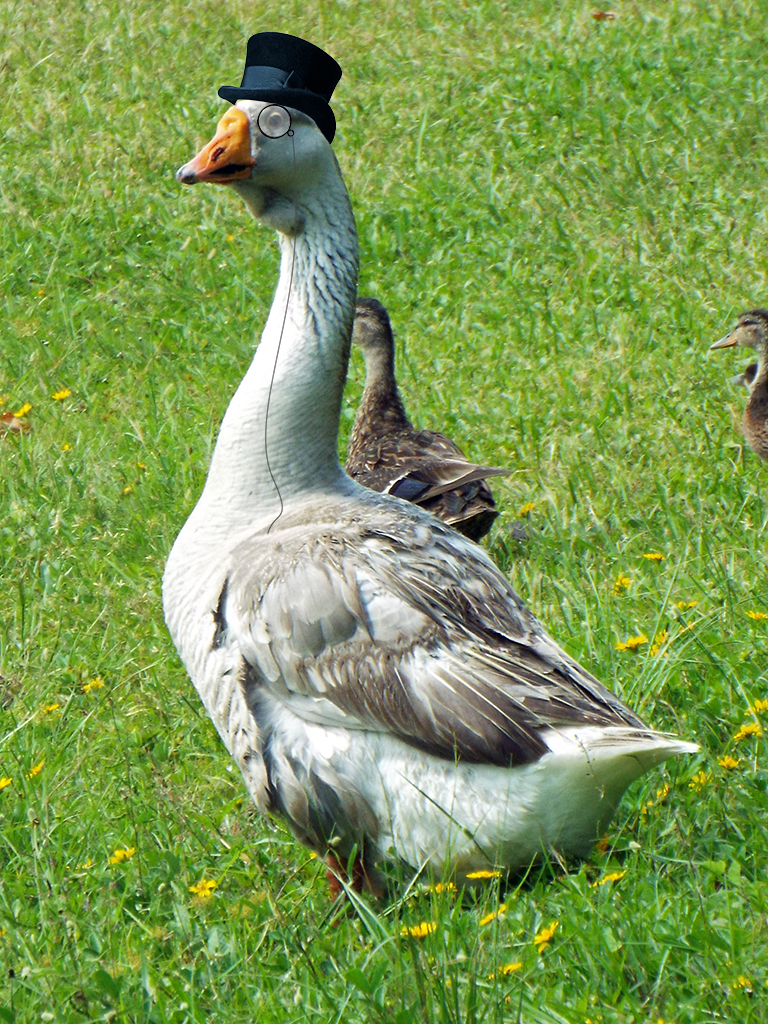
So the ABA doesn’t “allow” Greylag Geese to count in any official capacity, and if you list it on eBird, it doesn’t increment your bird counts.
A mated pair of Greylag Geese, somewhere in Kissimmee. This particular pair seems to have sort of adopted a Mottled Duck family and follows them around a lot. Pretty wild, eh?
The reason for this, apparently, is that this species isn’t “wild” enough.
I can’t imagine what they’re talking about!
Ah, ok, once they got out of the water, it all became clear!
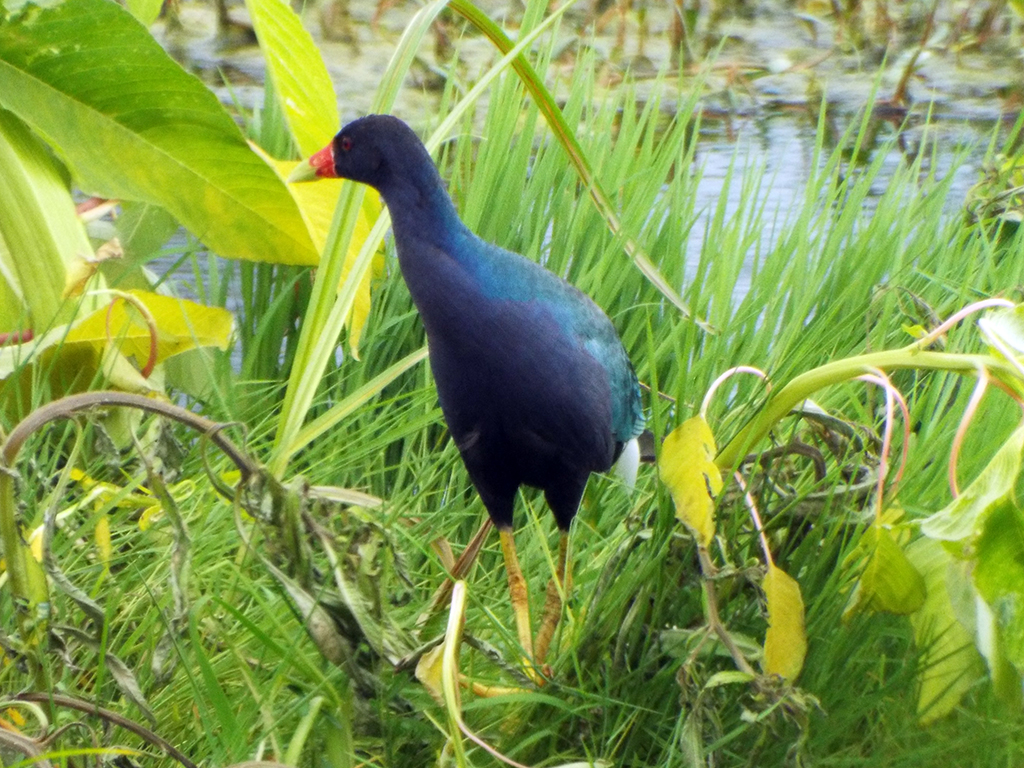
I’m running a little behind on my blog this week, but I do have some material coming up. Hang in there and I’ll be with you shortly! Meanwhile, enjoy this Purple Gallinule!
This past weekend’s adventure was all about the rails! After some good tips from both eBird and some local birders, Camille and I headed north to Spruce Creek Park for Clapper Rails. A few leads said that they were easily observed and calling loudly throughout the park.
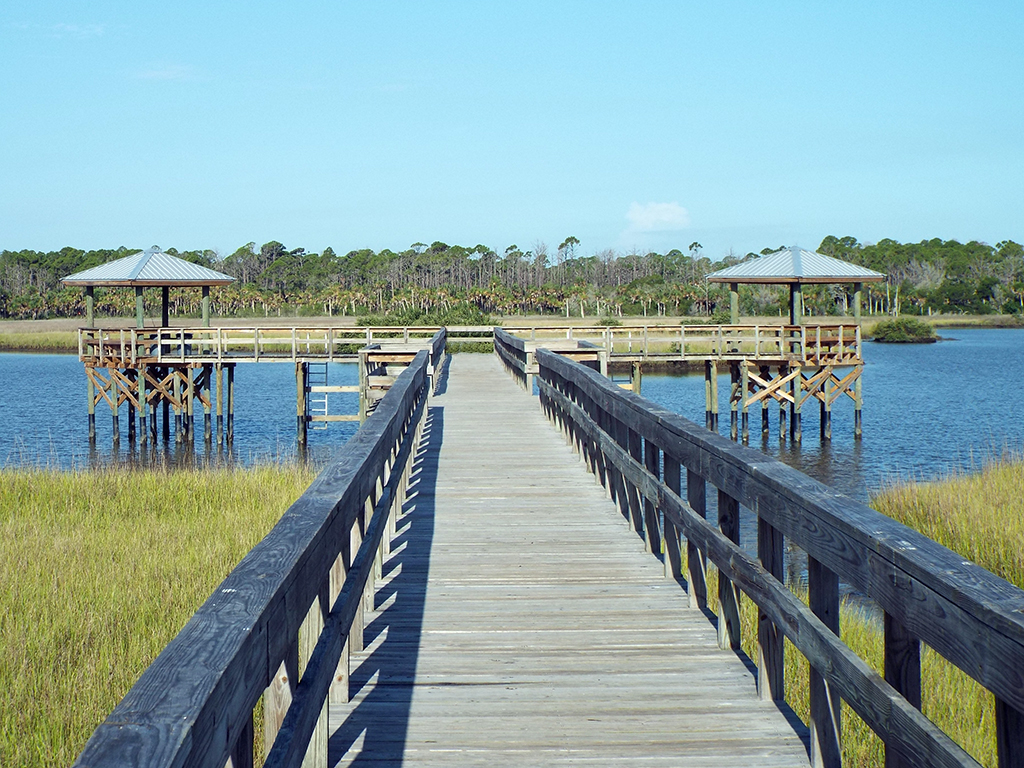
The park is over 1,600 acres in size and has a boardwalk overlooking the marshes and mudflats of Spruce Creek. There are also a few miles of hiking trails, but since the focus of the trip was rails, we didn’t really hike them.
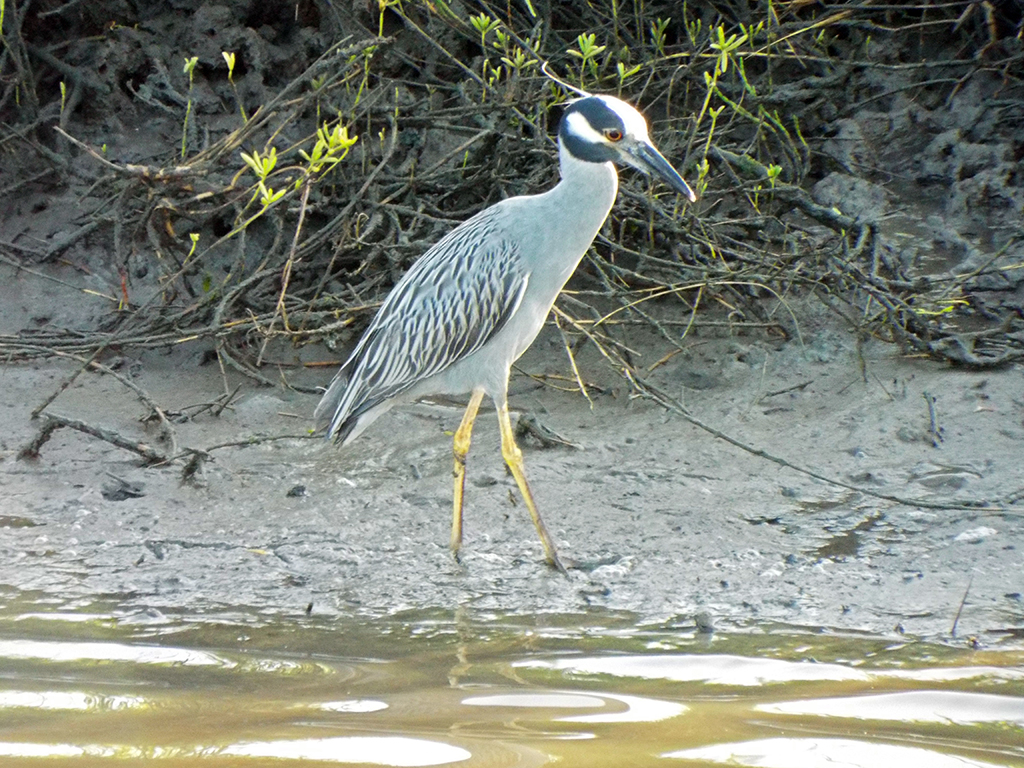
As soon as we stepped on the boardwalk we could hear Clapper Rails calling from all around the marsh, but we couldn’t see them. Other wading birds were working the perimeter of the mudflats (which were mostly underwater), including a Yellow-crowned Night Heron (my first of the year, finally).
Several Ospreys were soaring overhead, occasionally making a dive for fish, but more often chasing each other around the sky. I assumed they were young birds still associating with their parents.
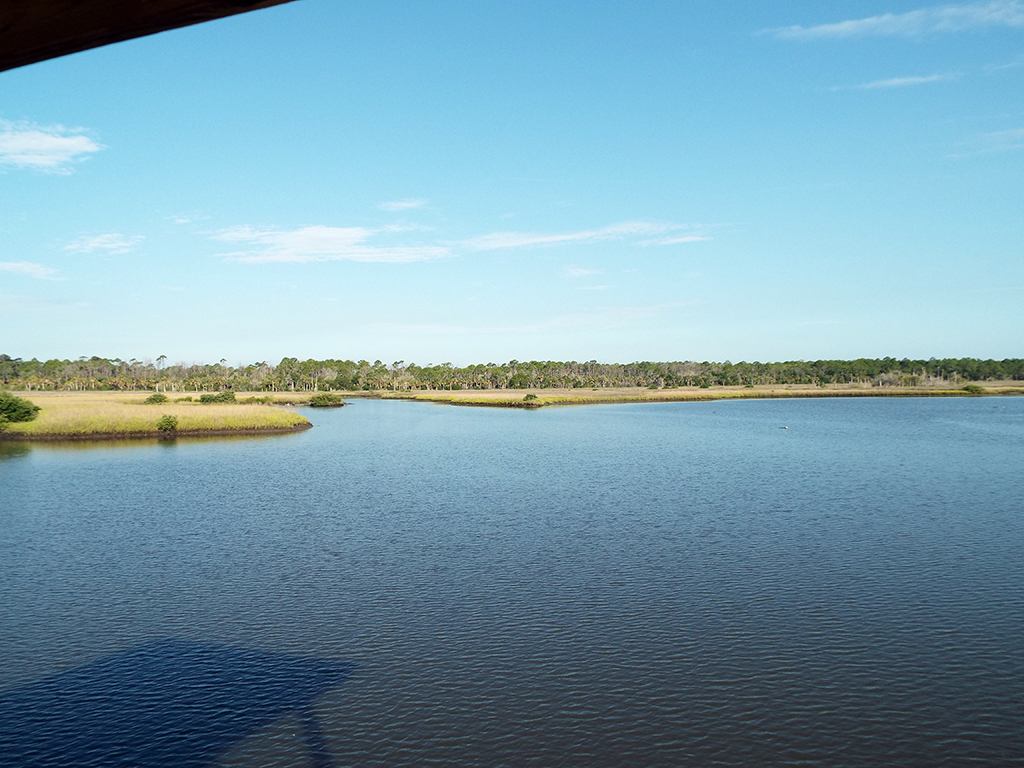
The marsh is beautiful and the stretch of water the boardwalk and pavilions overlook is expansive.
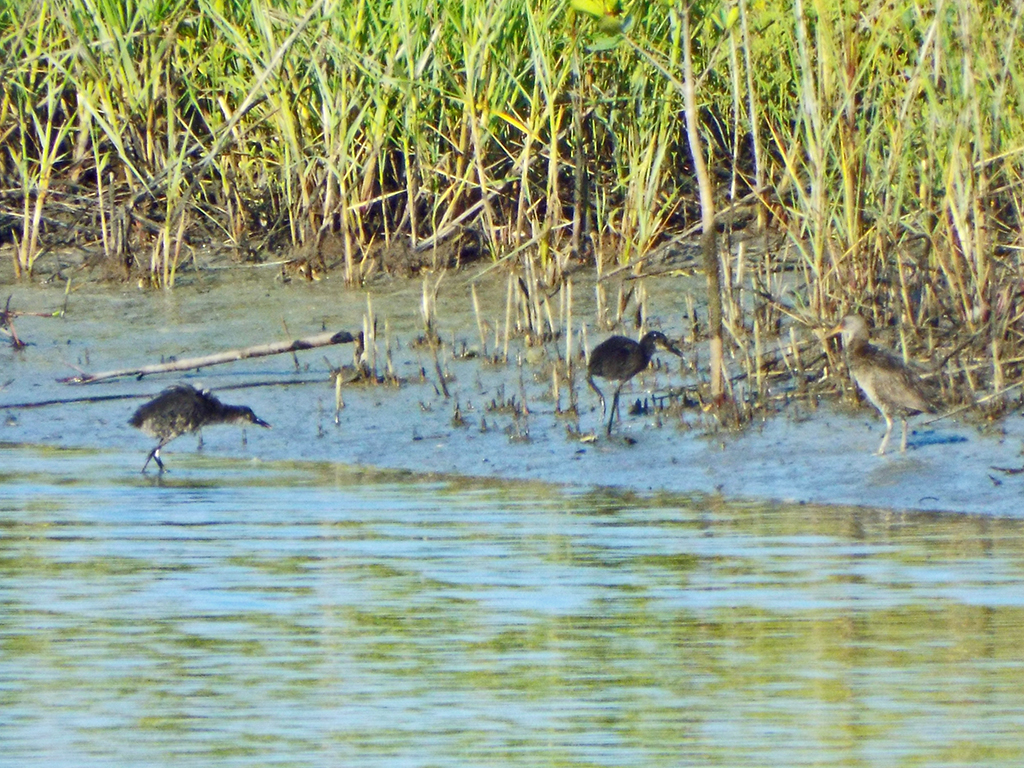
After waiting about 20 minutes or more, and continuing to hear the “kek-kek-kek-kek!” of Clapper Rails around, its was discouraging. But finally, I caught a glimpse of several gray bird shapes across the water cautiously emerge from the vegetation to the water’s edge. Just at the edge of my binoculars and camera range, I made out the characteristic rail shape.
Part of the rail family before heading back to the safety of the vegetation. These chicks look nearly adult sized.
There seemed to be two adults and several chicks. The adults’ gray plumage matched the mud almost perfectly, while the chicks were still sporting many black and dark gray feathers. The birds stayed in a group and wandered a bit along the vegetation before one by one, slipping back into the marsh.
After scanning the marsh another time, I saw a single rail even further away, but well into the open and in full sunlight. It ducked back out of sight after just a few minutes.
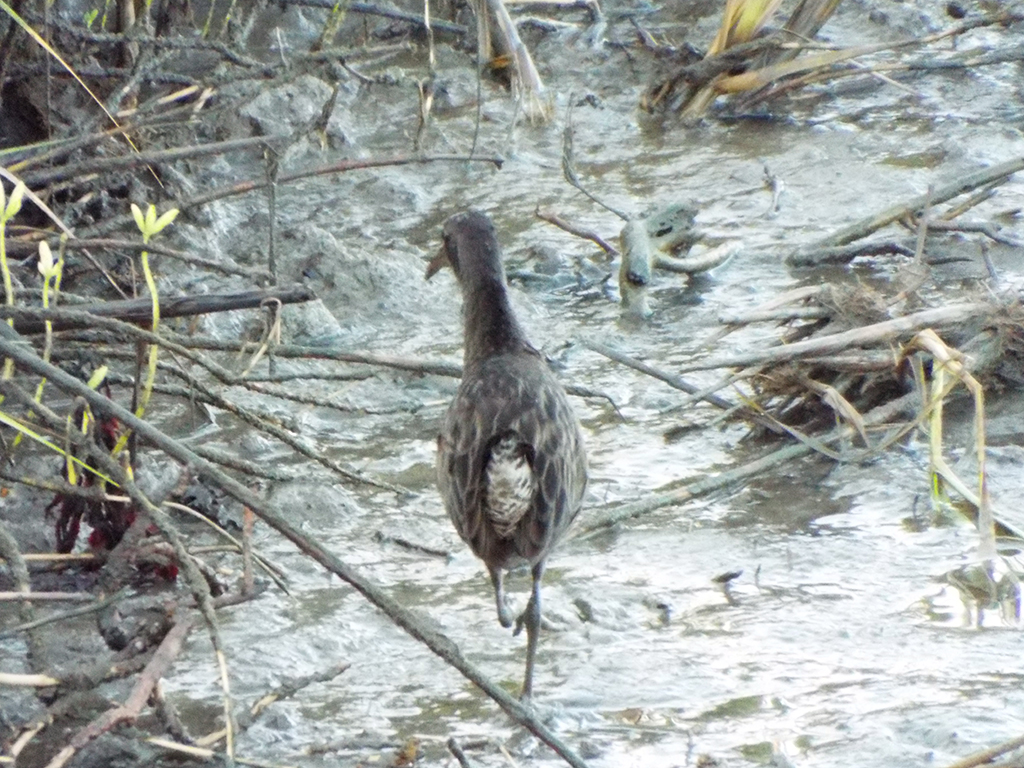
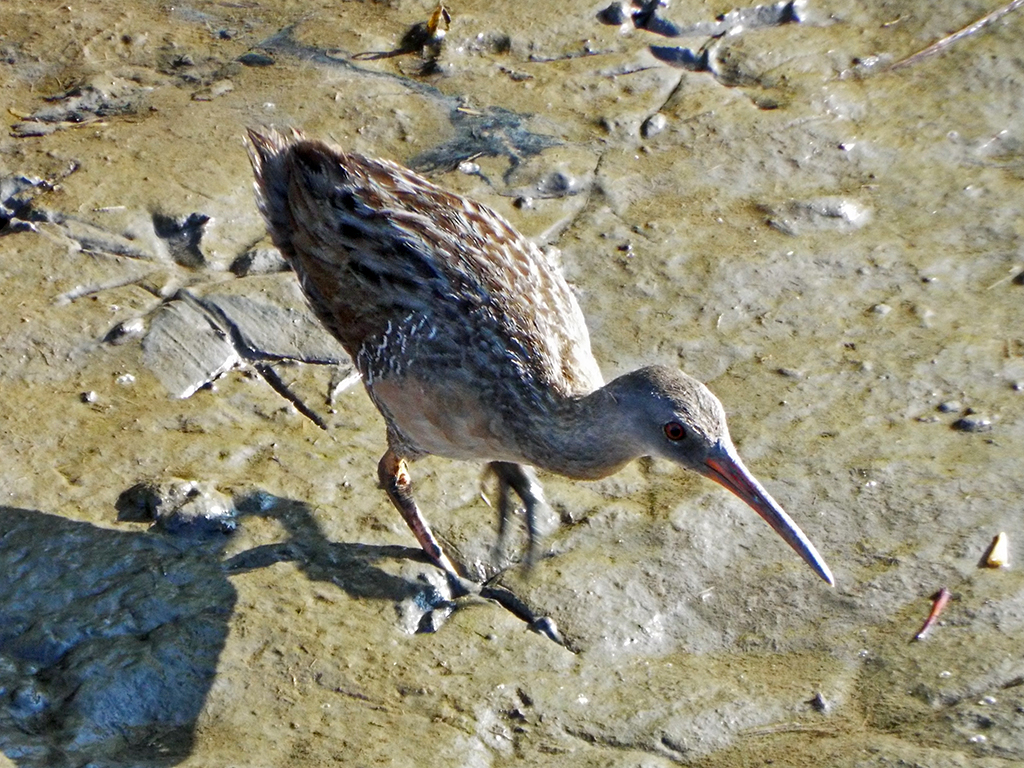
I figured that would be it, but Camille and I were excited to have finally seen rails! We began to slowly work our way back from the boardwalk to the parking area, but a bit of movement caught Camille’s eye as she saw something rail-like briefly fly above the vegetation before dropping down. We watched the spot where it disappeared for a minute before continuing on our way. Then a Clapper Rail walked right out in the open just below the boardwalk! It walked briskly away from me before running back under cover.
This was quite an unexpected treat. You can see from the laterally flattened body where the term “thin as a rail” comes from. Like bitterns, rails are exquisitely adapted to walking and running through reeds and other marsh vegetation, only very rarely flying in the open.
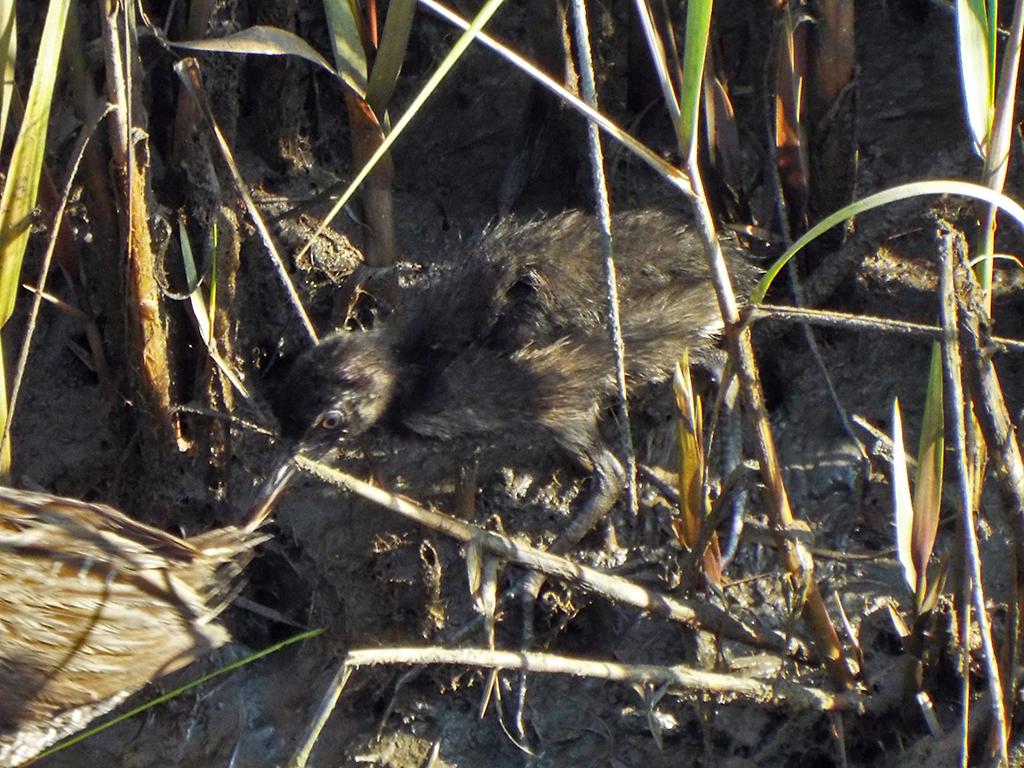
After a few more steps, I glanced over the other side of the boardwalk and another rail came out into the open, this one with a single chick following it! It paid us very little mind before making its way back into the marsh, followed by its chick.
The adult rail had only one chick following it. I don’t know if that means only one survived or hatched, or if more chicks were with the other parent.
Another bird I have not seen (at least not this year so far) is the American Oystercatcher. Recent sightings in Volusia county, not far from Spruce Creek Preserve, gave me some hope to see them. But after stops at the Port Orange Causeway Park and Seabird Island, no oystercatchers were in sight.
We did see a large number of Brown Pelicans (approximately 200 adults and nearly fledged chicks) as well as Double-crested Cormorants and a few egrets on a small island and sandbar near Seabird Island.
The last place we searched for American Oystercatchers was the Ponce Preserve. The eastern portion of the park is mostly vegetated sand dunes while the western portion (closest to the Halifax River) is a tidal marsh and mudflat habitat similar to Spruce Creek. Indeed, we heard more Clapper Rails (including one right below my feet under the boardwalk).
“Under the boardwalk, we’ll be hearing rails…”
Clapper Rails’ homeland.
That about wrapped up the morning, except one mystery. While we were exiting the dune portion of the Preserve and again later while on the boardwalk on the marsh, I heard a distinct, high-pitched, two-toned whistle that sounded exactly like a Mississippi Kite. I sort of joked about it to Camille, but then as we approached the end of the boardwalk, there was a very raptor-like silhouette on a small snag to our left. Perhaps it was that call plus the odd way the bird was perched, but we both really thought it was a small gray raptor. Each of us took a long series of photographs, but the bird was just far enough away to make it hard to know what we were looking at, even in binoculars. Upon closer review on my camera, it became embarrassingly apparent that it was merely a Mourning Dove, but that left the mystery call unresolved. As we were walking back along the boardwalk a small raptor did appear, this time soaring in quick circles, just after another two-tone whilstling call. I got a pretty decent look at the bird, and Camille got two slightly blurred photographs, but I can not make heads or tails out of what I saw. The most likely candidate would seem to be an immature Cooper’s Hawk; however, the mystery kite-like call and some aspects of this birds plumage have me wondering (Cooper’s Hawk calls sound much different than a kite). I’m going to take a closer look at the photographs and compare some other resources to see if anything definite can be determined.
But this is part of the fun and challenge of birding. You can’t always identify every bird you see or hear, and often the birds either refuse to cooperate in terms of posture or lighting, or they can look like a totally different bird. Since they have wings, species can be found far from where you’d expect (as Laura Erickson says, birds are functionally illiterate. They can’t read the field guides to know where they are supposed to be).
Here are the links to my eBird lists and identified species:












 Lonely Birder