It’s Alive!

I had a much more exciting morning at Turkey Creek Sanctuary than I anticipated yesterday (Sunday). Having bemoaned the lack of bird activity in my last post, it seems the birds had to prove me wrong. Which is fine by me!

After a nice “good morning!” song from this Carolina Wren near the main trail-head, I headed off through the relatively new Turkey Oak Trail.

photo carolina-wren.jpg
Nothing could be finer than a Thryothorus ludovicianus in the morning…

I was immediately surrounded by warbler call notes and fluttering activity. Blackpoll Warblers were everywhere. Some were quite curious about me and would momentarily perch just feet away and cock their little heads at me before zooming off.
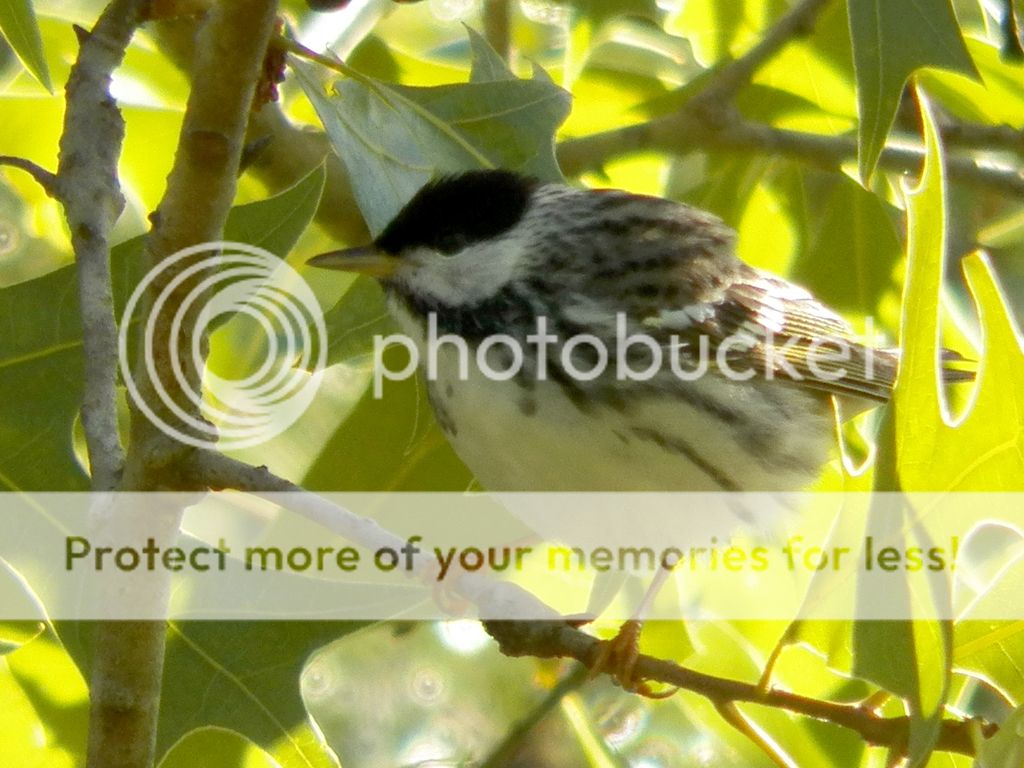
photo black-poll-male.jpg
Puffball – er, I mean Blackpoll Warbler.

One female was a little more defensive and wary, following me along the path and looking at me as if to say, “I’ve got my eye on you.”

photo blackpoll-female.jpg
Several ounces of latent hostility.

I know from experience that some warbler species come in pairs. Usually when there are Blackpoll Warblers there are American Redstarts. Sure enough, there were many of those as well, in all stages of plumage. Pretty much anywhere in the sanctuary I went, there were American Redstarts nearby Blackpoll Warblers. The only exception was one spot near the end of the Turkey Oak Trail where instead of redstarts, the Blackpolls were mingling with Black-throated Blue Warblers. I find American Redstarts somewhat difficult to photograph with my current equpiment. They seen to almost never sit still, and the leap out of frame just as i get my finger on the shutter button.

photo american-redstart.jpg
This little guy stopped long enough for me to get this shot.

The Black-throated Blues were almost as numerous as the redstarts, but tended to stay lower in the canopy and among the Sabal palms.

Further along the way, I got a good look at a yellow warbler but was having an issue getting a good ID. I manged some photos that showed the facial markings pretty well, and decided to check at home with my Warbler’s Guide to pin down what it was. As it turns out, the Warbler’s Guide led me to conclude it was perhaps a Hooded Warbler – either a female or a male that had yet to molt into its bold head pattern. In the end, I posted the photo to Facebook and asked some of my friends what they thought. Corey Finger immediately IDed it as a Prairie Warbler. Upon another look I can see the distinctive “mustache” facial pattern. So not a FOY bird, but cool none-the-less.

photo prairie.jpg
Prairie Warbler.

The Turkey Oak Trail was uncharacteristically productive for me, as I also cataloged my first of the year (FOY) Scarlet Tanager, heard a Blue-headed Vireo, and a very secretive Ovenbird.

There were also several noisy Great-crested Flycatchers that were more-or-less moving in the same direction as me. They stayed pretty high up in the canopy, but came close enough to harrass me a few times, but never got in a good position for a photo-op.

By the time I got to the boardwalk, I was feeling pretty good. The boardwalk itself was a little quieter, but I did get a quick look at an Indigo Bunting male as well as more Black-throated Blues and American Redstarts.

I scared up a couple of Solitary Sandpipers as I got off the boardwalk on the path toward the jogging trail (I guess they weren’t so “solitary” if they were a pair?).

The biggest question, though, is what kind of thrush did I see as I made my way to the emergency boat ramp? I got a very clear look and I can say it was either a Gray-cheeked Thrush or a Bicknell’s Thrush. These two species are almost impossible to distinguish in the field. There is an accepted but challenged difference in their songs, but neither this bird, nor the one I saw further down the jogging path later, did any singing.

photo thrush.jpg
The only shot of the thrush I was able to get. Anyone see anything diagnostic?

At the weir and canal there were some Spotted Sandpipers, a few Green Herons, Cattle Egrets and a Common Gallinule.

That was about it as I walked back toward the picnic area and saw a few more Black-throated Blue Warblers and heard a few bickering Blue-gray Gnatcatchers.

Here’s the total species list for the outing yesterday morning:

  1. Blackpoll Warbler (FOY)
  2. American Redstart
  3. Black-throated Blue Warbler
  4. Black-and-white Warbler
  5. Northern Parula
  6. Prairie Warbler
  7. Ovenbird
  8. Scarlet Tanager (FOY)
  9. Great-crested Flycatcher
  10. Downy Woodpecker
  11. Red-bellied Woodpecker (♫)
  12. Fish Crow
  13. Blue-gray Gnatcatcher
  14. Blue-headed Vireo (♫)
  15. Spotted Sandpiper
  16. Green Heron
  17. Cattle Egret
  18. Common Gallinule
  19. Northern Cardinal
  20. Carolina Wren
  21. Common Grackle
  22. White Ibis
  23. Black Vulture
  24. Turkey Vulture
  25. Blue Jay (♫)
  26. Northern Mockingbird
  27. Indigo Bunting
  28. Solitary Sandpiper
  29. Mystery thrush

It was good to see the old place looking more “birdy” this spring. I am wondering if the migration was a bit delayed, given the brutal winter most of eastern North America had this year, but we’ll see.

Over My Head I Hear Music

Yesterday’s birding time was shortened again due to my knee issue, and I returned to the Turkey Creek Sanctuary. It was not a very active morning, though I did manage three FOY birds.

I started out on the north side of the creek (on the mountain bike trails) and did one of the loop trails. I could hear several species of warbler, but was frustrated in my attempts to identify anything by my lack of warbler song knowledge and the birds hiding too well in the foliage overhead. I recognized Northern Parulas and Yellow Warblers, but the other 2 or 3 songs I have not yet figured out. Just before returning to the car, I followed some woodpecker drumming to a Hairy Woodpecker (FOY) hammering on a dead tree.

I drove to the main part of the sanctuary and walked the boardwalk loop. Again, I heard a couple of warbler songs high in the canopy, but was unable to see anything long enough for an identification. I suspected one song was a Black-throated Blue Warbler (FOY), and it took a good deal of stalking to catch a solitary male.

I heard more Blue-gray Gnatcatchers than I had for a couple of weeks, and there was one Gray Catbird that crossed my path. The Northern Cardinals are growing more vocal every time I come out, but they have not yet reached the distracting cacophony they will later in the spring.

High above, I also heard what was probably a vireo of some species, but it flew away too quickly for me to definitively identify.

The only other bird species of note that I’ll mention here was a White-winged Dove (FOY) that flew over the car as I drove home.

Here’s the species list for the day (including drive to and from the sanctuary):

  • Northern Mockingbird
  • Common Grackle
  • White Ibis
  • Cattle Egret
  • Mourning Dove
  • Eurasian Collared Dove
  • Common Ground Dove ♫
  • Blue-gray Gnatcatcher
  • Northern Cardinal
  • Blue Jay
  • Fish Crow
  • Black Vulture
  • Turkey Vulture
  • Gray Catbird
  • Northern Parula ♫
  • Black-throated Blue Warbler (FOY)
  • Hairy Woodpecker (FOY)
  • Red-bellied Woodpecker
  • White-winged Dove (FOY)
  • Carolina Wren ♫
  • Osprey
  • Sandhill Crane
  • European Starling

A Short Walk In The Woods: Turkey Creek Sanctuary

We had some strong weather move through the area late on Saturday, so I was hoping for a small “fallout” of migrants Sunday morning. For my non-birding or novice birding followers, a “fallout” is when an event, such as a strong weather front or a storm forces birds to land, either to take shelter or to rest from the extra exertion. Often these birds will spend some time after the fallout foraging to get their reserves back up to continue their journey. Unfortunately, there didn’t seem to be much of any fallout activity in the Sanctuary (though there were lots of windblown twigs, leaves and branches in places).

photo backlit-rbwp.jpg
Red-bellied Woodpecker enjoying the sunrise.

I’ve been having some issues with one of my knees, and by doctor’s orders I am limiting my walking distance and time until we figure out what to do; therefore, my outing on Sunday was abbreviated and I mainly stuck to the boardwalk.

I heard more Yellow Warblers high in the canopy (and may have glimpsed one), but otherwise it was still mostly the locals and winter residents. I heard just one Blue-gray Gnatcatcher and there was no evidence Gray Catbirds, so there are changes happening as daylight increases and temperatures rise.

photo n-parula.jpg
Northern Parula playing peek-a-boo with a leaf.

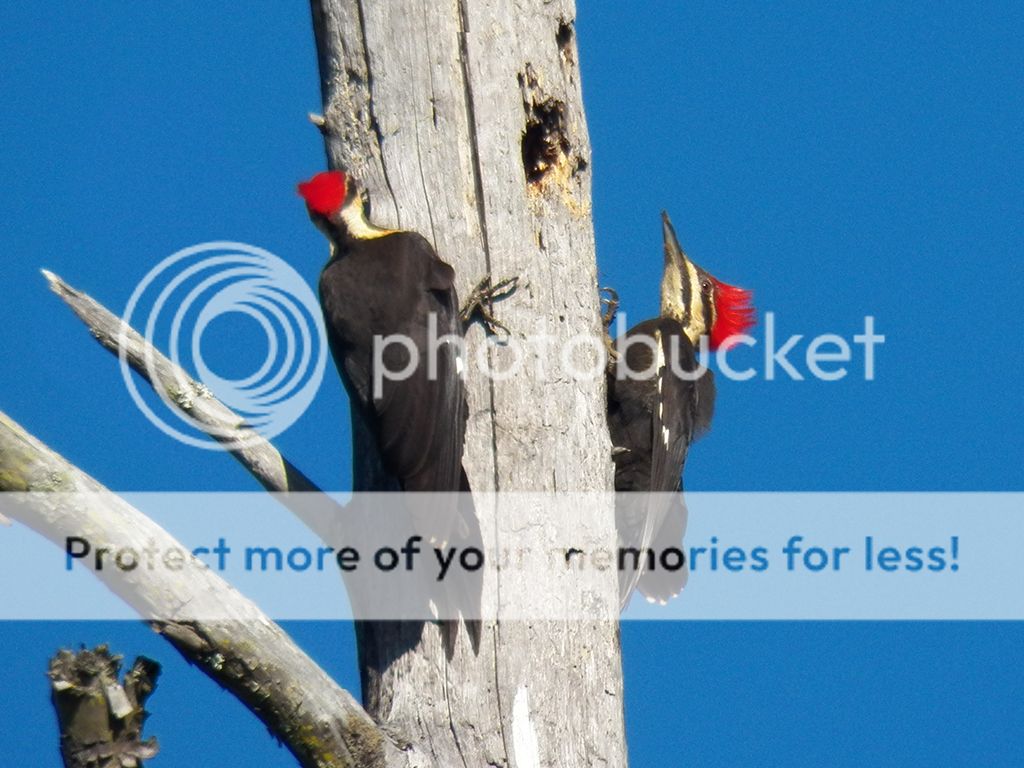
The best watching opportunity happened near the Pileated Woodpeckers’ nest tree, where I saw a total of three at once. One was on the nest tree while the other two (which I think are fledgling juveniles) chased each other around a nearby tree (which has a Red-bellied Woodpecker nest hole in it) and flew awkwardly in circles before heading north and out of sight. The other bird (one of the parents, I assume), stayed a bit longer before flying off in the same direction.

photo pileateds.jpg
Pileated Woodpeckers playing around a Red-bellied Woodpecker nest hole.

The new Floodplain Trail boardwalk I reported on last time is now 100% complete (though there is still a small cache of boards that need to be removed).

photo boardwalk-name.jpg
Future civil engineer?

Since I didn’t walk the southern part of the jogging trail, nor go out by the weir and canal, this weekend’s list is shorter than might otherwise be expected.

  • Yellow Warbler ♫
  • Northern Parula
  • Black-and-white Warbler
  • Blue-gray Gnatcatcher ♫
  • Northern Cardinal
  • Pileated Woodpecker
  • Red-bellied Woodpecker
  • Turkey Vulture
  • Black Vulture
  • Osprey
  • Red-shouldered Hawk
  • Bald Eagle
  • Carolina Wren ♫
  • Black-bellied Whistling Duck
  • Mallard

I am looking forward to getting this knee issue resolved so I can resume “normal birding operations.”

Top O’ The Morning…

I returned to Turkey Creek Sanctuary today hoping to catch some early migrants and to cover more of the paths than last week.

For the most part the “winter residents” are still holding the fort, with a plethora of Blue-gray Gnatcatchers, Pine Warblers, Black-and-white Warblers, Northern Parulas, Yellow-rumped Warblers, Northern Cardinals (who are getting even more vocal) and Gray Catbirds. I do beleive that the Palm Warblers have pretty much vacated the sanctuary.

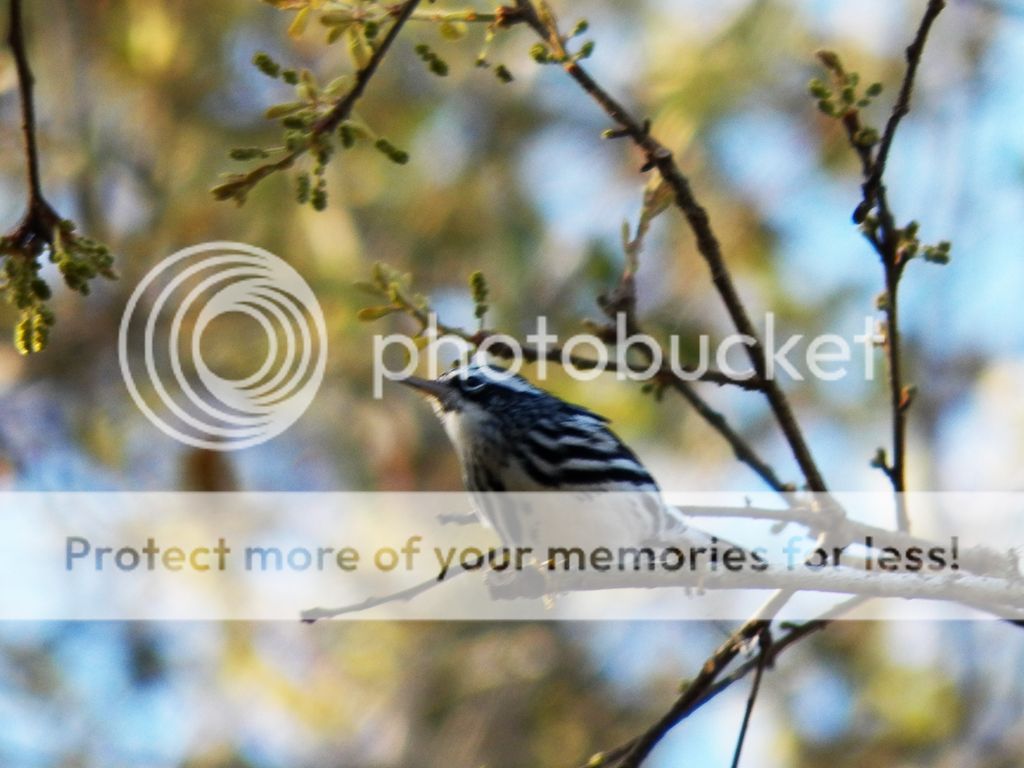
photo bww.jpg
We meet again, my monochromatic friend.

The trees are really starting to leaf-out (even more than last week), casting a greenish light on the boadwalk, which might suit those celebrating St. Patrick’s Day tomorrow!

photo greenish.jpg
May the road (or in this case, boardwalk) rise with you.

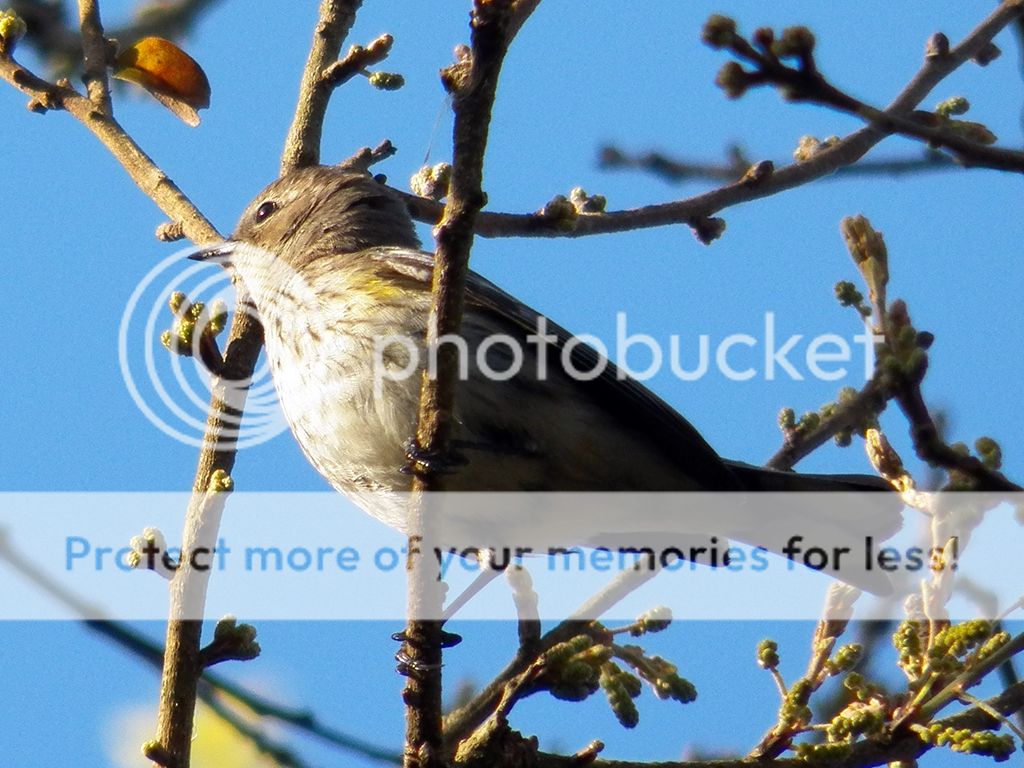
I’ve noticed that the Yellow-rumped Warblers in the area have shifted their foraging strategies a bit. They seem to be skulking more in the underbrush than they had been earlier in the winter. I am fairly sure this is related to what food items are availble for them as springtime approaches.

photo yrw.jpg
Yellow-rumped Warbler.

An exception to the status quo (that is, more signs of Spring) was the unmistakable call of Yellow Warblers in the canopy. Among my first “regular” birds during the summers in New England, Yellow Warblers were always a great sighting on any birding day for me. They were cheerfully loud, beautifully conspicuous, and easy to identify. I tried my best to get an actual visual on one, but they remained stubbornly up in the foliage. (NOTE: The following photo is not mine, but from Wikipedia).

image
Yellow warbler, via Wikipedia user “Mdf”

I also noticed that the boardwalk at the end of the Floodplain Trail is almost finished. I did not see or hear the Boy Scouts working on it today, but I think they just have some finishing work and clean-up left.

photo flood-plain-boardwalk1.jpg
Looking back from the end of the new Flood Plain Trail Boardwalk.

The big surprise of the morning happened when I was looking up into some foliage through a hole in the understory along the Hammock Loop. Just as I Iooked directly above me, a Peregrine Falcon flew right through the clear patch of sky. One second or one foot difference and I might have missed it!

I was also excited to see a flock of Cedar Waxwings near the weir. I somehow missed seeing this species during the Blue Heron Wetlands field trip during the Space Coast Birding and Wildlife Festival, so being buzzed by a 20-strong flock today was a real treat. 

Species list for today (♫ = voice only; FOY=first of the year):

  • Northern Cardinal
  • Gray Catbird
  • Blue-gray Gnatcatcher
  • Northern Parula
  • Black-and-white Warbler
  • Yellow-rumped Warbler
  • Pine Warbler
  • Yellow warbler (FOY) ♫
  • Red-bellied Woodpecker
  • Blue-headed Vireo
  • Fish Crow
  • Black Vulture
  • Turkey Vulture
  • Peregrine Falcon! (FOY)
  • Tri-colored Heron
  • American Coot
  • Great Blue Heron
  • Carolina Wren ♫
  • American Goldfinch ♫
  • Mottled Duck
  • Downy Woodpecker ♫
  • Cedar Waxwing (FOY)

That brings us near to the first of “Official” Spring later this week and the hope of some great birding during migration coming up.

What was that, Bill?

My birding day was an abbreviated walk through Turkey Creek Sanctuary this morning, as I wanted to sleep in due to the start of Daylight Saving Time and wanting to make it to Indiafest before the afternoon wore on.

I bumped into Bill Haddad, a birder who splits his time between North Carolina and Florida. He’s here until late April before departing for the Blue Ridge, where he’ll stay until later in the fall, when he returns to Florida.

We walked most of the boardwalk together, swapping tips and stories, which was pleasant, though it meant not covering as much grounds as I usually do. It was a bit of a “birdy” morning, but most of the action stayed out of sight in the canopy (which is beginning to leaf out as spring arrives).

Bill is an accomplished birder and I learned a few good tips for some areas to concentrate on in April as the migration moves through our area, and his warbler identification is better than mine – something I hope to improve upon this spring.

We had one mystery bird: a light or whitish bird with heavily streaked flanks popped into view on top of a sapling, close by. Bill’s first thought was that it was reminiscent of a Pine Siskin (the quality of the stripes, not the color or shape of the bird). Just the very middle of its throat and belly clear whitish (much narrower than one would expect from a Black-and-white or Blackpoll Warbler) and it had no distinctive facial features. My Peterson’s guide was not helpful, and it moved to quickly for us to get either of our cameras on it. The best explanation we came up with was a Black-and-white Warbler with a slightly aberrant plumage. Such is the way with birding!

We had a nice but quick view of a male Pileated Woodpecker as it worked near its mate in excavating a nest hole (or so we assume – they were on the opposite side of the trunk that we could see).

photo pileated-2014mar09.jpg
Best view of the male Pileated Woodpecker.

Here’s the species list for the morning – many of these were voice only (♪):

  • White-eyed Vireo ♪
  • Northern Parula
  • Pine Warbler (these were excessively numerous today!)
  • Carolina Wren
  • Northern Cardinal
  • Gray Catbird
  • Blue-gray Gnatcatcher
  • Black-and-white Warbler ♪
  • Red-bellied Woodpecker
  • Yellow-bellied Sapsucker ♪
  • Turkey Vulture
  • Black Vulture
  • Blue-headed Vireo
  • Yellow-rumped Warbler
  • Palm Warbler
  • Pileated Woodpecker
  • Downy Woodpecker ♪
  • Fish Crow ♪
  • Red-shouldered Hawk ♪

Bill also told me that he’s recently started wearing hearing aids, specifically to regain his lost high frequency hearing. He’s still learning how to gauge distances, which made for interesting stalking of the Northern Parulas and number of Blue-gray Gnatcatchers. It was interesting to me to hear about his experience with hearing loss as it relates to birds, as it is something I thought I had to deal with recently.

Turkey Creek, February 23, 2014

First, my apologies; I forgot to check my camera batteries before arriving at the park, and they were dead, so no photos from today.

I decided to drop in on Turkey Creek to see how things are going on now that winter is waning. It was a pretty good morning, all things considered.

The most noticible change over my last visit was the sound. Although the area nearest the start of the trails and boardwalk was pretty quiet, once you got closer to the creek, things picked up. There was a pleasing jumble of Blue Jays, Blue-gray Gnatcatchers, Northern Cardinals, Gray Catbirds and Northern Parulas. Northern Parulas are a year-round species in this part of Florida, but they make themselves fairly scarce through the winter. The males are now in their breeding plumage and are singing from the canopy. It was nice to see them (and hear them). Yet another sign spring has arrived in the Sunshine State. Don’t worry, my northern friends, it’s coming I promise!

Other notable wintering species were a Blue-headed Vireo and a couple of Black-and-white Warblers.

I didn’t venture to the canal or weir today, but I did see a small flock of Black-bellied Whistling Ducks fly over.

At one point I heard a very distinctive sounding whining roar overhead, and looked up to see an Osprey, high in the sky! No, not THAT Osprey, THIS kind of Osprey:

image
CV-22 Osprey, via Wikipedia.

It was pretty high up, but the unique engine sound and one of the rotors (on the left wing), catching the sunlight making it almost shimmer, made it hard to miss.

Complete species list for this morning:

  • Northern Cardinal
  • Blue-gray Gnatcatcher
  • Yellow-rumped Warbler
  • Downy Woodpecker
  • Yellow-bellied Sapsucker
  • Tree Swallow
  • Black-and-white Warbler
  • Northern Parula
  • Carolina Wren
  • Northern Mockingbird
  • Gray Catbird
  • Turkey Vulture
  • Black Vulture
  • Red-shouldered Hawk
  • Black-bellied Whistling Duck
  • Great Blue Heron
  • Wood Stork
  • Blue-headed Vireo
  • Boat-tailed Grackle
  • Fish Crow
  • Osprey
  • American Goldfinch
  • Eurasian Collared Dove
  • Mourning Dove
  • Rock Pigeon

Notably absent were the Palm Warblers I expected to see, which have been everywhere else in eastern Florida in droves. The large flocks of American Robins also seem to have dispersed, indicating the nearness of spring not just for Florida, but for points north.

It was nice to see the old place perking up a bit after such a silent fall and winter. 

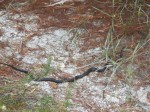
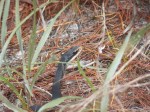
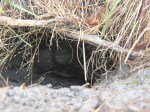
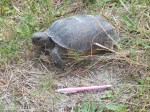
Some photos of my reptilian friends from yesterday’s walk through Turkey Creek Sanctuary.

  • Florida Red-bellied Turtle
  • Southern Black Racer (long shot and a close-up)
  • Gopher Tortoise in its burrow
  • a different Gopher Tortoise with a pen shown for scale (a smallish individual)

Click to enlarge images.

Quiet Time

I went to Turkey Creek Sanctuary today and spent a silent walk through most of it. Besides various groups of birds flying or soaring overhead (vutures, crows and some smaller sparrows and/or warblers), I only saw 6 individual birds inside the Sanctuary, and 6 individuals upstream from the weir on the canal. That’s a pretty low bird density and count for about 3 hours.

Here’s the official list (including the overhead flyers I could positively identify):

  1. Ovenbird (1)
  2. Ruby-crowned Kinglet (1)
  3. Blue-gray Gnatcatcher (2)
  4. Turkey Vulture
  5. Black Vulture
  6. Fish Crow
  7. Northern Cardinal (2)
  8. Little Blue Heron (1)
  9. Cattle Egret (1)
  10. Pied-billed Grebe (1)
  11. Common Gallinule (3)

It was particulary noteworthy to me that I neither heard nor saw any Gray Catbirds at all. The Gopher Tortoises were out again en force, and I managed to catch a glimpse of one squirrel and one snake (a Black Racer, I believe). 

Merry Christmas and Happy Holidays everyone. Depending on my Christmas situation there may be a Christmas Count post upcoming, but I make no guarantees.

It’s quiet… too quiet…

I’ve always wanted to say that, just not while birding, and especially during the fall migration! Turkey Creek Sanctuary was a bust today, in those terms. Oh, there were birds, but the anticipated migration season has been very poor so far. 

I bumped into Shirley Hills, who has been birding at Turkey Creek for 20 years, and she said that hands down, today was the worst day during October she remembers. The story is the same all over the Space Coast. Either the birds are finding other stop-overs, or something drastic is going on. Maybe the birds are delayed, maybe their numbers are way down, it is hard to know.

Here’s my list for today. No pics for this post this time, folks. Sorry.

  • Yellow-throated Warbler (a winter resident here, not a migrant)
  • Ovenbird
  • Blue-gray Gnatcatcher
  • Northern Cardinal
  • Northern Mockingbird
  • Catbird (this one has been absent for me for a while)
  • Carolina Wren
  • Downy Woodpecker

Shirley said that typically this time of year there are at least a dozen or more warbler species moving through the Sanctuary. I can’t vouch for that personally, but my warbler ID had never been very good.

I’d like to be able to sneak off work this week to see if I catch anything, but that’s likely not realistic, so we’ll see what happens next time I get out.

Turkey Creek Heats Up As Things Cool Down

It seems now that September is here and some slightly cooler morning weather has arrived, that things are picking up in Turkey Creek Sanctuary. Notable and active birds seen today inlcuded:

  • American Redstart
  • Blue-grey Gnatcatcher
  • Black-and-white Warbler
  • Swainson’s Warbler (new for me!)
  • Northern Parula
  • Blue Jay
  • Caronlina Wren
  • Northern Cardinal (was there a doubt?)
  • Downy Woodpecker

Voice-only IDs included Hairy Woodpecker (more monotone and deeper version of the Downy’s calls), White-eyed Vireo (again!), Pileated Woodpecker. There was also a Belted Kingfisher that flew overhead at one point. The day was not very good for soaring, though. I saw no hawks or vultures in the air over the park at all.

As you can see from the list above, warbler activity is on the rise as we get closer to the fall migration. 

Today, I tried shifting my birding to Saturday monring (instead of Sunday). As expected, there were a lot more people in the sanctuary than I am used to. As I was on my way to the new Turkey Oak Trail, a woman came down the path and asked me if I knew how to tell the difference between a King Snake (non-venemous) and a Coral Snake (venemous). Various incomplete versions of the rhyme designed to help tell the difference went through my head, which was no help at all. In any case, whatever snake she saw was no longer present, so we both walked and talked along the entirety of the trail. 

Thus ended my first Saturday morning birding adventure of the year.