Christmas Passed

Here we are, right between Christmas and New Year’s Day. Since the middle of December many regions are once again in the throes of the “CBC” – the Christmas Bird Count. This Audubon sponsored endeavor is one way that bird population trends are tracked, long term, across the continent. Count season starts before Christmas and ends just after the New Year.

Last count season, I took part in the CBC in my home county. This time around, I helped my friend David Goodwin and his team with the east Pasco County count, the day after Christmas.

In order to get started on time, I had to leave my house before 3am for the 2+ hour drive to our meeting place at a Denny’s by the interstate, just outside St. Leo. From there we hit several spots in our designated part of the count circle (for an explanation of the CBC and count circles, visit the Audubon CBC webpage).

We started before dawn at the Tyndall Road Marsh [map] to catch birds most active at or before dawn. Much of the day required that we drive on McKendree Road – an unpaved stretch with washboard ridges and potholes – and other rural streets to get to our various hot spots.
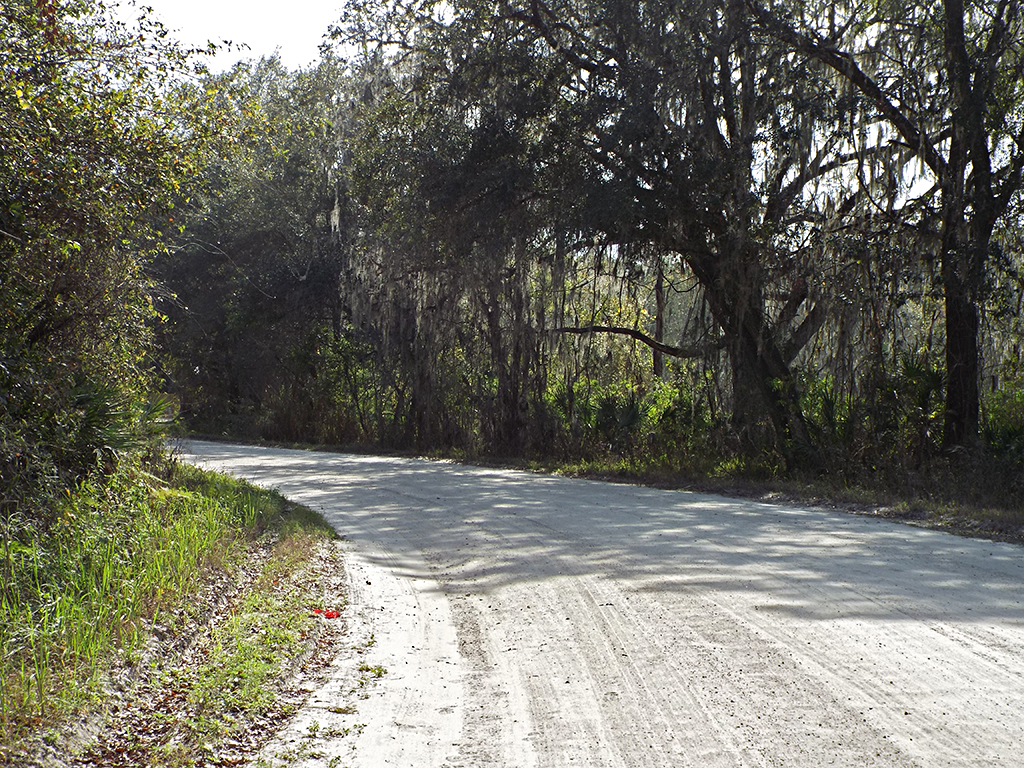
road
This is a typical road in east Pasco County.

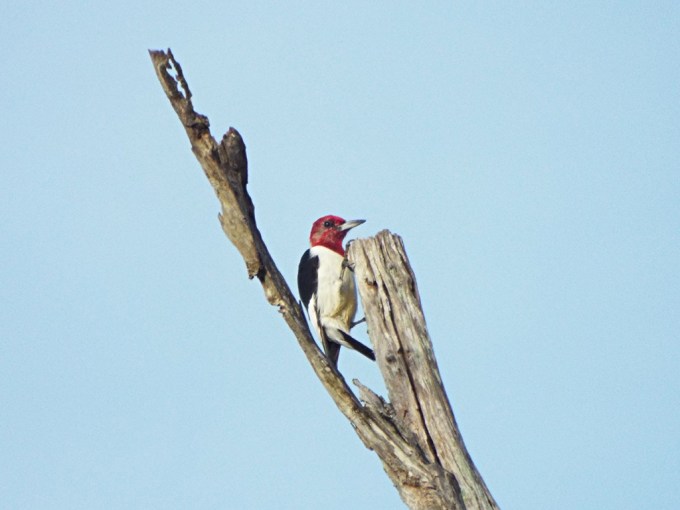
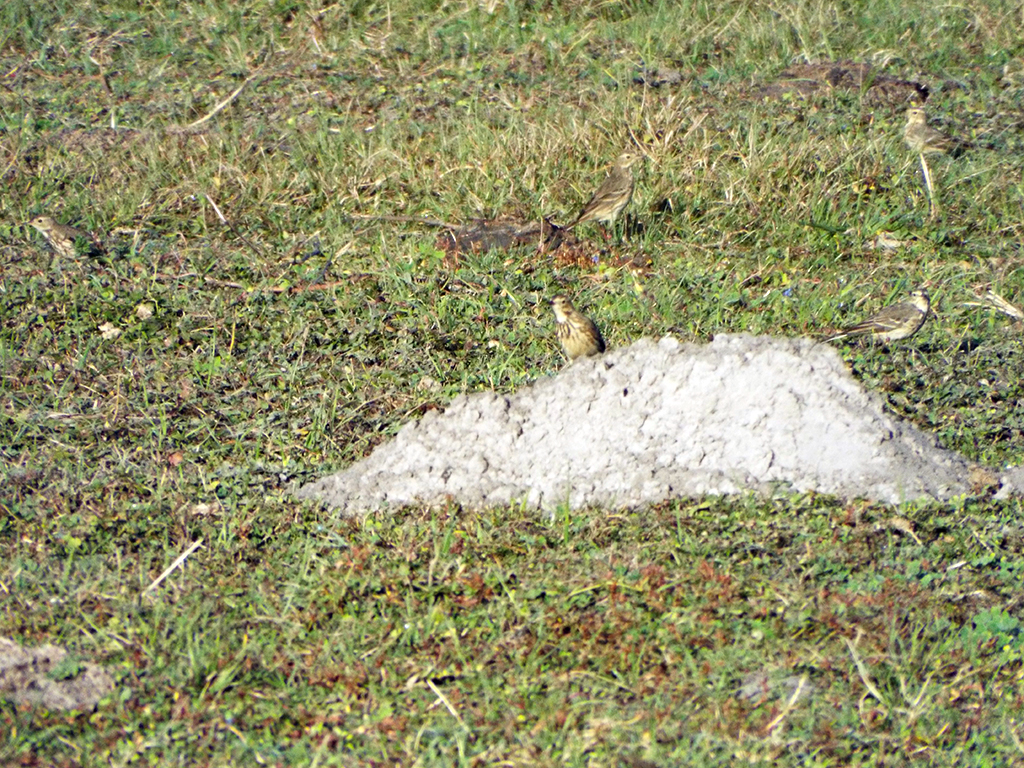
As a group, we found 107 species for the day (I personally identified 99). Some of the good “gets” for the count were American Woodcock (seen by Dave Goodwin before dawn), American Pipits, a couple of Red-headed Woodpeckers, and a Merlin.
 

red-headed-woodpecker
The closest and longest look I’ve had of a Red-headed Woodpecker!


american-pipits
If you look closely, you’ll see 5 American Pipits in this shot. They blend in very well on the ground where they forage for insects.

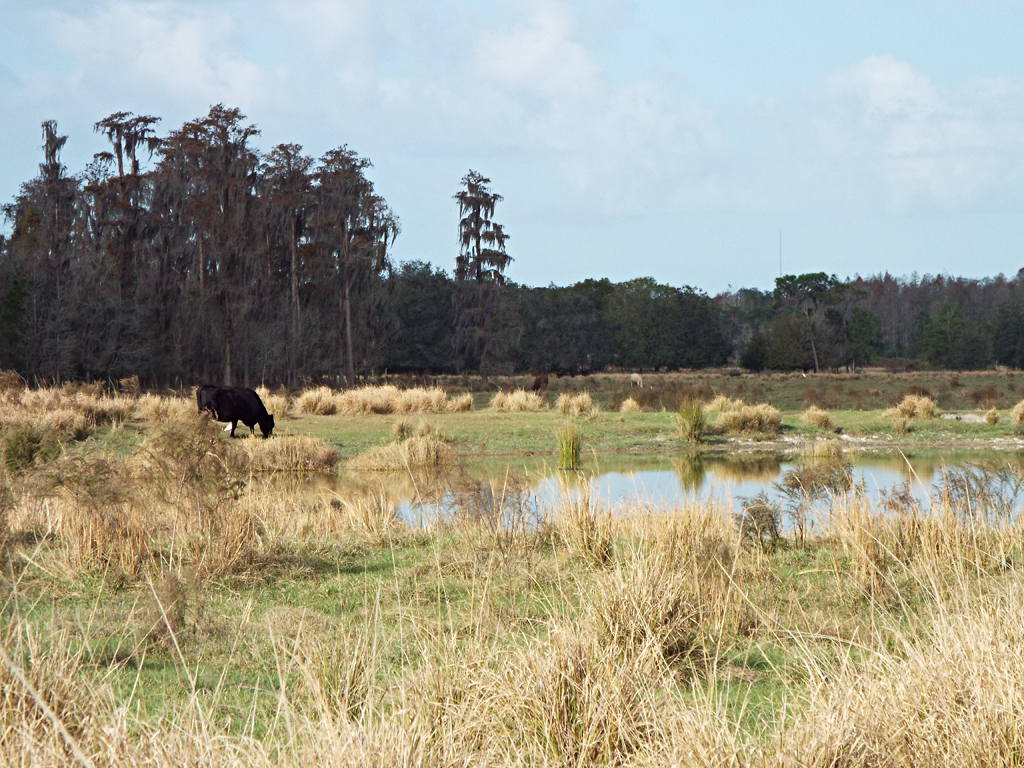
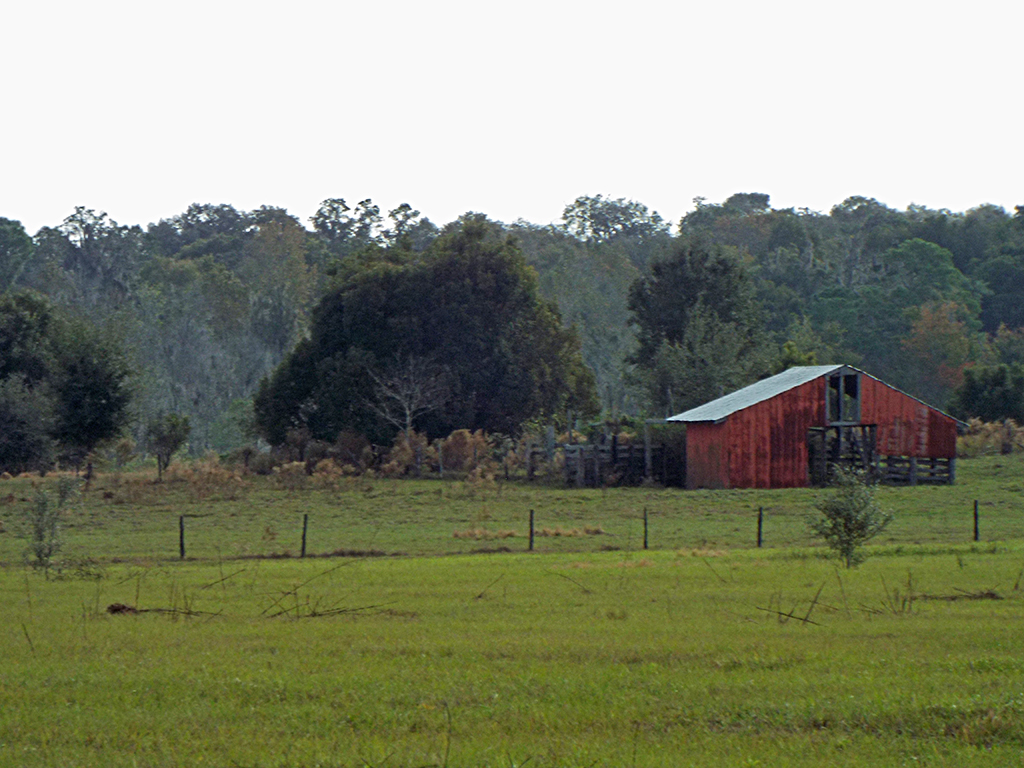
The parts of Pasco County we birded are all quite rural, making for some lovely scenes, and we were only downwind of some of the more fragrant aspects a couple of times.
cow-and-pond
This cow pasture has an obligatory watering hole and an attendant cattle egret, behind the cow. Note the remnant of a cypress dome on the left.
pasco-barn
Florida isn’t all palm trees and thrill rides. I leave it up to you if that’s a good or bad thing.

At Wesley Chapel District Park [map], Erik Haney got a pair of Ovenbirds to respond to a recorded call of that species, but they remained very well hidden. We managed to scare up a Carolina Wren or two, and on the way out, a singing Blue-headed Vireo briefly got us back, scanning the woods to see it.

carolina-wren
Carolina Wrens share the same habitat as Ovenbirds, but are often a little less secretive.

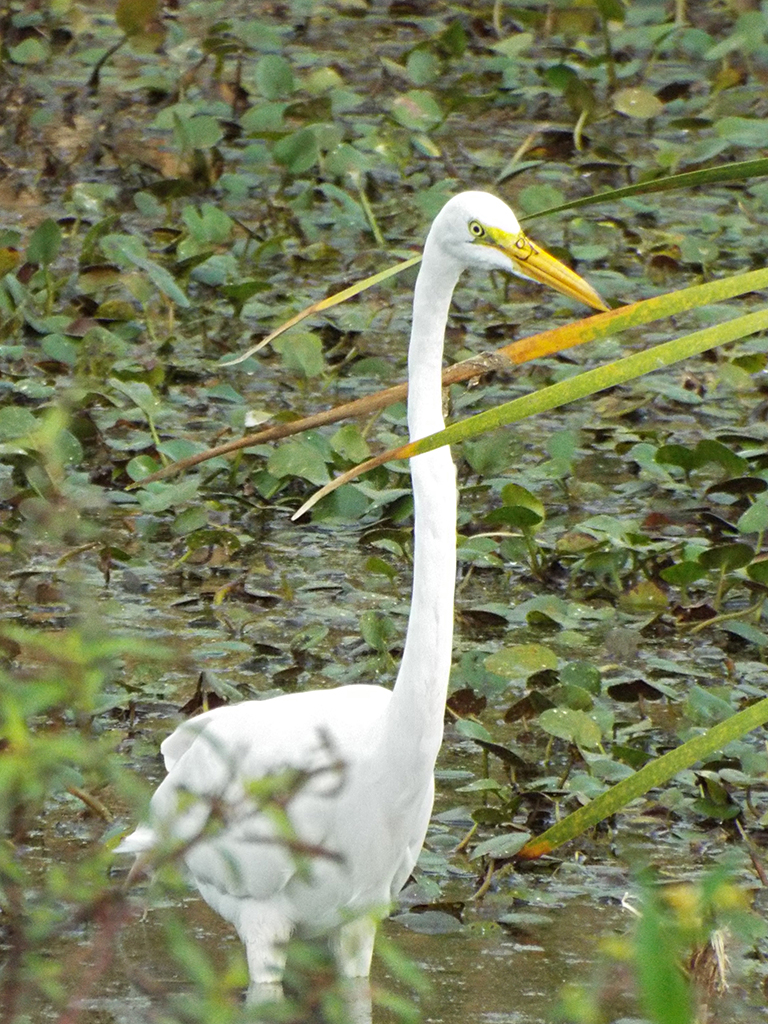
In general, the concentration of wading birds was low throughout the day. The only large numbers were from a distant rookery before dawn, as they dispersed. There were just two wading birds at Wesley Chapel District Park. A Great Egret and a Glossy Ibis were quietly feeding in a small wetland area.
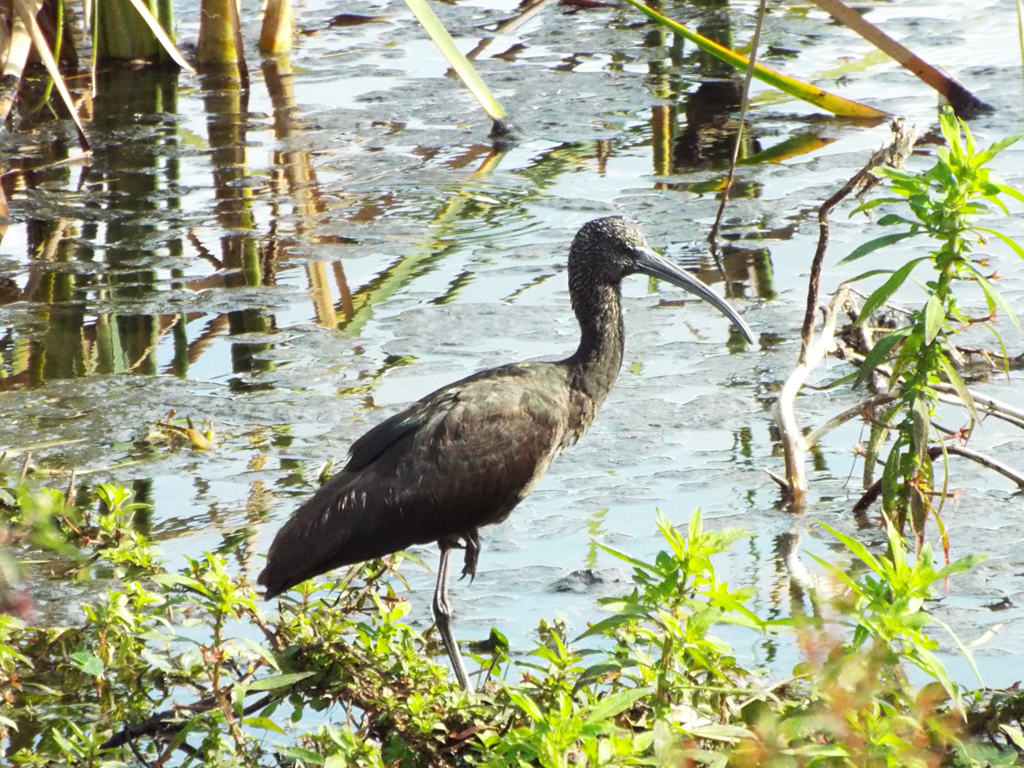
glossy-ibis
A Glossy Ibis, looking a bit less than glossy, over the winter.
great-egret2
A really great Great Egret!

The goal of any count is to see as many birds of as many species as possible. To achieve this birders, of course, use skill, patience, and optics. But there is an even greater urge than usual to “pish” at birds to get them to come out into the open or to use recordings. It is much easier in these days of smartphones to get high quality recordings of almost any bird to draw it out. And it’s not just the recording of the target bird. Some birders use the distress calls of other birds (the Tufted Titmouse is a favorite among eastern birders) or even predator calls, such as screech owls. There’s an always ongoing debate as to how much of this is necessary or causing stress/harm to the birds. It’s generally accepted that the least one uses these measures the better, but it can be hard when doing something like a CBC or a paid field-trip.
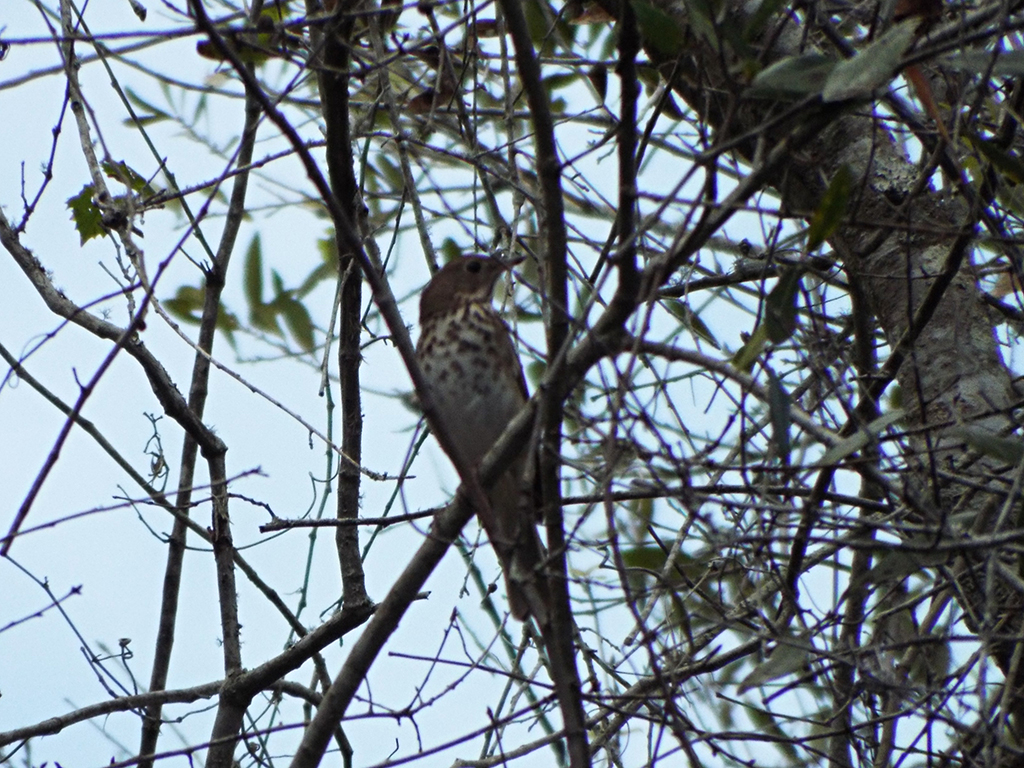
hermit-thrush
Hermit Thrushes were among the birds pulled into clear view due to the persistent playing of an Eastern Screech Owl recording.

Our group made a lot of use of titmouse and screech owl recordings to lure birds out. We relied on it much more than I am comfortable with, but probably did no permanent harm to the birds in the areas in which we used them.
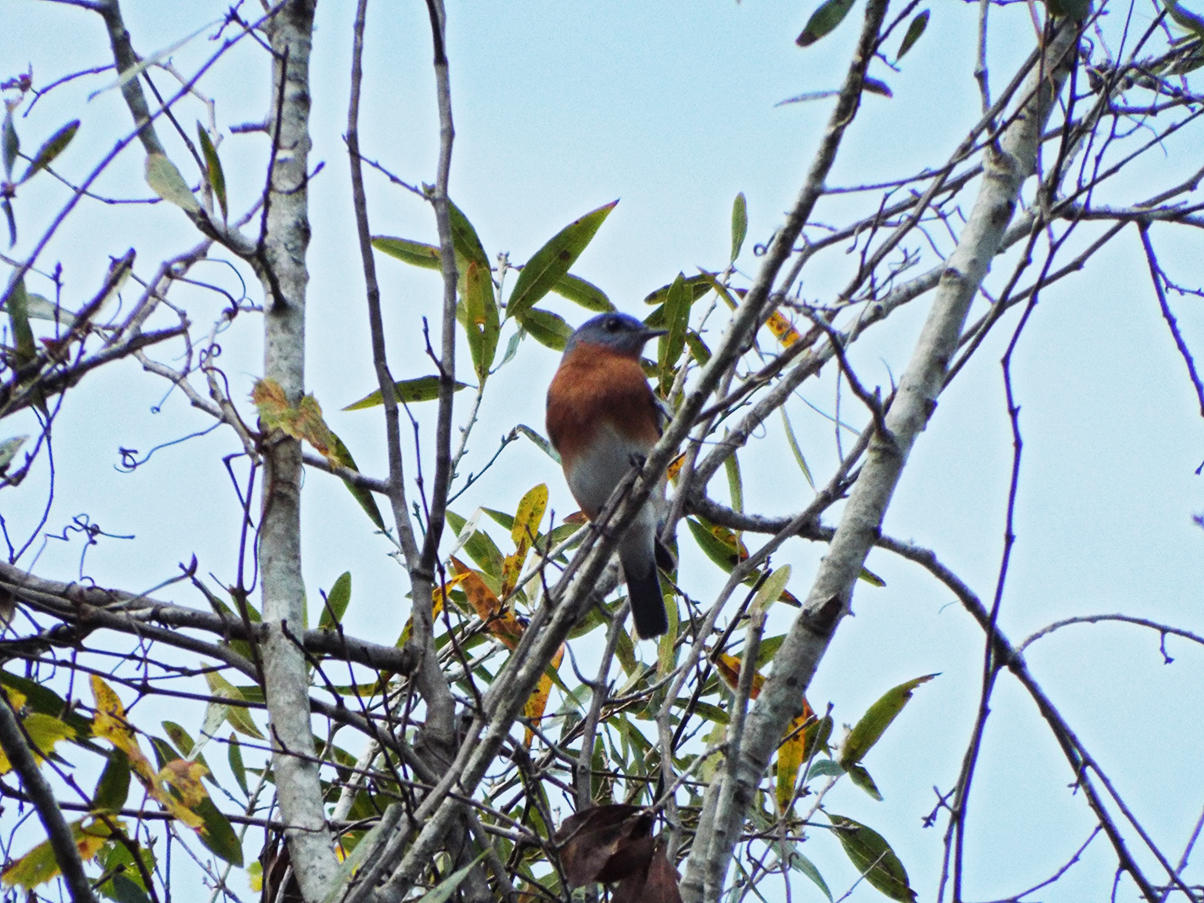
eastern-bluebird
Eastern Bluebirds are normally birds of open or semi-open country, but our recordings lured more than a few into more wooded areas to see what the hubbub was about.

We ended the day with a walk through an old field, looking for sparrows in the brush and weeds and then circling back to McKendree road for a final look for ducks and shorebirds at pond we had scoped out earlier in the day. Throughout most of the day, Dave Goodwin had been commenting on us not having seen a Northern Harrier. By sundown, we still hadn’t seen one. But as I made one last scan in the fading light, I caught one in my binoculars skimming low over the fields. I found it fitting that I found the bird that way. On my first field trip with Dave at the Space Coast festival, our group was heading home in the tour bus, going over our day’s list. The only hoped for or expected bird we didn’t have was a Northern Harrier. Just after Dave commented on how nice it would be to have that bird before we arrived back at the festival HQ, I looked out the window and there was a Northern Harrier, about to fly over the road. “You mean, like that one?” I said to him. It was a cool moment.

For the so-inclined, here are all the eBird lists for our stops. If you poke around eBird, you’ll see Erik’s lists too, which differ slightly from mine. This isn’t for lack of trust or disagreement, it’s that sometimes we were looking in slightly different areas and saw different birds.

Tyndall Road Marsh: http://ebird.org/ebird/view/checklist/S33203139
McKendree Road: http://ebird.org/ebird/view/checklist/S33205152
Wesley Chapel District Park: http://ebird.org/ebird/view/checklist/S33206770
Mariners Harbour Drive: http://ebird.org/ebird/view/checklist/S33210038
Wesley Chapel-Overpass Road: http://ebird.org/ebird/view/checklist/S33207398
Tyndall Road: http://ebird.org/ebird/view/checklist/S33209070
Tyndall Road Curved Woods: http://ebird.org/ebird/view/checklist/S33210011
Kenton Road: http://ebird.org/ebird/view/checklist/S33210738
Old Pasco Road Sparrow Field: http://ebird.org/ebird/view/checklist/S33212110
Hadlock Drive: http://ebird.org/ebird/view/checklist/S33212564
Gray Catbird Loop: http://ebird.org/ebird/view/checklist/S33242919
Wesley Chapel School complex: http://ebird.org/ebird/view/checklist/S33242790
Bridgewater Development: http://ebird.org/ebird/view/checklist/S33242525
McKendree Road, across from pond: http://ebird.org/ebird/view/checklist/S33242994

I would have liked to stay for the end of the day count up from all the teams in the CBC circle, but I had a 2+ hour drive ahead of me. So I said my good-byes and headed home. Birding with Dave is always fun and informative. CBC days are long. You have to drive, walk, talk and share with people for hours, and sometimes the birds are less than cooperative. Birders, as a general rule, get along pretty well. After all, we’re united by this passion for birds. But having Dave head up a team is special, and all four of us did pretty well, and had fun doing it.
Unlimited Ducks!

As much of the nation went into a deep freeze last week, the cold air brought with it those promised ducks to Florida. As I mentioned in my last blog post, ducks and other waterfowl only tend to migrate south when the weather or food supply dictate. When ponds and lakes freeze over, these birds cannot forage and have to move to warmer places.

The ducks came in to the Merritt Island National Wildlife Refuge in massive amounts last weekend. Thousands of birds settled into their usual digs along Black Point Wildlife Drive [map], along with a growing contingent of shorebirds and gulls and terns.

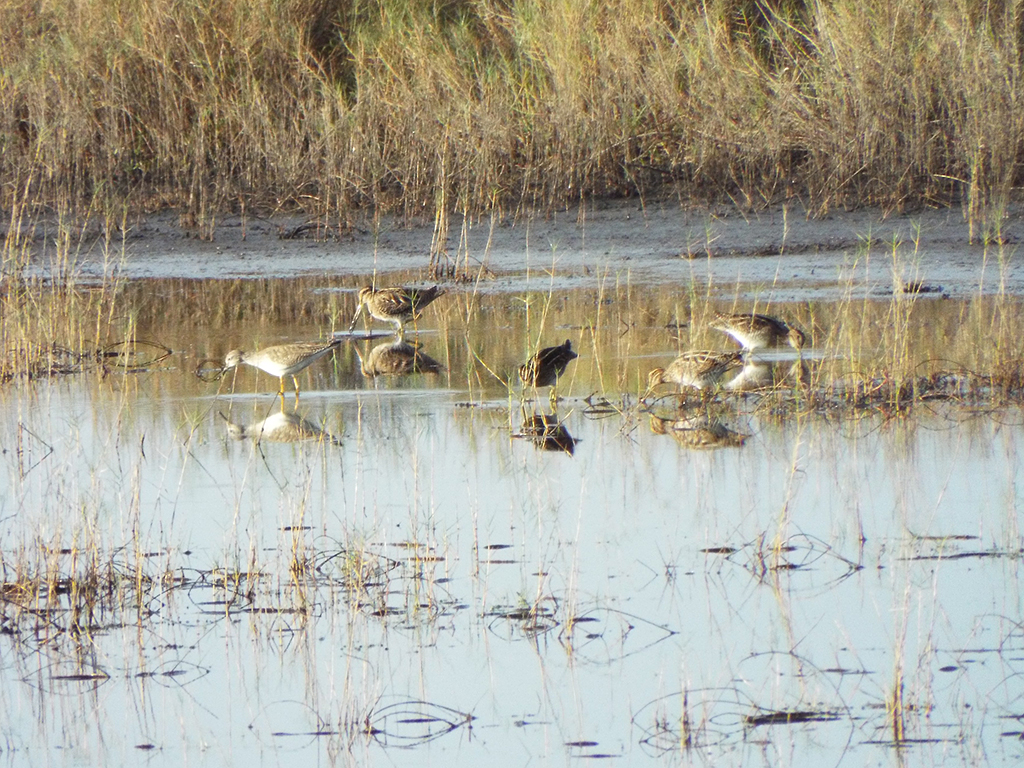
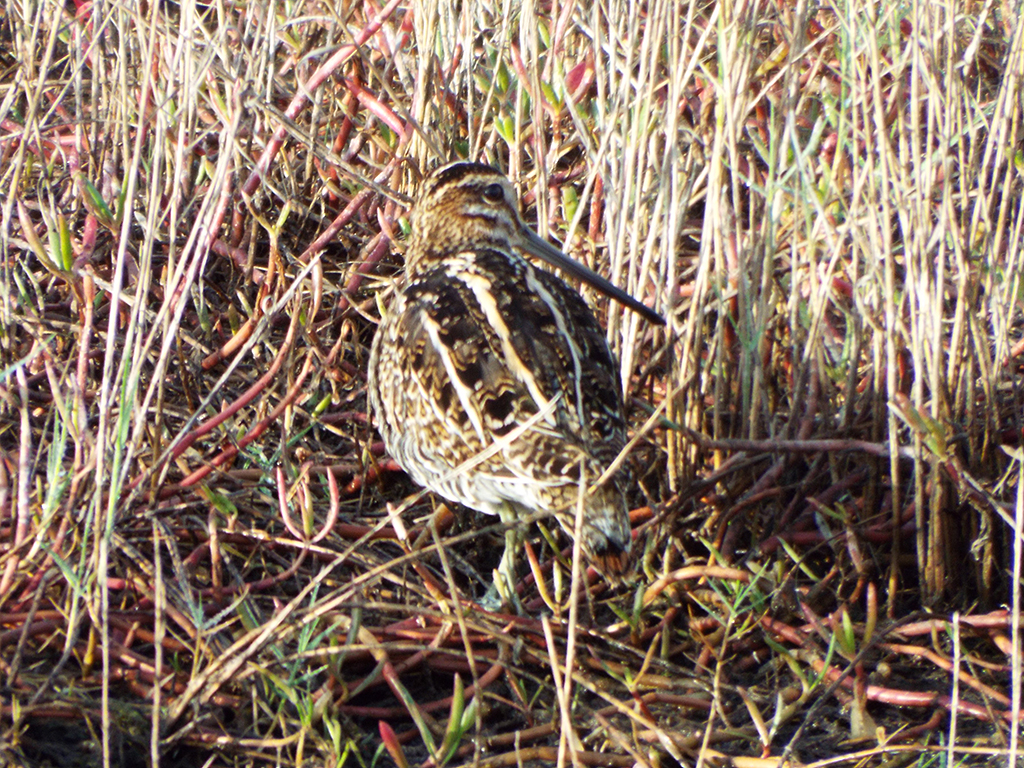
The first most noticeable difference along Black Point was the relative abundance of Wilson’s Snipes, feeding in the open. Snipes are usually fairly cryptic and will suddenly take to the air in an erratic zig-zag flight pattern only when approached very closely, often startling whomever is walking by. They rely on their camouflaged plumage to stay hidden. This was the largest single grouping of Wilson’s Snipes I’ve seen – almost 40 birds.

snipes-yellowlegs
Normally secretive Wilson’s Snipes feeding in the open with Greater and Lesser Yellowlegs.
wilsons-snipe1
Snipe’s bills are similar in size and shape to those of dowitchers, and their feeding methods and posture seemed much alike. This bird was resting in the margin of some tall marsh grass.

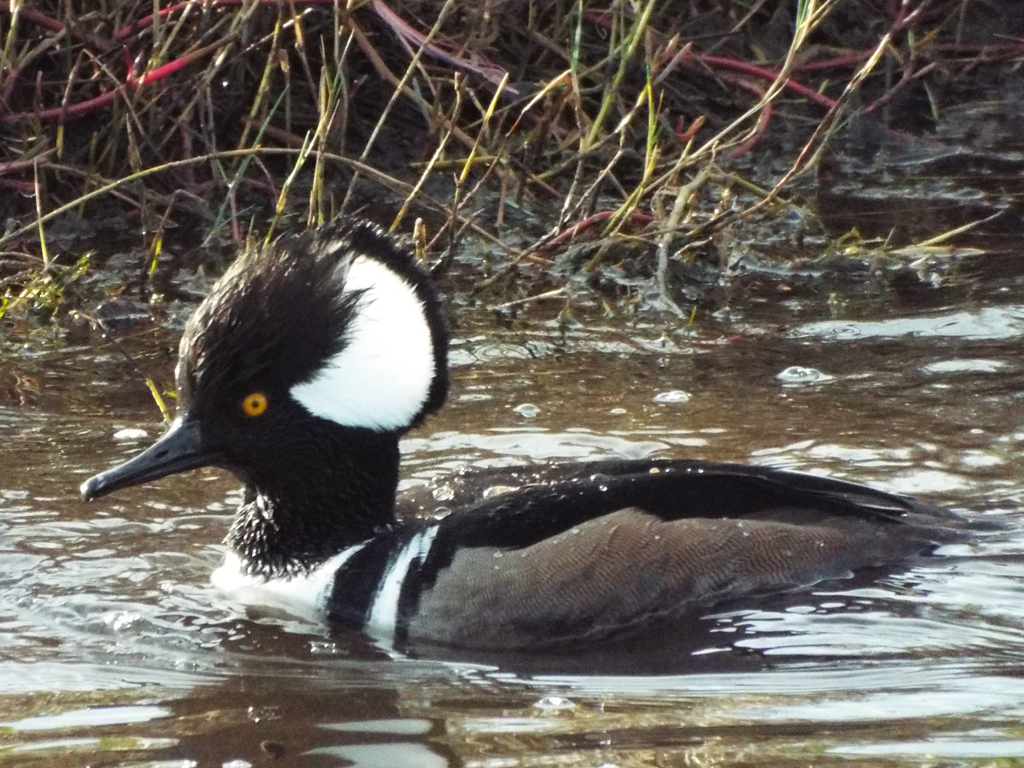
Ducks started appearing farther along the drive. First, Hooded Mergansers in small groups, quickly diving and scouting for prey. When food is abundant, these birds are in almost constant motion and only fully on the surface for a few seconds at a time.


hooded-merganser
A Male Hooded Merganser in an alert posture (crest up).

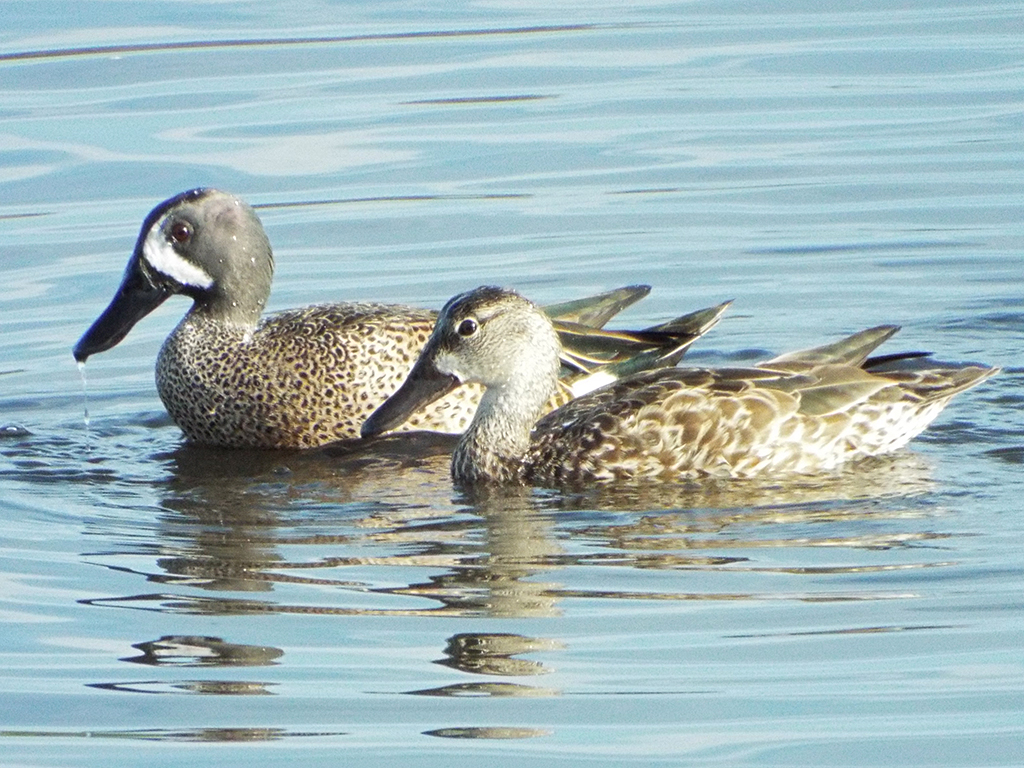
Blue-winged Teals had already arrived in numbers earlier in the Fall, but they have been joined by Northern Shovelers and Northern Pintails.

blue-winged-teal-couple
This male (left) and female (right) Blue-winged Teal pair have likely been at MINWR for weeks.
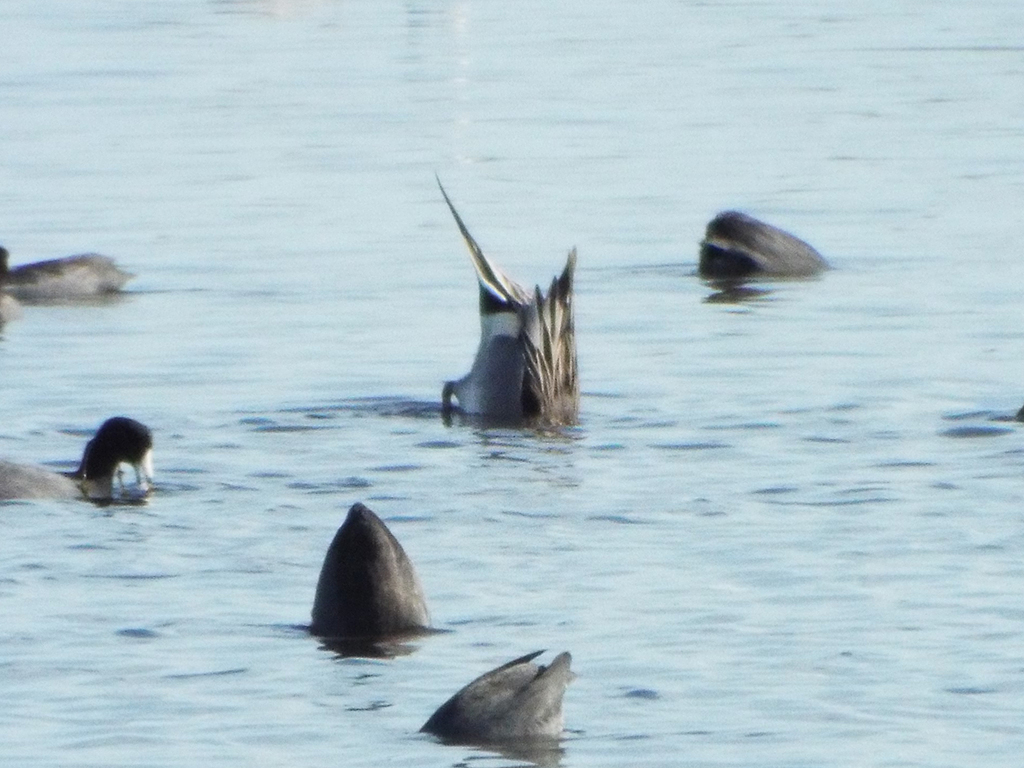
pintail-tail
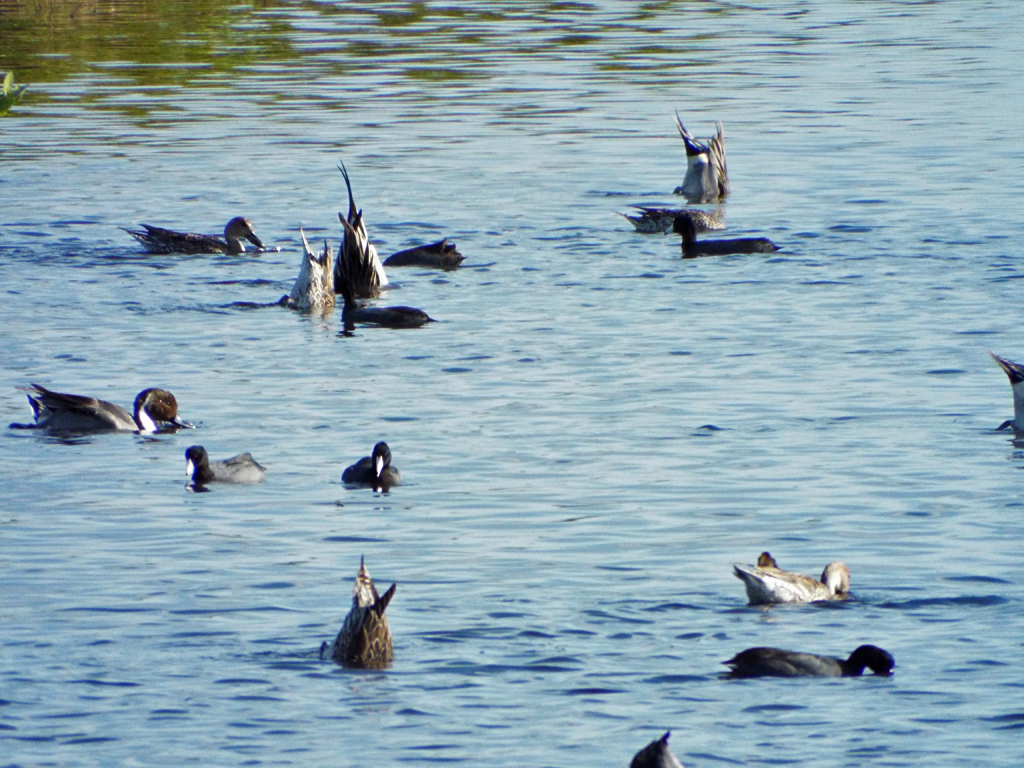
Bottoms up! Even without breeding plumage, you can see how pintail ducks got their name.
shovelers-pintails-coots
A wider shot showing Northern Shovelers, Northern Pintails, and American Coots together. Large areas of the ponds on the west side of the road (north of Cruickshank) were like this.

A large flock of Redheads were just within binocular range, as well as smaller pockets of Gadwalls, Ring-necked Ducks, and even an overflight of Black Scoters. Overhead and in spotting scope range (for those that had them) were many hundreds of more ducks, too distant or backlit to identify.

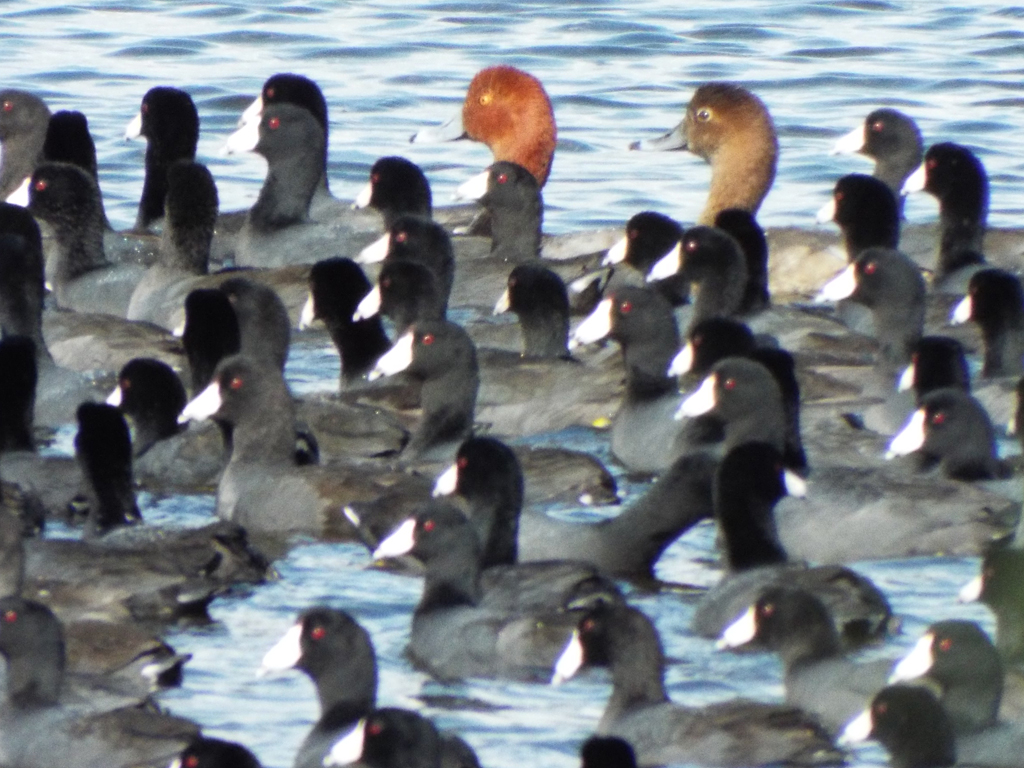
Of course, winter means American Coot time. Coots gather in huge rafts over the winter, using a “safety in numbers” survival strategy from predators, such as Bald Eagles. Sometimes other birds use the coots as cover, some blending in better than others. The largest rafts of coots were actually along Playalinda Beach Road (402) in some mangrove-screened ponds [map]. Google Maps erroneously calls this Max Brewster Memorial Parkway.

redheads-coots
A pair of Redheads trying to fit in.

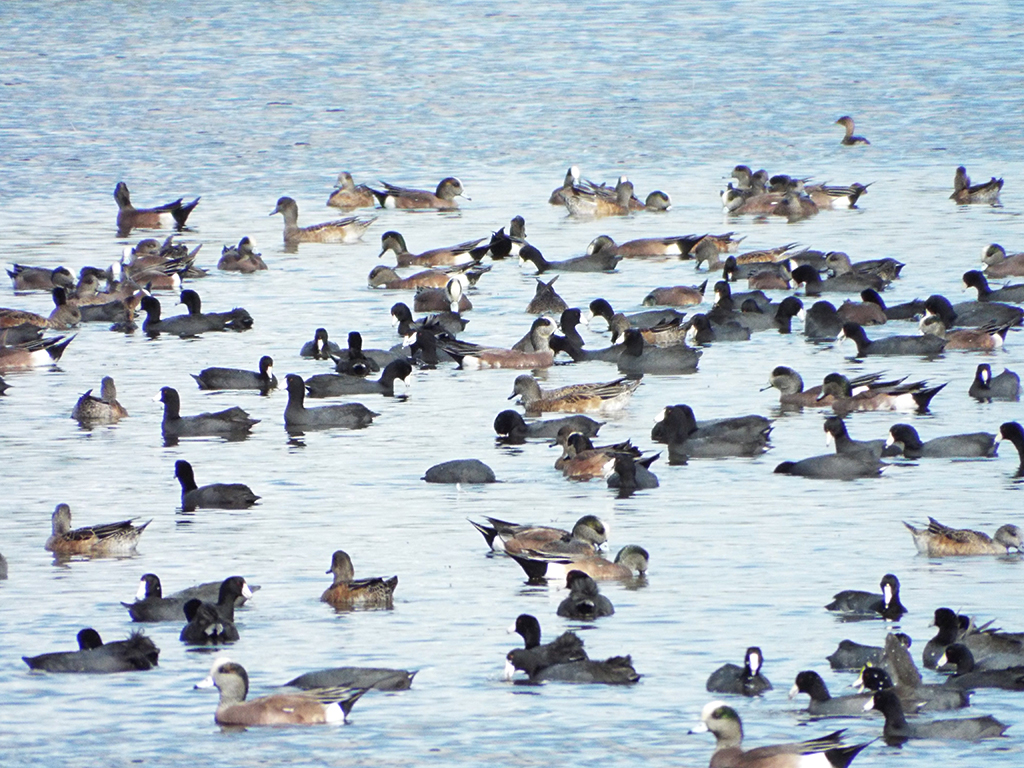
The main event the past few years along this stretch has been the large and vocal numbers of American Wigeons. Whether it’s the added privacy of the mangrove hedge or something about the ecology of the area, the wigeons have staked it out.


american-wigeon
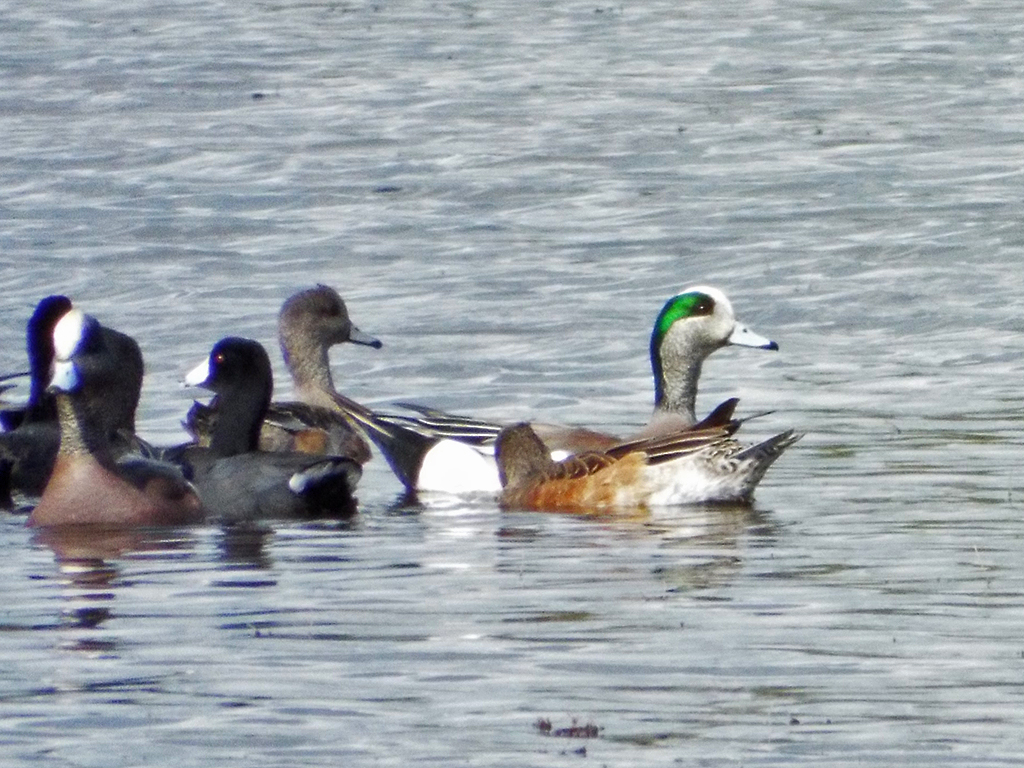
The few gaps in the mangroves allowed for some photos. The green feathers on the male American Wigeons are spectacular when they catch the sunlight.
many-wigeons
Many American Wigeons (and coots, of course). There might be a grebe or two in there, as well.
wigeons-flight
The wigeons were a bit skittish. It seemed like they took to the sky at the slightest approach through the mangroves. The large flocks would break up and circle in smaller groups like this before settling down again.

Hopefully the ducks will stay over longer this winter than they have. The Space Coast Birding and Wildlife Festival begins in just over a month, and the impressive array of ducks at MINWR would be a great treat for field-trip attendees!


Look Who’s Ducked in for a Visit

The major bird “events” that many people look forward to in Florida are the Spring and Fall songbird migrations. In the Fall, hundreds of northern species funnel south through the state either to stay for the winter or on their way to Central and South America. The process is reversed in Spring when these species pass north on the way toward their breeding grounds.

There’s another migration that happens, though. In November, ducks by the thousands begin to arrive on the coasts, lakes, ponds, lagoons, and estuaries. Unlike most songbirds, whose drive to migrate is dictated primarily by length of day, many ducks and other waterfowl migrate when the food supply or weather dictates. If a winter is comparatively mild and food is abundant, these birds may not arrive in Florida until later in the winter, if at all.

One thing to count on, no matter when the ducks arrive, is that there’s almost always a vagrant, rare or unusual species that pops up here and there in central Florida.

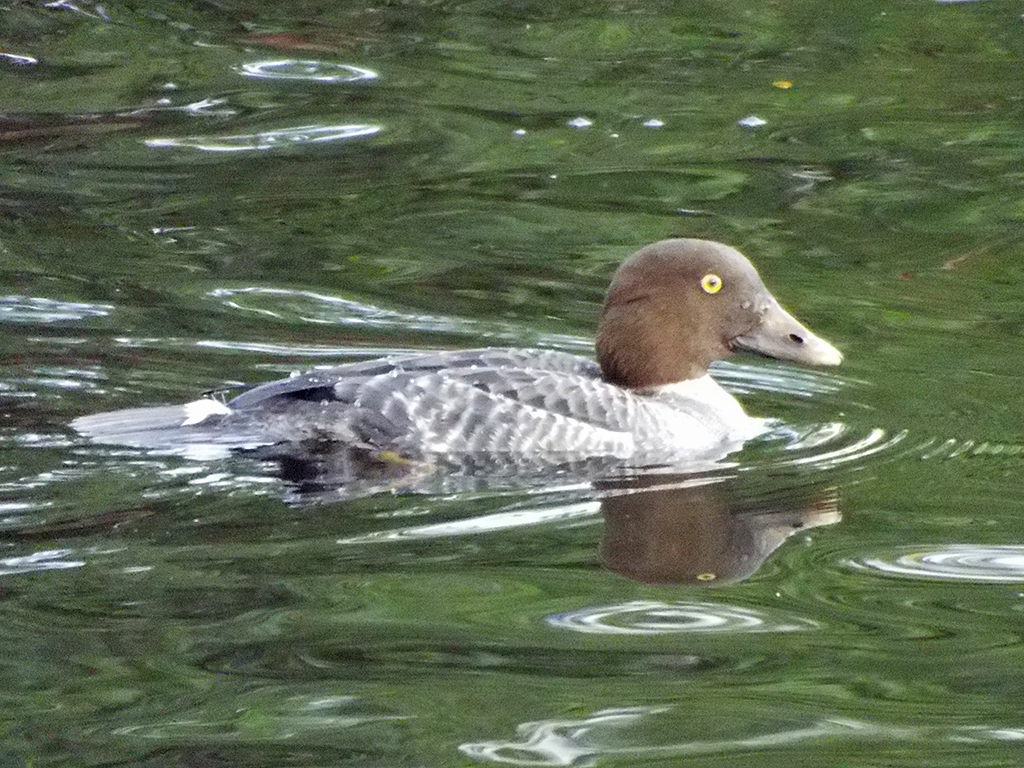
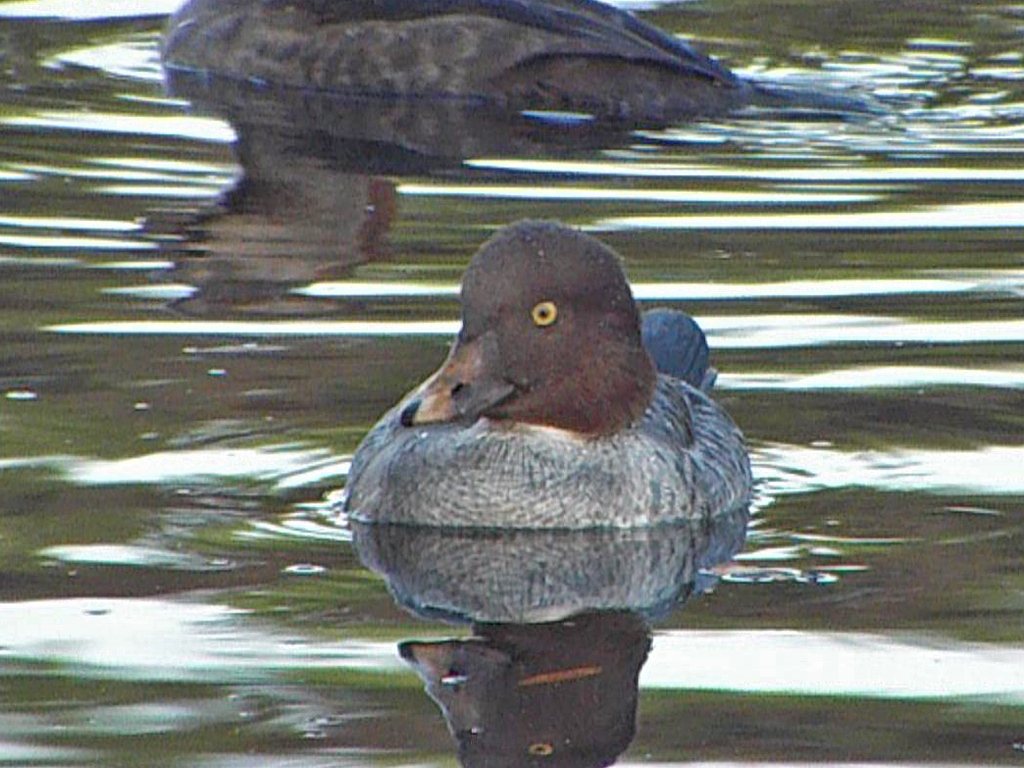
For example, there has been a Common Goldeneye at a small retention pond in Melbourne for the past couple of weeks. This particular bird has been hanging out with a flock of Hooded Mergansers. Common Goldeneyes normally winter as far south as the Gulf Coast and the Carolina Coast (though they are increasingly found in northern Florida).

common-goldeneye1
The brown head indicates that this is a female. Note the gold-colored eye that gives this bird its name.
common-goldeneye3
In breeding season, the tip of the bill would be brighter yellow, contrasting with the almost black base. The black area at the tip of a duck’s bill is called the nail and is sometimes useful for species identification.

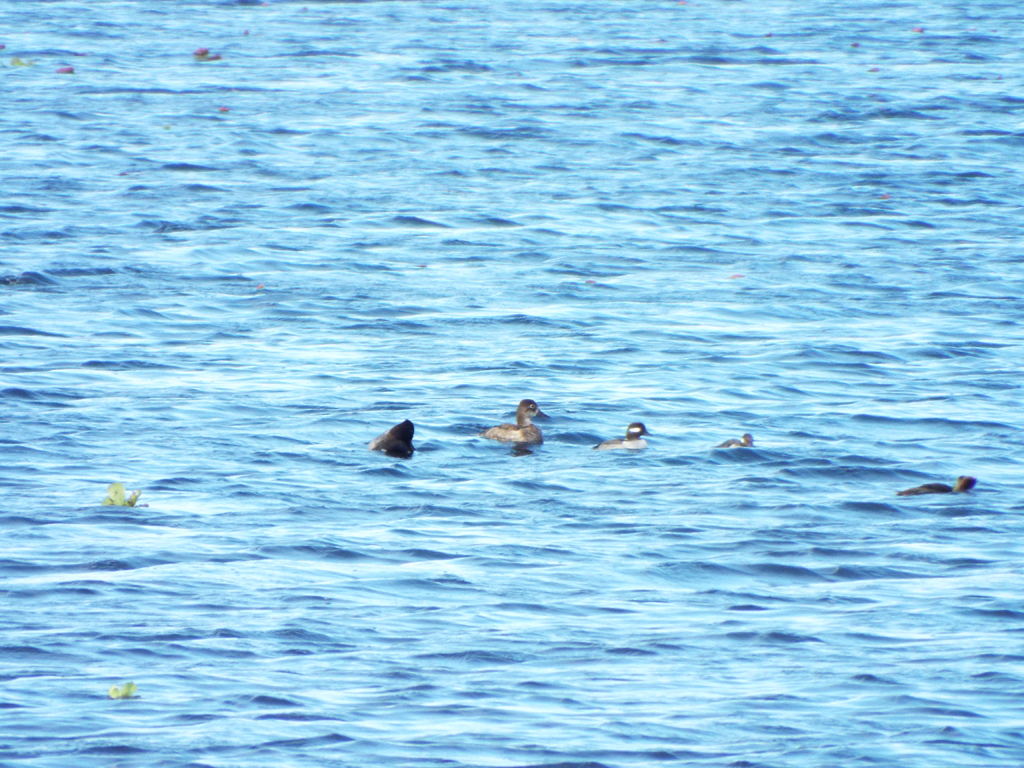
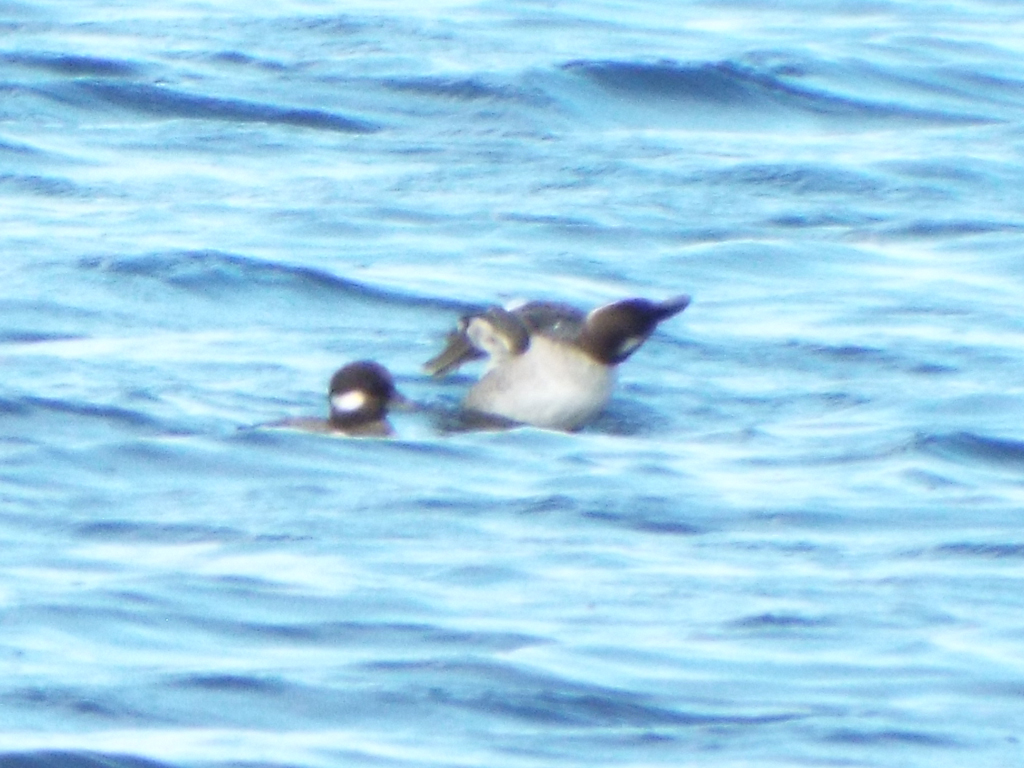
A few days earlier,  another rare but regular visiting duck species was seen at Orlando Wetlands Park. Buffleheads are small diving ducks, usually seen in saltwater bays or along the coast in winter (though they do breed near northern lakes). These Buffleheads (either females or immature males) were swimming and diving with Hooded Mergansers, Lesser Scaups and a Ring-necked Duck. The typical winter range for Buffleheads just extends into extreme northern Florida.

bufflehead-in-there
The Buffleheads are the 3rd and 4th ducks from the left, in this distant shot. The first duck is tipped tail-up, feeding. The white head-stripe was noticeable, even without binoculars.
bufflehead-in-there2
Here’s a close crop of the birds on the wind-ruffled surface of one of the artificial ponds that make up the park.

The two duck species above are among the more often seen, since their historical winter ranges are not that far away.

Other rarer, but regular waterfowl visitors to Florida include Snow Geese, Ross’ Geese, Mute Swans, and Long-tailed Ducks (the latter usually along the coast or in coastal lagoons). Over-wintering ducks and other waterfowl aren’t always that picky on where they stay, either. It often pays off to drive by suburban and urban retention ponds. Keep your eyes open!

Fun with Anis

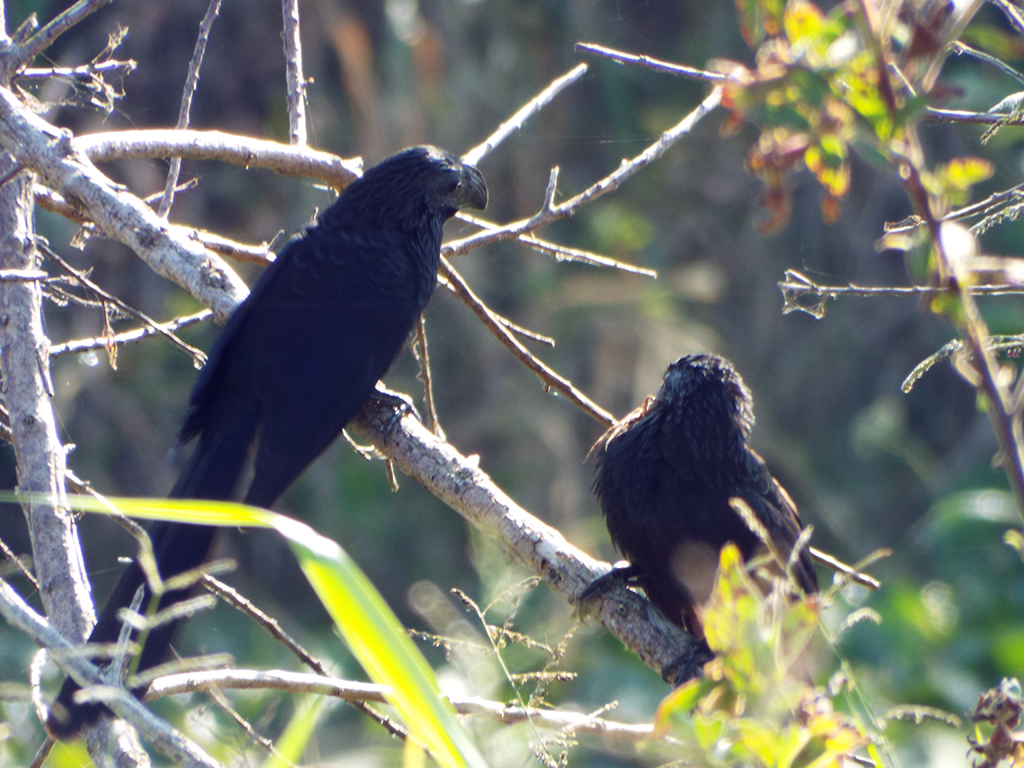
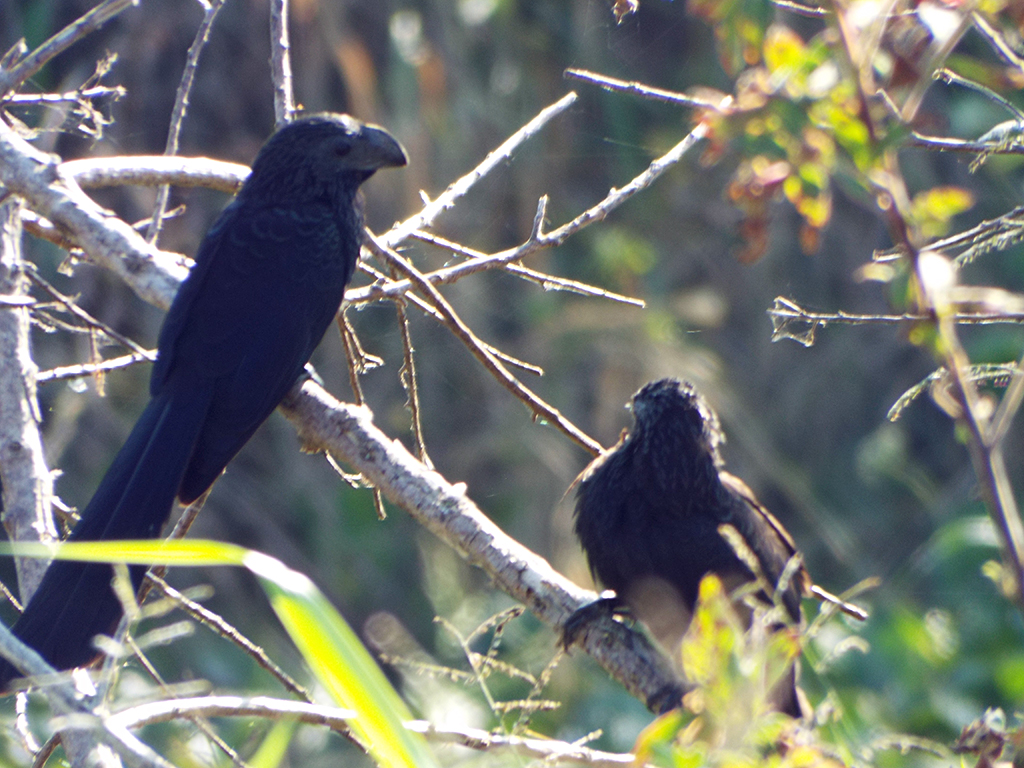
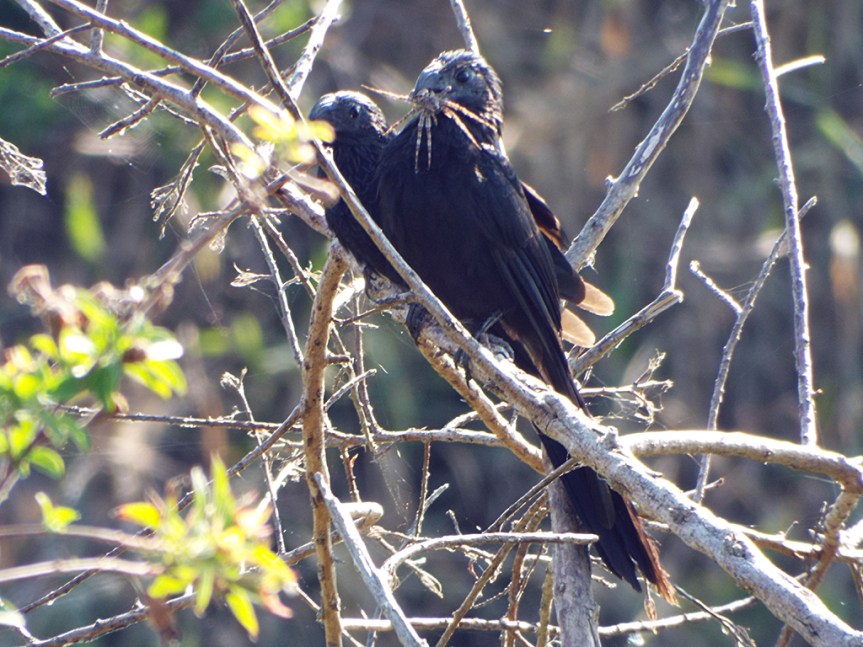
At Lake Apopka this morning, we had this fun little interaction between the two Groove-billed Anis that have been seen there all week.

what-is-that1
“Oh yeah, what you got there?”


what-is-that2
“Uh…wait. I don’t think I like this…”
 
what-is-that3
“What? This thing is GREAT!”           “…keep that thing away from me…”
The bird with the spider tried to give it to the other one several times, even chasing it a bit up the branch!
Oh, and Groove-billed Ani? Lifer!

Fellsmere Friends

Here are just a few of the friends I met down near Fellsmere this past week.

t-vultures
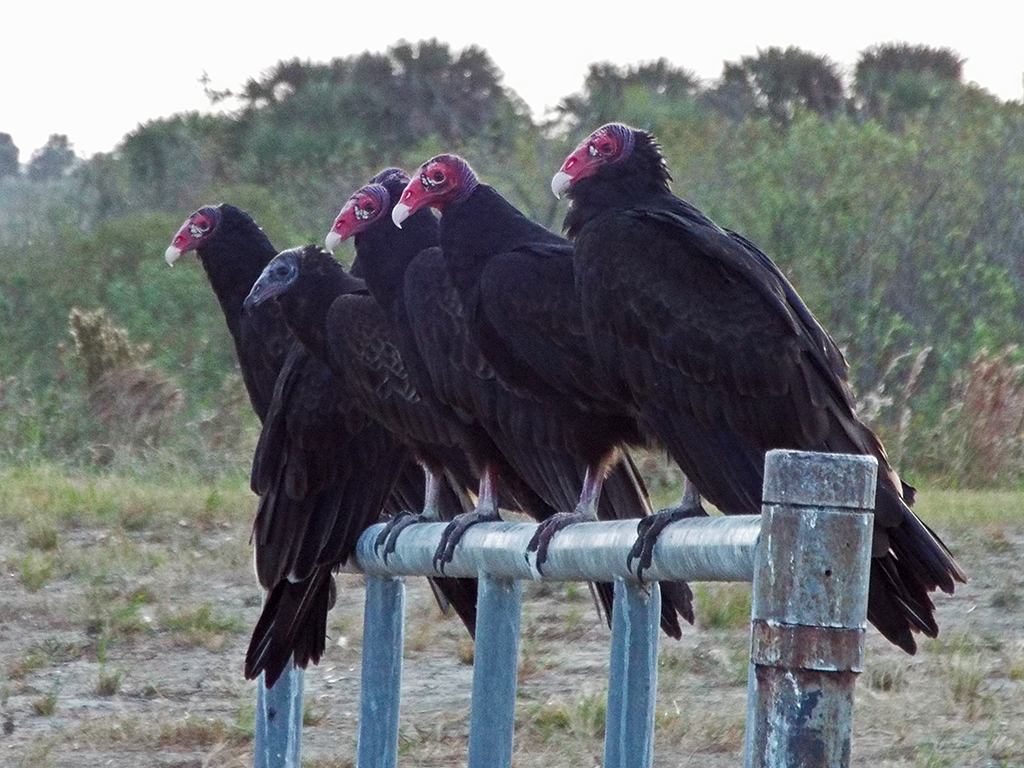
Can you spot the youngster in this line of Turkey Vultures?
red-shouldered-hawk
This “Florida form” of Red-shouldered Hawk has lost (perhaps molted) its tail. It is just growing back.
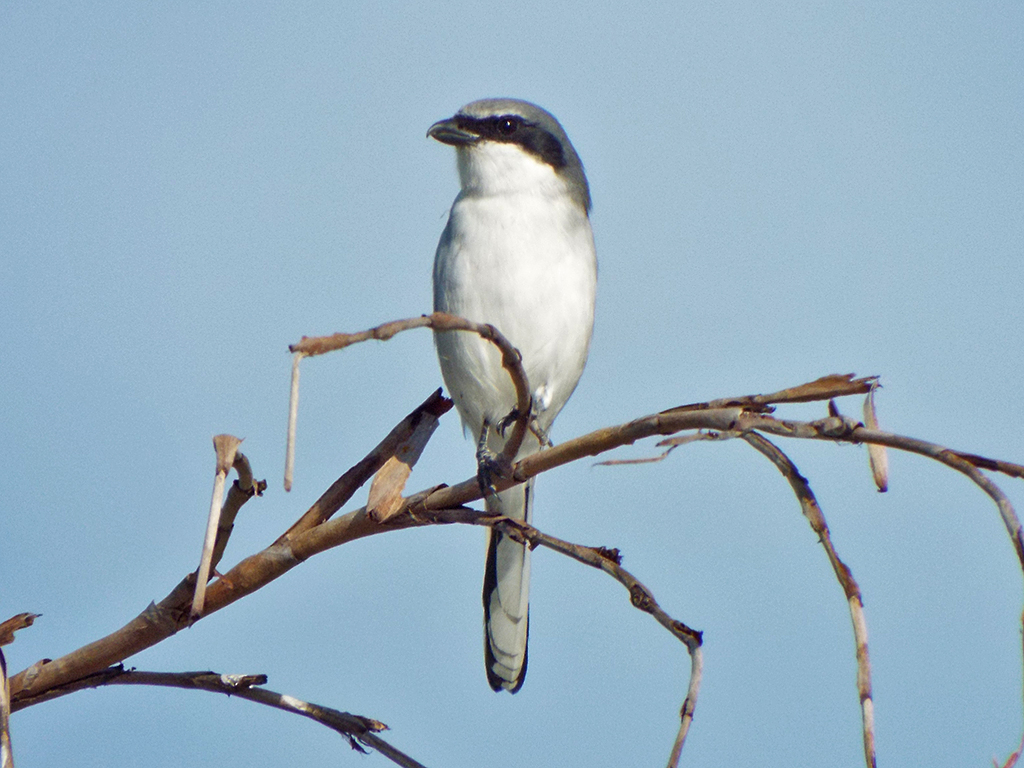
shrike
Loggerhead Shrikes are so named because of the relative large size of their heads to their bodies. Loggerhead Sea Turtles are named for the same reason.


Miami Thrice: 3 Lifers and the Joy of Suburban Birding

As I mentioned in my last post, I’ve had a couple of bigger birding adventures this fall. Two weeks ago, in a push to try and see some south Florida exotics and specialties, Camille and I went to the Miami area for a day trip. Our main goal was to find Spot-breasted Orioles, Red-whiskered Bulbuls, White-crowned Pigeons, and Common Mynas. Parrots were also a good possibility.

Hurricane Matthew had passed offshore the week before. There was still evidence of coastal flooding and inundation here and there, but no major damage that I could see.

We stopped at A.D. Barnes Park [map] first, since there had been a report of a Sulphur-bellied Flycatcher there several days before. Unfortunately, we struck out with that bird, and we dodged raindrops and tough lighting most of the morning.

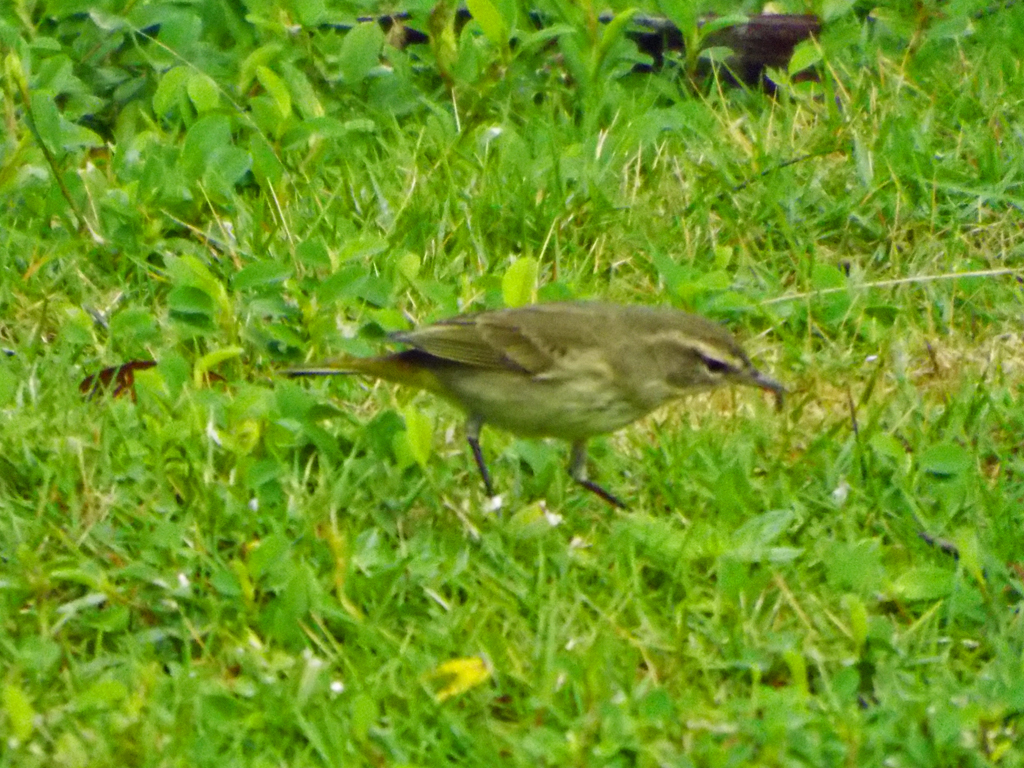
palm-warbler
Palm Warblers were really hopping about in many places, here for their winter stay.

There were a few different warbler species in the wooded sections of the park, including by the nature center, but nothing in large numbers. Some parrots would circle nearby from time to time, but the canopy kept us from identifying which species it was. There are several established parrot species now in south Florida, including the now familiar Monk Parakeets (also known as Quaker Parrots) and Blue and Gold Macaws.

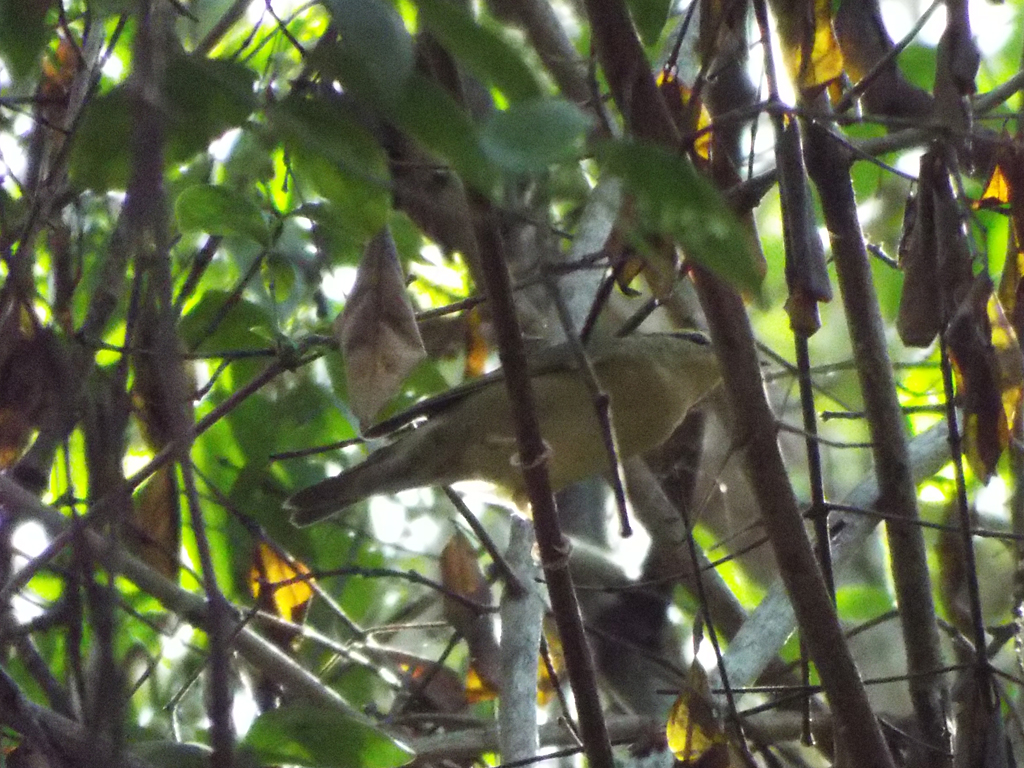
worm-eating-warbler
This Worm-eating Warbler may not be as flashy as a parrot, but it was a nice find.

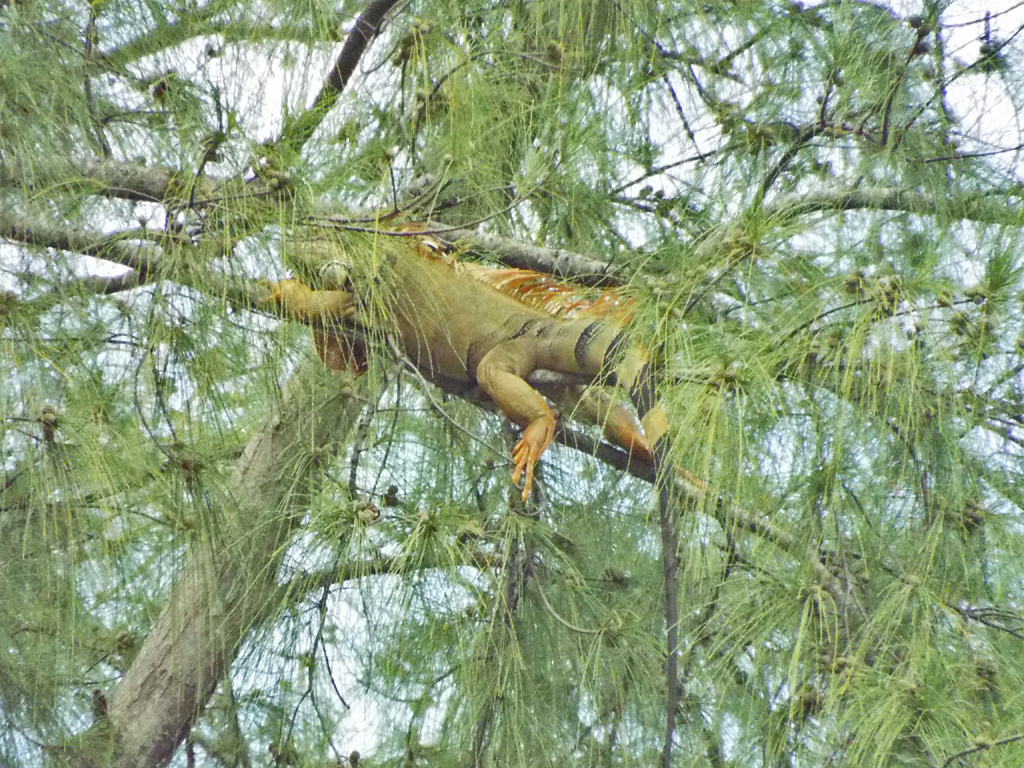
At the other end of the park, I looked in one of the trees over a pond and thought someone had lofted a pool-toy raft into the branches, but it turns out it was an iguana! This invasive species (introduced via escaped or released pets) can grow several feet long. They often lounge in the trees, I’ve been told.

iguana
A real lounge lizard?

There was also a Merlin being harassed by a flock of Blue Jays. Eventually the jays gave up and the little raptor staked out some lookout perches high above the park, but it was very wary of us and kept flying off a bit as we approached. This photo was the closest it let us get before flying off and out of sight.

merlin
Merlins arrive in October and generally stay the winter.

Our last birds in the park were some Northern Parulas, Chestnut-sided Warblers, and a pair of male Cape May Warblers, still sporting some bright yellows.

cape-may-warbler
One of two Cape May Warblers, enjoying berries from ornamental plant in the park.

eBird list for A.D. Barnes Park:
http://ebird.org/ebird/view/checklist/S32064632

After leaving the park, we headed for some neighborhoods in the Dadeland/Kendall area of Miami [map], hoping to find the exotic species I mentioned at the start of the post. These birds were somewhat hard to get good looks at, since they tend to hang out in peoples yards or behind houses.

I did get a quick look at a Spot-breasted Oriole in someone’s tree, and there were the typical mockingbirds and cardinals. We did see a White-winged Dove as well as a Loggerhead Shrike, too. At the King’s Creek Village subdivision we were surprised by a Red-whiskered Bulbul that was flycatching from a fruit tree of some sort. We had initially walked into the area behind some apartments to scout it out, and the bulbul surprised us. It stayed in plain sight until I ran back to the vehicle to get my camera. On my return to the immediate area, it of course flew off never to be seen again!

eBird lists for Kendallwood and Kings Creek Village:
http://ebird.org/ebird/view/checklist/S32068268
http://ebird.org/ebird/view/checklist/S32069300

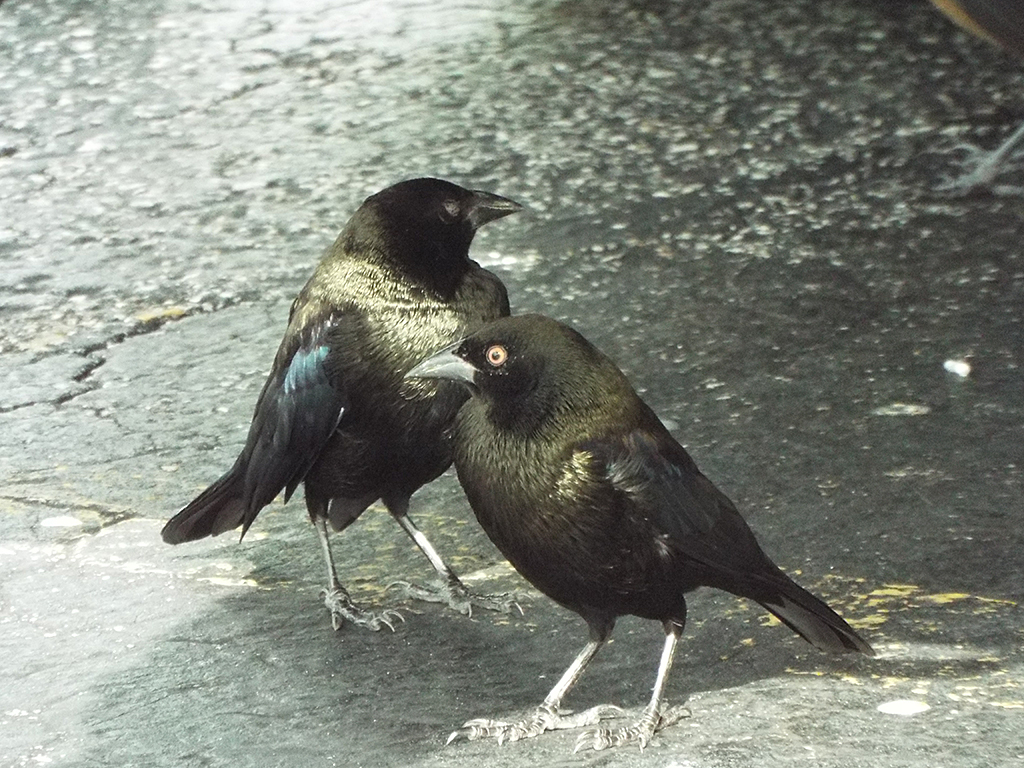
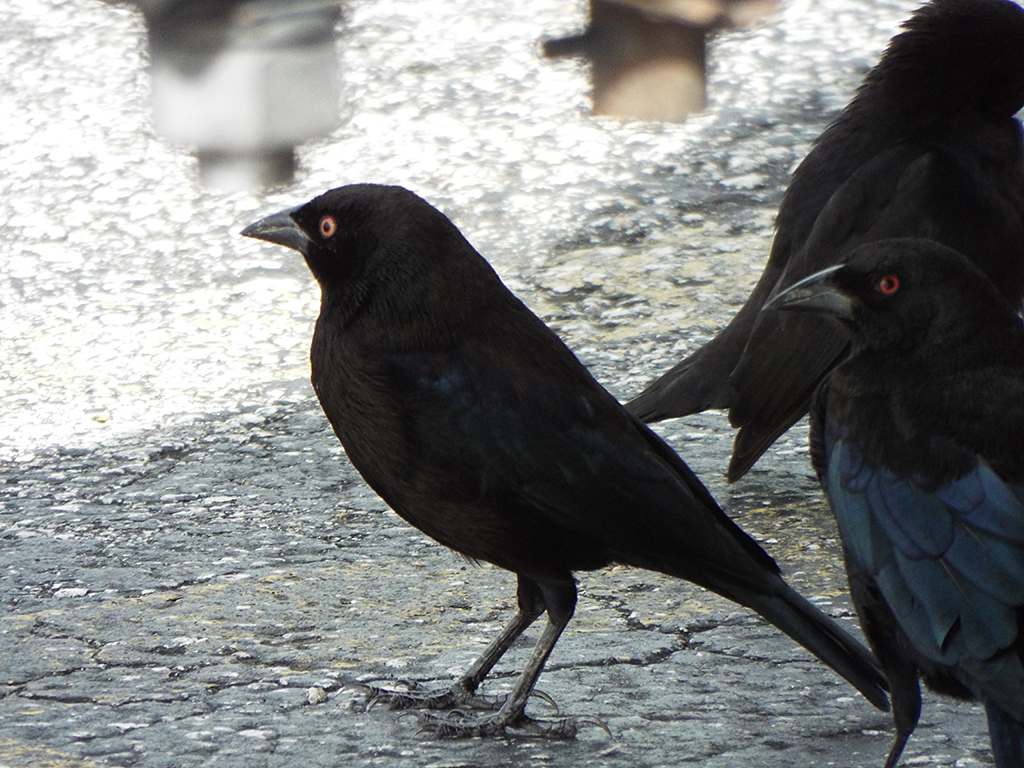
After that, we cruised around a bit looking in on places where Common Mynas had been seen recently (they are scattered all around the city). At one commercial area we pulled in and noticed a large amount of blackbirds in a parking lot, many of the birds standing under vehicles. Many of the birds were Boat-tailed Grackles, but the smaller blackbirds gave me a double-take. What I at first thought were Common Grackles were in fact Bronzed Cowbirds. It turns out that this particular location is a known hangout for them. These birds are rare at the Space Coast, though, so it was pretty exciting. I love this pair of photos, because they show how different most blackbirds look in direct sunlight vs. indirect light.

bronzed-cowbirds-sun.jpg
You can see why Bronzed Cowbirds are so-named when they are in direct sunlight.
bronzed-cowbirds-shade
Bronzed Cowbirds looking “none more black” in the shade. I love the grumpy expression on the bird on the right!

We stopped for gas on NW 42nd avenue, near where some recent Common Myna sightings were listed in eBird. While filling up, sure enough, there was a myna on a used car lot sign! In fact, here’s a Google Street View of the exact sign (I know, sorry replacement for an actual photo of the bird). Zoom out of Street View to see the location on the map.

If you’re counting (and I was), that’s three lifers – the Spot-breasted Oriole, the Red-whiskered Bulbul, and a Common Myna.

We then made our way to the area around Matheson Hammock Park [map], including “the round beach”. There was still evidence of Hurricane Matthew’s presence here, which made some exploration a bit interesting, due to expanses of mud, plant debris, and coconuts.

miami
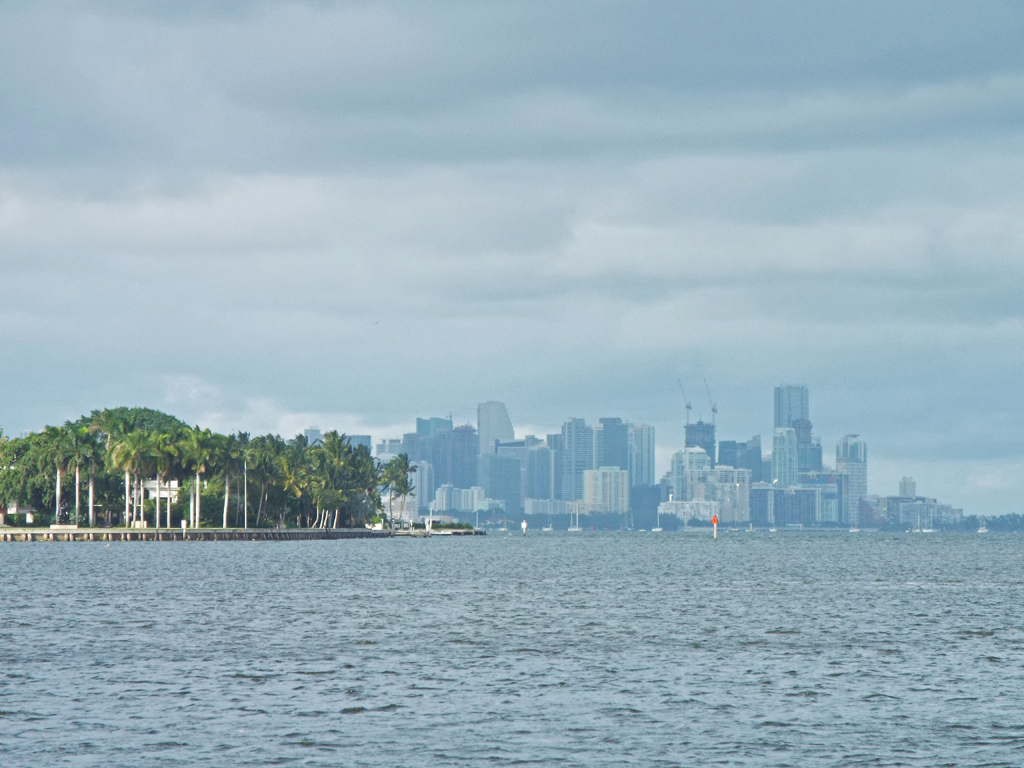
Part of downtown Miami from the beach near Matheson Hammock.

The wind was really picking up, keeping many of the small birds down, but the more powerful aerialists were about, either kiting high up above the shore, making high-speed runs with a tail-wind, or roosting, bodies bent into the wind.

royal-tern
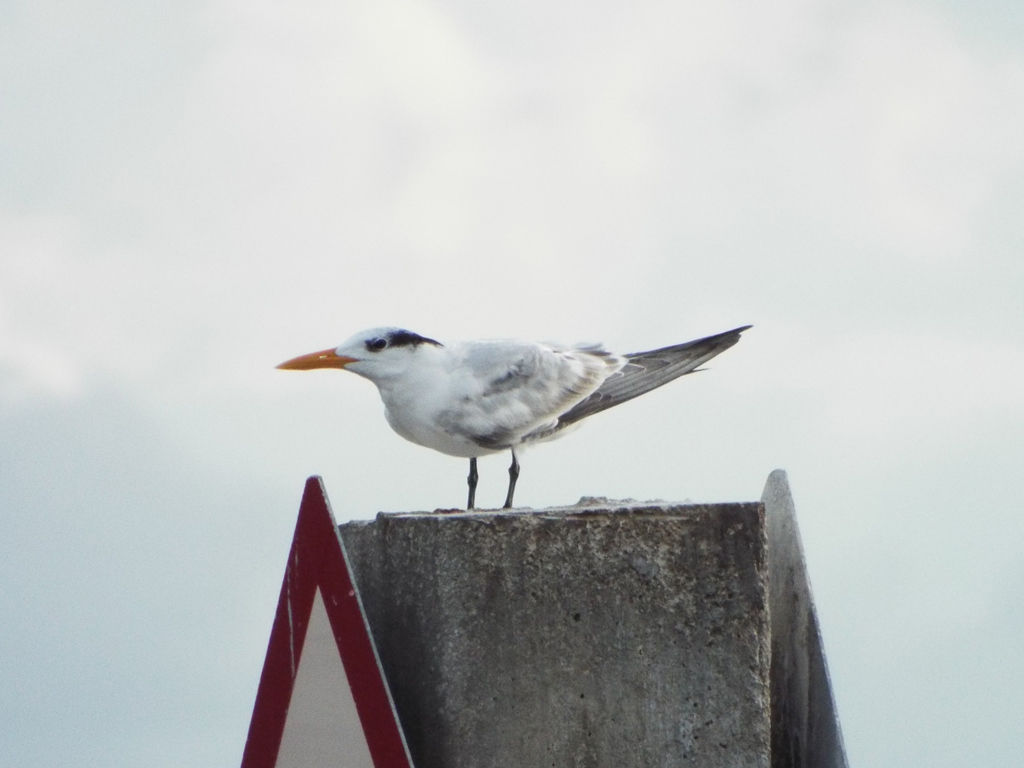
This Royal Tern is in “winter” plumage, with a white forehead and black nape feathers (I think it looks like Patrick Stewart). The buffeting wind didn’t seem to bother it much.

The sea-spray was really starting to fly, and more heavy showers were in the area, as we decided to head out. A few shorebirds were sheltering behind some sea walls or low vegetation.

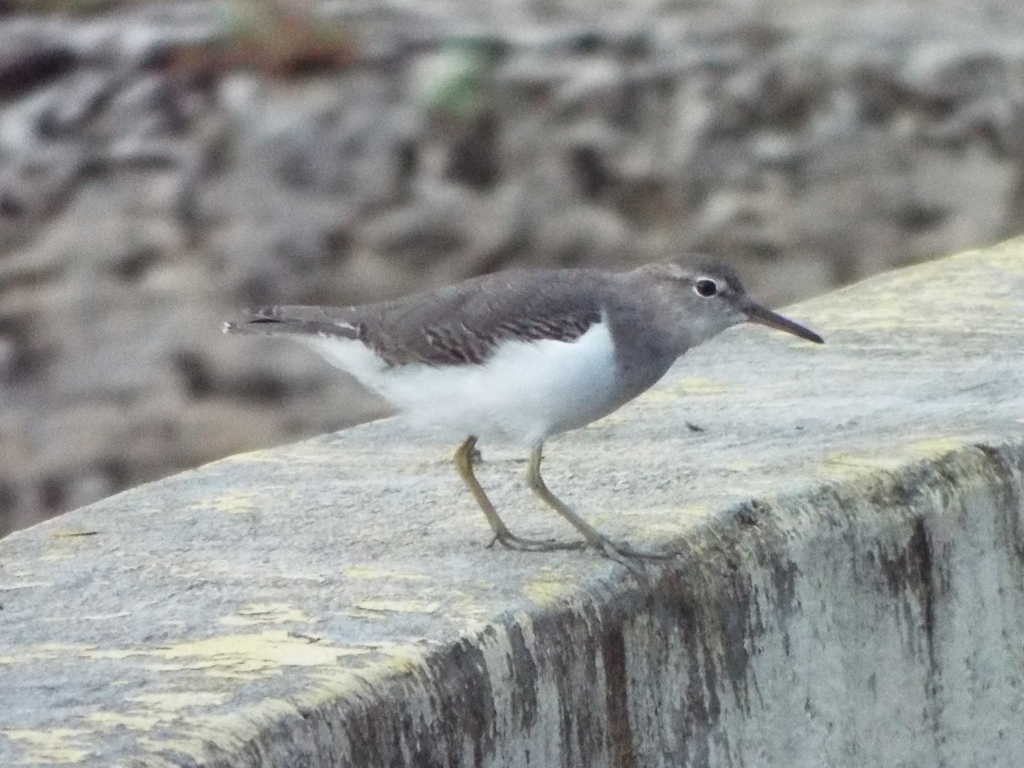
spotted-sandpiper
An “Unspotted” Sandpiper on top of a short sea wall. Spotted Sandpipers lose their spots over the winter, but their overall shape and constant tail-bobbing makes them easy to identify.

Matheson Hammock eBird list:
http://ebird.org/ebird/view/checklist/S32073100

Our day wasn’t quite over yet. Earlier in the day, at A.D. Barnes Park, we noticed two young, abandoned cats. I realize cats and birding are a real hot-button issue these days, and I’m not going to get into any of the politics of it here. Suffice it to say that we had it in our minds to return and get these cats out of the park and fostered or adopted. We did go back and managed to get one of the cats, but the other was much more evasive. The cat we did catch is now spayed and living inside a safe and loving home.

It was a long day, but rewarding all the same. I managed 3 life birds and got a cat off the “streets” and out of the park. I also learned my lesson to be better prepared for unexpected sighting opportunities. I’ll have to go back to Miami and get my Red-whiskered Bulbul photo, plus there are more south Florida specialties to find.

Fall all over the place

In between some “grander” adventures over the last few weeks, I’ve managed to take in some of the local changes, now that Fall has arrived, even in central Florida. Mid-October generally ushers in the dry season (though the past few falls/winters have been fairly wet), and the waterworks do seem to have shut off. With the cool weather, it’s much more feasible to spend longer mornings and even some afternoons looking for birds, whether late-season migrants or wintertime residents.

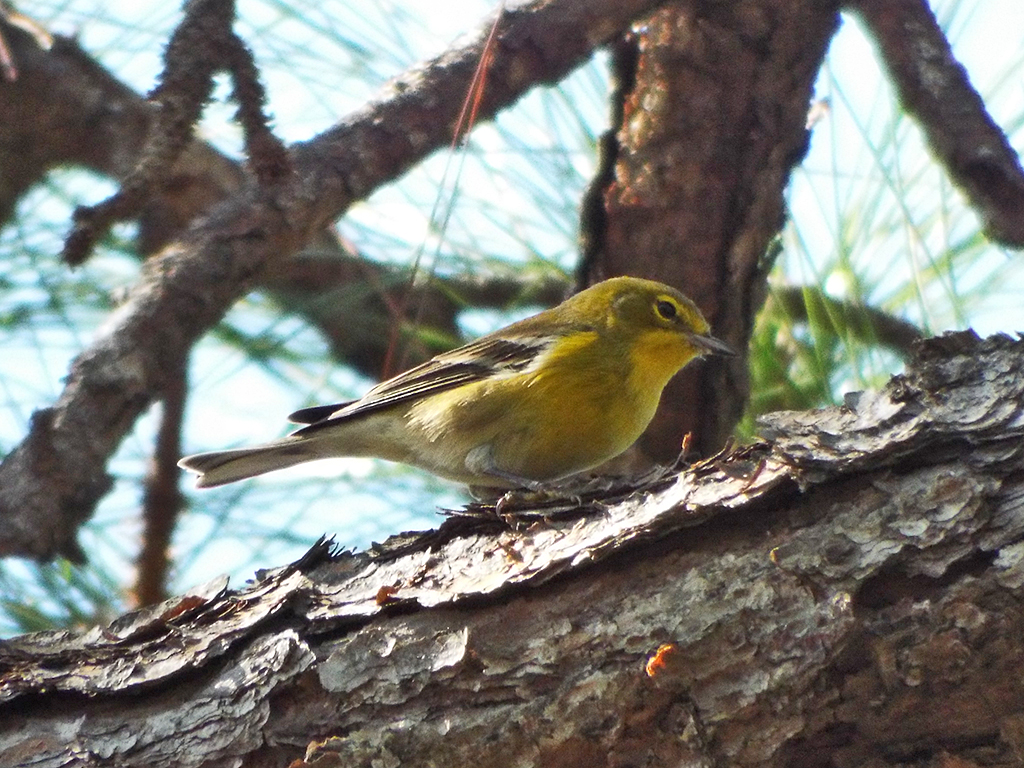
pine-warbler
Pine Warblers are year-round residents here, and add some nice color even as our Florida greenery fades for the winter. This one was hanging out at a park near where I work.

Most of the herons and egrets also stick around throughout the year. The Space Coast is a pretty built up place, and herons have grown fairly people tolerant. Even so, I still find it a little jarring when wildlife is in such close proximity to the urban world.

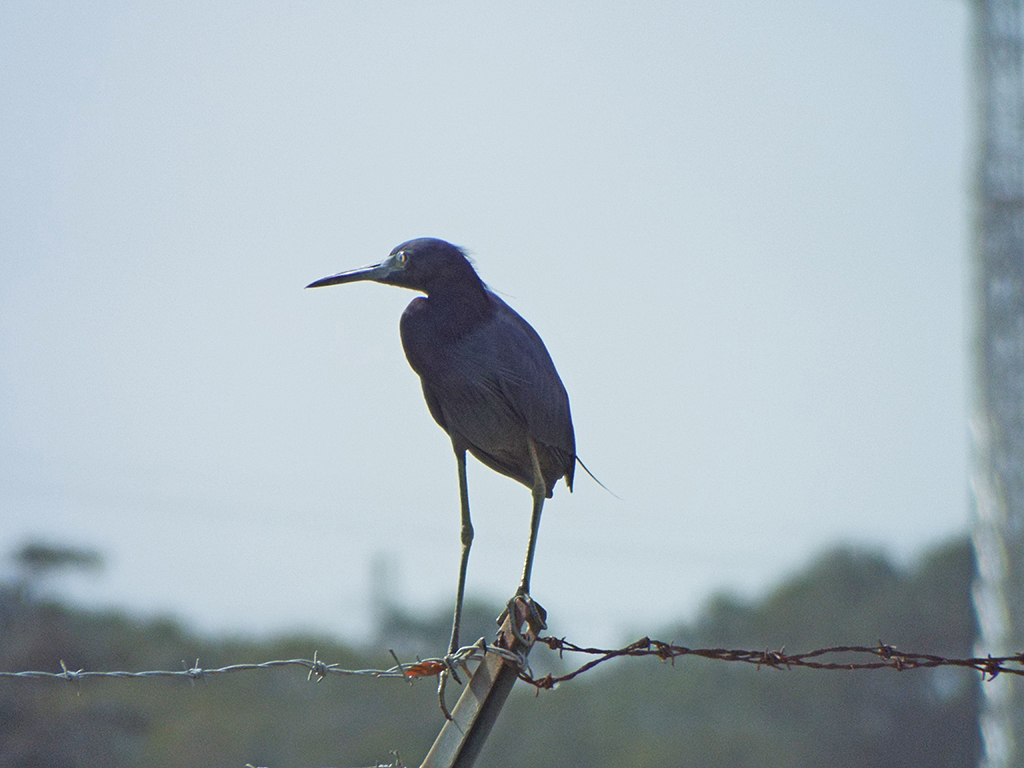
little-blue-heron
This Little Blue Heron was perched on a barbed-wire fence, enclosing a retention pond. Fences allow birds and small animals in and out, but larger natives, like alligators are unable to get in. That’s probably good for developed areas (people), but the ponds and wetlands we create are poor substitutes for the real thing, for a host of ecological reasons.

As migrants have moved through the area and resident birds have dispersed, predators are never far behind. American Kestrels are back and Red-shouldered Hawks are on alert for whatever they can get.

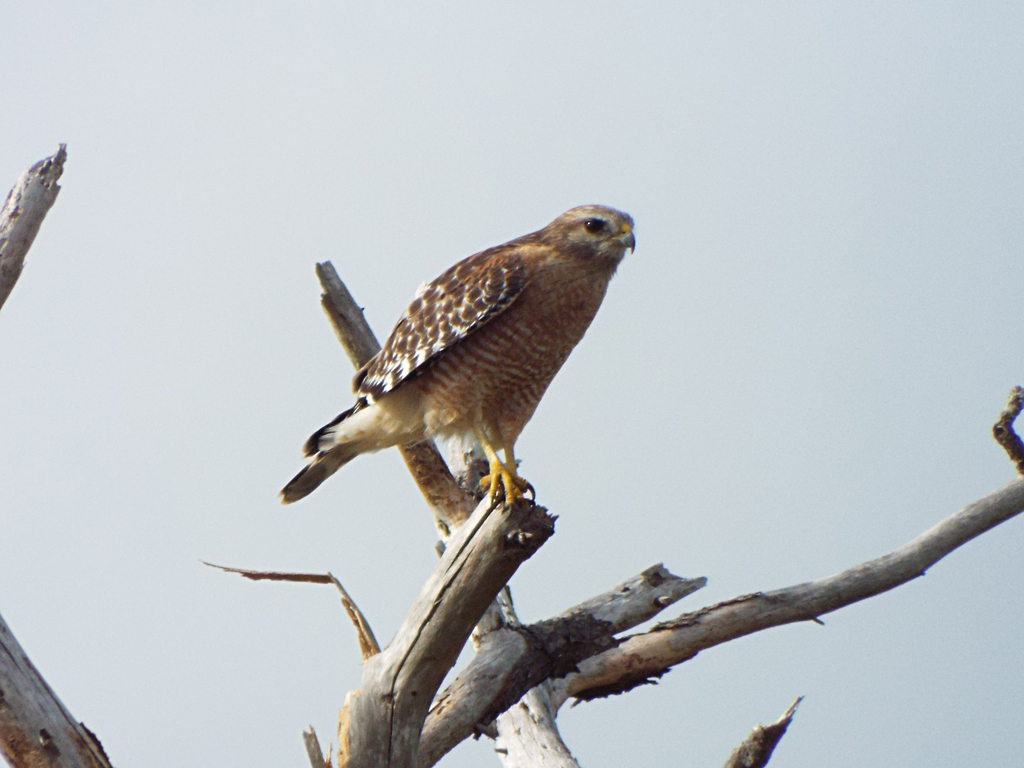
red-shouldered-hawk
This Red-shouldered Hawk was stalking lizards and Palm Warblers near St. Sebastian River Preserve State Park.

I even managed to squeeze in an “owl prowl” at Turkey Creek Sanctuary this past weekend! We called in both a Barred Owl (probably with too many recorded calls, honestly) and an Eastern Screech Owl. I was especially proud of us getting the screech owl, because our leader had called an end to our hike, and I suggested we try for it one more time, since we’d be near the nature center and probably far enough away from the Barred Owl’s territory. I also know screech owls are a bit more tolerant of development, and the nature center is closer to the library, community center, and the road. I was right, and we got some close looks, even without spotlighting the owl!

Fall does tend to be quiet, at least until the ducks arrive in November, but that’s not always a bad thing. I’ve got the rescheduled (thanks a lot, Hurrican Matthew) Florida Ornithological Society meeting next weekend and SCBWF is going to get here real quick in January, so some relaxing time is probably good.

Peek-a-Blue!

Turkey Creek Sanctuary was closed most of last week, after Hurricane Matthew did some minor damage and left lots of debris along the boardwalk and trails. I walked the perimeter of the park before work one morning and got to play a little hide-and-seek with a male Black-throated Blue Warbler.

Other highlights included a Merlin, a Sharp-shinned Hawk, and a Red-shouldered Hawk. I also had my first Gray Catbirds of the season and some other surprises and expected comforts.

eBird List: http://ebird.org/ebird/view/checklist/S31989975

Pelagic Trip: Sept. 25, 2016

I recently had the privilege to take a pelagic (open ocean) birding trip with the Marine Science Center out of Ponce Inlet [map]. This is the same organization that heads the pelagic trips for the Space Coast Birding and Wildlife Festival. The festival trips tend to stick to the western side of the Gulf Stream. In recent years, we’ve not even ventured that far. Instead we stuck to the near-coast waters. The trips that head out over the summer and fall are longer-ranging. The goal is usually to head out to the middle of the Gulf Stream. This increases the odds of seeing pelagic birds that never venture near to shore.

We headed out early in the morning, well before sunrise. There were thunderstorms well ahead of us, and the lightning as the storms crept up from the horizon was beautiful.

At one point soon after sunrise, we had a flock of mixed seabirds along the horizon-line. I could make out some shearwaters and terns, but did not get a decent look at the Black-capped Petrels that others reported. This would have been a life bird for me, but I could not differentiate them from the terns and shearwaters, so I did not claim them.

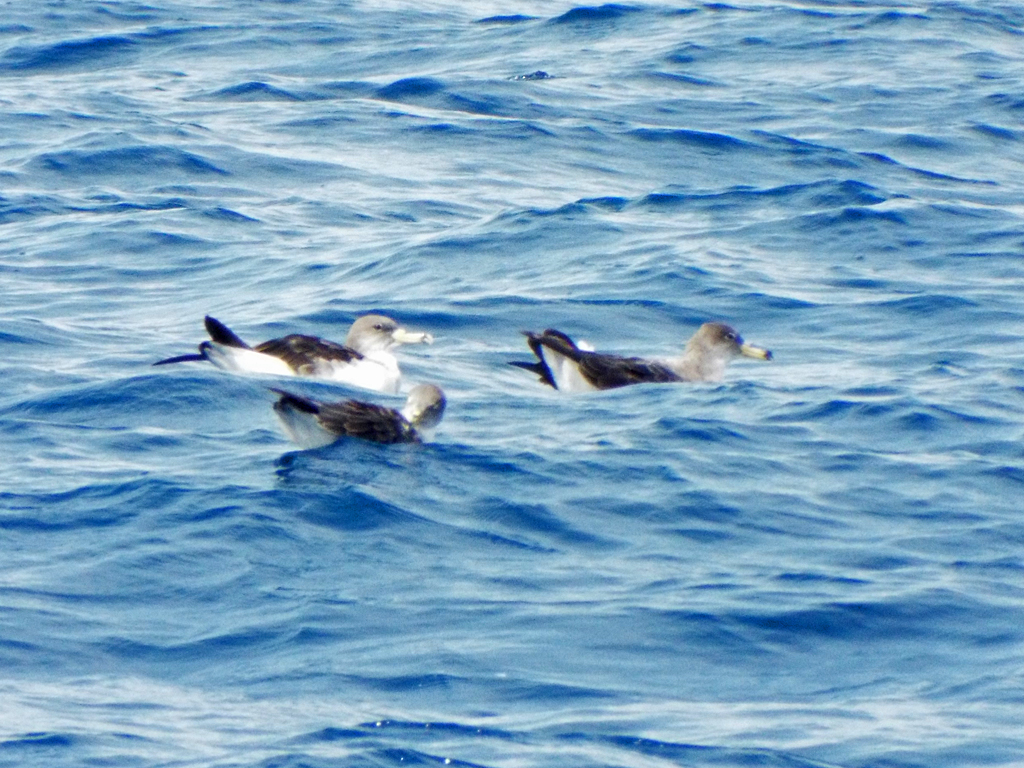
The headlining species for the trip was the Cory’s Shearwater. If you recall from my New England trip, I saw this species as a life bird during a whale watch; however the numbers on this trip were much higher, and we came across group after group, resting on the sea.

shearwaters
A few Cory’s Shearwaters resting on the ocean.

There are two subspecies of Cory’s Shearwaters – one that nests off Africa and another that nests in the Mediterranean. Both were present here, thousands of miles away from their breeding grounds. Like many shearwaters and other pelagic predators, these birds range far and wide.

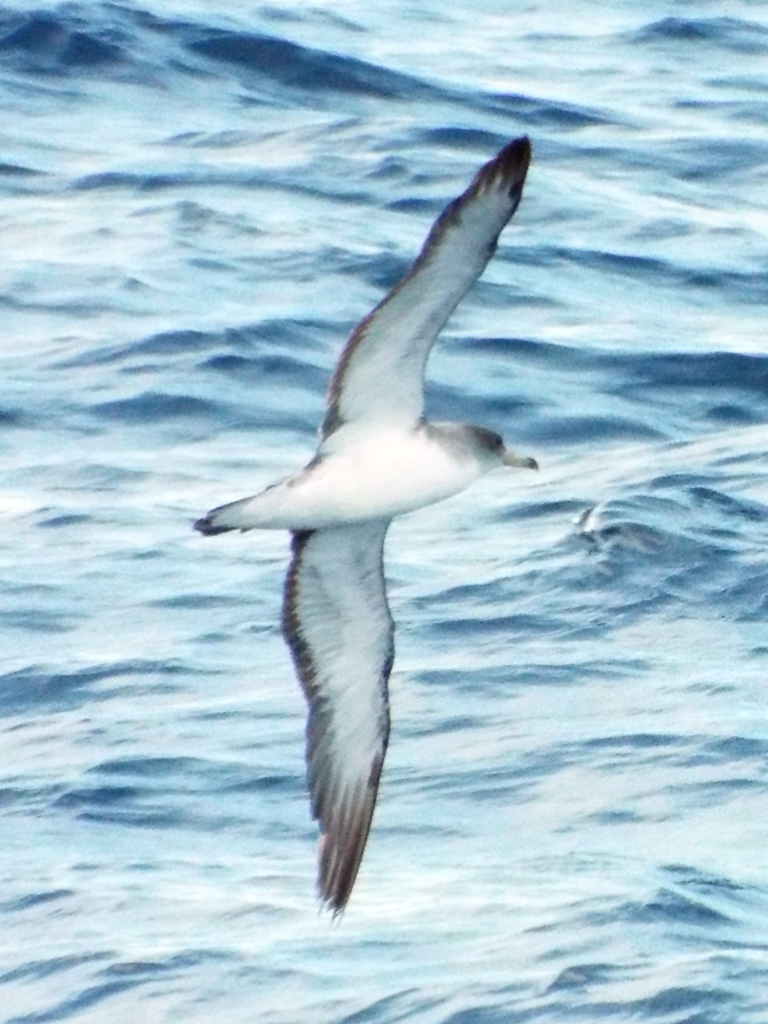
corys-shearwater2
Shearwaters have a distinctive flight pattern where they soar and then tilt to one side, perpendicular to the water. They’ll often skim one tip close to the surface.

Along with the Cory’s, we had a good number of the smaller Audubon’s Shearwaters. I still find it surprisingly difficult to photograph birds from a boat, so below you’ll see my best attempts at getting an Audubon’s Shearwater.

audubons-shearwater
Audubon’s Shearwater.
shearwater-compare
Audubon’s on the left, Cory’s on the right (in the mid-ground).

We had a few other notable encounters, including a Prairie Warbler, a Hooded Warbler, and even a Barn Swallow – all well out to sea. There was a Brown Booby and several Jaegers (we saw all three jaeger species).

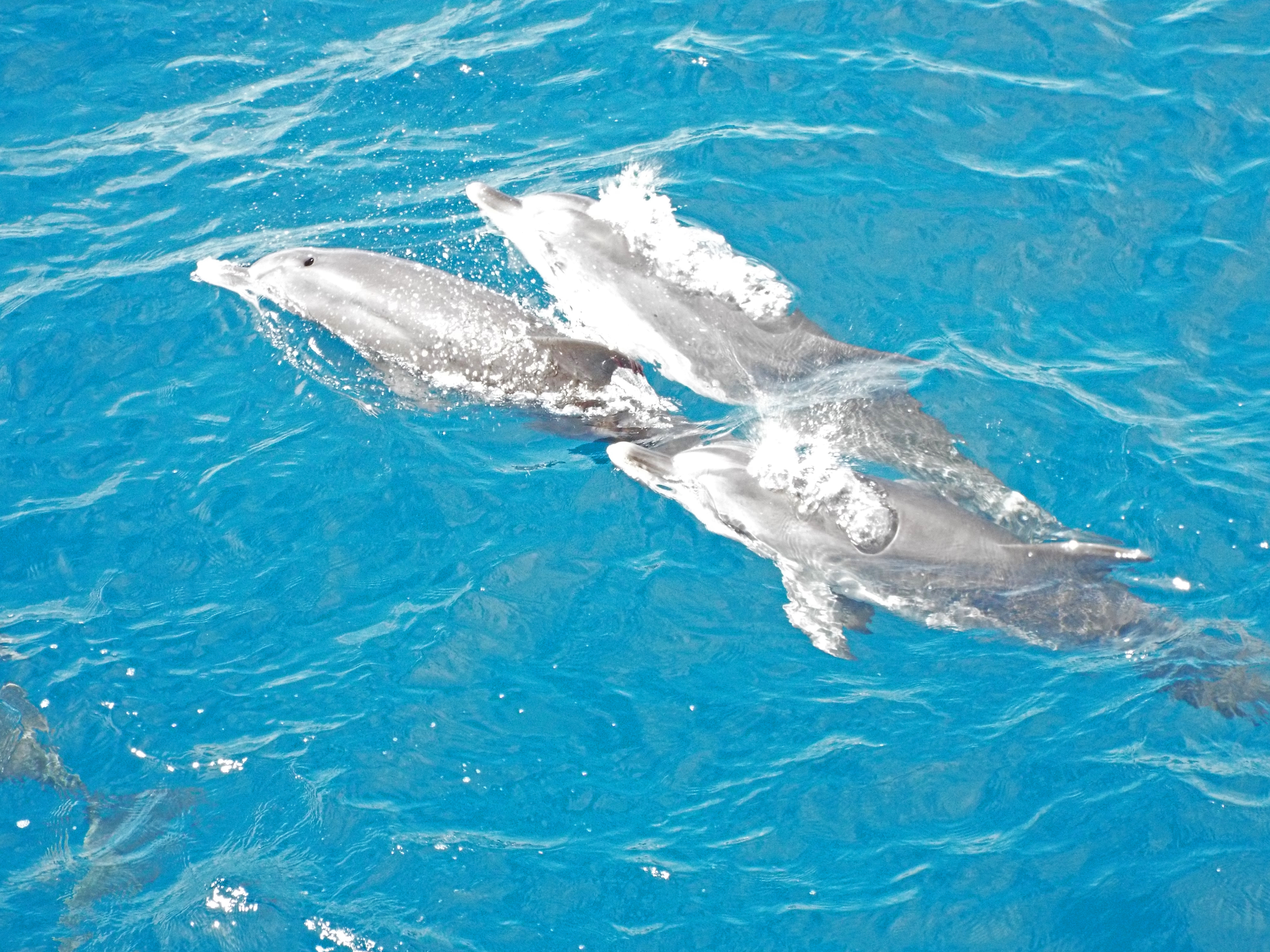
We ran into a few pods of dolphins, mostly Atlantic Spotted. The first large group we saw seemed to be a mixture of adult and adolescents. I suspect they were males, but I don’t know for sure.

dolphin3
Young Atlantic Spotted Dolphins (notice the lack of spots).

On other trips, we’ve let the dolphins ride the bow wake, which they seem to love. I noticed that on this trip, the captain slowed or stopped the boat whenever the dolphins approached. I don’t know if there are some wildlife protection laws now being followed, or some conservation “best practices”, but some of the dolphins seemed to be hanging around the bow, waiting for us to move. We did eventually move once most of the dolphins dispersed. I noticed a few seemed to sneak in while were were under way (I didn’t say anything).

Here’s a short video of them around the bow of the boat. If you listen closely, you can hear the squeaks and whistles as they communicate with each other.

One reason I say these were males is because a short time later, another pod came racing toward us. This time there were single adults, many with a calf alongside. I assume these were females and their babies. As with previous SCBWF trips, the moms seemed to be trying to display their babies to us. They would push the babies along one side and up toward the surface wherever we were hanging over to look. I was so excited to see this, I forgot to take any photos or video! Sorry.

On the way back to shore we had some Sooty Terns and a few Bridled Terns, as well. These species are very rare to see from the coast. Our final treat was a flyby of a Sabine’s Gull, the only life bird on the trip for me.

For eBird purposes, the trip was divided into 9 legs (and one list for the inlet). I’ve used and edited the shared trip lists here (which probably overcount some of the species I personally saw, but it’s close enough). Here are all ten lists, if  you’re interested (Note that the photos in the eBird lists here are not mine, but mostly taken by Douglas Richard):

Leg 1: http://ebird.org/ebird/view/checklist/S31810628
Leg 2: http://ebird.org/ebird/view/checklist/S31810631
Leg 3: http://ebird.org/ebird/view/checklist/S31810634
Leg 4: http://ebird.org/ebird/view/checklist/S31810636
Leg 5: http://ebird.org/ebird/view/checklist/S31810641
Leg 6: http://ebird.org/ebird/view/checklist/S31810646 (No birds on this leg)
Leg 7: http://ebird.org/ebird/view/checklist/S31810650
Leg 8: http://ebird.org/ebird/view/checklist/S31810651
Leg 9: http://ebird.org/ebird/view/checklist/S31810653
Inlet: http://ebird.org/ebird/view/checklist/S31810654

We had several hundred (!) hatchling and washback sea turtles on board that we were supposed to release into Sargassum (floating seaweed) one we got out into the Gulf Stream. Unfortunately, we could not find any suitable size patches or lines of Sargassum for the turtles, so the poor things had to make the trip back to shore. There will be another attempt to get them out from another location.

I love these pelagic trips, so it is with some concern that I learned the boat we were on (that’s been used for every Florida pelagic trip I’ve done), the Pasttime Princess, is to be sold. This was its last trip, at least in this incarnation. Michael Brothers (from the Marine Science Center) said these trips, including the SCBWF, will continue in some fashion. Still, it was sad to say bye to the Pasttime Princess and the crew.


Good Ol’ New England: Cape Cod Adventure

A few weeks ago, I had a short trip to New England (hopefully you saw my whale watch photos). I’ve not had a chance to update the blog until now, so I’ll dump a few photos now.

The bulk of my pictures are from Cape Cod. I started at Morris Island [map](near Chatham) and Chatham Light, then worked my way over to Coast Guard Beach [map] (via the trail from Doane Rock [map]), then walked south toward Nauset Beach [map], where some Least Terns and Piping Plovers were finishing their nesting season (behind some wire fencing). I ended that day with a drive to and a hike at Beech Forest Park in Provincetown [map].

To avoid parking issues, I cheated a bit and parked at the Doane Rock Picnic area and walked a trail to Coast Guard Beach. Technically, there’s an hour limit for parking at the picnic area, but I’ve never known the lot to be full, so I thought it was worth the risk of a ticket. It paid off, with nice paths and some surprise birds, like Red-breasted Nuthatches. The biggest surprise, though, was a group of Grasshopper Sparrows that flew into the area around the rock for a few seconds, before flying away.

There was a large number of Gray Seals (with a few Harbor Seals) just off the beach where Coast Guard Beach ends, at the inlet north of Nauset Beach. They were lounging in the shallows, some of them looking like they were basking in the sun, but while submerged.

Over at Beech Forest Park, I enjoyed a nice short walk in the woods, with more chickadees and a few White-breasted Nuthatches, as well as Canada Geese in the parking lot.

Here are all the Cape Cod related eBird lists, for those of you as are interested:

Monomoy NWR-Morris Island:
http://ebird.org/ebird/view/checklist/S30932427

Chatham Lighthouse:
http://ebird.org/ebird/view/checklist/S30932716

Doane Rock (and the trail to Coast Guard Beach):
http://ebird.org/ebird/view/checklist/S30936236

Coast Guard Beach (including all the way the inlet near Nauset Beach):
http://ebird.org/ebird/view/checklist/S30935835

Beech Forest:
http://ebird.org/ebird/view/checklist/S30939157