Shiny New Year

2014 is surely still new enough not to have gotten much tarnish yet, right?

So far I’ve had a couple of abortive attempts to head to Jacksonville and see the Snowy Owl that’s been at Little Talbot State Park for the past few weeks. I may get to head there on Friday, but I am not sure yet. I know every day I don’t go risks the owl departing, so that’s a bit frustrating.

Otherwise, I’ve casually seen about a dozen species so far for my 2014 species count (yes, I am doing “that” again).

The Space Coast Birding & Wildlife Festival is coming up in a couple of weeks, and I am getting excited! If anyone’s interested I’ll have a brief itinerary of my field trips and classroom sessions just because I’m feeling all social and share-y. 🙂

Pin The Tail On The Ducky

Today is (likely) the last birding adventure and blog update for 2013. I’ve done the final species audit and researched what unidentified birds I had notes on. 

I decided to make my last concerted birding effort at Merritt Island National Wildlife Refuge. Specifically, I drove the Black Point Drive loop. I have mixed feelings about Black Point. On the one hand, it is a very handy way to see birds. On the other, it’s about 40 minutes to an hour of slow driving, buring gasoline all the way, unless you turn off the engine for longer observing periods.

In any case, I drove the loop around 8:30am and managed to gain 5 new species for the 2013 count (* denotes new life-lister):

  1. Northern Pintail (they were there by the dozens!)* 
  2. Greater Scaup*
  3. Reddish Egret
  4. Bufflehead*
  5. Red-breasted Merganser*

photo pintails1.jpg
Northern Pintail males.

I was excited to see the Northern Pintails. They are very distictive and something I had hoped to see in an earlier trip to Pine Island. Of all the ducks I have seen, the pintails seemed to be the most synchronized in their foraging, so quite a few of my photographs show all the pintails with their heads underwater at the same time.

photo pintails2.jpg
Female and male Northern Pintails.

I don’t have very many good photographs, as the birds tended to stay far away, and the lighting was bad due to a very thick and low overcast. Most of what I took was for me to use later for verifying identification.

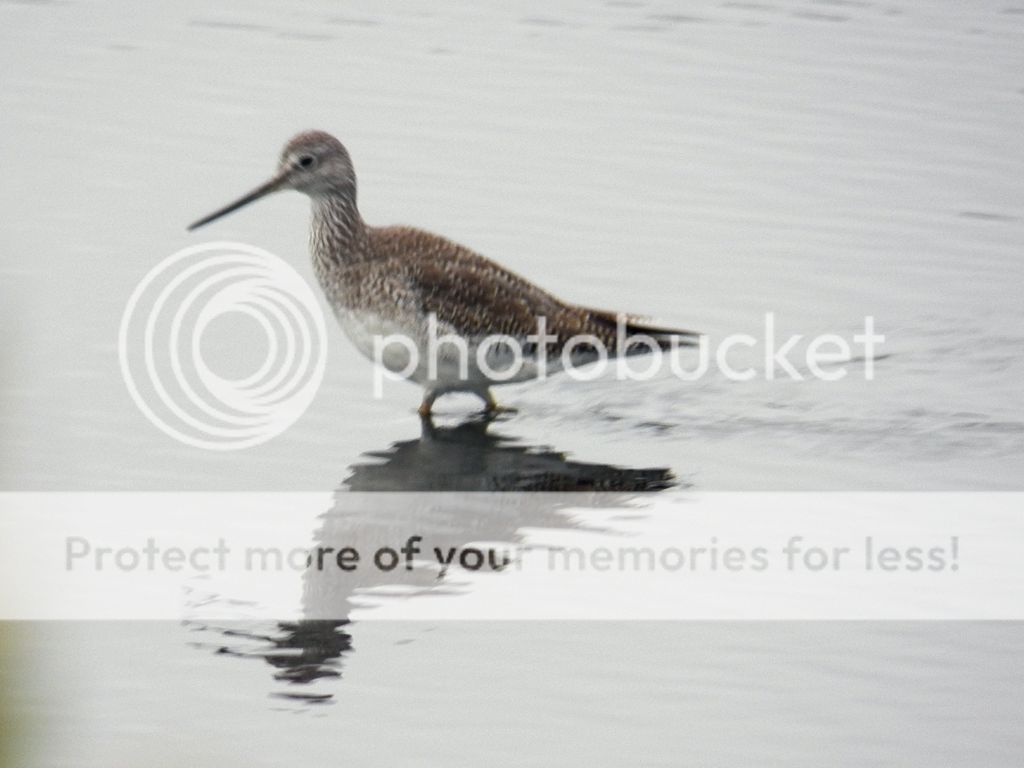
photo greater-yellowlegs.jpg
Greater Yellowlegs.

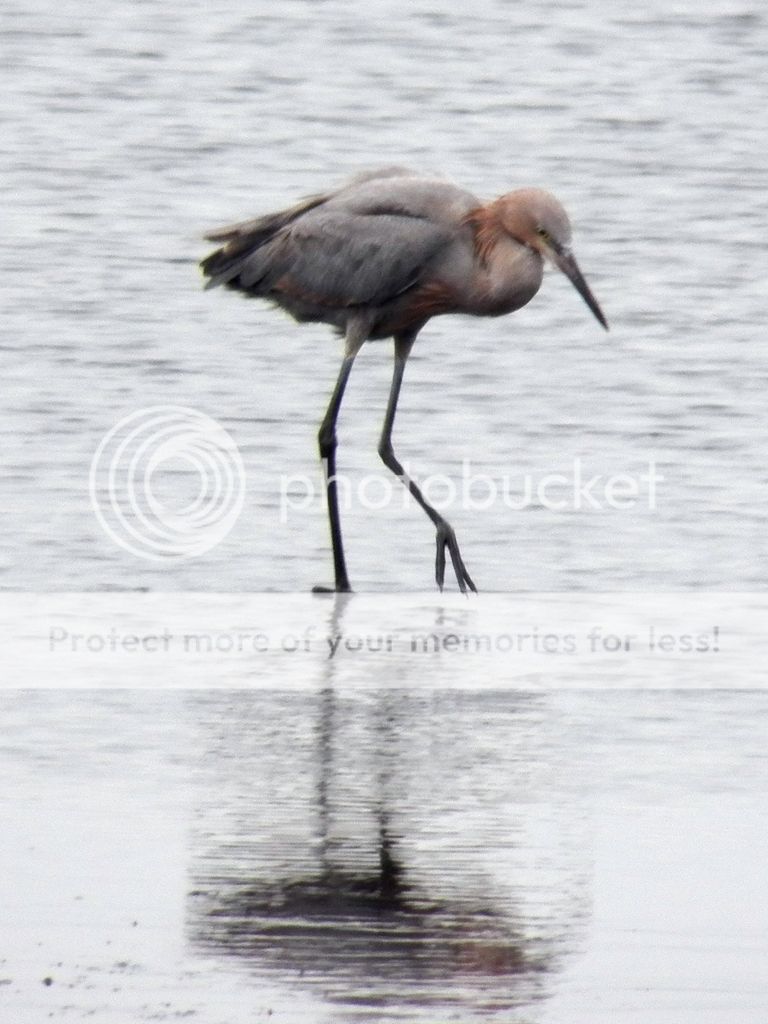
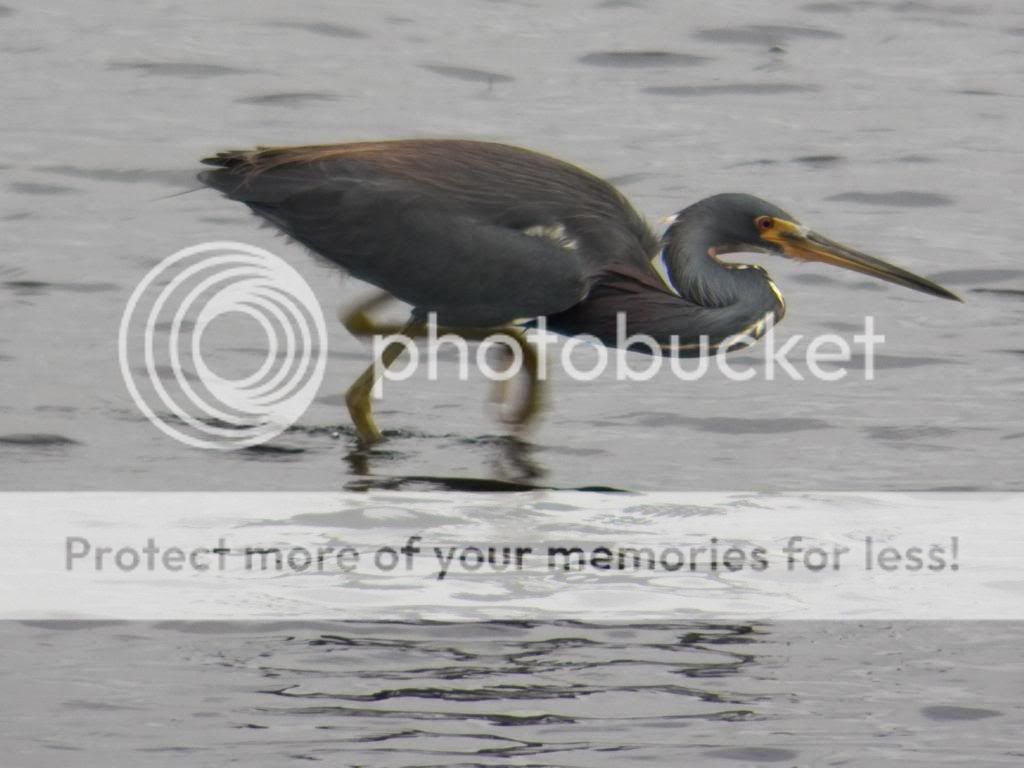
Here are some photographs of herons that came out looking pretty good, though. Interstingly (to me) I did not see a single Great Blue Heron this morning.

photo reddish-egret1.jpgphoto reddish-egret2.jpg
Two different Reddish Egrets.

photo tri-colored-heron.jpg
Tri-colored Heron lunging for food.

In addtion to the five birds listed above, I also saw the following:

  • Greater Black-backed Gull
  • Sandhill Crane
  • Willet (possibly the western subspecies)
  • Greater Yellowlegs
  • White Pelican
  • Turkey Vulture
  • Black Vulture
  • Tri-colored Heron
  • Little Blue Heron
  • Green Heron
  • Snowy Egret
  • Glossy Ibis
  • White Ibis
  • Double Crested Cormorant
  • Blue-winged Teal
  • Pied-billed Grebe
  • Northern Mockingbird
  • Boat-tailed Grackle
  • Belted Kingfisher
  • Fish Crow
  • Osprey

There were large flocks of sandpipers as well (hundreds), but they were too far away to ID even by binoculars.

photo sandpipers.jpg
Mystery Sandpipers!

The White Pelicans were numerous both in the air and rafting quietly on the water. Their size always amazes me. As with their cousins, the Brown Pelicans, White Pelican are surprsingly graceful on the wing.

photo white-pelicans.jpg
White Pelicans soar above Merritt Island.

The (likely) final 2013 species count is 149. While it’s certainly possible I might see a new bird for this year some time tomorrow thus rounding off the count to 150, I’m not counting on it (no pun intended, ha ha).

Happy, healthy and birdy New Years to all of you. Thanks for sharing in my birding adventures this year. Things will heat up pretty quick for 2014 at the Space Coast Birding & Wildlife Festival near the end of January.

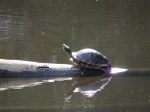
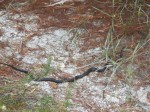
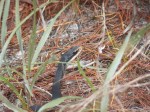
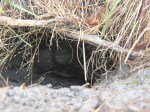
Some photos of my reptilian friends from yesterday’s walk through Turkey Creek Sanctuary.

  • Florida Red-bellied Turtle
  • Southern Black Racer (long shot and a close-up)
  • Gopher Tortoise in its burrow
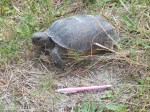
  • a different Gopher Tortoise with a pen shown for scale (a smallish individual)

Click to enlarge images.

Quiet Time

I went to Turkey Creek Sanctuary today and spent a silent walk through most of it. Besides various groups of birds flying or soaring overhead (vutures, crows and some smaller sparrows and/or warblers), I only saw 6 individual birds inside the Sanctuary, and 6 individuals upstream from the weir on the canal. That’s a pretty low bird density and count for about 3 hours.

Here’s the official list (including the overhead flyers I could positively identify):

  1. Ovenbird (1)
  2. Ruby-crowned Kinglet (1)
  3. Blue-gray Gnatcatcher (2)
  4. Turkey Vulture
  5. Black Vulture
  6. Fish Crow
  7. Northern Cardinal (2)
  8. Little Blue Heron (1)
  9. Cattle Egret (1)
  10. Pied-billed Grebe (1)
  11. Common Gallinule (3)

It was particulary noteworthy to me that I neither heard nor saw any Gray Catbirds at all. The Gopher Tortoises were out again en force, and I managed to catch a glimpse of one squirrel and one snake (a Black Racer, I believe). 

Merry Christmas and Happy Holidays everyone. Depending on my Christmas situation there may be a Christmas Count post upcoming, but I make no guarantees.

Do You Hear What I Hear?

The biggest “leap” of birding ability I made came when I started to really pay attention to the birds I was hearing, as well as the birds I was seeing. Most “expert” birders do much, if not most, of their observing by ear. Personally, I would say that sometimes well over half the birds I record and observe are first discovered by hearing them.

photo towhee-singing.jpg
..It’s just that I’d rather… just… SING!

I recently had a bit of a health scare. Last year, I noticed I was having to ask people to repeat what they were saying, and I developed tinnitus. I had a series of hearing tests over the course of several months which seemed to verify some hearing loss, especially in higher frequencies. I started to wonder if I was missing some bird calls and songs on my birding hikes.

It’s normal, as we age, to start losing our higher frequency hearing ability. From what I’ve read, this actually starts to happen earlier, on average, than we might think – by our 30s many of us are already losing the highest range. I had been blessed so far to have kept most of my higher frequency hearing, but it seemed that now as I entered my 40s, it was catching up.

image
Chart showing average hearing loss by age and gender. You can see that as a person ages, the ability to hear higher frequency sounds drops fastest.

The effect of losing one’s hearing really hit me when I’ve bumped into some very experienced birders in their 70s and early 80s. Their visual acuity never ceases to amaze me, but I noticed that, even with my nascent hearing loss, they were not reacting to most of the bird calls around us. On one visit to Turkey Creek, there was a massive commotion of Northern Cardinals giving their alarm calls. Interspersed with their calls were those of at least two other bird species. After seeing the person I was with not react at all, I hesitantly asked, “I wonder what all that noise is over?” To which my companion blankly stared at me and said, “Oh, what, you’re hearing some birds?” Hearing some birds? It sounded like the birds were expecting the Apocalypse!

We’ll all have to face up to the effects of aging, and for birders that means at some point many of us will start to lose a range of hearing that includes call notes of most warblers, sparrows and Cardinalids (as well as others).

For now, though, I have been given a bit of a reprieve. My last hearing test showed recovery of my high-frequency hearing to near to previoius levels (though my tinnitus hasn’t disappeared), and I’ve been able to still hear warblers and sparrows call while flying high overhead before dawn, the bickering of cardinals, and even the quietly beautiful bubbling of gnatcatchers.

Blue-gray Gnatcatcher softly singing.

I can only hope that when my hearing starts to fade that I can sharpen my visual ability like those of my experienced birding colleagues, who still seem to get whole-hearted enjoyment out of watching birds.

Do You See What I See?

Today was a pleasant day at Turkey Creek Sanctuary. The winter and year-long residents seem to be settling into their routines. The overall bird density was still low, but the number of species was greater than any point since the summer. 

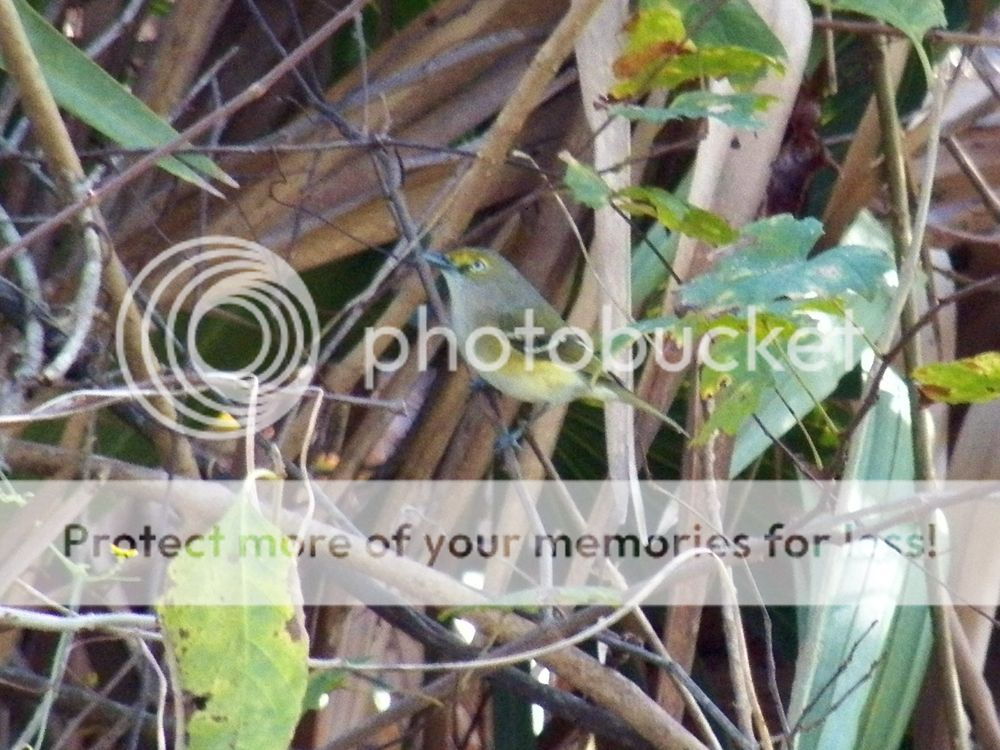
Most importantly, after almost an entire year, I finally managed to get that elusive White-eyed Vireo photograph! I almost missed it and I had time to fire off one shot in the shadows of the underbrush before it dashed off. But my quest is at an end! 

photo white-eyed-vireo.jpg
A photograph 11 months in the making!

Speaking of vireos, I had a somewhat mysterious encounter with one near the start of my walk. I managed to observe the bird for a good while (sorry no pics – too busy birdwatching 😉 ), and my visual assessment doesn’t quite match with anything in my Peterson guide. The bird was clearly a vireo by shape and size. It was an almost uniform gray with white wing-bars and white spectacles. The best fit is a Blue-headed Vireo; however, both my Peterson field guide and my Sibley guide indicate there should be some sense of yellow and/or greenish cast on the flanks and back. Here, some further explanation is needed.

During the late 1990s, the Solitary Vireo was “officially” split into 3 separate but closely related species, the Plumbeous Vireo of the intermountain west, Cassin’s Vireo of the Pacific coast and northwest, and the Blue-headed Vireo of eastern North America. Generally the three species form what Sibley refers to as a “cline” from east to west of decreasing contrast and color.


An illustration by Keith Hansen showing the plumage variation among “Solitary” Vireos.

I mention all this because as I was making careful observations of “my” vireo, I had the distinct impression that it was almost completely devoid of color and of fairly low contrast. Upon further review, it most closely resembles the plumage of a Plumbeous Vireo. I will note though, that Sibley says there is hybridization and overlap in all plumages and even voice. Where that leaves me with proper identification, I am unsure as this species has not been reliably recorded this far east.

As has been the case for most of the autumn, the most numerous and active birds in the Sanctuary are the Blue-gray Gnatcatchers. If you haven’t had a chance to observe these birds, let me just say that they are the tiniest balls of energy you’ll see in a bird, surpassed only by some hummingbirds. Despite their often being within only feet of me, it’s nearly impossible to get a decent photograph. My attempts today did yeild a fairly unique image. It’s a bit blurry, but I find it fascinating. This was taken in the split second it takes one of these tiny birds to hop from one branch to another.

photo blue-gray-gnatcatcher-leap.jpg
Geronimo!

Some other species that I observed today include the Black-and-white Warbler, Northern Cardinal, Gray Catbird, Ruby-crowned Kinglet, Red-bellied Woodpecker, Turkey Vulture, Palm Warbler, Tri-colored Heron, American Coot, Cattle Egret, and American Kestrel (the last four by the weir at the Melbourne-Tillman Canal).

photo black-and-white-warbler.jpg
Hello, my monochromatic friend.

photo red-bellied-woodpecker.jpg
Red-bellied Woodpecker enjoying a little breakfast.

Today was extra active for the Gopher Tortoises that live in the Sanctuary. Here are a couple of examples of coloration difference within the species.

photo 100_1611.jpg
This dark green tortoise had a shell about 12” from front to back.

photo gopher-tortoise.jpg
This larger tortoise’s shell was about 18” long. Notice the reddish coloration.

One very noticeable absence from the time I was at the Sanctuary was a total lack of squirrels. The last several trips there the squirrels were everywhere. Dozens and dozens. Today, I heard one scolding call deep in the underbrush, and that was it. I suppose all the frenzy of activity before could have been the squirrels fattening up for the “winter” here, and now they’re just lazing about, waiting for spring. But it was darn strange from my perspective! 

Return to Viera Wetlands

This past Sunday, I headed to the Ritch Grissom Memorial Wetlands at Viera (a.k.a. The Viera Wetlands) to check out the winter resident bird situation. I was last there this spring with my friend Cedric.

It was a cloudy and misty day, which will be evident in some of the pictures.

Just as in years past, these wetlands attract large congregations of waterfowl (mainly ducks and certain members of the rail family).

photo coots-aligned.jpg
One of many rafts of American Coots.

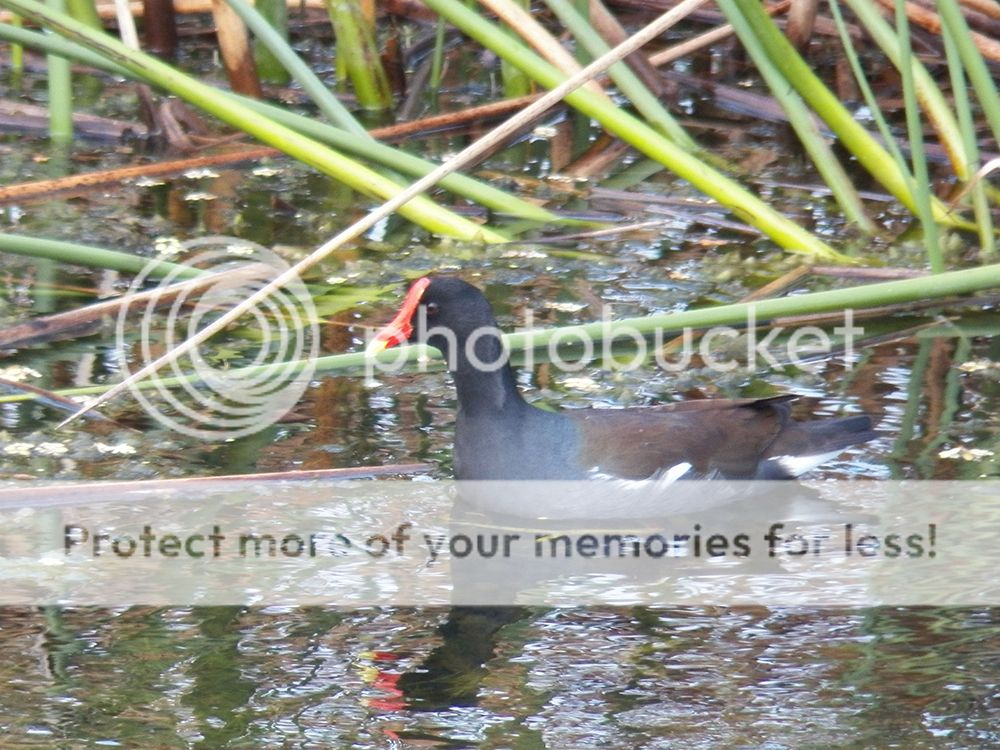
photo common-gallinule.jpg
Common Gallinule.

Right now, the American Coots are by far the most visibly numerous, but on closer inspection, there were a few interlopers among the rafts of chattering coots, including Pied-billed Grebes, Blue-winged Teals, Lesser Scaups, Hooded Mergansers, and Northern Shovelers (a first!).

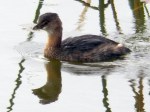
photo grebe1.jpg
Pied-billed Grebe in winter plumage.

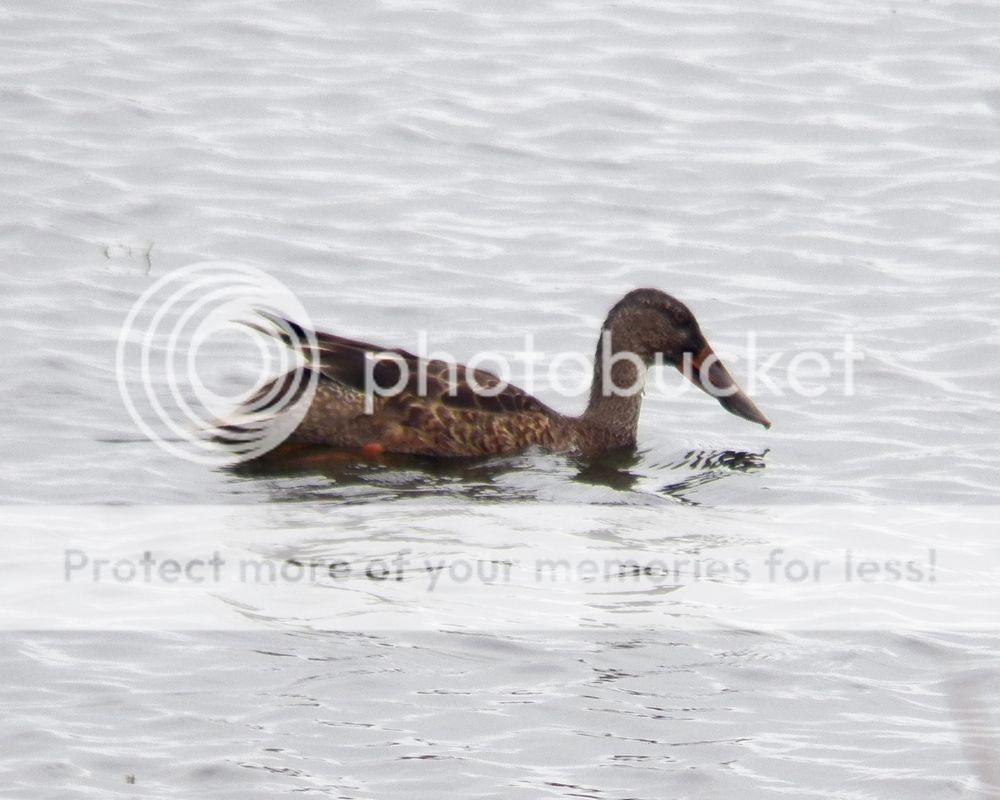
photo shoveller-female.jpg
A Nothern Shoveler female, can you dig it?

Of course, the usual waders were present as well, though there seemed to be a larger concentration of Tri-colored Herons than I’ve seen anywhere recently.

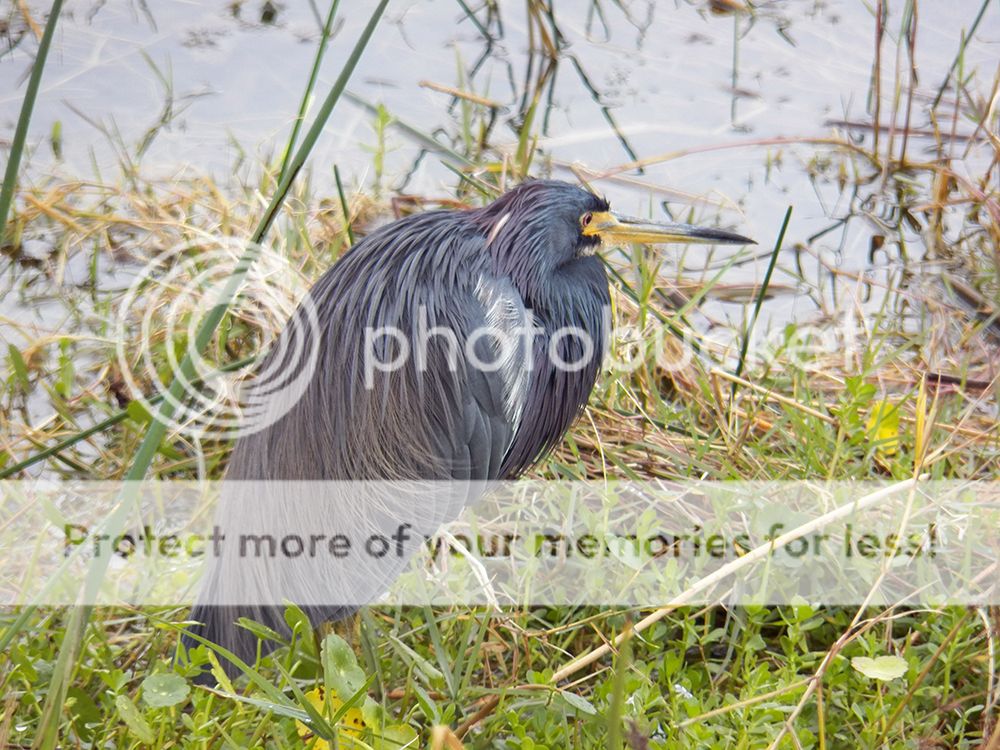
photo tri-colored-hunched.jpg
You can see how blustery and damp it was by this Tri-colored Heron, balled up to conserve heat.

photo great-egret.jpg
Great! Egret!

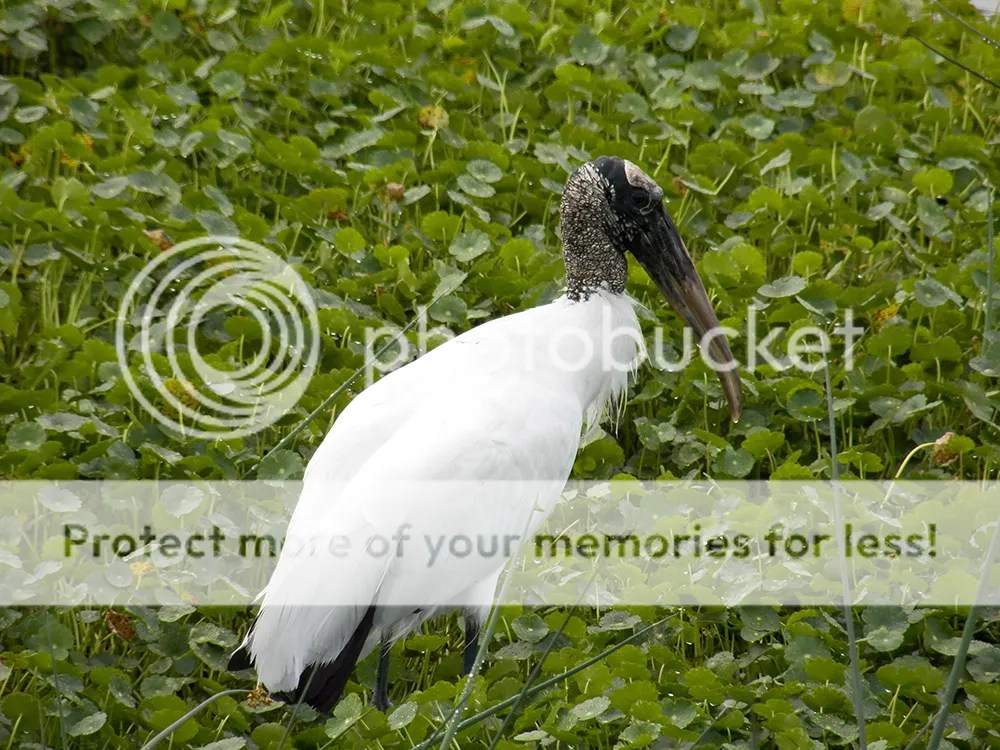
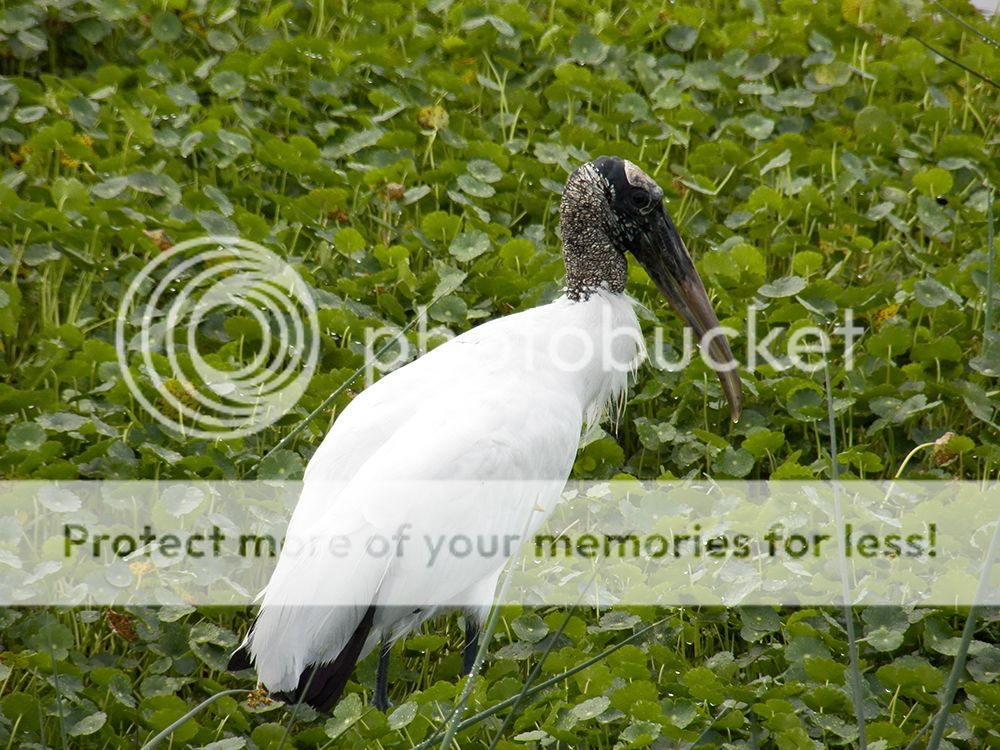
photo stork.jpgWood Stork.

Anhingas outnumbered cormorants, though most had already done their morning fishing by the time I arrived. I’ve not often seen an Anhinga’s feet, but here you can see one of the reasons why they are such strong swimmers.

photo anhinga-pose.jpg
I bet there are divers who would kill for a pair of flippers like these.

It was fun to see more Palm Warblers and Savannah Sparrows, too. Savannah Sparrows are quickly getting my vote as Bird with Personality!

photo savannah-sparow-dec.jpgPersonality Plus.

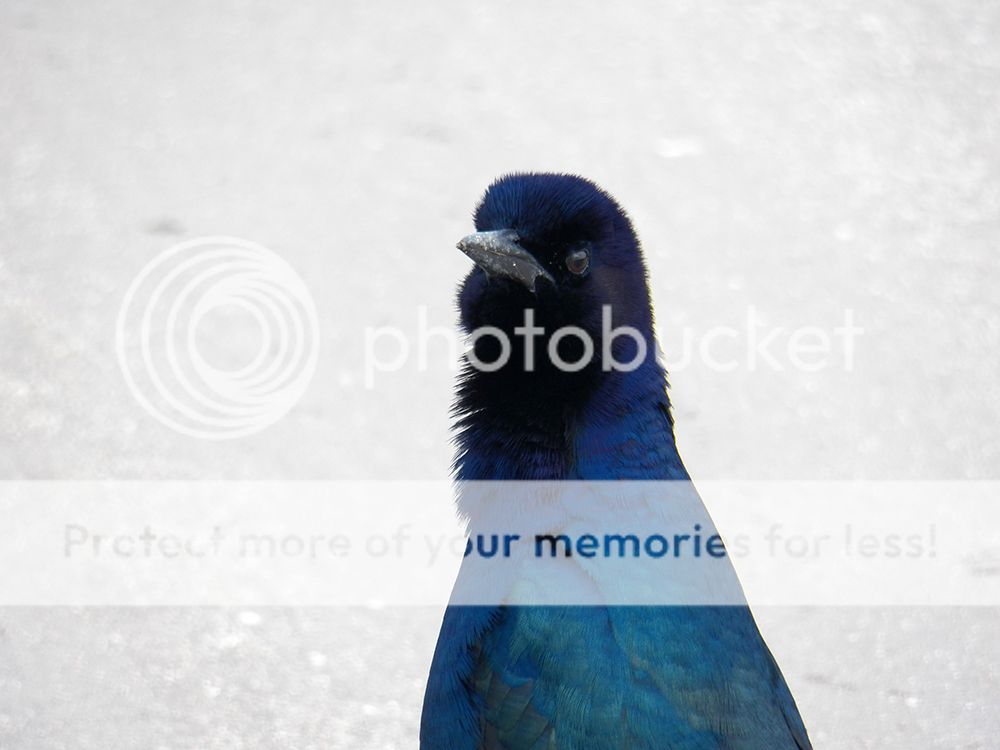
But this Boat-tailed Grackle was campaigning pretty hard, too. He landed about 2 feet from me. His total attitude had me laughing out loud. Boat-tailed Grackles seem to think they are Hot Stuff!

photo boat-tailed-grackle-closeup.jpg
Attitude without the Platitude.

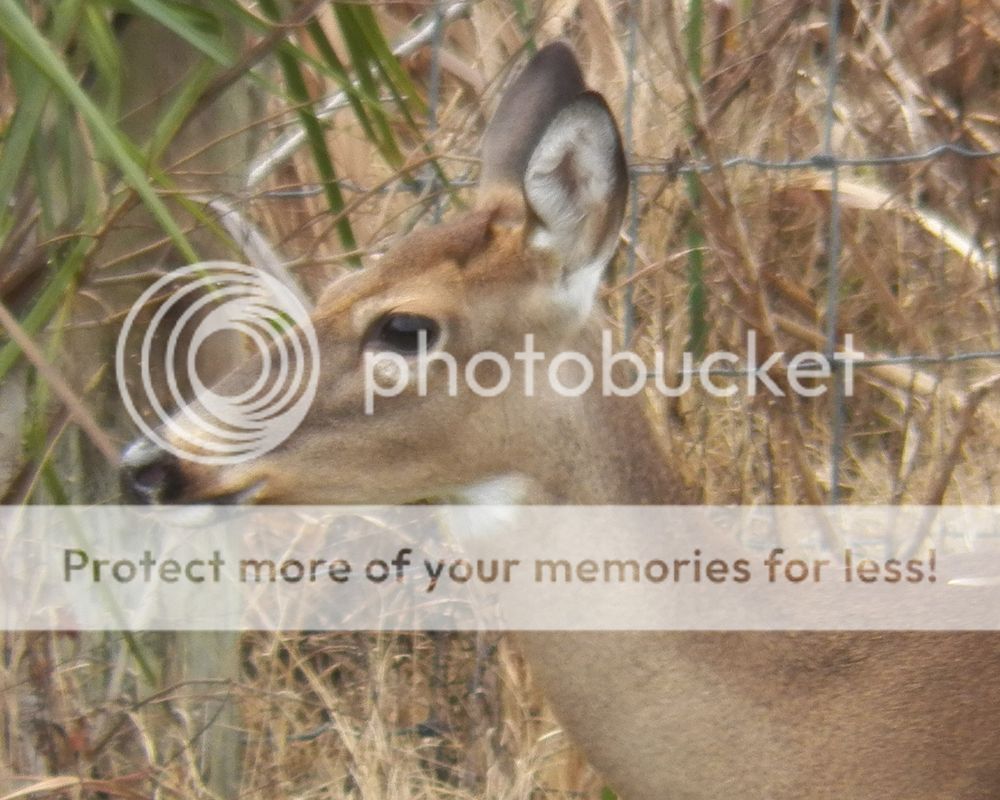
There were non-avian residents as well. Along the wetland’s perimeter a pair of White-tailed Deer ran past. I think a mother and a yearling (is that a deer thing?). I was a bit surprised they were out in the open that late in the morning, but they soon found some brush to take cover in.

photo deer1.jpg
Oh, deer!

photo deer2.jpg
White tail showing.

At least 2 species of terns were present as well. The most common were Forster’s Terns (another first) which were diving for fish and frogs. In this photograph you can see the characteristic “ear” markings of the species’ winter plumage.

photo forsters-tern.jpg
Forster’s Tern.

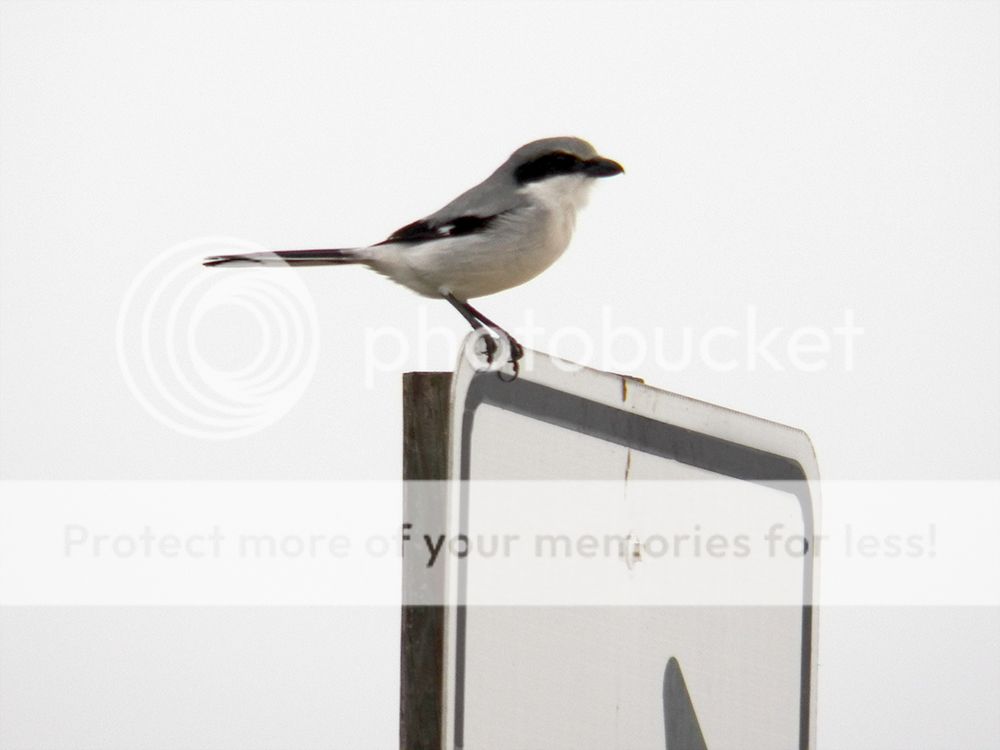
Unlike my spring-time visit, there were only a few Crested Caracaras around, and with the weather, very few vultures. Apart from a brief glimpse of an unidentified buteo species, the only other predatory birds not hunting fish were the Loggerhead Shrikes.

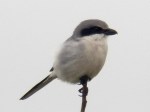
photo loggerhead-shrike.jpg
Don’t let the songbird schitck fool you. Loggerhead Shrikes are deadly.

As far as total species count, this trip was nearly as productive as Pine Island was two weeks ago.

Total species list:

  1. Pied-billed Grebe
  2. American Coot
  3. Common Gallinule
  4. Wood Stork
  5. Anhinga
  6. Snowy Egret
  7. Tri-colored Heron
  8. Boat-tailed Grackle
  9. Little Blue Heron
  10. Great Blue Heron
  11. Great Egret
  12. Common Ground Dove
  13. Loggerhead Shrike
  14. Lesser Scaup
  15. Blue-winged Teal
  16. Northern Shoveler (new!)
  17. Hooded Merganser
  18. Crested Caracara
  19. Turkey Vulture
  20. Forster’s Tern (new!)
  21. Common Tern
  22. Green Heron
  23. Black-crowned Night Heron
  24. Belted Kingfisher
  25. Savannah Sparrow
  26. Palm Warbler
  27. Red-winged Blackbird
  28. Double-crested Cormorant
  29. Northern Cardinal
  30. Common Yellowthroat
  31. European Starling
  32. Fish Crow
  33. Sandhill Crane

With the addition of the Forster’s Tern and Northern Shoveler, my 2013 species count is at 144.