Coming up Next: Malabar Scrub Sanctuary, March 2, 2014

I had a pleasant outing at the Malabar Scrub Sanctuary yesterday, with some decent photos. I’ll be getting a post together some time later today or this evening. In the meantime, here’s the species list, including the drive there and back:

  • Northern Mockingbird
  • Fish Crow
  • Brown Pelican
  • Great Blue Heron
  • Yellow-rumped Warbler
  • White-eyed Vireo
  • Blue-gray Gnatcatcher
  • Northern Cardinal
  • Eastern Towhee
  • Florida Scrub Jay (FOY)
  • Boat-tailed Grackle
  • Osprey
  • Turkey Vulture
  • Black Vulture
  • Brown-headed Cowbird (FOY)
  • Palm Warbler
  • Carolina Wren
  • Northern Parula
  • Blue Jay
  • Pileated Woodpecker
  • Tree Swallow
  • Red-shouldered Hawk
  • American Goldfinch

More to come.

Coming up Next: Malabar Scrub Sanctuary, March 2, 2014

I had a pleasant outing at the Malabar Scrub Sanctuary yesterday, with some decent photos. I’ll be getting a post together some time later today or this evening. In the meantime, here’s the species list, including the drive there and back:

  • Northern Mockingbird
  • Fish Crow
  • Brown Pelican
  • Great Blue Heron
  • Yellow-rumped Warbler
  • White-eyed Vireo
  • Blue-gray Gnatcatcher
  • Northern Cardinal
  • Eastern Towhee
  • Florida Scrub Jay (FOY)
  • Boat-tailed Grackle
  • Osprey
  • Turkey Vulture
  • Black Vulture
  • Brown-headed Cowbird (FOY)
  • Palm Warbler
  • Carolina Wren
  • Northern Parula
  • Blue Jay
  • Pileated Woodpecker
  • Tree Swallow
  • Red-shouldered Hawk
  • American Goldfinch

More to come.

Turkey Creek, February 23, 2014

First, my apologies; I forgot to check my camera batteries before arriving at the park, and they were dead, so no photos from today.

I decided to drop in on Turkey Creek to see how things are going on now that winter is waning. It was a pretty good morning, all things considered.

The most noticible change over my last visit was the sound. Although the area nearest the start of the trails and boardwalk was pretty quiet, once you got closer to the creek, things picked up. There was a pleasing jumble of Blue Jays, Blue-gray Gnatcatchers, Northern Cardinals, Gray Catbirds and Northern Parulas. Northern Parulas are a year-round species in this part of Florida, but they make themselves fairly scarce through the winter. The males are now in their breeding plumage and are singing from the canopy. It was nice to see them (and hear them). Yet another sign spring has arrived in the Sunshine State. Don’t worry, my northern friends, it’s coming I promise!

Other notable wintering species were a Blue-headed Vireo and a couple of Black-and-white Warblers.

I didn’t venture to the canal or weir today, but I did see a small flock of Black-bellied Whistling Ducks fly over.

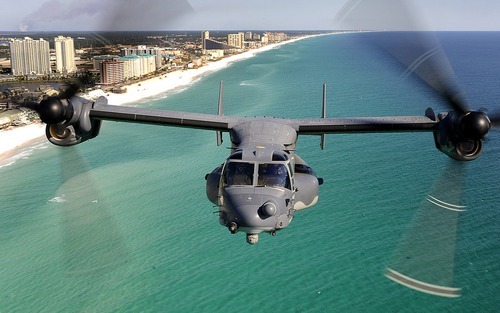
At one point I heard a very distinctive sounding whining roar overhead, and looked up to see an Osprey, high in the sky! No, not THAT Osprey, THIS kind of Osprey:
image
CV-22 Osprey, via Wikipedia.

It was pretty high up, but the unique engine sound and one of the rotors (on the left wing), catching the sunlight making it almost shimmer, made it hard to miss.

Complete species list for this morning:

  • Northern Cardinal
  • Blue-gray Gnatcatcher
  • Yellow-rumped Warbler
  • Downy Woodpecker
  • Yellow-bellied Sapsucker
  • Tree Swallow
  • Black-and-white Warbler
  • Northern Parula
  • Carolina Wren
  • Northern Mockingbird
  • Gray Catbird
  • Turkey Vulture
  • Black Vulture
  • Red-shouldered Hawk
  • Black-bellied Whistling Duck
  • Great Blue Heron
  • Wood Stork
  • Blue-headed Vireo
  • Boat-tailed Grackle
  • Fish Crow
  • Osprey
  • American Goldfinch
  • Eurasian Collared Dove
  • Mourning Dove
  • Rock Pigeon

Notably absent were the Palm Warblers I expected to see, which have been everywhere else in eastern Florida in droves. The large flocks of American Robins also seem to have dispersed, indicating the nearness of spring not just for Florida, but for points north.

It was nice to see the old place perking up a bit after such a silent fall and winter. 

Ritch Grissom Memorial Wetlands – February 16, 2014

Yesterday saw me at the Ritch Grissom Memorial Wetlands at Viera again.

Heron activity was more restricted to the reeds, compared to last week, and there were fewer Wood Storks. I noted at least one Sandhill Crane nest mound being constructed and several species gathering nest material.

photo 100_2217.jpg
Sandhill Crane pair getting their nest in order.

photo 100_2177.jpg
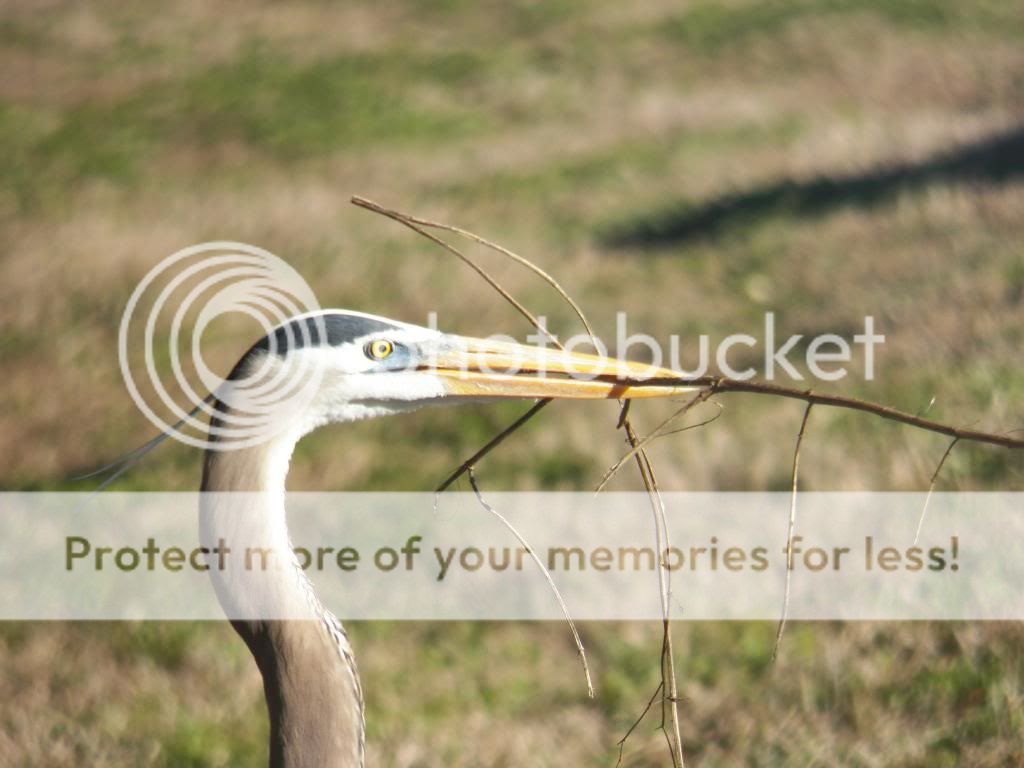
Great Blue Heron gathering sticks.

I watched a Wilson’s Snipe forage through the reeds and water lettuce for a while. It’s usually pretty easy to flush this species out before you even see one, so it was a treat to get to watch this one for several minutes.

There were at least a few dozen American White Pelicans on the ponds. On one pond, each bird was swimming more or less alone. Some are beginning to grow “horns” or “mortarboards” on their bills – a sign the breeding season is near.

photo 100_2198.jpg
American White Pelican, gearing up for spring.

On another pond, there was a close group swimming together. I caught them on video as they surged into the center of the pond to gobble up some fish that had evidently schooled there.

American White Pelicans at Ritch Grissom Wetlands at Viera from CJSF on Vimeo.

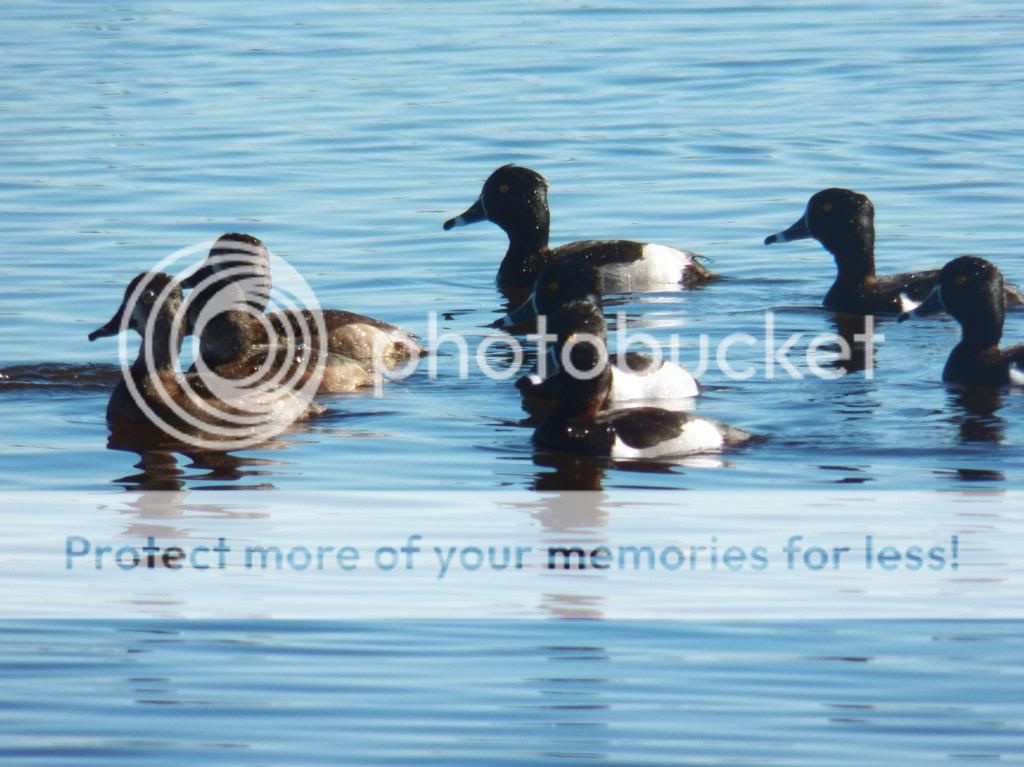
There were even fewer ducks than last week. The most numerous are now the Ring-necked Ducks, who were swimming more in their own groups rather than mingling with the American Coots (which were still there in the hundreds).

photo ring-necked-ducks.jpg
Some Ring-necked Ducks and Blue-winged Teals.

More evidence of Florida Spring would be found in the territorial calls and displays of the male blackbirds. Both the Red-winged Blackbirds and the Boat-tailed Grackles were calling out, chasing other males away and displaying their plumage to its best effect.

photo red-winged-black-bird-display.jpg
Red-winged Blackbirds show off their brilliant red epaulets to attract mates and impress rivals.

photo boat-tailed-grackle-calling.jpg
Boat-tailed Grackles rely on their irridescent feathers and loud calls and bill-snapping to stand out.

Here are the species I saw (* denotes species gathering nest material):

  • American Robin
  • Ring-necked Duck
  • Blue-winged Teal
  • White Pelican
  • Great Blue Heron *
  • Snowy Egret
  • Cattle Egret
  • Little Blue Heron
  • Tri-colored Heron
  • Green Heron
  • Great Egret
  • Palm Warbler
  • Yellow-rumped Warbler
  • Savannah Sparrow
  • Northern Cardinal
  • Grey Catbird
  • Northern Mockingbird
  • American Coot
  • Common Gallinule
  • White Ibis
  • Glossy Ibis *
  • Forster’s Tern
  • Bonaparte’s Gull
  • Osprey
  • Turkey Vulture
  • Black Vulture
  • Crested Caracara *
  • Boat-tailed Grackle
  • Blue Jay
  • Fish Crow
  • Belted Kingfisher
  • Loggerhead Shrike
  • Wilson’s Snipe
  • Mottled Duck
  • Sandhill Crane
  • Common Tern
  • Hooded Merganser
  • Red-winged Blackbird *
  • Common Yellowthroat
  • Tree Swallow
  • Killdeer
  • Eastern Phoebe
  • Eastern Meadowlark
  • Wood Stork
  • Red-bellied Woodpecker

I’ll post some more photos later this week.

Ritch Grissom Memorial Wetlands – February 16, 2014

Yesterday saw me at the Ritch Grissom Memorial Wetlands at Viera again.

Heron activity was more restricted to the reeds, compared to last week, and there were fewer Wood Storks. I noted at least one Sandhill Crane nest mound being constructed and several species gathering nest material.

photo 100_2217.jpg
Sandhill Crane pair getting their nest in order.

photo 100_2177.jpg
Great Blue Heron gathering sticks.

I watched a Wilson’s Snipe forage through the reeds and water lettuce for a while. It’s usually pretty easy to flush this species out before you even see one, so it was a treat to get to watch this one for several minutes.

There were at least a few dozen American White Pelicans on the ponds. On one pond, each bird was swimming more or less alone. Some are beginning to grow “horns” or “mortarboards” on their bills – a sign the breeding season is near.

photo 100_2198.jpg
American White Pelican, gearing up for spring.

On another pond, there was a close group swimming together. I caught them on video as they surged into the center of the pond to gobble up some fish that had evidently schooled there.

//player.vimeo.com/video/86967865

American White Pelicans at Ritch Grissom Wetlands at Viera from CJSF on Vimeo.

There were even fewer ducks than last week. The most numerous are now the Ring-necked Ducks, who were swimming more in their own groups rather than mingling with the American Coots (which were still there in the hundreds).

photo ring-necked-ducks.jpg
Some Ring-necked Ducks and Blue-winged Teals.

More evidence of Florida Spring would be found in the territorial calls and displays of the male blackbirds. Both the Red-winged Blackbirds and the Boat-tailed Grackles were calling out, chasing other males away and displaying their plumage to its best effect.

photo red-winged-black-bird-display.jpg
Red-winged Blackbirds show off their brilliant red epaulets to attract mates and impress rivals.

photo boat-tailed-grackle-calling.jpg
Boat-tailed Grackles rely on their irridescent feathers and loud calls and bill-snapping to stand out.

Here are the species I saw (* denotes species gathering nest material):

  • American Robin
  • Ring-necked Duck
  • Blue-winged Teal
  • White Pelican
  • Great Blue Heron *
  • Snowy Egret
  • Cattle Egret
  • Little Blue Heron
  • Tri-colored Heron
  • Green Heron
  • Great Egret
  • Palm Warbler
  • Yellow-rumped Warbler
  • Savannah Sparrow
  • Northern Cardinal
  • Grey Catbird
  • Northern Mockingbird
  • American Coot
  • Common Gallinule
  • White Ibis
  • Glossy Ibis *
  • Forster’s Tern
  • Bonaparte’s Gull
  • Osprey
  • Turkey Vulture
  • Black Vulture
  • Crested Caracara *
  • Boat-tailed Grackle
  • Blue Jay
  • Fish Crow
  • Belted Kingfisher
  • Loggerhead Shrike
  • Wilson’s Snipe
  • Mottled Duck
  • Sandhill Crane
  • Common Tern
  • Hooded Merganser
  • Red-winged Blackbird *
  • Common Yellowthroat
  • Tree Swallow
  • Killdeer
  • Eastern Phoebe
  • Eastern Meadowlark
  • Wood Stork
  • Red-bellied Woodpecker

I’ll post some more photos later this week.