No Bittern Tears of Egret

Monday was a vacation day for me, and I used it to head back to the Ritch Grissom Memorial Wetlands at Viera. It was overcast and a few sprinkles were falling, but I was hoping to see additional waterfowl and perhaps some more winter residents birds.

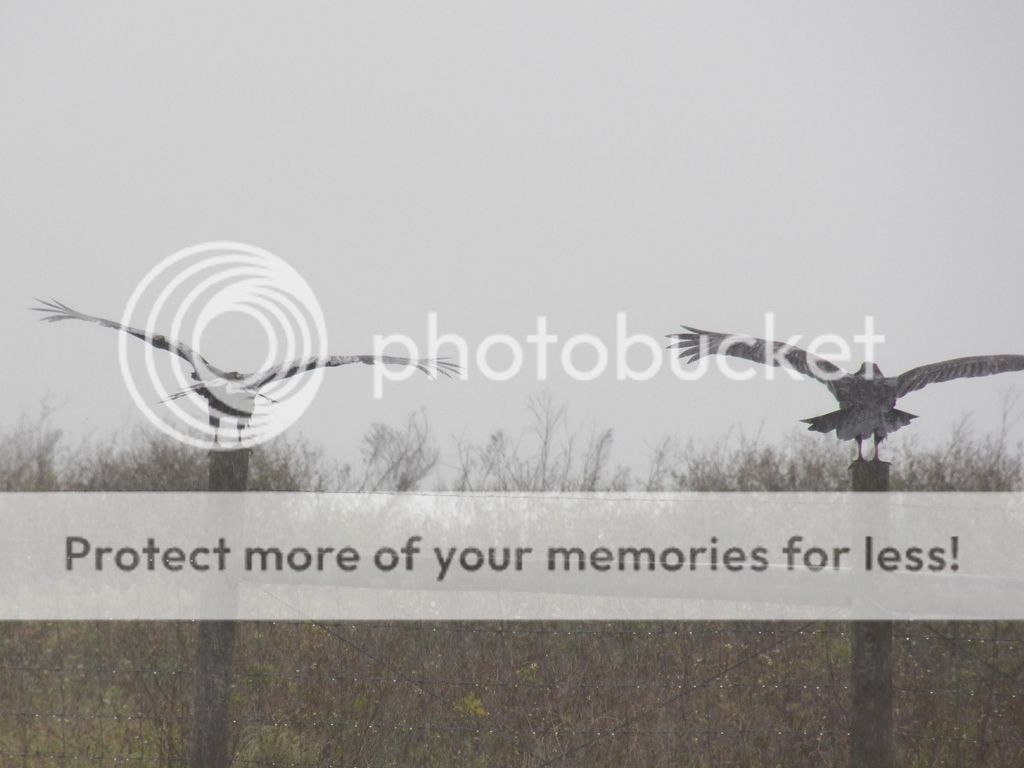
As I pulled into the parking area, I saw an immature Bald Eagle being harassed by an Osprey and some Turkey Vultures trying to get airborne. The morning was cool, so there didn’t seem to be any thermals to get them aloft.

I noticed more Pied-billed Grebes than the last time. There were also small groups of Northern Shovelers (all female) and Blue-winged Teals (both sexes). The rafts of American Coots have grown a little larger, though there were some pairs skulking closer to shore.

photo coot-couple.jpg What a coot couple!

I noticed several Black-crowned Night Herons in the reeds, some distance away. Both species of night herons here are actually crepuscular (a fancy term for being most active at dusk or dawn) rather than nocturnal. They were roosting quietly and grooming themselves a little.
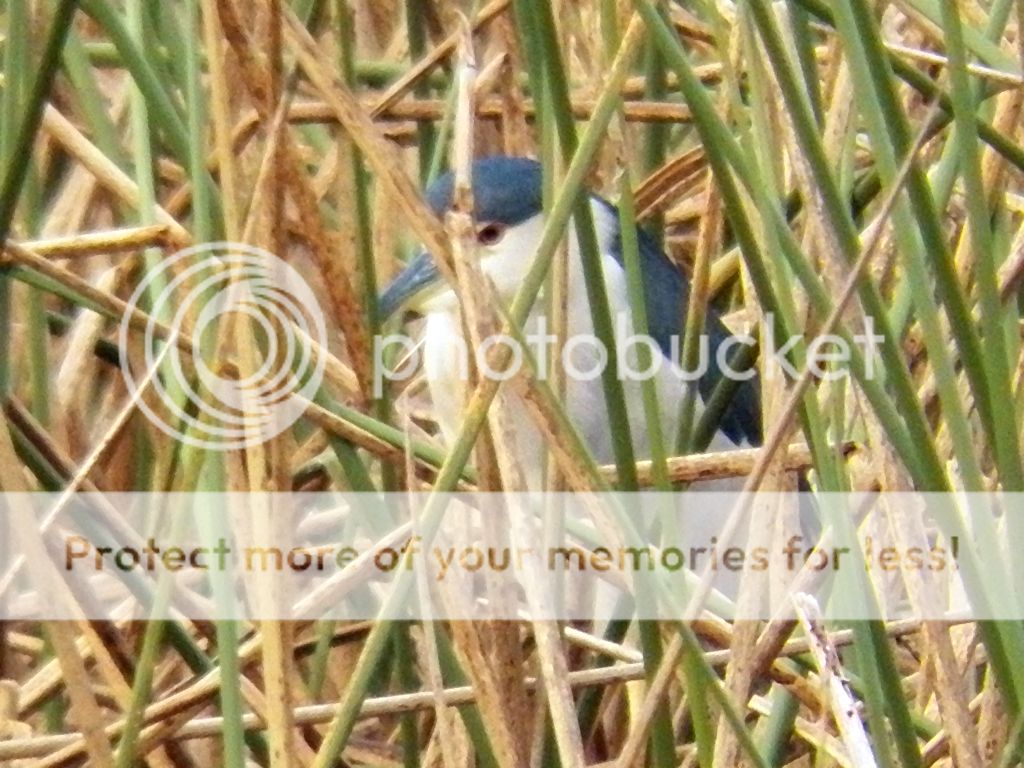
photo black-crowned-night-heron.jpg
Black-crowned Night Heron.

I had something happen to me then that always fascinates me when something like it occurs. Normally one would chalk it up to a coincidence, but when it happens, the experience can seem so uncanny that we ascribe it to outside forces or fate. I was thinking to myself how great it would be to see every species of resident heron or egret in one outing. I was mulling that over and said to myself, “it would be pretty awesome if I did see an American Bittern.” Immediately, there was a squawk and flurry of wings to my left, and a chunky, brown and striped bird rose out of the reeds and flew across my line of sight. I first grabbed my binoculars and to my glee, it was indeed an American Bittern! It landed on the far side of the pond and tried to adopt the characteristic freeze posture the bird is known for, to blend in with the reeds. With the distance and low light levels, here’s the best shot I got.
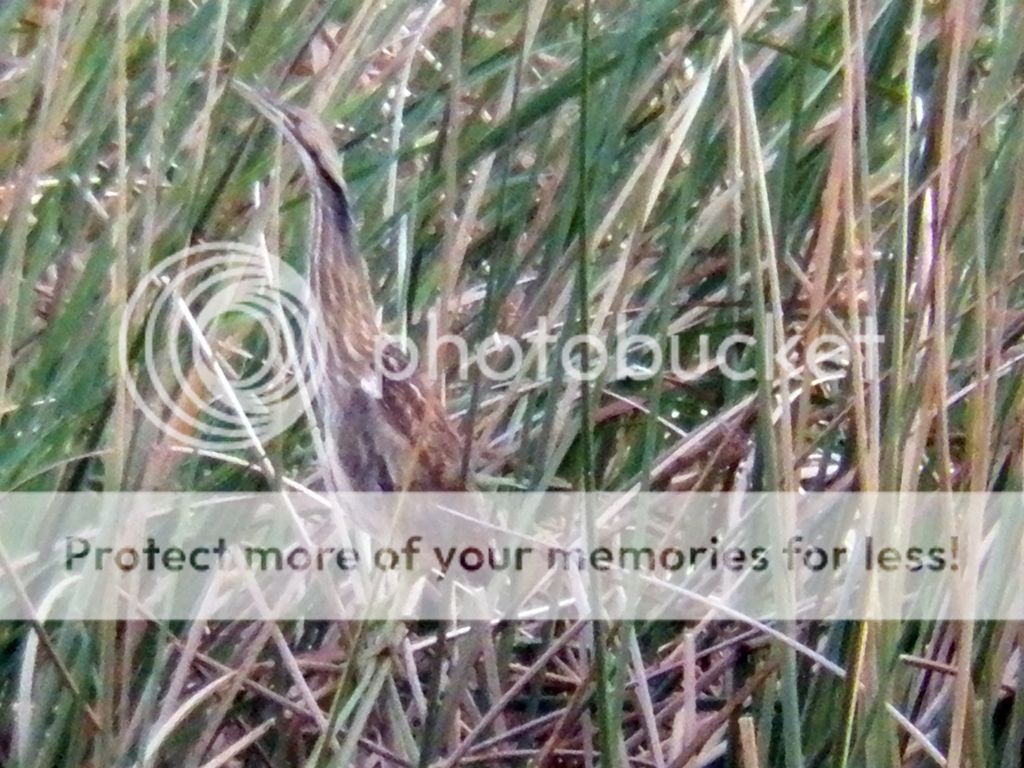
photo bittern.jpg
“I am a reed. Nothing to see here.”

I love it when these things happen! I was not able to conjure up a Whooping Crane or a Kirtland’s Warbler, though!

Palm Warblers were plentiful. They seemed equally at home among the wetland and upland vegetation. Palm Warblers are also getting a little more numerous near my workplace. Last year there were dozens each morning as I walked through the turnstile onto the work campus ground, each winter morning.
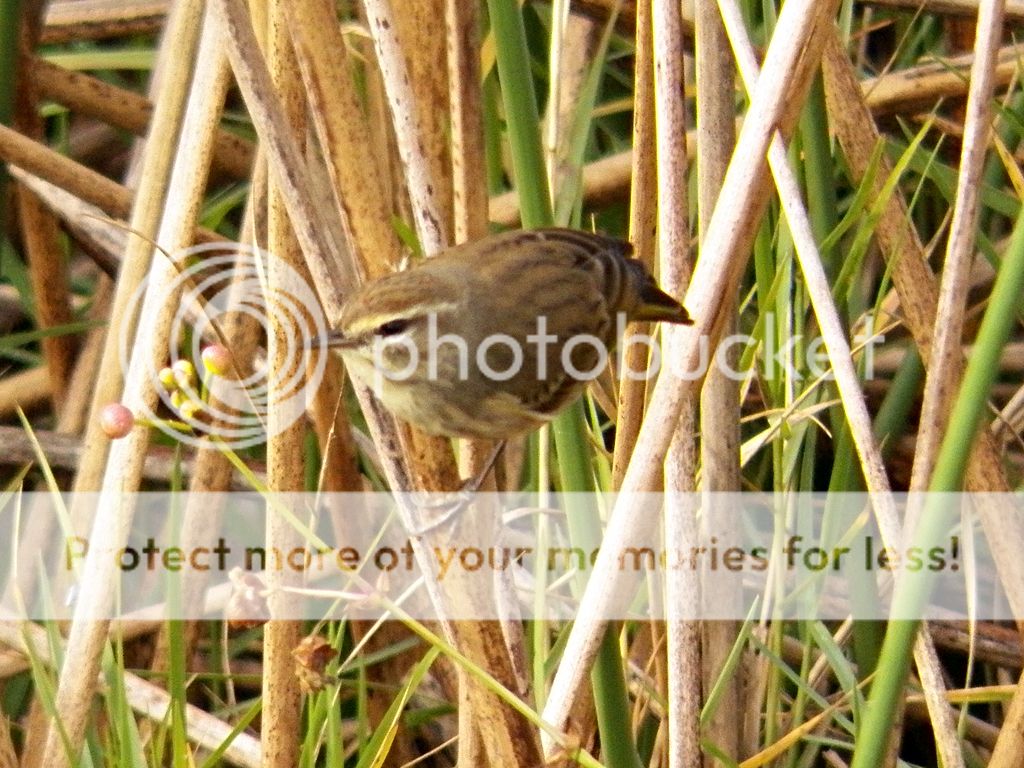
photo pine-warbler1.jpg
Palm Warbler says, “Hey there!”

As I said above, there was a good variety of herons and egrets. At one point I heard some loud splashing and commotion behind me and saw a Great Egret wresting with a really large lunch! This bullfrog must have been at least 6 inches long (not counting the legs). It took some effort, but the egret finally got its meal down. I did feel a little bad for the frog.

photo great-egret-frog.jpg
“What are you looking at? Is there something in my beak? Oh gosh, there is! How embarrassing!”

The Ospreys were not diving or flying much. I don’t know if the water surface or wind conditions were unfavorable or not, but they seemed mostly content to sit and look around. This one watched me intently the whole time I was in its vicinity.

photo osprey.jpg
Osprey chillin’ out.

One can usually count on interesting non-bird encounters at the Viera Wetlands as well. I encountered some small alligators trying to get some glimpses of sun in between the sprinkles and clouds. Since it was a cool day, they were a bit sluggish and I was able to approach a bit closer than normal.

photo baby-gator.jpg
Young gator showing us its happy face.

But most exciting was the almost run-in with a Water Moccasin in the grass. Water Moccasins are notoriously aggressive, and will often stand their ground when approached. I kept my distance, but still managed some great shots.

photo moccasin-long.jpg

photo moccasin-head.jpg
Don’t let this pretty face fool you. Water Moccasins can be very aggressive. I kept a respectful distance from this beauty.

As I made my way across the far end of the wetlands, I saw a few Limpkins carefully walking along the water’s edge. I was a little surprised to find so many Limpkins present, because their preferred food, apple snails, are not plentiful at this location. One individual was trying to make a meal out of a tiny snail about a centimeter across, before it flew away, calling loudly.

photo limpkin.jpg
Limpkin in flight.

As I continued along the western edge of the Wetlands, I was accompanied by loose groups of Palm Warblers and Savannah Sparrows along the grassy borders and small pines and brush that parallel the driving paths. I also heard a few Blue-gray Gnatcatchers. I paused at one point to check the Palm Warblers more closely and was surprised to see a different warbler flitting among the rest. My first thought was that it might be a Common Yellowthroat, but I’ve never seen one in brushy pine edges before (but that doesn’t mean it couldn’t be). On closer notation of the field marks and behavior I am left with a bit of a dilemma.

If I enumerate my notes thus:

  1. Gray head
  2. Yellowish breast and belly
  3. Greenish back, getting brighter and yellow-greenish on rump
  4. No wing-bars
  5. Flipped it’s tail (not bobbing or wagging like a Palm)

The closest match I get is a Nashville Warbler (a first for me!). However, there are problems with that identification. First, it’s not 100% certain that the bird wasn’t a slightly odd (or “aberrant”) plumage of a female or immature Common Yellowthroat. Second, the last time a Nashville Warbler was credibly reported in this area this late in the season was on November 8, 1999. Of course this doesn’t mean it is impossible, but without good photographic proof and a little more study of field marks, I cannot be 100% sure I saw a Nashville Warbler. Such is the way with birding. Sometimes not knowing for sure, but using all your skills to try to figure it out, expands your knowledge and experience and makes you a better birder. As Laura Erickson said to me, “Experiencing the bird itself is ever so much more fun than simply identifying it.”

Besides the Bald Eagle at the Wetlands’ entrance and the Ospreys lurking on the tree-tops, there were more raptors present than I’ve seen in a while. Perhaps due to the increase in small birds in the area compared to the summer, there were Northern Harriers flying around the area all morning, and several Red-tailed Hawks were present. The one in this photo was one of the darker ones I’ve seen here (compare to the lighter one I saw a few weeks ago).
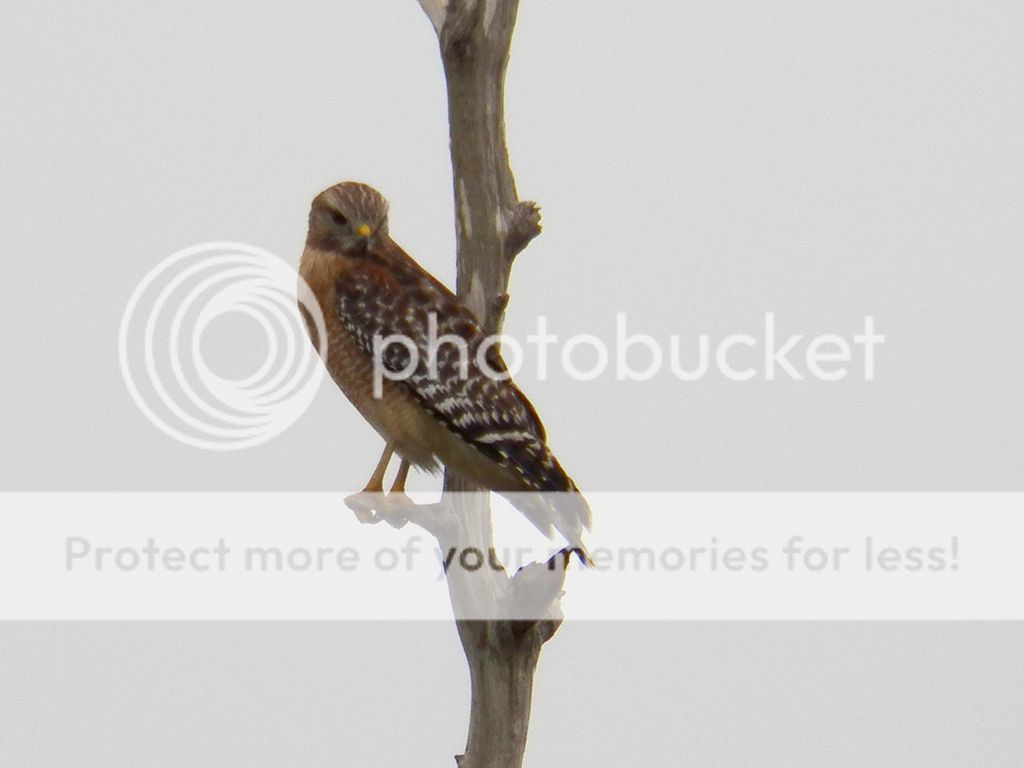
photo red-shouldered-hawk.jpg

As I rounded one of the wetland cells to head back to the car, the weather turned, and the pesky on-an-off sprinkles were about to give way to steady rain. As the sky darkened, I saw this snowy egret standing on a pipe.

photo snowy-egret.jpg
A Snowy Egret hunkering down as the rain approached.

You can clearly see what Peterson and others have called “golden slippers” – the bright yellow feet. It is thought that one feeding strategy the Snowy Egrets use is to shuffle their bright feet along the bottom of ponds or marshes and scare up fish, crustaceans and other aquatic life in order to catch them to eat.

photo golden-slippers.jpg
“The feet! I told you about – I told you to – I told you – didn’t I tell him about the feet?”

The rain began falling soon after and by the time I got back to the car, I was pretty soaked.

Species list, mostly in order of first identification:

  • Bald Eagle
  • Turkey Vulture
  • American Coot
  • Common Gallinule
  • Common Grackle
  • Boat-tailed Grackle
  • Great Egret
  • Northern Harrier
  • Black-crowned Night Heron
  • Pied-billed Grebe
  • Blue-winged Teal
  • Northern Shoveler
  • Sandhill Crane
  • Osprey
  • Loggerhead Shrike
  • Double-crested Cormorant
  • Northern Mockingbird
  • American Bittern
  • Snowy Egret
  • Great Blue Heron
  • Anhinga
  • Barn Swallow
  • White Ibis
  • Glossy Ibis
  • Little Blue Heron
  • Black Vulture
  • Belted Kingfisher
  • Green Heron
  • Savannah Sparrow
  • Palm Warbler
  • Blue-gray Gnatcatcher
  • Eastern Phoebe
  • Red-winged Blackbird
  • Limpkin
  • Red-shouldered Hawk
  • Gray Catbird (β™«)
  • Eastern Meadowlark (β™«)
  • Common Yellowthroat

photo wet-vultures.jpg
Wet Turkey Vultures coping with the weather.

Transitions, Part II: Viera Wetlands

[For part I, from the Moccasin Island tract, click here.]

The Viera Wetlands (officially the Ritch Grissom Memorial Wetlands at Viera) are an important wintering area for many birds. Ducks, coots and gallinulesΒ  gather in large floating groups, called rafts, to feed and provide common defense. Mergansers and grebes mingle with them in pairs or small groups, and we even had Mute Swans this past year.

It’s a little early in the wintering season, but I thought it would be good to see how the Wetlands transition from summer to winter. The American Coots were already starting to gather in groups but other species, like this Pied-billed Grebe, were enjoying the larger stretches of still empty water before things get noisy and crowded.

image
Lone grebe as a picture of solitude.

The lake at the center of the Wetlands is a favorite place for gulls, terns and Ospreys to dive for fish. Normally when an Osprey goes after a fish, it strikes the water feet first and uses them to grab its prey and immediately flies back into the air. Osprey have special barbs, called spicules, on the underside of their feet that aid it in grasping fish and manipulating to to face head-first. This makes transporting the fish to either a nest of an eating perch more aerodynamic and therefore more energy efficient. What happens when an Osprey dives a little too hard and misses its meal?

image
A dejected and wet Osprey drips dry after diving in a little to hard for a meal.

Heron and egret activity was much reduced. I saw no Cattle Egrets and the rookery trees were empty. There were a few Green Herons across the lake from me, and I saw just one each Great Blue Heron and Great Egret. Now that breeding and nesting season is over, the males have molted and lost their plumes and lancet feathers, but still retain a simple beauty and grace.

image
A Snowy Egret standing patiently. Normally this species is an active feeder, using its bright golden-colored feet to stir up fish, crustaceans and frogs.

Herons sometimes amaze me with the focus and patience they have when stalking the edge of a pond or standing, head poised for a quick strike to grab a fish or a frog. There was a Little Blue Heron that was so intent on its foraging activities that it gave me almost no mind as I got within a couple of feet.

image
This Little Blue Heron was so focused, I could almost see laser beams coming out of its eyes.

Its nonchalance seemed to attract a Glossy Ibis and Common Gallinule; the normally more skittish birds hung close to it and only glanced at me once or twice before I moved on.

image
When you hear a Common Gallinule’s calls, you realize why this species used to be called the Common Moorhen (hen as in chicken).

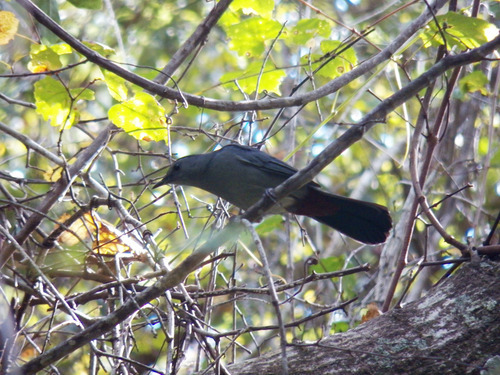
Other birds have finished their end of summer molting as well. The small flocks of Red-winged Blackbirds and Boat-tailed Grackles are generally quieter now that the chaos of summer is over. The birds making the loudest ruckus were the Gray Catbirds in the trees and brush along the outside of the outer road.

image
This female Boat-tailed Grackles feathers looked almost like a burnished metal in the sun.

I walked back to my car and drove a partial loop to get to the exit, covering some of the same ground I did on foot. Not much had changed in the short time, except more Osprey were diving for food, and I hope this one wound up more successful, or at least less wet, than the first one I saw.

image
Best of luck and farewell.

Here is the complete species list, including my adventures at the Moccasin Island Tract. You can read about it in part 1.

  • American White Pelican
  • Boat-tailed Grackle
  • Sandhill Crane
  • Mourning Dove
  • Common Grackle
  • Tree Swallow
  • Purple Martin
  • Red-bellied Woodpecker
  • Great Blue Heron
  • American Crow
  • Eastern Meadowlark
  • Bobolink
  • Wilson’s Snipe
  • Tri-colored Heron
  • Great Egret
  • White Ibis
  • Glossy Ibis
  • Belted Kingfisher
  • Red-shouldered Hawk
  • Loggerhead Shrike
  • Roseate Spoonbill
  • Common Yellowthroat
  • House Wren
  • Northern Cardinal
  • White-eyed Vireo
  • Grey Catbird
  • Common Ground Dove
  • Northern Mockingbird
  • Blue Jay
  • Green Heron
  • Eastern Phoebe
  • Osprey
  • Anhinga
  • Red-winged Blackbird
  • American Coot
  • Common Gallinule
  • Little Blue Heron
  • Pied-billed Grebe
  • Snowy Egret
  • American Kestrel
  • Black Vulture
  • Turkey Vulture
  • Wood Stork

Transitions, Part I: Moccasin Island Tract

October in Florida is a time of transition. Florida has two dominant seasons: the wet season, which runs from May to October, and the dry season, which runs from October to May. The division between the wet and dry seasons is usually fairly predictable and quick. Sometime within the second week of October the humid and rainy pattern of the summer ends and the air masses tend to be drier. That isn’t to say we still can’t have some days with rain, but generally that is the trend. We seem to have crossed over this past weekend into that dry season.

This month is also the peak month for bird migration through the central part of the state, and many of Florida’s winter residents are beginning to set up house and gather in places where food and shelter are plentiful.

My goal, initially, was to head to Viera and check out the Click Ponds to see if any waterfowl or shorebirds have begin to congregate, but the gate to the roadway to the ponds was closed, and it remained so all morning. I used that as an opportunity to head to the Moccasin Island Tract for an hour or so. Interested readers can check out my blog posts here and here for previous adventures to this conservation area.

On the way along the road toward the parking area a large white bird caught my eye, far off in one of the fields (I think much of the area is a sod farm). The shape didn’t look right for an egret, but it didn’t seem tall enough to be a Whooping Crane. While we do have Whoopers in central Florida, associated with the Deseret Ranch, it would be quite a “thing” if one were to turn up in Viera! I stopped the car and took out my binoculars and had a look. It was an American White Pelican, standing by itself on a patch of sod. There were no other pelicans anywhere that I could see. As I watched it preen a little and look around, I wondered if it was tired and just plopped itself down wherever it could as I’ve never seen a pelican either not flying or floating.

I arrived at the parking area with the sun still pretty low, but it was warming up fairly quickly. I was first greeted, as I usually am at this location, by the singing of Eastern Meadowlarks. The fields adjacent to the dirt road leading north from the parking area were still covered in standing water from all the rain we had in last few weeks, and I flushed a couple of Wilson’s Snipes as I walked along.

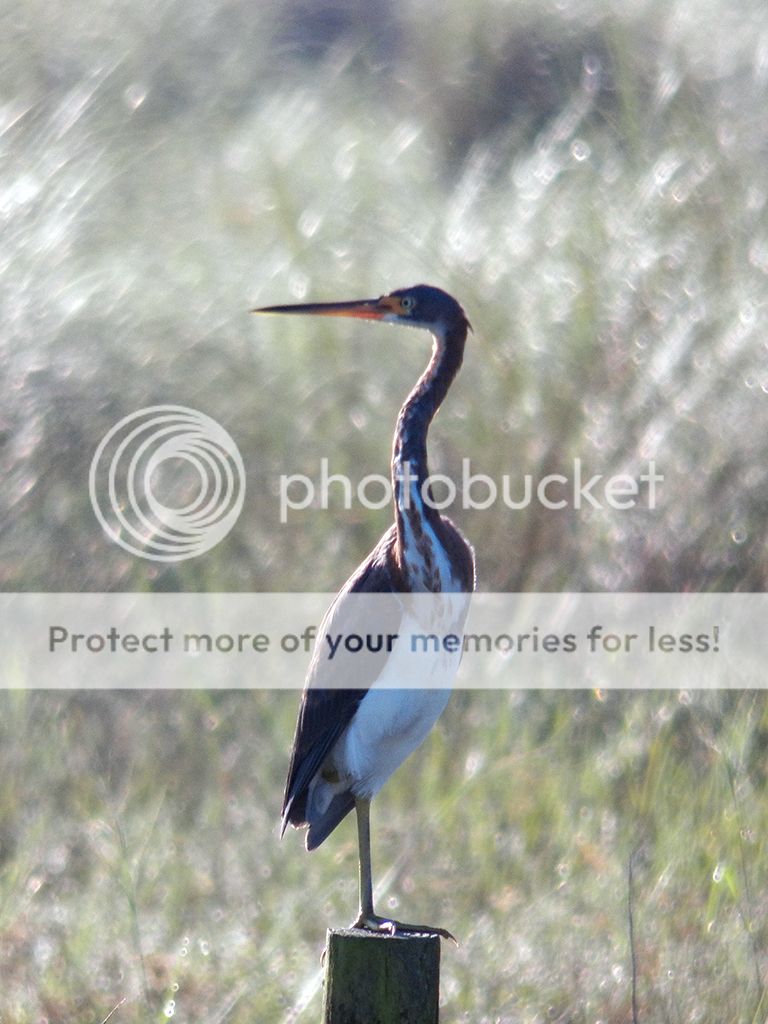
Most of the fence posts were occupied by Tri-colored Herons, who nervously watched me go past.

image
Herons sometimes strike the goofiest of poses, thanks in part to their long and flexible necks. Standing on one foot only added to this bird’s charm.

Further in the flooded fields were congregations of Great Egrets and both White and Glossy Ibises. Occasionally two or three ibises would take off and fly in a big circle around the fields and then land back with the group.

image
Herons and egrets are usually silent, except for alarm calls when startled or otherwise flushed out. When they are in groups like this, they have a surprisingly varied set of vocalizations.

I didn’t walk far up that particular path, since I wanted to explore along the drainage canal and road to the west of the parking area. As I walked back, a small flock of Bobolinks flew past. These had been reported over a week ago on the BRDBRAIN e-mail list, but I figured they were gone, so that was a pleasant surprise.

As I approached the parking area, I could hear American Crows and a Red-shouldered Hawk nearby. There were Belted Kingfishers chasing each other around as well. Some Red-shouldered Hawks in Florida are of a paler form that I don’t usually see until winter. This one may have just gotten its adult feathers.

image
This bird seemed inexperienced and a little clumsy, despte the adult plumage.

Along the path to the west, my presence stirred up some Northern Cardinals and some scolding notes that later turned out to be House Wrens. None of that ruffled the feathers (actually or metaphorically) of this Loggerhead Shrike.

image
Shrike populations are declining in many areas around east central Florida as we pave over more of their preferred habitat. It’s good to see them holding their own in conservation areas like this and Stick Marsh.

Along with the quite agitated House Wrens was this handsome Common Yellowthroat that popped out to check me out for a few seconds before disappearing back into the dense brush.

image
“Peek-a-boo! I see you! Now go away!”

Whenever I’m birding I try to stay in the habit of looking up now and again to see what might be there. This is particularly useful in catching raptors or other soaring birds that might be circling on thermals high overhead. This time I was surprised by a relatively large flock of Roseate Spoonbills. Normally I only see one or two at a time, so I felt this was a real treat.

image
Roseate Spoonbills doing the Missing Man Formation.

No birding trip in east central Florida would be complete without those tiny bundles of energy, the Blue-grey Gnatcatchers. This is one of several that was scolding me along with the House Wrens and Northern Cardinals.

image
Ever-present and always fun to watch!

I soon found my path blocked by a submerged section of the path with no way around it. Forced to turn back, I flushed some Common Ground Doves from the brush edges and watched some Blue Jays harass the Red-shouldered Hawk.

Before getting in the car to head to the wetlands, I watched a pair of American Crows walk through the parking area and saw an Eastern Phoebe perform some impressive acrobatics in pursuit of food. At the top of a palm tree stood this Great Blue Heron, a fitting end to the first part of my day.

image
Looking far more serious and determined than its smaller cousin at the start of this post, this Great Blue Heron had a commanding view of the landscape.

Here’s the complete species list, including those from the Ritch Grissom Memorial Wetlands at Viera, which you’ll get to see in part 2.

  • American White Pelican
  • Boat-tailed Grackle
  • Sandhill Crane
  • Mourning Dove
  • Common Grackle
  • Tree Swallow
  • Purple Martin
  • Red-bellied Woodpecker
  • Great Blue Heron
  • American Crow
  • Eastern Meadowlark
  • Bobolink
  • Wilson’s Snipe
  • Tri-colored Heron
  • Great Egret
  • White Ibis
  • Glossy Ibis
  • Belted Kingfisher
  • Red-shouldered Hawk
  • Loggerhead Shrike
  • Roseate Spoonbill
  • Common Yellowthroat
  • House Wren
  • Northern Cardinal
  • White-eyed Vireo
  • Grey Catbird
  • Common Ground Dove
  • Northern Mockingbird
  • Blue Jay
  • Green Heron
  • Eastern Phoebe
  • Osprey
  • Anhinga
  • Red-winged Blackbird
  • American Coot
  • Common Gallinule
  • Little Blue Heron
  • Pied-billed Grebe
  • Snowy Egret
  • American Kestrel
  • Black Vulture
  • Turkey Vulture
  • Wood Stork

Click here for Part II: Viera Wetlands

Back In The Catbird Seat

I had today off from work, so I took a quick late-morning look at Turkey Creek (again) to see if anything was going on. I was too late to catch up with Shirley Hills, and the park was mostly empty. The biggest change from Sunday was the prevalence of Gray Catbird calls all through the western part of the sanctuary. There were some other sprinklings of birds too, including a loose congregation of Yellow-throated Vireos, White-eyed Vireos and Blue-grey Gnatcatchers. I’ll do a quick photoblog post later of the few other shots I got off.

image
Catbirds are here!

Here’s the list from today (not in much of a particular order):

  • Gray Catbird
  • Mourning Dove
  • Common Ground Dove
  • Northern Cardinal
  • Carolina Wren
  • Yellow-throated Warbler
  • Blue-gray Gnatcatcher
  • Yellow-throated Vireo
  • White-eyed Vireo
  • Downy Woodpecker
  • Northern Mockingbird
  • Red-bellied Woodpecker
  • Blue Jay
  • Snowy Egret
  • Great Blue Heron
  • Tri-colored Heron
  • Common Gallinule
  • Anhinga
  • Fish Crow
  • Brown Thrasher
  • Cape May Warbler
  • Black Vulture
  • Turkey Vulture
  • Red-shouldered Hawk (β™«)

You’ll Never Walk Alone

I was a not-so-lonely birder today (Sunday) at Turkey Creek Sanctuary. After walking part of the boardwalk then McKinnon’s Way en route to the weir and canal, I first briefly bumped into Roy Book, and then Shirley Hills. Roy was on his way opposite myself and Shirley, so we waved “good luck” to Roy, and then Shirley and I headed back toward the boardwalk together.

Shirley has so much knowledge about the sanctuary and a keen eye for bird movement that birding with her is always exciting and fascinating. We hooked up with Juanita Baker, who runs the Florida Bird Photo-of-the-Month at Pelican Island Audubon. The three of us stuck together and did a few laps and back-and-forths along the side of the park near McKinnon’s Way. Although Shirley said it was much quieter compared to the previous few days, we did pretty well in terms of variety, if not numbers, of migrants.

Prior to running into my companions for the morning, I did have some luck along McKinnon’s Way. I had a very clear look at a Red-eyed Vireo, a female Ruby-throated Hummingbird, and an extensive hide-and-seek game with a mystery warbler.

photo f-btbw.jpg
Fall warblers can indeed be quite confusing. This little girl had me preplexed all day.

I speculated with Shirley that maybe this was either a Tennessee Warbler or an Orange-crowned Warbler. Shirley doubted the latter, due to timing, but as she has seen some Tennessee Warblers at her house, she thought that was a possibility. Keen-eyed readers will see, from the photographic evidence that it was a female Black-throated Blue Warbler. I was finally able to satisfy myself as to the ID of this bird thanks in part to The Warbler Guide, which provides a variety of diagnostic, partial views of all the warbler species. There was a decent sprinkling of Black-throated Blues in the sanctuary, and it was still a nice observing session, but I haven’t seen a Tennessee or an Orange-crowned yet this year.

The big hits for me were my very first (finally) Prothonotary Warbler, a small flock of Blackburnian Warblers, and the sanctuary’s first Blackpoll Warbler of the autumn.

Juanita asked me some questions about my bird photographs and my blog. She asked if my photographs were “documentary” or “nature photographs” (by which I think she meant what I call “glamor shots”). I told her that I consider them “geographic” photographs, in that they tend to show the bird in its place and habitat. The few clear photographs I took this morning are proof of that, as you can see. If you are interested in some great glamor shots, I highly recommend seeing my friend Corey Finger’s photographs over at 10,000 Birds [10000birds.com].

photo prothonotary.jpg
This Prothonotary Warbler was shy at first, but saved its best views for my binoculars.

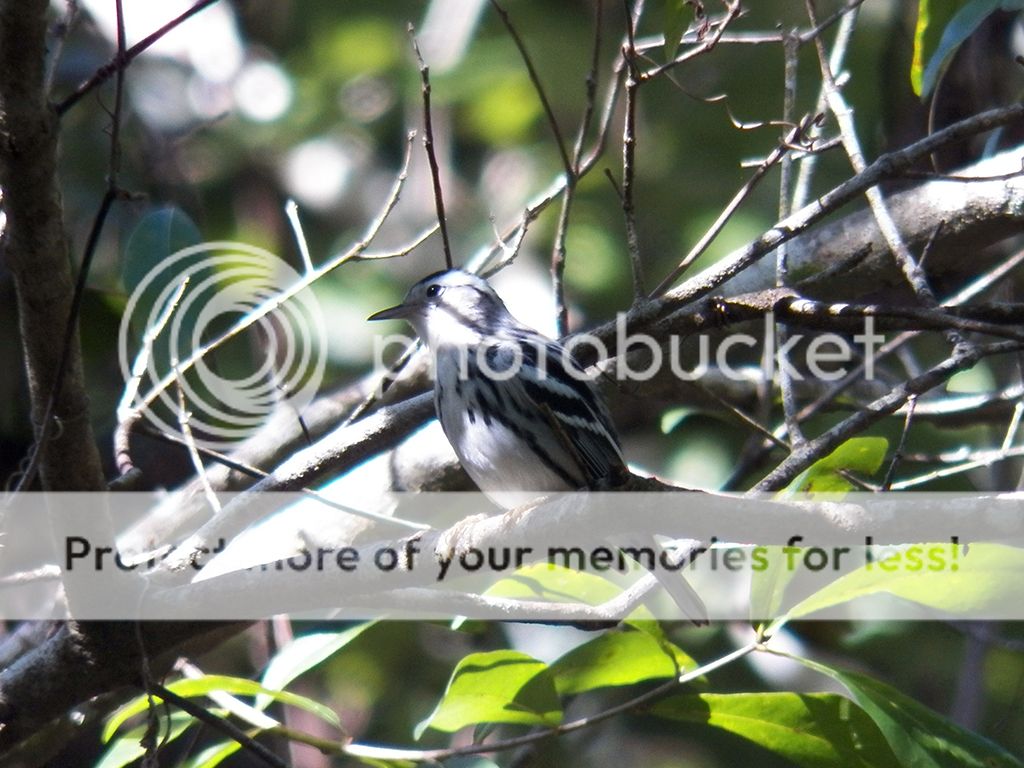
Black-and-white Warblers are back now, and they allowed us to get quite near to them. Most of the birds at Turkey Creek of late have been quite skittish, probably due to low numbers, but as the Black-and-whites are winter residents, perhaps they feel more comfortable.

photo bww.jpg
Greetings, my monochromatic friend. So we meet again.

Along the jogging path, we were able to get quite close to this Downy Woodpecker as he foraged for insects on this sapling. At first, he tried to sidle around the backside of the little tree to hide from us, but as this was clearly futile, he gave up and just went back to feeding.

photo downy.jpg
Bug flavor must really be worth the taste of tree bark!

The creek level was still quite high, but receding. There were manatees along a good section of the creek, but few turtles in evidence. I also caught a very brief glimpse of what may have been a Short-tailed Hawk (dark morph), but it ducked into the canopy amidst a flurry of Blue Jay and Northern Cardinal calls.

On our way out, as we watched a small grouping of American Redstarts (they continue to be relatively numerous in the sanctuary), we saw this Yellow-throated Warbler skulking in and around some palm fronds.

photo yellow-throated.jpg
This warbler actually followed us along the boardwalk for a bit.

Birding with Shirley and Juanita was a lot of fun, and I think we did well, considering the state of the migration through Turkey Creek in recent years. The verifiable list for the morning follows:

  • Fish Crow
  • White Ibis
  • Blackpoll Warbler
  • Carolina Wren
  • American Redstart
  • Northern Parula
  • Red-eyed Vireo
  • Ruby-throated Hummingbird
  • Blue Jay
  • Mourning Dove
  • Common Ground Dove
  • Snowy Egret
  • Tri-colored Heron
  • Green Heron
  • Great Blue Heron
  • American Coot
  • Black-throated Blue Warbler
  • Cape May Warbler
  • Yellow-throated Vireo
  • Blackburnian Warbler
  • Prothonotary Warbler (*)
  • Yellow-throated Warbler
  • Blue-grey Gnatcatcher
  • Northern Cardinal
  • Downy Woodpecker
  • Black-and-white Warbler
  • Red-bellied Woodpecker
  • Pileated Woodpecker (β™«)
  • Northern Mockingbird
  • Red-shouldered Hawk (β™«)

As you can see from today’s photographs, not too much in the way of glamor shots, but by working with my camera’s limitations and capabilities, I think I capture the moments pretty well.

How rare is rare?

Just a quick update.Β I went for a quick walk through Erna Nixon Park before work this morning and had a couple of nice surprises. As the sun was rising I heard 2 distinct individual Eastern Screech Owls some distance away. They were alternating with each other, using a trill on a single pitch (rather than a whinnying call). Then as I was nearing the mid-point on the boardwalk I clearly heard at least 2 Carolina Chickadees calling. I know that Carolina Chickadees are rare for central and southern Brevard County, but this was a 100% certainty for me. Interestingly, when I posted my finds to the BRDBRAIN list, I got some lip from a fellow birder that this bird is SO RARE as to be unlikely, I suppose, but he was “Just saying”. Sometimes I wonder why I don’t just rage quit these e-mail lists.

Anyway, here’s the list:

  • Carolina Wren
  • Northern Cardinal
  • Yellow-throated Warbler
  • Blue-gray Gnatcatcher
  • Carolina Chickadee
  • Tufted Titmouse
  • American Redstart
  • Blue Jay
  • Red-shouldered Hawk
  • Pileated Woodpecker
  • Downy Woodpecker
  • Red-bellied Woodpecker
  • Mourning Dove
  • Eastern Screech Owl