Keeping Tabs

I live fairly close to several parks, and my regular readers know I frequent Turkey Creek Sanctuary, and the descriptions and photographs of my trips there make up the better part of my blog. I do try to find a balance of exploring other areas nearby and keeping track of what’s going on at Turkey Creek Sanctuary throughout the year. If I were a mere “lister” birder, I would more likely travel farther across the region to snag birds for my lists. As it is, I find repeat observations and comparisons are vital to understanding birds and their place in the environment.

This past weekend I returned to the sanctuary to do such a check. Summers are usually quiet times for finding birds in many of the area parks. The rush of springtime homemaking and breeding has settled down and the birds are trying to keep cool even by 8 or 9 in the morning. With not much going on with bird life in the park, I thought it might be good to mix in a few photographs of some of the things I blog about at Turkey Creek.

As I walked toward the park the entrance in the library parking lot,  I heard some soft, high-pitched call notes in the trees, and caught some glimpses of Northern Parulas foraging quietly together. One of the birds caught my eye. It’s yellow “spectacles” gave it away as a Yellow-throated Vireo. This vireo species’ plumage is very similar to the Northern Parula in many other respects (particularly with worn feathers and in the fall), but the spectacles are diagnostic.

Now that we are well into summer, quite a lot of American Beautyberry plants are ripening. This plant is ubiquitous, and birds love to eat them.

photo beauty-berry.jpg
Berry beautiful…

The Sanctuary has been quiet, even for summer, this year and this day was no exception. There were a few Northern Cardinals calling from the brush and one or two singing in the distance, but the usual cacophony of alarm notes and whistling I am used to hearing was again absent. I approached the Harris radio tower which sometimes has Brown Thrashers or Eastern Phoebes hanging out nearby. No such luck this time, but let’s have a look at the tower.

photo harris-tower.jpg
The tower is held up by 3 pairs sets of guy-wires, spaced 120 degrees apart.

This 129 meter (400 foot) tower is owned by Harris Corporation, and I think it’s used for communications testing, rather than broadcasting. You can see from this photograph that the structure has supports fairly close together. I’ve been told by several people that years ago vultures and various raptors would roost on the tower, sometimes causing quite a smelly mess. To deter the birds from roosting, additional supports were added to the tower, making it near impossible for larger birds to make use of it.

I am amazed that such a tall structure (and others like it) are supported by wires, anchored into the ground. This simple method works even in hurricane-force winds.

photo anchor-bolt.jpg
The guy-wires holding up the tower are anchored in place with the help of these 1+ inch diameter bolts. The smaller wire you see is a grounding line for lightning strikes.

We have had a lot of rain the past week or so, and that was reflected in the elevated canal and creek water levels. I walked to the weir, where the Melbourne-Tilman Canal empties into Turkey Creek. There were only a few bird species present by the weir. Mourning Doves were the most abundant, and I flushed quite a few as I walked along the canal. In suburban settings, where these birds are commonly perched on utility wires, they are fairly conspicuous. Among the grass by the side of the canal they were almost invisibly until my footfalls scared them out.

photo mourning-doves.jpg
Mourning Doves.

There were a few Green Herons, a single Tri-colored Heron and one American Coot by the flotation barrier leading to the weir. I saw a few Common Ground Doves and Eurasian Collared Doves as well.

The weir itself is part of a drainage and flood-control system, using Turkey Creek as an outlet to keep the canal water levels down, especially after heavy rainfall events.

photo weir-inflow.jpg
Flood control for the canal system.
photo weir-outflow.jpg
Into the creek.

Two of the area streams, south of the Eau Gallie River, are named for birds. Crane Creek empties into the Indian River Lagoon near Melbourne’s downtown, while Turkey Creek flows into the lagoon in Palm Bay (and is the main feature of the Turkey Creek Sanctuary, of course). I don’t know the historical reasons for the names, but for the first time I documented Wild Turkeys at Turkey Creek. Technically, they were running alongside the Melbourne-Tillman Canal, but based on the direction they were traveling, they had to have been along the creek’s side to get where I photographed them. I found it slightly ironic that I spied them running alongside the residential neighborhood that abuts the sanctuary.

photo wild-turkeys.jpg
Residential Turkeys.

The turkeys made their way out of sight, and I made my way back into the sanctuary. Upon entering the woods, there is what I’ve been calling an “emergency” boat ramp. Normally there is a heavy chain across the entrance to the path that leads to the ramp, but I noticed that it was missing (though the sign clearly indicated this is not for pubic access).
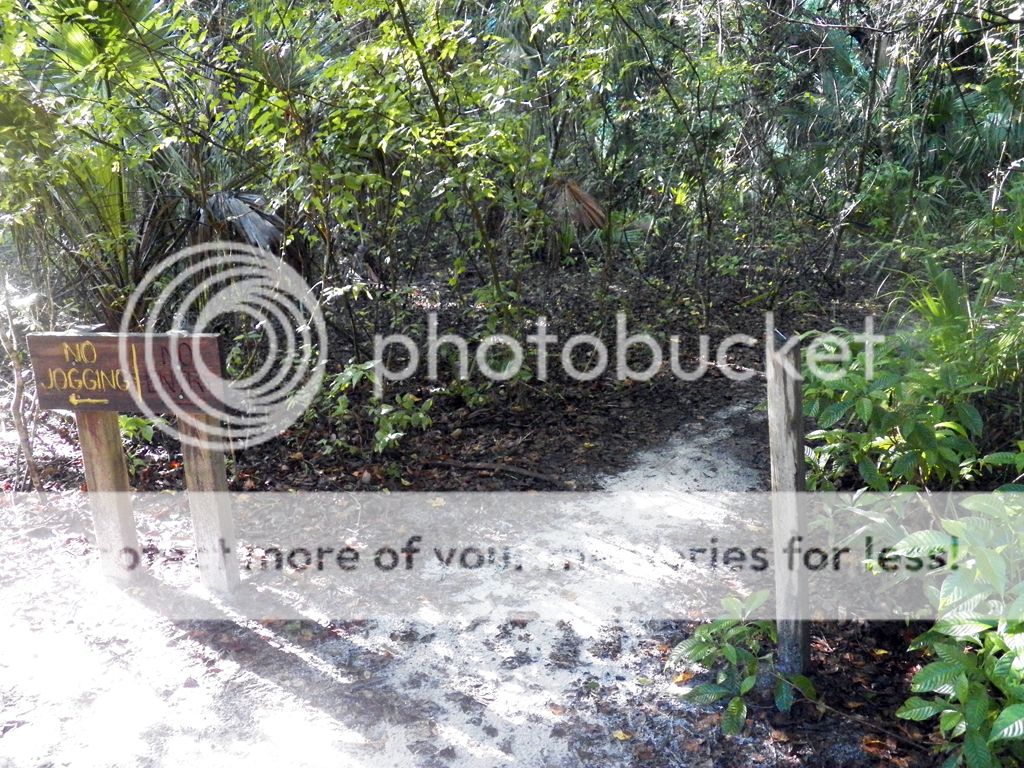
photo no-entry.jpg
This also happens to be the area I saw the Bicknell’s Thrush this year.

I don’t know if it’s really for emergencies or not, and I freely admit I pass the signs and chain regularly to have a look at the creek from the ramp and it’s adjacent platform. In fact, I took a photograph of Flat Stanley there earlier in the summer.

photo stanley.jpg
You can see the platform and posts in the background and to the left of Flat Stanley, when the water level was lower.

After all the rain we’ve had, the creek level was several feet higher than my last visit, almost completely submerging the wooden posts for the platform next to the ramp.

photo flooded-steps.jpg
Swamped.

I worked my way to the boardwalk and, apart from a couple of distantly circling vultures and some Carolina Wren calls, I didn’t have much luck with finding birds. There were plenty of dragonflies. This one, like many others this late in the summer, have very worn-out wings and rest as often as they are flying.

photo another-worn-dragonfly-1.jpg
Howdy, Ms. Dragonfly!

This Mole Skink was sunning itself on the boardwalk. If you look closely you can see water beaded up on its skin. Despite the shiny appearance, skinks are not slimy or wet. Their scales are exceptionally smooth and close-fitting. The camera had a bit of trouble picking up the brilliant blues and overall iridescence of this animal.

photo skink.jpg
See the shiny skink sunning in the sanctuary.

Further up the boardwalk and the Sand Pine Trail, I detoured onto the Flood Plain Trail. I was expecting the Boy Scout’s boardwalk to be at least partially under water, but it was not – a testament to both the flood control efforts at the weir and the capacity for the ground near the creek to hold water. The ground was covered in standing water, but still several inches below the decking.

photo trail-end.jpg

Apart from a few Yellow-throated Warblers a the entrance end of the Sand Pine Trail, that’s about it for the day.

The species list, including the parking lot:

  • Northern Cardinal
  • Northern Mockingbird
  • Yellow-throated Vireo
  • Northern Parula
  • Mourning Dove
  • Wild Turkey
  • Green Heron
  • Tri-colored Heron
  • American Coot
  • Common Ground Dove
  • Eurasian Collared Dove
  • Blue Jay
  • Black Vulture
  • Turkey Vulture
  • Carolina Wren (♫)
  • Yellow-throated Warbler
  • Rock Pigeon

The nearly last quarter moon shone brightly enough, even in daylight, to provide a nice parting shot.

photo moon.jpg
Blue Moon, you left me birding alone…

While We’re Naming Names

Weather and sleeplessness prevented me from birding this weekend, but I’d like to use this opportunity to discuss a bit of controversy in the birding world.

A Proper Debate

From time to time in the “birdosphere” of field guides, magazine articles, journals and blogs, the debate will rise again on how to name birds in print and digital displays.

As in computer scripting and coding, where there’s a long and ongoing conflict between “camelCase” and using an underscore between words, there’s likely never to be a reconciliation.

On the one hand, you have the Capitalization Camp, which feels it is necessary to differentiate the local, common names of a species from more mundane and generic descriptions. On the other hand, is the Proper Noun Camp, which feels capitalization is reserved for proper nouns such as specific things or individuals, like if you had a parakeet named “Minuet”. We’ll use our trusty and handsome avian friend, Cyanocitta cristata as an example.


Feeling blue?

Is this a blue jay or a Blue Jay? The Capitalization Camp says this is a Blue Jay, specifically referring to this species of jay. A mere “blue jay,” the rationalization goes, could be Cyanocitta cristata, Aphelocoma coerulescens or any other jay that is colored blue.


Also blue and a jay.

On the other hand, the Proper Noun Camp says that the specific, individual bird is not named and there are more than one “blue jays” or “Florida scrub jays” in the world, and to capitalize the name is improper. The Capitalization Camp would also say the above bird is better referred to as a Florida Scrub Jay, to differentiate it from its western cousin, the “Western Scrub Jay” (which the Proper Noun Camp would no doubt want to call the “western scrub jay”).

If you’ve read my blog, you know I subscribe to the “Capitalization Camp,” as I see the non-scientific names of the bird species as a sort of “pseudo-proper” noun. It’s not as personal as calling a bird “Bob” or “Mary” but clearly differentiates it from something generic like a blue jay or a yellow warbler (there are a LOT of yellow warblers!).


Geothlypis trichas is a yellow warbler.

But it turns out that to capitalize or not has another issue that I hadn’t considered until recently.

Is it Elitist?

My friend and überbirder Laura Erickson somewhat recently brought up the capitalization issue as it relates to non-birders. Specifically she was wondering if using capital letters seemed snobby or elitist to non-birders. This is something I had not thought of, but seemed a legitimate, if somewhat self-important question. Does it portray birders as pompous for using capitalization in a manner that non-birders might assume is reserved for proper names? Here, the Proper Names Camp has some traction. If, in the public eye, the use of capitalization is seen as unnecessary (or even incorrect) and puts birders and bird watching in a negative light, isn’t that a reason for the Capitalization Camp to fold up their tents and give up?

Does it Matter?

It’s not clear what the “public” thinks about this (or how much they do or should care), so for now the debate will continue. But in the end, does it matter if we all know what we are talking about? It would seem to me that in the end it’s clear what bird species or type we are writing about in context, and as long as we are communicating our love, respect and excitement about birds and their importance in the world, we’re all doing fine. That’s what matters to me, even though to me it will always be a Blue Jay. What do you think?

Where Did I Go?

I had a fun and interesting time this Sunday in Fellsmere. I had heard from a co-worker that there was some good wildlife viewing where he had ridden his bicycle, west of the St. Sebastian River Preserve State Park. I’m not particularly familiar with that area, but I know the “Stick Marsh” is often mentioned in that area, and there’s usually a field trip out that way during the Florida Birding and Wildlife Festival. In any case, trying to find “Stick Marsh” on Google Maps just showed an erstwhile bait and tackle shop where there’s a boat ramp. I’ve also seen it referred to as “Blue Cypress Lake.”

photo water1.jpg
Part of the Stick Marsh at dawn.

In any case, off the “main” road, one traverses a couple of miles on an dirt road with occasional metal catwalk overlooks of some marsh vegetation along some drainage canals. Unfortunately, any “parking” areas near these overlooks have stern signage saying “NO PARKING HERE.”

I got to the parking area, which had a lot of truck and boat trailer parking, but a few “normal” parking areas too. “Heres the Stick Marsh” I said to myself and was promptly greeted by a bunch of vultures, welcoming me to…wait, what?

photo welcome.jpg
A couple of locals formed a welcoming committee.

There were also signs for “Blue Cypress Lake” and “Three Forks Conservation Area”…

I was pleasantly surprised at the large number of Limpkins around the boat ramp and the adjacent waters. They were quite conspicuous, both visually and vocally. Incidentally, this is the first visual ID of Limpkins I’ve had this year. I’ve heard them before now, the first time at the Birding Festival’s Marl Bed Flats field trip.

photo limpkin.jpg
One of many Limpkins.

In the smaller overflow ponds there were numerous Common Gallinules, both adults and juveniles. The chicks were about as big as the adults, but still quite gray in color and without the prominent red forehead shields.

photo baby-gallinule.jpg
Hey baby, what’s up?

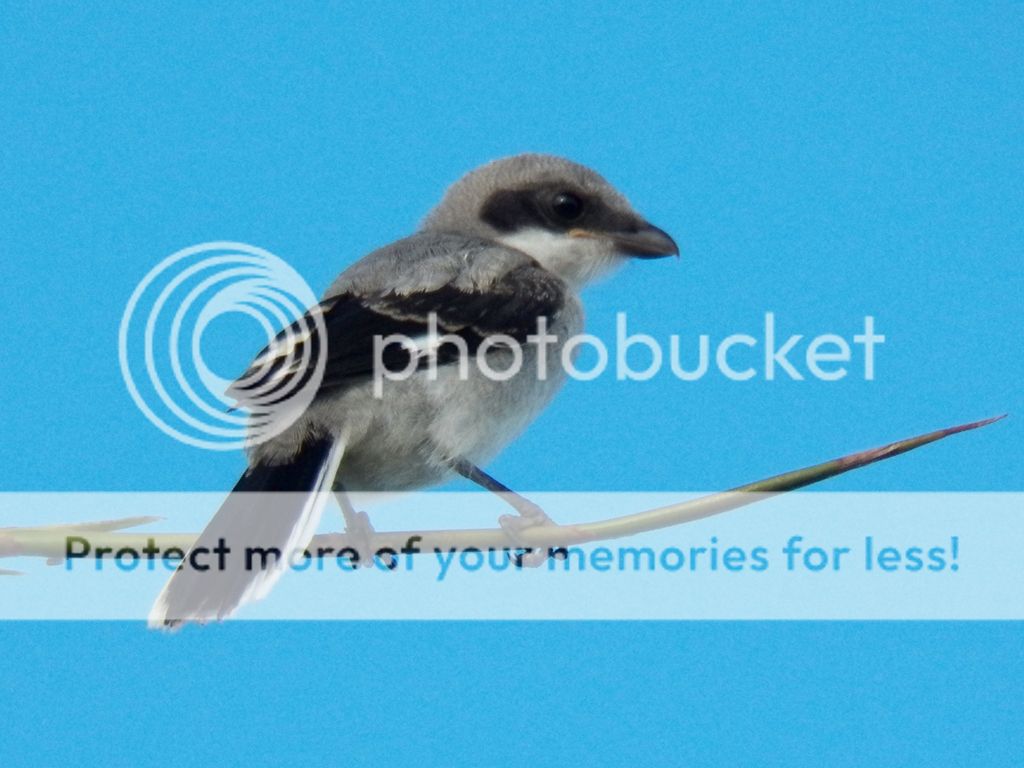
Shrikes were also common. I saw about half a dozen individuals, most catching lizards in the tree tops and whacking them on branches or utility wires before eating them. 

photo shrike.jpg
Superficially similar to mockingbirds, shrikes are far more sleek and lethal.

The trees across from the boat ramp were full of both Turkey Vultures and Black Vultures. While waiting for the morning to warm up and for thermals to develop, many of the the vultures had their wings spread, back to the sun, warming up and getting ready to start their day.

photo vultures.jpg
Sun worshippers.

Within five minutes of that photo being taken, the vulture began to take to the sky en masse. Within a couple of minutes they had already formed 2 large circling groups, or “kettles” as they soared higher on rising thermals.

photo kettle.jpg
Morning commute for vultures.

The only duck species I encountered were numerous mated pairs of Black-bellied Whistling Ducks. I’d tell you how I knew they were mated pairs, but this is generally a family friendly blog ;-). Unlike many ducks, Black-bellieds like to perch up on trees and stumps. Many pairs were high on the tops of palm trees near the water’s edge. This pair was a bit closer to the surface of the pond, maybe about 10 to 15 feet up. I wonder when their chicks normally fledge, because I saw no baby or juvenile-appearing ducks, only adult pairs (and some singles).

photo black-bellied-whistling-ducks.jpg
Black-bellied whistling duck pair.

There were large alligators as well. I estimated that two of the bigger ones I saw were definitely over 10 feet long. The gallinules and Limpkins squawked out their alarm calls whenever one cruised by.

I skulked around some of the narrow penisulas between Blue Cypress Lake and the adjacent pond, where I saw this Osprey, which had just landed a fish, and several Spotted Sandpipers, as well as Red-bellied Woodpeckers. I flushed even more Limpkins and Common Gallinules as well.

photo osprey.jpg
Breakfast, interrupted…

From there I crossed over some drainage canals into an area marked as the T. M. Goodwin Waterfowl Management Area. This is a series of levees and flooded areas, laid out in long grids.

photo goodwin.jpg
Not a lot of waterfowl to manage today.

My goal was to reach what was marked on the trailhead map as Lake Goodwin, but my water began to run out, it was getting very hot and humid, and I was being assaulted by really big horse flies! On my way out and back through this area, I saw Red-winged Blackbirds, more Common Gallinules, a couple of distant Common Yellowthroats, and even a few Swallow-tailed Kites!

photo common-yellowthroat.jpg
In keeping with my confusion over the name of where I was, Common Yellowthroats’ songs can be written as, “Which is it, which is it, which is it? Which?”

Despite some early confusion, it ended up being a nice 1/2 day excursion. Here’s the species list in approximate order of first identification:

  • Turkey Vulture
  • Black Vulture
  • Great Blue Heron
  • Cattle Egret
  • Snowy Egret
  • Boat-tailed Grackle
  • White Ibis
  • Little Blue Heron
  • Limpkin
  • Common Gallinule
  • Green Heron
  • Tri-colored Heron
  • Red-winged Blackbird
  • Loggerhead Shrike
  • Spotted Sandpiper
  • Osprey
  • Black-bellied Whistling Duck
  • Northern Cardinal
  • Anhinga
  • Red-bellied Woodpecker
  • Great Egret
  • Carolina Wren (♫)
  • Red-tailed Hawk
  • Northern Cardinal
  • Common Yellowthroat
  • Swallow-tailed Kite
  • Mourning Dove
  • Northern Mockingbird

There were some tantalizing clues that some rails were lurking in some of the marsh vegetation, but I could never be sure the calls I was hearing were not Common Gallinules. I tried comparing what I was hearing to some recordings I had on my iBird Pro app, but it just confused me more. I hope to get out even earlier next time out to this place in hopes of catching some more definitive proof.

Cameron Preserve, July 27, 2014

It’s been a wild few weeks here at the Lonely Birder Perch, but after a solid week of heavy rain every afternoon and weekends full of non-birding fun, I got back to birding this past Sunday at the Cameron Preserve in Palm Bay. It’s taken me a while to get this post up, so thanks for hanging in there with me!

As I’ve probably mentioned before, the Cameron Preserve is an area of protected land between the East and West Malabar Scrub Sanctuary parcels. I’ve crossed the northern edge of it while traversing both Malabar and the Turkey Creek Sanctuaries. On Sunday I decided to have a closer look at the Preserve itself.

photo wet-dry-cameron-path.jpg
Believe it or not, this was one of the drier parts!

At first glance, the areas away from Turkey Creek (the hydrological feature) would seem to be filled what environmental biologists call “obligate” upland species of plants. That’s just a fancy way of saying that due to certain environmental features (like ground water level, elevation, slope, soils, etc.) one would expect species that must live in dryer, higher places. For the most part, the Malabar Scrub Sanctuary is full of obligate upland plants, once you move away from the creek. Much of the Cameron Preserve is contiguous with Malabar, but if you look carefully, some areas have what are called “facultative” wetland species. That’s another fancy term environmental biologists use. It means that usually those plants are found in wetland habitats, but sometimes they are found in upland settings.One reason these plants survive slightly drier times in the uplands is because the ground water level (or water table) remains high enough for long enough in the year to support them. Extended periods of drought can take their toll on these plants, though.

With the copious rainfall over the past week there was a LOT of standing water in the Cameron Preserve, and the “usually” wetlands plants were loving it. I’m not very good with my Florida wetland plant identification, but there were various reed-like plants and broad leafy ground cover that during dryer spells might blend in, but because of the water, they were really standing out.

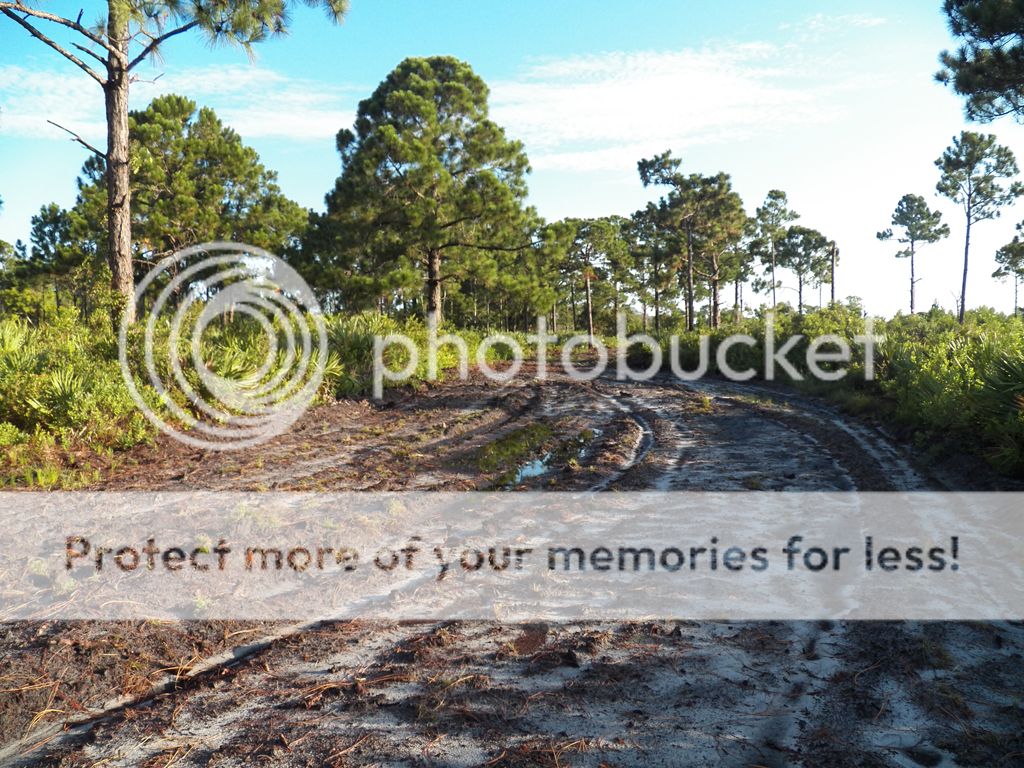
In any case, I began my hike from the eastern part of the Malabar Scrub Sanctuary and made my way into the Preserve. My intent was to circle around in the Preserve and make my way back to where I started. Somehow, I got myself into the Preserve but when I tried to make my way back, I kept running into huge flooded areas or impenetrable scrub.

As I slogged around, I saw some Scrub Jays and Eastern Towhees, and several species of woodpeckers.

I find it interesting that while during the past couple of years the bird population density has been much lower than “normal” in the area, and that this has coincided with a decline in Northern Cardinals and birds of prey that hunt song-birds (like Sharp-shinned and Coopers Hawks, for example).

There were some loose flocks of Fish Crows, some with missing primaries (wing feathers), most likely as they molt and replace them.

The relative peacefulness of the morning ended abruptly, however, when a low flying helicopter passed over the Preserve and began circling over the Turkey Creek Sanctuary. This had the immediate effect of scattering most of the birds (an probably other animals) away from the sound.

photo heli.jpg
I’m pretty sure a whirlybird isn’t really a bird…

After further investigation i found that this is a Brevard County Sheriff’s Department helicopter. It’s equipped with pontoons for water search and rescue. I don’t know what was happening, but the helicopter circled and hovered for 20 minutes or more before either finding somewhere to land (not sure where that might be in that area) or heading off for a while. After about 15 more minutes, it returned for a few more minutes before heading out of the area.

Soon after the helicopter left, a group of Swallow-tailed Kites (click to see them in my previous photoblog post) came swooping over. I think it’s possible this was a family unit. It seemed like 2 adults and 3 juveniles, based on the tail length and the way they flew (the 2 adults were much more graceful).

photo stk-sky.jpg
I hope you get a sense of how perfect these birds are in the endless sky.

Because I could not find a way around the flooded areas, I walked down a residential street out to the main road. From there it was a relatively short walk to the Malabar Scrub Sanctuary East, where I got back to my car and headed home.

  • Florida Scrub Jay
  • Eastern Towhee
  • Downy Woodpecker (♫)
  • Red-bellied Woodpecker
  • Mourning Dove
  • Common Ground Dove
  • Red-shouldered Hawk (♫)
  • Blue Jay
  • Fish Crow
  • Northern Cardinal
  • Osprey
  • Swallow-tailed Kite
  • Black Vulture
  • Carolina Wren (♫)
  • White Ibis
  • Great Blue Heron

Apart from the lovely sight of a Swallow-tailed Kite family and some unexpected aircraft, I got two ankles full of fire ant bites to commemorate my hike this week.

Swallow-tailed Kites flying over the Cameron Preserve

A group of five Swallow-tailed Kites flying over the Cameron Preserve, in Brevard County, FL.

The shorter tailed individuals are likely juveniles. The adults have longer tails. No bands or tracking devices were visible.

These birds were seen this past Sunday (July 27, 2014) during my weekly birding hike. I’ll have some more to post about that later in the week.

Not So Lazy Days of Summer

Hi everyone. Just a quick note that the lull in blog postings will end soon. I’ve been busy with some other projects and obligations, but I have some material I’ll be putting together soon. So hang in there and enjoy your summer (unless you’re living south of the Equator. Enjoy your winter, in that case).

Cheers.

Are 1,000 Words Worth A Picture? Turkey Creek – June 22, 2014

It’s the first full day of astronomical Summer in the Northern Hemisphere! Happy Summer!

In my excitement to get out and about early this morning, I left my camera behind, which was a big bummer. We have had a couple of days in a row with some heavy thunderstorms and downpours in the area, and I was anxious to see how Turkey Creek and the adjacent canal were affected. Haste makes waste, as they say, right?

It turns out the creek was about a foot higher than I last saw it, but it had dropped lower than that before the rains came this week. So I don’t know the total difference right before and after. In any case, there was a bit of debris washed over the trails, and evidence the creek had run up on the banks here and there, but otherwise nothing too epic.

On the way to the canal by the Scrub Trail there was a total of 4 immature Coopers Hawks in a dead tree. This is the same general area I saw a pair of the same species last year. They must be recently fledged, and they were making short, noisy flights around the western side of the sanctuary all morning.

The other “main event” of the morning was an apparently newborn manatee in the creek with its mother. I first saw a couple of manatees grazing along the creek banks along McKinnon’s Way, but when I got to one overlook, there was a smallish adult manatee just laying in the water, with its (her) back sticking up. It took a breath every minute or so. Then, I saw a tiny nose poke up next to her, then a small, smooth gray back. It was soo cool (and NO CAMERA!). A man and a woman came along the path from the Canoe Deck, and told me they had seen her in the same spot yesterday before the big downpour, and she seemed “in distress” which they thought might be labor. WIth a newborn manatee in evidence, I’d say they were right. 

I watched the manatees for a bit, then made my way around the park, doing the boardwalks first, then the Sand Pine Trail before exiting.

I know I don’t generally like wall-of-text posts, so I’ll wrap this up with my species list for today, generally in order of first identification (♫ = voice only):

  • Fish Crow
  • Osprey
  • Rock Pigeon
  • Carolina Wren (♫)
  • White Ibis
  • Northern Mockingbird
  • Coopers Hawk
  • Blue-gray Gnatcatcher
  • Northern Cardinal
  • Blue Jay
  • Mourning Dove
  • Great Egret
  • Snowy Egret
  • Green Heron
  • Common Gallinule
  • Chimney Swift
  • Double-crested Cormorant
  • Tri-colored Heron
  • Northern Parula
  • Downy Woodpecker (♫)
  • Red-bellied Woodpecker (♫)
  • Black Vulture
  • Turkey Vulture

Walk It Off

This past Sunday I decided to do my birding at the Moccasin Island Tract at the River Lakes Conservation area. In all my past visits here, I’ve headed south from the parking area and walked about a mile or so before turning back. I’ve generally avoided the northern trail because it leads to a hunting area in the Upper St. Johns Marsh WMA. But since (according to the post at the trailhead) no hunting is in season this time of year, I decided to head north.

Much of the Moccasin Tract is owned by the St. Johns River Water Management District and leased by the Duda cattle ranch, and they manage the conservation land jointly. (By the way, the Duda company also develops and manages Viera, FL.)

photo cow.jpg
A Duda cow watches, not impressed.

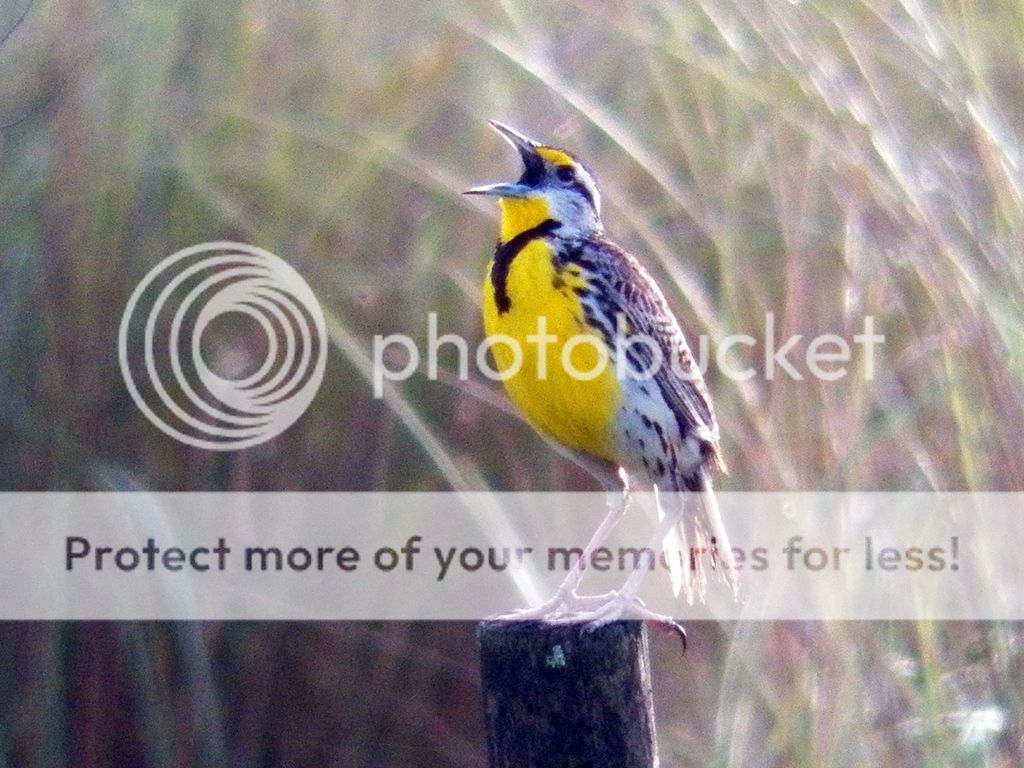
The first birds I heard were the ever present Eastern Meadowlarks and some American Crows (not Fish Crows!) in the distance. The crows only briefly appeared close enough for me to see once, otherwise they were content to stay well to my west. The meadowlarks were singing on prominent perches like fence posts and wires.

photo singing-meadowlark.jpg
As Ann Wilson says, “Sing, child, sing!”

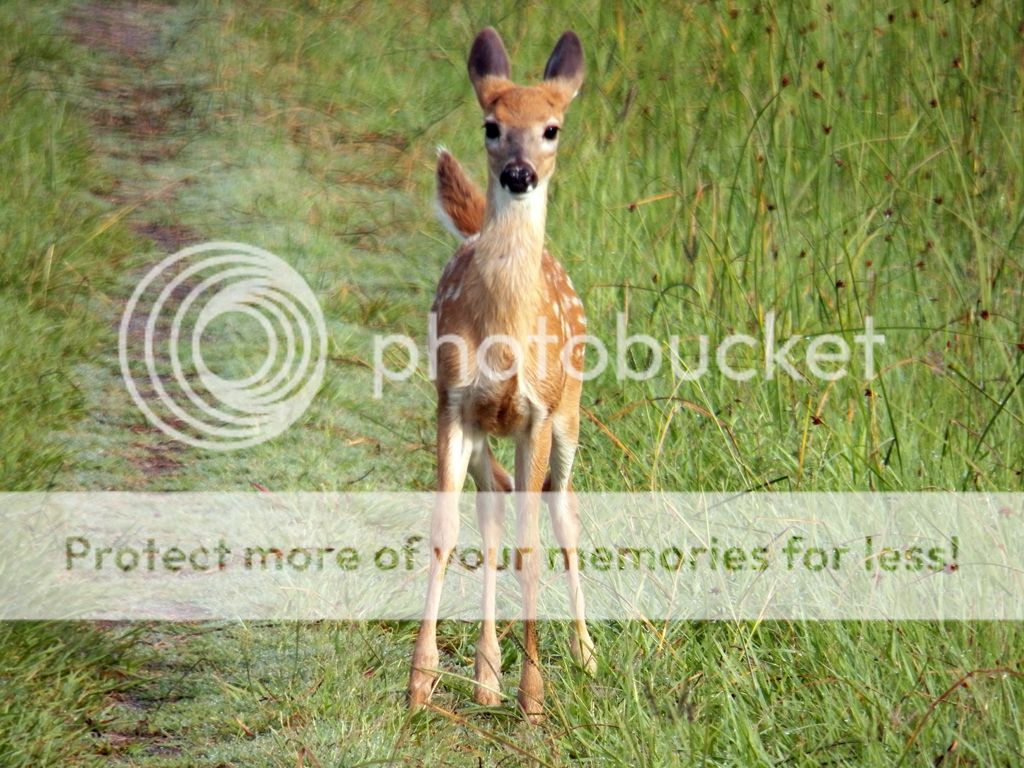
Further along the trail, I saw a fawn poke out of some brush onto the path briefly before ducking back in. A couple of minutes later, it came out again, but this time turned toward me and started walking in my direction! There were no adult deer anywhere to be seen, and I stood still as it came closer. It eventually got to within 7 or 8 meters of me before stopping.

photo fawn0.jpg
A curious fawn.

photo fawn1.jpg
I didn’t want to fawn all over it, scaring it away.

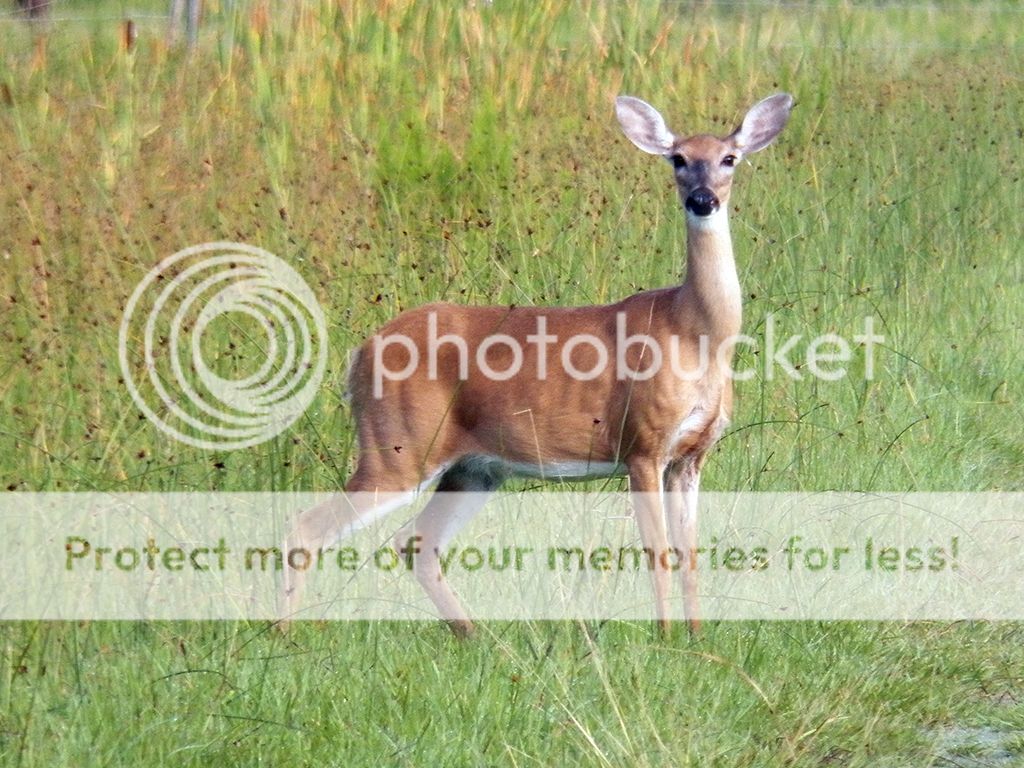
Finally when it was just a few meters away, an adult (Mom, I suspect) came out of the brush and was not pleased her baby was so close. She made a snorting sound before bounding across the trail and over the barbed-wire fence, stopping to look back.

photo mom-deer.jpg
Mom nervously looks on.

Finally after another squeaky snort, the fawn found a low spot along the barbed-wire and leaped across, and mother and baby bounded off into the brush and trees to the east.

The northern trail is about 4 kilometers (2.5 miles) long, and I thought I stopped about half-way. Later when I consulted an online map, I realized I walked almost to the end of the trail near Lake Winder. That made my total walking distance over 8 kilometers (5 miles)! If I had known I was that close to the end of the trail and the lake, I would have gone the extra distance, but in the end, I wound up pretty sore.

I stopped at a couple of points on the trail where there were copses of trees. A pair of Downy Woodpeckers were tapping around some palm trees in one area, and another larger grove of Live Oaks was sheltering some Northern Mockingbirds, Northern Cardinals and at least one Carolina Wren.  

There were many Cattle Egrets, as you might expect on a cattle ranch. In addition, I saw or heard a couple of dozen other species typical of eastern central Florida.

  1. Wood Stork
  2. Mourning Dove
  3. Cattle Egret
  4. Great Blue Heron
  5. Black-bellied Whistling Duck
  6. Common Ground Dove
  7. Great Egret
  8. Eastern Meadowlark
  9. Boat-tailed Grackle
  10. Common Grackle
  11. Red-winged Blackbird
  12. Pileated Woodpecker (♫)
  13. Northern Cardinal
  14. Carolina Wren
  15. Northern Parula (♫)
  16. Downy Woodpecker
  17. Red-shouldered Hawk
  18. Northern Mockingbird
  19. Northern Bobwhite (♫)
  20. Black Vulture
  21. Turkey Vulture
  22. Tri-colored Heron
  23. Snowy Egret
  24. Glossy Ibis
  25. Black-necked Stilt
  26. Mottled Duck
  27. Little Blue Heron
  28. White Ibis

It ended up being a long walk, but it wasn’t as hot as last week. Despite the sore legs and feet, it was a fine morning.

Summer at the Viera Wetlands

This past Sunday morning I decided to have a walk around the Ritch Grissom Memorial Wetlands at Viera, since I haven’t been there for a couple of months. I wasn’t disappointed as there was a lot of action and a good amount of birds. I walked the outer perimeter roads first, which allowed me to have pretty good views of wetland birds and habitat on the inside of the loop with transitional and upland habitat on the outside.

photo wetlands.jpg
A sea of reeds.

The high concentrations of American Coots and Common Gallinules from the winter have gone, but there were pairs and family groups of both still scattered around the ponds. I even got a few photos of some gallinule chicks, which are quite cute.

photo gallinule-chick.jpg
“Mom! Tell this man to stop taking my picture!”

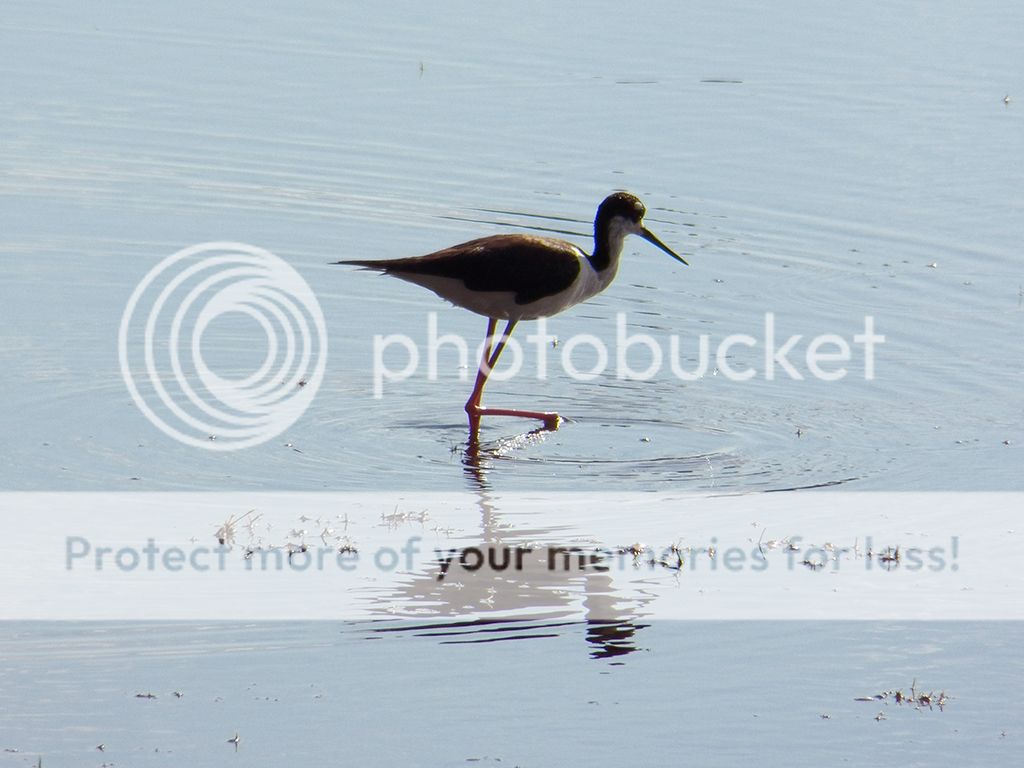
I was slightly surprised to see a few Black-necked Stilts in most of the ponds. They are very striking birds, with almost comically long legs, an adaptation that allows them to forage in places other similarly sized birds cannot take advantage of.

photo stilt.jpg
Sure they may look awkward, but stilts get the job done.

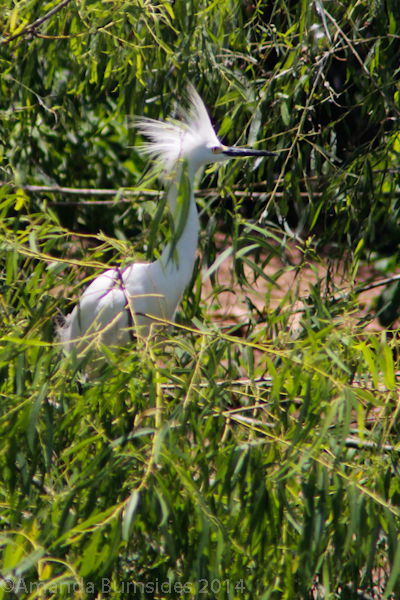
The air was full of White Ibises and Cattle Egrets, as there seems to be a rookery of some sort across one of the ponds. It’s a little hard to see from the photograph, but there were dozens of birds in the trees.

photo rookery.jpg
Aliteration exercise: a cadre of cacophonous Cattle Egrets.

Some were adults, but many were fledglings with varying flight experience. The young Cattle Egrets were making test flights out over the trees while the adults shuttled themselves (and food!) back and forth over the ponds. It was surprisingly hard to capture their flights, but I managed to get a few photos. I also saw individual Roseate Spoonbills in flight, but none actually wading in the wetlands.

photo cattle-egret.jpg
Egret Food Delivery Services, Inc.

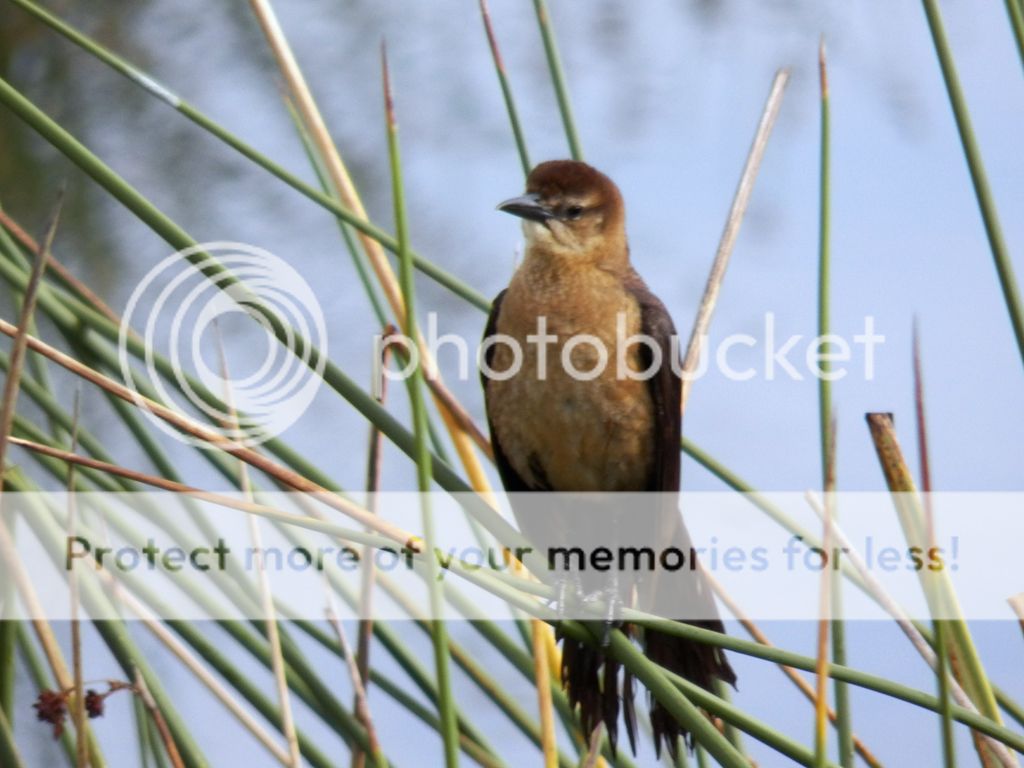
Walking along the outer loop, I could hear some more upland or transitional species, like Carolina Wrens and Eastern Meadowlarks. Meanwhile, other blackbird species, like the Red-winged Blackbirds and Boat-tailed Grackles were flying about with food to feed their fledgling and near-fledgling chicks. This nearly independent Boat-tailed Grackle female was quite interested in me, and followed me around on prominent perches, as if wanting camera time. Of course I obliged.

photo female-boat-tailed-grackle.jpg
Female Boat-tailed Grackle, sitting pretty.

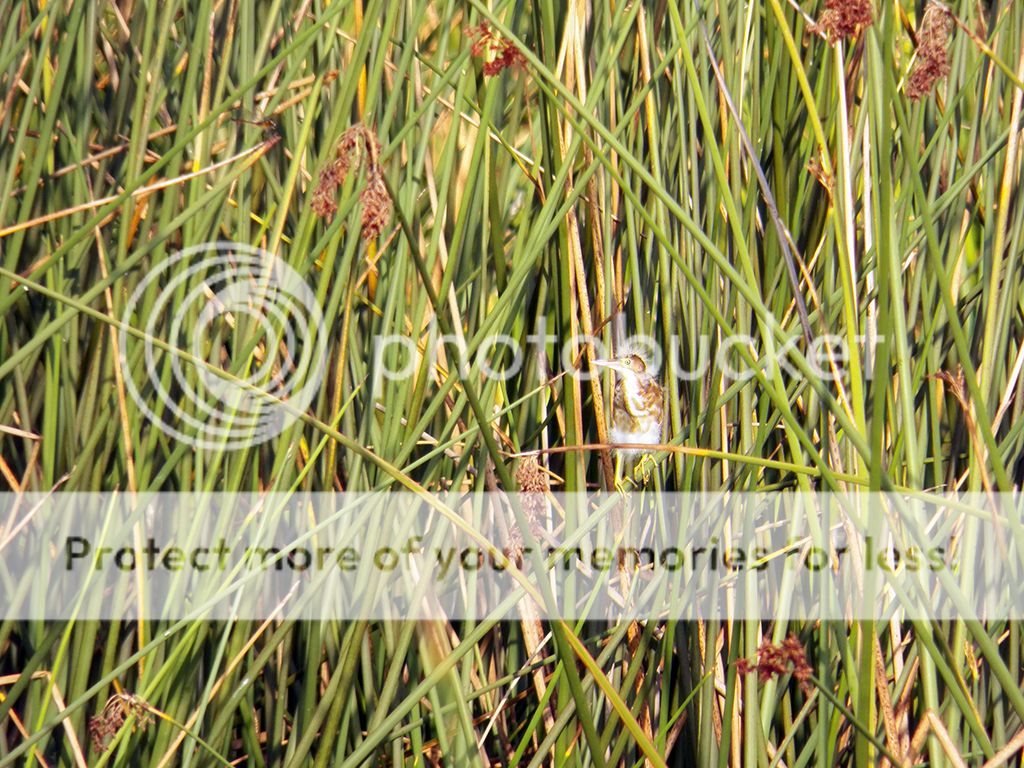
Its interesting how the demands of raising chicks change the behavior of adult birds. Normally, species like the Least Bittern are very secretive and hard to flush out into the open. But with hungry mouths, it’s important that the parents forage out to get food, and that means venturing more out into the open. I saw a good number of adult Least Bitterns dashing out of the reeds, flying low across open water, frantic to get back under cover. While most of my bittern photographs didn’t turn out, I did take this one of an overly curious chick. Right after I took this picture, an adult darted into the reeds and bodily shoved the chick into the reeds and back under cover!

photo least-bittern-chick.jpg
It’s a great big world outside your reed bed, little one.

Whereas there were nesting Sandhill Cranes in the wetlands earlier in the Spring, the crane families are now walking and foraging outside the wetlands in the adjacent grass areas and neighboring ranch land. I believe for some of these cranes, it is their second brood.

After I finished the outer loop, I drove the car to the center area of the park, and walked the inner road. Here there were more of the larger herons, mixed in with the smaller species.

photo great-blue-heron.jpg
A truly great and blue heron.

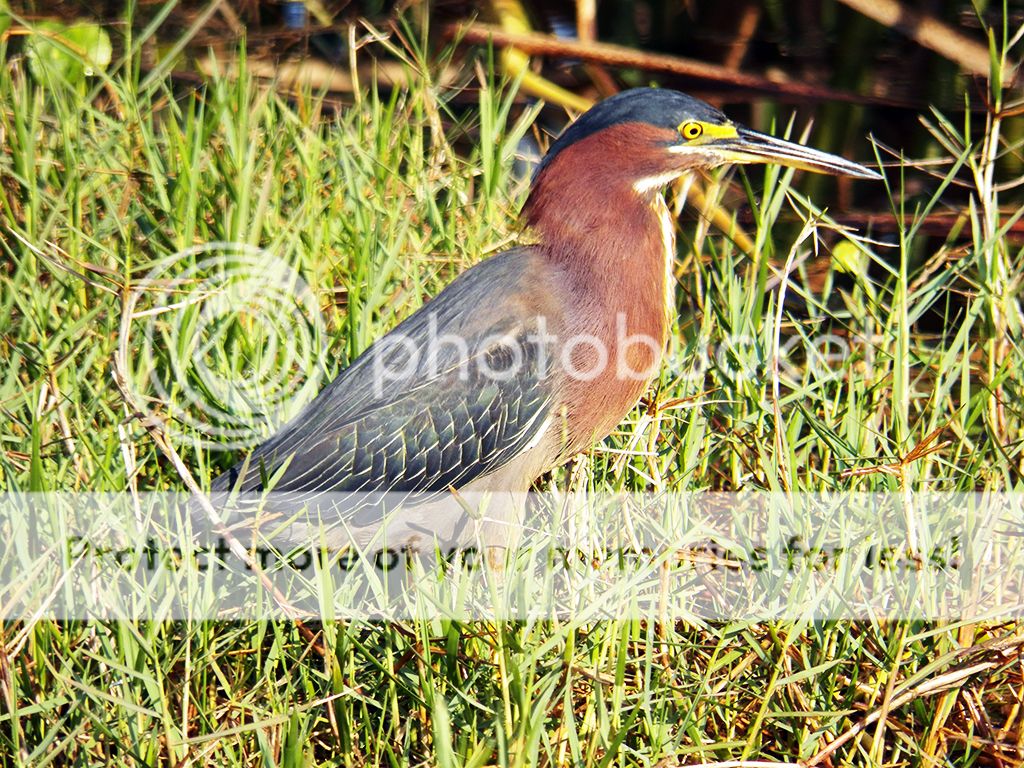
photo green-heron.jpg
Green Heron.

There was one Great Blue Heron that was very patiently staring down at the water waiting for prey. It stood motionless for quite a while. In fact, I passed it twice while trying to photograph some other birds, and it never moved.

photo gbh-head.jpg
This heron remained motionless for at least a half an hour. Patience personified… or at least avianified.

Of the smaller, non-white herons, the Tri-Colored Herons were the most active and agitated. I’ve noticed that this species seems to be the most “high-strung” of the smaller herons, though I don’t know why

photo tri-colored-heron.jpg
Tri-colored Herons are dainty and what people with way too much vocabulary call “gracile.”

There were a few Little Blue Herons in the midst of changing from white (immature) to dark blue (adult). I love this phase, as I think they look like living marble.

photo little-marble-heron.jpg
Little Blue Marble Heron coming in for a landing.

There were a few medium sized alligators as well. When they’d pass near the gallinules, the birds would call out nervously and jump up on the nearest clump of vegetation or mud and bicker at it as it passed. I estimate the largest alligator that I saw to be about 7 feet long.

photo alligator.jpg
Let’s head away from this alligator head that’s heading away from us. (Uh, wait a sec…)

As the morning warmed up, vultures, anhingas and some other birds took to the thermals. Anhingas will often soar high on thermals, a curious adaptation for a diving bird.

photo anhinga.jpg
“Can’t keep my eye from the circling sky.”

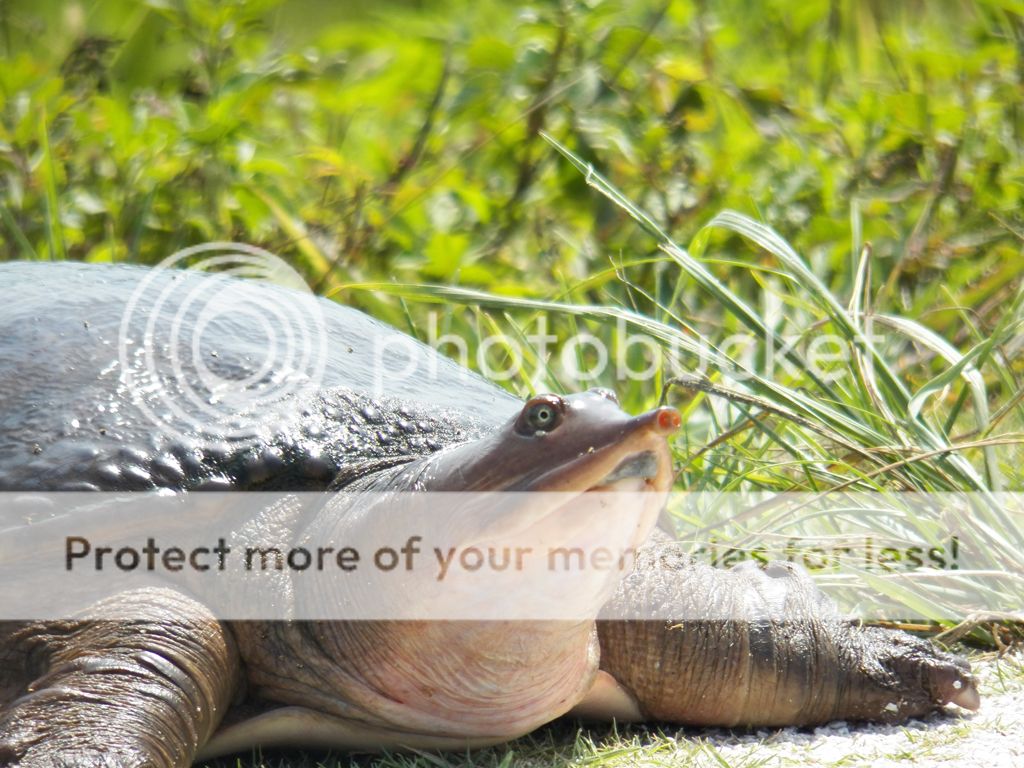
On the drive out, I passed a couple of large Florida Soft-shelled Turtles. Normally they bask with their long necks held in graceful s-curves, but as my car drew near, they partially retracted their necks. They can grow quite large, and in fact both specimens I saw had shells at least 18” in diameter.

photo turtle.jpg
These turtles are fantastic!

Here is the total list for the morning, including First of Year (FOY) and voice only (♫) species:

  1. Northern Mockingbird
  2. Common Grackle
  3. White Ibis
  4. Common Gallinule
  5. Little Blue Heron
  6. Black-bellied Whistling Duck
  7. Cattle Egret
  8. Black-necked Stilt (FOY)
  9. Sandhill Crane
  10. Least Tern
  11. Glossy Ibis
  12. Roseate Spoonbill
  13. Anhinga
  14. Fish Crow
  15. Carolina Wren (♫)
  16. Northern Cardinal
  17. European Starling
  18. Boat-tailed Grackle
  19. Red-winged Blackbird
  20. Least Bittern (FOY)
  21. Green Heron
  22. Great Egret
  23. Great Blue Heron
  24. Snowy Egret
  25. American Coot
  26. Mottled Duck
  27. Osprey
  28. Eastern Meadowlark (♫)
  29. Red-bellied Woodpecker
  30. Purple Martin
  31. Northern Rough-winged Swallow
  32. Crested Caracara
  33. Eurasian Collared Dove
  34. Double-crested Cormorant
  35. Pied-billed Grebe
  36. Common Ground Dove (♫)
  37. Mourning Dove
  38. Black Vulture
  39. Turkey Vulture
  40. Wood Stork

It was a hot day, but even in summer, these wetlands are beautiful and active, with many species successfully breeding and raising young. With the continued assault on and development of wetlands in the area, this park will remain a vital part of wildlife conservation for the species that call it home. Projects like this, born of mitigation of water treatment from the development that makes them so vital, are all the more ironic for it.

photo water-lily.jpg
Lovely.