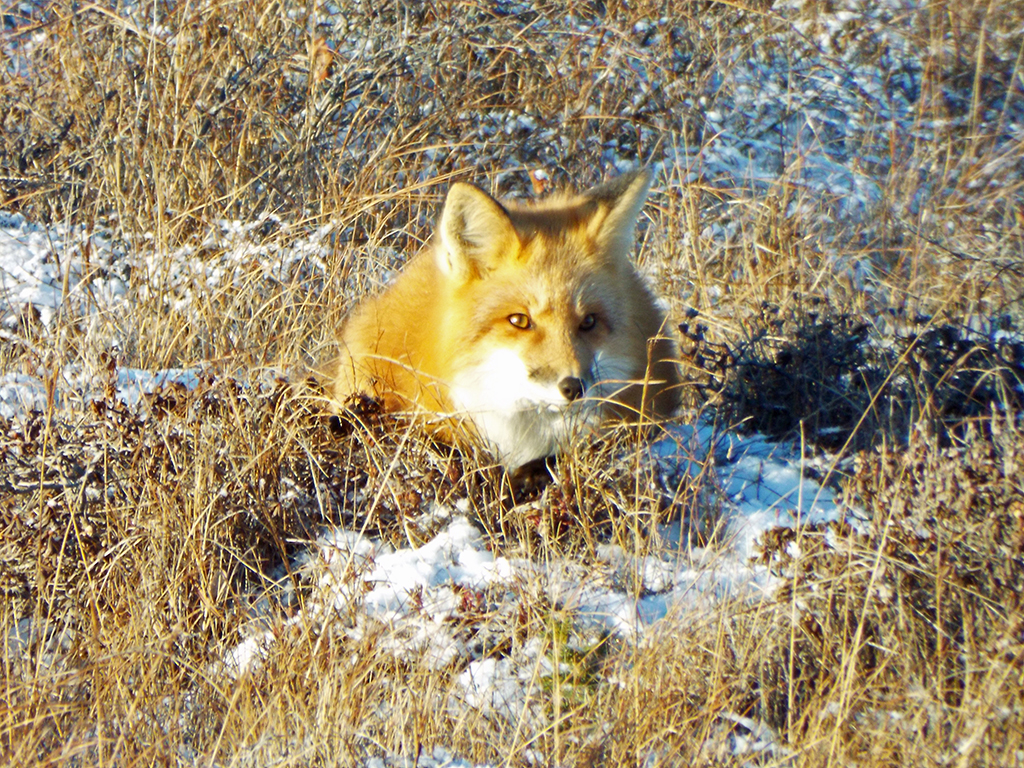
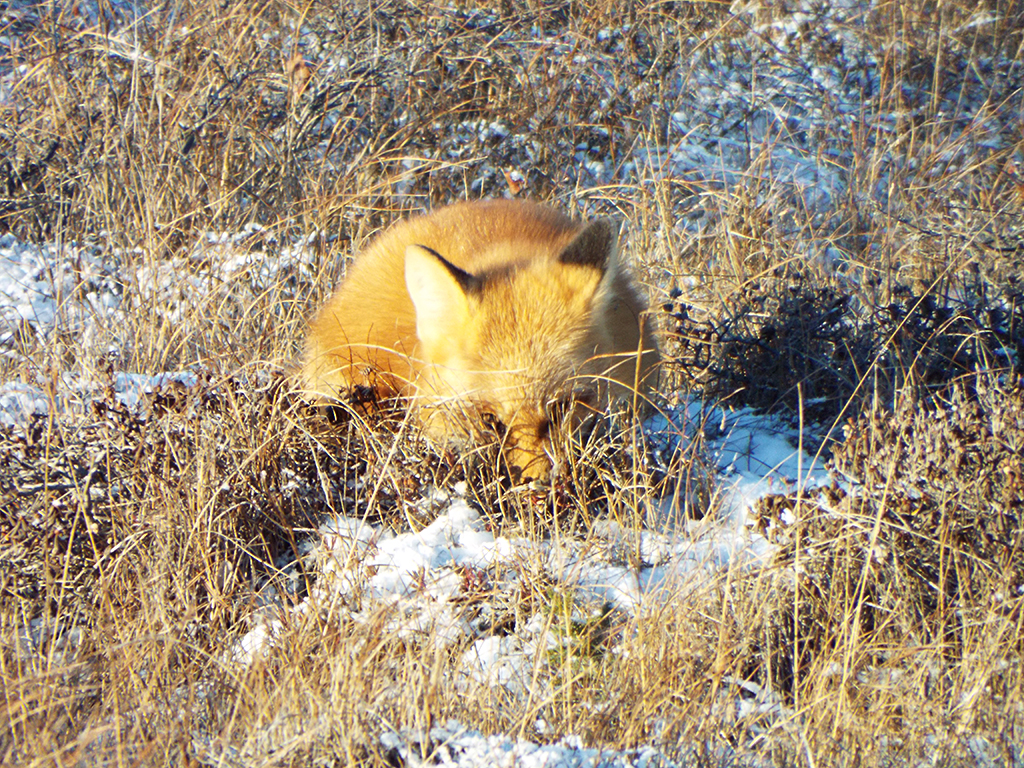
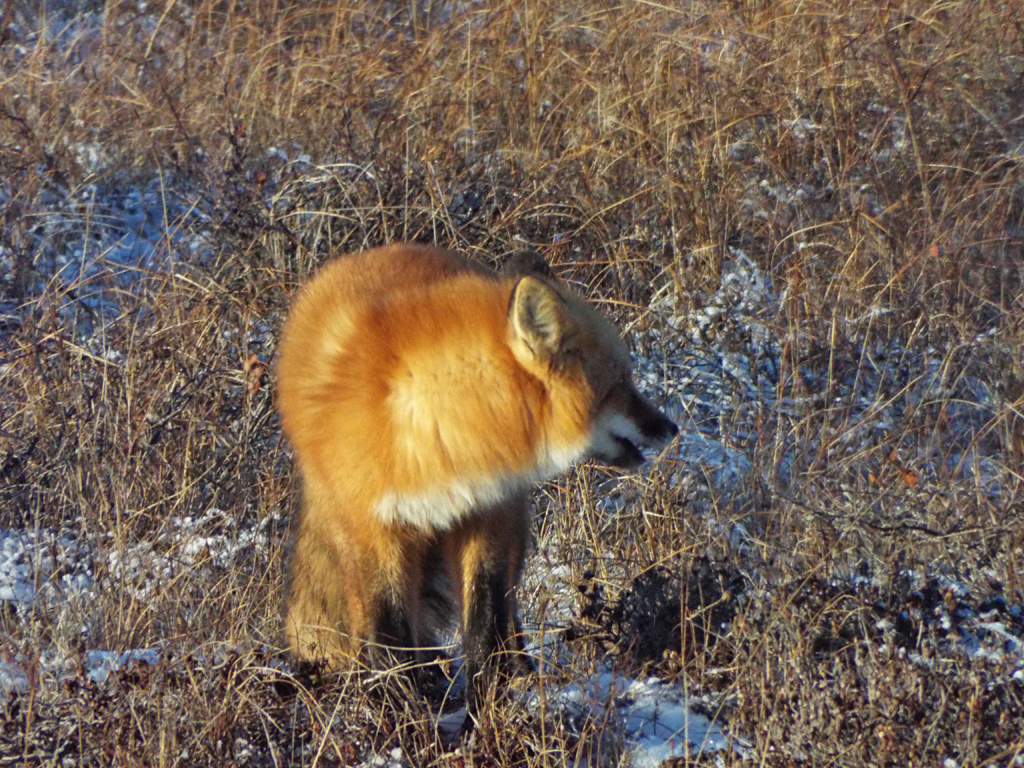
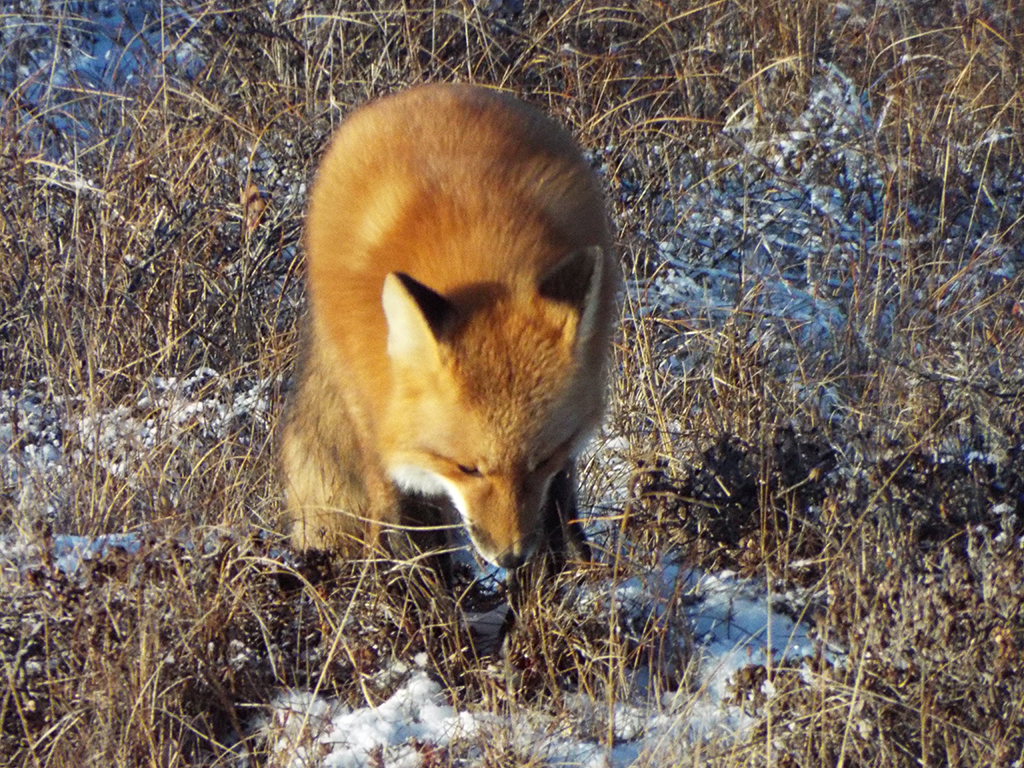
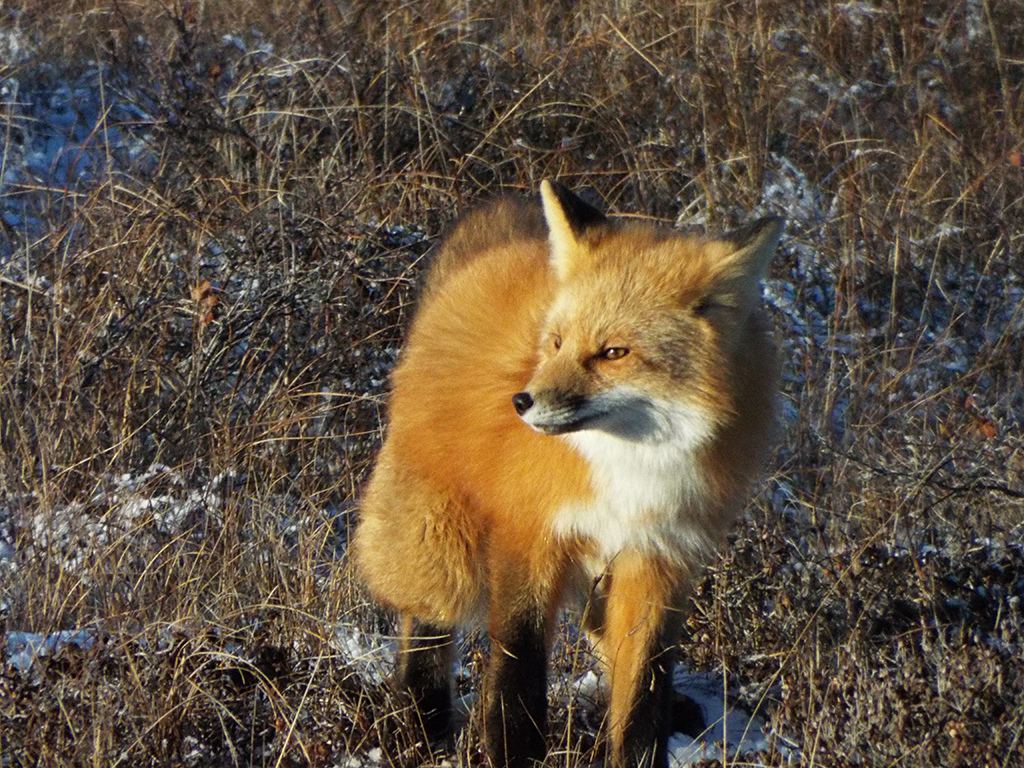
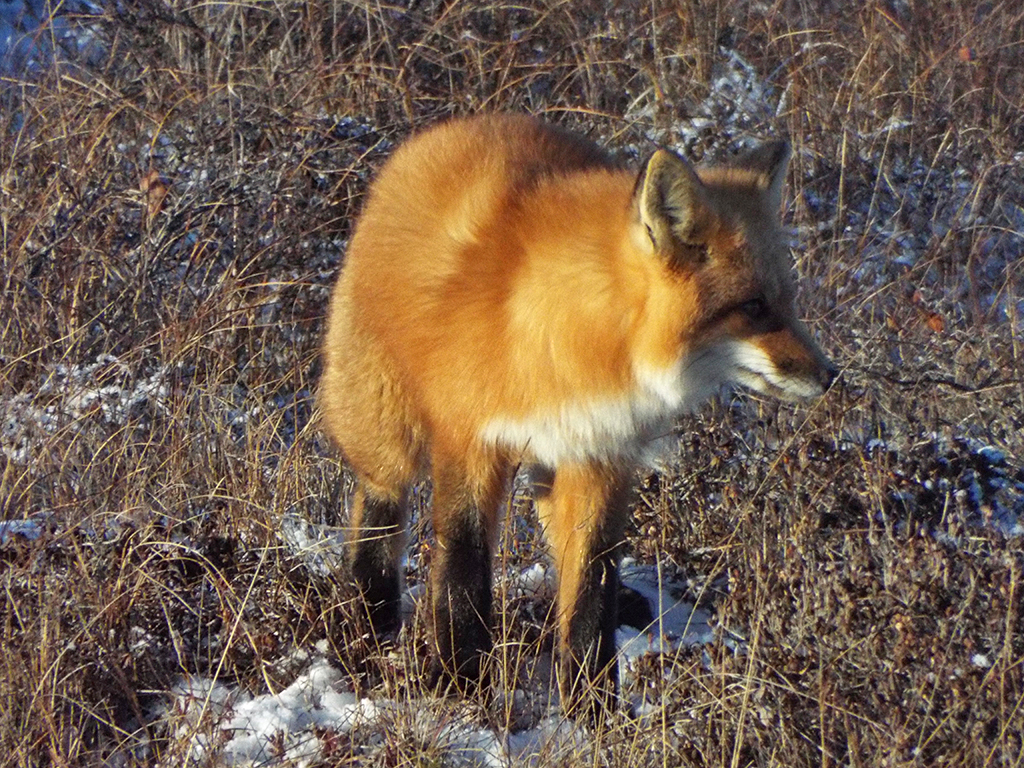
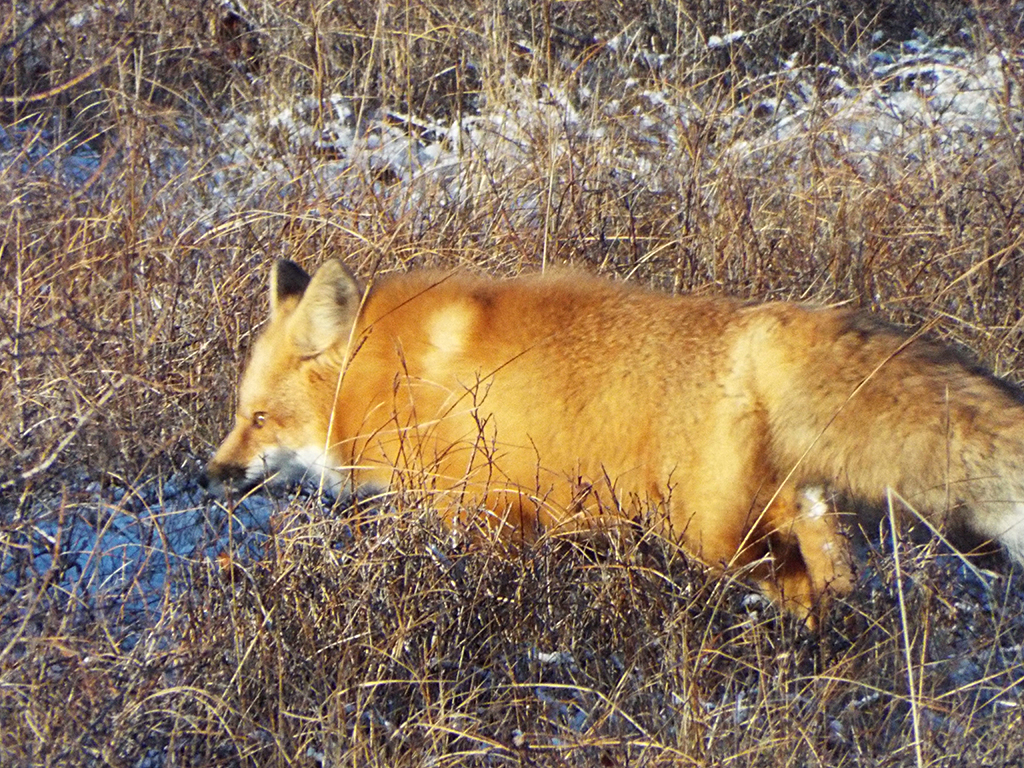
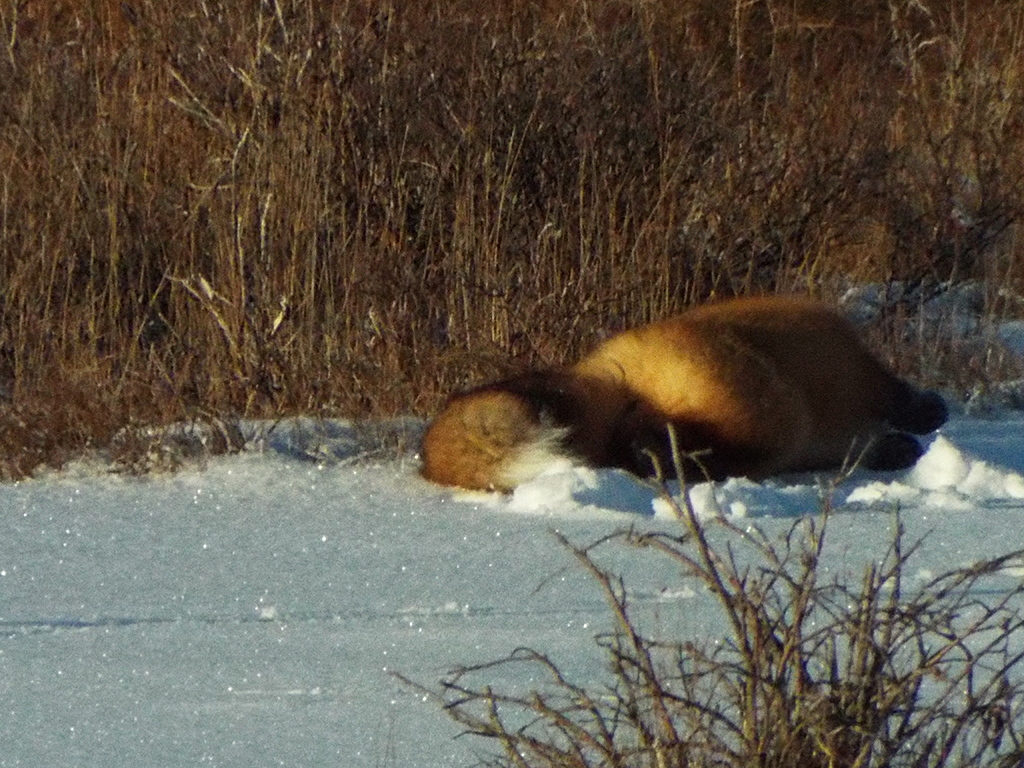
Another phenomenal encounter we had in Churchill was one late afternoon as we were coming back from Cape Merry and points north of town. We saw a vehicle stopped along the side of the road and quickly pulled over to see what the action was. There was a Red Fox a few dozen yards from the roadside, apparently eating its dinner!
It didn’t seem to want to leave its supper, though, and came back toward us. It hung around, uncertain, for a few more minutes before again running off, but never straying too far from sight. I managed to get a pretty good video, too!
We had a great time on the Tundra Buggy tour at Wapusk National Park! We saw many bears, including a rare sight: a mother bear with 2 “COYs.” COY stands for “Cub of the Year” and indicates the cubs are just shy of their first birthday. Some of the bears came very close to our buggy. Mrs. Lonely Birder was over the moon! The day was capped off by an impressive sun pillar. Marvelous.
Wapusk National Park
Mrs. Lonely Birder was so excited!
Momma with 2 cubs
COY cuties
Curious bear
Footprints
“Can I get a ride?”
“Does this bus stop at Churchill?”
Happy walking bear
Many of the bears like to rest in the willows
Explorer
Three bears
The bears rest a lot as they wait for the sea ice to form
Things got a bit contentious at times, with many people crowding at windows or on the outer porch on the Tundra Buggy. It helped to be a bit aggressive to get some space to see the bears. It was a magical day in any case. These bears, and the land they inhabit, are majestic, beautiful, and perhaps dangerous. I felt truly privileged to be there, and feel quite thankful for the opportunity.
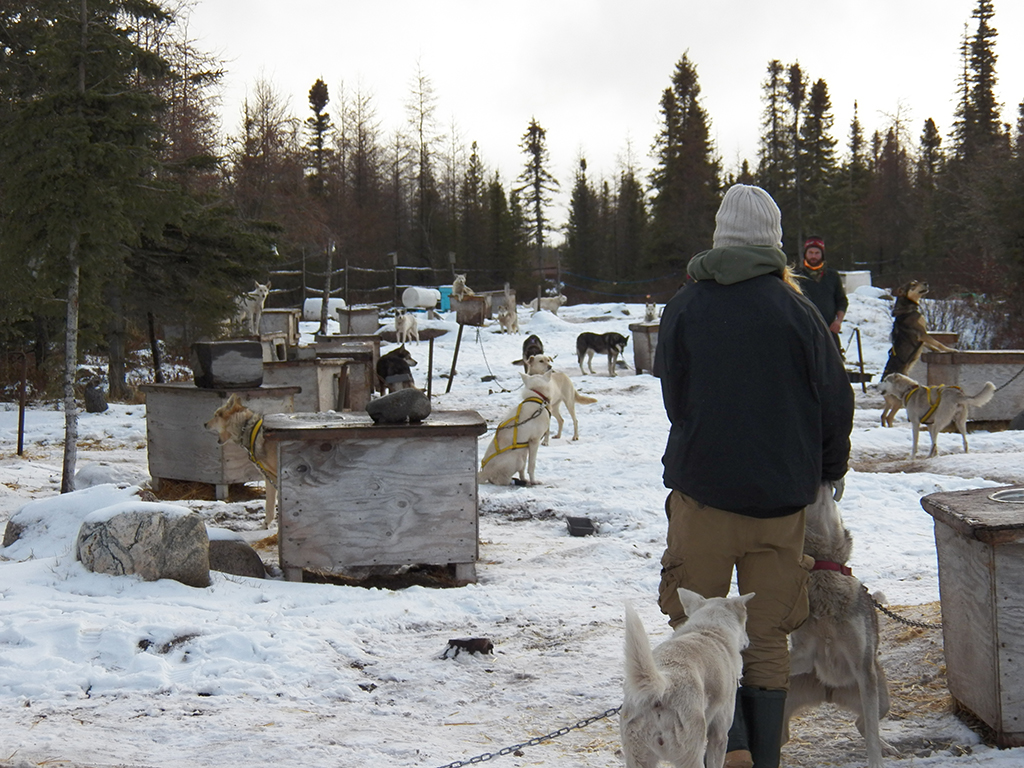
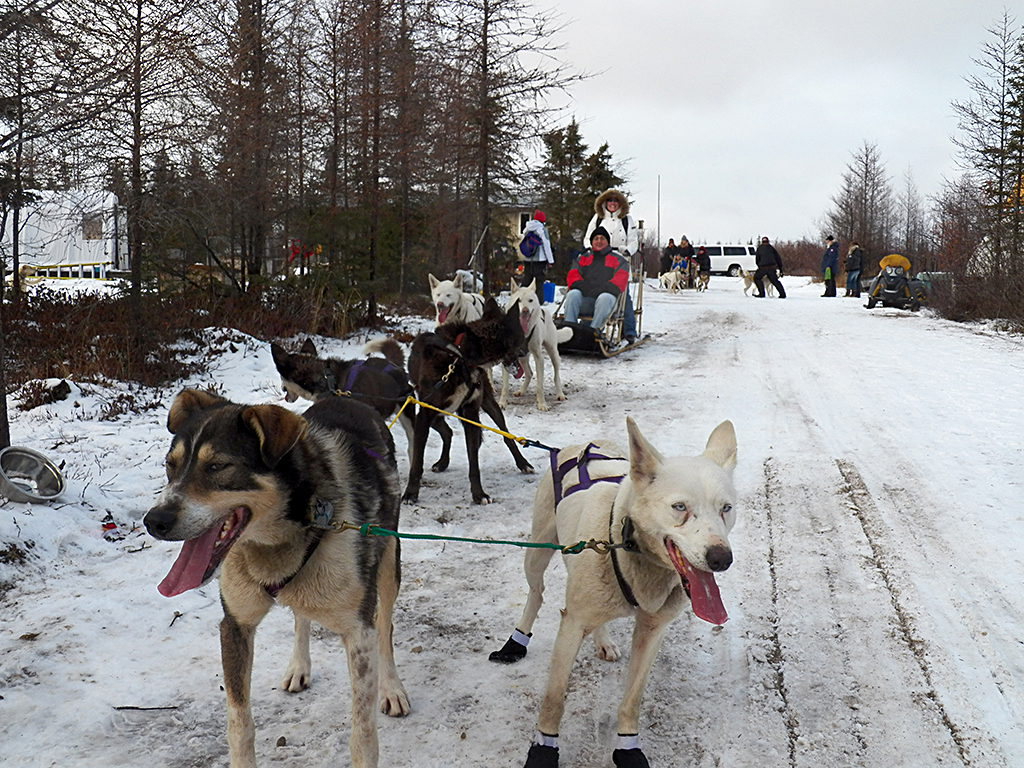
We managed to get some spots on a dog sled ride with Wapusk Adventures on our second day in Churchill. The rides are offered by David Daley, a charismatic and confident Metis man that initiated the Hudson Bay Quest race in 2004. Rather than give you a biography, I refer to you this Frontiers North blog that does a great job explaining what Dave and his team (humans and dogs) are about and how much love and respect there is for these incredible canine athletes.
Bred for arctic climes, these dogs are comfortable in the cold and are well cared for and loved.
These dogs are born wanting to run, and are happiest when out pulling sleds. Their excitement was palpable and contagious.
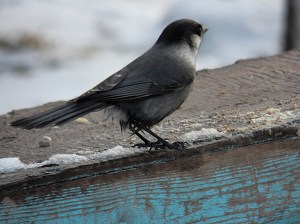
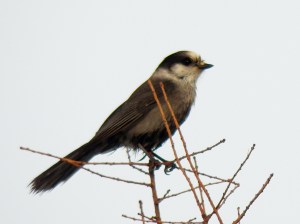
While waiting for our turn to ride a sled, I noticed several Gray Jays flying nearby from tree to tree. Some of Dave’s dog handlers were feeding them out of their hands. It was reminiscent of some Florida Scrub Jays.
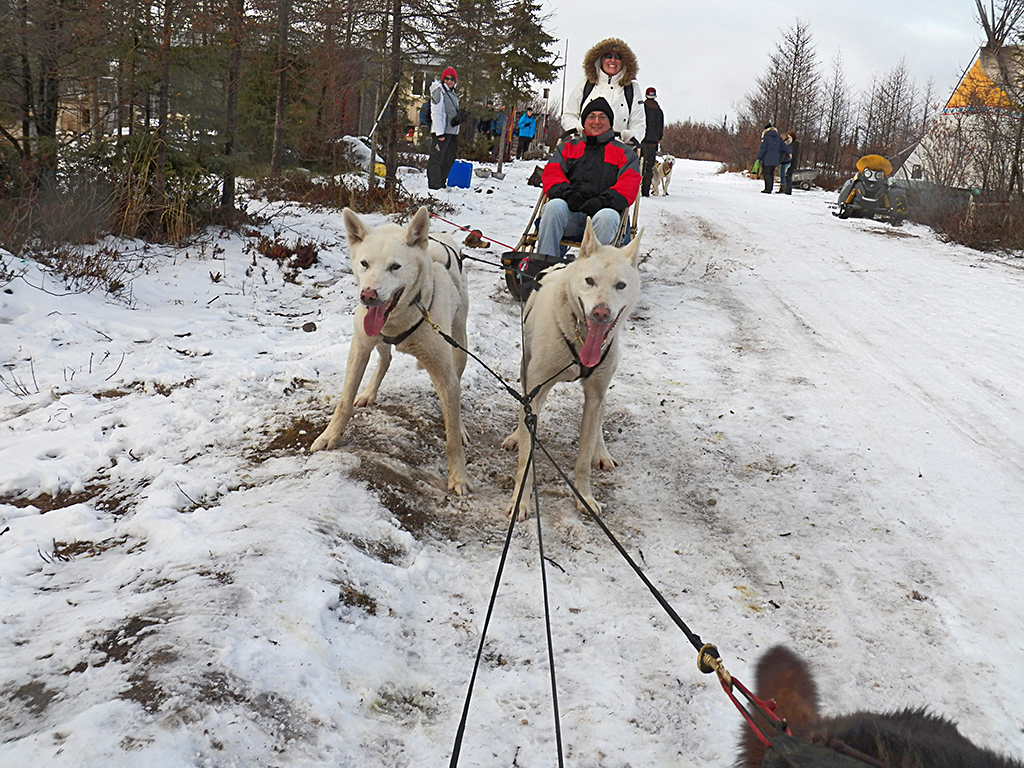
I also caught a very brief glimpse of a Boreal Chickadee – a species that I missed while in Minnesota this past February – but then it was our turn to ride the sled! I took a video of the 1+ mile lap we did, but it is a little shaky (especially toward the end)
Wapusk Adventures jokingly calls this the “Ididamile” and even had some novelty certificates printed up. But behind this showman exterior, Dave is a competitor and driven individual. He’s run his dog teams on some long treks (and does all he can to keep them healthy and happy).
After our run. Happy people, too!
We learned quite a bit about dog sleds and how they work together in teams. Lead dogs are in front, followed by point dogs. Next are the team dogs, and then those closest to the sled are the wheel dogs. Wheel dogs are usually the thoughest dogs, as they feel every movement and resistance of the sled more than the other dogs. But they are all necessary for a good team. Every dog has a personality and strength that is accommodated, and even which dogs run together is a function of how they get along. It’s pretty remarkable. Our teams were small, so the point and team dog positions were combined. Here’s a good page on dog sled positions: https://iditarodoutsider.wordpress.com/tag/sled-dog-positions/.
Our dog team!
Another special day and good fun in the frozen north!
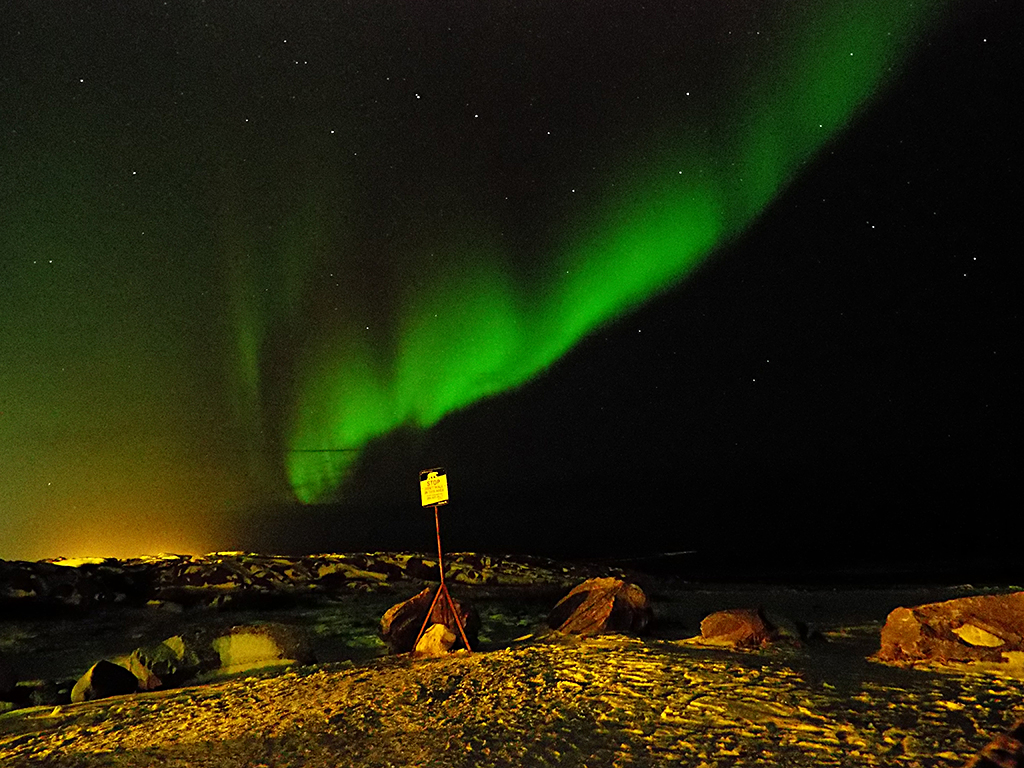
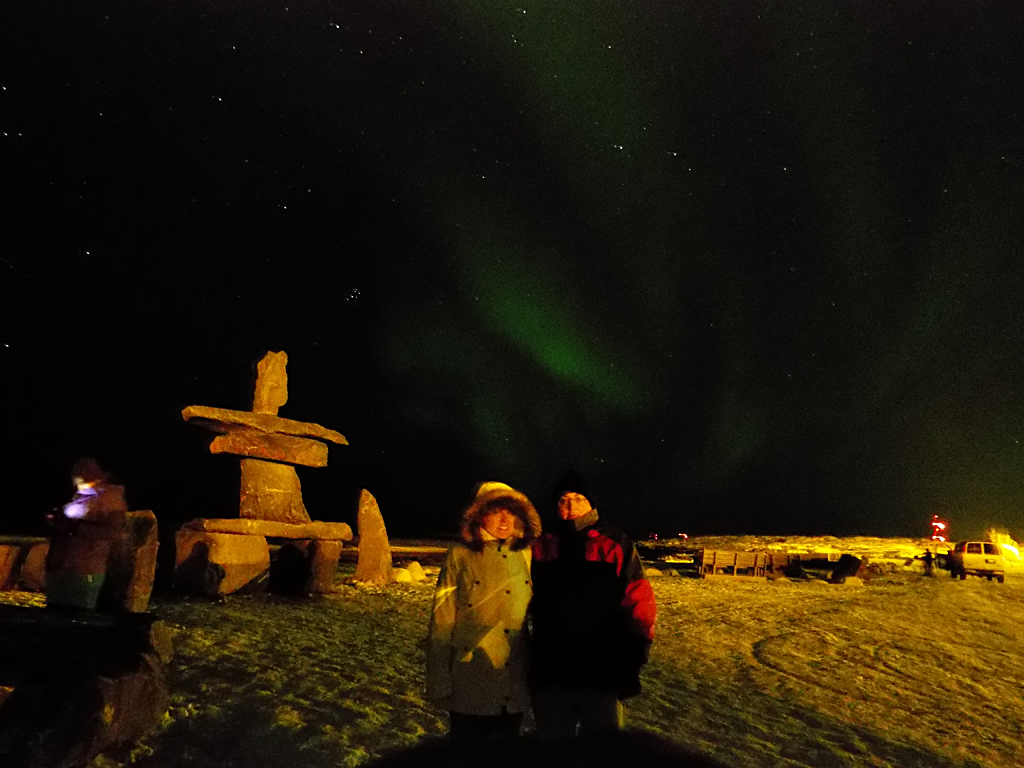
While we were in Churchill we had good aurora activity for 3 nights in a row! This was the first time either of us have seen the Northern Lights! There was a moderate geomagnetic storm this past week. Gail, whom we met at the B&B, is an “aurora hunter” and has traveled with her husband, Ben, to Iceland and Alaska to get good views. She helped me with some camera settings, and on the 3rd night of displays I tried my hand at some long exposure shots. [Note: Aurorae do not generally look this bright green to the unaided eye; the effect is more of a ghostly green – think “glow-in-the-dark” – but either way, they were breathtaking!]
Bright curtain.
The lights spanned a good deal of sky
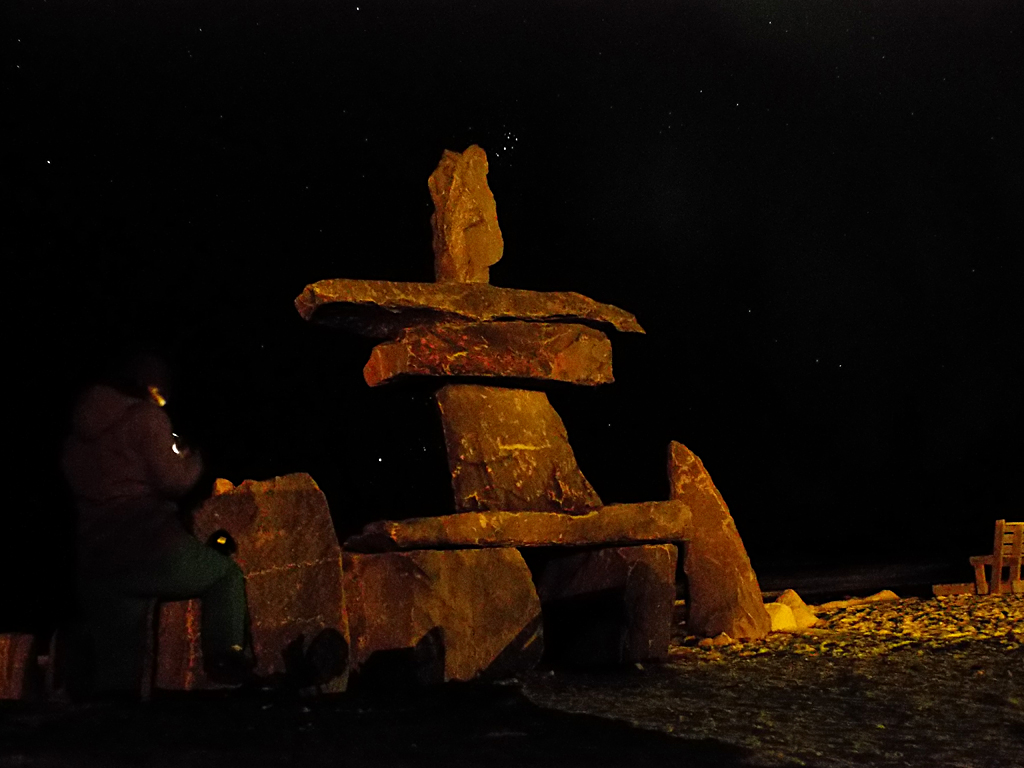
Inunnguaq with the Pleiades (7 sisters) just above and to the right.
The next several posts will be (mostly) non-birding related, so bear (har har) with me. Mrs. Lonely Birder and I spent several days in and around Churchill, Manitoba during the annual Polar Bear migration. The bears are heading to Hudson Bay in anticipation of the sea-ice forming so they can start hunting seals. The bears have been doing this for milennia, but Churchill is a comparatively recent obstacle for them. This means that bears occasionally make their way into town or near the airport. When this happens, the bears need to be encouraged to leave, and fatal encounters are exceedingly rare (for both bears and humans).
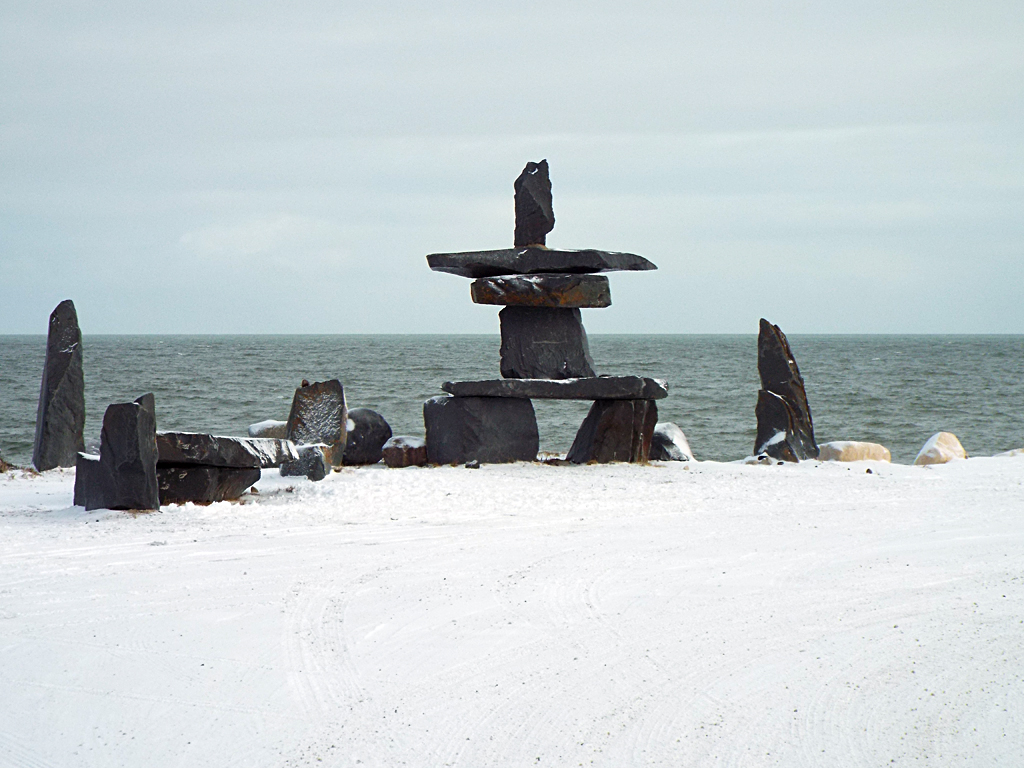
We stayed at The Bear’s Den Bed & Breakfast, met some fine people and had a great time. Here is a gallery of photos from around Churchill. The stone structures you see are called inuksuit (the singular form is inukshuk) and inunnguat (singular form is inunnguaq). According to The Canadian Encyclopedia:
Inuksuit are placed throughout the Arctic landscape acting as “helpers” to the Inuit. Among their many practical functions, they are used as hunting and navigational aids, coordination points and message centres (e.g., they might indicate where food was cached). In addition to their earthly functions, certain inuksuk-like figures have spiritual connotations, and are objects of veneration, often marking the spiritual landscape of the Inummariit — the Inuit who know how to survive on the land living in their traditional way.
The Inuit also construct a stone figure called an inunnguaq (plural inunnguat), which means “in the likeness of a human.” This familiar stone figure with head, body, legs and arms is often mistakenly referred to as an inuksuk. Its purpose is more symbolic than functional. Because of its humanoid appearance in the likeness of a little person, its image has become a popular cross-cultural symbol.
Most non-Inuits refer to both as inukshuks. I am not sure if any of the ones in town are “actual” inuksuit or inunnguat or if they were constructed for tourists.
An inunnguaq on the shore of Hudson Bay
The tallest building in town is the Holy Canadian Martyrs Roman Catholic church. It’s steeple is visible from almost anywhere, and so it provides a good landmark when you’re first venturing out into town. There’s a really cool “eskimo” museum next to the church showcasing local indigenous art and historical artifacts.
The Bear’s Den B&B
Strolling into town
One of many Common Ravens in town
Bear crossing!
An inunnguaq by the beach
The supermarket
Old fishing boat on display
Another of the huge area ravens
Main road into town
Holy Canadian Martyrs Catholic church
Church rectory
Hope for seeing the real thing!
Typical winter street scene in town
Holy Canadian Martyrs Catholic church
An inukshuk
That pink purse has got a lot of miles on it.
Another inukshuk/inunnguaq
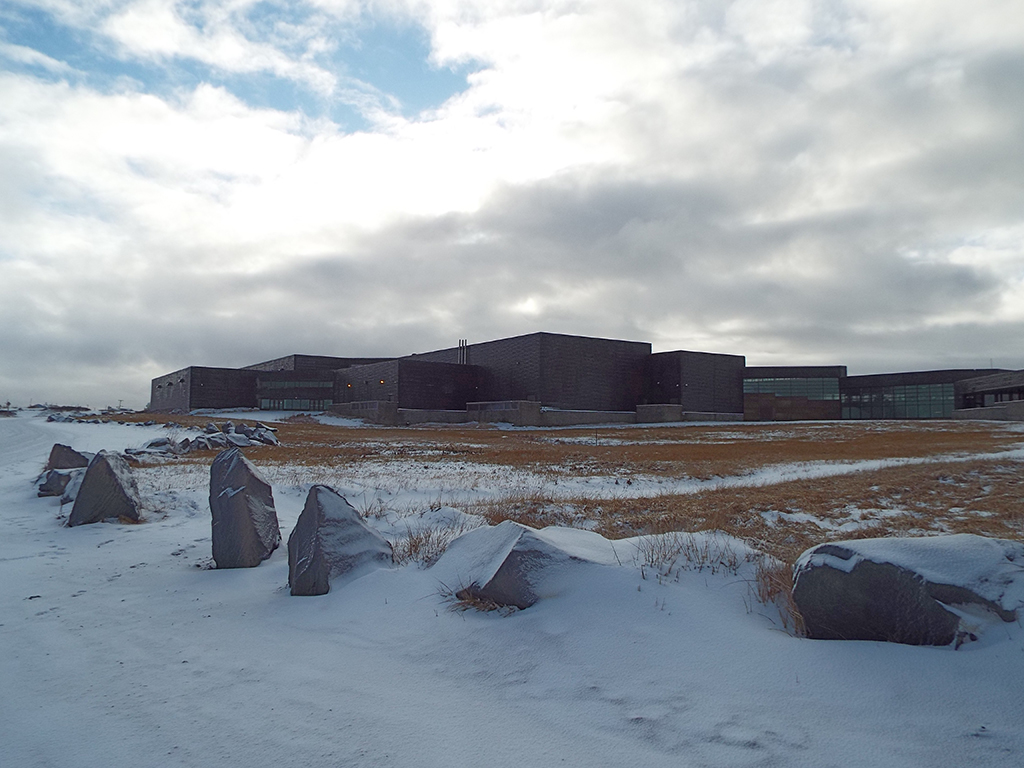
On the north end of town, overlooking Hudson Bay, is the Town Complex. This huge building houses the heath clinic, school, a pool, skating rink, playground and other community spaces. The Canadian Government built it for the town to serve as a safe place to learn and play. It’s especially important because winter temperatures can drop to under -40°C (same number for °F)
“The Complex”
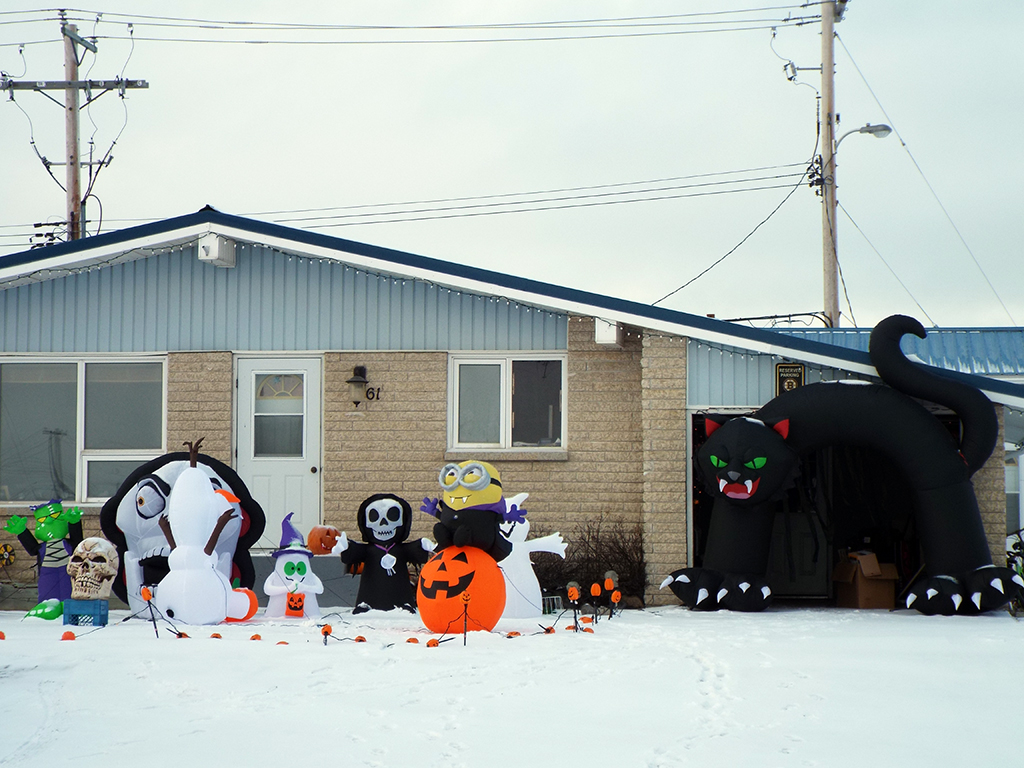
We arrived on Halloween, which is usually a big deal at the Lonely Birder house. It’s a huge deal for Churchill. The government authorities and volunteers keep a perimeter watch around the whole town to keep Polar Bears away so the kids can trick-or-treat in safety. There are several large costume parties (for kids and adults). We were so exhausted from our travel (we had to get up at 3:30 to get to the airport in Orlando) that we ended up missing the big party at The Seaport restaurant, but we were settled into the B&B as kids came to trick-or-treat.
Here are some photos from this past weekend’s Orlando Wetlands Park adventure (map). It was a nice day, with slightly broken overcast skies, which cut down on the glare.
A first-year male Vermilion Flycatcher and Scissor-tailed Flycatcher had been reported there last week. If you recall my blog from earlier this year, an adult male Vermilion Flycatcher has spent most of the last few winters there. It’s interesting to me that another of that species has shown up. There has been no sign of the bird from this past winter, yet.
Eastern Phoebe
One of several Black-bellied Whistling Duck families.
Belted Kingfisher
Juvenile male Vermilion Flycatcher
One of my best looks at a Yellow-billed Cuckoo
There was no sign of the Scissor-tailed Flycatcher (and it hasn’t been listed on eBird or the mailing lists for over a week now), but plenty of other birds were around, as well as some non-avian friends. There were a few Black-bellied Whistling-Ducks with chicks. Being a relatively new arrival to the area, I’m wondering if these ducks are figuring out they can breed year-round or at least stick around longer in Florida. I suppose time will tell.
An American Alligator trying to catch some sun
Wood Stork
Wading Tricolored Heron
Handsome Turkey Vulture
A cute River Otter
There was an impressively large aggregation of Blue-winged Teals, but no other duck species that I noticed (besides the Black-bellied Whistling-Ducks). More should be arriving soon.
Other birds of note include Purple Martins (quite late in the year for them), Royal Terns (unusual this far inland), and a Solitary Sandpiper (hanging out with some Lesser Yellowlegs).
Orlando Wetlands Park closes to the general public on November 15th and will reopen February 1st. According to the Friends of the Orlando Wetlands website:
In order to purchase the property for the Wetlands, a 50 year agreement was made with the landowners allowing them to hunt the property during the closed season.
Oh, the deals you sometimes have to make. Looking forward to 2037…
Here are some photos from the last couple of weeks. Two weeks ago, I did some birding at Turkey Creek Sanctuary and stopped by The Villages. The winter resident birds are coming in, with more Palm Warblers and Eastern Phoebes arriving every day.
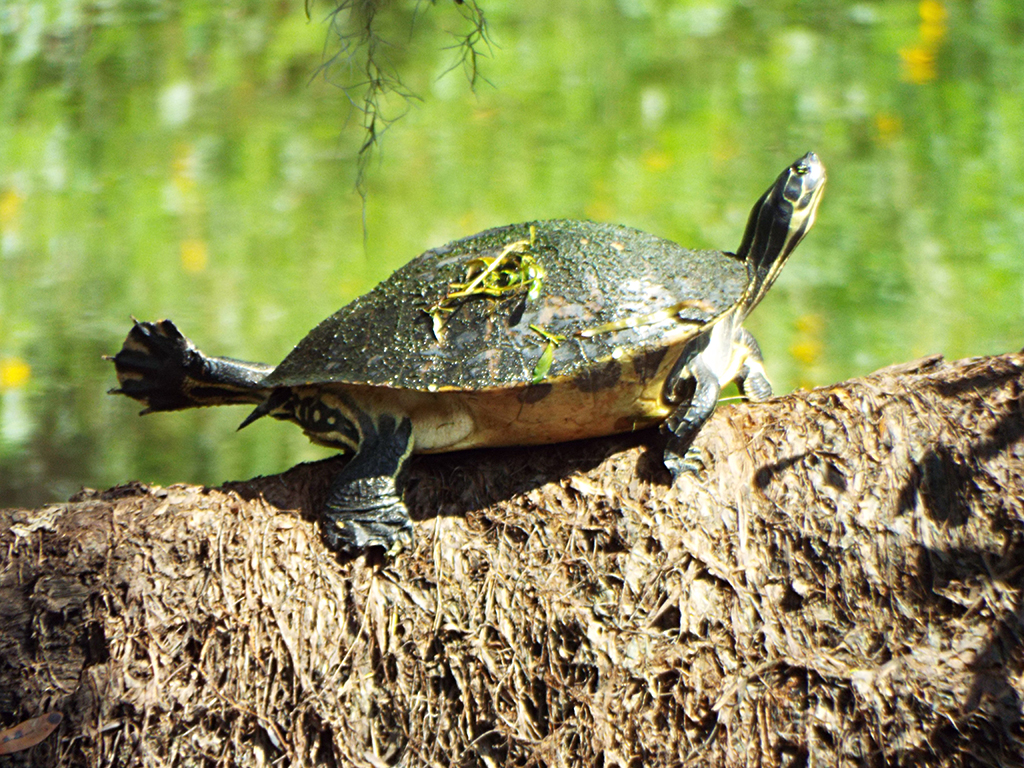
A turtle using its foot as an solar panel.
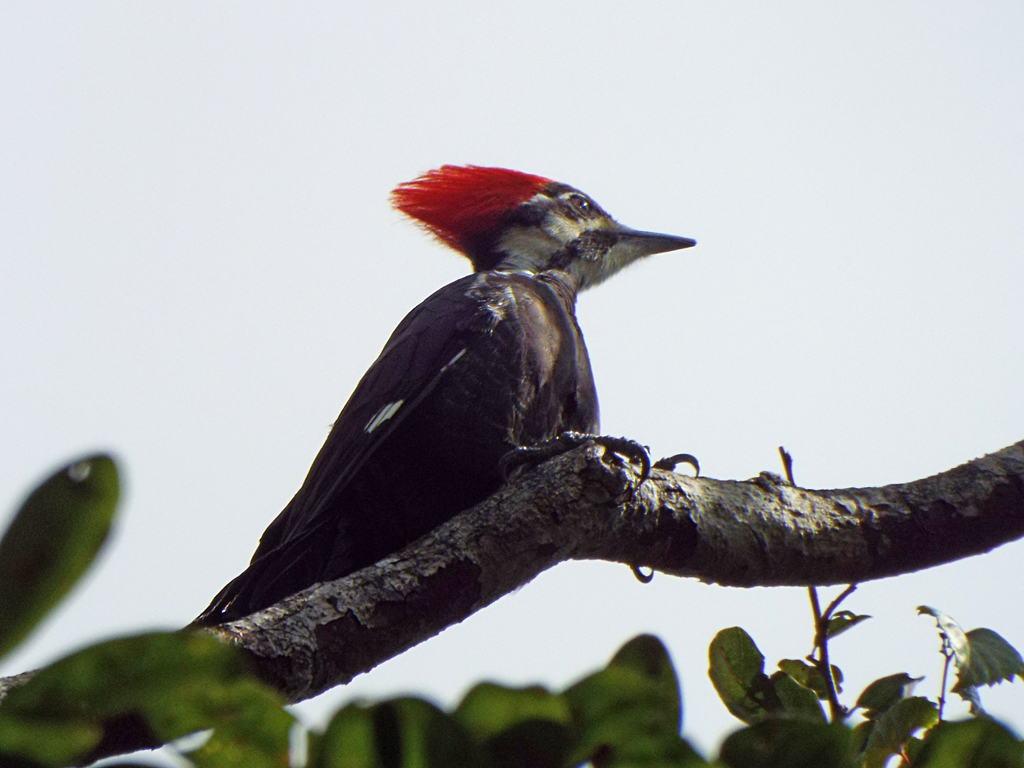
Piliated Woodpecker, high in a tree
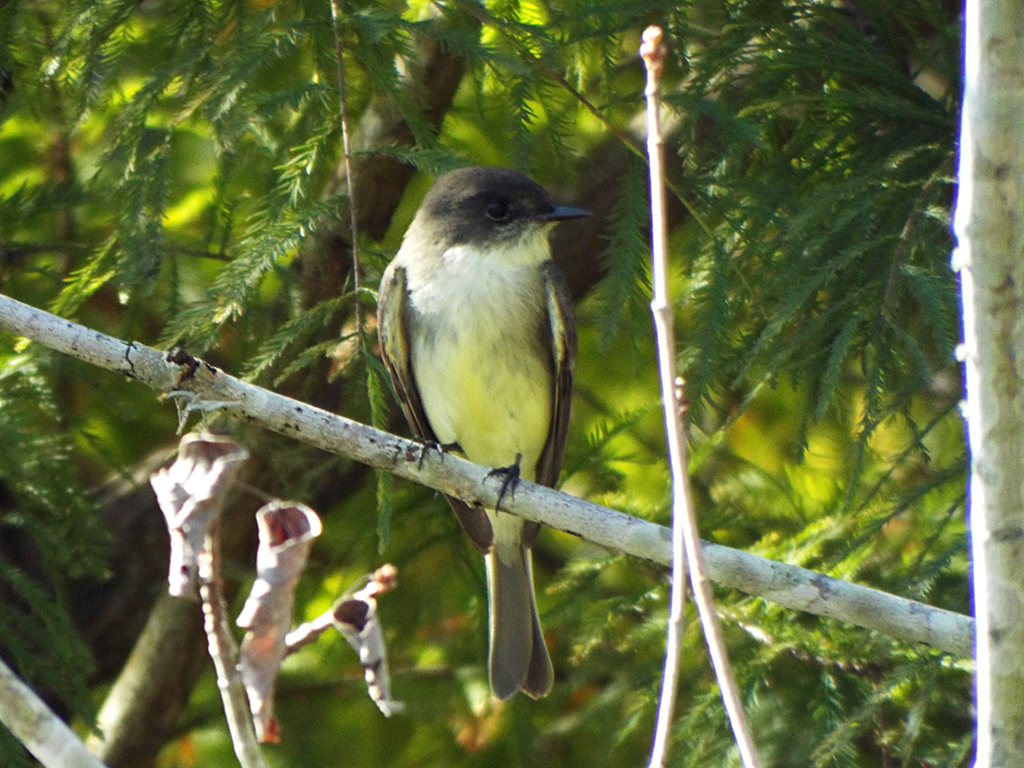
Eastern Phoebe wearing its Fall colors (note the yellowish belly).
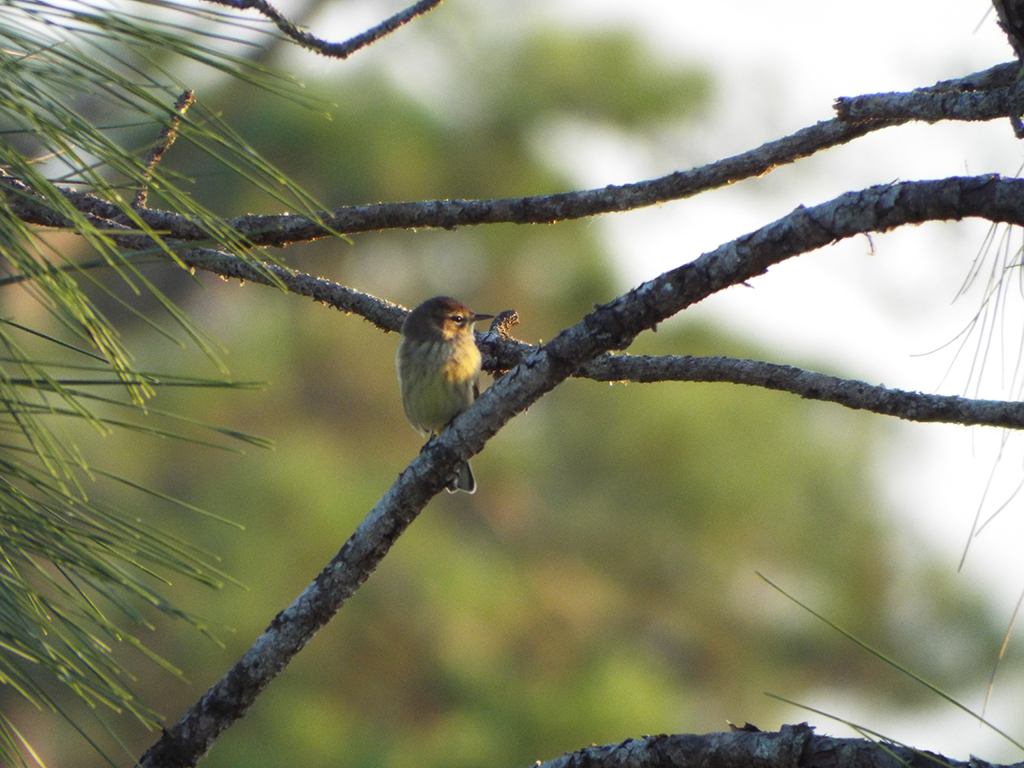
Uncropped shot of a tiny Palm Warbler.
On my trip to The Villages, I finally managed to see the Egyptian Geese that have been reported there. I found a total of eight, and they let me get quite close. They only flew or swam away when a 6 or 7 year-old charged at them (and the 120 White Ibises!) to get them to fly. While I am sure they were careful, having over a hundred White Ibises coming at you, sharp-ish end first can get your heart racing a bit.
Here are some eBird lists from the last couple of weeks:
Summer is generally over here in the northern hemisphere, and what a summer it’s been! I’ve ranged all over Central Florida, and it was fitting to end the season this past weekend at the Wings and Wildflower Festival in Leesburg, Florida, at the Venetian Gardens Park (map).
For most of September the wind patterns and weather have not been conducive to bird migration through central Florida. That finally ended with a low pressure system moving to our north, trailing a weather trough, and scary hurricane Joaquin far out over the Atlantic. The same confluence of factors that has devastated South Carolina with two feet of rain also ushered in the stalled migration through Florida. The end result was a bit unexpected. While weather radars clearly showed birds moving en masse, southward through the peninsula, it seems many of them just kept on going! I am sure some areas picked up some good migrants, and there’s time enough for another push or two before November. But perhaps the next best thing was also ushered in: cooler weather! It’s been a very warm and humid summer, with a lot of rain. This weekend was the first break of the summer heat, with highs in the low 80s and, perhaps more importantly, lower humidity!
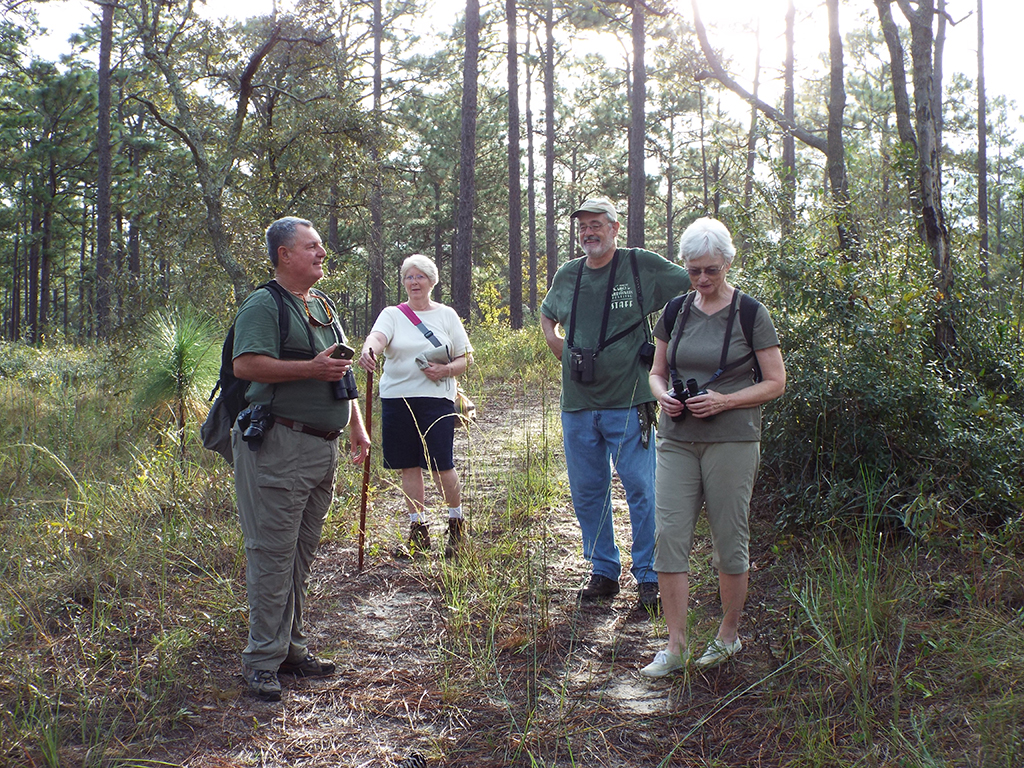
I went on three morning field trips for this festival. On Friday, I visited the Ocala National Forest for the first time and hiked the Clearwater Lake Recreation Area (map) there with a small group. Our target species were Red-cockaded Woodpecker and Brown-headed nuthatches. Both were relatively easy to see, as they came to our location. The lighting wasn’t favorable for photos, but my binoculars were put to good use for great views as the birds foraged and chase each other around.
It might be hard to see, but this views looks over 2 sand ridges. The first is in the foreground, then there is a low area (with the yellow vegetation) before the next rise, in the background.
There were quite a few Red-headed Woodpeckers as well, with a mixture of adult and juvenile birds chasing each other around throughout the area we hiked. I found the landscape to be refreshingly different. As a pine flatwoods community, it had many of the same features of similar habitats in Saint Sebastian River Preserve State Park or the Hal Scott Preserve, but with one major difference: topography. I’m not talking hills or valleys or anything like that. But a definite undulation of the ground with topographic rises and troughs. There was also a different understory, with much less palmetto and more wiregrass and low brush scrub. In fact, that wiregrass is highly favored by one other target species that we didn’t manage to see: Bachman’s Sparrow. Despite searching and even playing some calls to draw them out, we came up empty.
Some of our group, including trip leaders Dave Goodwin (ball-cap) and Jim Eager (on the left).
Other than that, it was a wonderful morning. On our way back out of the trail, we saw two American Kestrels twisting and turning their way in pursuit of pray through the woods, calling out as they maneuvered around treetops.
Later on Friday was the Florida Ornithological Society’s business meeting (the Board Meeting). I had some time before it started to walk the Venetian Gardens Park. The park is a beautiful urban oasis, and with the comparatively cooler weather, not a bad way to spend an hour or so exploring.
When the business meeting started, I sat in on it and got some insights into how the organization works and what their challenges are. There was a general gathering (or “Flock” as the FOS calls it) of members. We heard a presentation by none other than Rienhard Geisler on the Orlando Wetlands. Rienhard is an engaging speaker and takes some great photographs. His main point to us for bird photography (and birding in general) was that we should be patient. In some cases, he waited in the same spot for hours to get a good shot at a bird. It seems to pay off for him, too. You can see some of his work at the Friends of the Orlando Wetlands website.
On Saturday, my field trip was at the Green Mountain Scenic Overlook (map), led by Gallus Quigley. The morning started off great, with both a Northern Bobwhite and two Eastern Whip-poor-wills calling in the pre-dawn light. As the sun came up, we made our way to the overlook and watched some gnatcatchers, titmouses and warblers darting in and out of the trees from above.
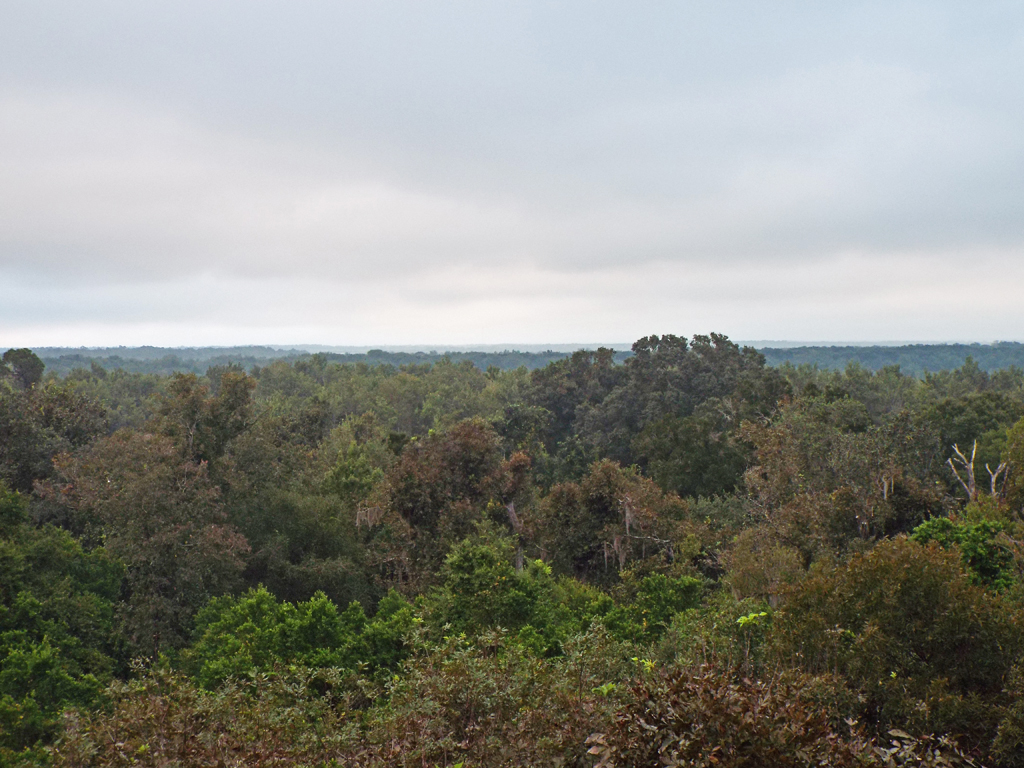
From the overlook you can see where Lake Apopka sits (just in front of the farthest, hazy line of trees).
We then walked down a section of trail that will eventually link up with the Lake Apopka North Shore Loop Trail. Gnatcatchers were super abundant, along with other, mostly resident birds. The high point for me was seeing five Veerys foraging in some thickets. We also got brief glimpses of a Magnolia Warbler and a Blackburnian Warbler (a first of season bird, for me). The birds were generally fast moving or in heavy brush, making photography a challenge.
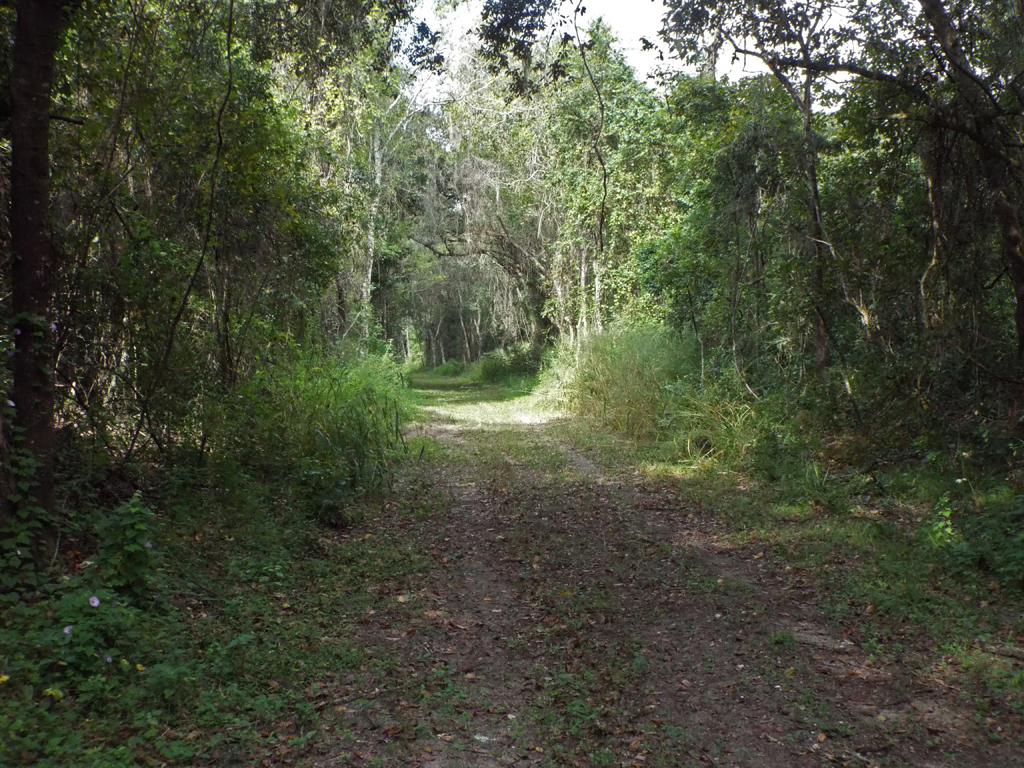
When Lake County finishes connecting this path to the Lake Apopka North Shore Trail Loop, it will be covered with crushed limestone to make a more accessible surface for walkers, wheelchairs and bicycles.
That afternoon, back at the Festival, the FOS had our scientific paper presentations, followed by a banquet. I opted out of that, since my budget for this festival was essentially zero. My parents live not too far away from the Festival site, so I had been staying there over night. I had dinner with them to end my second day.
Finally, on Sunday morning I headed over to Hidden Waters Preserve ( on the map it’s the small a lake west of Abrams Road) – an ongoing 90-acre restoration project. The plan is to bring some sandhill habitat to the area, which used to be a golf course back in the 1950s. The main focus of the trip was for wildflowers, and we didn’t really stop long at any one place for birds. I managed to sneak in a few looks at some stops, including the FOS Hermit Thrush calling at the bottom of the sinkhole by Alfred Lake.
On our way out, I saw a raptor with a prey item hanging from its talons. A closer look in binoculars showed it to be an adult Red-tailed Hawk. It then slowly let go of its lunch as it flew rapidly, just above the tree-line. I took the binoculars down just in time to see a large Bald Eagle swoop down and land where (out of my view) the hawk’s meal had landed. After about 30 seconds or so, the eagle rose up and then circled over our location. Apparently it either didn’t think too much of a Red-tailed Hawk’s choice of a meal, or was just chasing out a competitor.
Bald Eagle
Gulf Fritillary
Wildflowers and pines – part of the Sandhill habitat restoration
I made one more stop at the Festival grounds at Venetian Gardens Park and sat in on an outdoor presentation about using native or Florida Friendly plants and best practices to maintain a lawn-free yard. I gleaned some useful information, but I am not yet sure how practical any of it is. After stopping back to my parents’ for lunch, I headed home. All in all it was an exciting weekend and has got me geared up for the Space Coast Birding and Wildlife Festival in January. Registration should be opening up for that later this month.
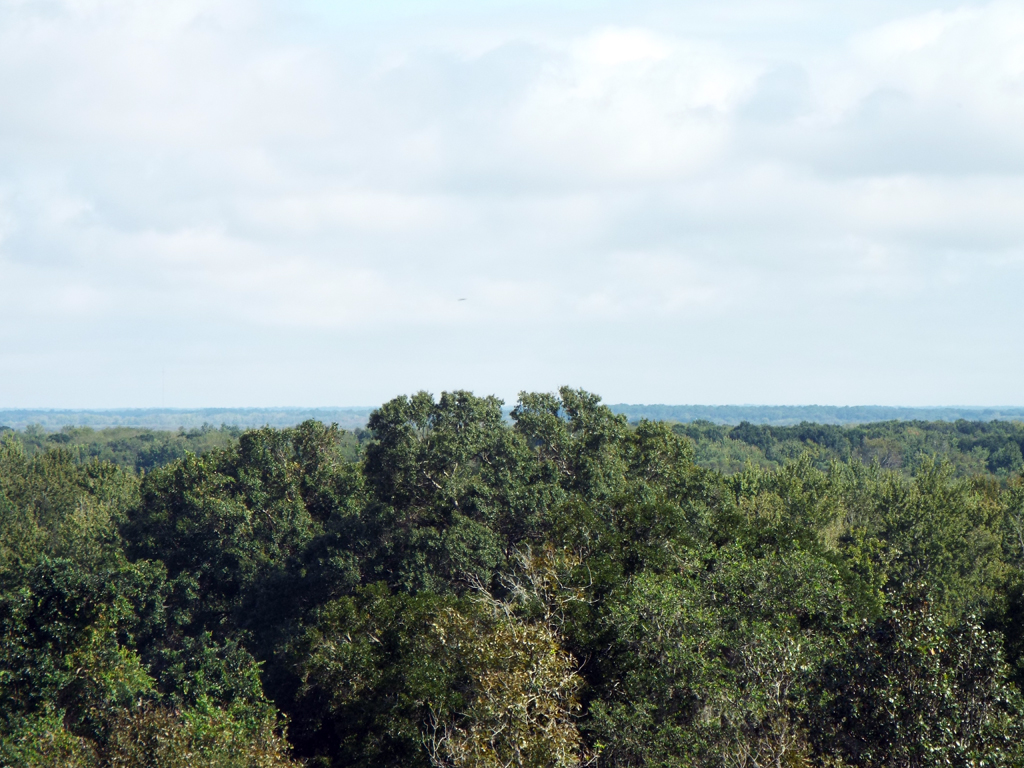
One last look from the Green Mountain Scenic Overlook.















 Lonely Birder