Parrots Plus in South Florida

October 21, 2017

Camille and I headed to Miami last Sunday to see what parrot species we could get. Using Bill Pranty’s “A Birder’s Guide to Florida”, we hoped to beef up our life lists with some “easy” to get exotic birds.

On our way, we couldn’t pass up an opportunity to visit Evergreen Cemetery in Ft. Lauderdale [map]. This cemetery is a lovely spot for migrants and the occasional vagrant or exotic. This is where many birders flocked to see the Variegated Flycatcher a couple of years ago.
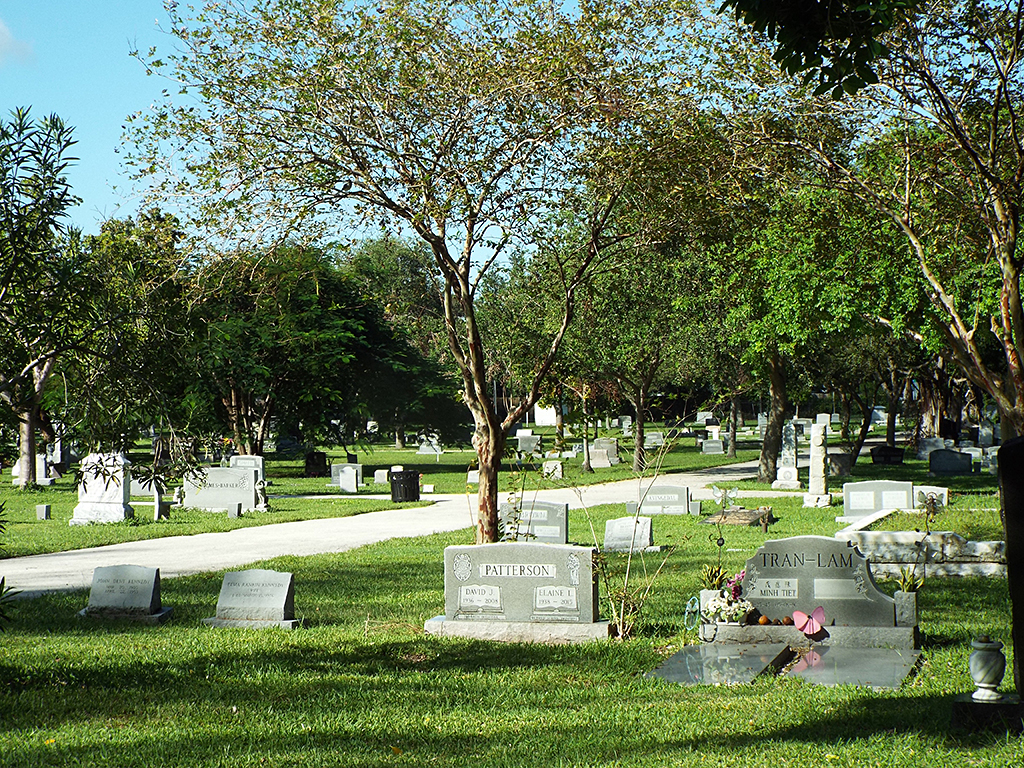
evergreen-cemetery
Evergreen Cemetery is a beautiful green space and a known migrant trap. As an aside, Leslie Nielsen is buried here.

The place was hopping with warblers, including American Redstarts, Black-and-White, Bay-breasted, Cape May, and Black-throated Blue Warblers.
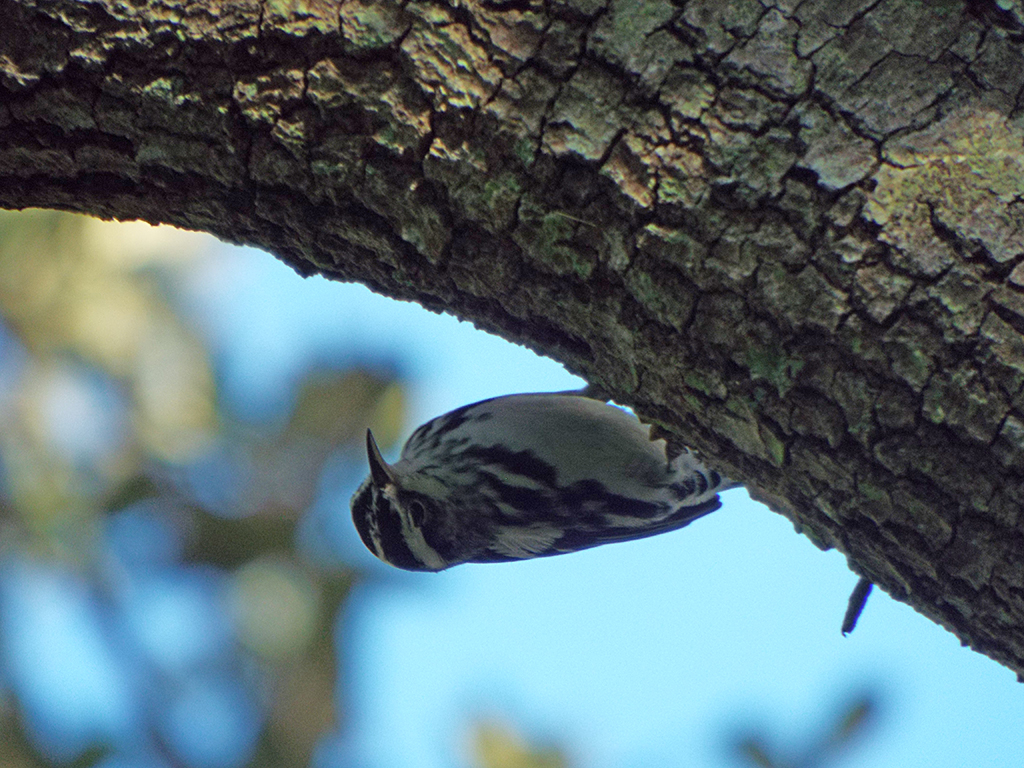
black-and-white-warbler
Black-and-White Warbler hanging out on an oak tree.

When there are small birds concentrated in an area, you can bet small raptors aren’t far away. This Cooper’s Hawk was trying to hide from mobbing Blue Jays.
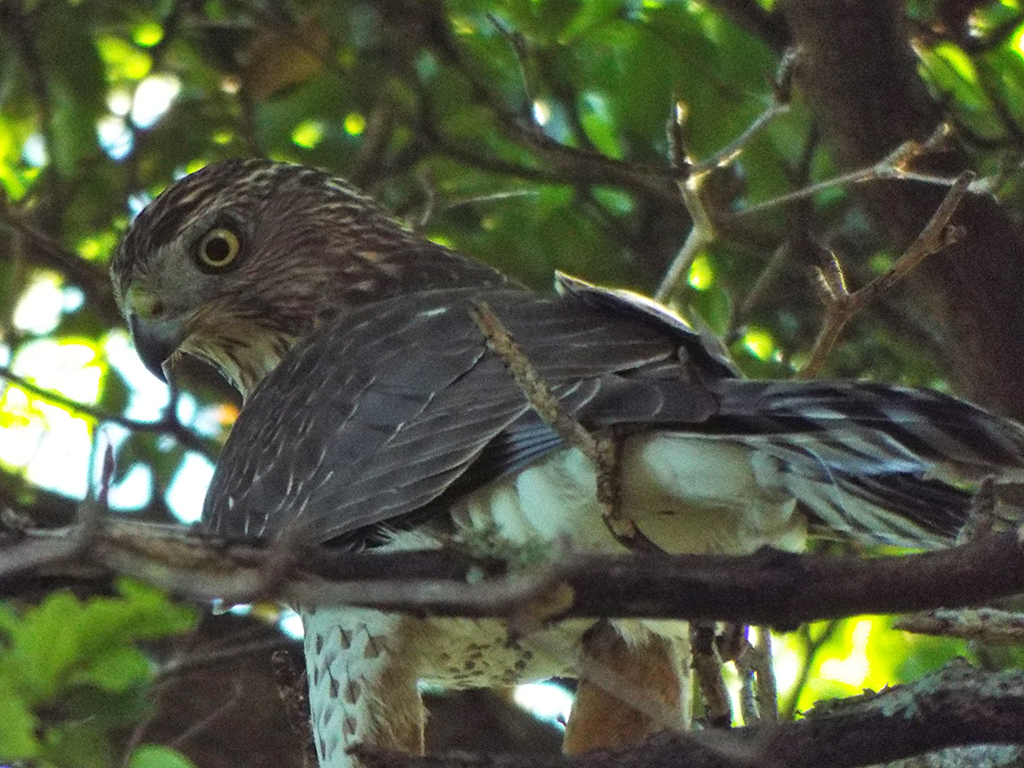
 

coopers-hawk
A young Cooper’s Hawk learned a lesson in patience and camoflage after getting chased around by angry Blue Jays.

A small Peregrine Falcon was also cruising over and around the cemetery, as well as a couple of American Kestrels.

Here’s the complete eBird list from the morning at Evergreen Cemetery:
http://ebird.org/ebird/view/checklist/S39933959

From Ft. Lauderdale we headed to South Miami to find exotic parrot species and track down White-crowned Pigeons. These pigeons are always showing up on eBird alerts and in e-mailing list reports, but each trip either of us has made to south Florida has come up with no White-crowned Pigeons. I’ll save you the suspense: We didn’t see any on this trip either.

But we did get some parrots! At the Baptist Hospital [map], we had almost given up on seeing any birds at all, besides the numerous Muscovy Ducks.
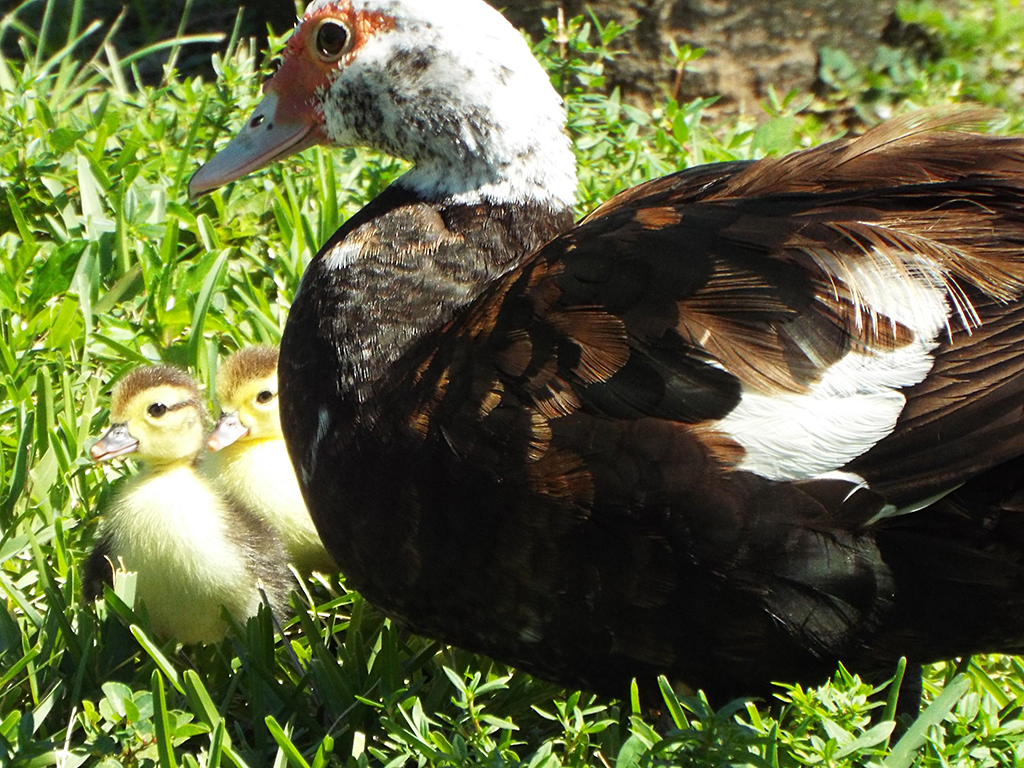
muscovy-duck-with-chicks
There were Muscovy Ducks with chicks of all ages around the ponds at the hospital. These two chicks were part of a group of 8 or so siblings and their mother (standing protectively here).

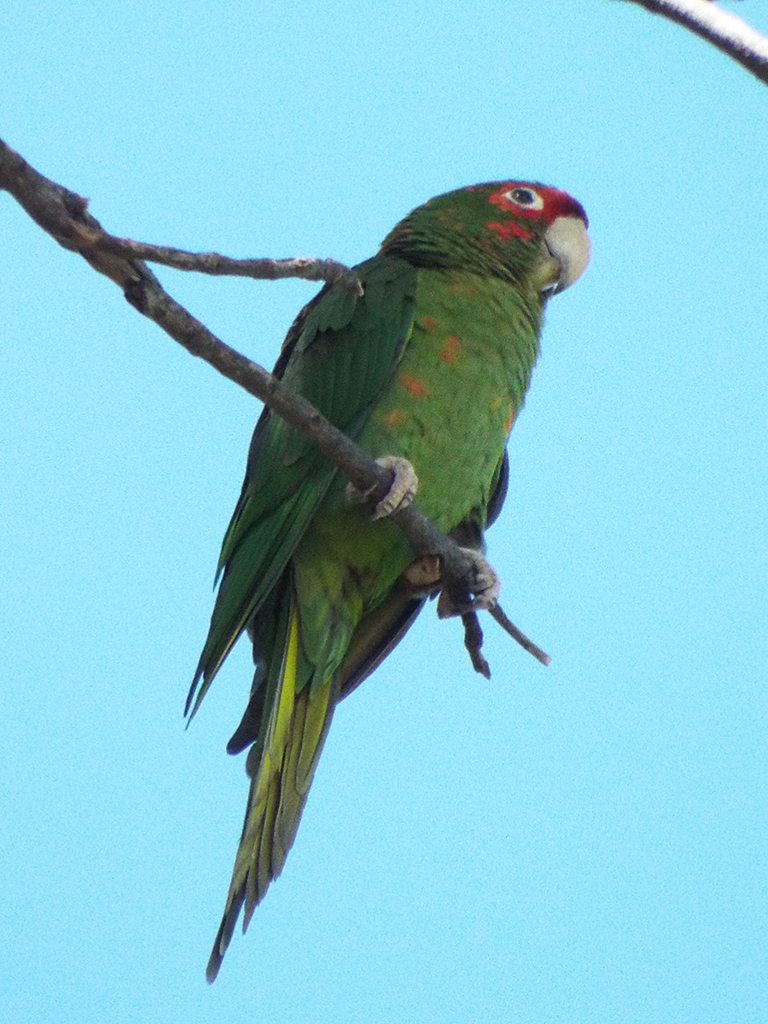
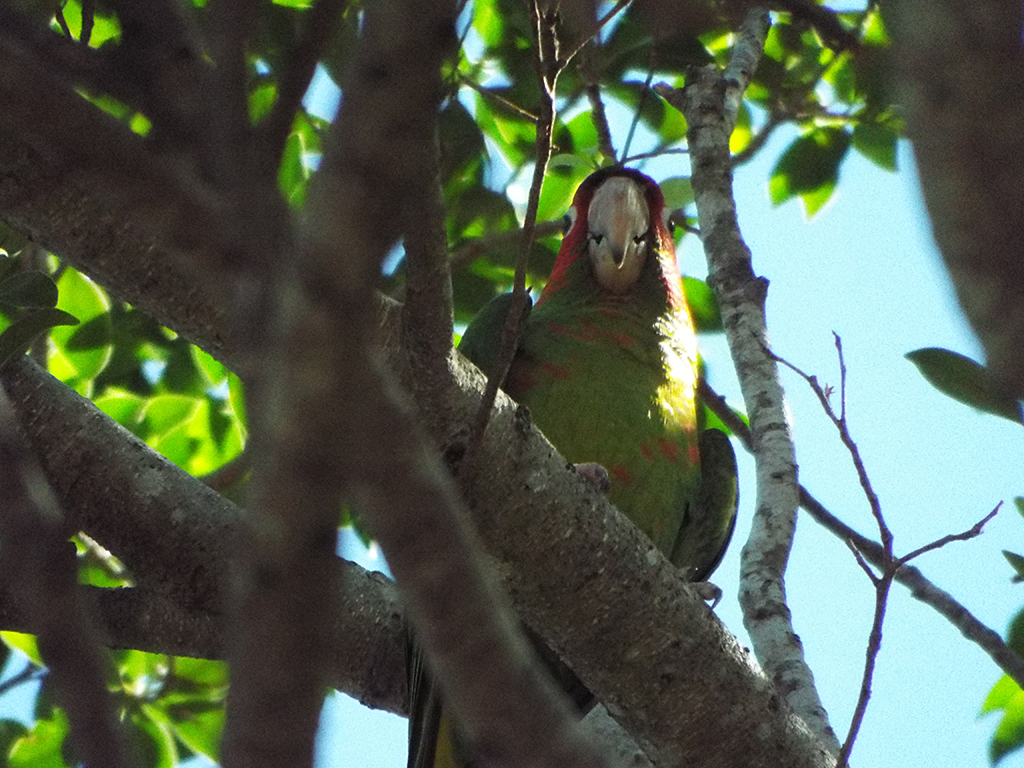
But on our second look around, a large flock of loud Mitred Parakeets flew into a tree in the parking lot. Several minutes later, another large flock flew into a second tree. These parrots are extremely loud, and at times they synchronized their calls into a raucous, rollicking cacophony.
mitred-parakeet-1
Mitred Parakeet on an exposed branch. Most of the birds stayed hidden (and cool) in the denser foliage.
mitred-parakeet-0
Mitred Parakeet watching the watchers.

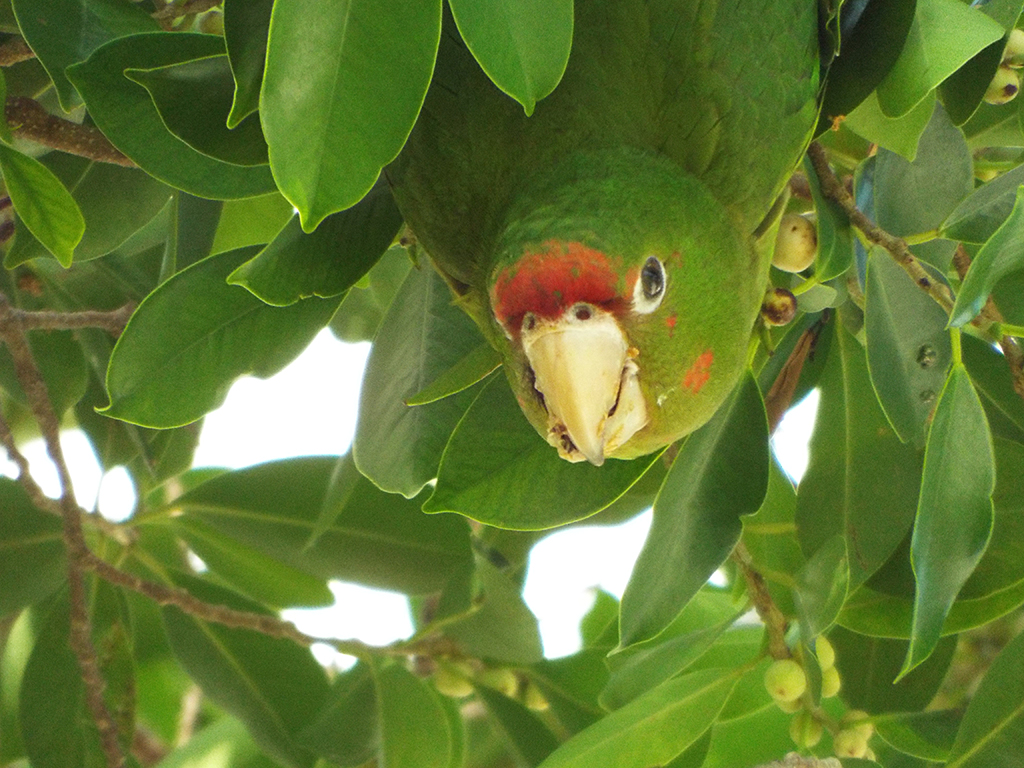
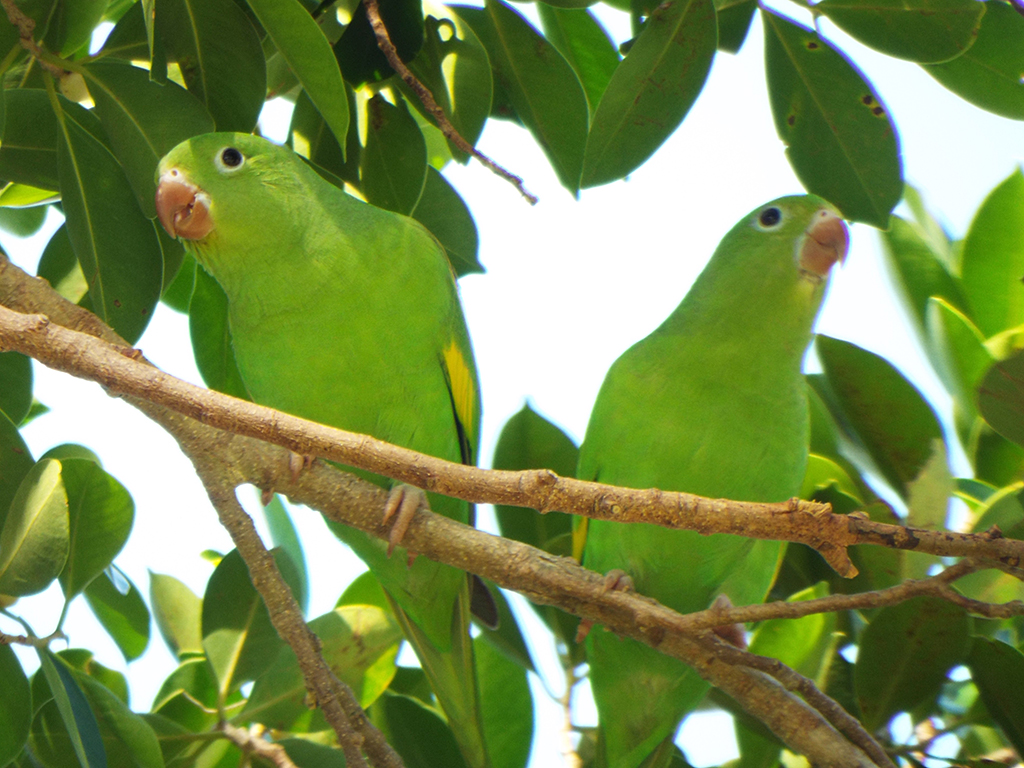
On the opposite side of the larger pond some more Mitred Parakeets flew in, joining a pair of smaller parrots, which turned out to be Yellow-chevroned Parakeets.
mitred-parakeet-2
“Peekaboo!”
yellow-chevroned-parakeet1
A pair of Yellow-chevroned Parakeets.
yellow-chevroned-parakeet2
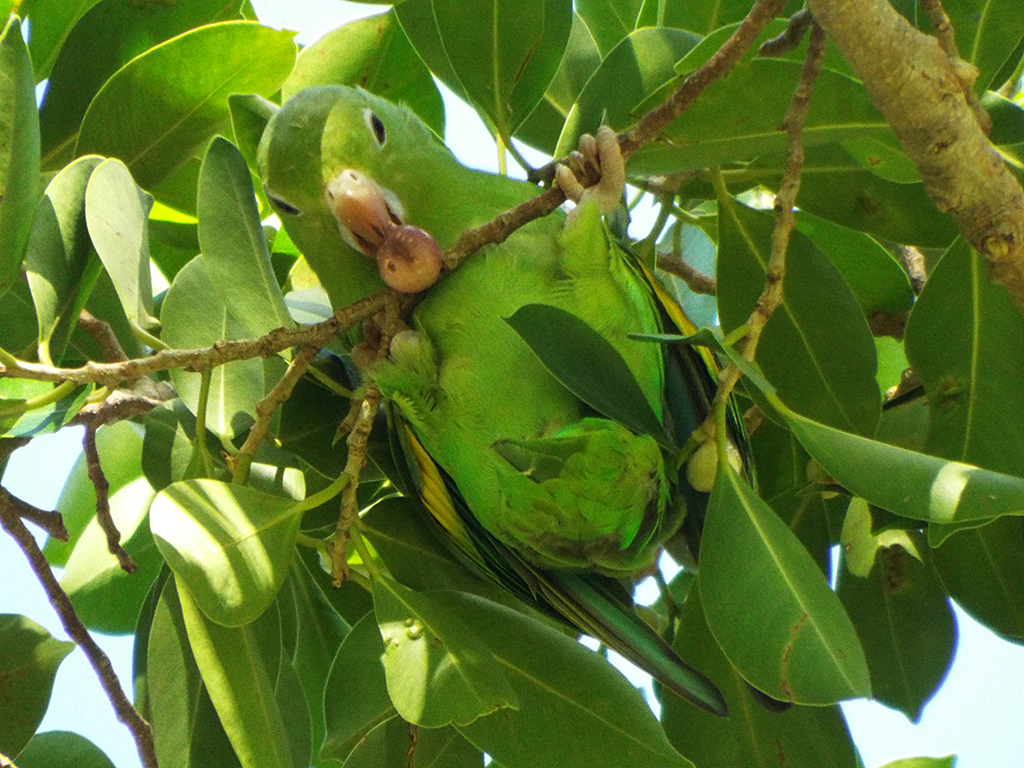
An acrobatic Yellow-chevroned Parakeet eating its lunch.

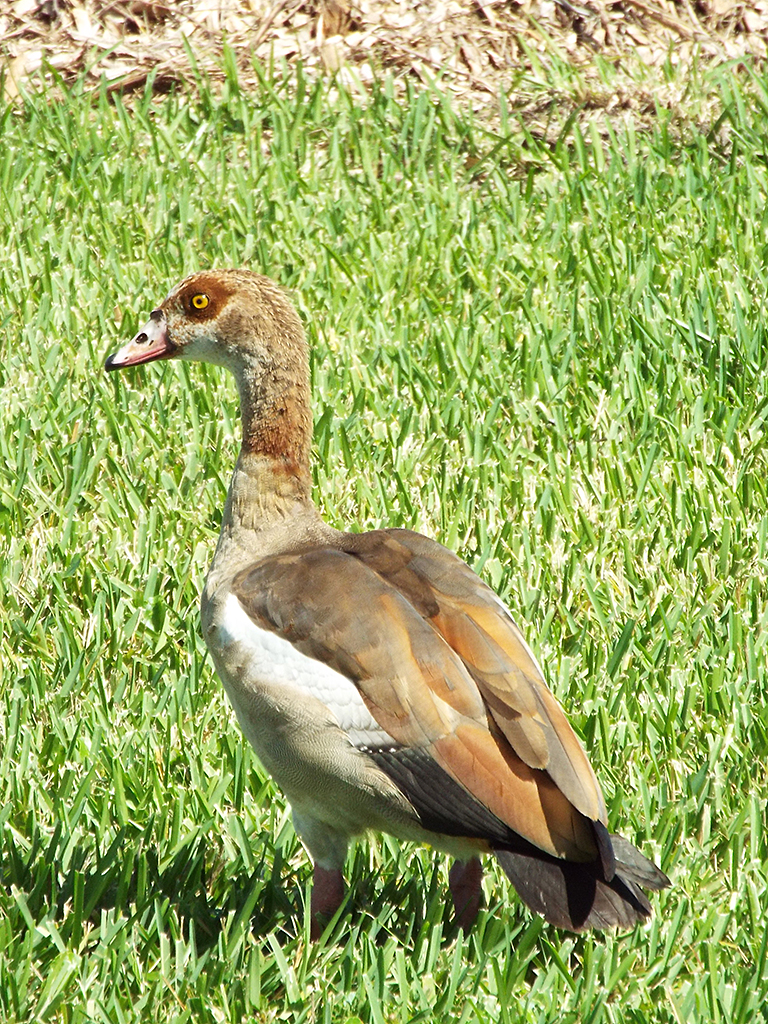
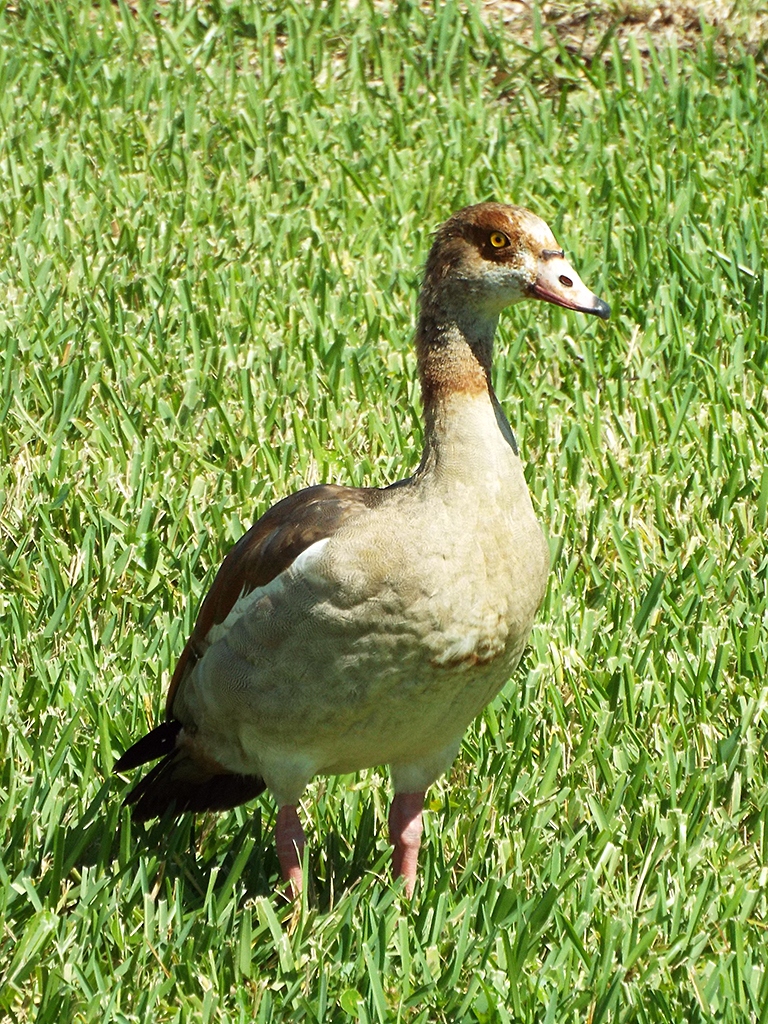
A few other feathered friends were around, including a small flock of Egyptian Geese. They were a bit flighty (no pun intended), but one bird was bolder and even struck some poses for us.
eygptian-goose2
Egyptian Goose, posing.
eygptian-goose
Here’s his “good side”.

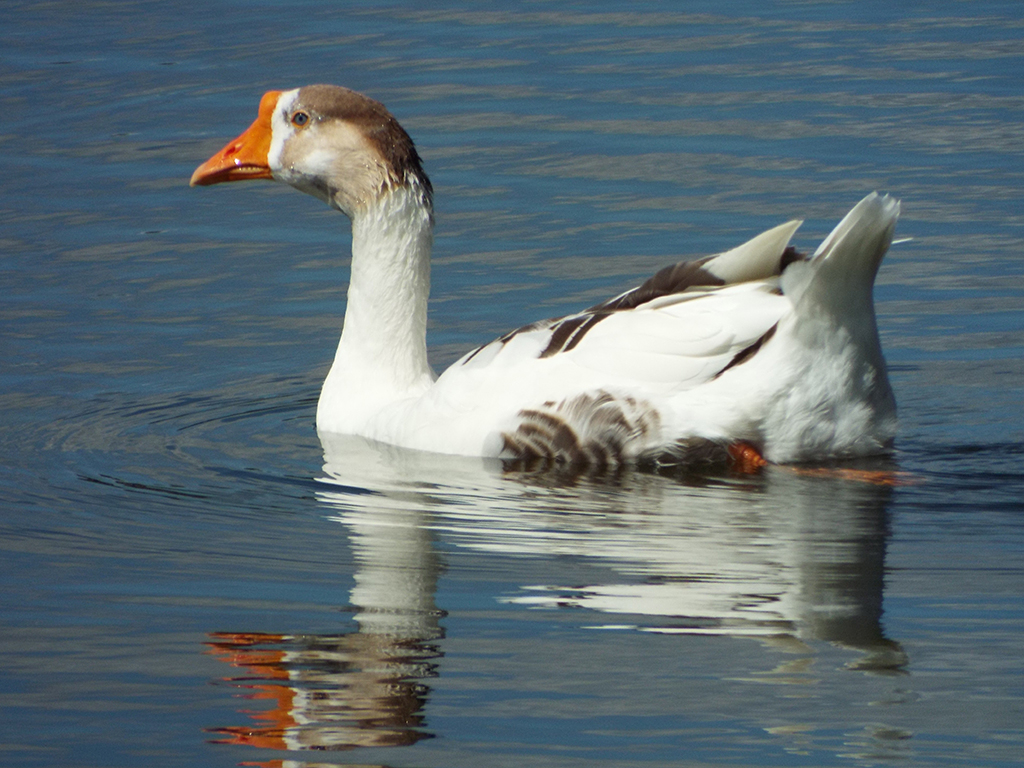
There were some domestic waterfowl, as well. I was hoping for a Greylag Goose, and this bird was the closest I could find.
feral-goose
The extensive white is evidence of domestication in this bird’s lineage.

Here’s the eBird list for the Baptist Hosptial Area, including the neighborhood to its north (where we found no White-crowned Pigeons):
http://ebird.org/ebird/view/checklist/S39939715

From the hospital area, we went in to a few of the area neighborhoods, which are known to host warblers as well as established exotics, like Spot-breasted Orioles and Red-whiskered Bulbuls.

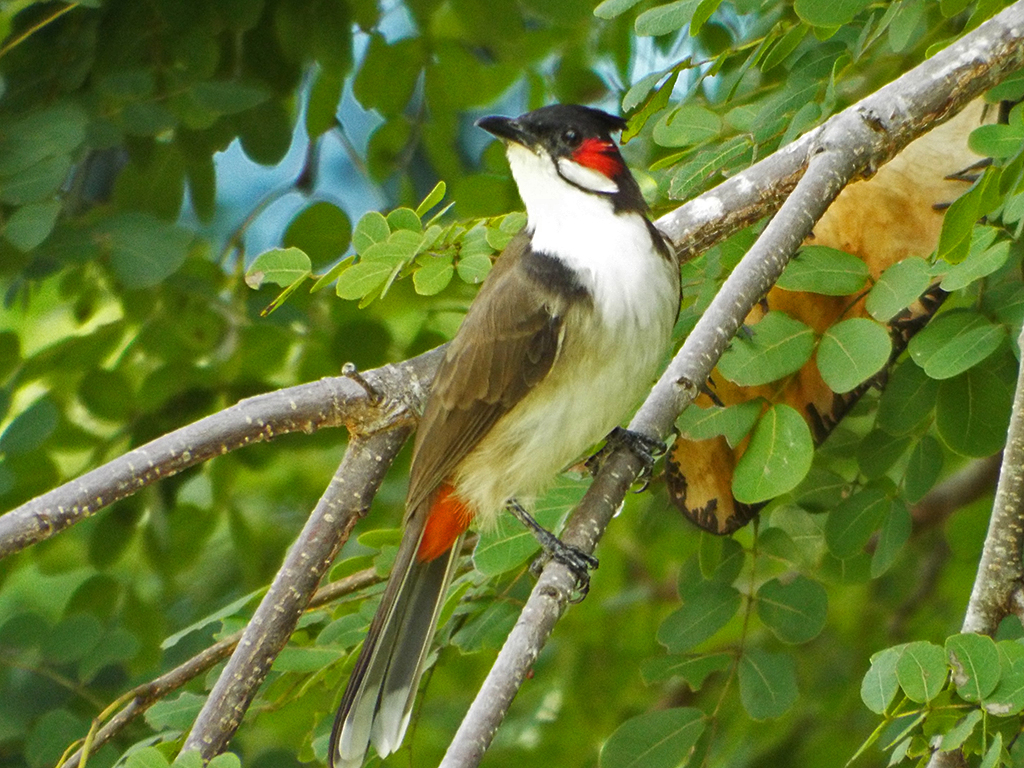
At the King’s Creek Village [map] townhouse development, we had some success! The last time we visited this area, we saw a Red-whiskered Bulbul, but were unable to photograph it. This time, we were ready!
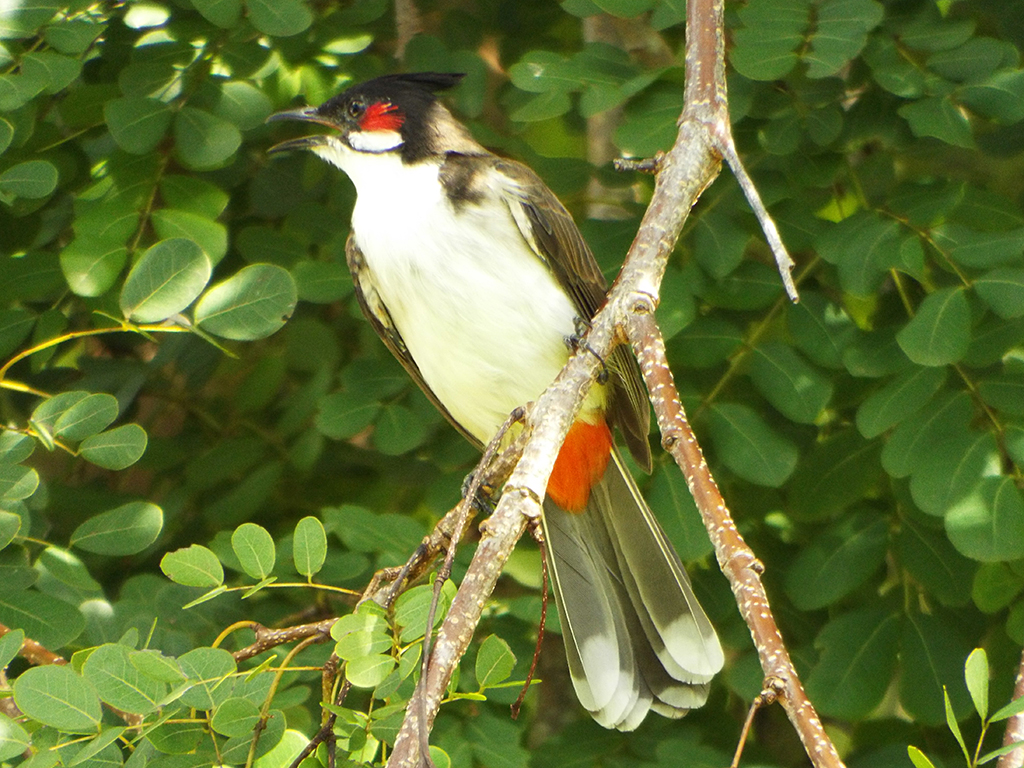
red-whiskered-bulbul2
One of several Red-whiskered Bulbuls in the neighborhood.
red-whiskered-bulbul1
Bulbuls are native to south Asia, but are doing well in suburban Miami.

Among the more common Palm Warblers and Northern Parulas, we also saw Cape May and Blackburnian Warblers, and one real rarity: A Nashville Warbler.
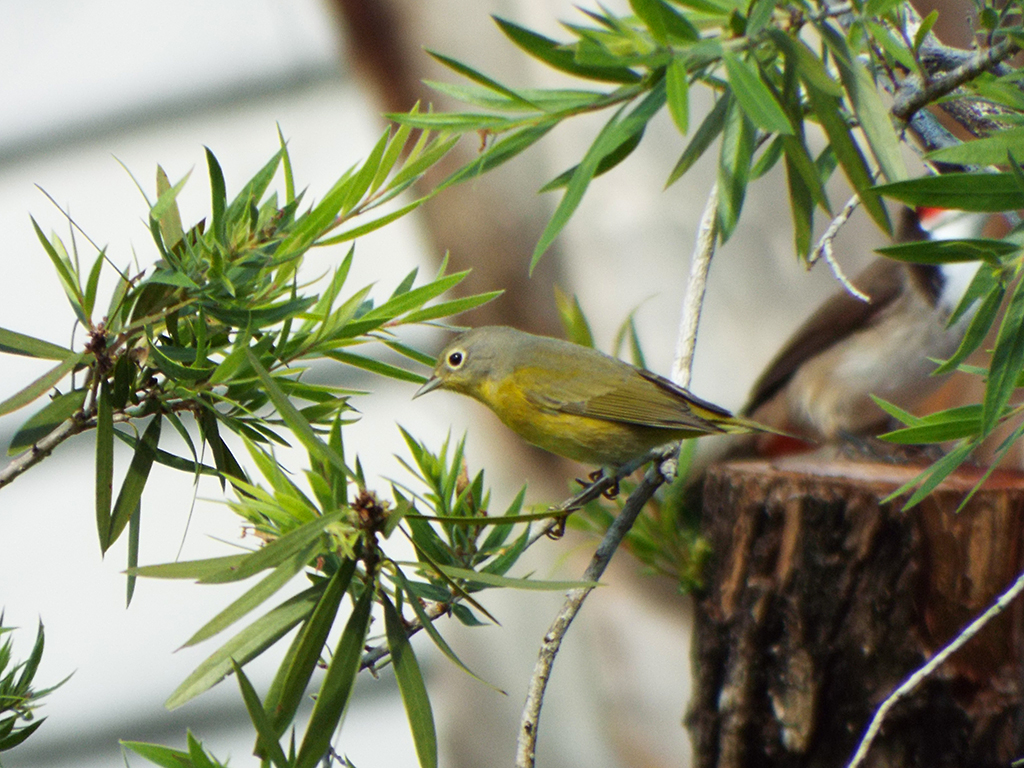
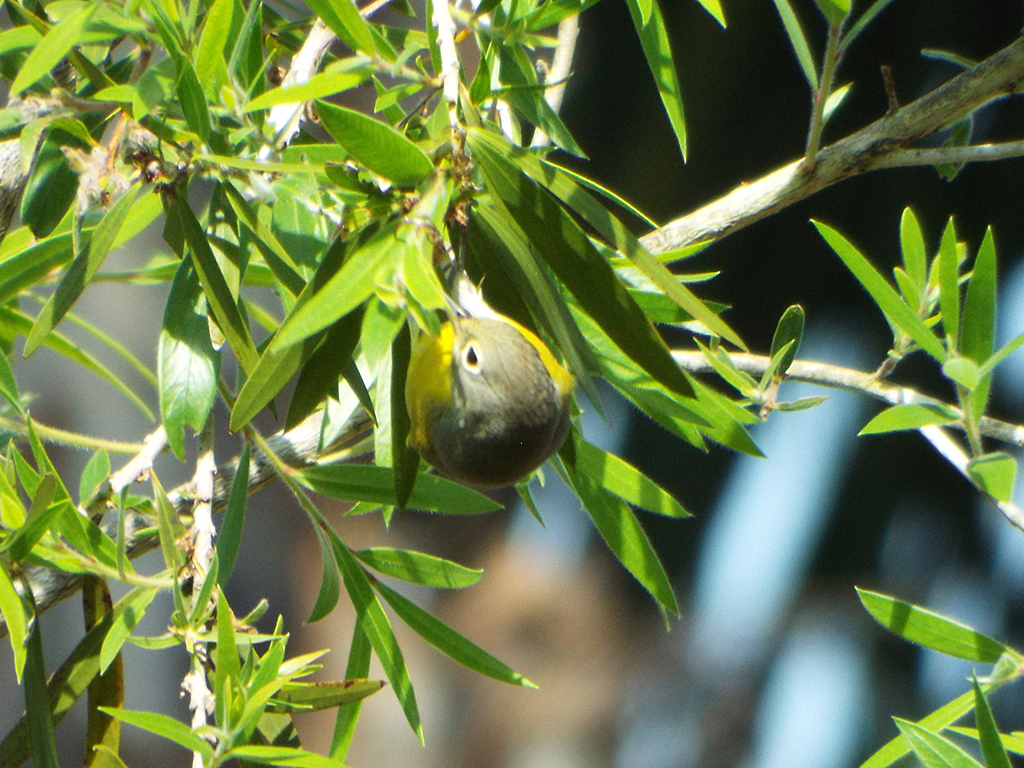
nashville-warbler-1
A rare Nashville Warbler feeding on an ornamental.
nashville-warbler-2
This Nashville Warbler’s bright yellow belly really stood out in the sunlight.

The complete eBird list for King’s Creek Village is here (with more good photos from Camille):
http://ebird.org/ebird/view/checklist/S39942003

After King’s Creek Village, we made two more stops, hoping to get White-crowned Pigeons and more parrots. At Ocean Bank [map] (a very urban setting), there have been White-chevroned Parakeets roosting just outside the atrium. We did not see them, but we did see some Common Mynas with nesting materials in a billboard structure.

We then made our way to the Miller Drive parrot roost [map], hoping to get more parrot species as they came in for the night. Unfortunately there were not many parrots, though we were treated to a fly by of a flock Red-masked Parakeets as the sun set. While we were waiting to see what parrots would flock in, we saw more warblers and even some non-avian friends.
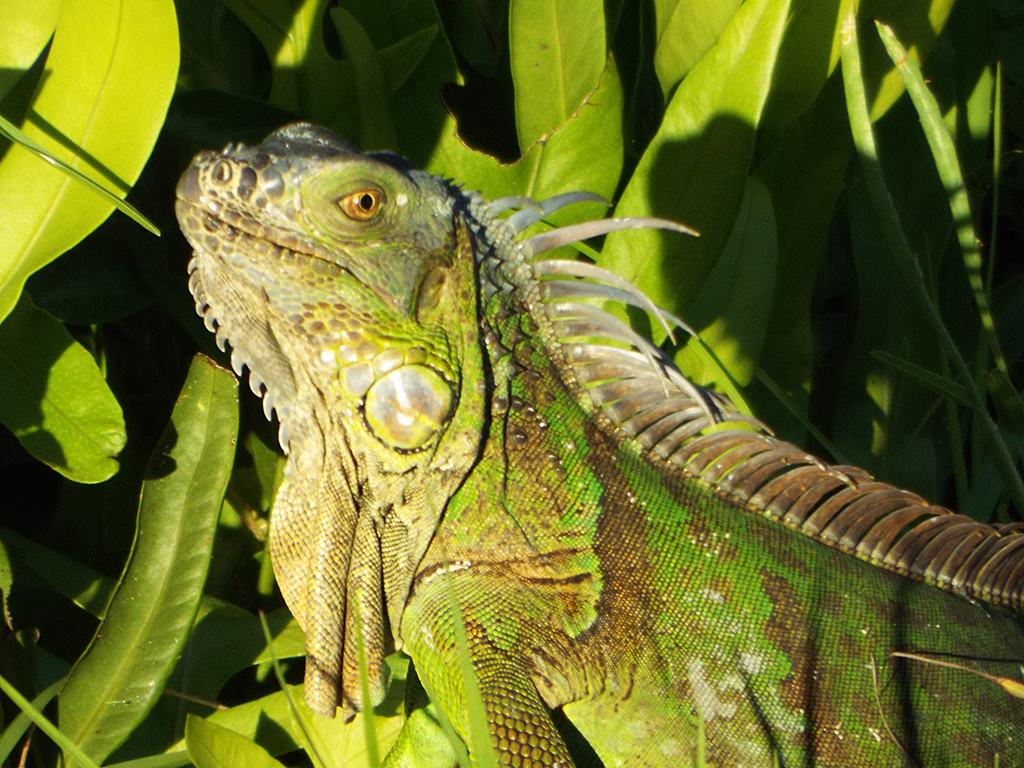
iguana2
Iguanas are a common introduced species in south Florida. In addition to some large specimens at Evergreen Cemetery, this one was hanging around the canal.

When it was clear there would be minimal roosting going on at this particular place, we made our way to Fuch’s Park [map], which is often an alternate roost site. But when we arrived there, it was dead quiet, with no parrots (and very few birds) present.

Here are the remaining eBird lists for the day:
Ocean Bank:
http://ebird.org/ebird/view/checklist/S39943542

Miller Drive:
http://ebird.org/ebird/view/checklist/S3994528

The sun was setting by now, and it was time to head home. Day trips to south Florida are always long, but rewarding. We never got our White-crowned Pigeon (deemed a “common” bird by some), and I joke that it’s a cryptid, like Big Foot. But I’ll be back to get it, along with the elusive Mangrove Cuckoo. There are plenty of birding adventures to be had before then!
 

Sunday Doubleheader: Mead Botanical Gardens and Ais Trail Park

October 11, 2017

Fresh from the sea this past Saturday night, I prepared to meet Camille for a trip out to Mead Botanical Gardens in Orlando on Sunday, since we’d heard there was some migrant activity there. I was tired from the previous day’s adventure, but as migration season is short, the promise of warblers was too good to pass up.

I did take my glitchy camera along, just in case I was able to get off a few reasonable shots. Here are the best of what I was able to photograph.

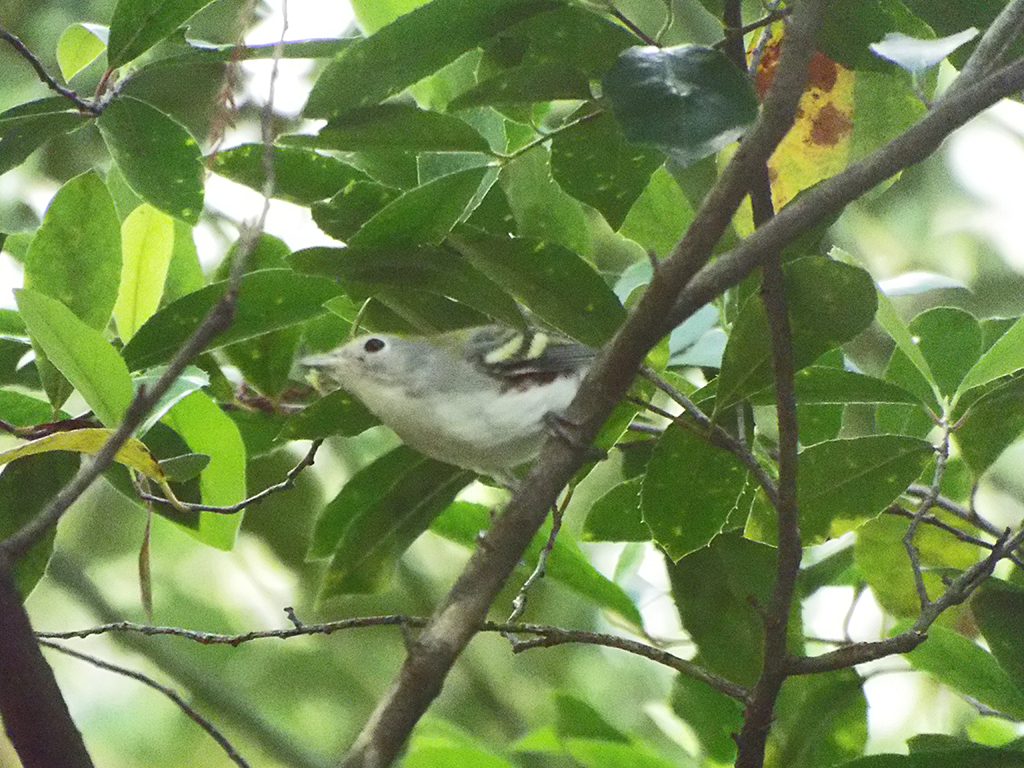
chestnut-sided
Chestnut-sided Warbler. The yellow wing-bars and cap (not seen here) are diagnostic for this species.
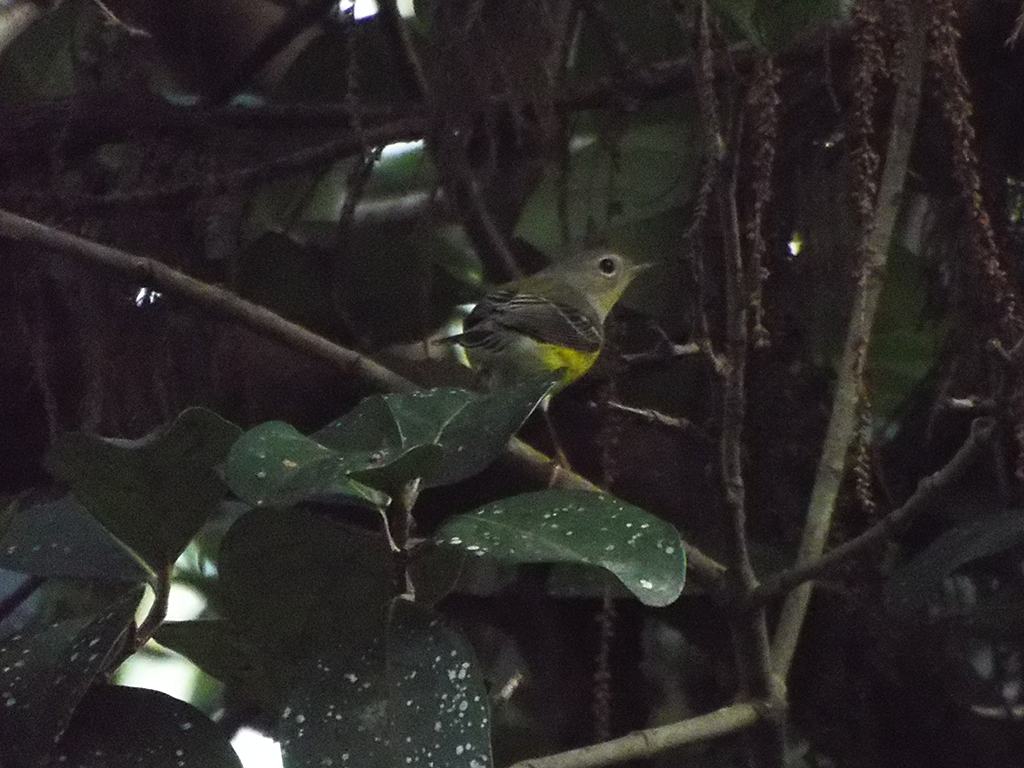
magnolia
Fall-plumaged Magnolia Warbler, deep in the foliage.
swainsons-thrush
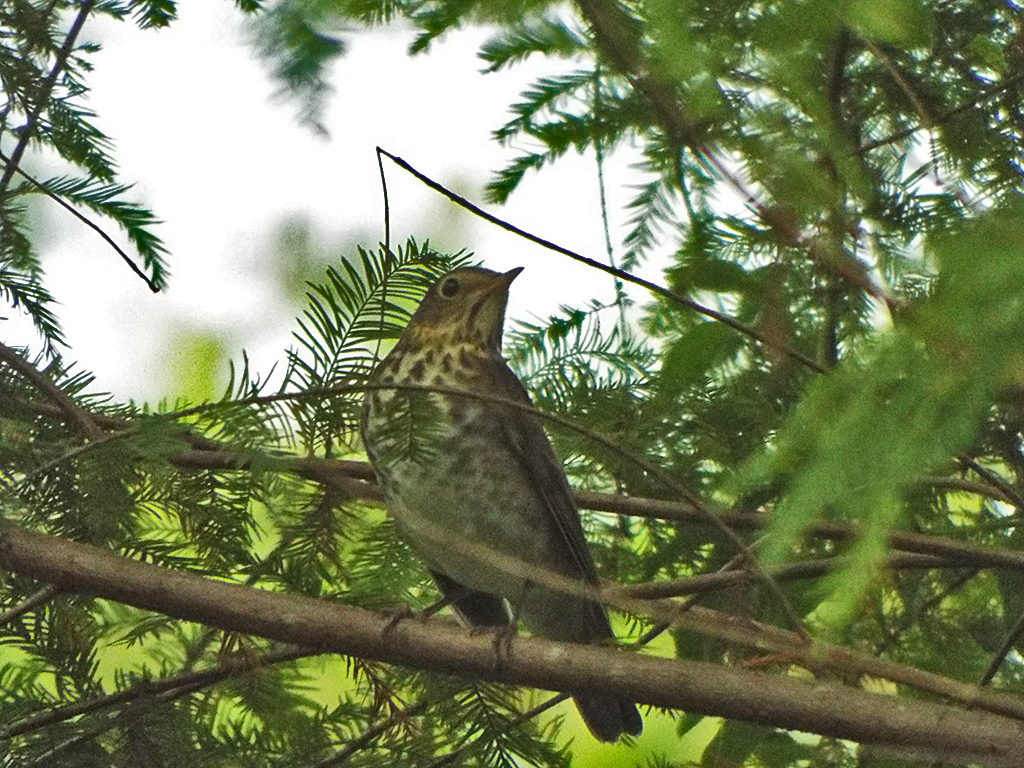
One of several Swainson’s Thrushes.

Don’t let the scarcity of photographs fool you into thinking the day was a bust. I identified 13 species of warbler that morning (Camille had 11)! Earlier in the week, some birders had 16 species in the park! That’s a pretty good variety. Here’s the complete eBird list (with some of Camille’s photos):

http://ebird.org/ebird/view/checklist/S39619140

After coming home, I got an e-mail from my friends Sarah and Bella who were hoping to try birding in a new location (for them). I suggested Ais Trail Park, in Palm bay, and met up with them in the late afternoon.

It was pretty quiet to start off, but we had some real teases. One was what appeared to be a Blackburnian male, still in bright breeding plumage. I saw the face and head, while Bella saw the large white wing patch. Between the two of us, we had a sighting, but we decided not to count it, since we didn’t each get a good clear look.

Then a warbler with an olive back, yellow underside and blue-gray head hopped up from the ground into some thick brush. I only saw it for the briefest second, The bird felt most like a Connecticut Warbler. It could have been a Nashville, but I wouldn’t have expected it to fly up from the ground onto a low branch before skulking away. I could not tell if the grey hood extended to the throat.

Neither bird was recovered despite some intensive searches.

But the best news of all was seeing a Peregrine Falcon fly over the park and then over Turkey Creek (near the lagoon) with great lighting. The ID was unmistakable, and this was Bella’s 200th ABA countable bird! Congratulations Bella!

She’s got amazing locating skills, and her birding abilities are as good, if not better, than many more experienced birders I know. But she has been doing this since she was a child.

Here’s our relatively short, but totally worth it list:
http://ebird.org/ebird/view/checklist/S39651513

What a great end to an epic weekend.


You Belong In A Boat Out At Sea

October 10, 2017

The much anticipated and alway fun pelagic birding trip, run by The Marine Science Center, disembarked from Port Canaveral on board the Canaveral Princess.

boat_canaveral_star
Promotional photo from https://orlandoprincess.com/

I love pelagic trips. Even during the long stretches with no birds in sight, I enjoy the waves and sun (and even the rain, when it’s not been too cold). This trip, we had great weather, and the seas were only moderately rough.

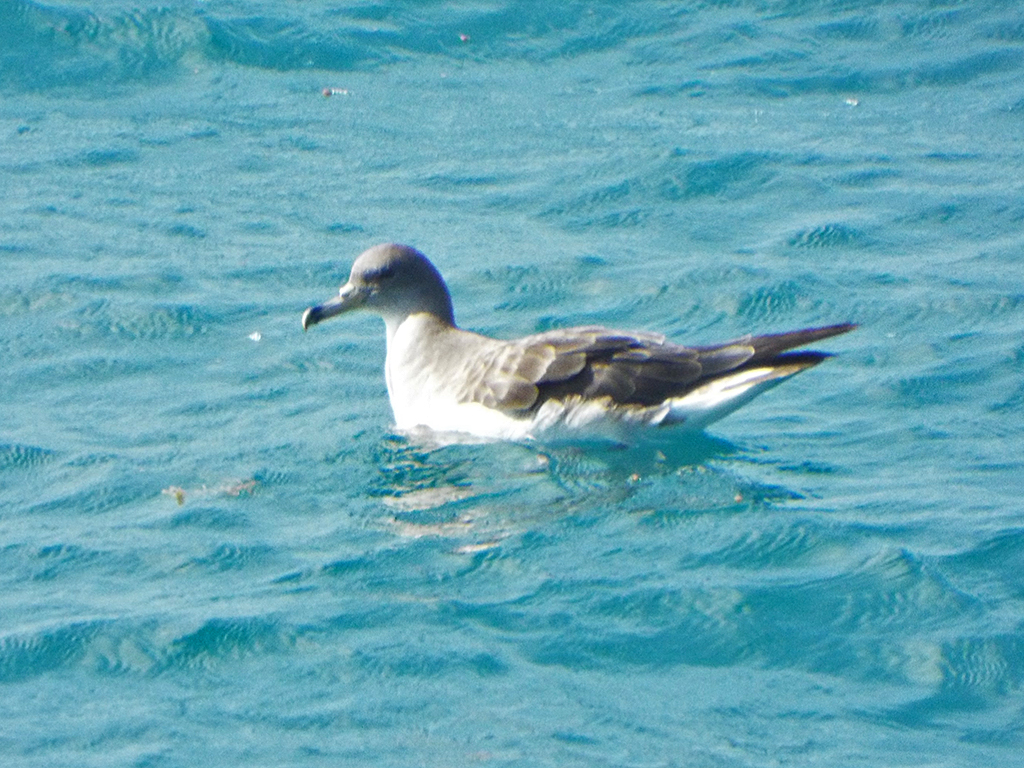
By far, the bird of the day was the Corey’s Shearwater. As a group, we saw over 200 of them (I recorded 77). We perhaps saw more Common Terns, but Shearwaters are obligate pelagic species – that means they are (barring severe weather events, like hurricanes) only found on the open ocean.

coreys-shearwater
A Corey’s Shearwater resting on the ocean’s’ surface. Note the nasal tube, or narnicorn, that some oceanic birds use to help remove salt from their systems.

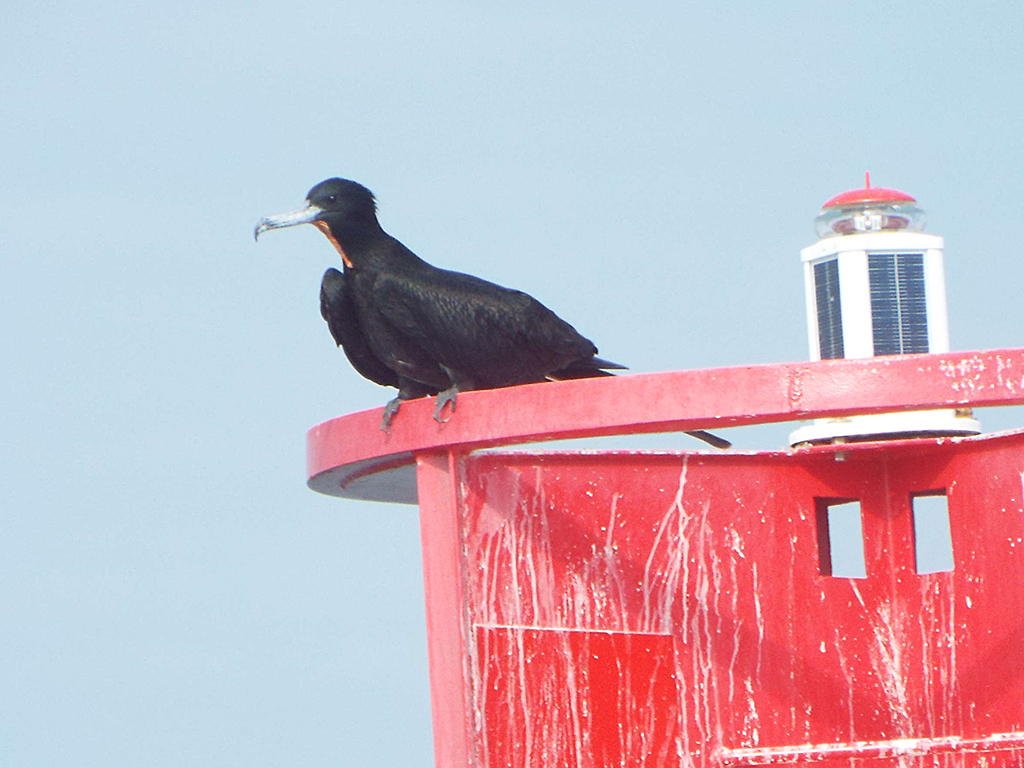
The initial leg out of the port was very smooth, and it wasn’t until we started passing some of the off-shore buoys that we started to feel the 6-foot (2-meter) seas. Buoys also provide places for birds to roost and use as a look-out.

magnificent-frigatebird2
Magnificent Frigatebird taking advantage of the view.

The majority of the shearwaters we saw were Corey’s, we also did see the Great and Audubon’s species (I’ve seen all these shearwater species on my whale watch in New England, last summer.)

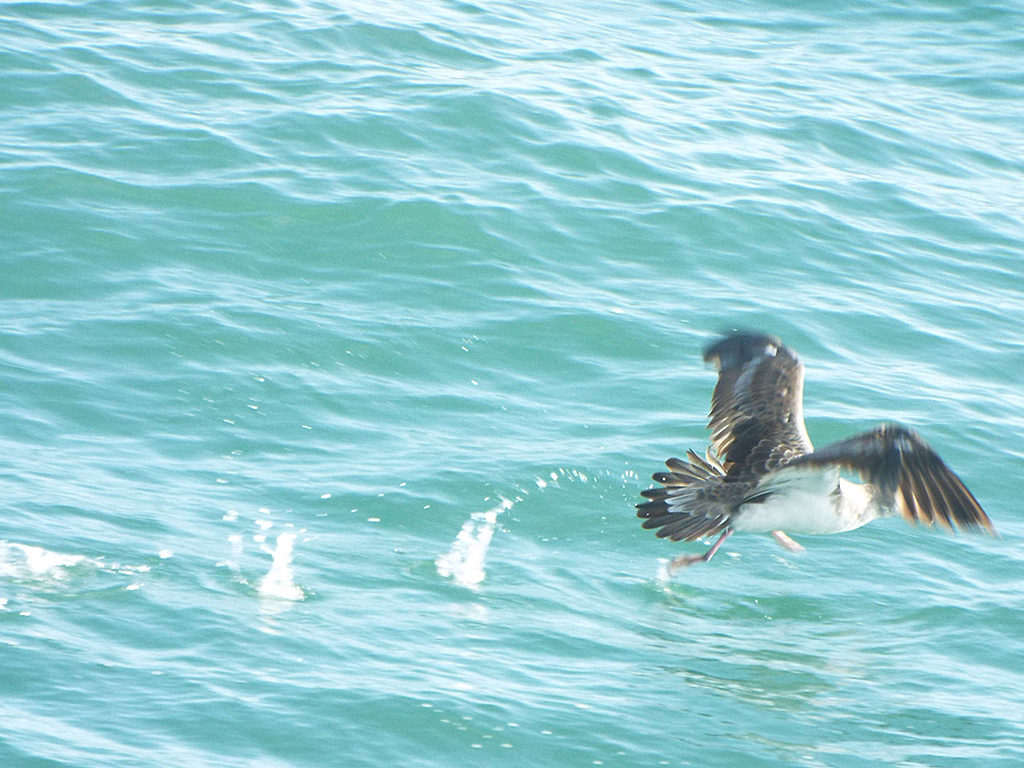
coreys-shearwater-takeoff
Shearwaters run on the water’s surface to get up to take-off speed.

Unlike most of the previous pelagic trips I have been on, we did not have many dolphins visiting us. Just one rode our bow wake as we left the port. We did see a couple of sea turtles, including a large Loggerhead Sea Turtle getting attacked by a Tiger Shark! The shark was unable to get a good angle on the turtle, and gave up as we drew closer. The turtle had it’s front flippers held straight up in the air to keep the shark from being able to grab or bite them. After a couple of minutes, the turtle dove out of view.

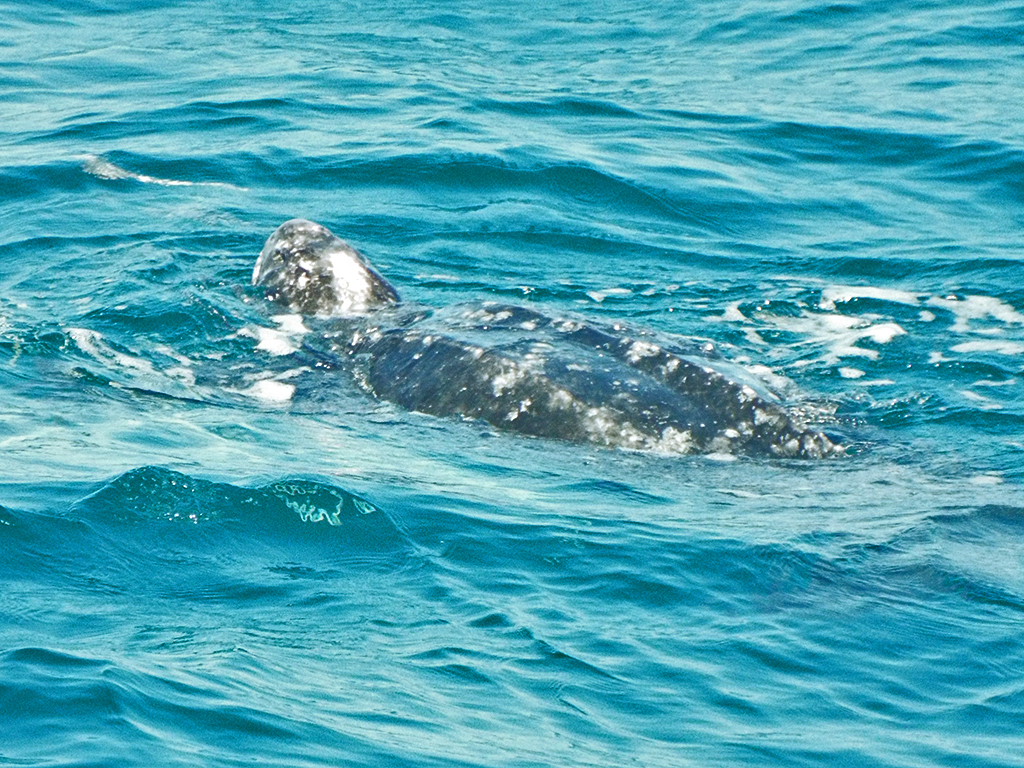
We also saw a Leatherback Sea Turtle. It was enormous and attended by several large Cobias and some remoras.

leatherback-sea-turtle
It’s hard to get a sense of scale, but this turtle was over 4 feet long, but still not full adult in size.

Before too long, I did run into some equipment problems. My current camera – a much loved Fujifilm Finepix S990W – has been having some glitches lately. The back-side buttons would activate without being pressed, or when pressed would cycle quickly through various options on their own. This escalated on Saturday, and the camera started changing settings and formats, as well as locking up entirely. I gave up fighting it, especially after taking a spill near the bow when trying to reach for the railing while protecting my camera. There wasn’t much reason to be holding on to a camera that wasn’t working.

The rest of the trip was fantastic. We came upon large flocks of terns, most of which were Common, but interspersed with Black and Sooty Terns. I saw what probably were some species of storm-petrel, but they were gone behind waves before I could really get a good look. Several Peregrine Falcons cruised by, over 30 km (50 miles) from land.

Here’s my complete eBird list for the trip. The “official” list for the trip, via Michael Brothers has a much higher count and some species I missed (and one species not recorded officially).

My eBird list for the entire trip, there and back again:
http://ebird.org/ebird/view/checklist/S39610465

“Official” list, via e-mail from Michael Brothers:
Blue-winged Teal 56
Cory’s Shearwater 235
Great Shearwater 5
Brown Pelican 8
Brown Booby 3
Magnificent Frigatebird 6
Parasitic Jaeger 8
Pomarine Jaeger 1
Black Tern 111
Common Tern 419
Royal Tern 41
Sandwich Tern 16
Laughing Gull 9
Sabine’s Gull 1
Short-billed Dowitcher 3
Wilson’s Snipe 1
Red Phalarope 6
Red-necked Phalarope 21
Peregrine Falcon 4
Barn Swallow 1
Black-throated Blue Warbler 1
Warbler sp. 1

Despite the camera glitch and my fall on the deck, I had a spectacular time. I am already looking forward to next year, circumstances willing. I’ll post the few remaining photos that didn’t make the blog, soon.


Driving down the Overstreet

September 30, 2017

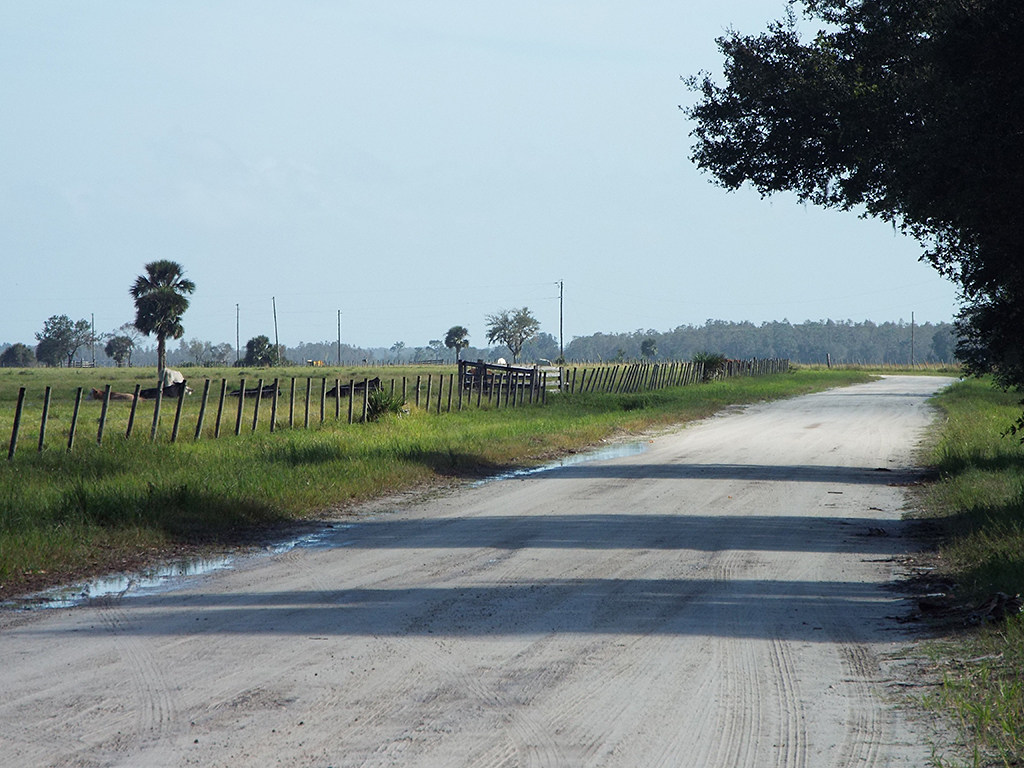
Joe Overstreet Road and Landing are among Osceola County’s most interesting birding “hotspots”. The road heads down to the northeastern edge of Lake Kissimmee, through ranch and farm lands. At the landing, wading birds are common, and the lake’s resident Snail Kites are usually around. Last weekend was a good opportunity to check them out.

joe-overstreet-road
Joe Overstreet Road.
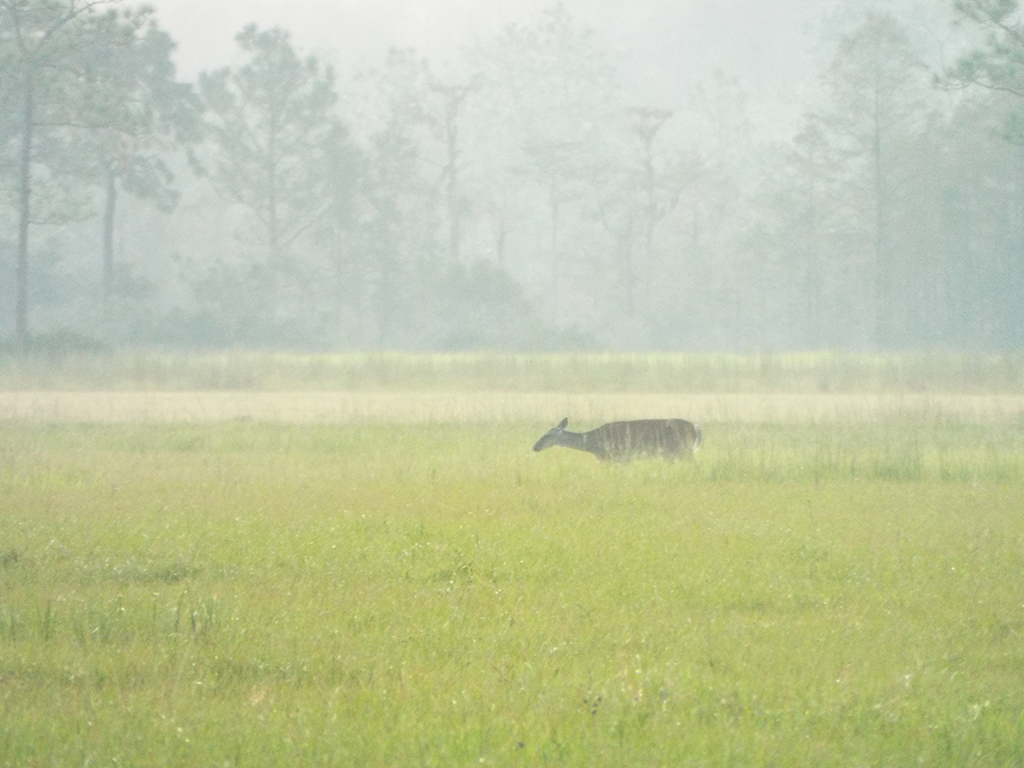
morning-deer
A White-tailed Deer in the morning mist.

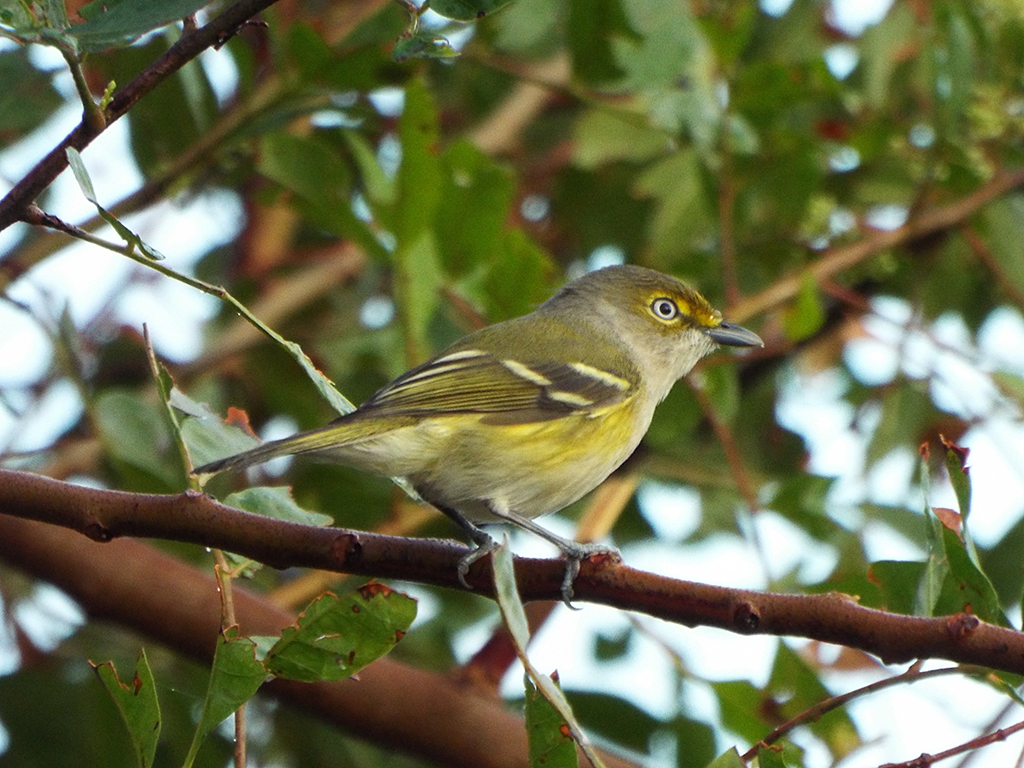
The trees and shrubs along the road edges are often a good place to stop and watch for warblers or other small songbirds. Sometimes the early morning light can be a challenge, especially if the birds are back-lit. But I had some good luck this time around for some White-eyed Vireos and friends.

white-eyed-vireo
One of several White-eyed Vireos, going about morning duties.
common-yellowthroat
This first year male Common Yellowthroat doesn’t have his complete mask, or “domino” yet.

Wherever small birds are (or other prey items, like large grasshoppers or katydids), you have predators. There were Loggerhead Shrikes staking out the road edges, and further out over the fields I could hear Red-shouldered Hawks calling out.

loggerhead-shrike
This Loggerhead Shrike was looking quite interested at the Common Yellowthroats down below.

During Spring and Summer there are usually a large number of Cattle Egrets along with the cattle, but with the advent of Autumn there were very few of any sort of heron or egret species.

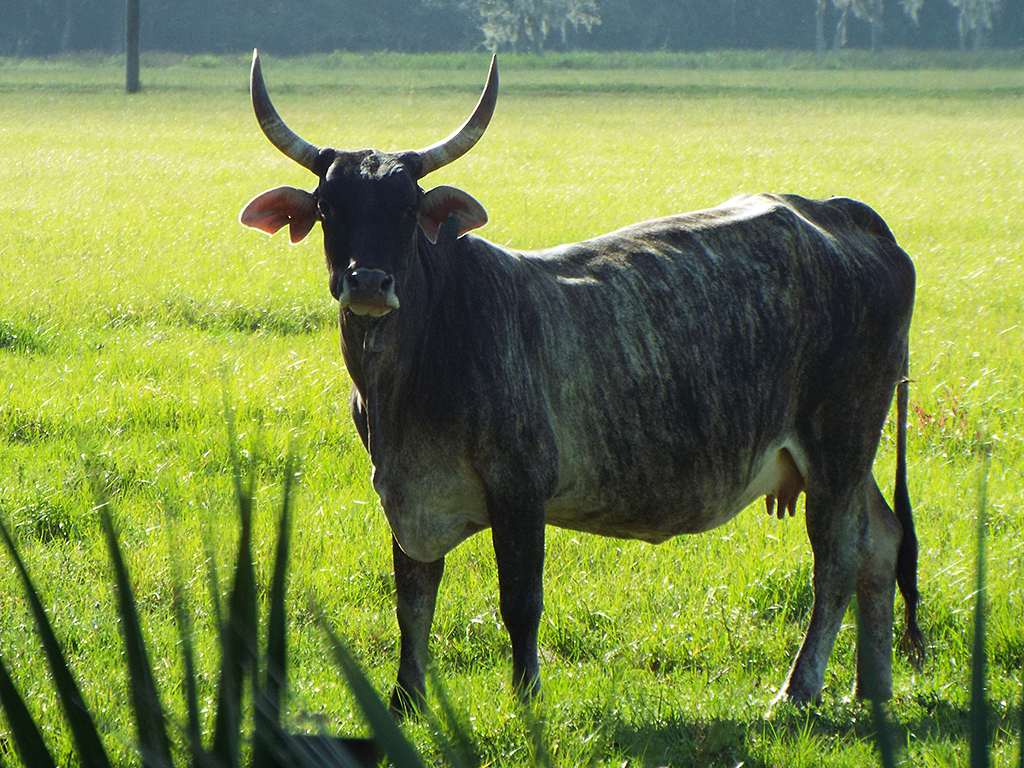
cattle
“What are yoooou looking at?”

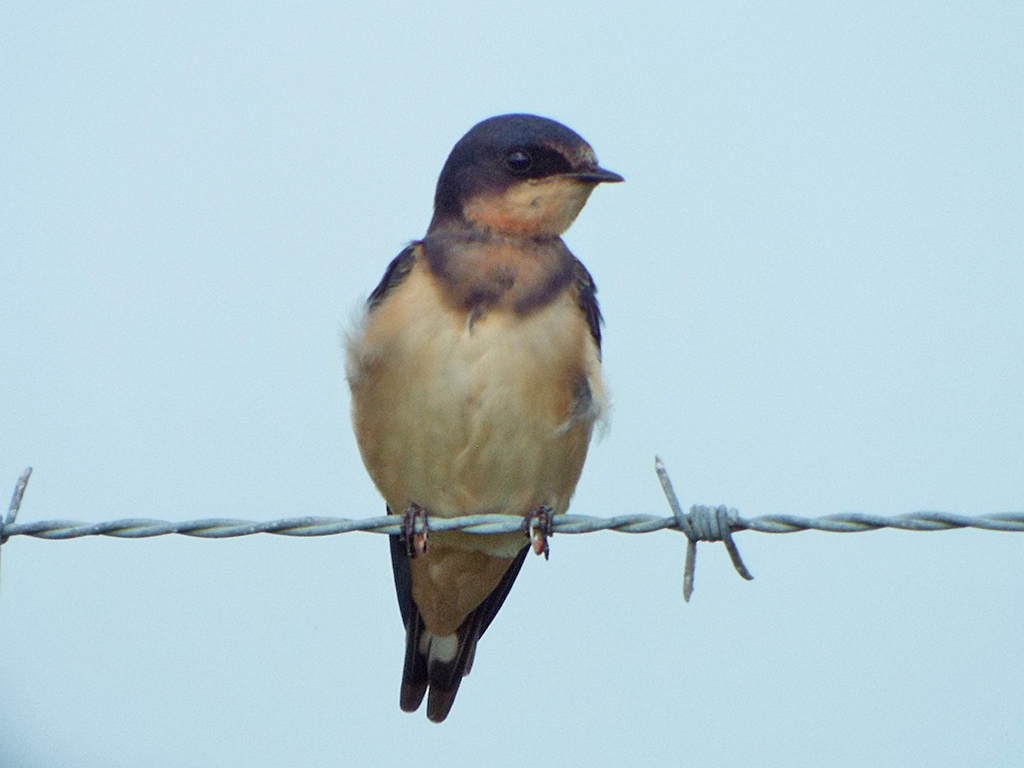
Barn Swallows were working the open land and pausing in little groups on the wires and fence lines. Many were youngsters themselves, and trying to beg off of the adults who, to their evolutionary credit, were ignoring them. The young birds were certainly capable of feeding themselves.

barn-swallow
This Barn Swallow is nearly in adult plumage.
barn-swallow2
This is a younger Barn Swallow, with some downy feathers still remaining, and a little more tail to grow.

In addition to the Barn Swallows, there were a few Cliff and Bank Swallows in the mix as the birds swooped and darted around, catching insects.

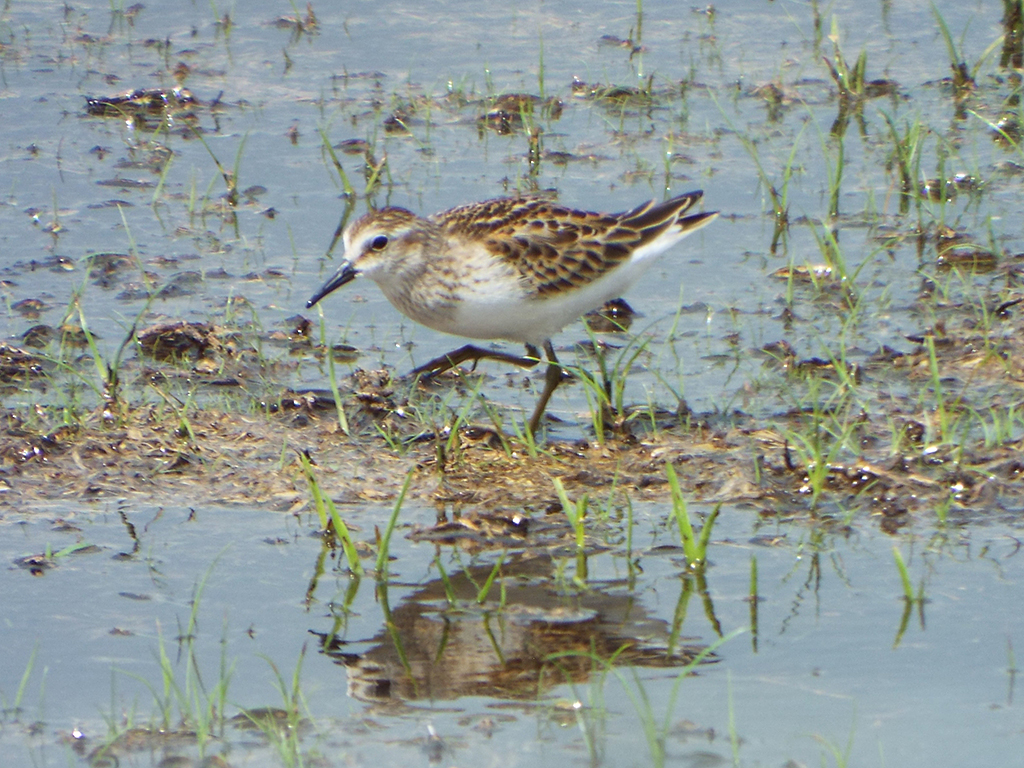
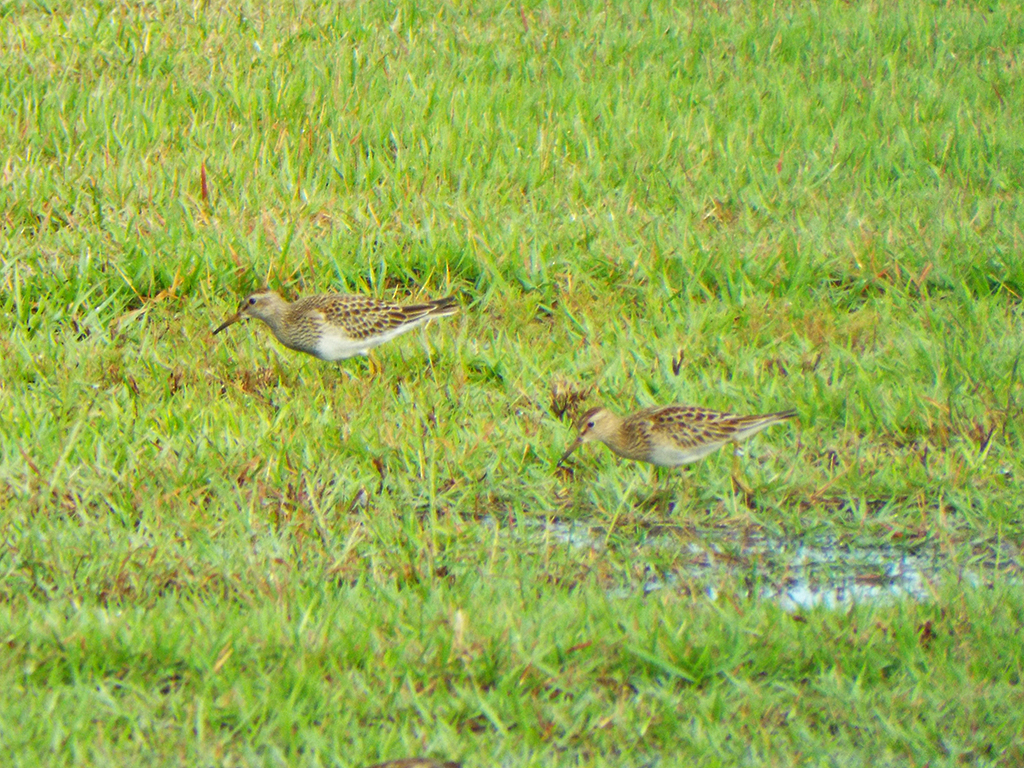
The wet sod fields near the midpoint of the road had produced reports of shorebirds, including some American Golden Plovers and various sandpipers. I did not see any plovers (besides Killdeers) on the way to the lake, but  I did see some Least and Pectoral Sandpipers

least-sandpiper
Quite a few Least Sandpipers were making use of the flooded sod fields.
pectoral-sandpipers
Pectoral Sandpipers are larger than the “peeps”, like Least Sandpipers, and can usually be distinguished by the sharp transition of their breast markings to their bellies.

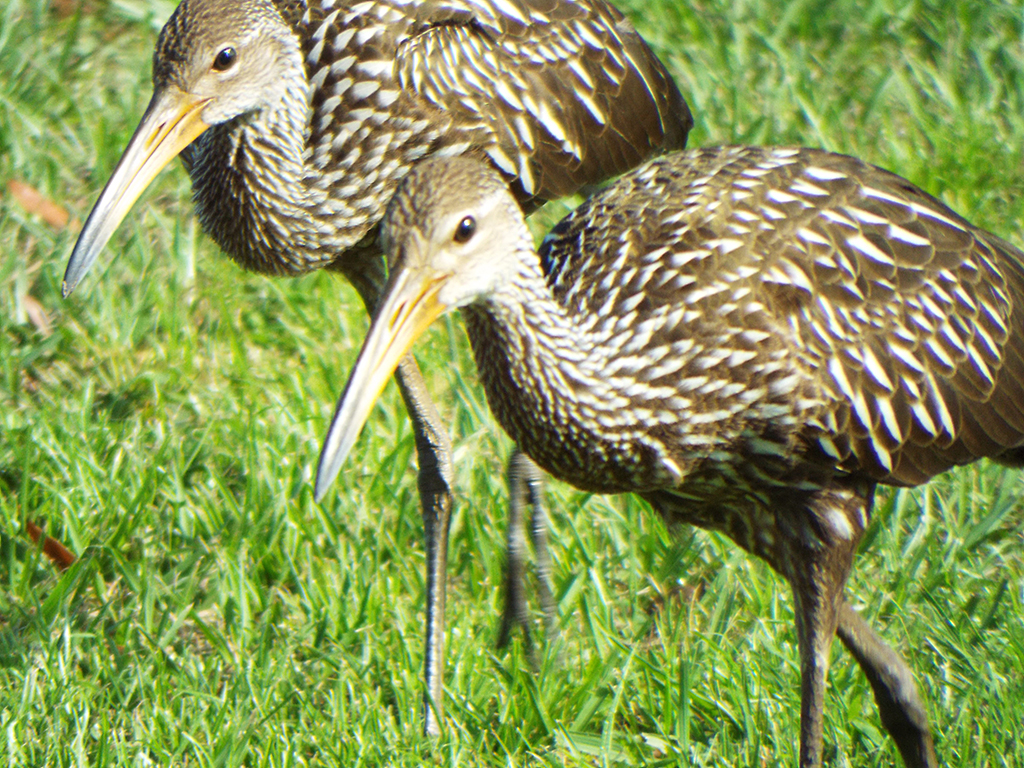
At the landing, I was almost immediately greeted by a family of Limpkins. The youngsters were almost full grown, and still looking a bit gangly as they ran to catch up with the adults.

limpkins
A pair of “teenage” Limpkins, running by.

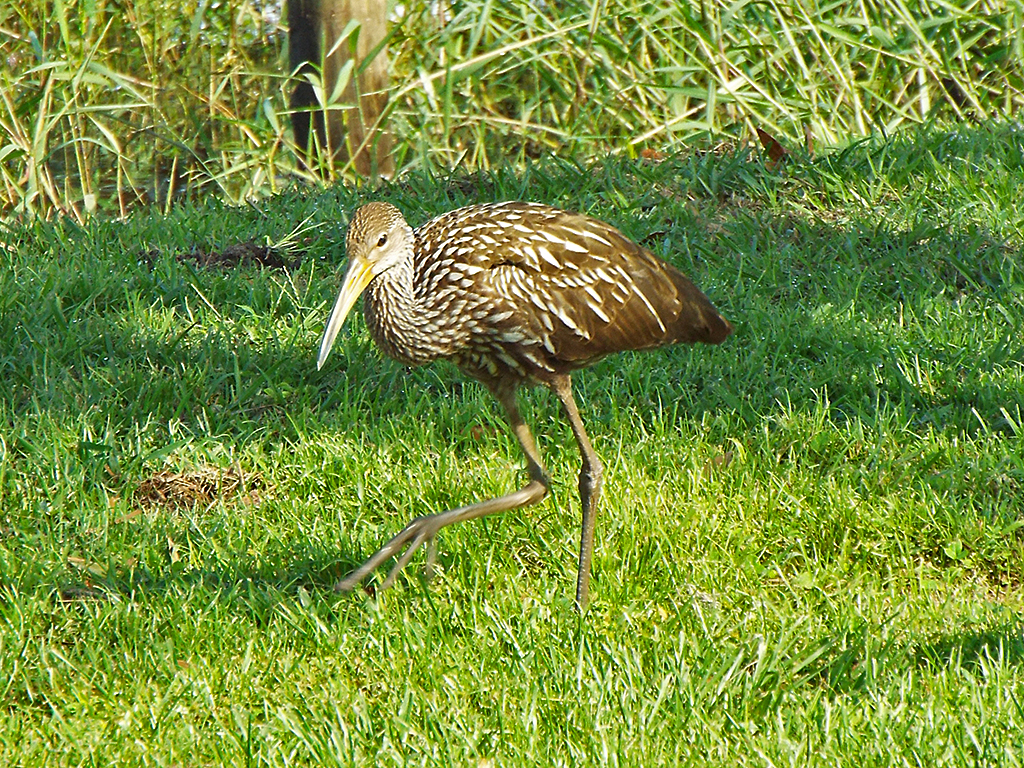
One could liken these birds to “teenage” birds, and it won’t be long before they leave the proverbial nest (they left the actual one weeks ago).

limpkin-legs
This bird was legging it, to catch up with its siblings.

A few of them decided to take a rest on a nearby picnic table, fairly unconcerned with the people and boats. They even had a squirrell join in!

limpkin-picnic
Limpkin picnic.

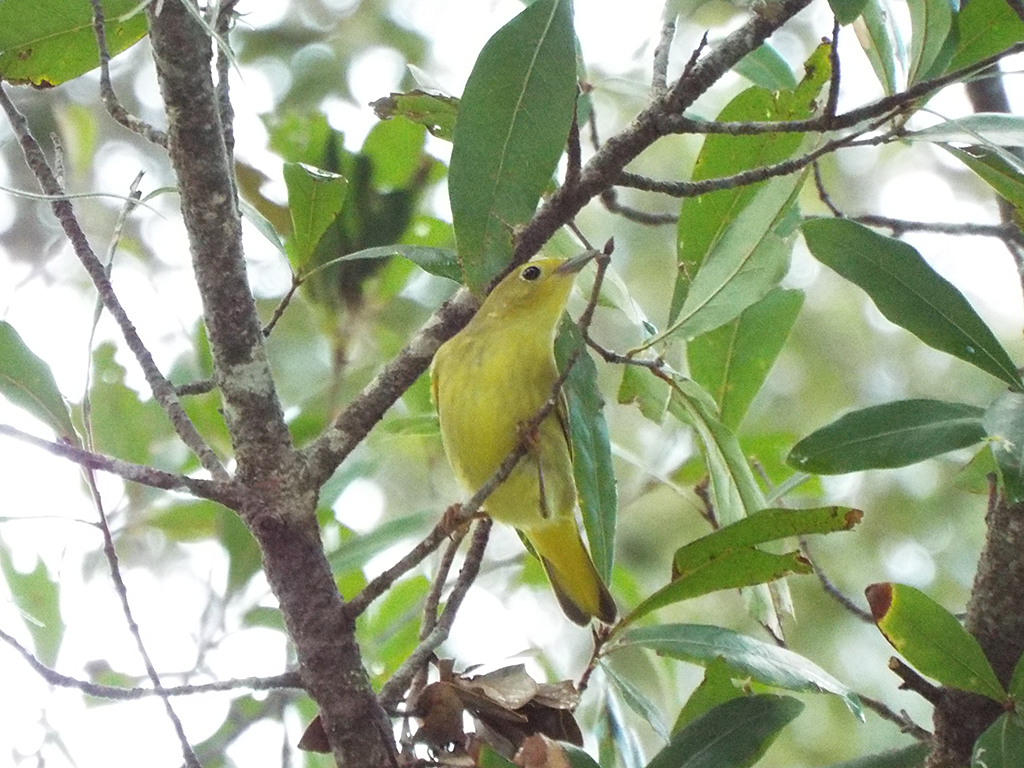
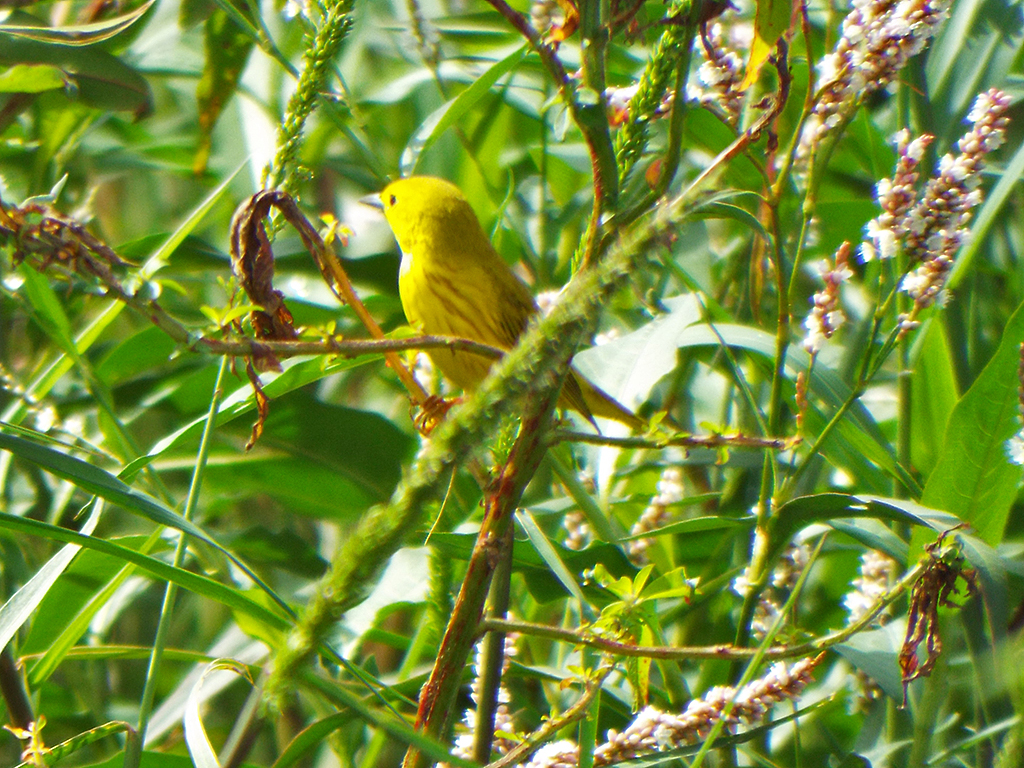
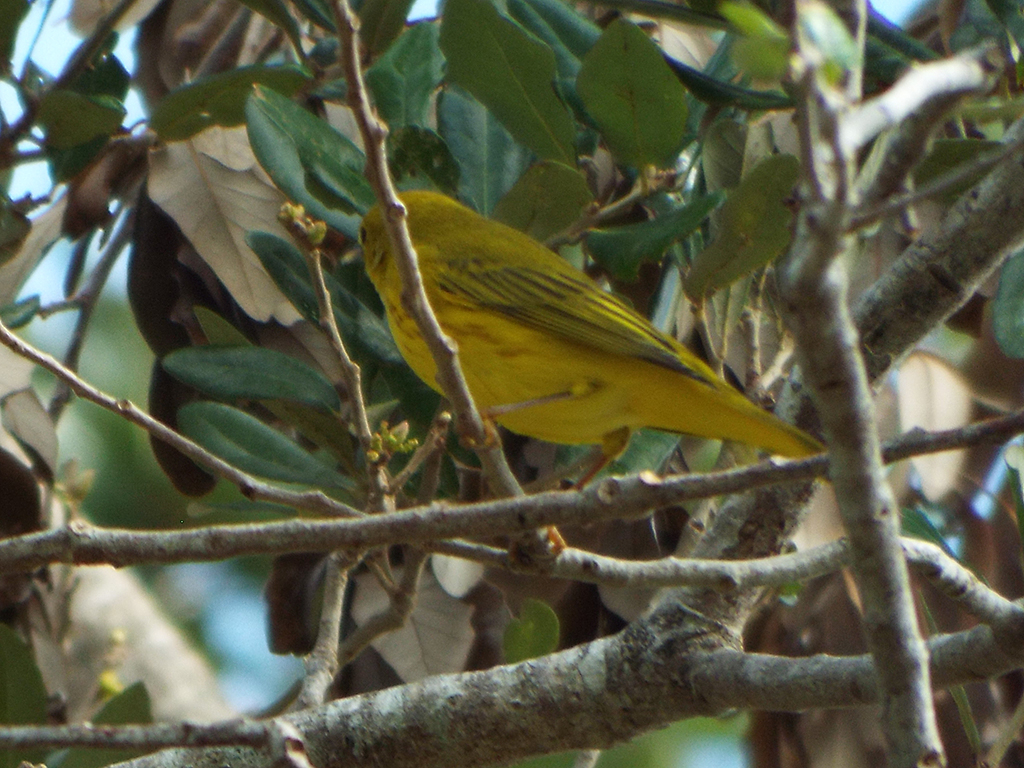
The trees around the boat ramp usually have a Yellow Warbler or two around, and I was happy to see both a female and at least two males. One male hadn’t lost his bright yellow breeding colors quite yet. It always amazes me how a bird this bright yellow can be hard to find in a green tree. But they are.

yellow-warbler-female
Female Yellow Warbler.
yellow-warbler-male2
A male Yellow Warbler, in the sun.
yellow-warbler-male1
In the shade, even these bright birds can blend into the green foliage.

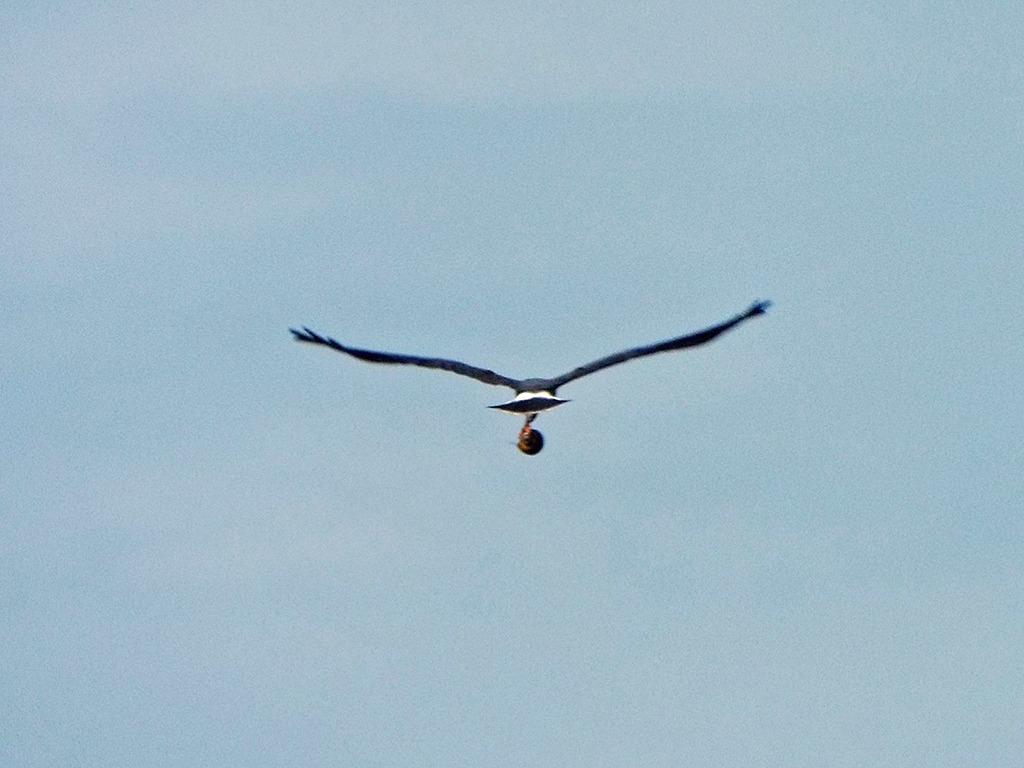
Snail Kites were catching a large invasive variety of Apple Snail that seems to have taken over the lakes in central Florida. At least they (and the Limpkins) seem to be having no trouble with them. Ecologically, the invasive snails can do a lot of harm and are outcompeting the already threatened native snails.

snail-kite
A Snail Kite departing with a large Apple Snail.

One the way back up Joe Overstreet Road, I stopped one more time to scope out for American Golden Plovers. It took a while, and the help of two birders with a more stable and functioning scope (my Audubon “Light” scope had some failures), several of these somewhat rare visitors were seen and identified! This is the best photograph I could obtain.

plover
It’s hard to see here, but this American Golden Plover’s identifying features were clear in a scope.

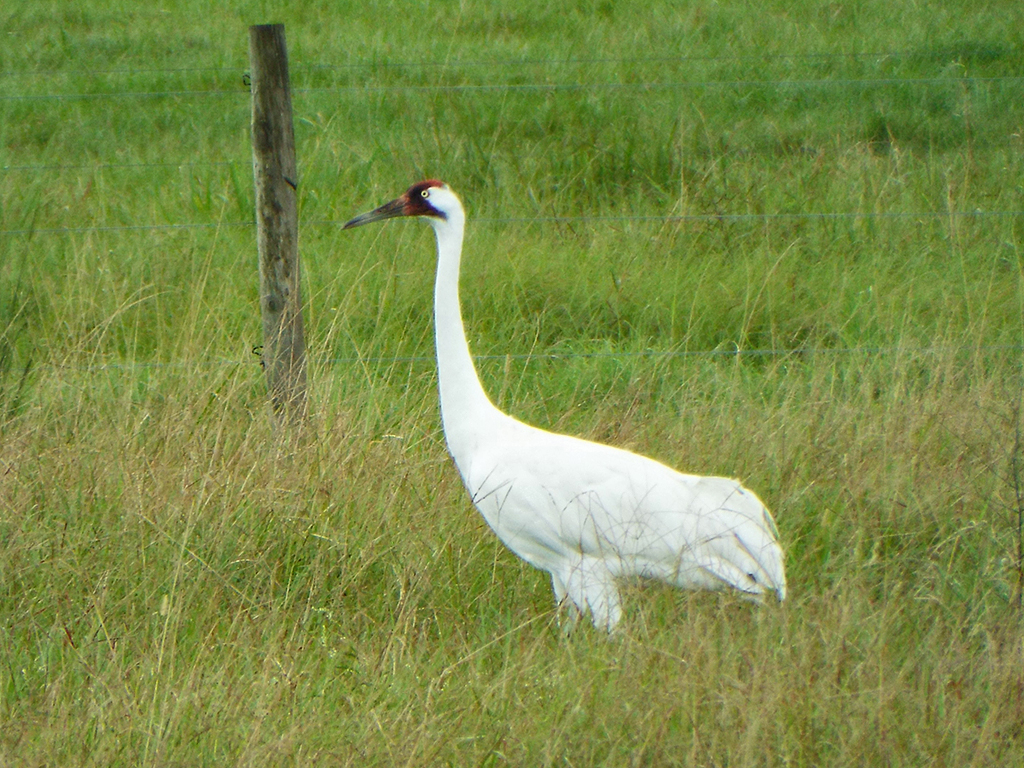
As a final treat, I made it a point to stop on the “main road” by the Double C Bar ranch, in case a Whooping Crane was in view. My life-sighting of this species was on my first Central Florida Specialties trip with David Goodwin at the Space Coast Birding and Wildlife Festival, several years ago. Since then, I’ve unsuccessfully tried to find these birds at this ranch (and elsewhere). Fortune favors the prepared, I suppose!

whooping-crane
This crane is one of the last survivors of a non-migratory Whooping Crane flock. The establishment and management of that flock was a failure, with resources now being put into a migratory flock that winters in the panhandle and spends the summer in Wisconsin.

That seemed like the cap on a pretty good birding day. While neither the American Golden Plovers nor the Whooping Crane were life birds, it was a thrill to see them, along with the other resident birds.

Here are the various eBird lists, for those who care.

Joe Overstreet Road (inbound to lake):
http://ebird.org/ebird/view/checklist/S39362311

Joe Overstreet Landing:
http://ebird.org/ebird/view/checklist/S39363297

Joe Overstreet Road (incidental, outbound from lake):
http://ebird.org/ebird/view/checklist/S39365025

Double C Bar Ranch:
http://ebird.org/ebird/view/checklist/S39365703